A period care kit is a small pouch of items that helps you feel prepared when your period starts unexpectedly, your flow changes during the day, or you are away from home longer than planned. It does not need to be fancy. The best period kit is practical, discreet, easy to refill, and matched to your body.
Periods can be predictable for some people and surprising for others. Even if your cycle is usually regular, stress, travel, illness, sleep changes, or normal cycle variation can shift timing. A small kit gives you one less thing to worry about when your period arrives at school, work, during travel, on a long commute, or while staying away from home.
Start with period products you already trust
Begin with the products you know work for your flow and comfort. Depending on your preference, pack pads, tampons, pantyliners, period underwear, a menstrual cup, a menstrual disc, or reusable pads. If you are unsure what you will need, include two absorbency levels: one for lighter flow and one for heavier flow.
The Office on Women's Health recommends following product instructions and changing or rinsing period products before they become soaked through or full. If you use tampons, choose the lowest absorbency that works for your flow and do not wear one longer than recommended. If you use a cup or disc, include anything you need for cleaning or storage when you are away from a private sink.
A good rule is to pack for one unexpected day, not for your entire period. Keep enough to get through school, work, a shift, a commute, or a travel delay. Then refill the kit when you get home.
Backup items that save the day
A period kit is not only about period products. Some of the most useful items are the ones that help when the day does not go neatly. Add spare underwear, a small zip bag for stained clothing or reusable products, tissues, unscented wipes, hand sanitizer, a tiny trash bag or wrapper for disposal, and a small dark cloth or scarf for emergencies.
Unscented is usually safer than heavily fragranced when you are choosing wipes or liners, especially if your skin is sensitive. The goal is comfort and hygiene, not perfume. If you are packing for school or travel, choose items that are individually wrapped and easy to use quickly.
If you use reusable products, carry a leak-resistant storage bag and plan how you will rinse or wash items later. If that feels difficult for a particular day, it is okay to use a simpler backup option.
Comfort and pain support
Period care is not only about managing blood. It is also about cramps, fatigue, headaches, bloating, nausea, and mood. Depending on what is safe for you, your kit might include a heat patch, pain relief you already use and tolerate, ginger candy, a small electrolyte packet, lip balm, or a note reminding you what usually helps.
Do not pack medication you are unsure about, and do not share medication casually with others. If cramps are severe enough to regularly disrupt school, work, sleep, or daily activities, a healthcare professional can help you look for causes and treatment options.
Food and hydration support
Periods can come with cravings, low energy, nausea, headaches, or mood changes. A small snack can help, especially when you are away from home. Consider a granola bar, trail mix, crackers, nuts, dried fruit, dark chocolate, ginger candy, or another snack that feels easy on your stomach.
Water matters too. You do not need a special period drink, but dehydration can make headaches, fatigue, and constipation feel worse for some people. If you forget to drink water during busy days, keep a small bottle nearby or add an electrolyte packet to your kit for travel or long shifts.
Add a mini planning card
A small card can make your kit more useful. Write your last period start date, usual cycle length, usual period length, products that work best, symptoms to watch, and any medication reminders. You can also write a simple emergency note: "If flow is unusually heavy, check the time between product changes."
You can use the Period Tracker to estimate your next period and the Cycle History page to review saved patterns when available. If your period is irregular, keep your kit in your main bag throughout the month rather than waiting for the predicted week.
Where should you keep it?
Useful places include a school bag, work bag, car, gym bag, travel pouch, bedside drawer, locker, or a trusted partner's place. If privacy matters, choose a pouch that looks like a normal cosmetics bag, pencil case, or small organizer.
It can help to create two versions. A daily kit can be small: a few products, wipes, sanitizer, and a snack. A travel kit can be larger: extra underwear, more products, disposal bags, heat patches, and backup clothes. This keeps your everyday bag light while still giving you a better plan for longer trips.
When should you refill or upgrade your kit?
Refill the kit after every period or after any day you use supplies. Upgrade it if your flow changes, cramps become worse, you start using a new product, you travel more often, or your period becomes less predictable. If you use products with expiration dates or medication, check dates regularly.
If you are soaking through pads or tampons very quickly, passing large clots, feeling faint, bleeding longer than usual, or having symptoms that worry you, do not simply pack more supplies and move on. The NHS explains that heavy periods can affect daily life and may need medical attention. A kit can support your day, but it should not replace care when bleeding is unusually heavy.
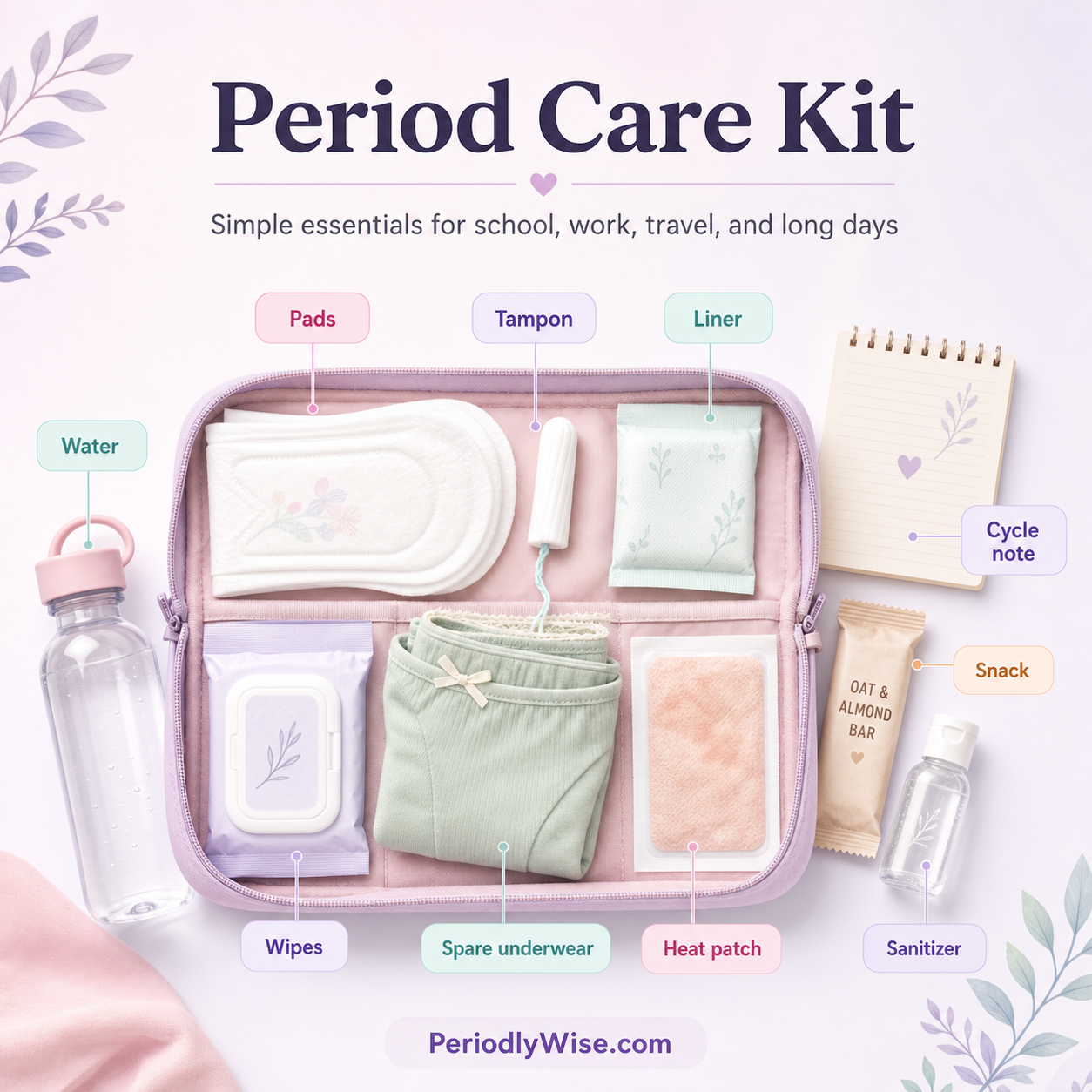
Simple period care kit checklist
- Period products: pads, tampons, liners, cup, disc, or period underwear.
- Backup: spare underwear, zip bag, tissues, wipes, sanitizer, and disposal bag.
- Comfort: heat patch, safe pain relief, ginger candy, or a calming note.
- Food and water: small snack, water bottle, or electrolyte packet.
- Planning: last period date, usual cycle length, usual period length, and symptoms to watch.
Key takeaway
A period care kit is not about expecting the worst. It is about giving yourself a calm backup plan. A few products, a little comfort, and clear cycle tracking can make period days feel much more manageable.
Use PeriodlyWise to estimate your next period window, then refill your kit before the week you are most likely to need it.
Estimate Your Next Period