A delayed fertile window usually means ovulation may be happening later than your calendar expected. The fertile window is the stretch of days around ovulation when pregnancy is more possible. It includes days before ovulation because sperm can survive for several days, while the egg is available for a much shorter time after release. If ovulation moves later, the fertile window moves later too.
This is why a delayed fertile window often travels with a longer cycle or a later period. In a textbook 28-day example, ovulation is often placed around the middle of the cycle. Mayo Clinic notes that ovulation typically happens about 14 days before a period in an average 28-day cycle, but cycle length and the time from ovulation to the next period can vary from person to person and month to month. A calendar can estimate; it cannot prove that ovulation happened on that date.
PeriodlyWise treats fertile-window dates as estimates because the body is not a fixed clock. If your normal cycle changes, or if ovulation signs show up later than expected, the most useful response is to track the shift and the context around it.
How a fertile window moves
The fertile window depends on ovulation timing. If your tracker predicted ovulation on day 14 but your body does not ovulate until day 20, the useful fertile days move with that later ovulation. The next period may also arrive later because it usually follows ovulation after the luteal phase. This is why delayed ovulation can make a period seem late even when pregnancy is not the cause.
Research on fertile-window timing shows wide variation. A BMJ study of menstrual cycles found that fertile-window timing can occur much earlier or later than common clinical examples, even among people who describe their cycles as regular. That does not mean tracking is useless. It means a single day estimate should be treated as a planning clue, not a certainty.
Calendar methods work best when cycles are consistent. CDC guidance for the Standard Days Method notes that it is designed around cycles between 26 and 32 days and that pregnancy risk rises when cycles fall outside that range. If your cycle is long, irregular, postpartum, breastfeeding, or recently affected by hormones, a standard day range may not fit.
Common causes of delayed ovulation
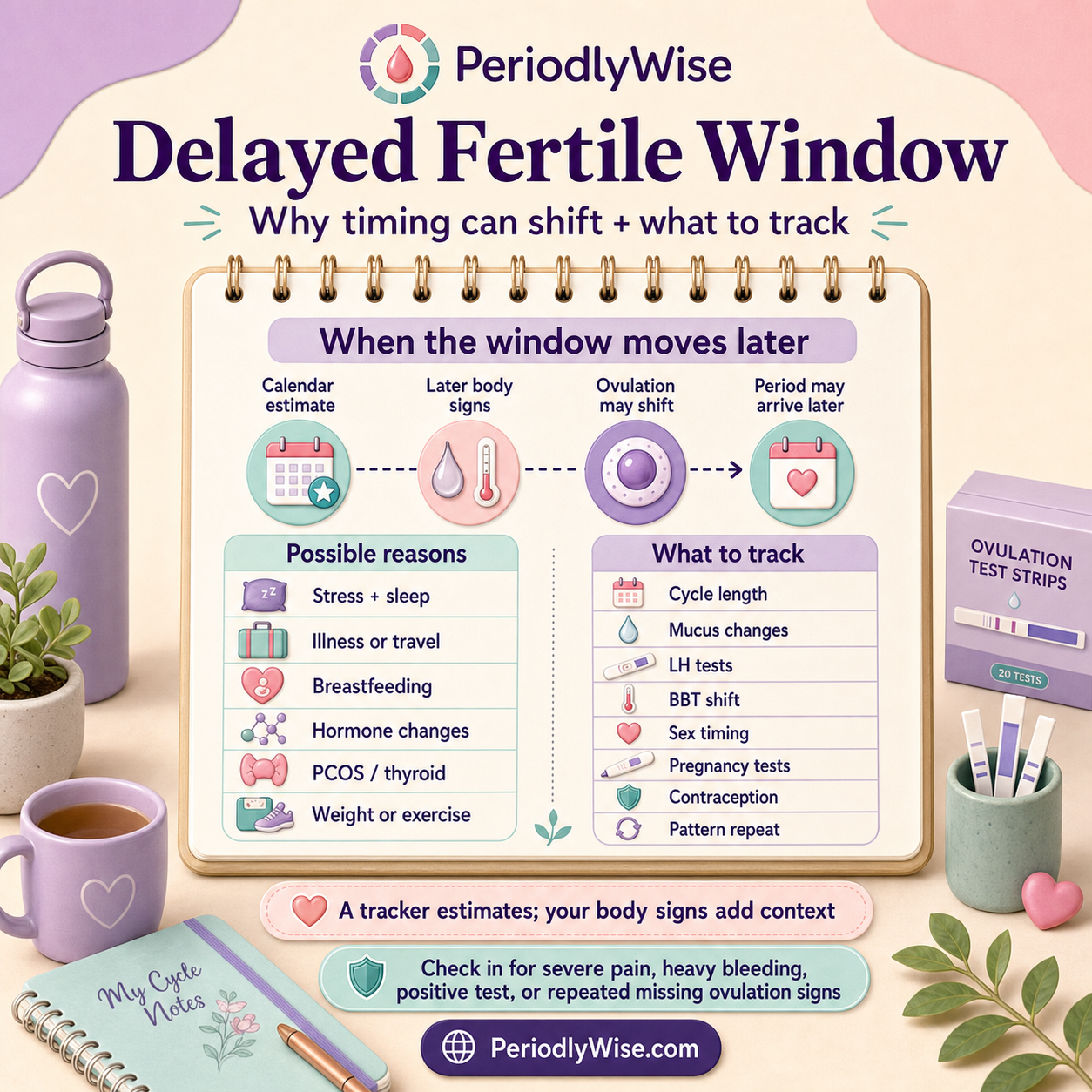
Short-term changes can delay ovulation for a single cycle. Stress, acute illness, travel, poor sleep, intense training, major weight change, under-eating, and emotional strain can all affect the hormone signals that lead to ovulation. The NHS lists stress, weight changes, too much exercise, pregnancy, hormonal contraception, PCOS, and thyroid problems among common causes of irregular periods, and irregular periods often mean ovulation timing is less predictable.
Breastfeeding and postpartum changes can also delay the fertile window. Higher prolactin levels are part of milk production, and Mayo Clinic notes that prolactin can affect ovulation. If feeds become less frequent or a baby starts sleeping longer, ovulation may restart unevenly, so fertile signs may appear later or unpredictably.
Longer-term or repeating delays can point to medical patterns. PCOS can make ovulation irregular or absent. Thyroid conditions can affect cycle timing. High prolactin, some medicines, perimenopause, eating disorders, and very intense exercise can also change ovulation. One late fertile window is often just a cycle shift; a repeated pattern deserves more attention.
What signs can help?
Cervical mucus can be useful. Mayo Clinic describes the fertile-type mucus before ovulation as thin, clear, and slippery, with thicker or less fluid after ovulation. If that slippery mucus appears later than usual, the fertile window may also be later than usual. Ovulation predictor kits can add another clue by detecting the LH surge before ovulation, although they can be confusing in PCOS or irregular cycles.
Basal body temperature is different. It usually rises after ovulation, so it can help confirm that ovulation likely happened, but it does not warn you days ahead on its own. Ovulation pain, libido changes, breast tenderness, spotting, and mood or energy shifts can be notes, but they are less precise. The more irregular the cycle, the more important it is to use more than one signal.
If you are trying to conceive, a delayed fertile window can make timing harder. Sex every 2 to 3 days across a changing cycle can reduce the pressure of finding one perfect day. If you are trying to avoid pregnancy, a delayed fertile window can make calendar-only estimates riskier, because the fertile days may not match the predicted safe days. PeriodlyWise is an educational tracker, not contraception.
What to track when the window is late
Track period start dates, cycle length, predicted fertile window, actual mucus changes, ovulation test dates and results, basal temperature shift, sex timing, contraception, pregnancy-test dates, stress, illness, travel, sleep loss, weight change, exercise intensity, breastfeeding pattern, medication changes, and recent hormonal contraception changes. The context is often what explains the shift.
Also track whether the next period is late by the same amount. If ovulation was delayed and your period comes later, that pattern can make sense. If you have no period, a positive pregnancy test, severe pelvic pain, heavy bleeding, or repeated cycles without clear ovulation, seek medical advice. If you are under 35 and have been trying to conceive for 12 months, or 35 or older and trying for 6 months, fertility guidance is usually appropriate sooner.
Use the Fertility Window Tracker to compare estimated fertile days with your own signs, and read the ovulation window versus fertile window guide if the terms are blurring together. A delayed fertile window is not always a problem. It is a signal to widen the record and avoid treating one predicted date as a promise.