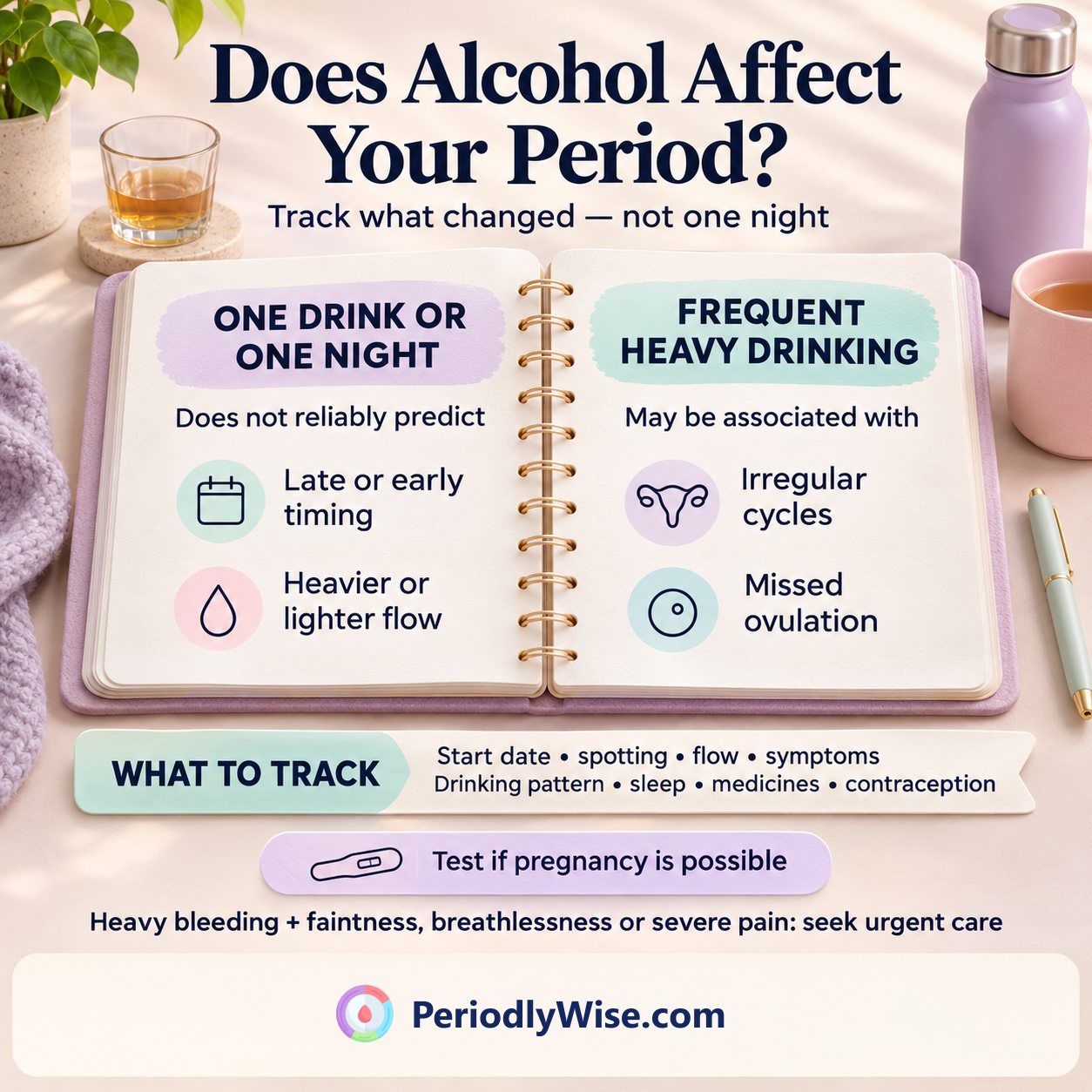
Alcohol may affect how you feel around your period, and frequent heavy drinking can disrupt menstrual cycles. But one drink or one evening out does not explain a late period, a heavier bleed or new cramps on its own. The timing of both events can be a coincidence.
If your period has changed, start with the change itself. Was the date different, did you bleed between periods, or did your usual flow come with a worse headache? Those are different observations. How much and how often you drink, whether pregnancy is possible, and any changes in sleep, medication or health matter more than the fact that you drank at all.
What does the research show?
The BioCycle study followed 259 regularly menstruating adults for up to two cycles. Recent alcohol intake was associated with changes in several reproductive hormone measurements, but the researchers found little evidence of a link with the cycle problems they measured overall. Few participants drank heavily, so this study cannot tell us much about repeated heavy drinking or predict what will happen after a particular night out.
A review from the US National Institute on Alcohol Abuse and Alcoholism describes irregular cycles and absent ovulation in the context of heavy alcohol use. This is a different exposure from occasional drinking. A hormone difference in a blood sample is also different from evidence that a particular drink changed your period date.
Can alcohol make your period late or early?
There's no reliable way to predict a shift in either direction after drinking. A later period may follow later ovulation, and an early-looking bleed may be spotting rather than the start of another period. A tracker estimates dates from past cycles. It cannot tell you which event occurred or establish alcohol as the cause.
Imagine your period was expected on Saturday and you drank on Friday. A delayed bleed does not establish that Friday's drinks postponed it. Ovulation timing earlier in that cycle, contraception changes, illness, stress or pregnancy could all change the interpretation. If pregnancy is possible, use a test on the appropriate timeline.
Flow, cramps and other symptoms
| Change you notice | What to check | Useful next step |
|---|---|---|
| Change you noticeHeavier or longer bleeding | What to checkCompare flooding, leaks, clots and days with your usual pattern. | Useful next stepArrange care for recurring heavy bleeding or flow that disrupts daily life. |
| Change you noticeLighter bleeding or spotting | What to checkNote whether it happened at your usual time or between periods. | Useful next stepTest if pregnancy is possible and get unexplained recurring spotting assessed. |
| Change you noticeWorse cramps, headache or nausea | What to checkSeparate pelvic pain from symptoms after drinking, poor sleep or missed meals. | Useful next stepRecord which symptoms improve and which persist. Severe pain needs assessment. |
| Change you noticeMissed or unpredictable periods | What to checkCheck the actual interval between period starts, medication changes and pregnancy possibility. | Useful next stepSpeak with a clinician if the pattern persists or you miss three periods in a row. |
Alcohol can affect sleep and contribute to next-day headache or nausea. Those symptoms can overlap with what you usually feel around menstruation. Feeling worse does not tell you that your uterus is bleeding more. Likewise, a familiar hangover does not explain new severe pelvic pain or unusual bleeding.
Medicines, contraception and pregnancy
- If you use ibuprofen for cramps, check the label and ask a pharmacist if you drink heavily or have a history of stomach ulcers. The NHS advises avoiding a lot of alcohol with ibuprofen because it can increase the risk of side effects.
- If you vomited after taking an oral contraceptive or missed a pill, follow the instructions for your exact product promptly. A pharmacist or sexual health service can advise about backup or emergency contraception.
- If pregnancy is possible, a home test is generally most reliable from the first missed day, or at least 21 days after the last unprotected sex if you do not know when your period was due.
- If you are pregnant or trying to become pregnant, the CDC says there is no known safe amount of alcohol. If you drank before finding out, discuss the timing and amount with your prenatal clinician. If you may be physically dependent on alcohol, get prompt medical help to stop safely.
What to track over the next few cycles
- Record the first day of actual flow and mark spotting separately. Count from one period start to the next.
- Note days of bleeding, products used, leaks, clots, and any pain that changed your plans or woke you up.
- Record drinking dates and approximate amounts alongside sleep, illness, medication, contraception and pregnancy tests. Leave unknown details blank instead of guessing.
- Compare cycles with and without the symptom. A repeated pattern is worth discussing, but even repeated timing does not establish a cause. There is no need to drink again to test a theory.
If alcohol is hard to cut down or you have shaking, sweating or other withdrawal symptoms when you stop, get medical advice about reducing safely. Bring the cycle notes as well. Both issues can be addressed without assuming one explains the other.
When to get help
Contact a clinician if periods become repeatedly irregular, bleeding occurs between periods or after sex, or pain or flow disrupts your usual activities. Heavy periods may contribute to iron deficiency, especially when accompanied by persistent tiredness or breathlessness. Mention your medicines and whether pregnancy is possible.
Seek urgent care if very heavy bleeding comes with faintness, breathlessness or severe pain. If pregnancy is possible and you have severe one-sided pain, shoulder-tip pain or feel faint, get emergency help for a possible ectopic pregnancy, even without a positive test.
Frequently asked questions
Can one drink delay my period?
There is no good evidence that a single drink reliably delays it. Check pregnancy possibility and recent cycle history before assigning a cause.
Does drinking on my period make me bleed more?
It is not possible to predict this from alcohol alone. Track what actually changed, including soaking through products, leaks and bleeding days.
Can alcohol stop my period?
It is not a way to stop an ongoing period. Repeated heavy use can be associated with missed or irregular periods, which deserve assessment.
Should I wait for another cycle before seeking care?
If the change is mild and isolated, tracking may be reasonable. Test promptly when pregnancy is possible and seek care for severe pain, heavy bleeding, faintness or a recurring change.
Can a period tracker tell if alcohol affected my cycle?
It can help you compare dates and symptoms. It cannot measure hormone levels, confirm ovulation or attribute the change to alcohol.
Organize your cycle dates and observations. Predictions are estimates.
Use the Period Tracker