Exercise during your period is often talked about in extremes. One message says to push through because movement is good. Another says to rest completely because the body is bleeding. Real life is more nuanced. Some people feel better after a walk or gentle stretching. Some can train normally. Some need heat, fluids, and rest. All of those can be reasonable depending on the day.
The best period exercise plan is not based on pressure. It is based on your flow, cramps, energy, dizziness, sleep, mood, schedule, and personal health. PeriodlyWise helps estimate your period window so you can plan movement before symptoms surprise you, but it cannot tell you what your body should tolerate on a given day.
Can you exercise during your period?
For many people, yes. A period by itself does not automatically make exercise unsafe. The question is what kind of movement fits your current symptoms. If your flow is light and you feel well, your usual workout may be fine. If cramps are strong, a five-minute walk or gentle stretch may be enough. If you feel weak, nauseated, dizzy, or overwhelmed, rest may be the healthiest option.
The NHS explains that period pain is common and can feel like painful cramps in the lower abdomen, sometimes spreading to the back and thighs. Movement may help some people, but pain that is severe, unusual, or disruptive deserves medical attention rather than a harder workout.
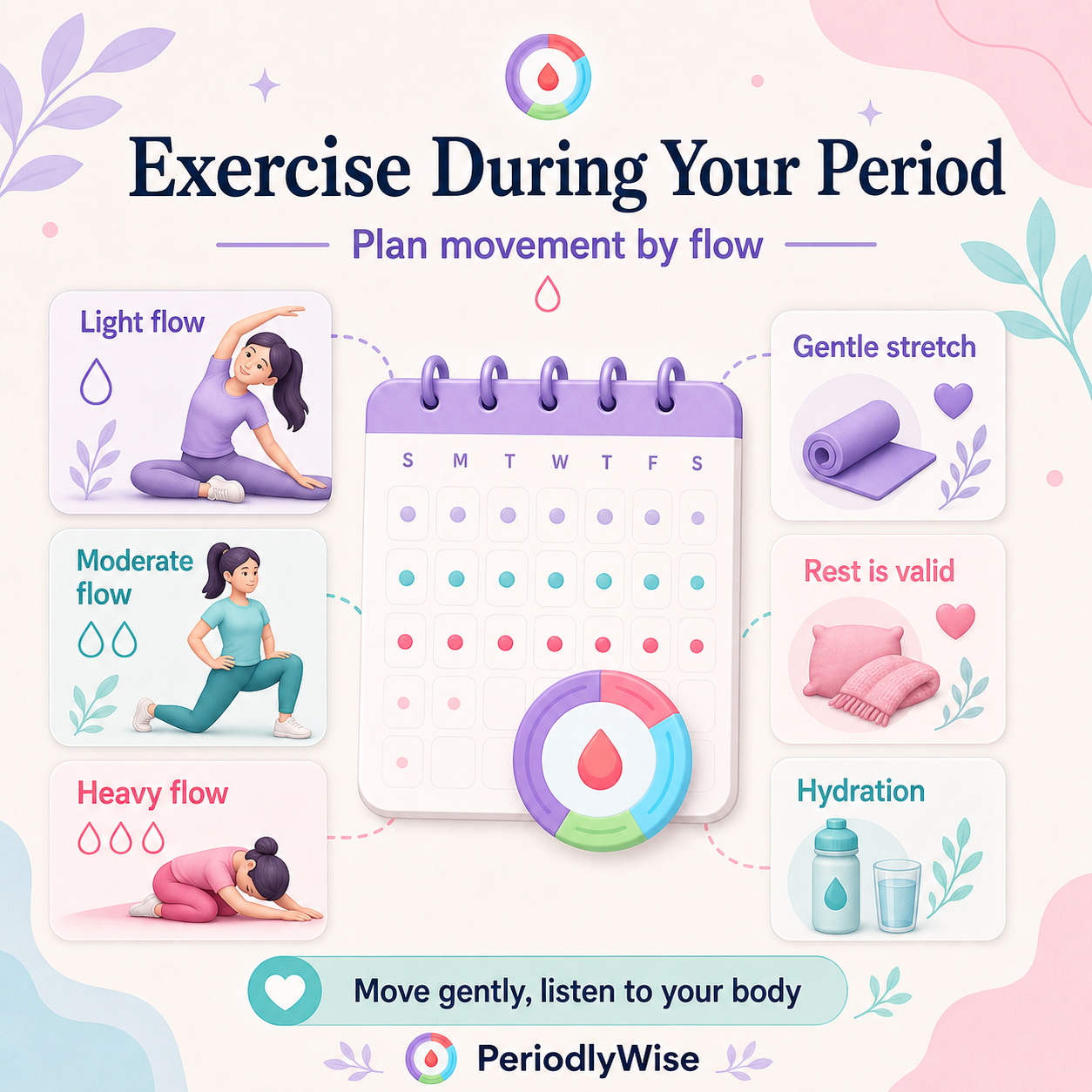
How to plan movement by flow
Flow is not the only factor, but it is a practical starting point. Your heaviest day may need different clothing, bathroom access, hydration, and energy expectations than your lightest day. If you track your period for several cycles, you may notice that day 1 is painful, day 2 is heavy, or day 4 is when energy returns.
| Period day or flow | Movement ideas | Planning notes |
|---|---|---|
| Spotting or light flow | Usual movement, walking, light strength, stretching, or mobility. | Use protection that feels secure and notice whether energy is normal. |
| Moderate flow | Walking, easy cycling, gentle strength, yoga-style stretches, or shorter workouts. | Keep water nearby and choose clothing that does not press on bloating. |
| Heavy flow | Gentle walking, breathing, supported stretching, or rest. | Prioritize bathroom access, leak confidence, hydration, and lower intensity. |
| Strong cramps | Heat, belly breathing, child's pose, pelvic tilts, slow walk, or rest. | Stop if pain increases, dizziness appears, or symptoms feel unusual. |
| Low energy or poor sleep | Short movement snack, stretching, or recovery day. | A lighter day can support consistency without draining you. |
For more detailed day-by-day planning, read Light vs Heavy Period Days: How to Plan Food, Rest, and Movement.
What types of movement may help?
Gentle movement is often the safest place to begin. Try a slow walk, relaxed stretching, belly breathing, pelvic tilts, cat-cow, a supported child's pose, or a short mobility routine. These options are not meant to force flexibility or burn calories. They are comfort tools.
If you already exercise regularly and symptoms are mild, you may choose a normal workout with small changes: shorter duration, lighter weights, lower speed, more rest, or skipping movements that increase pressure in your abdomen. If you are new to exercise, your period is not the best time to suddenly start intense training because you read that exercise helps cramps.
The existing gentle exercises for period cramps guide gives specific movements for crampy days. Use it as a menu, not a command.
What should you avoid during your period?
Avoid any movement that makes pain sharper, bleeding feel unmanageable, dizziness worse, nausea worse, or your body feel unsafe. This may include high-intensity intervals, heavy lifting, deep twisting, long endurance sessions, hot environments, or inverted positions if they do not feel good for you. These are not universally forbidden. They are simply not worth forcing when your symptoms are asking for care.
Also avoid using exercise as a way to dismiss severe symptoms. If you regularly need to cancel school, work, sleep, exercise, or daily activities because of period pain, that is information. ACOG describes dysmenorrhea as painful periods, and persistent or severe pain may need evaluation and treatment based on the cause.
How to adjust a workout without quitting completely
If you want to stay active but your period is making the day harder, reduce one variable at a time. Shorten the session from 45 minutes to 20. Lower the weight. Walk instead of run. Stretch instead of strength train. Move at home instead of going to a crowded gym. Choose exercises with easy bathroom access. Wear dark, comfortable clothing if it helps you feel less distracted.
Another option is a movement snack: five to ten minutes of gentle activity instead of a full workout. This can be enough to reduce stiffness, support mood, and preserve routine without draining your energy.
Food, water, and recovery matter too
Movement feels different when you are underfed, dehydrated, sleep deprived, or already in pain. Before exercising during your period, ask a few basic questions: Have I eaten enough? Have I had water? Do I feel dizzy? Is my pain ordinary for me or different? Do I have supplies and bathroom access?
Simple food and hydration can make movement safer and more comfortable. If heavy meals worsen bloating, choose something lighter. If caffeine worsens anxiety, cramps, sleep, or digestive symptoms for you, avoid using it as your only energy source. For related ideas, see What to Eat During Your Period.
How to track your personal exercise pattern
The most useful exercise advice is personal. Track what you actually did and how you felt afterward. You might learn that walking helps cramps on day 1, strength training feels best after day 3, or intense workouts feel harder when sleep was poor before your period.
- Cycle timing: period day, expected period window, and whether your period arrived early or late.
- Flow: spotting, light, moderate, heavy, or unusually heavy.
- Symptoms: cramps, headache, bloating, nausea, fatigue, dizziness, mood, or bowel changes.
- Movement: what you did, how long, how intense, and whether it helped or worsened symptoms.
- Recovery: sleep, appetite, soreness, energy, and whether symptoms improved later.
Use the Period Tracker to estimate upcoming period dates and cycle history to compare patterns. If your cycle varies widely, the Irregular Period Tracker can help you plan with more realistic windows.
When is rest the better choice?
Rest is the better choice if you have severe pain, very heavy bleeding, dizziness, faintness, chest pain, shortness of breath, fever, vomiting, new pelvic pain, possible pregnancy, or symptoms that feel different from your usual period. Rest is also reasonable when you are exhausted, sleep deprived, emotionally drained, or simply do not want to exercise that day.
Mayo Clinic notes that menstrual cramps may need evaluation when symptoms are severe or concerning. Movement can be helpful for some people, but it should never become a reason to ignore medical warning signs.
FAQ
Is it bad to exercise on the first day of your period?
Not automatically. Some people can exercise on day 1, while others need rest because cramps, heavy flow, nausea, or fatigue are strongest then. Let symptoms guide the intensity.
Can exercise make period cramps better?
Gentle movement may help some people feel less tense or uncomfortable, but it does not work for everyone. Severe or worsening cramps should be discussed with a healthcare professional.
Should I avoid heavy workouts during my period?
You do not need a universal ban, but avoid heavy workouts if they worsen pain, dizziness, nausea, bleeding concerns, or fatigue. Reduce intensity when your body needs more recovery.
Final thoughts
Exercise during your period should feel like support, not punishment. Some days that support is a normal workout. Some days it is a walk. Some days it is stretching, heat, water, and bed. Tracking helps you learn the difference.
Use PeriodlyWise to estimate your next period window and compare flow, cramps, energy, and movement patterns over time.
Open the Period Tracker