Period cramps can be hard enough at home. At work, school, college, or during a commute, they can feel even more frustrating because you may not have full privacy, rest, heat, or flexibility. You might need to sit through classes, meetings, exams, shifts, travel, or social situations while your body is asking for comfort.
You cannot always make cramps disappear immediately, but you can make the day easier with a practical plan. The goal is not to push through at any cost. The goal is to support your body while still handling the day as gently as possible.
Why cramps can feel harder in public
Cramps often happen when the uterus contracts during menstruation. The NHS explains that period pain is common and may feel like cramps in the lower abdomen that can spread to the back or thighs. Even when cramps are common, they can feel harder in public because you may have fewer choices: no heating pad, limited bathroom access, fixed schedules, uniforms, long sitting, or pressure to act normal.
Public settings also add mental load. You may worry about leaks, carrying products discreetly, missing class, asking for a break, or explaining why you feel unwell. That stress can make the whole day feel heavier. Planning ahead reduces some of that pressure.
Prepare before the day starts
If your period is expected soon, check your estimated window using the Period Tracker. If your cycle varies a lot, use the Irregular Period Tracker so you are planning with a wider, more realistic window instead of one exact date.
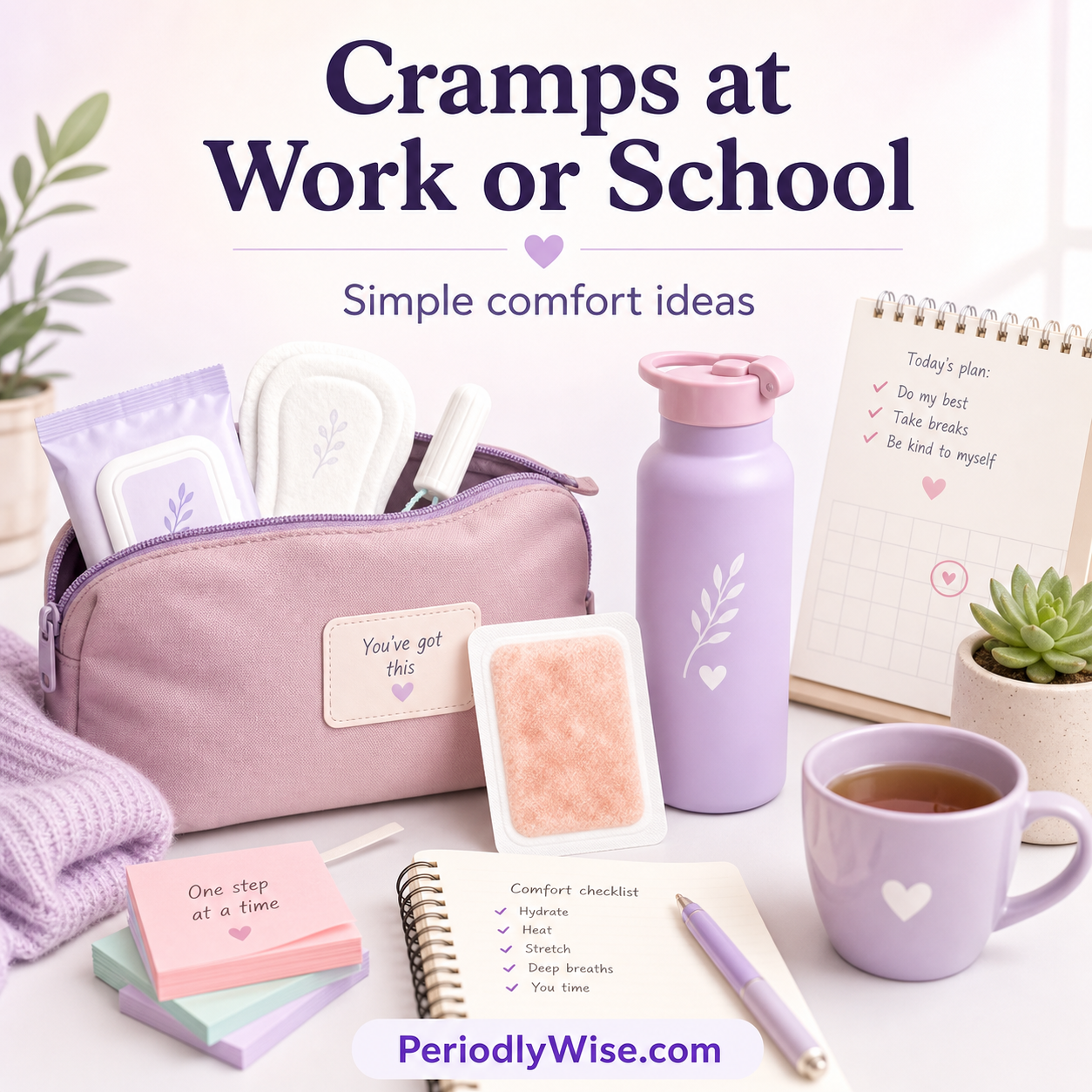
Pack what you may need before leaving home: your preferred period products, spare underwear, wipes or tissues, a small disposal bag, water, a snack, and any pain relief you already use safely. The period care kit checklist can help you build a simple version for school, work, travel, or long days.
If your cramps usually start before bleeding, prepare a little earlier than your predicted period day. Being ready one or two days ahead is often easier than trying to solve everything once pain has already started.
Use heat when possible
Heat is one of the most practical comfort tools for cramps. At home, that might be a heating pad, warm bath, or hot water bottle. At work or school, it may be a disposable heat patch, warm drink, heated hand warmer, or hot water bottle wrapped safely and used during a break.
If you use a heat patch, follow the product instructions and avoid placing it directly on skin if the label warns against it. Heat should feel soothing, not burning. If heat is not allowed at school or work, a warm drink and a short bathroom break can still give a small moment of comfort.
Choose clothing that does not fight your body
Tight waistbands, stiff jeans, or restrictive clothing can make bloating and cramps feel worse. If you can choose your outfit, consider softer clothing on expected period days: stretchy waistbands, looser trousers, longer tops, soft underwear, or layers that help you feel covered and comfortable.
For school uniforms or workplace dress codes, even small changes can help. Choose the least restrictive allowed option, wear a comfortable underlayer, carry a cardigan, or choose shoes that make walking easier if cramps affect your posture or energy.
Move gently, not aggressively
Some people feel better with gentle movement. A slow walk, light stretching, relaxed hip movement, or breathing exercises may reduce tension. But movement should support you, not punish you. If activity makes pain, dizziness, nausea, or bleeding feel worse, stop and rest.
If you are stuck at a desk, try small adjustments: uncross your legs, relax your shoulders, place both feet on the floor, breathe slowly, or take a short walk to the bathroom or water fountain. If you want more ideas, the guide to gentle exercises for period cramps gives simple movement options without pressure.
Eat and drink in a steady way
Cramps can feel worse when you are dehydrated, underfed, or running only on caffeine. Keep water nearby if possible. A simple snack can help if you feel weak, nauseous, distracted, or low on energy. Try crackers, banana, nuts, yogurt, toast, soup, fruit, or whatever your stomach tolerates.
You do not need a perfect period diet during a busy day. The best choice is usually the realistic one: something gentle, available, and steady enough to help you keep going. If caffeine makes your cramps, anxiety, sleep, or stomach feel worse, consider reducing it during your heaviest or most painful days.
Make privacy easier
One difficult part of managing cramps in public is not wanting everyone to know. Keep supplies in a small pouch so you can take it to the restroom discreetly. If cramps are common for you, keep a backup pouch in your bag, locker, desk, car, or with someone you trust.
If you are comfortable, telling one trusted person can also help: a friend, teacher, manager, school nurse, or coworker. You do not need to share every detail. A simple sentence can be enough: "I am having period pain and may need a short break."
What if you cannot rest?
Some days do not allow proper rest. Exams, shifts, presentations, deadlines, travel, or caregiving may continue even when cramps are present. In those cases, make the day smaller where you can. Break tasks into shorter blocks, use heat during breaks, keep water nearby, eat something simple, and avoid extra commitments after the main responsibility is done.
After the day, give your body recovery time if possible. That might mean an easier evening, warm shower, simple dinner, early bedtime, or preparing tomorrow's kit before you sleep. Recovery is part of period care too.
When period pain needs help
Period pain is common, but severe pain should not be ignored. The NHS advises seeking medical help if period pain is severe, worse than usual, stops you doing normal activities, or comes with other concerning symptoms. Office on Women's Health also lists period pain and heavy bleeding among period problems worth discussing with a healthcare professional.
Ask for guidance if cramps regularly disrupt school, work, sleep, or daily life; pain suddenly becomes worse; bleeding is very heavy; you feel faint; pain happens outside your period; there is bleeding between periods; pregnancy is possible; or something simply feels wrong for your body. A tracker can help you explain when pain happens and how often it repeats.
Simple comfort checklist for work or school
- Before leaving: check your period window, pack supplies, water, snack, and safe pain relief if you use it.
- During the day: use heat when possible, take short breaks, drink water, and choose gentle movement only if it helps.
- For privacy: keep products in a small pouch and identify one trusted person or private place if needed.
- Afterward: refill your kit, record symptoms, and plan lighter recovery time if cramps were strong.
Key takeaway
Period cramps at work or school are easier to manage when you prepare before the day starts. Heat, comfortable clothing, water, snacks, gentle movement, privacy planning, and a small period care kit can make the day more manageable. Track your cycle, plan around your likely period window, and ask for help when pain is more than normal discomfort.
Use PeriodlyWise to estimate your next period window and prepare a small care kit before cramps or bleeding catch you off guard.
Estimate Your Next Period