Periods are often explained as bleeding and cramps, but many people also notice digestive changes around the same time. You may feel bloated before your period, constipated in the days leading up to it, or suddenly need the bathroom more often once bleeding starts.
These changes can feel confusing, especially if nobody talks about them openly. But digestive symptoms around a period are common, and they can be connected to the same cycle-related changes that affect cramps, mood, appetite, and energy.
PeriodlyWise cannot diagnose digestive conditions, menstrual disorders, IBS, endometriosis, infection, pregnancy-related concerns, or any medical problem. But tracking period dates and digestive symptoms together can help you understand whether there is a repeatable pattern.
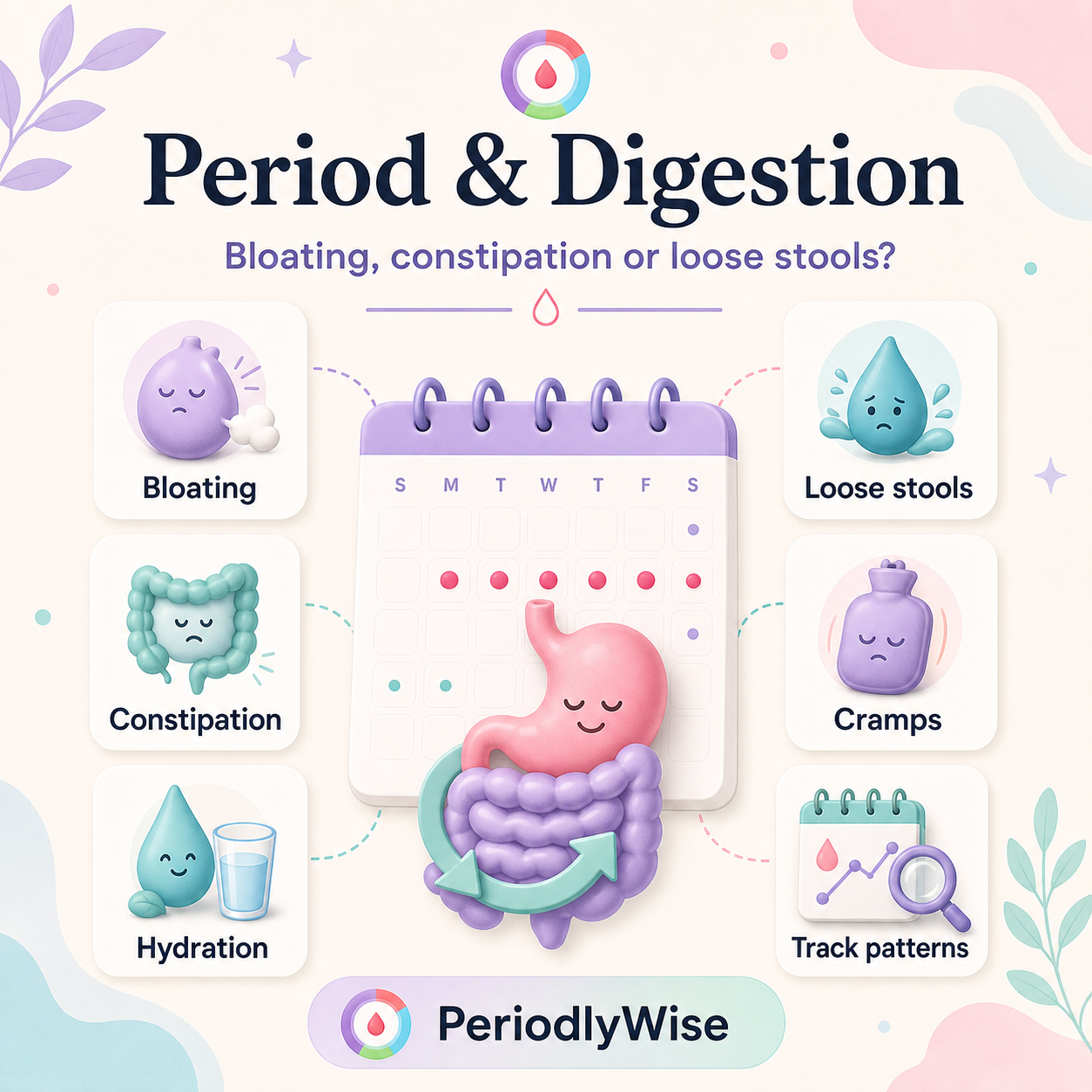
Common digestive symptoms around a period
| Symptom | When it may happen | What it may feel like |
|---|---|---|
| Bloating | Often before the period | Fullness, tight clothes, gassy feeling, or water retention. |
| Constipation | Often before bleeding starts | Hard stools, fewer bowel movements, pressure, or discomfort. |
| Diarrhea or loose stools | Often around the start of bleeding | Urgency, softer stools, more frequent bathroom trips. |
| Nausea | Before or during the period | Queasy stomach, reduced appetite, or sensitivity to smells and food. |
| Cramps with bowel changes | During early period days | Lower belly cramps with digestive discomfort or urgency. |
Why diarrhea can happen during a period
During menstruation, the uterus contracts to help shed its lining. Hormone-like substances called prostaglandins are involved in these contractions and in period pain. Mayo Clinic explains that menstrual cramps are caused by uterine contractions triggered by prostaglandins, and that higher levels are associated with more severe cramps.
For some people, the same period days that bring stronger cramps can also bring loose stools, nausea, or bathroom urgency. This does not mean every episode of diarrhea is "just your period." But if loose stools happen predictably on day 1 or day 2 of bleeding and then settle, tracking may show a menstrual pattern.
Pay attention to severity. Mild temporary loose stools around your period are different from severe diarrhea, dehydration, fever, blood in stool, or symptoms that continue outside your usual period window.
Why constipation can happen before a period
Some people feel more constipated in the days before their period. This may be influenced by hormone shifts, lower movement, changes in appetite, dehydration, stress, or changes in routine. If you eat differently before your period, sleep poorly, drink less water, or move less because of fatigue or cramps, constipation can become more noticeable.
Constipation can also make cramps and bloating feel worse because pressure builds in the abdomen. If this happens often, track stool changes along with period timing, food, water intake, stress, and movement. A pattern can help you plan earlier instead of waiting until discomfort peaks.
Why bloating feels worse before bleeding
Bloating can happen with PMS and may show up with a gassy feeling, abdominal fullness, water retention, or digestive slowdown. The Office on Women's Health lists bloating among common PMS symptoms. It can feel uncomfortable even when nothing serious is happening.
Tracking helps because bloating can have many causes: cycle timing, food, constipation, stress, sleep, travel, digestive conditions, or medication changes. If you track the symptom with your period dates, you may see whether it repeats at the same point in each cycle.
For more on this, see Period Bloating: Why It Happens and What You Can Track.
What should you track?
If digestive symptoms happen around your period, track them alongside your cycle for at least two or three months. The goal is not to turn your life into a spreadsheet. The goal is to know whether symptoms are occasional, predictable, worsening, or happening outside the period window.
- Period timing: period start date, end date, cycle length, and whether bleeding was expected or delayed.
- Bowel changes: constipation, diarrhea, urgency, frequency, hard stools, loose stools, or painful bowel movements.
- Other symptoms: bloating, gas, nausea, cramps, pelvic pain, fatigue, headaches, or mood changes.
- Flow: spotting, light, moderate, heavy, or unusually heavy.
- Food and routine: caffeine, alcohol, spicy foods, greasy foods, fiber changes, travel, exams, shift work, or poor sleep.
- Relief: what helped, what made it worse, and when symptoms settled.
Use the PeriodlyWise Period Tracker to estimate upcoming period dates, and saved records to keep cycle entries organized. If your timing changes often, cycle history can help show whether digestive symptoms line up with repeated cycle phases.
Gentle comfort steps that may help
Small, practical steps can make digestive symptoms easier to manage. Drink enough fluids, especially if stools are loose or you feel bloated. Choose simple, familiar meals on sensitive days. Avoid making extreme diet changes during your period. Try gentle walking or stretching if movement feels comfortable. Use warmth for cramps if it helps you relax.
Food does not need to be perfect. Some people prefer soup, toast, rice, bananas, yogurt, fruit, eggs, crackers, or warm drinks. Others need more fiber before the period to reduce constipation. Your pattern matters more than generic rules. Track what helps your body without turning food into another source of pressure.
If you want more practical planning, read What to Eat During Your Period and Light vs Heavy Period Days.
When should you speak with a doctor?
Digestive changes can be common around periods, but some symptoms need medical attention. Consider speaking with a healthcare professional if you notice severe or worsening abdominal or pelvic pain, diarrhea that does not settle, constipation that is persistent or painful, blood in stool, fever, vomiting, fainting, dehydration, sudden major changes in bowel habits, or symptoms that happen outside your period too.
Also seek advice if bowel symptoms happen with very painful periods, painful bowel movements during periods, heavy bleeding, bleeding between periods, possible pregnancy, or symptoms that stop you from work, school, sleep, or normal activity. Conditions such as IBS, endometriosis, infection, inflammatory bowel disease, medication effects, and other health issues can overlap with cycle symptoms, so recurring or severe symptoms deserve proper care.
How PeriodlyWise helps organize timing
PeriodlyWise helps estimate your next period, cycle length, ovulation window, and fertile days. For irregular cycles, it can also help show wider, more realistic windows instead of forcing one exact date.
For digestive symptoms, the value is pattern clarity. If you know that constipation happens three days before your period, or loose stools happen on the first day of bleeding, you can plan food, water, rest, movement, bathroom access, and supplies more calmly.
FAQ
Is period diarrhea normal?
Some people notice loose stools or diarrhea around the start of their period, especially when cramps are stronger. If symptoms are severe, persistent, bloody, dehydrating, or unusual for you, seek medical advice.
Can constipation happen before a period?
Yes. Some people notice constipation before bleeding starts. Hormone shifts, food changes, reduced movement, stress, poor sleep, and dehydration can all contribute.
Should I track bowel symptoms with period symptoms?
Yes, if they repeat or bother you. Tracking bowel changes with period dates, flow, cramps, food, sleep, and stress can help you see whether there is a cycle-linked pattern.
Can PeriodlyWise diagnose digestive problems?
No. PeriodlyWise can help organize timing and cycle patterns, but it cannot diagnose IBS, endometriosis, infection, inflammatory bowel disease, pregnancy-related issues, or any digestive condition.
Final thoughts
Digestive changes around your period can be frustrating, but they are not unusual. Bloating, constipation, nausea, loose stools, and diarrhea can all appear around the menstrual cycle. The most useful step is to track timing, severity, and whether symptoms repeat.
If symptoms are mild and predictable, planning can make the days easier. If symptoms are severe, new, persistent, or worrying, medical guidance matters more than guessing.
Use PeriodlyWise to estimate your next period and compare digestive symptoms with your real cycle pattern over time.
Open the Period Tracker