Period bloating can make your body feel tight, heavy, swollen, or uncomfortable before your period starts. Your waistband may feel tighter, your belly may feel fuller, and your weight may shift slightly even when your routine has not changed much. For many people, bloating is one of the most noticeable premenstrual symptoms.
Bloating around your period is common, but that does not make it pleasant. It can affect how clothing feels, how confident you feel, how much you want to move, and how easy it is to focus at school, work, or during daily plans. The good news is that small, practical changes can often make bloating easier to manage.
Why does bloating happen before a period?
Premenstrual symptoms are connected to hormone changes across the menstrual cycle. The NHS lists bloating or cramping among common PMS symptoms and notes that PMS symptoms often happen in the weeks before a period. Office on Women's Health also describes PMS as symptoms that happen before the period and improve after bleeding begins.
Hormone shifts can affect fluid balance, digestion, appetite, mood, sleep, and bowel habits. Some people retain more water before their period. Others feel more constipated, gassy, or sensitive to certain foods. Some notice that cravings, stress, or tiredness lead to more salty snacks, less movement, or irregular meals, which can make bloating feel worse.
This does not mean bloating is imaginary or caused by doing something wrong. It is a real body experience that can be influenced by several small factors at once.
What can period bloating feel like?
Period bloating may feel like belly fullness, pressure, swelling, tight clothing, gas, constipation, or a sense that your body feels heavier. It can come with breast tenderness, cramps, headaches, cravings, tiredness, mood changes, or sleep changes.
Some people notice bloating before bleeding starts. Others feel it during the first few days of the period. It may improve once the period begins, but the exact timing varies.
A tracker can help you see whether bloating happens at the same point each cycle. If it appears predictably before your period, it may be part of your PMS pattern. If it is new, severe, or does not follow your cycle, it deserves closer attention.
Simple ways to feel more comfortable
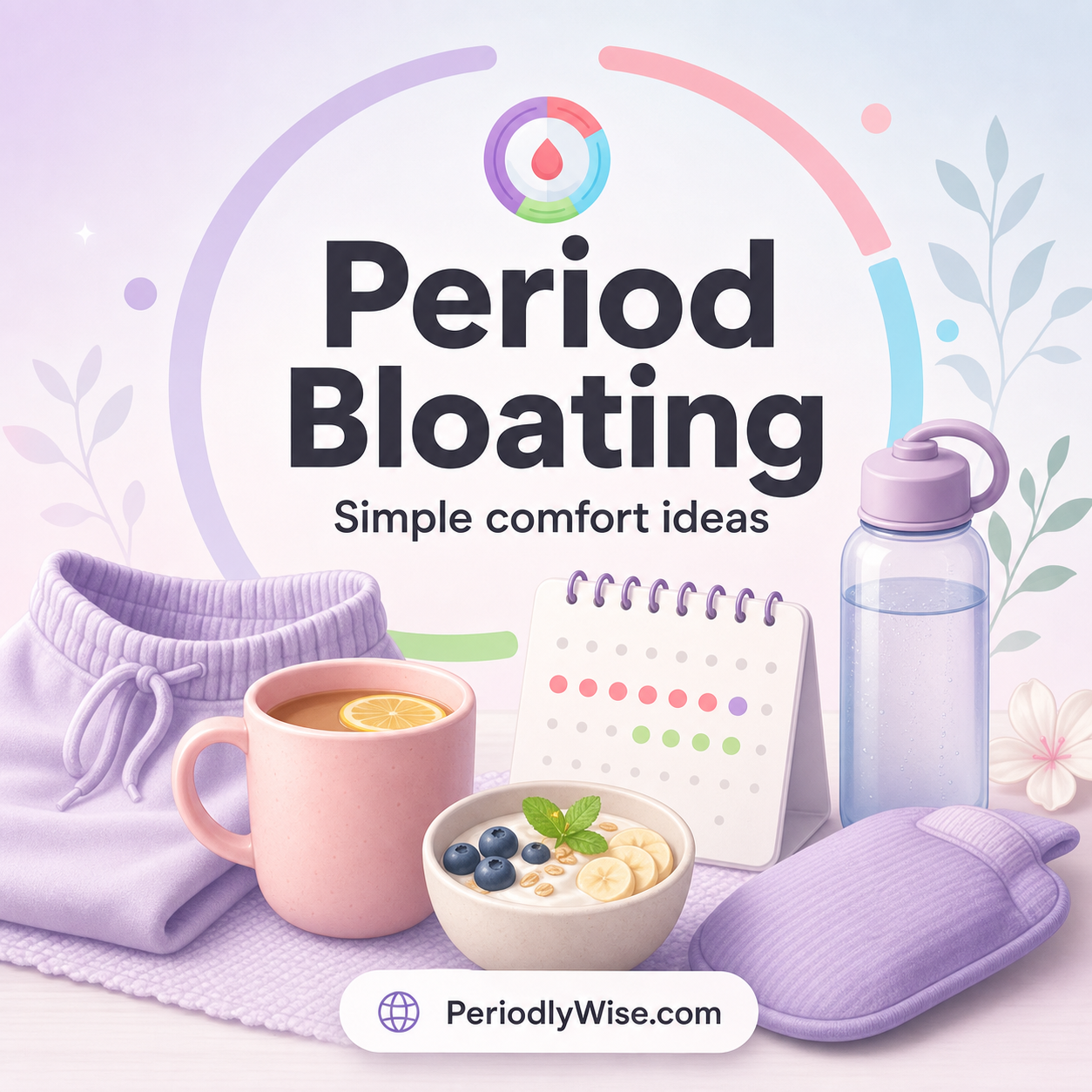
Start with hydration. Drinking water regularly may sound too simple, but dehydration can make constipation, headaches, and sluggish digestion feel worse. You do not need to force large amounts of water. Aim for steady hydration across the day.
Eat in a steady way. Long gaps without food can make cravings stronger and energy lower. Smaller, balanced meals may feel easier if your stomach is sensitive. Try combining carbohydrates, protein, fat, and fiber in a way your body tolerates: rice and eggs, yogurt and fruit, soup, lentils, toast with nut butter, oats, or vegetables with a familiar meal.
Reduce very salty processed foods if they seem to worsen bloating for you. Salt is not bad, and you do not need a perfect diet, but high-salt packaged foods may make some people feel more fluid retention. The useful approach is not restriction; it is noticing your pattern.
Move gently if it helps. A walk, stretching, light yoga-style movement, or relaxed mobility can support digestion and reduce the stiff, heavy feeling. If you are cramping, exhausted, dizzy, or bleeding heavily, choose rest instead. Movement should feel supportive, not punishing.
Wear clothing that gives your body room. On bloated days, tight waistbands can make everything feel worse. Soft leggings, loose trousers, dresses, longer tops, or adjustable waistbands can make the day easier without changing anything medical.
Support sleep and stress where possible. PMS symptoms can feel harder when you are tired or under pressure. You may not be able to remove stress, but you can reduce extra friction: prepare your period care kit, plan easier meals, set a lighter evening routine, and avoid overbooking the days when bloating usually peaks.
What should you track?
Track bloating alongside your period dates, not separately from them. Useful notes include when bloating starts and ends, whether it appears before, during, or after the period, flow level, cramps, constipation, diarrhea, gas, nausea, appetite changes, salty meals, alcohol, caffeine, stress, poor sleep, travel, and routine changes.
Also note whether bloating affects clothing, movement, school, work, sleep, or daily plans. After two or three cycles, you may see a pattern. Maybe bloating starts five days before your period. Maybe it is worse with poor sleep. Maybe it happens during heavy flow days. This kind of information helps you plan more gently.
You can use the Period Tracker to estimate your upcoming period window and then compare that estimate with real symptoms. If your cycle timing changes a lot, the Irregular Period Tracker can help you look at wider patterns.
Comfort planning ideas
| What you notice | Simple support | What to track |
|---|---|---|
| Tight waistband before period | Roomier clothing, warm drink, steady meals. | Cycle day and whether period follows. |
| Gas or constipation | Hydration, gentle walking, familiar fiber foods. | Bowel changes, food, stress, sleep. |
| Bloating with cramps | Heat, rest, gentle movement only if helpful. | Flow level, pain level, heavy days. |
| Bloating outside your usual pattern | Track carefully and consider medical advice. | Duration, pain, bleeding, fever, pregnancy possibility. |
When does bloating need medical attention?
Period bloating is common, but not all bloating should be assumed to be PMS. Speak with a healthcare professional if bloating is severe, sudden, persistent, worsening, or not linked to your cycle. Get help if bloating comes with severe pelvic or abdominal pain, fever, vomiting, fainting, unexplained weight loss, blood in stool or urine, unusual vaginal bleeding, bleeding after sex, bleeding after menopause, or possible pregnancy.
Also seek help if PMS symptoms affect your daily life or lifestyle changes do not help. The NHS advises getting medical support when PMS symptoms affect daily life. A clinician can check whether symptoms are related to PMS, digestion, gynecologic conditions, medication, pregnancy, or another cause.
Key takeaway
Period bloating is common and often linked to premenstrual hormone changes, fluid retention, digestion, sleep, stress, and routine. You cannot always prevent it, but you can make it easier to manage with hydration, steady meals, comfortable clothing, gentle movement, rest, and tracking. If bloating is severe, persistent, unusual, or comes with concerning symptoms, ask for medical help.
Use PeriodlyWise to track period dates, bloating, cramps, flow, and cycle changes so your comfort plan is based on your real pattern.
Open the Period Tracker