Sleep and stress do not control your period by themselves, but they can influence the body systems that help regulate cycle timing, ovulation, energy, mood, cravings, cramps, and PMS symptoms. That is why a period may sometimes arrive earlier, later, heavier, lighter, or feel more intense during a stressful month, after poor sleep, while traveling, during exams, after night shifts, or during a major life change.
Your menstrual cycle is guided by hormone signals between the brain, ovaries, and uterus. The Office on Women's Health explains that a menstrual cycle begins on the first day of a period and that hormones change throughout the cycle. When your body is under pressure, those rhythms may feel less predictable. This does not mean every stressful week will delay your period. It means stress and sleep are useful context when you are trying to understand why your cycle pattern changed.
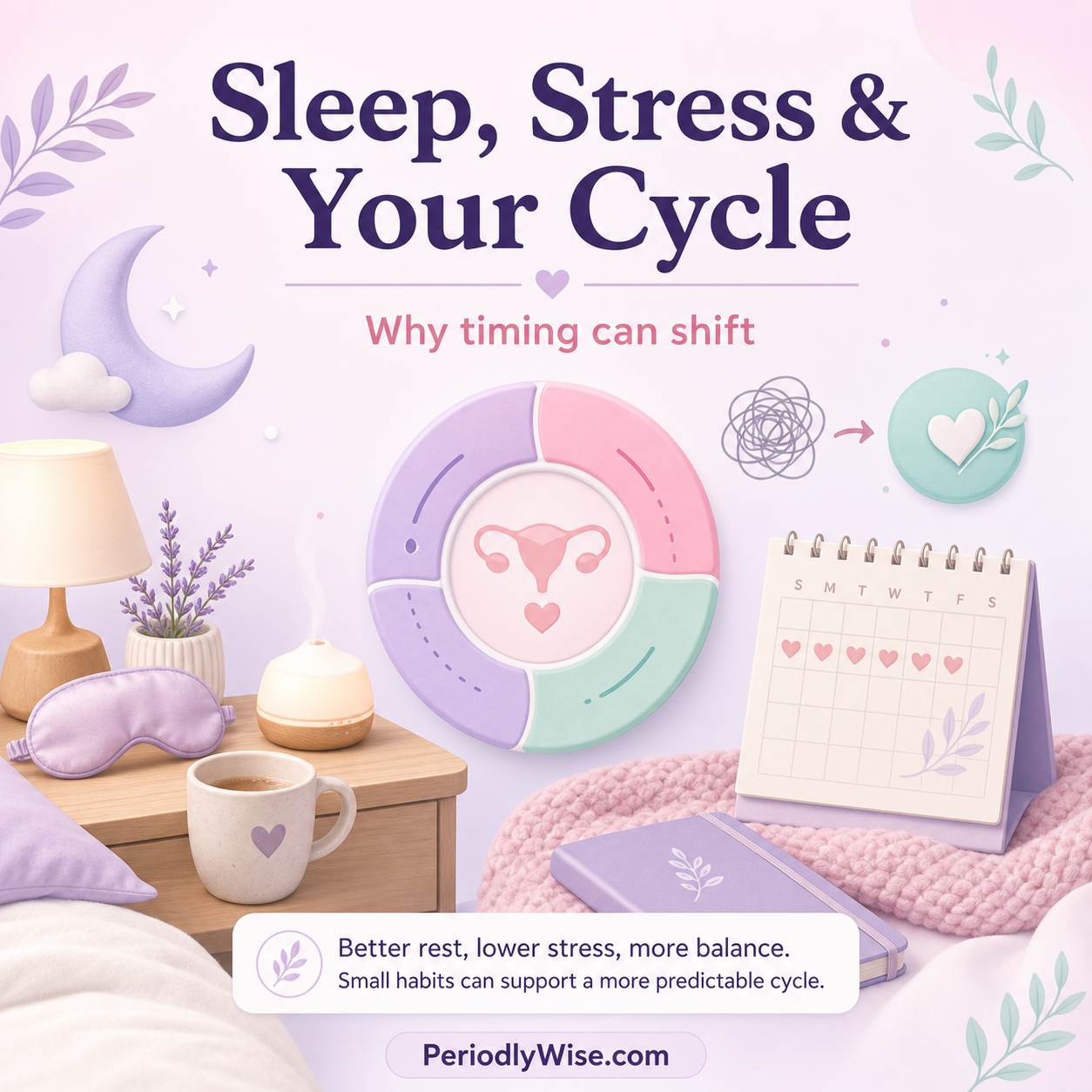
Why can stress affect period timing?
Stress activates hormones such as cortisol and adrenaline. In short bursts, stress can help you stay alert. But ongoing stress may affect sleep, appetite, digestion, mood, exercise habits, and hormone signaling. The Office on Women's Health notes that long-term stress can contribute to health issues and may affect the body in many ways. For menstrual tracking, the key point is practical: when your routine and nervous system are under strain, your cycle may not behave exactly like your usual average.
For some people, stressful months may be followed by a late period, a shorter or longer cycle, spotting, more noticeable PMS, stronger cramps, headaches, appetite changes, or a cycle that feels harder to predict. For others, stress may not visibly change timing but may make symptoms feel harder to manage. Both experiences are possible.
This is one reason tracking matters. A single late period may not tell you much. Several months of period dates, flow notes, sleep changes, stress levels, and symptoms can help you see whether your body is reacting to a temporary situation or whether a new pattern is forming.
How does poor sleep fit in?
Sleep supports many body functions, including hormone regulation, immune function, mood, blood sugar balance, and recovery. The National Heart, Lung, and Blood Institute explains that sleep deficiency can affect many parts of health. When sleep is short, broken, or irregular, the body may feel more stressed even if life looks normal from the outside.
Poor sleep may also make period symptoms feel louder. A person who is already tired may notice cramps more, feel more emotionally sensitive, crave quick-energy foods, or have less patience for discomfort. This does not mean the period is "all in your head." It means sleep can change how much capacity you have to handle normal cycle changes.
Sleep timing matters too. Shift work, very late nights, irregular wake times, jet lag, and long travel days can blur the body's routine. If your period arrives differently during those months, the timing change may not be random. It may be part of a broader body response to an unusual schedule.
Can stress or sleep affect ovulation?
Sometimes, yes. Ovulation depends on a coordinated hormone pattern. If stress, illness, intense exercise, sudden weight change, travel, or poor sleep disrupts that rhythm, ovulation may happen later than usual. When ovulation happens later, the next period often arrives later too.
This is why a period tracker should not pretend every cycle is identical. PeriodlyWise estimates your next period, fertile window, and ovulation window using your cycle details, but it also encourages you to treat estimates as helpful planning ranges, not guaranteed dates. If your cycles are irregular, the Irregular Period Tracker can help you look at wider patterns over time.
If you are tracking fertile timing, remember that calendar-based ovulation estimates cannot confirm ovulation. They are planning tools, not medical confirmation and not contraception. If pregnancy prevention, fertility treatment, or health concerns matter, use professional guidance alongside any tracker.
What should you track?
If sleep and stress may be affecting your cycle, track more than just the first day of bleeding. Useful notes include bedtime and wake time changes, night shifts, travel, stressful events, exercise changes, flow level, cramps, headaches, mood changes, spotting, appetite changes, and missed or late periods.
You do not need to track everything forever. Try tracking a few extra details for two or three cycles when something feels different. A simple note such as "slept badly all week," "exam stress," "travel and late nights," or "high stress plus late period" can become very useful later. The goal is not to create homework. The goal is to give your future self context.
You can use the Period Tracker to estimate upcoming period dates and compare them with what actually happens. If you are specifically watching ovulation timing, the Ovulation Tracker and Fertility Window Tracker can help you plan with clearer windows.
How to plan during stressful months
When life is unusually stressful, treat your period estimate as a window rather than a single date. Pack period products a little earlier than usual, keep a light backup kit in your bag, and avoid scheduling your most demanding tasks on days when your history suggests symptoms may be stronger. If you cannot change the schedule, you can still plan comfort: water, a snack, heat, easy clothing, and sleep recovery where possible.
Planning does not mean expecting the worst. It means acknowledging that the body may need more room during high-pressure weeks. If your period arrives as expected, no harm done. If it shifts, you are less likely to feel caught off guard.
When should you speak with a healthcare professional?
Stress and sleep can explain some cycle changes, but they should not be used to dismiss symptoms. Consider speaking with a qualified healthcare professional if your period suddenly becomes very irregular, you miss periods for several months, bleeding is very heavy, pain disrupts daily life, bleeding happens between periods, pregnancy is possible, or the change worries you.
The Office on Women's Health notes that tracking can help you share cycle problems with a doctor or nurse. Saved dates, symptom notes, and context about stress or sleep can make that conversation clearer. A tracker cannot diagnose the cause, but it can help organize the story.
Key takeaway
Sleep and stress are not the only reasons periods change, but they are important clues. A calm tracking habit can help you connect cycle changes with real-life context, so you are not left guessing from one period date alone.
Use PeriodlyWise to estimate your next period, ovulation window, and fertile days, then compare those estimates with real cycle changes over time.
Open the Period Tracker