Blood sugar can run higher before a period, particularly for some people with type 1 diabetes. If your readings rise around the same time each month, the menstrual cycle may be part of the explanation. A reading that is higher than usual can still be within your target range. Repeated highs outside your range, an unexpected high without diagnosed diabetes, or symptoms that suggest illness deserve attention on their own.
If you have diabetes, use your usual plan for a high reading today. Get emergency help for high ketones or signs of diabetic ketoacidosis, such as deep or rapid breathing, fruity-smelling breath, vomiting with inability to keep fluids down, or unusual drowsiness or confusion. The timing of your period should never delay that response.
Why glucose can rise in the days before bleeding
The luteal phase is the time after ovulation and before the next period. During this phase, progesterone and estrogen change. Insulin sensitivity can change with them. Lower sensitivity means the same amount of insulin may have less effect on blood glucose. The timing and size of this change vary, and a glucose reading by itself cannot show which hormone or other factor contributed.
A study by Tatulashvili and colleagues followed 62 cycles in people with type 1 diabetes and found more time above the glucose target in the late luteal phase than during menstruation. A larger 2026 study of automated insulin delivery users also found cycle-related differences on average, with substantial variation between people. A separate closed-loop study by Levy and colleagues found stable glucose measures across phases in its sample. Together, the studies explain why a personal pattern matters more than a rule about how much glucose should rise or on which day it should peak.
What a high reading can mean in your situation
- If you have type 1 diabetes, look for a repeatable change in the times you tend to run high, such as overnight, after waking or after meals. A pump or automated insulin delivery system can still show cycle-related changes. Use your current care plan for highs and ask your diabetes team whether a recurring pattern calls for a separate plan.
- If you have type 2 diabetes or prediabetes, use the targets and monitoring schedule your clinician gave you. The studies described here mostly involved type 1 diabetes. They cannot tell you how much your own readings will change. Illness, missed medicine, changes in meals or activity, and steroids such as prednisone are other explanations to check.
- If you have no diabetes diagnosis, a higher reading one day can reflect meal timing or a measurement issue. The BioCycle Study found modest changes in estimated insulin resistance in healthy participants across the cycle. That finding does not make repeated high readings an expected part of menstruation. If readings are repeatedly high, especially fasting, or you have unusual thirst, frequent urination or unexplained weight loss, arrange a medical evaluation. A home meter or sensor does not diagnose diabetes. A clinician can choose the appropriate blood tests.
Feeling tired, hungry or shaky before a period cannot tell you whether your glucose is high or low. If you use a continuous glucose monitor (CGM) and a reading seems wrong or does not match how you feel, follow its instructions and your care plan for checking with a fingerstick. Wash and dry your hands before using a glucose meter.
How to check whether the pattern repeats
If you already monitor glucose and you feel well, review readings from two or three cycles, including past records if you have them. There is no need to wait for another cycle to report repeated highs or concerning symptoms.
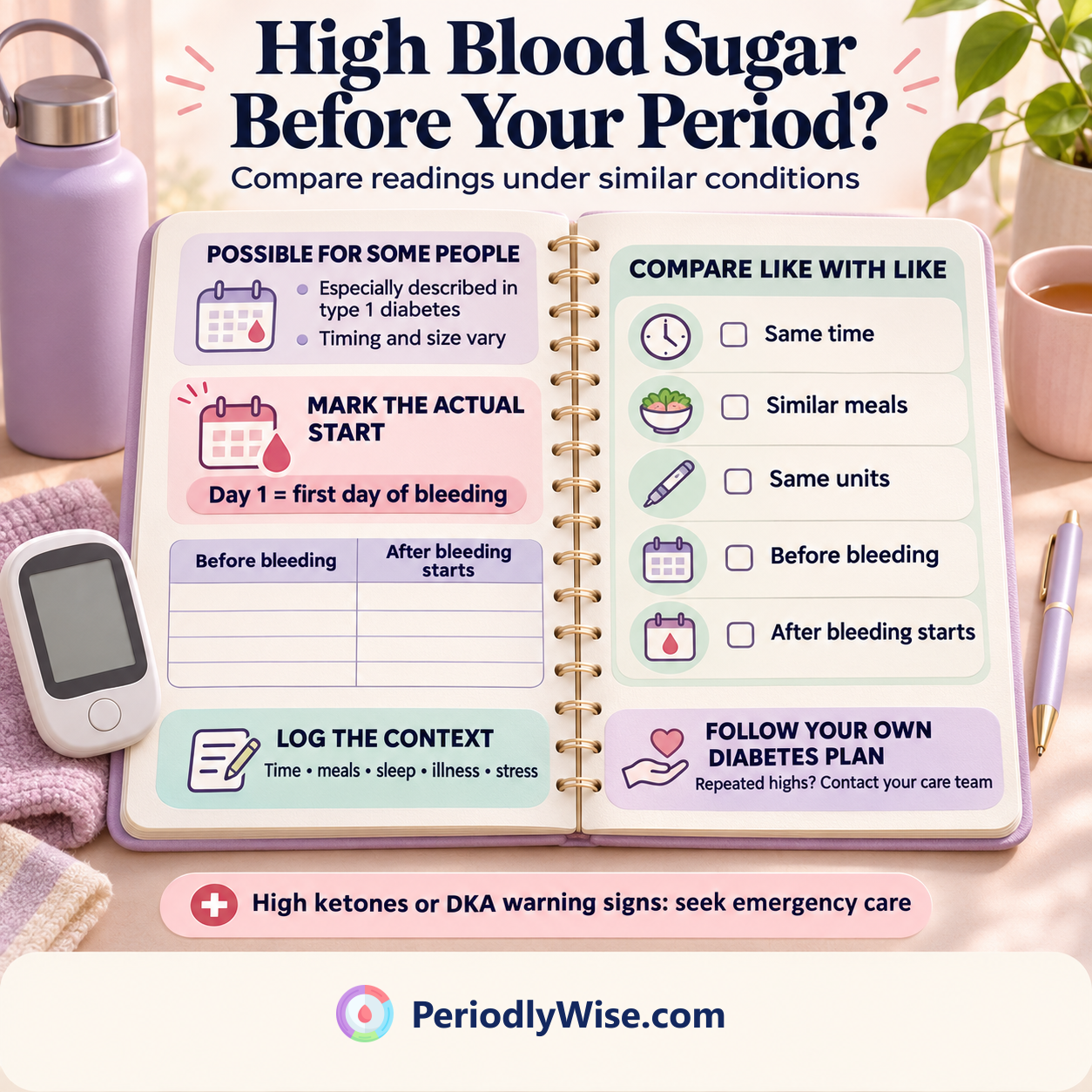
- Mark the first day of menstrual flow. Use the actual start date when you look back, particularly if your cycles are irregular. A predicted date does not establish when you ovulated.
- Compare readings taken at similar times. Compare fasting readings with fasting readings, or compare readings taken the same amount of time after similar meals. If you use a CGM, look at the overnight trend or time above your personal target across several days instead of focusing on one peak.
- Record what else changed. Note sleep, activity, meals, illness, stress, diabetes medicines and any pump or infusion-site problems. Keep the reading, its unit and its time together.
- Check what happens once bleeding begins. See whether readings return toward your usual range, stay high, or drop. Share a short log or CGM report with your care team if the same pattern keeps showing up.
Example: Your after-dinner readings are higher during the three days before bleeding in two cycles, even on evenings with similar meals and activity. They return to your usual range after the period starts. That is a pattern worth showing your team. If the only high followed a much later meal or happened during an infection, you have a less useful comparison.
How to respond without chasing every reading
- For one higher reading when you feel well, check when you last ate and whether the reading is outside your target. If the value is surprising, check it as your meter or sensor instructions advise. If you have diabetes, follow the steps already in your care plan.
- For highs that keep recurring, contact your care team. Bring the timing of highs and any lows around the start of bleeding. If you use insulin, ask what to do when the highs start and when to return to your usual settings if your team recommends a temporary adjustment.
- For high readings that persist despite your plan, or if you are ill or suspect a pump delivery problem, follow your sick-day or pump-failure instructions and contact your care team promptly. If your plan calls for a ketone check, do it then. If you are pregnant and have repeated highs, contact your maternity or diabetes team promptly because your targets and instructions may differ.
There is no standard premenstrual dose increase. Use any correction your care team has already prescribed. Ask them before changing insulin, pump settings or other diabetes medicine based on a cycle pattern. If your glucose drops around the start of bleeding, a temporary adjustment that helped earlier can increase the risk of low glucose if continued.
When high blood sugar needs urgent care
Diabetic ketoacidosis (DKA) is a medical emergency. Follow your care team's directions on when to check ketones if you have diabetes and are sick or running high. Seek emergency care for high ketones, deep or rapid breathing, fruity-smelling breath, vomiting with inability to keep fluids down, or marked confusion or drowsiness. CDC guidance also advises emergency care if glucose stays at 300 mg/dL (16.7 mmol/L) or higher. Symptoms or high ketones can require care even at a lower glucose reading. Call your local emergency number or go to an emergency department.
If you do not have diagnosed diabetes and you have a high reading with these symptoms, get emergency care as well. DKA can be the first sign of diabetes.
Frequently asked questions
How many days before a period can blood sugar rise?
Some people notice higher readings in the last few days before bleeding. Others see a change earlier after ovulation or see no consistent change. Use your own dated records rather than assuming a fixed number of days.
Can blood sugar rise even if I use a closed-loop pump?
Yes, some users still see changes across the cycle. Others have fairly stable readings. Share your glucose and insulin delivery patterns with your diabetes team before changing settings.
Will blood sugar come down when my period starts?
It may return toward your usual range. Some people notice lower readings around the start of bleeding. If yours stays high, follow your care plan and ask about other causes.
Does one high reading before my period mean I have diabetes?
One home reading cannot establish diabetes. Contact a clinician for repeated high readings, especially fasting, or symptoms such as unusual thirst or frequent urination. A clinician can order and interpret the appropriate blood tests.
Should I buy a glucose monitor just to track my cycle?
You can mark period dates and symptoms without measuring glucose. If you suspect abnormal blood sugar or have symptoms, ask a clinician about testing. If you already use a meter or sensor, your existing records can help you spot a pattern.
Mark when bleeding starts and compare the date with readings you already keep in your diabetes log.
Use the Period Tracker