
Period blood is not always one color. It can look bright red one day, darker red the next, brown at the beginning or end, or lighter pink when the flow is very light. These changes can feel confusing, especially if you are trying to understand whether your period is normal.
The useful thing to know is that color alone rarely tells the whole story. Period blood color should be understood together with flow amount, timing, clots, cramps, odor, spotting, cycle regularity, pregnancy possibility, medication changes, and whether the change is new for your body.
This guide explains common period blood colors and flow changes, what to track, when color changes may be normal, and when it is better to speak with a healthcare professional.
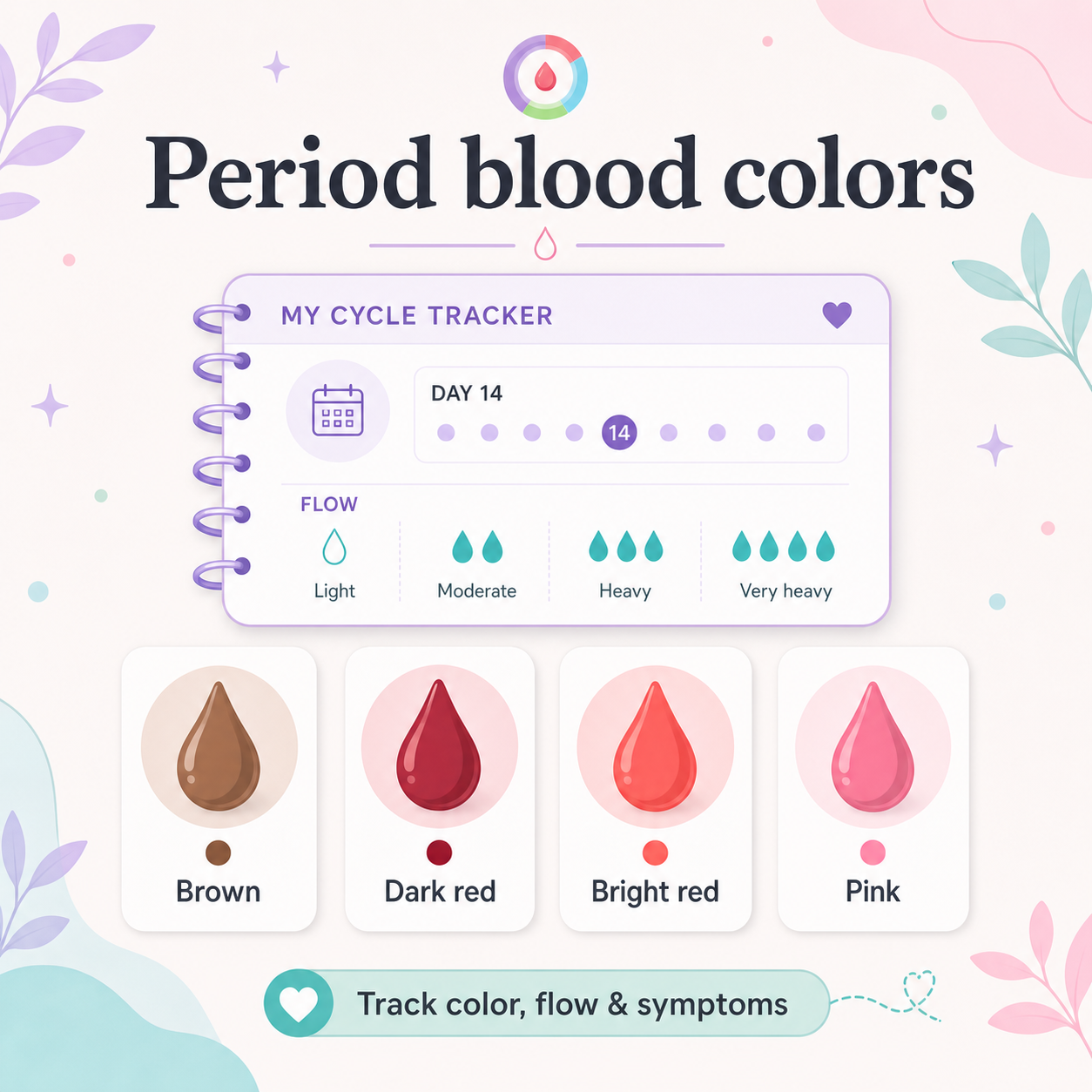
Why does period blood color change?
Period blood color can change because blood does not always leave the uterus at the same speed. When flow is faster, blood may look brighter red. When flow is slower, blood may have more time to darken before leaving the body, which can make it look dark red, brown, or nearly black.
Color can also change at different points in your period. Some people notice brown spotting before bleeding begins, bright red blood during heavier days, and dark red or brown blood near the end. That pattern can be completely ordinary for many cycles.
What matters most is whether the color change comes with symptoms such as severe pain, fever, unusual odor, very heavy bleeding, pregnancy possibility, bleeding between periods, or a sudden pattern change.
Common period blood colors and what they may mean
| Color or change | What it may suggest | What to track |
|---|---|---|
| Bright red | Often fresher blood and a steadier or heavier flow. | Flow level, cramps, clots, and how many days it lasts. |
| Dark red | May be slower flow or blood that has taken longer to leave the body. | Whether it appears at the start, overnight, or near the end. |
| Brown | Often older blood, common at the beginning or end of a period. | Spotting days, timing, odor, pain, and pregnancy possibility. |
| Pink or watery | May happen with very light flow, discharge mixed with blood, or spotting. | Whether it is new, repeated, or linked with missed periods. |
| Almost black | Can be very old blood leaving slowly, but context matters. | Odor, pain, fever, and whether it keeps happening. |
| Orange, gray, greenish, or foul-smelling discharge | May need medical attention, especially with itching, pain, fever, or odor. | Symptoms, discharge, pain, fever, and timing. |
Brown period blood: should you worry?
Brown period blood is commonly older blood. It may appear before your period fully starts, during light flow, or at the end when bleeding slows down. If brown blood appears in your usual pattern and does not come with concerning symptoms, it is often not urgent.
However, brown spotting outside your usual period pattern deserves attention if it is new, repeated, happens after sex, appears with pelvic pain, has a strong odor, follows a missed period, or could be connected to pregnancy. If you are unsure, tracking and medical guidance are both reasonable.
You can read more about spotting patterns in our guide to spotting before your period.
Bright red period blood
Bright red period blood often appears when flow is fresh and moving more quickly. It may be most noticeable on heavier days. For many people, bright red bleeding during the main part of the period is normal.
The key is flow amount. If bleeding becomes very heavy, soaks through pads or tampons quickly, includes large clots, causes dizziness, or is much heavier than your normal pattern, it is worth seeking medical advice. The NHS notes that heavy periods can include needing to change protection very often, passing large clots, or bleeding through clothes or bedding.
Dark red or nearly black period blood
Dark red blood can happen when blood has been in the body longer before leaving. Some people notice it after waking up, near the end of a period, or during slower flow days. Nearly black blood may also be older blood, but it should not be ignored if it appears with pain, fever, odor, or unusual discharge.
If dark or black-looking blood is new for you, continues outside the period, or comes with symptoms that worry you, speak with a healthcare professional.
Pink or watery period blood
Pink period blood can happen when light bleeding mixes with cervical fluid or discharge. It may appear during light flow days, spotting, or at the start or end of a period. Sometimes people also notice lighter bleeding with hormonal contraception, cycle changes, or lower flow cycles.
If pink spotting happens after sex, between periods, after menopause, with pelvic pain, or with possible pregnancy, it is safer to get medical advice.
What about period clots?
Small clots can happen during heavier flow days. They may look dark red, jelly-like, or thicker than usual blood. A few small clots can be part of a normal heavy day for some people.
Clots deserve more attention when they are large, frequent, new for you, or happen with very heavy bleeding, severe pain, dizziness, or bleeding that interferes with daily life. Office on Women's Health notes that heavy bleeding and clots larger than a quarter are reasons to contact a doctor.
Light flow vs heavy flow: what changes matter?
Flow amount can be more important than color. A light period can look pink, brown, or watery. A heavy period can look bright red or dark red and may include clots. Both light and heavy days can be normal if they fit your usual pattern.
What matters is a change from your baseline. For example, a period that suddenly becomes much heavier, much longer, much more painful, or much lighter than usual may be worth tracking carefully. If the pattern repeats, bring your notes to a healthcare professional.
For planning comfort around flow differences, see our guide to light vs heavy period days.
What should you track during your period?
Tracking helps you avoid guessing from memory. Use the Period Tracker to estimate your next period and compare your real bleeding pattern with your expected window. If your cycles are unpredictable, the Irregular Period Tracker can help you review broader patterns over time.
- Color: bright red, dark red, brown, pink, or unusual discharge color.
- Flow: spotting, light, moderate, heavy, or very heavy.
- Clots: none, small, frequent, large, or new for you.
- Pain: cramps, pelvic pain, back pain, or pain that interrupts daily life.
- Timing: before period, during period, after period, between periods, or after sex.
- Context: stress, sleep, illness, birth control changes, pregnancy possibility, travel, or medication changes.
Example tracking table
| Day | Color | Flow | Notes |
|---|---|---|---|
| Day 1 | Brown then red | Light to moderate | Mild cramps, period starting slowly. |
| Day 2 | Bright red | Heavy | Changed protection more often, small clots. |
| Day 3 | Dark red | Moderate | Cramps improved, energy low. |
| Day 4 | Brown | Light | Flow slowing down. |
After a few cycles, this kind of record can show whether your color and flow pattern is consistent or changing. Your cycle history becomes especially useful when you need to explain symptoms clearly.
When should you seek medical advice?
Speak with a healthcare professional if you have very heavy bleeding, bleeding that lasts longer than usual, severe pain, dizziness, fainting, fever, foul odor, unusual discharge, bleeding between periods, bleeding after sex, bleeding after menopause, possible pregnancy, or clots larger than a quarter.
You should also seek advice if your period suddenly changes in a way that worries you, if your periods become unpredictable after being regular, or if bleeding affects school, work, sleep, or daily life. A clinician can help check for causes such as hormonal changes, fibroids, polyps, infection, pregnancy-related issues, thyroid conditions, bleeding disorders, medication effects, or other health factors.
FAQ
Is brown period blood normal?
Brown period blood can be normal, especially at the beginning or end of a period. It often means the blood is older and leaving the body more slowly. If it is new, repeated, painful, foul-smelling, or happens outside your usual pattern, seek medical advice.
Is bright red period blood normal?
Bright red period blood is often fresh flow and can be normal during heavier period days. Pay attention to how heavy the bleeding is, whether you have large clots, and whether the flow is unusual for you.
Are period clots normal?
Small clots can happen during heavier flow. Large, frequent, painful, or new clots should be discussed with a healthcare professional, especially if bleeding is very heavy.
Can period blood color show if something is wrong?
Color can give clues, but it does not diagnose a problem by itself. Symptoms such as severe pain, fever, odor, very heavy bleeding, pregnancy possibility, or bleeding outside your usual pattern matter more than color alone.
Can PeriodlyWise diagnose abnormal bleeding?
No. PeriodlyWise can help you track period dates, flow patterns, and cycle changes, but it cannot diagnose or treat medical conditions. Use it as an educational tracking tool and seek medical care for concerns.
Final thoughts
Period blood colors and flow changes can be normal, but they are worth tracking because your pattern matters. Bright red, dark red, brown, and pink blood can all appear for common reasons. What matters most is whether the change is new, repeated, painful, very heavy, foul-smelling, or happening outside your usual cycle.
Use PeriodlyWise to record your period timing and compare your patterns over time. Clear notes can help you feel less uncertain and make it easier to explain changes if you need medical support.
Use PeriodlyWise to estimate your next period, save cycle records, and understand whether color or flow changes are part of your usual pattern.
Open the Period Tracker