Yes, stress can sometimes delay your period. It does not explain every late period, and it should not be used to ignore symptoms that feel unusual, but stress is one possible reason your cycle may shift earlier, later, or feel less predictable than usual.
Your menstrual cycle is connected to the wider body. Sleep, illness, travel, emotional strain, intense exercise, major routine changes, eating patterns, medication changes, and ongoing stress can all affect cycle timing. For some people, a stressful month may make ovulation happen later than usual. When ovulation is delayed, the next period may also arrive later.
The most helpful question is not only "Am I stressed?" but "What changed this cycle, and is this becoming a pattern?" Tracking can help you separate a one-time delay from a repeating cycle change that deserves medical advice.
How can stress delay your period?
The menstrual cycle depends on communication between the brain, ovaries, and uterus. Stress can affect that communication, especially when it is intense, prolonged, or paired with poor sleep, illness, under-eating, over-exercising, grief, anxiety, exams, work pressure, travel, or major life changes.
Ovulation timing is especially important. Your period usually comes after ovulation if pregnancy does not happen. If ovulation happens later than usual, your period may also come later. This is why a stressful cycle can feel like your body has suddenly changed its schedule.
Stress does not always delay a period. Some people notice no change. Some notice spotting, lighter bleeding, heavier symptoms, or a period that arrives earlier. Others notice a longer cycle, missed period, or more irregular pattern. The response can vary from person to person and from month to month.
What kind of stress can affect your cycle?
Cycle shifts are more likely when stress is not just a brief bad mood, but something your body experiences as a real load. That can include emotional stress, physical stress, or a combination of both.
- Work pressure, exams, deadlines, or caregiving strain.
- Grief, relationship stress, conflict, or major life changes.
- Poor sleep or repeated late nights.
- Travel, jet lag, or disrupted routines.
- Illness, infection, or recovery from being unwell.
- Sudden changes in eating, weight, or appetite.
- Intense exercise or not enough recovery.
- Anxiety, burnout, or long periods of feeling on edge.
One stressful day may not change your cycle. But a cluster of stressors across several days or weeks can make timing less predictable for some people.
How late can stress make a period?
There is no single number that applies to everyone. Stress may shift a period by a few days for one person and by longer for another. The amount of delay depends on when stress happens in the cycle, whether ovulation has already occurred, your usual cycle regularity, and whether other factors are involved.
If your period is only a few days later than expected and you have had a stressful month, tracking may be enough at first. If your period is much later than usual, if pregnancy is possible, or if your cycles keep becoming irregular, it is better to take the change seriously.
Could it be stress, pregnancy, or something else?
If pregnancy is possible, take a pregnancy test rather than assuming stress is the reason. Stress and early pregnancy can both come with symptoms such as fatigue, mood changes, breast tenderness, nausea, appetite changes, and a delayed period. Symptoms alone are not a reliable way to tell the difference.
Other reasons a period may be late or irregular include illness, travel, weight change, intense exercise, hormonal contraception changes, breastfeeding, perimenopause, PCOS, thyroid conditions, some medications, and normal cycle variation. Stress may be part of the story, but it is not always the whole story.
If you want a broader checklist, read Why Is My Period Late? Common Reasons Besides Pregnancy.
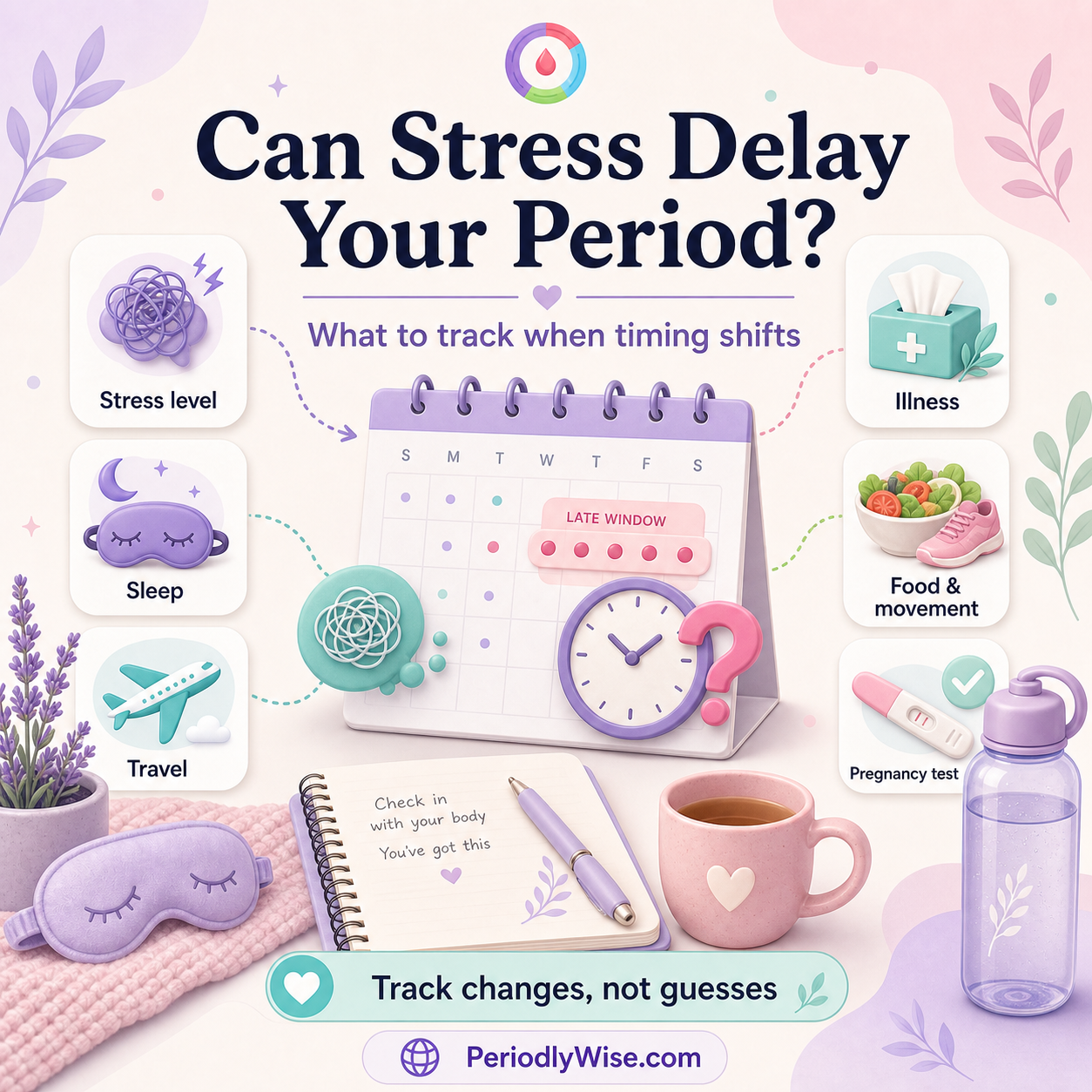
What should you track when stress may be delaying your period?
Tracking is useful because stress can feel vague. Writing down the details turns "my cycle is off" into a clearer pattern.
- Period dates: first day of bleeding, spotting, and when bleeding becomes normal flow.
- Cycle length: number of days from one period start date to the next.
- Stress level: low, moderate, high, or very high.
- Stress type: work, school, emotional stress, grief, travel, illness, caregiving, or burnout.
- Sleep: hours, quality, late nights, insomnia, or waking often.
- Food and movement: skipped meals, appetite changes, intense exercise, or reduced activity.
- Symptoms: cramps, breast tenderness, bloating, acne, headaches, fatigue, nausea, mood changes.
- Pregnancy possibility: sex timing, contraception changes, missed pills, condom issues, or test results.
- Pattern: whether this is a one-time delay or happening across multiple cycles.
It may help to write a simple note like: "Cycle day 34, high work stress for two weeks, poor sleep, PMS symptoms, no bleeding yet, pregnancy test negative." That kind of note is more useful than simply writing "late."
When is a stress-related delay less concerning?
A small delay may be less concerning when it happens during an obviously stressful month, your period arrives soon after, bleeding is similar to your usual pattern, symptoms are not severe, pregnancy is not possible or a test is negative at the right time, and your next cycles return to normal.
Even then, it is worth noting the change. If your body reacts to stress with cycle shifts, that information can help you prepare during future stressful periods.
When should you get medical advice?
Consider medical advice if your period is repeatedly late, your cycles suddenly become irregular, you miss periods, bleeding becomes very heavy, pain is severe, you bleed between periods, you may be pregnant, or symptoms feel unusual for you.
Also seek help if stress feels unmanageable, affects sleep or eating, causes panic, low mood, hopelessness, or makes daily life difficult. Cycle tracking can show patterns, but it cannot replace mental health or medical support when symptoms are strong.
What may help your cycle settle after stress?
You cannot always remove stress quickly, but you can support your body through it. Focus on basics that are realistic rather than perfect.
- Try to protect sleep where possible.
- Eat regular meals, especially if stress reduces your appetite.
- Hydrate and limit extra alcohol or too much caffeine if they worsen anxiety or sleep.
- Use gentle movement, walking, stretching, or rest depending on your energy.
- Build small recovery moments into stressful days.
- Track your period window so delays do not feel like complete surprises.
- Talk to a healthcare professional if late or irregular periods repeat.
Stress management does not need to look dramatic. A regular bedtime, a short walk, a meal you can tolerate, a calmer evening routine, or asking for support can all matter. If anxiety is part of the picture, our guide on period anxiety before your period may also help.
The bottom line
Stress can delay your period, especially if it affects ovulation timing or comes with poor sleep, illness, appetite changes, travel, or intense physical strain. But stress is only one possible explanation. Pregnancy, health conditions, medication changes, contraception changes, and normal cycle variation can also shift timing.
The best approach is calm tracking. Note the delay, what changed this cycle, your symptoms, pregnancy possibility, and whether the pattern repeats. If the change is strong, unusual, or ongoing, medical advice can help you understand what is happening.
Use PeriodlyWise to estimate your period window and keep notes on stress, sleep, symptoms, flow, and cycle changes.
Open the Period TrackerFAQs
Can stress make your period late?
Yes, stress can sometimes make your period late, especially if it affects ovulation timing. But not every late period is caused by stress, so track other possible factors too.
Can stress cause a missed period?
Stress can contribute to missed or delayed periods in some people. If you miss a period and pregnancy is possible, take a pregnancy test. If missed periods repeat, consider medical advice.
How do I know if my period is late from stress?
You cannot know from symptoms alone. Look at the pattern: stress timing, sleep, illness, travel, cycle history, pregnancy possibility, and whether your period returns when stress eases.
When should I worry about a late period?
Get advice if your period is much later than usual, pregnancy is possible, you miss periods repeatedly, bleeding or pain changes strongly, or you have symptoms that feel unusual or concerning.