Feeling more anxious before your period can be unsettling. A small worry may feel heavier. A normal task may feel harder to start. You may feel tense, restless, sensitive, overwhelmed, or more easily pulled into "what if" thoughts. Then, once your period begins or a few days pass, the emotional pressure may soften.
This does not mean you are imagining it. For some people, the days before a period can bring noticeable emotional and physical changes. Anxiety, tension, irritability, sleep problems, fatigue, food cravings, and mood swings can all appear as part of a premenstrual pattern.
The goal is not to label every hard feeling as "just hormones." Your feelings are real. The useful question is: does this anxiety follow a pattern with your cycle, and does tracking that pattern help you prepare better?
What is period anxiety?
Period anxiety is not a formal diagnosis by itself. It is a practical way to describe anxiety, worry, nervousness, tension, or feeling on edge that shows up in a repeating pattern before a period.
It may feel like racing thoughts, trouble relaxing, needing reassurance, feeling easily overwhelmed, irritability mixed with anxiety, poor sleep before your period, or physical anxiety feelings such as a tight chest, unsettled stomach, or restlessness.
For some people, this is mild and manageable. For others, it can interfere with work, school, relationships, sleep, or self-confidence.
Why can anxiety feel stronger before your period?
Premenstrual symptoms usually happen after ovulation and before bleeding starts. The Office on Women's Health explains that PMS symptoms can appear after ovulation, when estrogen and progesterone levels change if pregnancy does not occur. These symptoms often improve within a few days after the period starts.
That hormonal shift does not affect everyone the same way. Some people barely notice emotional changes. Others feel a clear difference in mood, energy, patience, and stress tolerance.
Hormone changes may affect mood sensitivity
Researchers do not know one single cause of PMS. Changing hormone levels during the menstrual cycle may play a role, and some people appear more sensitive to those shifts than others.
This is important because it keeps the explanation balanced. It is not that hormones create every anxious thought. It is more that the premenstrual window may lower your emotional buffer. A worry you could manage easily in another week may feel louder when sleep is worse, energy is lower, cramps are building, or your body feels uncomfortable.
Sleep changes can make worry louder
Premenstrual symptoms can include sleeping too much, sleeping too little, or feeling tired. Poor sleep can make anxiety feel more intense because the brain has less recovery time. You may notice more overthinking at night, waking earlier than usual, or feeling tired but wired.
If anxiety always spikes after two or three poor nights before your period, sleep may be one of your strongest tracking clues.
Stress can feel harder to carry
Stress and cycle timing can stack together. A busy week, family pressure, deadlines, travel, conflict, or financial worry may feel heavier in the premenstrual window. Tracking can help you see whether anxiety is mainly cycle-linked, stress-linked, or both.
Physical symptoms can add to anxiety
Cramps, bloating, headaches, breast tenderness, digestive changes, fatigue, dizziness, acne, cravings, or back pain can all affect emotional steadiness. If your body feels uncomfortable, your mind may have less space.
For example, period anxiety may be stronger when it comes with poor sleep, heavier flow expected soon, cramps starting early, headaches, fatigue, appetite changes, digestive discomfort, or feeling less in control of the day.
Is this PMS, PMDD, or anxiety?
Mild anxiety before a period can be part of PMS. PMS may include tension, anxiety, mood swings, irritability, tiredness, sleep changes, appetite changes, and concentration problems.
PMDD is different. It is a more severe premenstrual condition where emotional symptoms are much more intense and can seriously affect daily life. The NHS notes that PMDD symptoms may include feeling very anxious, angry, depressed, or suicidal.
| Pattern | What it may suggest | What to do |
|---|---|---|
| Anxiety is noticeable but manageable before your period | May fit a mild premenstrual pattern. | Track timing, sleep, stress, symptoms, and what helps. |
| Anxiety repeatedly disrupts work, school, sleep, relationships, or daily care | Needs more support than tracking alone. | Consider medical or mental health guidance. |
| Anxiety comes with hopelessness, self-harm thoughts, or feeling unsafe | May be urgent. | Seek immediate help through local emergency services or a crisis line. |
You do not need to wait until things are unbearable to ask for help. If the pattern worries you, support is a reasonable next step.
What should you track for period anxiety?
Tracking helps because memory can blur when emotions are intense. A simple record can show whether symptoms follow a cycle pattern or are happening throughout the month.
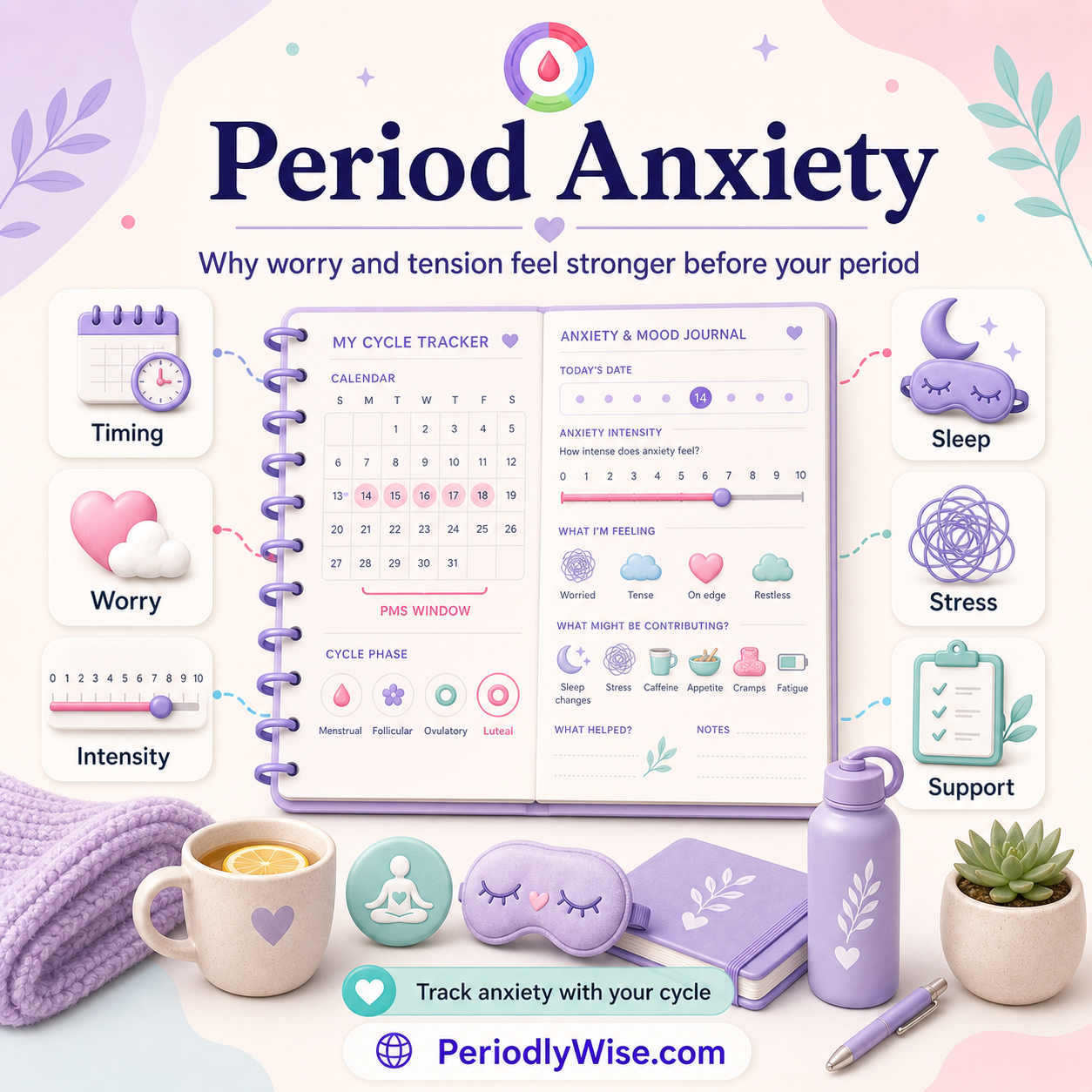
Track these details for at least two or three cycles:
- Cycle day: before bleeding, day 1, day 2, after bleeding, or outside your period.
- Anxiety intensity: a 0 to 10 rating helps reveal whether symptoms are mild, moderate, or severe.
- Main feeling: worry, panic, tension, irritability, sadness, overwhelm, or restlessness.
- Sleep: poor sleep can make anxiety stronger.
- Stress level: this helps separate cycle pattern from life pressure.
- Caffeine and alcohol: some people notice stronger anxiety with these.
- Food and appetite: skipped meals, cravings, or blood sugar dips may affect mood.
- Physical symptoms: cramps, bloating, headaches, fatigue, dizziness, nausea, or breast tenderness.
- Daily impact: note whether symptoms affected work, school, relationships, or plans.
- What helped: rest, walking, breathing, talking, journaling, reducing plans, or sleep.
PeriodlyWise can help you connect period timing with symptoms. You can use the Period Tracker to estimate your next period and compare anxiety patterns with your cycle. If your cycles vary, the Irregular Period Tracker can help you avoid relying on one perfect calendar pattern.
Gentle ways to manage anxiety before your period
These are not cures, and they are not a replacement for care when symptoms are severe. Think of them as low-pressure supports.
Name the pattern without dismissing yourself
Try: "This is a real feeling, and it may also be part of my premenstrual pattern." That sentence validates the feeling, but it also reminds you that the intensity may shift. Many people find it easier to get through anxious days when they can say, "This usually peaks before my period and eases later."
Protect sleep where you can
If anxiety is worse before your period, sleep becomes a priority. Keep the goal simple: reduce late-night scrolling if it fuels worry, keep caffeine earlier in the day, make the bedroom calmer, and write down tomorrow's tasks before bed so your brain is not holding everything.
Do not aim for perfect sleep. Aim for fewer things that make anxiety louder.
Reduce the load during high-anxiety days
If you know the two days before your period are emotionally harder, avoid scheduling everything there when possible. This is not weakness. It is planning.
You might move intense conversations, complicated errands, or big decisions to another day if they can wait. If they cannot wait, build in more recovery time around them.
Eat regularly and hydrate
Anxiety can feel worse when you are underfed, dehydrated, or running on caffeine. During the premenstrual window, regular meals and steady snacks may help your body feel less alarmed.
This does not need to be complicated. Try protein, fiber, and fluids. If cravings are strong, avoid turning food into guilt. The aim is steadiness, not perfection. You may also want to read Period Cravings and Appetite Changes.
Move gently, if it helps
Regular movement may help some PMS symptoms, but movement does not have to be intense. A walk, gentle stretching, slow yoga, or a few minutes outside can help release tension for some people.
Skip movement if you feel dizzy, unwell, in severe pain, or if your body clearly needs rest.
Use a short anxiety reset
- Put both feet on the floor.
- Relax your jaw and shoulders.
- Breathe out slowly.
- Name five things you can see.
- Ask: "What is the next small thing I can do?"
The goal is not to erase anxiety. The goal is to bring your nervous system down one notch.
Talk to someone earlier
If you tend to isolate before your period, plan support before the hardest day. Send a simple message to a trusted person: "I am in my premenstrual anxiety window. I do not need fixing, but I may need a little patience today."
Support does not have to be dramatic. A walk, a check-in, or someone helping you reality-check a worry can be enough.
When should you get help?
Consider medical or mental health support if anxiety affects work, school, relationships, or daily routine; happens before most periods and feels hard to manage; comes with panic attacks; is paired with depression, hopelessness, or severe irritability; feels unsafe; is getting worse over time; or is present most of the month rather than only before your period.
If you feel suicidal or at risk of harming yourself, seek urgent help immediately. Use your local emergency number, go to the nearest emergency department, or contact a crisis support line in your country.
How PeriodlyWise can help you notice patterns
A period tracker cannot diagnose anxiety, PMS, or PMDD. But it can help you organize what is happening.
With PeriodlyWise, you can estimate your next period window, compare anxiety timing with cycle timing, track irregular cycles more calmly, notice whether symptoms improve after bleeding starts, and bring clearer notes to a healthcare professional if needed.
Use PeriodlyWise to compare period timing, sleep, stress, symptoms, and anxiety notes across cycles.
Open the Period TrackerFAQ
Is anxiety before your period normal?
Some increase in tension, worry, irritability, or emotional sensitivity before a period can happen as part of PMS. But common does not mean you have to ignore it. If anxiety bothers you or affects daily life, it is worth tracking and discussing with a healthcare professional.
Why do I feel anxious a week before my period?
The week before a period is often part of the luteal phase, after ovulation. Hormone changes, sleep disruption, stress, physical symptoms, and existing anxiety patterns can all make worry feel stronger during this window.
Can PMS make anxiety worse?
Yes, PMS can include tension or anxiety. Existing anxiety symptoms can also feel worse before or during a period. Tracking timing and intensity can help show whether the pattern is cycle-linked.
How many cycles should I track?
A useful starting point is two to three cycles. Track daily anxiety intensity, sleep, stress, physical symptoms, and when bleeding starts. If symptoms are severe, do not wait several cycles to seek help.
When is premenstrual anxiety more serious?
It is more serious when it disrupts normal life, causes panic, affects relationships or work, feels unmanageable, or comes with depression, hopelessness, or self-harm thoughts. Severe premenstrual emotional symptoms may need professional care.
Final thoughts
Anxiety before your period can feel very real because it is real. The calmer question is whether it follows a cycle pattern, what makes it stronger, and what kind of support helps you get through that window more safely.
Track the timing, intensity, sleep, stress, physical symptoms, and daily impact. If anxiety is mild and predictable, planning may help. If it is severe, unsafe, worsening, or disrupting daily life, you deserve professional support.