Feeling tired around your period is common, but that does not mean it should be ignored. Some people feel mildly slower, sleepier, or less motivated for a day or two. Others feel deeply drained, weak, foggy, or unable to move through normal work, school, exercise, or home responsibilities.
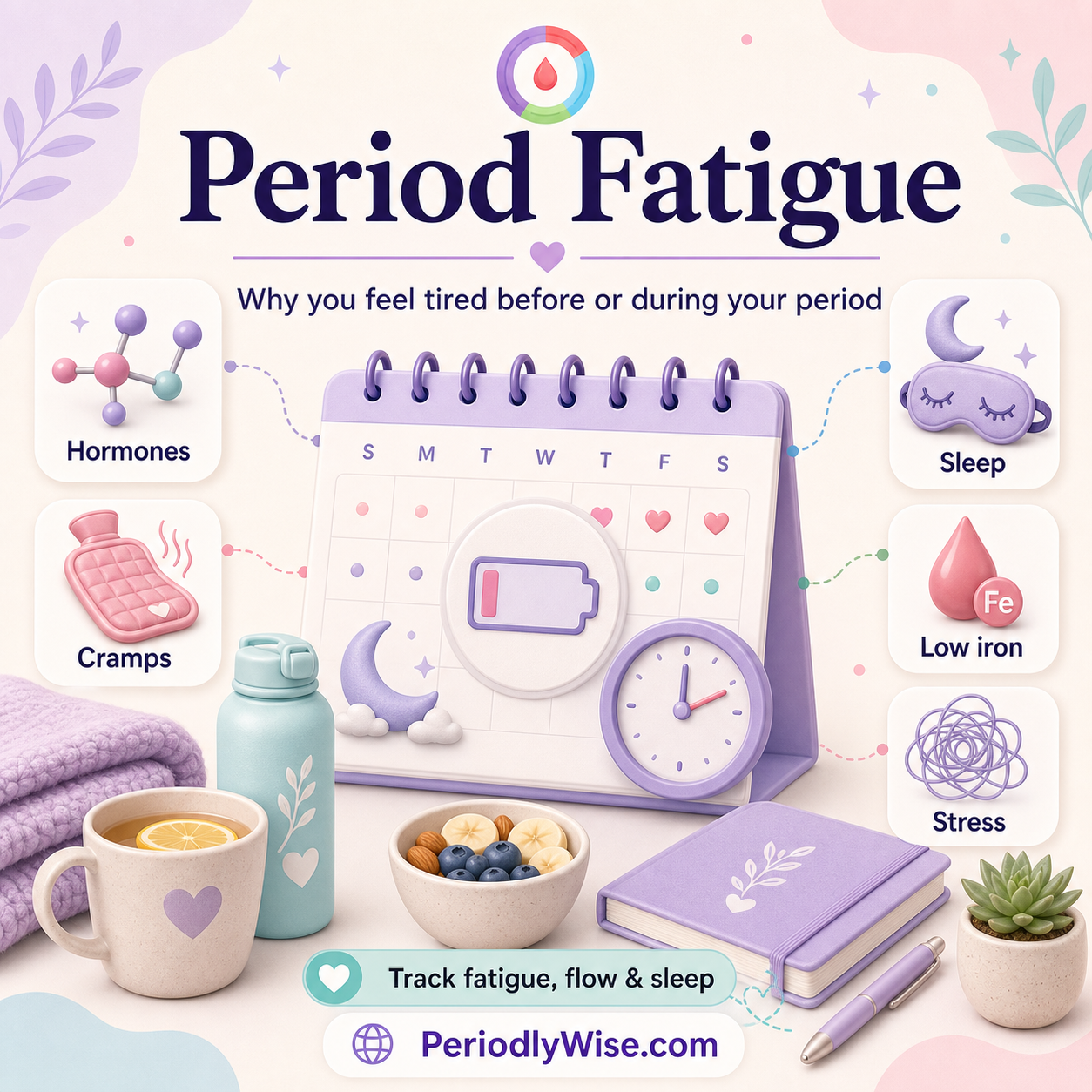
Period fatigue can have more than one cause. It may be connected to normal menstrual-cycle hormone changes, cramps, poor sleep, heavy bleeding, iron deficiency, stress, headaches, appetite changes, dehydration, or an underlying health condition. The key is to look at the pattern: when it happens, how intense it is, how long it lasts, and whether it is changing over time.
PeriodlyWise can help you track period dates, cycle patterns, symptoms, and saved records so you can notice whether fatigue appears before bleeding, during heavy-flow days, after your period, or only during irregular cycles.
What is period fatigue?
Period fatigue means noticeable tiredness, low energy, sleepiness, weakness, or reduced stamina that appears before, during, or just after menstruation. It may feel like needing more sleep than usual, feeling unusually heavy or slow, struggling to focus, feeling drained after normal activities, skipping workouts or social plans, or feeling emotionally worn down along with physical tiredness.
Mild fatigue for a short time can be part of a normal cycle. But fatigue that is severe, sudden, worsening, or paired with heavy bleeding, dizziness, shortness of breath, fainting, chest pain, or extreme weakness needs medical attention.
Why can your period make you feel tired?
There is rarely one single reason. Period fatigue is usually a combination of body changes happening at the same time.
1. Hormone changes before your period
In the days before menstruation, estrogen and progesterone shift. These changes can affect sleep, mood, appetite, fluid balance, and how energetic you feel. Some people feel more sensitive to these changes, especially during the late luteal phase, which is the time between ovulation and the start of the period.
This is why fatigue may appear alongside PMS symptoms such as mood changes, breast tenderness, bloating, headaches, food cravings, or sleep changes.
2. Cramps and pain can drain energy
Period cramps are caused by uterine contractions. These contractions are linked with prostaglandins, hormone-like chemicals involved in pain and inflammation. When cramps are strong, the body may feel tense, uncomfortable, and exhausted.
Even if cramps are not severe, pain can interrupt sleep, reduce appetite, lower motivation, and make normal movement feel harder. If cramps are the main issue, the guide on period cramps at work or school may help with practical comfort planning.
3. Heavy bleeding can contribute to low iron
If your periods are heavy or prolonged, blood loss can reduce iron stores over time. Iron is needed to make hemoglobin, the part of red blood cells that carries oxygen. When iron is low, or when iron deficiency anemia develops, fatigue can become more intense and more persistent.
Heavy menstrual bleeding may be more likely if you bleed for more than seven days, need to change pads or tampons very frequently, pass large clots, wake at night to change protection, or feel that bleeding interferes with daily life.
Low iron or anemia can cause symptoms such as tiredness that does not improve with rest, dizziness, lightheadedness, shortness of breath with normal activity, headaches, pale skin, fast heartbeat, cold hands or feet, and poor concentration. If fatigue is strong and your periods are heavy, it is worth discussing iron testing with a healthcare professional.
4. Sleep may be lighter or more disrupted
Before and during a period, sleep can be affected by cramps, mood changes, headaches, night sweats, breast tenderness, digestive discomfort, or anxiety. Even one or two nights of poor sleep can make period fatigue feel much worse.
This is why fatigue may not be caused by menstruation alone. It may be menstruation plus interrupted sleep. For a deeper look at this pattern, read How Sleep and Stress Can Affect Your Menstrual Cycle.
5. Food, hydration, and blood sugar can play a role
Some people eat less during cramps or nausea. Others crave more sugar or caffeine. Either pattern can affect energy. Skipping meals, not drinking enough water, or relying mostly on quick snacks may make fatigue worse, especially on heavy-flow days.
A steadier approach often helps: regular meals, enough fluids, protein, iron-rich foods, and gentle carbohydrates that do not cause sharp energy crashes. The guide on light vs heavy period days explains how food, rest, and movement can change with flow.
6. Stress can make cycle symptoms feel heavier
Stress does not simply live in the mind. It can affect sleep, appetite, muscle tension, pain sensitivity, digestion, and how the body handles fatigue. If a difficult week overlaps with PMS or a heavy period, tiredness can feel amplified.
Tracking stress along with cycle dates can help you see whether fatigue is mainly cycle-timed, stress-timed, or both.
Is it normal to feel tired before your period?
Yes, mild tiredness before your period can be normal, especially if it happens predictably and improves once your period starts or after the first couple of days.
However, common is not the same as something you must tolerate. If fatigue is interfering with work, school, parenting, exercise, relationships, or basic daily tasks, it is worth paying attention to. A good rule: if fatigue changes your life, track it and talk about it.
How can you manage period fatigue at home?
These steps are not cures for every cause, but they can support your body during lower-energy days.
Prioritize sleep before your expected period
If you know fatigue usually appears two or three days before your period, try protecting sleep during that window. Keep the room cool, reduce late caffeine, limit heavy late-night meals, and give yourself a realistic bedtime.
Eat steady, iron-supportive meals
Useful options may include lentils, beans, spinach, eggs, fish, poultry, lean meat, tofu, nuts, seeds, and fortified cereals. Pairing plant-based iron sources with vitamin C foods, such as citrus, strawberries, bell peppers, or tomatoes, may help absorption.
Do not start iron supplements blindly unless a healthcare professional recommends them. Too much iron can be harmful.
Hydrate before cramps and headaches worsen
Water, warm drinks, soups, and electrolyte-supporting fluids may help if you tend to feel weak, headachy, or lightheaded. Hydration will not fix anemia or severe fatigue, but it can reduce avoidable energy dips.
Use gentle movement, not punishment workouts
On tired days, the goal is not intensity. Gentle walking, stretching, yoga, or mobility work may help circulation, stiffness, mood, and cramps. If movement makes symptoms worse, rest is valid. For movement ideas, see Exercise During Your Period.
Plan your calendar around your pattern
If your fatigue is predictable, plan demanding tasks earlier in the cycle when possible. Period tracking is useful here because it turns vague "I always feel bad randomly" into visible timing.
You can use the Period Tracker to estimate upcoming period windows. If your cycle varies a lot, the Irregular Period Tracker can help you understand broader cycle patterns over time.
What should you track?
Tracking does not diagnose the cause of fatigue, but it gives you better information. Track period start date, period length, flow level, fatigue level, sleep quality, cramps, headaches, dizziness, stress, food and hydration patterns, and whether fatigue improves after bleeding ends.
| What to track | Why it helps |
|---|---|
| Flow level | Heavy or prolonged bleeding can be relevant when fatigue is strong. |
| Fatigue level | A mild, moderate, or severe note helps show whether symptoms are changing. |
| Sleep quality | Poor sleep can make normal period symptoms feel harder to manage. |
| Cramps and headaches | Pain can drain energy and interrupt rest. |
| Stress and routine changes | Travel, pressure, illness, and schedule changes can affect cycle timing and energy. |
If you save records consistently, your cycle history can become useful when discussing symptoms with a clinician.
When should period fatigue be checked by a doctor?
Consider medical advice if fatigue is severe or worsening, you feel faint or breathless, your period lasts longer than seven days, you soak through protection very quickly, you pass large clots often, you have bleeding between periods, your periods suddenly become much heavier, fatigue continues after your period ends, pregnancy is possible, or symptoms interfere with daily life.
Possible causes can include iron deficiency, anemia, thyroid problems, pregnancy-related issues, fibroids, endometriosis, bleeding disorders, PCOS, chronic stress, poor sleep, or other medical conditions. A healthcare professional may suggest blood tests, iron studies, thyroid testing, pregnancy testing, or other evaluation depending on your symptoms.
The bottom line
Period fatigue is real. It may come from normal hormone shifts, but it can also be a sign that your body is dealing with heavy bleeding, low iron, poor sleep, pain, stress, or another issue that deserves attention.
The most helpful first step is to track the pattern without judging yourself. Notice when fatigue appears, how strong it is, what else happens with it, and whether it is changing. Then use that information to plan your cycle more gently and to know when it is time to ask for medical support.
Use PeriodlyWise to estimate your next period window, save records, and compare symptoms with your real cycle history over time.
Open the Period Tracker