A headache around your period can be more than a small inconvenience. For some people, it is a dull pressure that arrives before bleeding. For others, it is a migraine attack with throbbing pain, nausea, light sensitivity, sound sensitivity, or the need to lie down in a dark room. If this happens repeatedly near the same part of your cycle, the timing itself becomes important information.
PeriodlyWise cannot diagnose migraine, menstrual migraine, hormone problems, neurological conditions, or any medical condition. But it can help you organize cycle timing so you can see whether headaches repeat before your period, during the first days of bleeding, around ovulation estimates, or during irregular cycles.
What is the difference between a period headache and a menstrual migraine?
A general headache may feel like pressure, tightness, or mild to moderate pain. It may be annoying but still manageable. Migraine is usually more complex. The Office on Women's Health describes migraine as a medical condition that can cause severe headache and symptoms such as nausea, vomiting, and sensitivity to light or sound. Some people also experience aura, such as visual changes, tingling, or speech symptoms, before or during a migraine attack.
A menstrual migraine is not simply "a headache during a period." It is a migraine pattern that appears in connection with the menstrual cycle. The pattern may show up in the days before bleeding starts, on day 1 or day 2 of a period, or during the early bleeding days. The NHS notes that hormone changes can trigger migraines in some people, and menstrual timing can be one of the clues.
| Feature | Common period headache | Possible menstrual migraine pattern |
|---|---|---|
| Pain quality | Pressure, tightness, or mild to moderate pain. | Often throbbing or pulsing, sometimes one-sided. |
| Other symptoms | May have fatigue, tension, or mild nausea. | May include nausea, vomiting, light sensitivity, sound sensitivity, aura, or needing to stop normal tasks. |
| Timing | Can happen any time, including during PMS or bleeding. | Often repeats around the same menstrual-cycle window. |
| Daily impact | May be manageable with rest, fluids, food, or usual care. | May disrupt work, school, sleep, caregiving, travel, or daily plans. |
Why can headaches happen around a period?
The menstrual cycle involves changing hormone levels. For people who are migraine-prone, hormone shifts may be one possible trigger. Mayo Clinic explains that changes in estrogen can be linked with menstrual migraine in some people. That does not mean hormones are the only cause. It means timing can matter, especially when attacks repeat near the same cycle phase.
Other factors often travel with the cycle too. Before or during a period, you may sleep poorly, eat differently, drink less water, use more caffeine, feel more stressed, have stronger cramps, or be more sensitive to light, sound, smells, and pain. These factors can combine. A headache may not have one neat cause; it may come from several small pressures at once.
If your cycles are irregular, the pattern may be harder to notice. A headache that seems random may actually be happening a few days before bleeding, but because the period date moves, the link is easy to miss. That is where tracking becomes useful.
What should you track for period headaches?
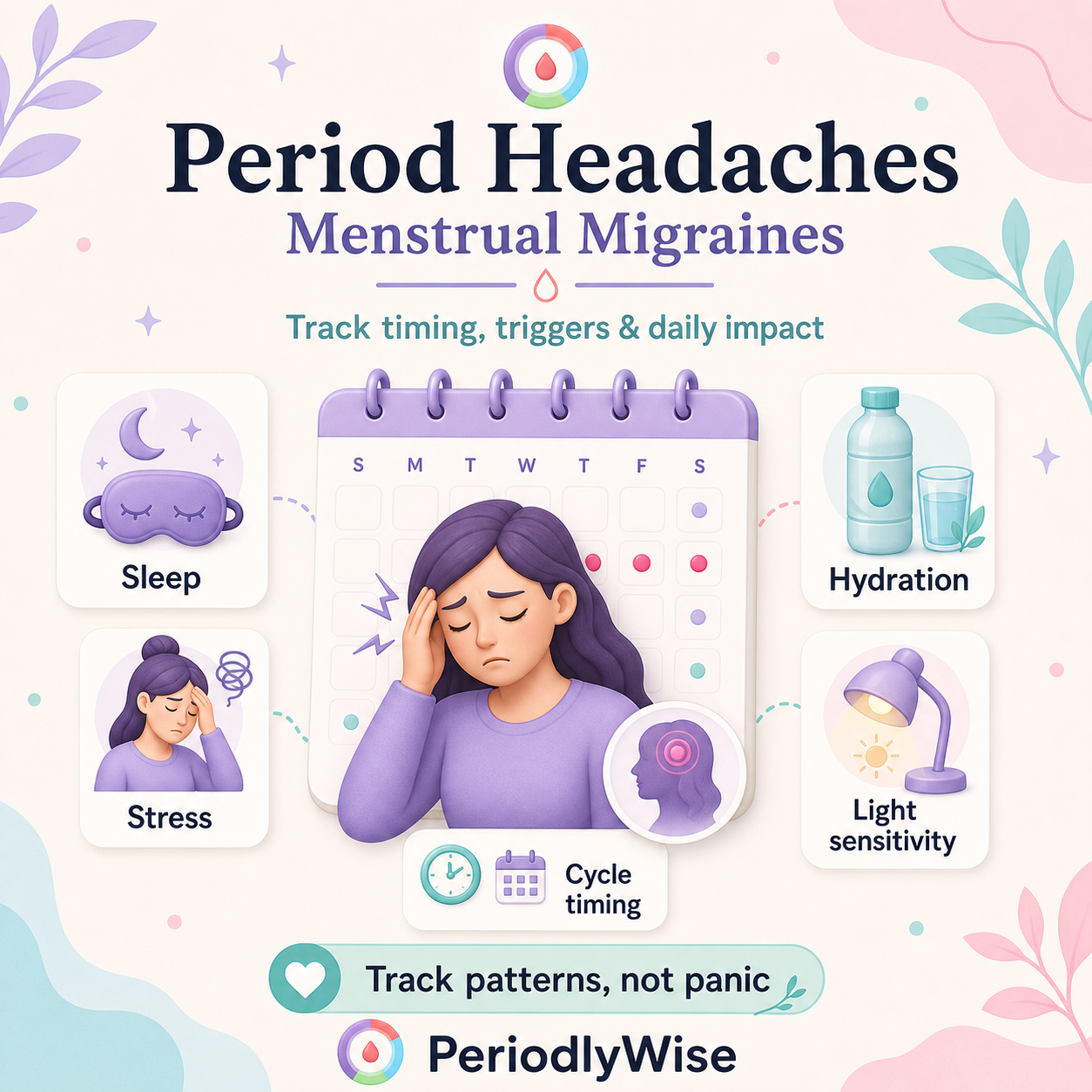
Track enough detail to see a pattern without turning it into a burden. For two or three cycles, write down when the headache starts, how long it lasts, where the pain is, how intense it is, and what else is happening in your body. If you already have a migraine diagnosis, follow the tracking advice from your clinician and add cycle timing as context.
- Cycle timing: period start date, expected period window, bleeding day, and whether your period was early or late.
- Headache timing: before bleeding, day 1 or day 2, during heavy flow, after bleeding, or around estimated ovulation.
- Symptoms: throbbing pain, one-sided pain, nausea, vomiting, light sensitivity, sound sensitivity, aura, dizziness, neck tension, or fatigue.
- Daily impact: missed work, missed school, reduced productivity, cancelled plans, trouble sleeping, or needing to lie down.
- Possible triggers: poor sleep, skipped meals, dehydration, alcohol, caffeine changes, stress, travel, screen exposure, strong smells, or weather changes.
- Relief: rest, darkness, fluids, food, heat or cold, medication used safely, and how quickly symptoms improved.
You can use the PeriodlyWise Period Tracker to estimate upcoming period dates and compare them with headache timing. If your cycle timing varies, the Irregular Period Tracker can help you think in wider windows instead of forcing one exact date.
Example headache tracking notes
| Timing | What you note | Why it helps |
|---|---|---|
| 2 days before period | Throbbing headache, light sensitivity, poor sleep. | Shows a possible premenstrual pattern and sleep link. |
| Day 1 of bleeding | Headache with cramps and nausea, needed rest. | Shows overlap between period pain and migraine-like symptoms. |
| Mid-cycle estimate | Mild headache after travel and missed meal. | Separates possible routine triggers from period timing. |
| After period ends | No headache, normal energy. | Shows when symptoms settle. |
How can you plan around a repeated pattern?
If headaches repeatedly appear near your period, prepare before the likely window. Keep water nearby, avoid skipping meals if that is a trigger for you, protect sleep as much as possible, and reduce avoidable stress on days when your history suggests symptoms may be stronger. If light or sound bothers you, sunglasses, quieter breaks, screen dimming, or a brief dark-room rest may help.
If cramps, bloating, or heavy flow happen at the same time, plan for the whole body, not just the head. A small period care kit, steady food, gentle movement if tolerated, and a clear rest plan can make the day less chaotic. You may also want to read how sleep and stress can affect the menstrual cycle, because those factors often sit beside headache patterns.
If you use medication for headaches or migraine, use it only as directed by a healthcare professional or the product label. Do not take more than recommended, and ask a clinician if you need frequent pain relief or if headaches are interfering with life.
When should you get medical help?
Speak with a qualified healthcare professional if headaches are new, worsening, unusually severe, happening more often, disrupting daily life, or appearing with neurological symptoms such as weakness, confusion, fainting, vision changes, speech trouble, numbness, or severe dizziness. Seek urgent care for a sudden severe headache, a headache after injury, fever with stiff neck, or symptoms that feel dangerous or very different from your usual pattern.
Also ask for guidance if pregnancy is possible, if headaches change after starting or stopping hormonal contraception, if you have migraine with aura, or if you are unsure whether estrogen-containing contraception is safe for you. These are medical decisions, and a tracker cannot make them for you.
FAQ
Can periods cause migraines?
Periods do not cause every migraine, but hormone changes around the menstrual cycle can be a trigger for some people. If attacks repeat around the same cycle phase, tracking can help you explain the pattern to a clinician.
Can a tracker diagnose menstrual migraine?
No. A tracker can help organize timing, symptoms, and possible triggers, but it cannot diagnose migraine or menstrual migraine. A healthcare professional can evaluate the pattern and treatment options.
Should I track headaches if they only happen sometimes?
Yes, if they bother you or seem connected to your cycle. Even occasional notes can show whether headaches cluster before your period, during bleeding, after poor sleep, or during stressful weeks.
Final thoughts
Period headaches and menstrual migraines deserve practical attention, especially when they repeat or affect daily life. Tracking will not remove every trigger, but it can turn a confusing pattern into a clearer story: when symptoms happen, how severe they are, what else was happening, and whether the pattern is changing.
Use PeriodlyWise to estimate your period window, compare cycle history, and add context around headache timing before your next appointment or planning day.
Open the Period Tracker