Mood changes, bloating, cravings, cramps, tiredness, breast tenderness, headaches, and irritability before a period are common. Many people notice these symptoms in the days before bleeding begins, and for some, they are mild enough to manage with rest, food, sleep, and planning.
But not every premenstrual experience should be brushed off as "just PMS." If symptoms become intense, predictable, emotionally overwhelming, or disruptive to work, school, relationships, or daily life, it may be time to look more closely at the pattern. That is where understanding the difference between PMS and PMDD can help.
PeriodlyWise cannot diagnose PMS, PMDD, anxiety, depression, hormonal conditions, or any medical problem. But tracking symptoms alongside your cycle dates can make the pattern easier to explain when you speak with a qualified healthcare professional.
What is PMS?
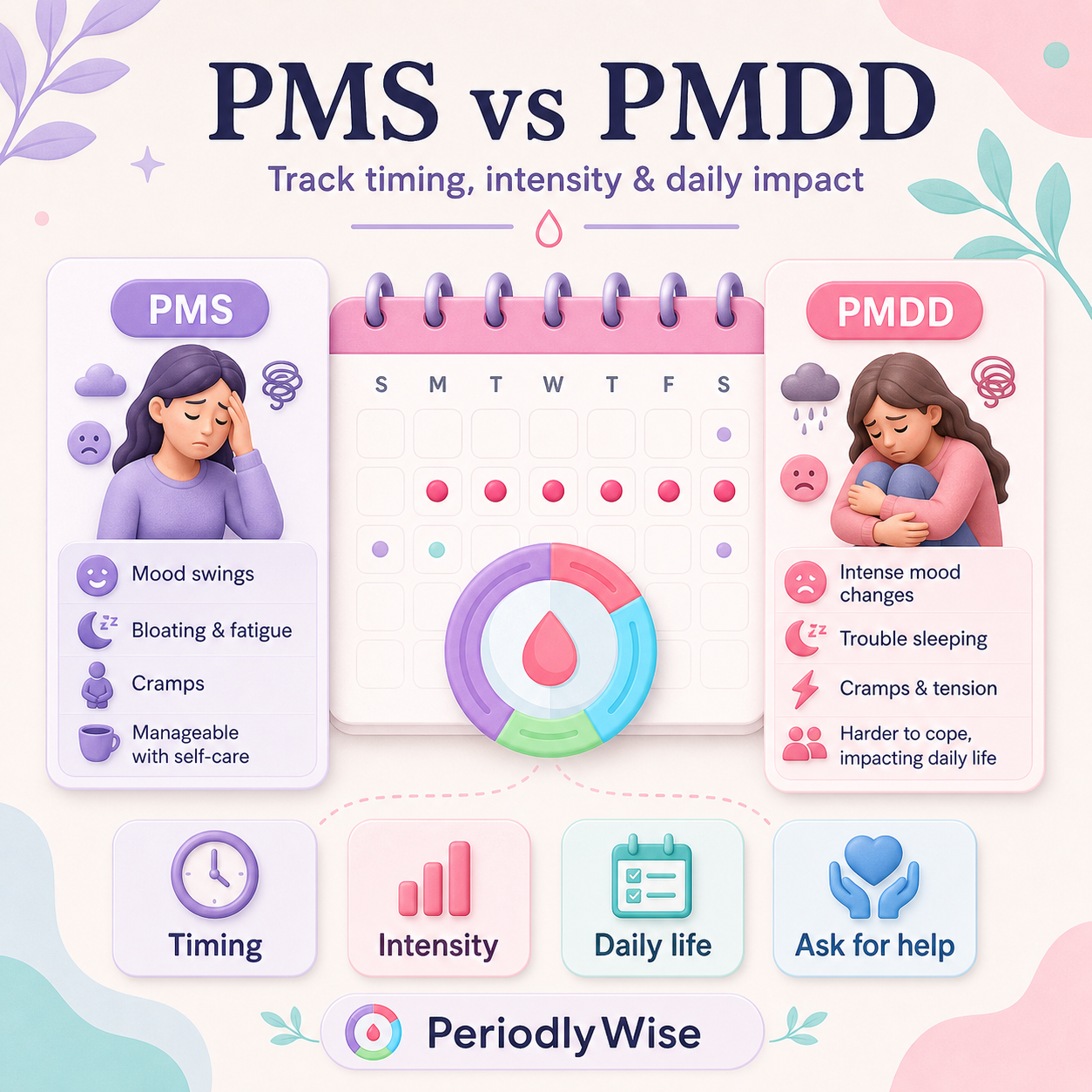
PMS stands for premenstrual syndrome. It describes a group of symptoms that can appear before a period. The Office on Women's Health notes that PMS symptoms can be physical, emotional, and behavioral. Common examples include bloating, cramps, headaches, fatigue, breast tenderness, food cravings, sleep changes, sadness, anxiety, irritability, and trouble concentrating.
PMS can look different from person to person and even from cycle to cycle. One month may be mostly bloating and fatigue. Another month may bring irritability and food cravings. The practical question is: do these symptoms show up in a repeated premenstrual pattern, and do they ease after the period begins?
If the answer is yes, tracking can help you prepare. You may notice that certain days are better for lighter workloads, earlier sleep, simpler meals, or more flexible plans.
What is PMDD?
PMDD stands for premenstrual dysphoric disorder. It is not simply "bad PMS." PMDD symptoms are generally more severe and can have a much stronger emotional and functional impact. MedlinePlus describes PMDD as a condition with severe depression symptoms, irritability, and tension before menstruation.
Possible signs worth discussing with a healthcare professional include intense sadness, anxiety, panic, anger, hopelessness, mood swings, feeling out of control, difficulty concentrating, sleep problems, appetite changes, and physical symptoms that appear in a repeated premenstrual pattern. The key point is disruption. If symptoms repeatedly interfere with school, work, relationships, or basic routines, they deserve proper attention.
If you ever have thoughts of self-harm or suicide, seek urgent help immediately through local emergency services, a crisis support line, or a trusted healthcare professional.
PMS vs PMDD comparison
| Area | PMS | PMDD |
|---|---|---|
| Timing | Usually appears before the period and improves after bleeding starts. | Usually appears in the week or so before the period and improves within a few days after bleeding starts. |
| Severity | Mild to moderate for many people. | Often intense, distressing, or disabling. |
| Mood impact | Moodiness, irritability, sadness, or anxiety can happen. | Mood symptoms are usually more severe and may include hopelessness, panic, intense anger, or feeling out of control. |
| Daily life | May be uncomfortable but still manageable. | May interfere with work, school, relationships, sleep, or basic routines. |
| Tracking value | Helps identify repeated symptoms and plan ahead. | Helps show whether symptoms follow a clear cycle pattern and how severe they are. |
Why timing matters so much
The timing of symptoms is one of the most important clues. Symptoms that appear randomly throughout the month may still matter, but they may not be specifically premenstrual. A clear premenstrual pattern usually means symptoms appear before bleeding, then improve once the period begins.
If symptoms are present all month, or if they do not improve after the period starts, it is still worth discussing them with a healthcare professional, but the explanation may be different. Tracking helps separate a cycle-linked pattern from symptoms that are more constant or caused by another issue.
What should you track?
For PMS or PMDD-related concerns, tracking only the period start date may not be enough. Try tracking symptoms daily for at least two or three cycles. A simple pattern record can be more useful than trying to remember everything during a medical appointment.
- Period timing: period start date, end date, cycle length, and whether the period was early, late, or expected.
- Mood symptoms: sadness, irritability, anger, anxiety, panic, hopelessness, crying spells, or feeling out of control.
- Physical symptoms: cramps, bloating, headaches, breast tenderness, fatigue, acne, dizziness, or nausea.
- Daily disruption: missed work, missed school, relationship conflict, low productivity, sleep disruption, or cancelled plans.
- Context: sleep, stress, travel, illness, medication changes, alcohol, caffeine, exercise changes, and major life events.
- Relief timing: whether symptoms improve after bleeding starts and how quickly they settle.
You can use the PeriodlyWise Period Tracker to estimate your next period and use cycle history to compare patterns over time. For irregular timing, the Irregular Period Tracker can help you think in wider, more realistic windows.
Example symptom notes
| Cycle day or phase | Symptom note | Why it helps |
|---|---|---|
| 7 days before period | Irritable, poor sleep, strong cravings. | Shows premenstrual timing and possible sleep link. |
| 3 days before period | Sadness, conflict at work, bloating. | Shows mood and functional impact. |
| Day 1 of bleeding | Cramps, mood beginning to settle. | Shows whether symptoms improve after bleeding starts. |
| Day 3 of bleeding | Mood mostly normal, energy low. | Helps compare emotional and physical recovery. |
When should you seek medical support?
Consider speaking with a doctor, gynecologist, or mental health professional if symptoms affect daily life, make you miss school or work, disrupt relationships, feel intense or frightening, worsen over time, or include depression, anxiety, panic, anger, or hopelessness that feels hard to control.
Also seek support if you are unsure whether symptoms may be related to PMS, PMDD, depression, anxiety, thyroid issues, medication effects, birth control changes, perimenopause, or another condition. Tracking does not replace care, but it can make the conversation more specific. Instead of saying "I feel terrible before my period," you can say, "For the last three cycles, symptoms began about a week before bleeding and improved by day 2 of my period."
What PeriodlyWise can and cannot do
PeriodlyWise helps you estimate period dates, ovulation timing, fertile windows, and irregular-cycle patterns. It can also help you build a clearer cycle history.
It does not diagnose PMS or PMDD. It does not decide whether symptoms are normal or dangerous. It does not replace a doctor, therapist, emergency service, or crisis support. Its role is to help you notice patterns, prepare for difficult days, and bring clearer information to a medical appointment.
For related reading, see How Sleep and Stress Can Affect Your Menstrual Cycle and Period Cramps at Work or School.
FAQ
Can PMS make you emotional?
Yes. PMS can include mood changes such as irritability, sadness, anxiety, crying, or feeling more sensitive before a period. If the symptoms are severe, repeated, or disruptive, it is worth discussing them with a healthcare professional.
How do I know if it is PMDD?
You cannot confirm PMDD with a tracker alone. PMDD usually involves more severe premenstrual mood symptoms that interfere with daily life and improve after the period starts. A healthcare professional can evaluate your symptoms and pattern.
Can tracking diagnose PMDD?
No. Tracking can help show timing, severity, and repeated patterns, but it cannot diagnose PMDD. It can make medical conversations clearer and help you explain what happens across several cycles.
Should I track symptoms every day?
If you are trying to understand PMS or PMDD-like symptoms, daily notes for two or three cycles can be helpful. They do not need to be long. Even short mood, pain, sleep, and disruption notes can show useful patterns.
Final thoughts
PMS and PMDD can overlap in timing, but they are not the same experience. PMS can be uncomfortable. PMDD can be deeply disruptive. If symptoms are intense, repeated, or affecting your life, you deserve support and a clear record of what is happening.
Use PeriodlyWise to organize your cycle dates, then add symptom notes in whatever private system works for you. Patterns are easier to explain when they are not trapped in memory alone.
Use PeriodlyWise to estimate your next period, compare cycle history, and prepare for days when symptoms may be more likely.
Open the Period Tracker