Feeling more emotional before your period can be confusing, especially when a small problem suddenly feels heavier than usual. You might feel irritated faster, cry more easily, feel anxious, feel low, or swing between moods in the same day. For some people, these changes are mild and predictable. For others, they can affect relationships, work, school, sleep, and self-confidence.
Period mood swings are often discussed as part of premenstrual syndrome, or PMS. PMS can include emotional symptoms such as mood changes, irritability, anxiety, sadness, tension, and trouble sleeping. These symptoms usually appear in the days before a period and often improve after bleeding starts or within the first few days of the period.
This does not mean every strong emotion is caused by your cycle. Life stress, sleep loss, hunger, pain, conflict, workload, mental health history, and major changes can all affect mood. The useful question is not "Is this all hormones?" The better question is "Does this pattern repeat before my period, and how much does it affect my life?"
What do period mood swings feel like?
Period mood swings do not look the same for everyone. Some people notice one clear emotion. Others feel several emotional shifts across the premenstrual days.
- Feeling irritated by small things.
- Crying more easily than usual.
- Feeling anxious, tense, or overwhelmed.
- Feeling sad, flat, or unusually sensitive.
- Feeling angry faster than usual.
- Feeling more affected by comments, conflict, or rejection.
- Wanting more reassurance or more space.
- Feeling emotionally tired even when nothing obvious has changed.
- Having mood changes along with cravings, fatigue, cramps, bloating, acne, or sleep changes.
The timing matters. If these symptoms appear repeatedly in the week or two before your period and ease after bleeding begins, they may be part of a premenstrual pattern. If they happen throughout the month, last beyond your period, or feel unrelated to your cycle, it is worth looking beyond the period window too.
Why can emotions feel stronger before your period?
The exact cause of PMS is not fully understood. Major health sources describe menstrual cycle hormone changes as an important factor, and some people may be more sensitive to normal hormonal shifts than others. These changes can interact with sleep, energy, appetite, pain, stress, and existing mental health patterns.
After ovulation, during the luteal phase, estrogen and progesterone levels shift as the body prepares for a possible period. If pregnancy does not happen, hormone levels change again before bleeding starts. Some people notice more emotional sensitivity during this window.
That hormonal context is only one part of the story. Emotions can feel stronger before a period because several small pressures stack together: lower energy, poorer sleep, cramps, bloating, headaches, cravings, body discomfort, and ordinary life stress. A tracker can help separate a repeating premenstrual pattern from a generally stressful month.
PMS mood changes or everyday stress?
PMS mood changes and everyday stress can overlap. A difficult week can feel worse before a period, and premenstrual symptoms can make ordinary stress harder to handle. Tracking is useful because it shows whether the timing repeats.
| Pattern | What it may suggest | What to track |
|---|---|---|
| Mood changes appear before most periods and improve after bleeding starts | May fit a PMS pattern. | Cycle day, symptom start, intensity, sleep, stress, and daily impact. |
| Mood symptoms happen all month or do not improve after your period | May need a broader mental health or medical review. | Frequency, triggers, duration, and support needs. |
| Symptoms are severe, unsafe, or disrupt work, school, relationships, or daily care | Should be discussed with a healthcare professional. | What happens, when it happens, and how it affects life. |
If your symptoms feel intense and reliably premenstrual, you may also want to read PMS vs PMDD: What to Track. PMDD is not something to self-diagnose from one article, but it is worth knowing when symptoms are more than ordinary PMS.
What should you track for period mood swings?
You do not need to record every feeling perfectly. A few simple notes across two or three cycles can show whether the pattern is repeating.
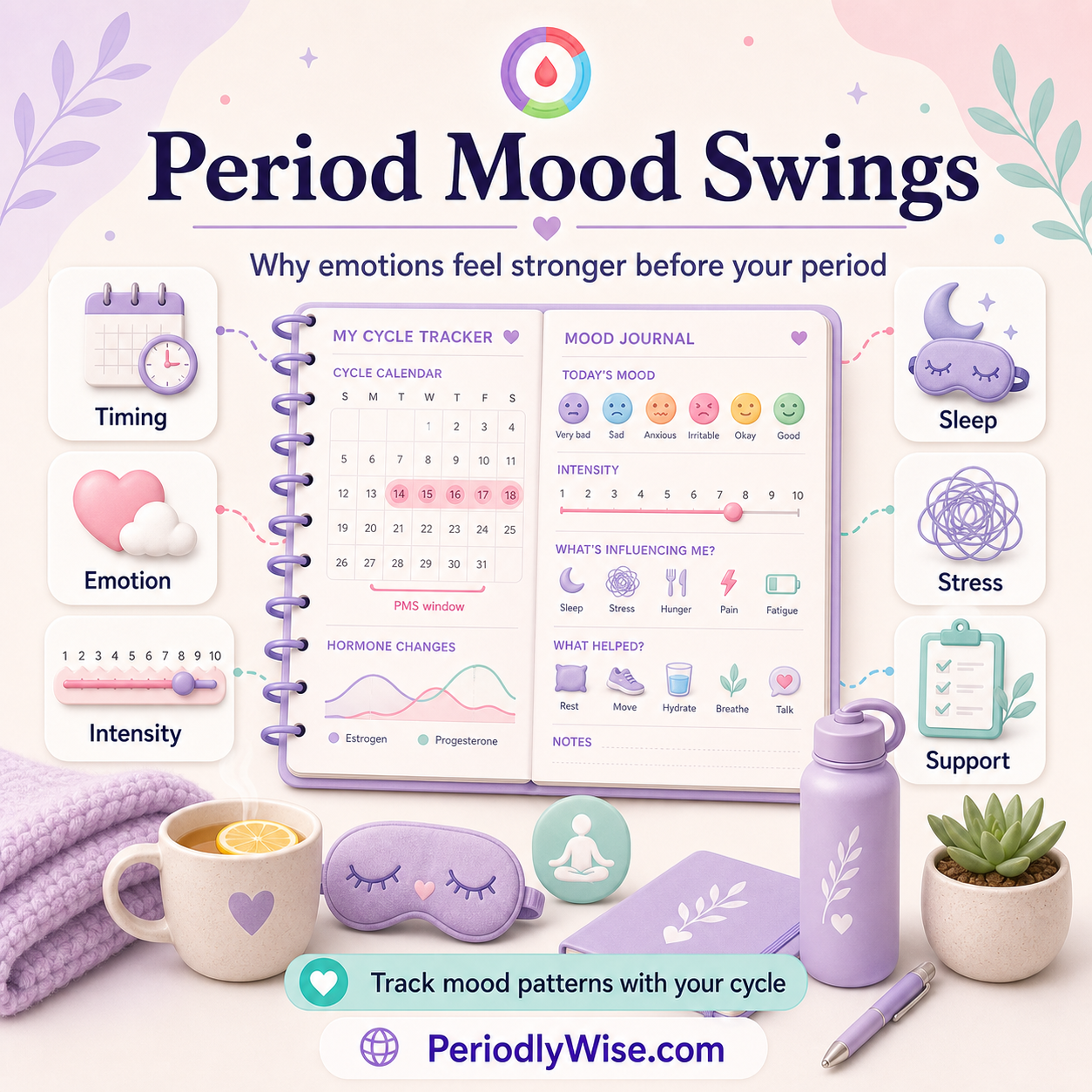
- Timing: when mood changes begin, whether they appear before bleeding, and when they ease.
- Emotion type: irritability, sadness, anxiety, anger, tearfulness, tension, or overwhelm.
- Intensity: a simple 1 to 10 score can help compare cycles.
- Daily impact: whether symptoms affect sleep, work, school, relationships, appetite, or normal routines.
- Sleep: bedtime, sleep quality, waking at night, or feeling unrested.
- Stress: workload, conflict, travel, deadlines, caregiving, exams, or major life events.
- Body symptoms: cramps, back pain, bloating, headaches, acne, fatigue, breast tenderness, or digestive changes.
- Food and appetite: cravings, skipped meals, stronger hunger, caffeine, or alcohol.
- What helps: rest, walking, heat, time alone, talking to someone, routine changes, or professional support.
For example, "irritable again" is useful. But "irritability starts 5 days before bleeding, feels worse after poor sleep, and improves on day 2 of period" gives you a clearer pattern.
What can make premenstrual mood symptoms worse?
Poor sleep
Sleep loss can make emotions feel sharper and reduce patience. If you notice premenstrual insomnia or restless sleep, connect the mood notes with sleep notes. The article on sleep, stress, and the menstrual cycle may help you think through this pattern.
Stress and pressure
Stress does not mean your symptoms are imaginary. It means your nervous system may already be carrying more. Premenstrual sensitivity can make normal pressure feel heavier.
Hunger and cravings
Skipping meals or going too long without food can make irritability worse for some people. If appetite changes before your period, read Period Cravings and Appetite Changes for a gentler tracking approach.
Pain and fatigue
Cramps, back pain, headaches, heavy flow, and fatigue can drain emotional energy. If you are already uncomfortable, it makes sense that your mood may feel less steady. The guide on period fatigue explains why tiredness is worth tracking too.
Too much self-criticism
Many people blame themselves for being "too sensitive" before a period. A kinder approach is more useful: notice the pattern, reduce avoidable pressure where possible, and ask for support when symptoms are bigger than self-care can handle.
What may help with period mood swings?
There is no single fix for everyone. The aim is to reduce avoidable triggers, support your body, and create a plan before the difficult window arrives.
Name the window
If you know your mood symptoms usually start a few days before your period, mark that window. Naming it can reduce the fear that something is randomly wrong every month.
Protect sleep where possible
A steady bedtime, reduced late-night scrolling, a darker room, and a calmer evening routine may help some people. It does not need to be perfect to be useful.
Eat regularly
Regular meals and snacks can help prevent hunger from adding to irritability. This is not about strict dieting or controlling cravings. It is about giving your body enough steady fuel.
Move gently
Walking, stretching, or light movement may help mood and body tension for some people. If you feel exhausted or movement worsens pain, rest is also a valid choice.
Lower the demand
If possible, avoid stacking your hardest tasks into the days when symptoms usually peak. Even small changes can help: simpler meals, earlier planning, fewer optional commitments, or a more realistic to-do list.
Communicate early
If a partner, friend, roommate, or family member is supportive, you can say something simple before the hard days arrive: "I may be more sensitive this week. I am tracking it and may need more quiet time." You do not have to share more than feels comfortable.
Consider professional support
If symptoms are intense, recurring, or hard to manage, a healthcare professional can help you understand options. Support may include reviewing sleep, stress, mental health, medicines, contraception, cycle history, or possible PMS or PMDD patterns.
When should mood symptoms get extra support?
Consider speaking with a healthcare professional if mood symptoms are severe, worsening, last beyond your period, affect relationships or daily responsibilities, make you feel out of control, or happen with panic, deep sadness, hopelessness, or major sleep disruption.
Seek urgent help now if you feel at risk of harming yourself or someone else, feel unable to stay safe, or have thoughts of suicide. Contact local emergency services or a crisis line in your country. If you are in the United States, you can call or text 988 for the Suicide and Crisis Lifeline.
Asking for help is not overreacting. Strong premenstrual mood symptoms are real symptoms, and support can make them easier to understand and manage.
How PeriodlyWise can help
PeriodlyWise can help you connect emotional symptoms with cycle timing. You can track period dates, flow, symptoms, and notes so you are not relying on memory alone.
Over time, you may notice that irritability begins around the same cycle day, anxiety is worse when sleep is poor, mood swings show up with cravings or fatigue, or symptoms improve after bleeding starts. That pattern can help you plan gentler days and explain your experience more clearly if you seek professional support.
Use PeriodlyWise to estimate your next period window, save cycle notes, and compare mood, sleep, stress, and symptoms across cycles.
Open the Period TrackerFAQ
Are mood swings before a period normal?
Mood changes before a period can be common and may be part of PMS. They still deserve attention if they feel intense, disruptive, unsafe, or different from your usual pattern.
Why do I get irritated before my period?
Irritability before a period may be linked with premenstrual hormone changes, poor sleep, stress, hunger, pain, fatigue, or a mix of factors. Tracking timing and context can make the pattern clearer.
How many days before a period do mood swings start?
For some people, PMS symptoms appear in the days or week before a period and improve after bleeding starts. Your own pattern may be shorter or longer, which is why tracking across cycles helps.
Can period mood swings be PMDD?
Severe premenstrual mood symptoms that strongly affect daily life may need assessment for PMDD or another mental health condition. A healthcare professional can help evaluate the pattern safely.
What helps emotional symptoms before a period?
Helpful steps may include regular meals, sleep support, gentle movement, planning lighter days, reducing avoidable stress, talking to a trusted person, and seeking professional support when symptoms are intense.
Final thoughts
Period mood swings are not a character flaw. They are a pattern worth noticing with care. If emotions feel stronger before your period, track the timing, intensity, body symptoms, sleep, stress, and what helps.
If the pattern is mild and predictable, planning ahead may make the premenstrual days easier. If the symptoms are severe, unsafe, worsening, or interfering with life, you deserve support from a qualified professional.