Many people can donate blood while having a period, but the safest answer is not a universal yes. Your local blood service makes the final eligibility decision, and its rules may differ from another country or center. The Irish Blood Transfusion Service accepts menstruating donors who pass hemoglobin screening and are not in pain or discomfort; Brazil's Ministry of Health says menstruation is not itself a contraindication, while heavy menstrual bleeding or other changes require assessment.
The more important question is whether menstrual blood loss and the donation together are appropriate for your body that day. Whole-blood donation removes red blood cells and iron. Heavy flow, prolonged bleeding, frequent donation, low dietary iron, recent pregnancy, fatigue, or a history of low ferritin can increase the chance that donation will worsen iron deficiency.
The screening at the center protects donors, but it has limits. Hemoglobin is checked before donation; ferritin, which reflects iron stores, may not be checked routinely. Someone can pass a hemoglobin screen and still have low iron reserves. This guide helps you decide when to attend, when to postpone, and what to tell the donor team.
Check the blood service before the calendar
Eligibility is set by national regulations and the collecting organization, not by PeriodlyWise. Some services explicitly accept donation during menstruation; others may defer donors during active bleeding or use additional clinical judgment. Check the official eligibility page or call the center before traveling, especially if this is your first donation.
At the appointment, answer the health questionnaire honestly and mention menstrual symptoms, medicines, iron treatment, recent procedures, pregnancy possibility, and any prior low-hemoglobin deferral. The donor professional can decide whether the planned whole-blood, platelet, or plasma donation is appropriate.
Do not use donation as a way to test whether you are anemic or to treat symptoms. If you have fatigue, breathlessness, palpitations, headaches, restless legs, unusual cravings for ice, pale skin, or heavy periods, arrange healthcare testing for a complete blood count and ferritin rather than relying only on the donation screen.
Donate today or postpone?
| Situation | Likely decision | Why it matters |
|---|---|---|
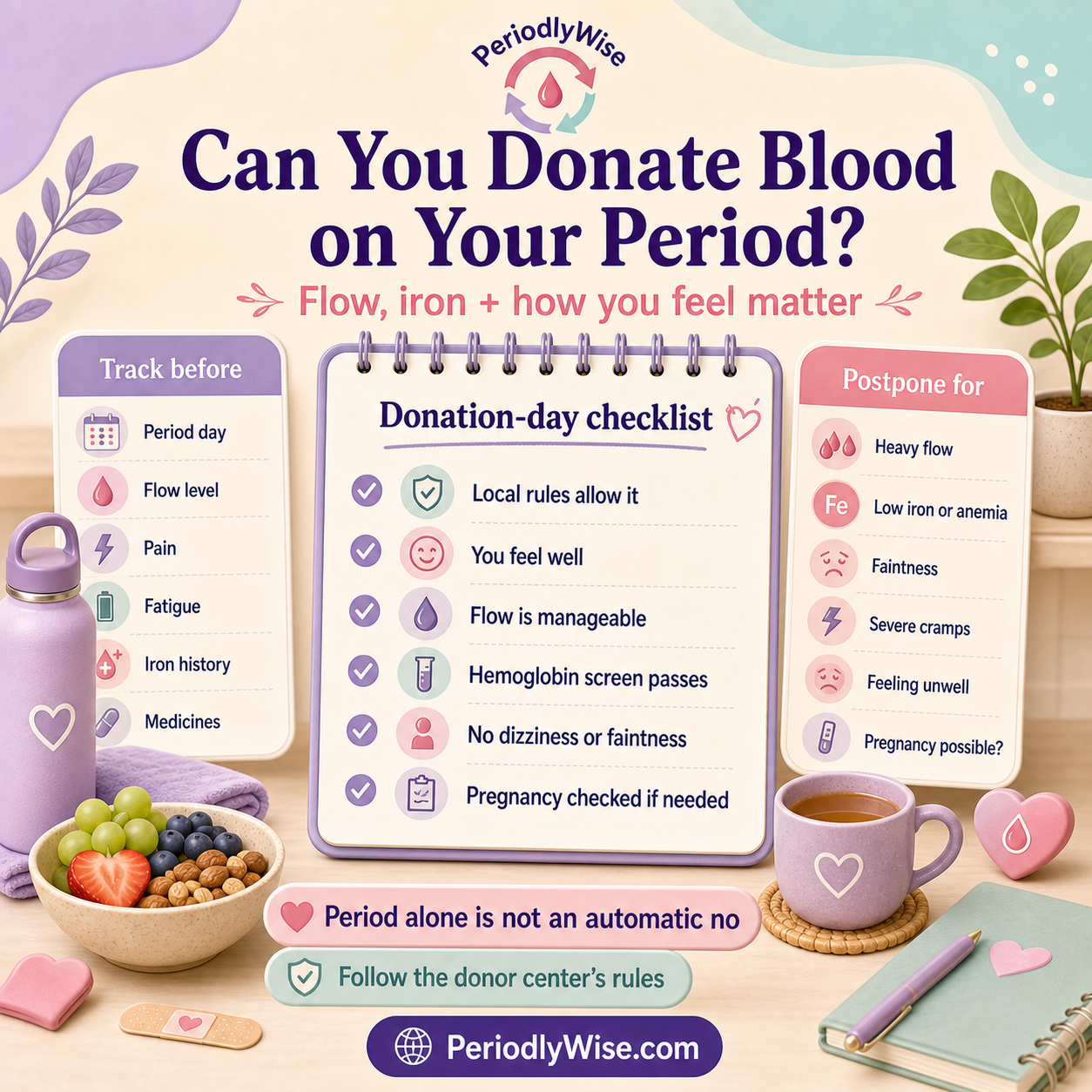
| Normal flow, you feel well, and local rules allow it | You may attend screening. | Menstruation alone may not disqualify you. |
| Heavy or prolonged bleeding | Postpone and contact the center or a clinician. | Combined blood loss can increase iron-deficiency risk. |
| Dizziness, faintness, severe cramps, vomiting, or weakness | Do not donate that day. | Donation can worsen symptoms and recovery. |
| Known anemia, low ferritin, or iron treatment for deficiency | Follow medical and center deferral guidance. | Passing one hemoglobin check may not mean iron stores have recovered. |
| A period is unexpectedly missed or pregnancy is possible | Check pregnancy and donor rules first. | Pregnancy is a contraindication to ordinary donation. |
| You took pain medicine | Tell the donor team exactly what and when. | Some medicines affect platelet donation or signal an unresolved condition. |
How periods, hemoglobin, and iron fit together
Hemoglobin is an iron-containing protein in red blood cells. Whole-blood donation removes both red cells and iron, and the body needs time and available iron to replace them. Menstrual bleeding is another source of iron loss. For many people with ordinary flow, the combination is tolerated; risk rises with heavy bleeding, frequent donation, low iron intake, pregnancy history, or already depleted stores.
Predonation hemoglobin testing is an important safety gate but is not the same as a ferritin test. Canadian Blood Services explains that iron stores can be low while hemoglobin remains normal. If you donate repeatedly or have heavy periods, ask a healthcare professional whether ferritin testing and an individualized iron plan are appropriate. Do not start high-dose iron solely because an article suggests it.
- Current flow: ordinary flow differs from soaking products rapidly or bleeding longer than usual.
- How you feel: energy, hydration, pain, dizziness, nausea, and sleep matter on donation day.
- Hemoglobin: the center checks whether the level meets its threshold.
- Ferritin: low stored iron can exist even when the hemoglobin screen passes.
- Donation frequency: repeated whole-blood donation raises cumulative iron loss.
- Donation type: plasma and platelet procedures return most red cells but still follow specific rules.
- Medicines and health history: pain relievers, tranexamic acid, iron therapy, illness, pregnancy, and procedures must be disclosed.
Before, during, and after donation
| Stage | Helpful preparation | Reason to stop or ask |
|---|---|---|
| Before booking | Read the official eligibility criteria and choose a day when you usually feel well. | Heavy flow, active investigation, low iron, illness, or pregnancy possibility. |
| The day before | Eat regular iron-containing meals, hydrate, and sleep. | Do not attempt a crash iron dose or arrive fasting. |
| At screening | Report your period, symptoms, medicines, and prior deferrals honestly. | A low hemoglobin result or staff concern means postponing. |
| During donation | Tell staff immediately about nausea, sweating, pain, tingling, or dizziness. | The procedure should be stopped or adjusted by trained staff. |
| After donation | Rest, drink fluids, eat, keep the bandage on as directed, and avoid strenuous activity for the advised period. | Persistent faintness, bleeding from the site, chest pain, or trouble breathing needs help. |
| Future donations | Track periods, donation dates, hemoglobin results, and recovery. | Repeated low hemoglobin or fatigue deserves ferritin and medical review. |
A safer donation-day checklist
A few checks before leaving home can prevent an avoidable deferral or a difficult recovery.
- Confirm local eligibility. Use the official blood service, not a general social post, because menstruation rules, age, weight, intervals, travel, medicines, and hemoglobin thresholds vary.
- Assess your period honestly. Note cycle day, flow level, clots, pain, dizziness, fatigue, and whether bleeding is heavier or longer than your normal.
- Check pregnancy context. If the period is missed, unusually light, or pregnancy is possible, follow pregnancy-testing and donor-center guidance before donating.
- Prepare normally. Eat a balanced meal, drink fluids, sleep, bring identification, and take only usual medicines as directed. Tell staff about every medicine and supplement.
- Respect a deferral. A low hemoglobin result protects you. Ask when you may return and arrange clinical testing if low results repeat or symptoms suggest iron deficiency.
What to record if you donate regularly
A private record can reveal whether donations, heavy periods, and fatigue cluster together. It should support donor-center and medical advice, not replace it.
- Period dates and flow: start, end, heaviest days, clots, leaks, and products used.
- Donation details: date, whole blood versus component donation, center, and any reaction.
- Screening result: hemoglobin value when provided and whether you were deferred.
- Iron context: ferritin or blood-count results ordered by a clinician, not guesses from symptoms.
- Symptoms: fatigue, breathlessness, palpitations, headaches, dizziness, restless legs, or reduced exercise tolerance.
- Nutrition: dietary pattern, appetite, and any clinician-recommended supplement.
- Medicines: pain relief, medicines that reduce menstrual bleeding, contraception, and iron treatment.
- Recovery: fluids, meals, bruising, faintness, and how long energy takes to return.
When to postpone and seek medical advice
Postpone donation and speak with the blood service if your bleeding is heavy or prolonged, your pain is not controlled, you feel dizzy or unwell, you are being investigated for abnormal bleeding, or you have been told that hemoglobin or ferritin is low. Arrange healthcare review for repeated low-hemoglobin deferrals or symptoms of anemia.
Seek urgent care for fainting that does not quickly resolve, chest pain, trouble breathing, confusion, severe weakness, uncontrolled bleeding, or signs of a serious donation reaction. For menstrual bleeding, urgent assessment is appropriate when products are being soaked rapidly, large clots occur with dizziness, severe pelvic pain is present, or pregnancy may be involved.
Use PeriodlyWise to record period timing and flow, then compare it privately with donation dates, screening results, and recovery symptoms.
Open the period trackerFrequently asked questions
Does being on your period automatically disqualify you from donating blood?
Not in many blood services, but rules differ. You still must feel well, meet every criterion, and pass the center's screening. Check the official service where you plan to donate.
Should I donate on a heavy-flow day?
It is safer to postpone and ask the donor center, especially with prolonged bleeding, clots, fatigue, dizziness, anemia, or low iron. Combined blood loss can make iron deficiency more likely.
What if I pass the hemoglobin test but have low iron?
Hemoglobin and ferritin measure different things. Normal hemoglobin can occur with depleted iron stores. Follow your clinician's and blood service's advice about ferritin, supplements, and when to return.
Can I take ibuprofen and donate?
Medication rules depend on the donation type and service. Some medicines may be acceptable for whole blood but affect platelet donation. Tell staff the exact medicine, dose, reason, and timing.
Can donating blood make the current period heavier?
Donation does not directly control menstrual flow, but the combined blood and iron loss can make you feel worse or increase anemia risk. Heavy or changing bleeding itself needs appropriate assessment.
The bottom line
For many people, menstruation is not an automatic barrier to blood donation. The safe decision depends on local rules, ordinary versus heavy flow, symptoms, hemoglobin screening, iron reserves, donation frequency, medicines, and pregnancy context.
Choose the donor's health over keeping an appointment. Postponing because you feel unwell, are bleeding heavily, or need an iron evaluation protects both you and the donation system; it does not make you a failed donor.