A missed period with a negative pregnancy test can create a very specific kind of uncertainty. Part of you may feel relieved. Part of you may still wonder, "But where is my period?" If pregnancy is possible, a negative test can be reassuring, but it is not always the end of the story. Timing matters, ovulation can shift, and periods can be late for reasons that have nothing to do with pregnancy.
Home pregnancy tests work by detecting human chorionic gonadotropin, usually called hCG, in urine. hCG rises after implantation. If you test before enough hCG is present, or if ovulation happened later than expected, a test can be negative even though your period has not started yet. Mayo Clinic and the Office on Women's Health both note that testing too early can lead to false-negative results.
This guide explains why a period can be missed while a pregnancy test is negative, how to retest responsibly, what non-pregnancy causes can delay bleeding, and what to track in PeriodlyWise so the next step feels clearer.
Can a negative pregnancy test be wrong?
Yes, it can. A false negative means the test says you are not pregnant when you are. The most common reason is testing too soon for the test to detect enough hCG. Mayo Clinic explains that home pregnancy tests are more likely to be accurate after the first day of a missed period, and that waiting a day or two can make hCG easier to detect if pregnancy is present. The FDA also notes that testing too early or too close to conception can miss pregnancy.
A negative result is more reliable when the test is not expired, the instructions were followed, the control line appeared, the result was checked at the correct time, and the urine was concentrated enough. First-morning urine is often recommended because it can contain a higher concentration of hCG early in pregnancy.
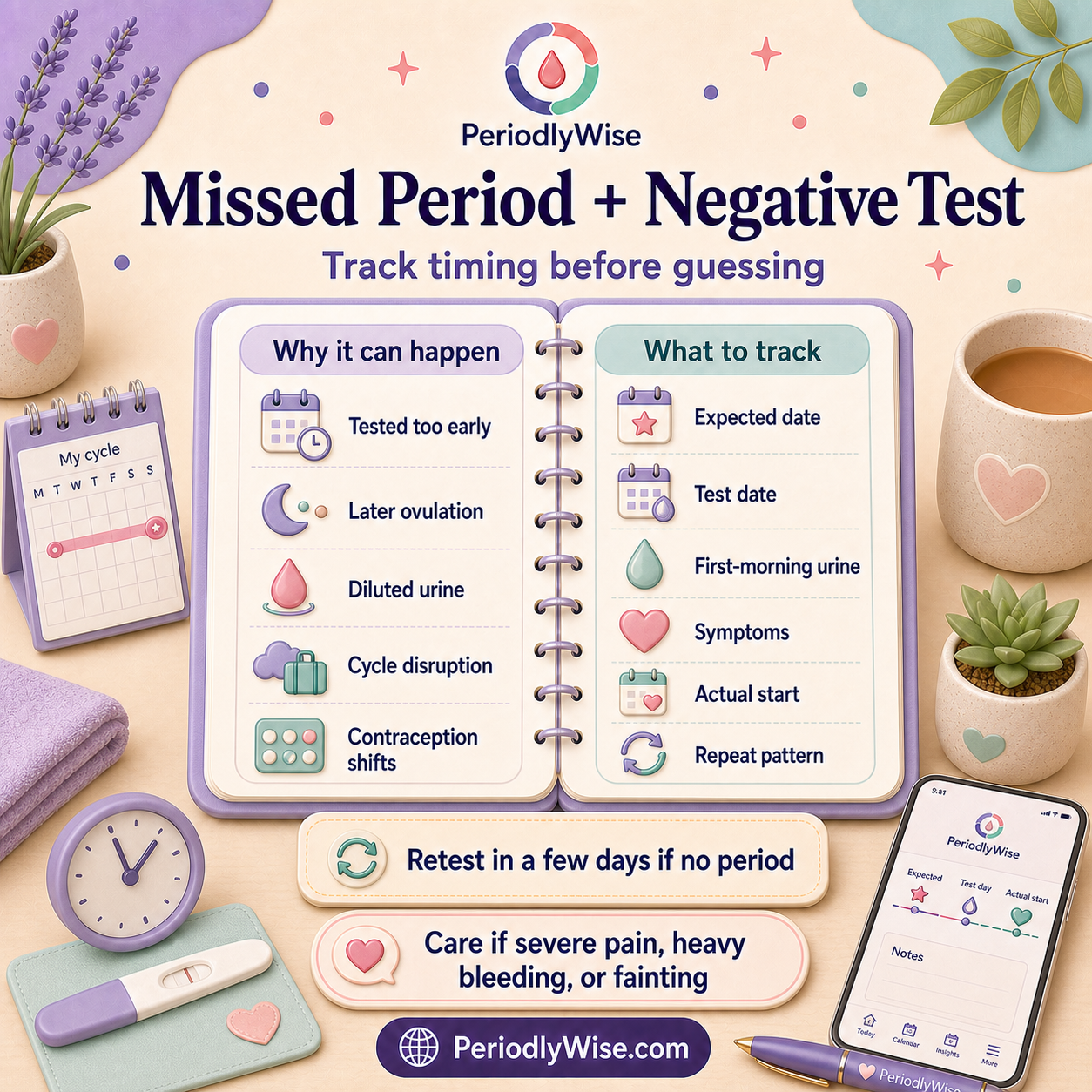
Why a period can be missed but the test is negative
There are two broad explanations: either pregnancy has not been detected yet, or the period is late for another reason. The details below can help you decide what to track next.
If hCG has not risen enough, a urine test may be negative. This is more likely if you tested before or right after the missed period.
If ovulation happened later than usual, the period may be due later than expected, and pregnancy testing may also need more time.
Testing later in the day after drinking fluids can make early hCG harder to detect. First-morning urine can improve early-test reliability.
Reading the result too early, too late, or using an expired or faulty test can make the result harder to trust.
Stress, illness, travel, poor sleep, sudden weight change, or intense exercise changes can shift cycle timing.
Breastfeeding, perimenopause, PCOS, thyroid conditions, and some contraception methods can delay or stop periods.
What to do next if your period still has not started
If pregnancy is possible and the test is negative, the next step is usually not to keep testing every few hours. hCG changes over days, not minutes. Mayo Clinic recommends taking another test a few days or one week later if the period does not begin. The Office on Women's Health also advises retesting in a few days if you still think you may be pregnant.
Confirm the expiration date, control line, waiting time, and instructions for that exact brand.
Write down expected period date, test date, time of day, and whether you used first-morning urine.
If bleeding does not start, repeat in a few days or about one week, especially if the first test was early.
If tests stay negative but pregnancy still feels possible, a healthcare professional can order blood testing or evaluate other causes.
Severe pelvic pain, one-sided pain, shoulder pain, fainting, heavy bleeding, or severe dizziness needs urgent care.
Record the eventual start date so your next PeriodlyWise estimate reflects what actually happened.
Common non-pregnancy reasons for a missed or late period
The NHS lists several common reasons for missed or late periods, including stress, perimenopause, PCOS, sudden weight loss, being overweight, too much exercise, hormonal contraception, breastfeeding, and thyroid conditions. Cleveland Clinic also notes that amenorrhea can have many causes, including pregnancy, lactation, stress, weight changes, exercise, medications, hormonal imbalance, thyroid conditions, and chronic illness.
Stress, illness, travel, and sleep disruption
The brain and ovaries communicate through hormone signals. Major stress, acute illness, disrupted sleep, travel, or sudden routine changes can shift ovulation. When ovulation shifts later, the period can also arrive later. For a deeper guide, read Can Stress Delay Your Period?
Weight, exercise, and nutrition changes
Sudden weight loss, significant weight gain, restricted eating, or intense exercise changes can affect cycle signals. This does not mean every workout or diet change will delay a period. It means a big body-stress change belongs in your notes when a period is missing.
Hormonal contraception and emergency contraception
Starting, stopping, missing, or changing hormonal contraception can change bleeding patterns. Some methods can make periods lighter, irregular, or absent. Emergency contraception can also shift bleeding timing for some people. If contraception is part of the story, track dates, missed doses, unprotected sex timing, and test timing.
PCOS, thyroid changes, and other health factors
PCOS, thyroid conditions, high prolactin, ovarian conditions, chronic illness, and some medications can affect periods. If missed periods repeat, if cycles become irregular, or if you notice symptoms such as acne changes, excess facial hair, unexplained weight changes, fatigue, hot flashes, nipple discharge, or headaches/vision changes, medical evaluation is appropriate.
Perimenopause, postpartum, and breastfeeding
Periods can become less predictable during breastfeeding, postpartum recovery, and perimenopause. These life stages can still include pregnancy possibility in some situations, so a negative test should be interpreted alongside your personal context.
What to track in PeriodlyWise
When a period is late and a test is negative, tracking should reduce confusion, not feed anxiety. Keep the notes useful and limited.
- Expected period date: the date PeriodlyWise or your usual pattern expected bleeding.
- Pregnancy test dates: test date, time of day, first-morning urine or not, brand if useful, and result.
- Actual period start: when full flow begins, record it as the new cycle start.
- Spotting or brown discharge: note separately from full flow so the cycle start is not overcounted.
- Sex and contraception context: only what you need for your own clarity and safety.
- Stress, illness, travel, sleep, exercise, weight, or medication changes: these may explain a shift.
- Symptoms: cramps, breast tenderness, nausea, fatigue, mood, discharge, pelvic pain, dizziness, or fever.
- Repeat pattern: one late period is different from repeated missed periods.
If you are having period symptoms but no bleeding yet, read Period Symptoms Without Bleeding. If your cycle lengths vary often, the Irregular Period Tracker and Irregular Period Calculator guide can help you use wider ranges.
When to seek medical care
Contact a healthcare professional if you continue to get negative tests but your period does not start, if pregnancy still feels possible, or if missed periods repeat. The NHS advises seeing a GP if you have missed three periods in a row, your periods have become irregular, or missed periods come with symptoms such as weight change, tiredness, facial hair growth, or skin changes. Cleveland Clinic advises calling a provider if you miss three months of periods.
Seek urgent medical care if you may be pregnant and have severe pelvic or abdominal pain, one-sided pain, shoulder pain, fainting, severe dizziness, heavy bleeding, weakness, or symptoms that feel unsafe. These symptoms need prompt assessment rather than waiting for another home test.
How PeriodlyWise helps you stay grounded
PeriodlyWise cannot tell you whether you are pregnant. It can help you keep the timeline straight: expected date, test date, symptoms, stressors, spotting, and actual start date. That timeline is useful whether the period starts tomorrow or whether you decide to speak with a clinician.
Use the Period Tracker to update your actual start date when bleeding begins. Use Why Is My Period Late Besides Pregnancy? for a broader list of late-period causes. If you notice brown discharge before bleeding starts, read Brown Discharge Before Your Period.
FAQ
Can I be pregnant with a negative test and missed period?
Yes, it is possible, especially if you tested too early, ovulated later than expected, used diluted urine, or the test was not used correctly. Repeat the test after a few days or about one week if your period does not start.
When should I test again?
If pregnancy is possible and your period still has not started, retest in a few days or about one week. Use the test instructions carefully and consider first-morning urine.
Can stress cause a missed period and a negative test?
Stress can delay ovulation for some people, which can make the period arrive later. A negative test does not prove stress is the cause, so track the pattern and seek care if missed periods repeat or symptoms worry you.
When should I call a doctor?
Call if your period does not start after repeated negative tests, if you miss several periods, if cycles become irregular, or if you have severe pain, heavy bleeding, fainting, dizziness, fever, unusual discharge, or symptoms that feel unsafe.
Use PeriodlyWise to track your expected period, test timing, symptoms, cycle shifts, and actual start date without guessing from memory.
Open the Period Tracker