
Brown discharge before your period can be unsettling because it sits in an in-between space. It may look like spotting, discharge, dried blood, or the very beginning of a period. The color can make you wonder whether something is wrong, whether your period is about to start, whether you should count it as day 1, or whether pregnancy or infection could be involved.
In many cases, brown discharge close to a period is older blood leaving the body slowly and mixing with vaginal fluid. Blood can look brown when it has had more time to oxidize before it comes out. That can happen at the end of a period, just before a period starts, or during light spotting. But the word can matters. Brown discharge is not a diagnosis by itself. The timing, amount, smell, texture, symptoms, and pregnancy or contraception context all matter.
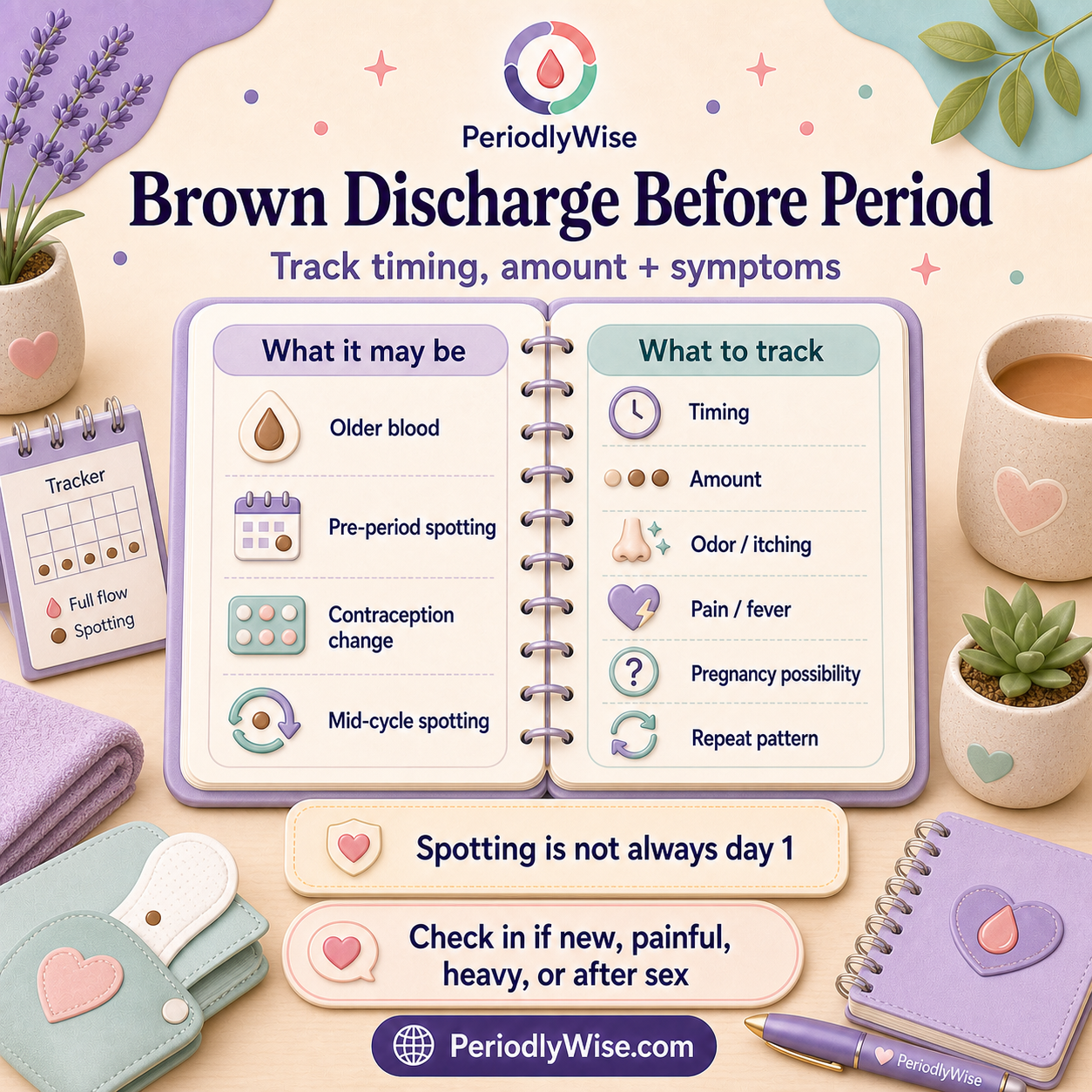
PeriodlyWise can help you track this without turning every spot into panic. The goal is to notice the pattern clearly: Was it one day before full flow? Did it happen between periods? Did it come with itching, odor, pelvic pain, fever, or bleeding after sex? Did it repeat?
What brown discharge usually means
Brown discharge often means a small amount of blood has mixed with vaginal fluid. The blood may be older or moving slowly, so it looks brown instead of bright red. Cleveland Clinic notes that brown discharge is commonly connected with blood mixing into discharge, and that it may happen around the end of a period or with spotting.
That does not mean every brown mark is harmless or period-related. A tiny amount near your expected period is a different story from brown discharge with a fishy odor, pelvic pain, fever, itching, burning, bleeding after sex, or a pregnancy concern. Try to describe what you see instead of forcing a conclusion too early.
Why it can happen before your period
Just before a period, hormonal changes can make the uterine lining begin to shed slowly. If the first blood leaves the body gradually, it may appear as brown spotting before brighter red or heavier flow begins. For some people, that is a familiar pre-period pattern.
If brown discharge reliably appears one or two days before full flow and then becomes your usual period, you may choose to track it as pre-period spotting rather than day 1. In PeriodlyWise, day 1 is most useful when it marks the first day of real menstrual flow, not every faint spot. This keeps cycle length calculations cleaner.
If the difference between spotting and a period is confusing, read Spotting Before Your Period. If the color itself worries you, the guide to Period Blood Colors and Flow Changes gives more context.
When brown discharge is not simply the period starting
Brown discharge can appear for several reasons. These are not self-diagnosis categories. They are practical ways to decide what details to track and when to ask for care.
Light brown spotting just before or after your period may be leftover or slow-moving blood. Track whether full flow starts and how many days the spotting lasts.
Starting, stopping, missing, or changing birth control can cause spotting or brown discharge for some people. Note the method and the date of any change.
Some people notice light spotting away from the period. Timing matters: mid-cycle brown spotting is different from spotting right before flow.
Sex, a pelvic exam, dryness, infection, or irritation can sometimes cause light bleeding that dries brown. Track pain, timing after sex, and discharge changes.
Discharge with a strong odor, itching, burning, pelvic pain, fever, yellow/green/gray color, sores, or pain while urinating needs medical attention.
If pregnancy is possible, brown or red bleeding should be interpreted carefully. Test at the right time and seek urgent care for severe pain, dizziness, or heavy bleeding.
Should brown discharge count as day 1?
For tracking purposes, it usually helps to separate spotting from full flow. Day 1 is typically the first day of real menstrual bleeding. If brown discharge appears only when wiping, stays very light, and does not require your usual period product, it may be better recorded as spotting. If it becomes a clear period flow later that day, you can count that day as the start.
This distinction matters because cycle length is counted from one period start date to the next. Counting every tiny brown spot as a period start can make cycles look shorter than they really are. If your cycle timing has become confusing, Cycle Length Meaning explains the start-date logic.
What to track in PeriodlyWise
When brown discharge appears before a period, the most useful notes are short and concrete. Avoid vague notes like "weird discharge" if you can. A clearer record may help you and a clinician understand whether this is a normal pre-period pattern, spotting, infection-related discharge, or abnormal bleeding.
Record the date, cycle day, and how many days before the expected period it happened.
Note whether it was only on wiping, a few underwear spots, needed a liner, or became real flow.
Brown, dark red, pink-brown, watery, sticky, thick, or clumpy can each tell a different story.
Track fishy or foul odor, itching, burning, soreness, or pain while urinating.
Note pelvic pain, one-sided pain, cramps, fever, dizziness, fatigue, or feeling unwell.
If pregnancy is possible, record test timing, sex timing, contraception, and whether bleeding is unusual for you.
Track missed pills, emergency contraception, new methods, IUD changes, blood thinners, or hormone changes.
One cycle of spotting and repeated spotting across several cycles are different clinical stories.
When brown discharge needs medical advice
The NHS advises getting help when vaginal discharge changes in color, smell, or texture, or when it comes with itching, soreness, bleeding between periods, bleeding after sex, pain when peeing, or pelvic pain. MedlinePlus also recommends evaluation for unexplained bleeding between periods, bleeding after menopause, heavy bleeding, pregnancy-related bleeding, or bleeding with pain, fatigue, or dizziness.
Contact a healthcare professional if brown discharge is new for you, keeps returning, happens after sex, appears between expected periods, comes with pelvic pain, fever, itching, burning, foul odor, unusual discharge color, or follows a missed period with pregnancy possibility. Seek urgent care for heavy bleeding, fainting, severe dizziness, severe one-sided pelvic pain, shoulder pain with pregnancy possibility, or symptoms that feel unsafe.
And if you have had menopause and notice any bleeding or brown discharge that could be blood, do not treat it as a normal period pattern. It should be checked.
How PeriodlyWise helps without over-monitoring
Brown discharge can be easier to explain when the notes are organized next to period timing. Use the Period Tracker for expected dates, flow, and symptoms. Use the Irregular Period Tracker if bleeding or start dates are becoming unpredictable. If your period seems to arrive twice in one month, read Period Twice in One Month. If pad irritation or scent makes the discharge harder to interpret, Pad Irritation and Comfort may help separate skin irritation from discharge concerns.
The point is not to inspect every detail all day. The point is to keep enough context that you are not relying on memory when something changes.
FAQ
Is brown discharge before a period normal?
It can be normal, especially when it is light spotting close to the expected period and turns into your usual flow. It is worth checking if it is new, repeated, painful, foul-smelling, itchy, related to pregnancy possibility, or happens between periods.
Does brown discharge mean my period starts today?
Not always. If it is only spotting, you may record it as spotting and count day 1 when full menstrual flow begins. If it becomes your usual flow the same day, that day may be your start date.
Can brown discharge be an infection?
Sometimes discharge changes can be linked with infection, especially when there is strong odor, itching, burning, pelvic pain, fever, pain while urinating, or yellow, green, gray, or frothy discharge. A healthcare professional can test and treat the cause.
Should I take a pregnancy test?
If pregnancy is possible and the discharge follows a late or missed period, is unusual for you, or comes with symptoms, a properly timed pregnancy test can be useful. Seek urgent care for severe pain, dizziness, fainting, or heavy bleeding.
Use PeriodlyWise to record timing, spotting, flow, symptoms, contraception context, and whether brown discharge becomes your usual period.
Open the Period Tracker