Pad irritation can feel frustrating, especially when you are already managing bleeding, cramps, fatigue, or a busy day. For some people, pads feel completely fine. For others, the skin around the vulva, inner thighs, or underwear line can feel itchy, raw, warm, sore, or rubbed during period days.
Most mild irritation is related to contact, friction, moisture, heat, or sensitivity to materials. Still, not every itch or burning feeling is "just pad rash." Infections, skin conditions, allergic reactions, shaving irritation, and other causes can feel similar. The safest approach is to notice the pattern, reduce obvious irritants, and get medical advice if symptoms are strong, persistent, unusual, or paired with other symptoms.
Why pads can irritate skin during your period
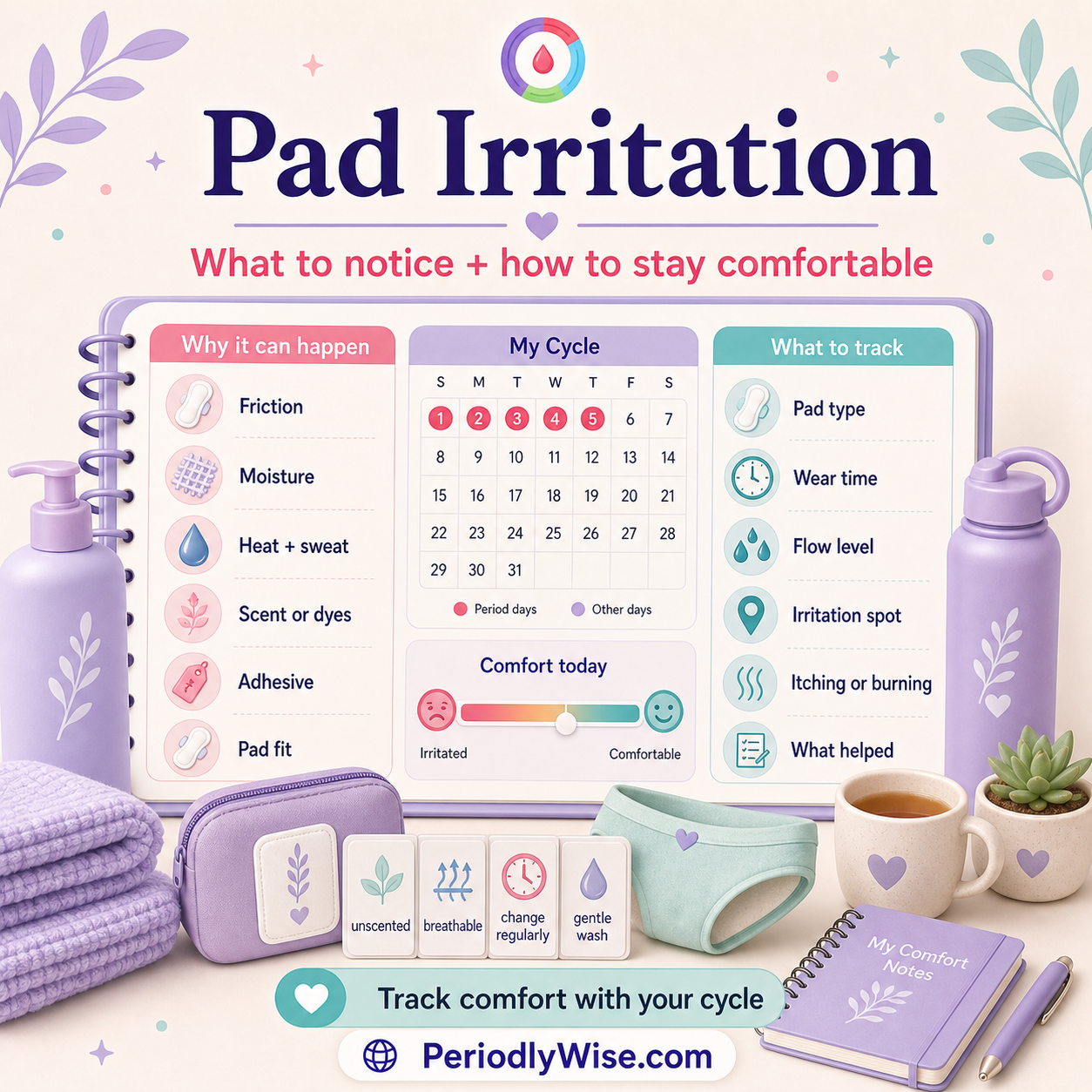
The vulvar area has delicate skin, and period days can create a mix of rubbing, moisture, warmth, and product contact. A pad may rub against the same area for hours, especially when walking, exercising, sitting for long periods, or wearing tight clothing. Blood, sweat, and discharge can also sit close to the skin, making the area feel damp or more sensitive.
Some people react to scented pads, deodorizing layers, dyes, adhesives, synthetic materials, or laundry products on underwear. Others feel irritation only on heavy flow days because pads are changed more often, worn longer, or pressed more firmly against the body. Irritation can also be worse if the pad size is not right, if wings rub the inner thighs, or if underwear shifts during the day.
Pad irritation is not a sign that you are doing something wrong. It usually means your skin is telling you that a product, fit, moisture level, or friction pattern needs attention.
What pad irritation can feel like
Irritation can show up as itching, burning, stinging, soreness, redness, rawness, chafing, small bumps, warmth, or a rubbed feeling. It may be strongest where the pad edge touches the skin, where wings fold around underwear, or where a seam presses against the inner thigh.
Product-related irritation often improves when the product is removed, changed more often, or switched to a gentler option. Symptoms that keep getting worse, spread beyond the contact area, or come with discharge, odor, sores, swelling, fever, pelvic pain, or urinary burning may need a different explanation.
What should you track?
Tracking helps you separate a one-time uncomfortable day from a repeating pattern. You do not need a complicated record. A short note can be enough.
- Product: pad brand, absorbency, size, wings or no wings, scented or unscented.
- Wear time: how long the pad was worn before changing.
- Flow: light, moderate, heavy, clots, spotting, or leaks.
- Location: vulva, underwear line, inner thighs, buttocks, or where wings touch.
- Symptoms: itching, burning, rawness, swelling, bumps, soreness, or pain.
- Context: exercise, heat, sweating, tight clothing, shaving, new detergent, or new underwear.
- Changes: whether symptoms improve after changing products, washing gently, or wearing looser clothing.
For example, "day 2 heavy flow, wing edge rubbing inner thigh, better after switching pad size" tells a different story from "burning and itching with unusual discharge for three days."
How to stay more comfortable
Choose unscented pads when possible, especially if your skin is sensitive. Change pads regularly, and sooner on heavy flow days or after sweating. Wear breathable cotton underwear and avoid very tight clothing when irritation is active. Wash the external area gently with water or a mild, fragrance-free cleanser if you already tolerate it, then pat dry instead of rubbing.
Avoid douches, vaginal sprays, perfumes, scented wipes, and harsh soaps around the vulva. These can irritate sensitive skin and may disturb the natural vaginal environment. The goal is gentle external care, not aggressive cleaning.
If one pad style keeps causing irritation, try a different shape, size, absorbency, or material. Some people do better with softer pads, reusable cloth pads, period underwear, tampons, cups, or discs, but the best option depends on comfort, flow, access, and health needs. If a product change makes symptoms worse, stop using that product and track what happened.
Why heavy flow days can make irritation worse
Heavy flow days can increase rubbing and moisture because products fill faster, feel bulkier, or need backup layers. You may also sit differently, move differently, or wear tighter protection because you are worried about leaks. That can create more pressure and friction.
If irritation appears mostly on heavy days, track product changes alongside flow. You may need a more absorbent product for a shorter time, a softer overnight pad, better-fitting underwear, or a different backup strategy. You can also read Period Fatigue on Heavy Flow Days if heavy bleeding is affecting energy too.
What if irritation comes with odor, discharge, or burning?
Pad irritation can overlap with other symptoms, but odor, unusual discharge, strong burning, sores, swelling, pelvic pain, fever, or pain when peeing should not be automatically blamed on the pad. These symptoms may need medical evaluation for infection, dermatitis, allergy, or another cause.
If odor is part of the concern, read Period Smell and Odor Changes. If spotting or bleeding changes are also happening, read Spotting Before Your Period.
When to get medical advice
Get medical advice if irritation is severe, painful, keeps returning, lasts beyond your period, or does not improve after avoiding likely triggers. Also seek care if you notice unusual discharge, a strong fishy or rotten odor, sores, blisters, swelling, bleeding from irritated skin, fever, pelvic pain, pain during sex, or burning when urinating.
These symptoms do not mean something serious is definitely happening. They mean the cause may not be simple friction, and you deserve a clearer answer.
How PeriodlyWise can help
PeriodlyWise cannot diagnose pad rash, infections, allergies, dermatitis, or any medical condition. What it can do is help you organize the timing. You can record period days, flow, product use, irritation, odor, discharge, and what helped.
Over a few cycles, you may notice that irritation happens only with one brand, only during heavy flow, only after sweating, or only when a pad is worn longer than usual. That pattern can help you make practical product choices and explain the issue more clearly if you seek medical advice.
Record pad type, flow, wear time, irritation, odor, discharge, and what helped so patterns are easier to see.
Open the Period TrackerFAQ
Is pad irritation normal?
Mild rubbing or sensitivity can happen, but frequent, painful, or persistent irritation should not be ignored. Tracking the product, location, and timing can help identify a trigger.
Can scented pads cause irritation?
They can for some people. Fragrance and deodorizing ingredients may bother sensitive skin, especially when the area is already warm or damp.
Should I stop using pads completely?
Not always. A different size, material, absorbency, or change schedule may help. If irritation continues or comes with other symptoms, ask a clinician.
Can pad irritation be confused with infection?
Yes. Itching, burning, redness, odor, or discharge can overlap with infections or skin conditions, so persistent or unusual symptoms deserve medical advice.
Final thoughts
Pad irritation is common enough to talk about plainly. It can come from friction, moisture, heat, fragrance, adhesives, product fit, or sensitive skin. Small changes, like unscented products, breathable underwear, regular changes, and gentler washing, may make period days more comfortable.
At the same time, do not force yourself to tolerate burning, swelling, sores, unusual discharge, strong odor, or symptoms that keep returning. Track the pattern and get support when the signs go beyond simple rubbing.