Period hygiene is not about being "clean enough" to hide your period. Periods are normal. Menstrual blood is not shameful. Hygiene simply means caring for your body, your skin, your products, and your comfort in a way that is practical for real life.
Some days you have a private bathroom, time to change, and everything you need. Other days you are at work, school, travel, a long commute, a shared restroom, or a heavy-flow morning. A good period hygiene routine should work in all of those situations without turning your period into a crisis.
This guide keeps the advice simple and medically careful: clean hands, regular product changes, gentle external washing, safe reusable-product care, scent-free comfort, and clear warning signs.
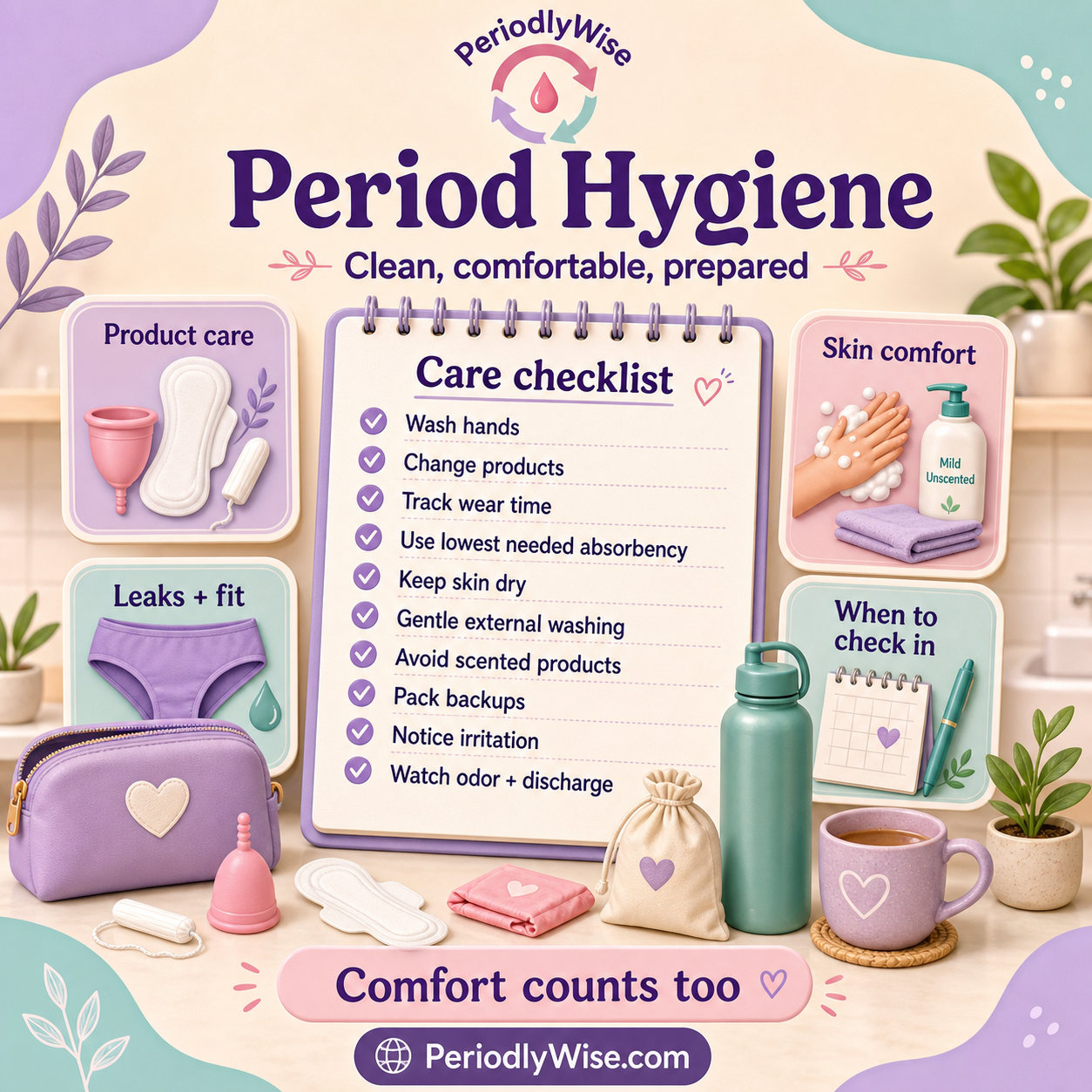
The 6 principles of period hygiene
You do not need a complicated routine. Most people need a few steady habits that can flex with flow and location.
| Principle | What it means | Why it helps |
|---|---|---|
| Clean hands | Wash or sanitize hands before and after changing products. | Reduces transfer of germs to products and sensitive skin. |
| Regular changes | Change based on product instructions, flow, comfort, and skin needs. | Helps reduce leaks, odor buildup, irritation, and product risks. |
| Gentle external washing | Wash the outside only with water or mild unscented cleanser if tolerated. | Protects the vulva and avoids disrupting the vagina. |
| No scented pressure | Avoid douches, vaginal sprays, perfumes, and strongly scented products. | These can irritate skin or disturb the natural vaginal environment. |
| Safe storage and disposal | Wrap disposable products; store reusable products clean, dry, and breathable. | Keeps your routine tidy and reduces odor or contamination. |
| Symptom awareness | Notice itching, burning, rash, fever, pain, odor changes, or retained products. | Some symptoms need medical care, not just more washing. |
How often should period products be changed?
Product timing depends on flow, product type, absorbency, instructions, and comfort. The FDA advises changing tampons every 4 to 8 hours and not wearing one for more than 8 hours. It also advises using the lowest absorbency needed for your flow. If you need a tampon more absorbent than usual or need changes very frequently, that can be a sign to track flow and consider medical advice.
| Product | Practical hygiene habit | Safety note |
|---|---|---|
| Pad or liner | Change when wet, uncomfortable, soiled, or after several hours, and sooner during heavy flow or sweating. | Long wear can increase odor, dampness, rubbing, and irritation. |
| Tampon | Change every 4 to 8 hours, use the lowest absorbency that works, and never wear longer than 8 hours. | Leaving tampons too long can increase toxic shock syndrome risk. |
| Menstrual cup or disc | Follow the specific product instructions for emptying, rinsing, cleaning, and maximum wear time. | Wash hands first; do not exceed the product's instructions. |
| Period underwear | Change based on flow, wetness, odor, and comfort; rinse or wash as directed. | Dry thoroughly before storing to reduce odor and fabric problems. |
| Reusable cloth pad | Change when wet or uncomfortable; rinse, wash, dry, and store as directed. | Do not store damp reusable products sealed for long periods. |
A period hygiene routine for real life
Instead of one perfect routine, use a context-based routine. It is easier to follow and less likely to collapse on busy days.
Morning
- Check flow level and choose a product that matches the next few hours.
- Wash hands before handling tampons, cups, discs, or reusable products.
- Pack at least one backup product, especially on heavy days or uncertain-cycle days.
- If skin feels sensitive, choose breathable underwear and avoid tight friction-heavy clothing when possible.
Work, school, travel, or shared bathrooms
- Carry a small pouch with products, tissues, hand sanitizer, disposal bags, and spare underwear if leaks worry you.
- If a sink is outside the stall and you use a cup or disc, follow your product instructions and plan a clean-hand method.
- Wrap disposable products before placing them in a bin. Do not flush pads, tampons, liners, wipes, or applicators unless the product specifically says it is flush-safe.
- If you cannot change exactly when planned, change as soon as you safely can and track whether the product was pushed past your comfort window.
Night
- Use a product appropriate for your flow and sleep length.
- Do not sleep with a tampon for more than 8 hours.
- If you leak at night, track leak location and sleep position rather than blaming yourself. Product fit, flow direction, and sleep length matter.
- Read Period Leaks at Night if night leaks are a repeat issue.
How to wash during your period
The vagina is internal and does not need washing inside. The vulva is external and can be washed gently. For many people, water is enough. If you use cleanser, choose something mild and unscented that you already tolerate. Avoid douching, vaginal sprays, perfumes, scented wipes, deodorant products, or aggressive scrubbing.
More washing is not always better. Over-cleaning can make irritation worse. If you notice itching, burning, swelling, rash, pain, strong fishy odor, unusual discharge, fever, or pelvic pain, that is not a hygiene failure. It is a reason to consider medical care.
Odor, skin comfort, and what is normal
A mild metallic or earthy smell can happen during a period because blood has a scent and products hold moisture. Strong, foul, fishy, rotten, or sudden odor changes deserve attention, especially with itching, burning, unusual discharge, pelvic pain, fever, or a tampon/cup/disc that may have been forgotten.
If pads irritate your skin, the cause may be friction, moisture, adhesive, scent, dye, heat, sweat, or product fit. Changing more often, trying unscented products, choosing softer materials, using breathable underwear, and avoiding tight clothing may help. For more detail, read Period Irritation From Pads and Period Smell and Odor Changes.
Toxic shock syndrome: rare, serious, and worth knowing
Toxic shock syndrome is rare, but it can be serious. It has been associated with tampon use, especially higher absorbency or prolonged wear, and can also occur in other contexts. FDA guidance is one reason tampon timing matters: change every 4 to 8 hours, use the lowest absorbency needed, and do not wear a tampon longer than 8 hours.
Seek urgent care if you are using or recently used a tampon, cup, disc, or internal product and develop sudden high fever, vomiting, diarrhea, dizziness, fainting, rash, muscle aches, confusion, or feeling very unwell. Remove the product if you can do so safely and get medical help.
What to track in PeriodlyWise
Tracking hygiene does not mean monitoring yourself harshly. It means learning what keeps you comfortable.
- Product type: pad, tampon, cup, disc, liner, period underwear, cloth pad, or backup layer.
- Wear time: how long the product was used before changing.
- Flow level: light, moderate, heavy, very heavy, spotting, clots, or sudden gushes.
- Leaks: front, back, side, underwear edge, clothes, bedding, or after standing.
- Skin symptoms: itching, burning, rubbing, rash, swelling, soreness, or warmth.
- Odor changes: mild, stronger than usual, fishy, rotten, or linked with a product worn too long.
- What helped: earlier changes, unscented product, different size, breathable underwear, shower, rest, or spare clothes.
Build a small hygiene kit
A small kit can reduce stress. Include your preferred products, one backup product, spare underwear, tissues, unscented wipes if you tolerate them, hand sanitizer, a small disposal bag, and any comfort item you use safely. If you want a full packing guide, read Period Care Kit Essentials.
When symptoms need care
Seek medical advice for severe or persistent itching, burning, rash, swelling, sores, unusual discharge, strong odor, pelvic pain, fever, pain with urination, bleeding after sex, a retained tampon or product concern, or symptoms that repeat despite changing products. Also seek care if bleeding is so heavy that hygiene feels impossible because you are soaking through protection quickly, leaking repeatedly, or feeling dizzy, weak, or short of breath.
FAQ
Do I need special feminine wash during my period?
No. The vagina does not need internal washing. The external vulva can usually be cleaned with water or a mild unscented cleanser if you tolerate it. Scented washes, douches, and sprays can irritate.
How often should I change a tampon?
The FDA advises changing tampons every 4 to 8 hours and not wearing one longer than 8 hours. Use the lowest absorbency that controls your flow.
Is period odor always a sign of infection?
No. A mild metallic or earthy smell can be normal. Strong fishy, rotten, sudden, or unusual odor with itching, burning, pelvic pain, fever, or unusual discharge should be checked.
Can poor hygiene cause pad irritation?
Pad irritation is often about friction, moisture, heat, scent, dye, adhesive, product fit, or sensitive skin. It is not a character flaw. Track the product, wear time, symptoms, and what helps.
Use PeriodlyWise to record flow, product wear time, leaks, skin comfort, odor changes, and what helped so period care feels calmer and more prepared.
Open the Period Tracker