A heavy period can feel like your whole day has to organize itself around bleeding. You may plan clothes around leaks, check the bathroom more often, wake up at night, avoid long commutes, or feel tired before the day even begins. That experience deserves practical attention, not shame.
The phrase "heavy period causes" can mean different things. Sometimes the first day is simply stronger than the rest. Sometimes the whole period is heavier than your usual pattern. Sometimes heavy bleeding is part of abnormal uterine bleeding and should be discussed with a healthcare professional. The safest approach is to describe the pattern clearly before trying to label it.
PeriodlyWise cannot diagnose the cause of heavy bleeding, but it can help you collect the details that make the story clearer: when it started, how heavy it was, how long it lasted, what symptoms came with it, and whether it repeated.
First define what "heavy" means for you
"Heavy" is personal, but medical guidance often looks at how bleeding affects product use, daily life, and symptoms. ACOG describes heavy menstrual bleeding as bleeding that interferes with quality of life and notes warning patterns such as bleeding through protection quickly, needing double protection, changing protection overnight, passing large clots, or bleeding longer than a week.
That does not mean you need to measure perfectly. You can still track in everyday language. "I changed a pad every 2 hours on day 2" is more useful than "it was bad." "I leaked through overnight protection twice" is more useful than "I think it was heavy."
A practical map of heavy period causes
Heavy bleeding can come from several categories. These are not self-diagnosis boxes. They are ways to organize what may be worth discussing with a clinician.
| Possible cause category | How it may show up | What to track |
|---|---|---|
| Normal heavier flow day | One or two heavier days that match your usual period pattern. | Which cycle day is heaviest, product changes, leaks, pain. |
| Hormonal or ovulation changes | Bleeding becomes heavier, earlier, later, or less predictable. | Cycle length, missed/late periods, stress, sleep, illness, weight changes. |
| Fibroids, polyps, or adenomyosis | Heavy or prolonged bleeding, pressure, cramps, pelvic discomfort, repeated changes. | Bleeding days, pain location, clots, pelvic pressure, daily impact. |
| Bleeding disorder or medication effect | Heavy bleeding from early periods, easy bruising, nosebleeds, or bleeding after dental work; or changes after blood thinners. | Bleeding history, bruising, medication list, family history. |
| Thyroid or other health conditions | Cycle timing and flow change together, sometimes with fatigue, weight, temperature, or energy changes. | Cycle gaps, flow, fatigue, body changes, new symptoms. |
| Pregnancy-related bleeding | Bleeding after a late or missed period, unusual pain, one-sided pain, dizziness, or pregnancy possibility. | Pregnancy test timing, pain, bleeding amount, dizziness, last sex/contraception context. |
| Contraception or IUD changes | Bleeding changes after starting, stopping, missing, or changing contraception; copper IUDs can make bleeding heavier for some people. | Start/change dates, missed doses, product changes, cramps, spotting. |
| Life-stage shifts | More variation during puberty, postpartum recovery, breastfeeding, or perimenopause. | Cycle length, bleeding length, hot flashes, postpartum or breastfeeding context. |
One heavy day is different from a heavy bleeding pattern
Many periods have a stronger day, often near the beginning. If day 1 or day 2 is usually heavier for you, and it settles into your normal pattern, that may be your baseline. Read Heavy Period Day 1 for more detail on strong early flow.
A pattern deserves more attention when bleeding is heavier than your usual, lasts longer than usual, repeats across cycles, causes leaks despite appropriate products, wakes you often at night, includes frequent large clots, or comes with dizziness, shortness of breath, chest pain, fainting, unusual pelvic pain, or extreme fatigue.
The symptom story matters as much as the amount
Heavy bleeding can affect the body. Fatigue can happen because the period is demanding, sleep is disrupted, pain is high, or blood loss is contributing to low iron or anemia. Dizziness, shortness of breath, weakness, or racing heartbeat should not be brushed off. If heavy flow and fatigue are connected for you, read Period Fatigue on Heavy Flow Days.
Clots also need context. Small clots can happen during heavier flow, but frequent large clots or a sudden clot change is worth noting. If clots are your main concern, read Period Clots: What Is Normal and What to Track.
What to track in PeriodlyWise
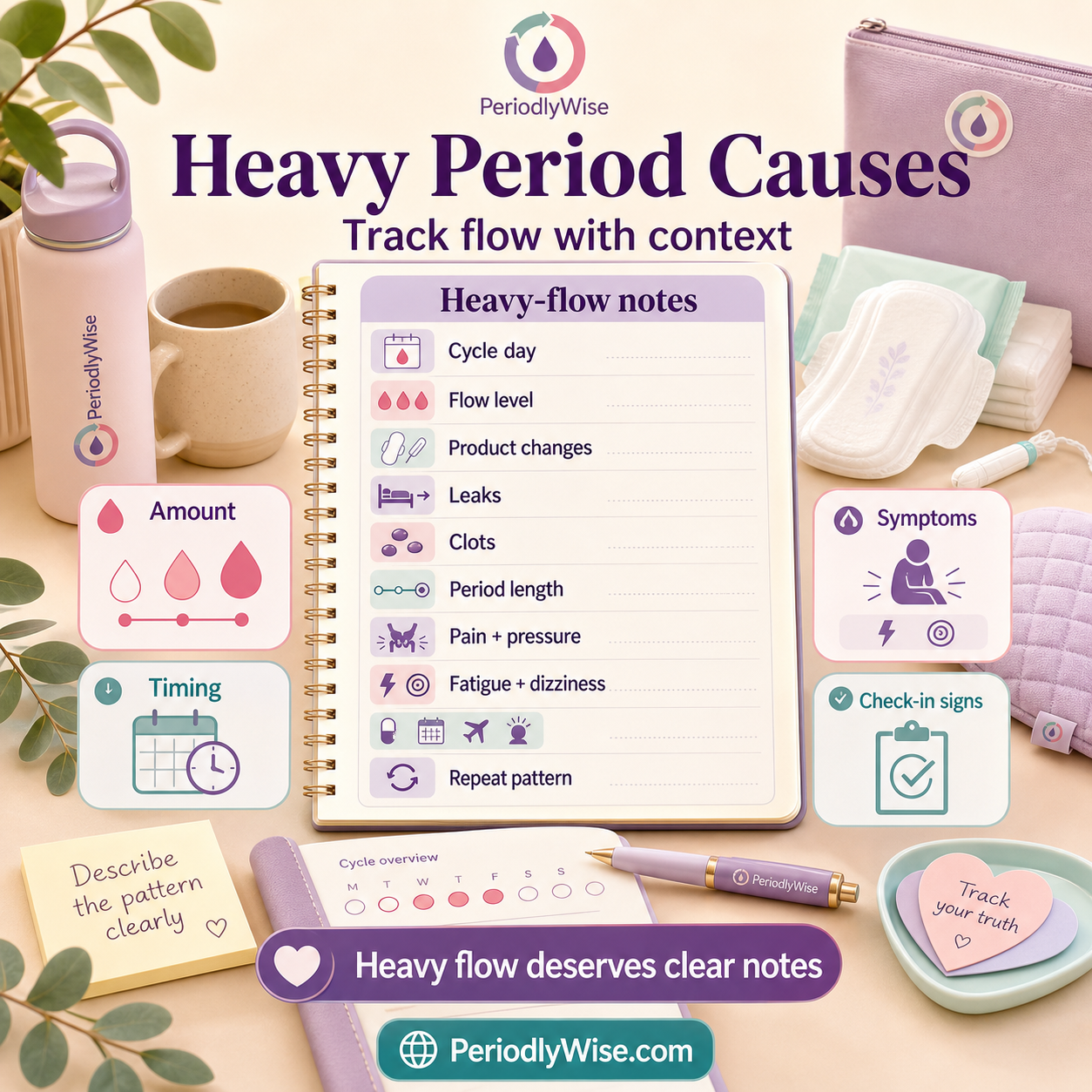
When flow feels heavy, record the details that would help someone else understand the day without seeing it.
| Detail | Why it helps | Example note |
|---|---|---|
| Cycle day | Shows whether heavy flow happens at the usual point. | "Day 2 always heaviest." |
| Product type and absorbency | Gives context for how much protection was needed. | "Overnight pad during daytime." |
| Change frequency | Helps identify rapid soaking or worsening flow. | "Changed every 90 minutes from 10 AM to 2 PM." |
| Leaks and location | Shows product fit, flow direction, and practical impact. | "Back leak while sitting; side leak overnight." |
| Clots | Size and frequency matter more than simply yes/no. | "Several coin-sized clots day 2." |
| Period length | Heavy flow plus longer bleeding can be more concerning. | "Bleeding lasted 8 days." |
| Pain and pelvic pressure | May point to a pattern worth discussing. | "Strong cramps plus pelvic heaviness." |
| Dizziness, fatigue, shortness of breath | Can signal body strain or possible anemia. | "Dizzy standing, needed to lie down." |
| Pregnancy possibility | Important with late, painful, or unusual bleeding. | "Period was late; pregnancy possible." |
| Medication or contraception changes | Can explain sudden bleeding changes. | "Started blood thinner / changed birth control." |
When heavy bleeding needs medical support
Contact a healthcare professional if heavy bleeding is new, repeated, worsening, lasts more than 7 days, happens between periods, occurs after sex, follows a missed or late period with pregnancy possibility, or interferes with work, school, sleep, or daily life.
Seek urgent care if you are soaking protection very quickly for hours or if heavy bleeding comes with fainting, severe dizziness, shortness of breath, chest pain, confusion, weakness, severe one-sided pelvic pain, or symptoms that feel unsafe. ACOG also advises urgent attention when heavy bleeding is paired with symptoms such as chest pain, shortness of breath, lightheadedness, or dizziness.
Heavy flow is common enough that many people minimize it. But common does not mean you have to silently manage unsafe bleeding.
How PeriodlyWise helps without making you over-monitor
PeriodlyWise can help you identify whether heavy flow is a usual day-2 pattern, a one-time change, or a repeated concern. Use the Period Tracker for dates, flow, and symptoms. If timing is changing too, use the Irregular Period Tracker. If leaks happen at night, read Period Leaks at Night. If color or flow looks different, read Period Blood Colors and Flow Changes.
FAQ
What is the most common cause of heavy periods?
There is no single cause for everyone. Heavy bleeding can relate to hormonal changes, ovulation changes, fibroids, polyps, adenomyosis, bleeding disorders, thyroid issues, medications, contraception, pregnancy-related bleeding, and life-stage transitions. A clinician can help identify what fits your situation.
Can stress cause a heavy period?
Stress can affect cycle timing for some people and may indirectly change bleeding patterns. It should not be used as the only explanation for repeated, very heavy, painful, or unsafe bleeding.
Are clots normal with heavy periods?
Small clots can happen on heavier days. Frequent large clots, sudden clot changes, very heavy bleeding, dizziness, or severe pain should be discussed with a healthcare professional.
Can heavy periods cause anemia?
Heavy or prolonged bleeding can contribute to iron deficiency or anemia in some people. Fatigue, dizziness, shortness of breath, weakness, or a racing heartbeat deserve medical attention, especially when paired with heavy bleeding.
Use PeriodlyWise to record flow, product changes, leaks, clots, symptoms, and cycle timing so heavy bleeding is easier to explain clearly.
Open the Period Tracker