Some period days feel manageable. Others feel like your body has quietly moved into low-power mode. Heavy flow days can bring tiredness, brain fog, low motivation, weakness, more need for rest, and a feeling that simple tasks take more effort.
That does not mean you are being lazy. Heavy bleeding days often come with more physical load: more product changes, more cramps, more interrupted sleep, more worry about leaks, and sometimes lower energy from blood loss. The goal is not to push through everything. The goal is to notice your pattern and know when fatigue is expected for you versus when it may need attention.
Why can heavy flow days feel more tiring?
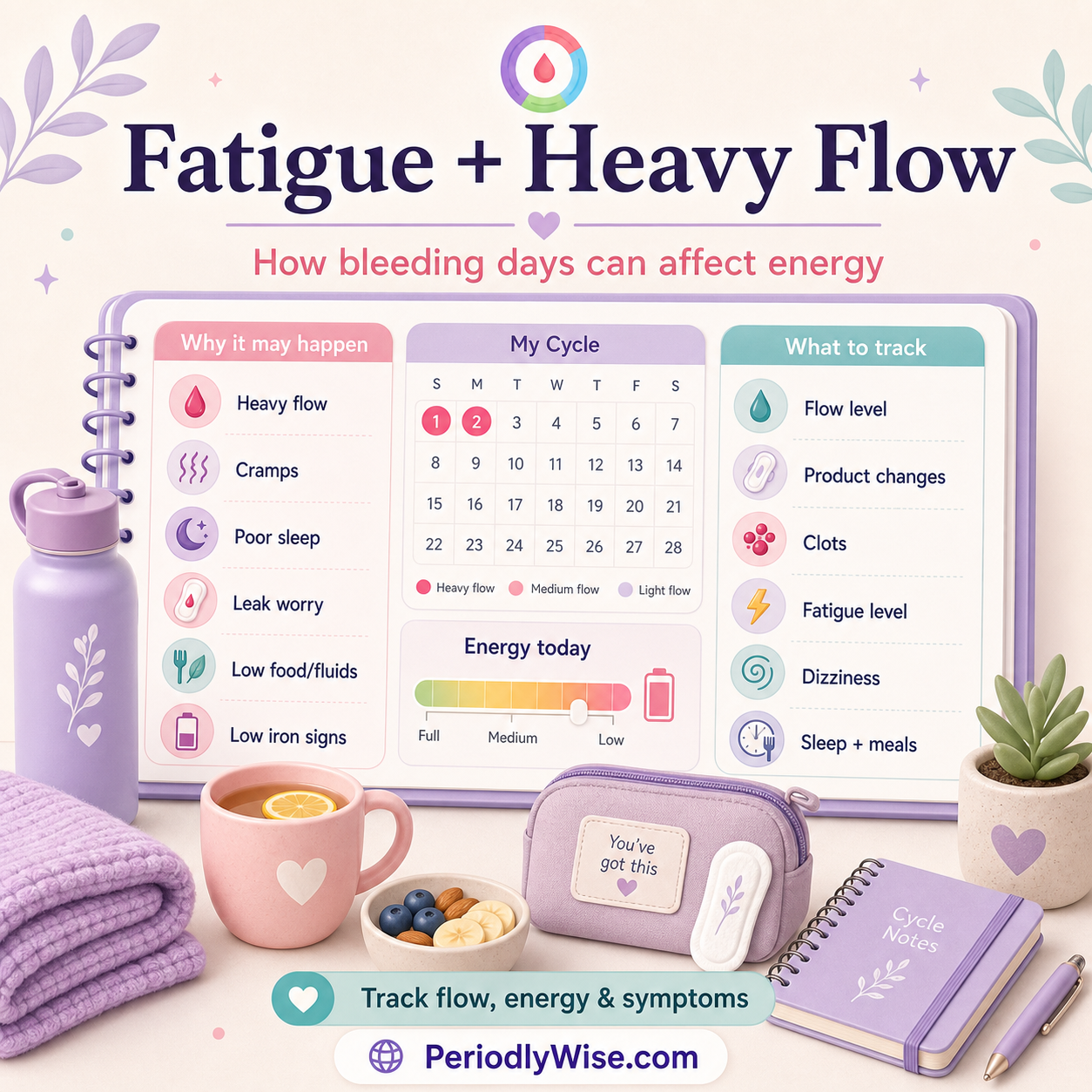
Heavy flow can affect energy in several ways. Cramps may use up attention and make sleep harder. Getting up at night to change products can reduce rest. Worrying about leaks can keep your body tense. Eating less, drinking less, or skipping normal routines because you feel uncomfortable can also add to fatigue.
For some people, repeated heavy bleeding can also contribute to low iron. Iron helps the body make hemoglobin, which carries oxygen in red blood cells. When iron becomes low, fatigue can feel deeper than ordinary tiredness. It may come with weakness, dizziness, headaches, shortness of breath, feeling cold, or difficulty concentrating.
That does not mean every tired period day is anemia. It means repeated heavy flow plus strong fatigue is worth tracking clearly and discussing if it affects your life.
How do you know if flow is heavy?
Heavy flow is partly about amount, but it is also about impact. It may be worth tracking if you need to change a pad or tampon every 1 to 2 hours, need double protection, wake up at night to change products, bleed through clothes or bedding, pass large clots, bleed longer than 7 days, or avoid normal activities because of bleeding.
One heavy day does not automatically mean something is wrong. Patterns matter. A heavy first day that is normal for you is different from a sudden change, a new level of exhaustion, or heavy bleeding that keeps interfering with daily life.
If your heaviest day is usually day 1, read Heavy Period Day 1. If your bleeding length is changing, read Short Periods vs Long Periods.
What should you track?
Track flow and energy together. This gives you a clearer story than "I was tired." It helps show whether fatigue is linked to heavy flow, poor sleep, pain, skipped meals, stress, or a repeated pattern.
- Bleeding day: day 1, day 2, day 3, or later.
- Flow level: light, moderate, heavy, or very heavy.
- Product changes: how often you change pads, tampons, cups, or period underwear.
- Leaks: clothing, bedding, backup layers, or overnight changes.
- Clots: size, frequency, and whether they are new for you.
- Fatigue level: mild, moderate, strong, or severe.
- Other symptoms: dizziness, weakness, headache, shortness of breath, or feeling faint.
- Sleep: wake-ups, cramps at night, or changing products overnight.
- Food and fluids: skipped meals, low appetite, caffeine, hydration, and what helped.
A useful note might be: "day 2 very heavy, changed pad every 2 hours, fatigue 8/10, dizzy when standing, poor sleep." That is much clearer than trying to remember it later.
Heavy flow, low iron, and energy
Heavy bleeding can increase the chance of iron deficiency in some people, especially when it happens often. Low iron can make tiredness feel more intense and harder to recover from. It can also overlap with headaches, weakness, dizziness, shortness of breath, heart racing, feeling cold, or trouble concentrating.
Only a healthcare professional can confirm iron deficiency or anemia with appropriate testing. Still, your tracker notes can help you explain the pattern: how heavy the bleeding is, how long it lasts, how often you feel weak, and whether symptoms repeat every cycle.
If heavy flow comes with lightheadedness, read Period Dizziness and Lightheadedness. If fatigue is present before bleeding starts too, read Period Fatigue.
What may help on heavy flow days?
Give your day more margin if you can. Choose reliable protection before the flow gets heavy. Keep water and easy food nearby. Warmth may help cramps for some people. Gentle movement can feel good for some, while rest is the better choice for others. If you know day 1 or day 2 is usually heavy, plan lighter tasks when possible.
Food does not "fix" heavy bleeding, but regular meals can support energy. Iron-containing foods, protein, and vitamin C-rich foods may be helpful as part of an overall diet. Do not start iron supplements just because you feel tired unless a healthcare professional recommends them, especially if you have other health conditions or take medications.
- Use backup protection on your heaviest window.
- Keep water, simple meals, and snacks available.
- Use heat for cramps if it helps you.
- Rest before you are completely drained when possible.
- Plan lighter tasks for the heaviest day if your schedule allows it.
- Track dizziness or weakness instead of brushing it off.
When should heavy-flow fatigue get medical advice?
Consider medical advice if heavy flow affects your life, if you often change products every 1 to 2 hours, if bleeding lasts more than 7 days, if clots are large or increasing, or if fatigue comes with dizziness, fainting, shortness of breath, chest pain, severe weakness, or looking unusually pale.
Also seek advice if your bleeding pattern suddenly changes, if you bleed between periods, after sex, or after menopause, or if pain is severe. These signs do not mean something serious is definitely happening, but they are worth checking.
You deserve support before symptoms become unbearable. If heavy periods are making school, work, sleep, exercise, or daily life difficult, that is enough reason to ask for help.
How PeriodlyWise can help
PeriodlyWise cannot diagnose anemia, iron deficiency, fibroids, bleeding disorders, hormone conditions, or any medical condition. What it can do is help you organize the pattern of flow and energy across cycles.
Use the Period Tracker to estimate your next period, then note which days are heaviest and how your energy changes. Over time, you may see whether fatigue rises with heavy flow, poor sleep, cramps, dizziness, or skipped meals.
Record heavy days, product changes, leaks, clots, fatigue, dizziness, sleep, food, fluids, and what helped.
Open the Period TrackerFAQ
Can heavy periods make you tired?
Yes. Heavy flow days can be tiring because of blood loss, cramps, poor sleep, stress, and routine disruption. Repeated heavy bleeding can also contribute to low iron in some people.
Is it normal to sleep more during a heavy period?
Some people need more rest on heavy flow days. Track whether it improves as bleeding slows and whether it affects your daily life.
When is fatigue more concerning?
Fatigue is more concerning when it is severe, new, worsening, or comes with dizziness, fainting, shortness of breath, weakness, or very heavy bleeding.
Should I take iron for period fatigue?
Do not start iron supplements only because you feel tired unless a healthcare professional recommends them. Iron needs and supplement safety vary by person.
Final thoughts
Heavy flow days can drain energy for understandable reasons. Bleeding, cramps, poor sleep, leak worries, skipped meals, and stress can all stack together. For some people, repeated heavy bleeding can also connect with low iron.
Track flow and fatigue side by side. If tiredness is severe, new, worsening, or paired with dizziness, weakness, fainting, shortness of breath, or very heavy bleeding, medical advice can help you understand what is going on.