Periods do not always begin gently. For some people, day 1 starts with spotting and builds slowly. For others, the first day feels sudden, heavy, crampy, and inconvenient right away.
A heavy first day is not automatically a problem. Many cycles have one or two stronger flow days, and day 1 or day 2 is often when bleeding feels most active. What matters is whether the pattern is normal for you, whether it is getting heavier over time, and whether it is affecting your comfort, energy, or daily routine.
This guide keeps the focus practical: why day 1 can feel heavier, what to track, how to prepare, and when heavy bleeding is worth discussing with a healthcare professional.
Why can period flow feel stronger on day 1?
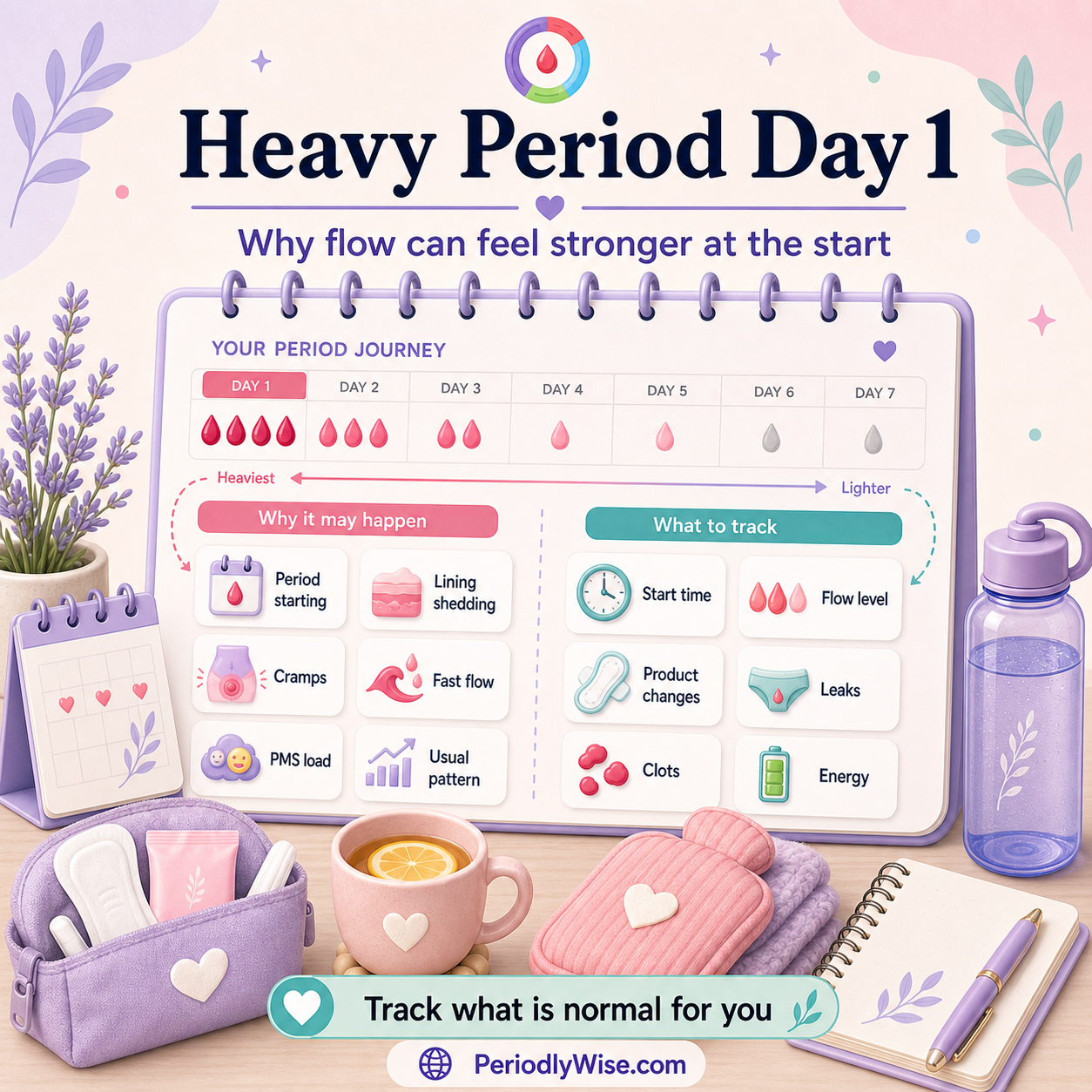
Day 1 is the first day of real period bleeding. Around this time, the uterine lining begins shedding. Your uterus may also cramp or contract to help move blood and tissue out. When bleeding starts more quickly, the first day can feel heavier than expected.
You may notice a sudden gush when standing up, stronger cramps, more frequent bathroom checks, or needing to change products sooner than usual. Sometimes the flow was building before it fully started, so it feels like the period arrives all at once.
A heavier day 1 can also feel more intense if you had PMS, bloating, poor sleep, stress, headaches, nausea, or cramps before bleeding began. The flow itself may not be the only thing making the day feel difficult.
Is day 1 always the heaviest day?
Not always. Some people have their heaviest flow on day 1. Others peak on day 2 or day 3. Some start with spotting, then have heavier bleeding later.
This is why tracking is more useful than guessing. A single heavy first day may simply be your pattern. A new change, such as suddenly bleeding through products much faster than usual, passing larger clots, or feeling unusually weak, is more important to notice.
It also helps to compare several cycles. One unusually heavy first day can happen. A repeated pattern that is getting harder to manage deserves more attention.
What should you track on a heavy first day?
Track the details that help you compare this cycle with your usual cycle. You do not need a perfect record. A few clear notes can be enough.
- Start time: morning, afternoon, night, or overnight.
- Flow level: light, moderate, heavy, or very heavy.
- Product changes: how often you change pads, tampons, cups, or period underwear.
- Leaks: whether bleeding reaches clothes, bedding, or backup layers.
- Clots: size, frequency, and whether they are new for you.
- Cramps: location, intensity, and whether heat or rest helps.
- Energy: fatigue, dizziness, weakness, or shortness of breath.
- Pattern: whether day 1 is usually your heaviest day.
A simple note such as "day 1 heavy, changed pad every 2 to 3 hours, cramps 6/10, no dizziness" can be more useful than trying to remember everything later.
Heavy day 1, clots, and flow changes
Small clots can happen on heavier days, especially when flow is faster or blood has collected before leaving the body. Track clot size and frequency alongside the flow level. A small clot on one heavy day may be less concerning than repeated large clots with very heavy bleeding.
If you are noticing color changes, clot changes, or a period that feels different from your usual pattern, you may also want to read Period Clots: What Is Normal and What to Track and Period Blood Colors and Flow Changes.
When is heavy day 1 worth medical advice?
Consider medical advice if your period is heavy enough to interrupt your normal life, if you regularly need to change a pad or tampon every 1 to 2 hours, if you need double protection, if bleeding lasts more than 7 days, or if clots are larger than usual for you.
Also get help sooner if heavy bleeding comes with dizziness, fainting, unusual weakness, shortness of breath, severe pain, bleeding between periods, or bleeding after sex.
This does not mean something is definitely wrong. It means the pattern is worth checking instead of silently pushing through it.
What can help you prepare for a heavy first day?
If your first day is often the strongest, preparation can make the day less stressful. Keep your preferred products nearby, carry backups, use period underwear or overnight protection if leaks are common, and plan heat, hydration, and rest when possible.
It may also help to track the day before bleeding starts. Mood changes, cramps, spotting, acne, bloating, breast tenderness, or sleep disruption can sometimes warn you that a heavier first day is coming.
If a heavy first day often comes with lightheadedness, read Period Dizziness and Lightheadedness. If your bleeding days are changing, the guide on Short Periods vs Long Periods may help you compare the bigger pattern.
How PeriodlyWise can help
PeriodlyWise cannot diagnose heavy bleeding or tell you why your flow changed. What it can do is help you organize your period dates, flow notes, symptoms, and cycle patterns so you are not relying on memory.
Use the Period Tracker to estimate your next period window, then note which day is usually strongest. Over time, you may see that day 1 is consistently heavy, that day 2 is your peak, or that heavy flow happens after a late cycle.
Use PeriodlyWise to record period start dates, flow level, clots, cramps, leaks, energy, and what helped so heavy days are easier to compare across cycles.
Open the Period TrackerFAQ
Is it normal for day 1 to be heavy?
It can be normal for many people. The key question is whether it is normal for you and whether it affects daily life.
Why do I get a gush of blood on day 1?
Blood can collect for a short time and then come out when you stand, move, or use the bathroom. Occasional gushes can happen, but frequent leaking or soaking products quickly should be tracked.
Are clots on day 1 normal?
Small clots can happen with heavier flow. Larger clots, repeated clots, or clots with very heavy bleeding are worth discussing with a healthcare professional.
Should I worry if my period suddenly gets heavier?
A one-cycle change can happen, but sudden, repeated, or worsening heavy bleeding should be checked.
Final thoughts
A heavy period day 1 can be part of your normal cycle, especially if it happens in a steady pattern and stays manageable. But heavy flow should not be ignored when it is new, worsening, disruptive, or paired with symptoms such as dizziness, weakness, shortness of breath, large clots, or severe pain.
Track the practical details: how fast products fill, whether leaks happen, what cramps feel like, whether clots appear, and whether the pattern repeats. That information can help you prepare and can make medical conversations clearer if you need support.