Seeing clots during a period can be unsettling, especially if the clot looks dark, thick, or larger than what you usually notice. In many cases, small period clots can happen on heavier bleeding days and may not mean anything dangerous. But clot size, frequency, flow level, pain, and sudden changes in your usual pattern all matter.
This article explains what period clots are, when they can be normal, what details are worth tracking, and when it is better to get medical advice. PeriodlyWise can help you organize your cycle dates and flow patterns, but it cannot diagnose the cause of clots or replace medical care.
What are period clots?
Period clots are thicker pieces of menstrual blood mixed with tissue from the uterine lining. They may look dark red, bright red, brownish, or almost jelly-like. They often appear when blood flow is heavier and blood collects before leaving the body.
During a period, the uterus sheds its lining. The body also uses natural clotting and anti-clotting processes to manage bleeding. When bleeding is heavier or faster, clots may be more noticeable because the blood has less time to break down smoothly before it leaves the uterus and vagina.
Clots are one part of the bigger picture. A clot by itself is less useful than the full pattern: how big it is, how often it happens, how heavy the bleeding is, how painful the period feels, and whether the pattern is new for you.
Are period clots normal?
Small clots can be normal during heavier period days. They are often more noticeable on day 1 or day 2, after waking up, after sitting for a long time, or during a heavier flow window. Some people notice occasional small clots for years without any serious issue.
However, clots should not be ignored when they are large, frequent, new, paired with very heavy bleeding, or connected with symptoms such as severe pain, weakness, dizziness, fainting, shortness of breath, fever, or bleeding between periods.
A practical way to think about it: one small clot on a heavy day may not be concerning. Repeated large clots, bleeding that soaks through protection quickly, or clots that appear with strong symptoms deserve more attention.
Why do period clots happen?
Period clots can happen for several reasons. Some are ordinary flow-related reasons, while others may need medical evaluation.
1. Heavy flow
The most common reason for visible clots is heavier menstrual flow. When blood leaves the uterus quickly or pools before passing, clots may form or appear more clearly. If heavy flow is occasional and your overall pattern is stable, it may simply be part of your normal period.
Still, heavy bleeding matters. The NHS describes heavy periods as periods that affect daily life, require frequent protection changes, involve passing large clots, or last longer than usual. If your bleeding is regularly hard to manage, it is worth discussing.
2. Hormone changes
Hormones help control how the uterine lining builds and sheds. If ovulation timing changes or hormones fluctuate, the lining may shed differently. This can sometimes lead to a heavier period, a delayed period followed by heavier bleeding, or more noticeable clots.
Stress, sleep disruption, illness, travel, major weight changes, and certain health conditions can all be part of the context. If your period arrived late and then came with heavier bleeding or clots, compare it with your usual cycle pattern rather than judging that month alone. You may also find the guide on why a period can be late besides pregnancy helpful.
3. Fibroids or polyps
Fibroids are non-cancerous growths in or around the uterus, and polyps are growths in the lining of the uterus. Both can sometimes contribute to heavy bleeding, longer periods, spotting, pelvic pressure, or clots. Only a healthcare professional can evaluate this properly.
4. Adenomyosis or endometriosis
Some conditions linked with the uterus or pelvic tissue can cause painful or heavy periods. Adenomyosis and endometriosis may be associated with severe cramps, pelvic pain, painful sex, bowel or bladder symptoms, or bleeding patterns that interfere with daily life. Clots alone do not diagnose these conditions, but clots plus severe pain or worsening periods should not be dismissed.
5. Pregnancy-related bleeding
If pregnancy is possible, bleeding with clots is a reason to seek medical guidance. This includes bleeding after a missed or late period, bleeding with one-sided pain, shoulder pain, dizziness, fainting, severe cramps, or heavy bleeding. A tracker cannot safely interpret pregnancy-related bleeding.
6. Bleeding disorders or medicines
Some bleeding disorders and certain medicines can affect bleeding patterns. If you bruise easily, have frequent nosebleeds, bleed heavily after dental work or surgery, or have a family history of bleeding problems, mention this to a clinician. Also tell them about medications, supplements, hormonal contraception, or blood thinners.
What size of period clot should you track?
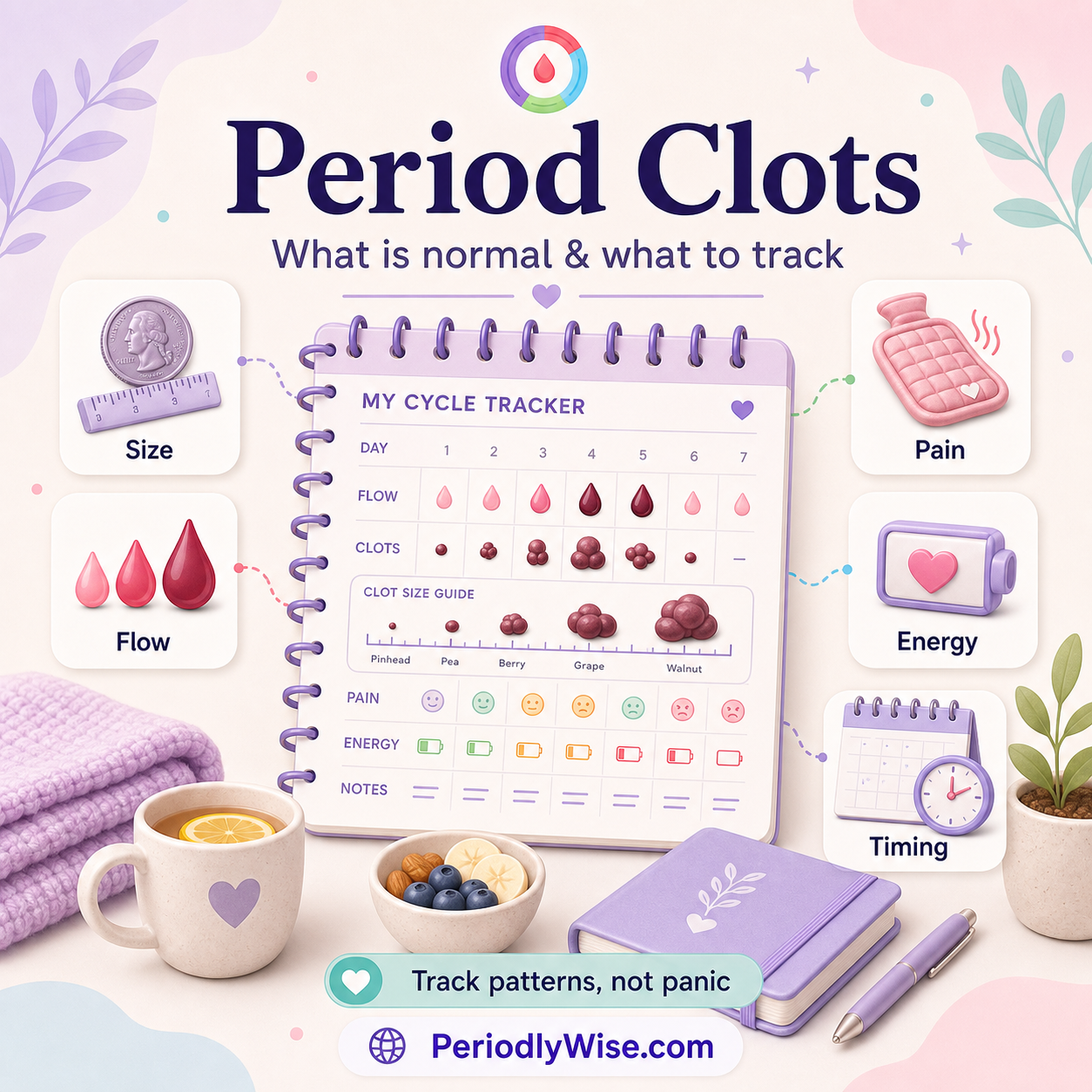
Track any clot that feels unusual for you. As a simple guide, clots smaller than a coin may be less concerning when they happen occasionally on heavy days. Clots around or larger than 2.5 cm, about one inch, are more important to record, especially if they happen repeatedly or come with heavy bleeding.
| Clot pattern | What it may mean | What to do |
|---|---|---|
| Occasional small clot on a heavy day | Can happen during normal heavier flow. | Track if you want a clearer pattern. |
| Repeated clots around one inch or larger | May suggest heavy bleeding or another cause worth checking. | Record size, flow, pain, and speak with a healthcare professional. |
| Clots with soaking protection every 1 to 2 hours | Can indicate heavy menstrual bleeding. | Seek medical advice, especially if it repeats or affects daily life. |
| Clots with dizziness, fainting, shortness of breath, or weakness | Could suggest significant blood loss, anemia, or another urgent issue. | Get medical help promptly. |
| Clots when pregnancy is possible | Needs medical interpretation. | Seek medical guidance, especially with pain or heavy bleeding. |
What else should you track with period clots?
Clots are only one signal. The surrounding details help you understand whether the pattern is stable, improving, or becoming more concerning.
- Clot size: estimate with a familiar comparison such as pea-sized, coin-sized, or about one inch.
- Clot frequency: once, a few times, many times, or every heavy day.
- Flow level: light, moderate, heavy, very heavy, or soaking through protection quickly.
- Product changes: how often you change pads, tampons, cups, or period underwear.
- Period length: whether bleeding lasts longer than usual or more than seven days.
- Pain: cramps, pelvic pain, back pain, one-sided pain, or pain that interrupts daily life.
- Energy symptoms: fatigue, dizziness, weakness, shortness of breath, headaches, or feeling faint.
- Timing: whether the period was late, early, irregular, or followed missed periods.
- Bleeding outside the period: spotting between periods, after sex, or after menopause.
If you are also noticing unusual color changes, read Period Blood Colors: What Different Flow Changes Can Mean.
When are period clots a sign of heavy bleeding?
Period clots are more concerning when they happen with heavy menstrual bleeding. Heavy bleeding is not only about the number of pads or tampons used. It is also about how much bleeding disrupts life.
Signs that bleeding may be heavy include soaking through protection every hour or two, needing double protection, waking at night to change protection, bleeding for more than seven days, passing large clots, feeling unable to leave home comfortably, or developing fatigue and dizziness during periods.
Heavy bleeding can sometimes contribute to iron deficiency or anemia. If you feel very tired, weak, dizzy, breathless, or unusually pale during or after periods, ask a healthcare professional whether testing for anemia or iron deficiency is appropriate. The article on period fatigue explains this connection in more detail.
When should you get medical advice?
Consider medical advice if clots are larger than about one inch, clots are frequent, bleeding is much heavier than usual, bleeding lasts longer than seven days, pain is severe, you feel dizzy or faint, you have shortness of breath, you are unusually weak or exhausted, you bleed between periods, bleeding happens after sex, bleeding happens after menopause, or pregnancy is possible.
Seek urgent medical help if you are soaking through protection very quickly, feel faint, have severe one-sided pelvic pain, have shoulder-tip pain with possible pregnancy, have sudden severe bleeding, or feel that something is seriously wrong. It is better to get checked than to wait with symptoms that feel unsafe.
How can you prepare for a medical visit?
A clinician can help more quickly when you bring clear details. You do not need perfect records. Even a simple list from the last few cycles can help.
- The first day of your last few periods.
- How long bleeding lasted.
- Which days were heaviest.
- How often you changed menstrual products.
- Approximate clot size and frequency.
- Pain level and where the pain was located.
- Symptoms such as dizziness, fatigue, shortness of breath, fever, or nausea.
- Pregnancy possibility, contraception, medicines, supplements, and relevant health history.
You can use PeriodlyWise Period Tracker for estimates and Cycle History to compare saved records over time. If your cycles vary a lot, the Irregular Period Tracker can help show whether heavier bleeding or clots are happening after longer or irregular cycles.
Can period clots be prevented?
It depends on the cause. Occasional small clots during a normal heavy day may not need prevention. If clots are linked with heavy bleeding, fibroids, hormonal issues, contraception changes, bleeding disorders, or another medical cause, treatment depends on the diagnosis and your health goals.
A healthcare professional may discuss options such as testing for anemia, reviewing medicines, checking for pregnancy when relevant, pelvic examination, ultrasound, hormonal treatment, non-hormonal treatment, or other care depending on symptoms. Do not start or stop medication based only on tracking information.
How PeriodlyWise can help you track clots
PeriodlyWise is designed for practical cycle awareness. It helps you estimate your next period window, ovulation estimate, fertile window, and cycle patterns from the details you enter. For clots, the most useful habit is to combine clot notes with period timing, flow, pain, and energy.
When you can see that clots happen only on one heavy day, after a late period, or across several cycles with worsening fatigue, you have a clearer story. That story can support better planning and a more useful conversation with a clinician.
FAQ
Are period clots always dangerous?
No. Small clots can happen during heavier flow and are not always dangerous. Large, frequent, new, painful, or heavy-bleeding-related clots should be checked.
What size period clot is concerning?
There is no single rule for everyone, but clots around or larger than 2.5 cm, about one inch, are worth tracking and discussing, especially if they happen repeatedly or with heavy bleeding.
Can stress cause period clots?
Stress may affect cycle timing and symptoms for some people, but stress alone should not be assumed to explain large clots or heavy bleeding. Track the full pattern and seek medical advice if bleeding is heavy or unusual.
Can birth control changes cause clots?
Hormonal contraception changes can affect bleeding patterns. If clots, heavy bleeding, severe pain, or pregnancy concerns appear after starting, stopping, or changing contraception, speak with a healthcare professional.
Final thoughts
Period clots can be normal, but they are worth understanding. The safest approach is not panic and not dismissal. Track what you see, compare it with your usual cycle, and pay close attention to clot size, bleeding volume, pain, energy, and sudden changes.
If clots are small and occasional, they may simply be part of a heavier flow day. If they are large, frequent, new, painful, or paired with heavy bleeding or weakness, it is time to get medical advice.
Use PeriodlyWise to estimate your period window, save records, and compare flow patterns across cycles before your next appointment or planning day.
Open the Period Tracker