
Period smell can feel awkward to think about, but it is also very common to notice. Menstrual blood is not just blood. It can mix with vaginal fluid, natural bacteria, uterine tissue, air, sweat, and menstrual products. Because of that, your period may have a scent that changes from day to day.
A mild smell is usually not a sign that something is wrong. Many people notice a metallic smell, especially on heavier days, because blood contains iron. Others notice an earthy, warm, or slightly musty smell when blood has been sitting in a pad, tampon, cup, disc, or period underwear for a while.
The useful question is not "does my period smell at all?" It is "is this normal for me, is it new, and are there other symptoms with it?"
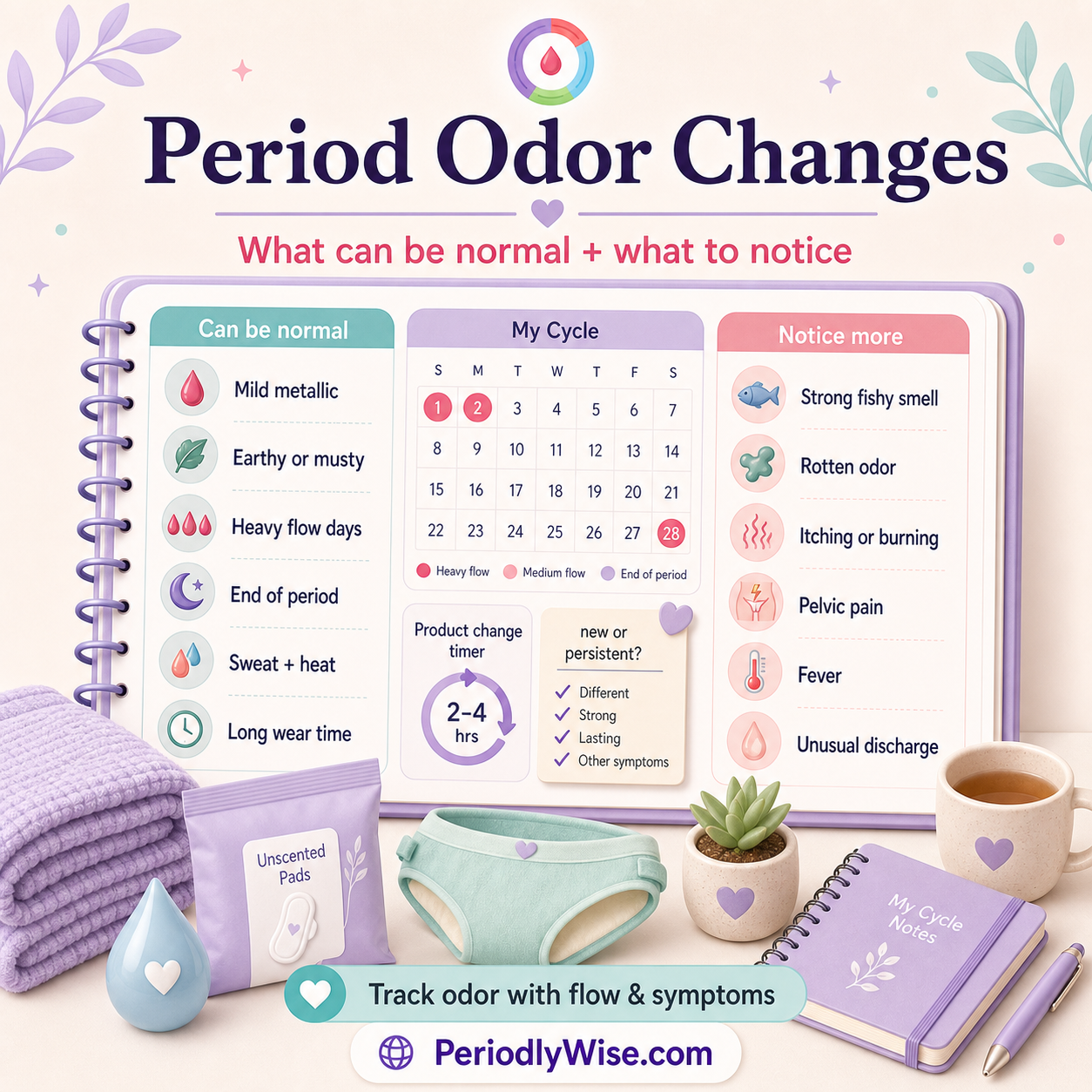
What period smells can be normal?
A light metallic smell can happen when menstrual blood is exposed to air. A slightly stronger smell may happen on heavier flow days, overnight, after sweating, or when a pad or period underwear has been worn for longer than usual.
A mild change near the beginning or end of bleeding can also happen. At the start, fresh blood may smell different from older blood. Toward the end, slower flow may sit longer before leaving the body, which can make the smell more noticeable.
Normal does not mean scent-free. The vagina has a natural environment, and menstrual blood has its own smell. Tracking helps you recognize your usual pattern instead of worrying over every small change.
Why can period odor change?
Period odor can be affected by flow level, how long blood sits before a product is changed, sweating, tight clothing, product type, and your usual vaginal environment. Hormonal changes across the cycle can also affect vaginal fluid and pH, which may make smell feel different around bleeding days.
Menstrual products can change how noticeable the smell feels. Pads and period underwear hold blood outside the body, where it meets air. Tampons, cups, and discs hold blood differently, so the smell may be less noticeable until the product is removed.
This does not mean you need scented products. Scented pads, sprays, douching, or harsh washing can irritate the vulva or disturb the natural vaginal balance. Gentle external washing with water, changing products regularly, and wearing breathable underwear are usually enough.
What should you track?
Track the smell in simple words, then add the context around it. You do not need to write a long note. A short phrase can be enough.
- Smell: metallic, mild, stronger than usual, fishy, rotten, sweet, or unusual.
- Timing: before bleeding, day 1, heavy flow days, end of period, or after sex.
- Flow: light, moderate, heavy, very heavy, clots, or spotting.
- Product use: pad, tampon, cup, disc, period underwear, and how often you change it.
- Discharge: color, texture, amount, and whether it is different from usual.
- Comfort: itching, burning, pelvic pain, fever, pain when peeing, or feeling unwell.
- Environment: sweat, exercise, heat, tight clothing, or long wear time.
For example, "day 2 heavy flow, metallic smell, no itching" tells a very different story from "fishy smell, burning, gray discharge, new this cycle."
When should odor changes get more attention?
A strong fishy odor can sometimes happen with bacterial vaginosis, especially if there is thin white or gray discharge, burning, itching, or the smell is stronger after sex or during menstruation. A rotten smell can happen if a tampon or another product has been left in too long. A strong odor with fever, pelvic pain, unusual discharge, or feeling unwell should not be ignored.
You do not need to panic over one unusual day. But if the smell is new, strong, persistent, or paired with discomfort, medical advice can help identify whether an infection, retained product, or another issue may be involved.
If odor changes come with unusual bleeding, color changes, or spotting, you may also want to read Period Blood Colors and Flow Changes and Spotting Before Your Period.
What may help with period odor?
Small hygiene steps can help without overdoing it. Change menstrual products regularly. Keep the vulva clean with gentle external washing. Avoid douching and scented vaginal products. Choose breathable underwear when possible. If you use tampons, follow the product timing instructions and do not leave one in longer than recommended.
If you sweat more during your period, changing underwear, rinsing externally, and wearing looser clothing may help. If pads or period underwear make odor more noticeable for you, changing more often or using a different product on heavier days may feel better.
The goal is not to remove all natural scent. The goal is comfort, clean product habits, and noticing changes that are not normal for you.
How PeriodlyWise can help
PeriodlyWise cannot diagnose odor changes, infections, bacterial vaginosis, retained products, or any medical condition. What it can do is help you place odor changes on a timeline with flow, product use, discharge, and symptoms.
Use the Period Tracker to record when odor changes happen. Over a few cycles, you may notice that a mild metallic smell is normal on heavy days, while a strong unusual smell is new and worth discussing.
Record cycle day, flow, product use, discharge, comfort symptoms, and whether the smell is new or familiar.
Open the Period TrackerFAQ
Is it normal for period blood to smell metallic?
Yes. A metallic smell can happen because menstrual blood contains iron and may smell stronger when exposed to air.
Can other people smell my period?
Usually, you notice your own scent more than anyone else does. A strong odor noticeable through clothing may be worth tracking.
Should I use scented pads or sprays?
It is better to avoid scented vaginal products. They can irritate sensitive skin and may disturb the natural vaginal balance.
When is period odor more concerning?
Odor is more concerning when it is strong, fishy, rotten, new, persistent, or comes with itching, burning, pain, fever, unusual discharge, or feeling unwell.
Final thoughts
Period smell does not need to be treated as shameful. A mild metallic, earthy, or musty smell can be part of ordinary bleeding. What matters is the pattern: whether the smell is familiar, whether it changes suddenly, and whether other symptoms appear with it.
Track odor with flow, products, discharge, and comfort symptoms. That gives you a calmer way to tell the difference between a normal period-day smell and a change that deserves support.