You may feel like your period is about to start: cramps, bloating, breast tenderness, mood changes, cravings, tiredness, backache, acne, or a heavy feeling in your lower belly. But then nothing happens. No bleeding. No clear start date. Just the feeling that your period is almost here.
This can be frustrating, especially if your cycle is usually predictable. Period symptoms without bleeding can happen for several reasons. Sometimes your period is simply late and still on the way. Sometimes ovulation happened later than usual. Sometimes stress, sleep changes, travel, illness, contraception, pregnancy, or another health factor may be part of the pattern.
The most useful approach is not to panic or guess. Track what you feel, when it starts, whether bleeding arrives, and whether the pattern repeats.
What are period symptoms without bleeding?
Period symptoms without bleeding are symptoms that feel like PMS or an approaching period, but bleeding has not started yet. The symptoms can feel very real even when there is no visible flow.
Common symptoms include:
- Cramps, pelvic heaviness, or lower belly discomfort.
- Bloating, gas, constipation, diarrhea, or nausea.
- Breast tenderness or swelling.
- Lower back discomfort.
- Mood swings, irritability, anxiety, sadness, or feeling more sensitive.
- Fatigue, poor sleep, or lower energy.
- Food cravings, appetite changes, or feeling hungrier than usual.
- Headache, acne, oily skin, or body aches.
These symptoms do not always mean something is wrong. Premenstrual symptoms often happen after ovulation and before bleeding begins. If the period is delayed, that premenstrual window can feel longer than expected.
Why can you feel PMS before bleeding starts?
Your menstrual cycle is not only the bleeding days. Hormones shift throughout the entire cycle. After ovulation, progesterone rises and then falls if pregnancy does not happen. Estrogen also changes. Some people are more sensitive to these shifts, which can show up as cramps, breast tenderness, bloating, mood changes, cravings, headaches, acne, or tiredness.
If your period is delayed, the symptom window may feel confusing. You may expect bleeding based on your usual calendar, but your body may be running on a shifted timeline that month.
That does not mean the symptoms are fake. It means your body may be in a premenstrual pattern while timing is changing.
1. Your period may be late but still coming
Sometimes the simplest explanation is that your period is on the way, just later than expected. A cycle can vary by a few days, especially after stress, poor sleep, illness, travel, intense exercise, appetite changes, or routine changes.
If your usual PMS symptoms show up and then bleeding starts a few days later, this may simply be a slightly longer cycle. Track the first day symptoms began, the day bleeding starts, and whether the same delay happens again next cycle.
2. Ovulation may have happened later than usual
A period usually comes after ovulation if pregnancy does not happen. If ovulation happens later than usual, your period may also arrive later. This is one reason you may feel like your period is due, but bleeding has not started yet.
Possible reasons ovulation timing may shift include stress, illness, travel, disrupted sleep, weight changes, intense exercise, or major routine changes. If stress has been a big part of this cycle, read Can Stress Delay Your Period? for a fuller tracking checklist.
3. Pregnancy is possible
If pregnancy is possible, do not assume the symptoms are only PMS. Early pregnancy and PMS can overlap. Both can involve breast tenderness, fatigue, mood changes, nausea, bloating, appetite changes, and a missed or late period.
Symptoms alone cannot reliably tell the difference. If your period is late and pregnancy is possible, take a pregnancy test according to the test instructions. If the result is negative but your period still does not arrive, repeating the test later or checking with a healthcare professional may help.
This does not mean every late period is pregnancy. It means pregnancy is one of the first possibilities to rule out when bleeding is late and pregnancy is possible.
4. Stress, sleep, illness, or travel may be affecting timing
Cycle timing can change when your body is under extra load. Stress, poor sleep, illness, travel, intense exercise, sudden weight changes, appetite changes, and major routine disruption can all make a period come later than expected for some people.
This matters because PMS-like symptoms can still happen while bleeding timing changes. A stressful month may bring more anxiety, cravings, fatigue, poor sleep, headaches, or body tension. Illness may add tiredness, nausea, appetite changes, or aches. Travel may disrupt sleep and routine. All of these can make a late period feel more noticeable.
Track the context around the symptom, not only the symptom itself.
5. Hormonal contraception can change bleeding patterns
Hormonal contraception can make bleeding lighter, irregular, delayed, or absent for some people. This can happen with pills, injections, hormonal IUDs, implants, or changes in how contraception is taken.
Some people still feel breast tenderness, mood changes, cramps, acne, or bloating even when bleeding is lighter than usual or does not arrive. If you recently started, stopped, missed, switched, or changed contraception, note that in your tracker. If you are unsure what is expected with your method, ask a clinician or pharmacist.
6. Perimenopause can make symptoms and timing less predictable
In the years before menopause, hormone levels can become less predictable. PMS-like symptoms may change, and periods may come earlier, later, heavier, lighter, or less regularly.
If you are in your late 30s, 40s, or early 50s and your cycle pattern is changing, tracking can help you describe what is happening more clearly. It can also help a healthcare professional understand whether changes fit a broader pattern.
7. PCOS, thyroid changes, or other health factors may be involved
A one-time delayed period with PMS symptoms is often not an emergency. But repeated symptoms without bleeding, frequent missed periods, or suddenly irregular cycles may need medical review.
Possible health-related reasons can include PCOS, thyroid conditions, significant weight changes, high physical strain, some medications, breastfeeding, perimenopause, or other hormone-related changes.
This does not mean you should self-diagnose. It means the pattern is worth noticing and, if it repeats or feels unusual, worth discussing with a qualified professional.
What should you track?
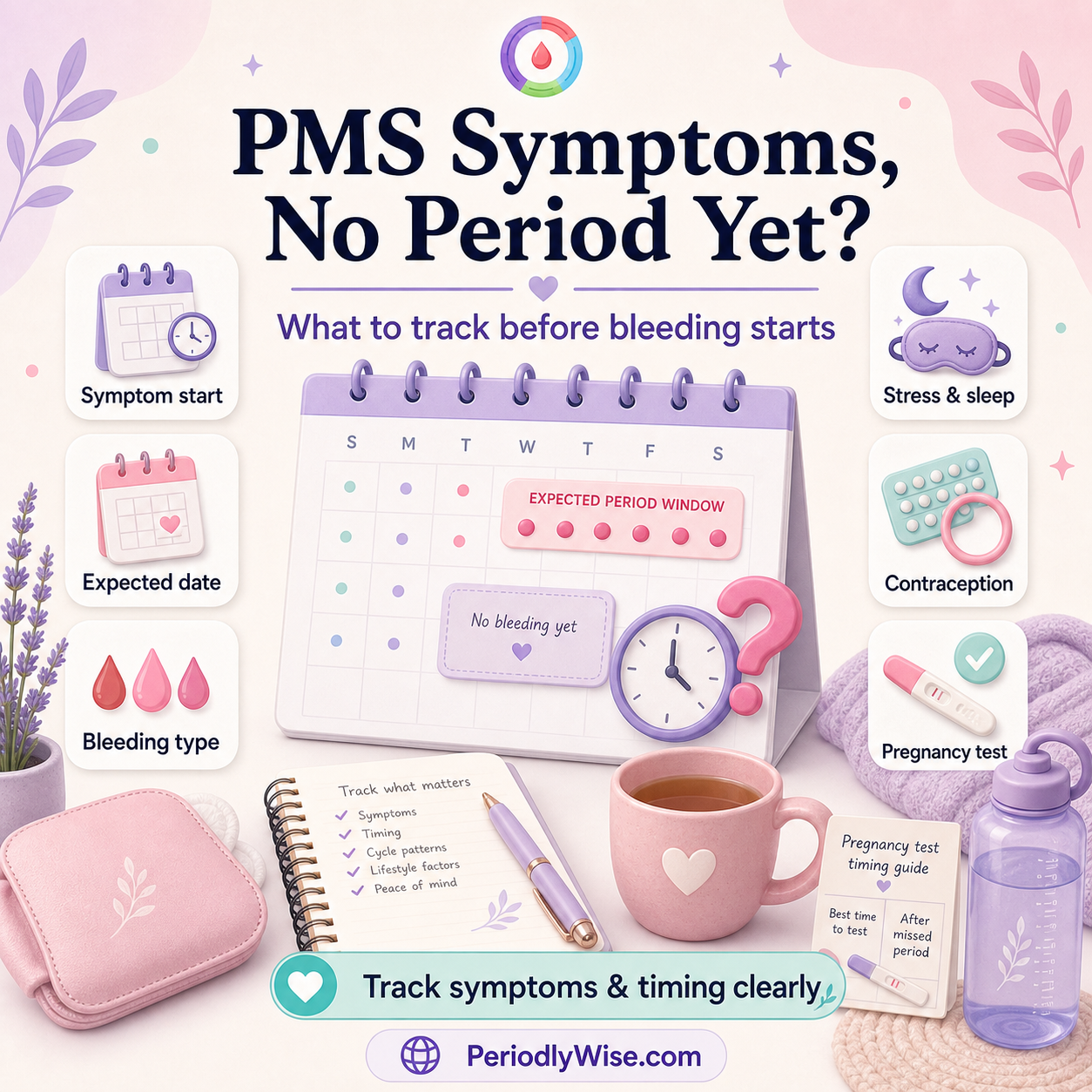
Tracking helps separate a one-time delay from a repeating pattern. Try to record the details that explain both the symptom and the timing.
- Symptom start date: the first day cramps, bloating, breast tenderness, mood changes, or other PMS-like symptoms began.
- Expected period date: when your period was expected based on your usual cycle.
- Actual bleeding date: when spotting or true flow starts, if it arrives.
- Bleeding type: spotting, light flow, normal flow, heavy flow, or no bleeding.
- Symptoms: cramps, bloating, breast tenderness, back pain, headache, nausea, acne, cravings, fatigue, or mood changes.
- Cycle context: stress, travel, illness, poor sleep, intense exercise, appetite changes, or routine disruption.
- Contraception: missed pills, new method, stopped method, changed method, or emergency contraception.
- Pregnancy possibility: sex timing, contraception issues, test date, and test result when relevant.
- Repeat pattern: whether this happens again next cycle.
A helpful note might look like: "Cycle day 32, cramps and breast tenderness for four days, no bleeding yet, high stress, poor sleep, pregnancy test negative today." That kind of note is more useful than only writing "late."
When is it less concerning?
It may be less concerning if symptoms feel similar to your usual PMS, your period starts within a few days, bleeding is normal for you, pregnancy is not possible or has been ruled out at the right time, and the pattern does not keep repeating.
Even then, keep a note. Your body may be telling you that stress, sleep, travel, illness, or routine changes affect your cycle timing.
When should you get help?
Consider medical advice if your period is repeatedly late, you miss periods, cycles suddenly become irregular, pain is severe, bleeding becomes very heavy, you have unusual discharge or fever, pregnancy is possible, or symptoms feel very different from your usual pattern.
Also seek help if mood symptoms are intense, frightening, or affect daily life. PMS and PMDD symptoms can be serious, and support is available. For more context, read PMS vs PMDD: What to Track.
The bottom line
Feeling PMS symptoms but no period yet can happen when your period is delayed, ovulation happened later, pregnancy is possible, stress or illness affected your cycle, contraception changed bleeding, or hormone patterns are shifting.
The key is calm tracking. Note the symptoms, the timing, what changed this cycle, whether bleeding arrives, and whether the pattern repeats. If symptoms are strong, unusual, or ongoing, medical advice can help you understand what is happening.
Use PeriodlyWise to estimate your period window and keep notes on PMS-like symptoms, late periods, flow changes, and cycle patterns.
Check Irregular Period PatternsFAQs
Can you have PMS symptoms but no period?
Yes. PMS-like symptoms can happen before bleeding starts, and bleeding may be delayed if ovulation or cycle timing shifted.
Can cramps happen without a period?
Yes. Cramps can happen before a period, during a delayed cycle, with digestion changes, stress, contraception changes, or other causes. Severe or unusual pain should be checked.
Does PMS but no period mean pregnancy?
Not always, but pregnancy is possible if you have had sex and your period is late. Symptoms alone cannot confirm or rule out pregnancy.
How long should I wait if I have PMS symptoms but no bleeding?
If your period is only a few days late and symptoms are familiar, tracking may be enough at first. If pregnancy is possible, test according to the test instructions. If missed or irregular periods repeat, get medical advice.