Fasting can mean many different things: finishing dinner earlier, eating within an eight-hour window, fasting on alternate days, avoiding food and drink from dawn to sunset for a religious observance, or severely restricting calories for prolonged periods. Those patterns are not physiologically interchangeable. The clock alone does not predict what will happen to your period.
Menstrual function is more likely to change when fasting contributes to an ongoing gap between the energy your body receives and the energy it uses. Rapid weight loss, strenuous exercise, low carbohydrate or fat intake, illness, dehydration, disrupted sleep, psychological stress, and an eating disorder can all sit behind the word “fasting.” When energy availability stays too low, the hypothalamus may reduce the hormone signals that coordinate ovulation. A period can arrive later, become irregular, or stop.
A short fast does not prove the cause of one unusual cycle, and not everyone who fasts develops menstrual changes. Current human research on intermittent fasting in menstruating people is small and uneven. Some studies in people with overweight, obesity, or polycystic ovary syndrome report metabolic or cycle improvements, while evidence in healthy, lean, active people is much thinner. The safest interpretation is context first: fasting pattern, total intake, symptoms, and cycle timeline together.
Different fasting patterns, different menstrual context
| Pattern | What may matter for the cycle | Interpretation |
|---|---|---|
| Overnight or modest time-restricted eating | Whether full energy, protein, fat, carbohydrate, fluids, and micronutrient needs are still met. | The eating window alone may not change periods; monitor the whole pattern. |
| Alternate-day or very-low-calorie fasting | Larger energy swings, medication timing, rapid loss, fatigue, binge-restrict cycles, and exercise load. | More likely to create under-fuelling or symptoms; professional guidance is useful. |
| Religious daylight fasting | Fast length, climate, hydration outside fasting hours, sleep shifts, night meals, health exemptions, and total intake. | Studies suggest possible mild temporary irregularity, but evidence is heterogeneous and not definitive. |
| Fasting with intense training | Energy left after exercise, recovery meals, injuries, cold intolerance, performance decline, and cycle gaps. | Persistent low energy availability can impair reproductive and bone health even at a stable-looking weight. |
| Fasting with PCOS | Baseline ovulation, medicines, metabolic health, weight change, and whether care is supervised. | Small studies suggest possible benefit in selected groups, but fasting is not established as a universal PCOS treatment. |
| Prolonged restriction or eating-disorder behaviour | Fear of eating, rigid rules, purging, compulsive exercise, faintness, bradycardia, and missed periods. | This is a health concern, not a wellness experiment; seek qualified medical and eating-disorder support. |
How fasting could change ovulation and bleeding
The menstrual cycle is linked to energy availability. The hypothalamus releases gonadotropin-releasing hormone in pulses, which helps the pituitary and ovaries coordinate ovulation and hormone production. Metabolic signals such as leptin, insulin, ghrelin, thyroid-related signals, and stress hormones help the brain interpret whether resources are available. Sustained energy deficiency can slow that signalling. Ovulation may be delayed or absent, so the next period can be late, irregular, or missing.
The Endocrine Society calls functional hypothalamic amenorrhea a diagnosis of exclusion. Pregnancy and other causes, including thyroid disease, high prolactin, PCOS, primary ovarian insufficiency, medicines, and structural or pituitary conditions, must be considered. The guideline recommends correcting energy imbalance through improved intake or nutrition and/or reduced exercise; it also highlights bone-density assessment after prolonged amenorrhea or earlier when severe nutritional deficiency or skeletal fragility is suspected.
Low energy availability can occur without a visibly low body weight. The IOC defines it as dietary energy left after exercise being insufficient for normal body functions. It exists on a spectrum: a brief, mild change may be adaptable, while prolonged or severe exposure can impair reproductive, bone, metabolic, cardiovascular, immune, and psychological health. A stable number on the scale does not guarantee that training is adequately fuelled.
Research on intermittent fasting is not a simple yes-or-no answer. Recent systematic reviews find few female-specific trials, short follow-up, mixed protocols, and limited menstrual outcomes. Studies in people with PCOS or obesity sometimes show lower androgen measures or improved cycle regularity, but weight loss, changed energy intake, and metabolic improvement may contribute. These findings cannot show that a fasting plan will regulate periods in a healthy person, nor that it is safe during pregnancy, breastfeeding, adolescence, an eating disorder, or intensive training.
Ramadan fasting is a distinct pattern. It includes daylight abstinence from food and drink for about a month, with eating and hydration after sunset. A recent narrative review reported that available studies suggest mild, temporary menstrual irregularities without consistent major reproductive-hormone changes, but study methods and populations vary. Sleep timing, meal composition, climate, fast duration, and baseline health complicate the picture. Religious practice and medical safety can be discussed respectfully with a clinician and a trusted religious adviser when exemptions or adaptations may apply.
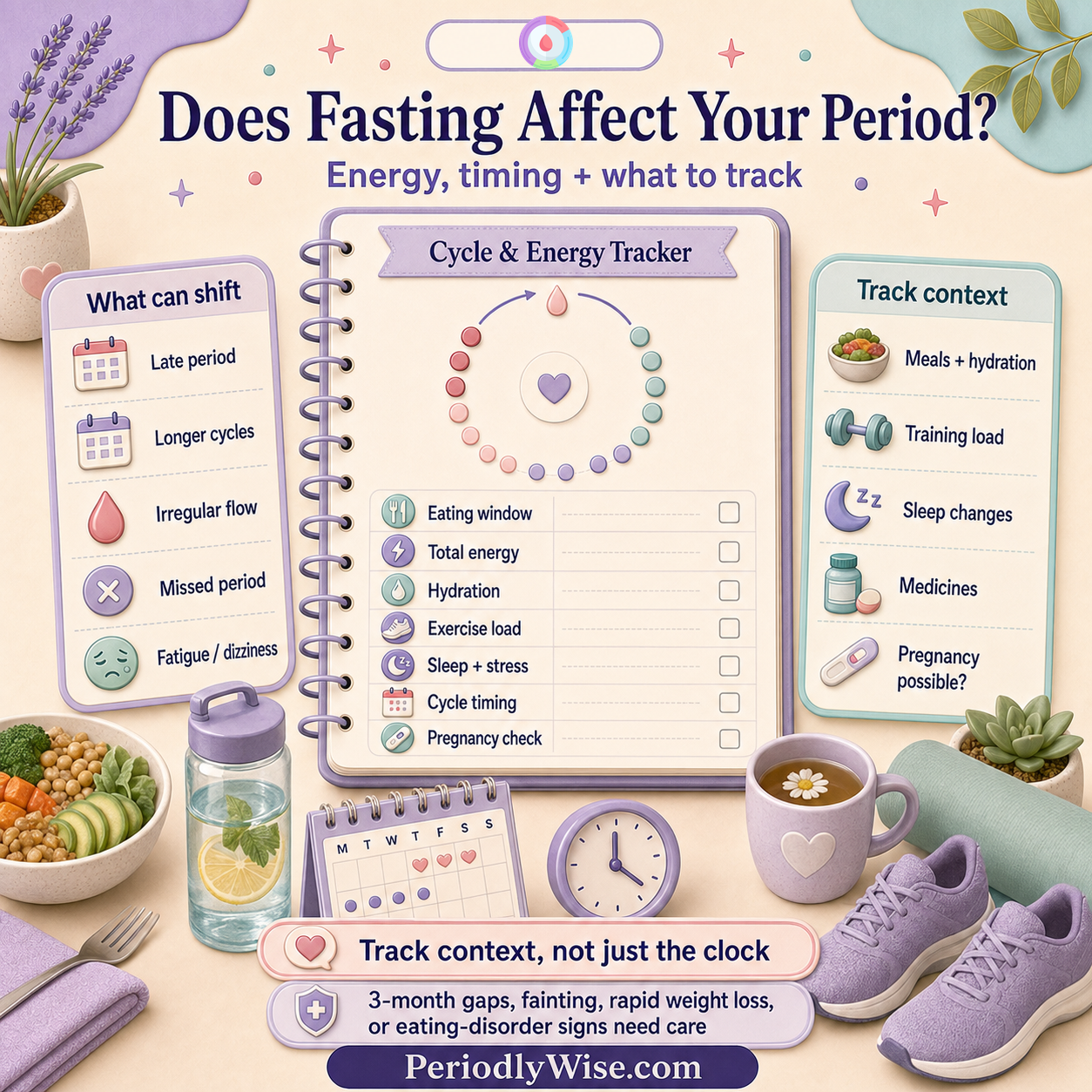
Look beyond fasting hours for the signals that matter most:
- total daily and weekly energy intake, not only the number of hours without food
- rapid or continuing weight loss, low body weight, or a recent change in body composition
- exercise duration and intensity, recovery days, injuries, declining performance, and persistent soreness
- protein, dietary fat, carbohydrate, iron, calcium, vitamin D, and overall food variety
- hydration, heat exposure, headaches, dark urine, constipation, and dizziness, especially in dry fasts
- stress, anxiety, sleep duration, shifted sleep timing, illness, travel, and work schedules
- pregnancy possibility, breastfeeding, postpartum recovery, perimenopause, PCOS, thyroid disease, or chronic illness
- insulin, sulfonylureas, diuretics, medicines that require food, and any supplement or weight-loss drug
- rigid food rules, guilt, secret eating, bingeing, purging, compulsive exercise, or fear of breaking the fast for health
A cycle change during fasting: what should you do?
| Situation | Reasonable next step | Why |
|---|---|---|
| One period is a few days early or late and you otherwise feel well | Record the dates, intake, stress, sleep, illness, and exercise; test for pregnancy if possible. | A single cycle varies for many reasons and cannot establish fasting as the cause. |
| Cycles become repeatedly longer, irregular, or absent | Pause aggressive restriction and arrange medical assessment, especially if intervals exceed 45 days or there is no period for three months. | Ovulatory suppression, pregnancy, PCOS, thyroid disease, prolactin changes, or another cause may need evaluation. |
| Weight is falling quickly or training has increased | Increase access to regular, balanced fuel and recovery; seek a clinician and sports dietitian familiar with low energy availability. | Menstrual change can be an early sign that energy needs are not being met. |
| You have PCOS and are considering fasting as treatment | Discuss goals, evidence, medicines, fertility plans, and a sustainable eating pattern with a qualified clinician or dietitian. | Small studies in selected PCOS groups do not establish one best fasting protocol. |
| You have diabetes or take glucose-lowering medicine | Do not alter fasting or medicine timing alone; make a pre-fast plan with the diabetes team. | Hypoglycemia, hyperglycemia, dehydration, and ketoacidosis risks depend on disease and medication. |
| You are pregnant, breastfeeding, under 18, medically frail, or have an eating-disorder history | Get individualized advice before fasting and prioritize safety over a generic plan. | Energy, fluid, growth, milk production, medication, and relapse risks can be different. |
| Fainting, confusion, severe weakness, vomiting, or dehydration develops | End the fast and seek urgent help according to severity. | Acute symptoms are not a normal sign of metabolic success and can become dangerous. |
How to investigate a period change safely
Do not respond to a late or missing period by making the fast stricter. Use a short, factual timeline and rule out urgent or common causes first.
- Name the actual fasting pattern. Record start date, eating window, no-calorie versus no-food-and-fluid rules, fasting days per week, and whether the plan changed during the month.
- Check pregnancy first when relevant. Use a home pregnancy test according to its instructions after a missed period or at the appropriate interval after sex. Repeat or seek testing when the result is negative but the period remains absent.
- Audit total intake rather than guessing. Note meals, snacks, hydration, dietary variety, and whether the shorter window makes it hard to meet energy, protein, carbohydrate, fat, iron, calcium, or other needs. A registered dietitian can assess this without turning tracking into rigid calorie policing.
- Put exercise beside food. Add training minutes, intensity, recovery, performance, injuries, and rest days. Energy availability is what remains after exercise, so food and training cannot be assessed separately.
- Look for body-wide signals. Record dizziness, faintness, cold intolerance, fatigue, hair change, constipation, headaches, low mood, sleep disruption, libido change, recurrent injuries, and stress fractures.
- Review medicines and conditions before continuing. Diabetes drugs, insulin, diuretics, medicines that require food, pregnancy, breastfeeding, kidney or liver disease, and recent illness may make unsupervised fasting unsafe.
- Reduce the energy deficit while arranging care. Regular meals, adequate hydration when permitted, improved nutrition, and lower training load may be part of restoring hypothalamic function. A clinician should guide treatment when periods are persistently absent or symptoms are significant.
- Seek eating-disorder support early. If fasting feels compulsory, triggers bingeing or purging, is driven by fear or guilt, or continues despite harm, contact a clinician or specialist service. Missing periods are not a harmless badge of discipline.
What to record for a useful medical conversation
A clinician needs the sequence: what your cycles were like before fasting, when the eating pattern changed, what happened to total intake and exercise, and when the menstrual change began. Exact dates are more useful than assuming a causal link.
Hormonal contraception can make interpretation harder. Withdrawal bleeding on a pill is not the same as a spontaneous ovulatory period, and some methods commonly lighten or stop bleeding. Record the method and schedule so a change is not incorrectly attributed to fasting.
- first day of each full period, cycle length, bleeding days, spotting, flow, clots, and pain
- pregnancy-test dates and results, contraception, sex timing, breastfeeding, and postpartum stage
- fasting type, start date, daily eating and drinking window, fasting days, and any unplanned extensions
- meal pattern, food variety, appetite, bingeing, nausea, gastrointestinal symptoms, and hydration
- weight trend and rate of change without repeated checking if weighing is distressing or compulsive
- exercise type, duration, intensity, rest, performance, injuries, bone pain, and stress fractures
- sleep timing, night waking, work shifts, stress, mood, illness, fever, travel, and heat exposure
- medicines, supplements, weight-loss drugs, dose timing, low-glucose readings, and symptoms around doses
- fatigue, dizziness, fainting, cold intolerance, hair loss, headaches, vision change, breast discharge, acne, or new facial hair
- food anxiety, rigid rules, guilt, compensatory exercise, purging, secret eating, or loss of control
When to stop fasting and when to seek care
Arrange a medical review if previously regular periods become persistently irregular, cycle intervals repeatedly exceed 45 days, or there is no period for three months without pregnancy, breastfeeding, menopause, or another known explanation. Seek earlier help with rapid weight loss, suspected nutritional deficiency, stress fractures, persistent dizziness, very low pulse or blood pressure, or an eating-disorder concern. Evaluation usually begins with pregnancy exclusion and may include history, examination, blood count, electrolytes, thyroid and prolactin testing, and other tests based on symptoms.
Do not use hormonal contraceptive pills solely to create bleeding or hide the problem without addressing energy balance. The Endocrine Society notes that oral contraceptives can mask the return of spontaneous periods while bone loss may continue if an energy deficit persists. Treatment must fit the diagnosis and your need for contraception.
If you have diabetes, NIDDK advises advance planning because fasting can cause low or high glucose, dehydration, and, in type 1 diabetes, ketoacidosis. Medication adjustments are individualized; do not copy someone else's plan. Break the fast and follow your emergency glucose instructions when readings or symptoms require it.
Use PeriodlyWise to privately track cycle dates, fasting windows, food and hydration context, exercise, weight trend, sleep, symptoms, medicines, and pregnancy tests. A clear timeline supports better decisions than blaming one late period on the clock.
Open the period trackerFrequently asked questions
Can intermittent fasting make your period late?
It can contribute if the plan creates a sustained energy deficit, rapid weight loss, high exercise load, stress, or sleep disruption. An eating window that still meets your needs may not change the cycle. One late period is not proof, so test for pregnancy when relevant and track the next cycles.
Can fasting stop your period completely?
Prolonged or severe under-fuelling can suppress ovulation and lead to functional hypothalamic amenorrhea, but pregnancy, PCOS, thyroid disease, prolactin changes, medicines, menopause transition, and other causes must be excluded. Seek evaluation after three months without a period or sooner with concerning symptoms.
Does Ramadan fasting affect menstruation?
Available studies suggest some people notice mild, temporary timing or bleeding changes, while major reproductive-hormone changes have not been consistently shown. Evidence is limited and varied. Meal quality, hydration outside fasting hours, sleep, climate, health, and fast duration differ, so individualized advice matters.
Can fasting improve irregular periods with PCOS?
Small studies in selected people with PCOS report improvements in androgen measures or cycle regularity, but reviews emphasize limited data and possible effects from weight loss or metabolic change. Do not use fasting as a substitute for a diagnosis or individualized PCOS, fertility, or medication care.
Should I stop fasting if my period is late?
First check pregnancy when possible and review symptoms, intake, weight change, exercise, stress, and medicines. Stop an aggressive fast and seek advice if you are under-fuelled, dizzy, faint, unwell, losing weight quickly, or developing repeated long cycles. A single mild delay without symptoms can be tracked.
Will eating more bring my period back?
When functional hypothalamic amenorrhea is caused by low energy availability, improving intake and nutrition and reducing excessive exercise are core treatments, and weight gain may be needed. Recovery timing varies, other causes must be ruled out, and bone and mental health may need support, so work with a clinician and dietitian.
The bottom line
Fasting affects menstrual function mainly through its real consequences, not its name: how much energy and nutrition remain available, how quickly weight changes, how hard you exercise, and what happens to stress, sleep, hydration, medicines, and underlying conditions. Many people will not see a cycle change from a modest eating window, but research is not strong enough to promise neutrality for every body or protocol.
Treat a late or missing period as information, not success or failure. Check pregnancy, loosen harmful restriction, document the full context, and seek care for persistent cycle gaps, under-fuelling signs, diabetes risk, or acute symptoms.