Heavy periods during perimenopause can feel confusing because the transition itself is known for irregular cycles. One month may be light, another may arrive late, and another may be suddenly heavy enough to change your plans.
So, is it normal? It can be common for flow to change during perimenopause, but heavy bleeding is not something to automatically dismiss. The useful question is how heavy, how long, how new, and what symptoms come with it.
This guide separates expected perimenopause variation from bleeding patterns that deserve medical advice. It also shows exactly what to track so a healthcare professional can understand the pattern quickly.
Why perimenopause can make periods heavier
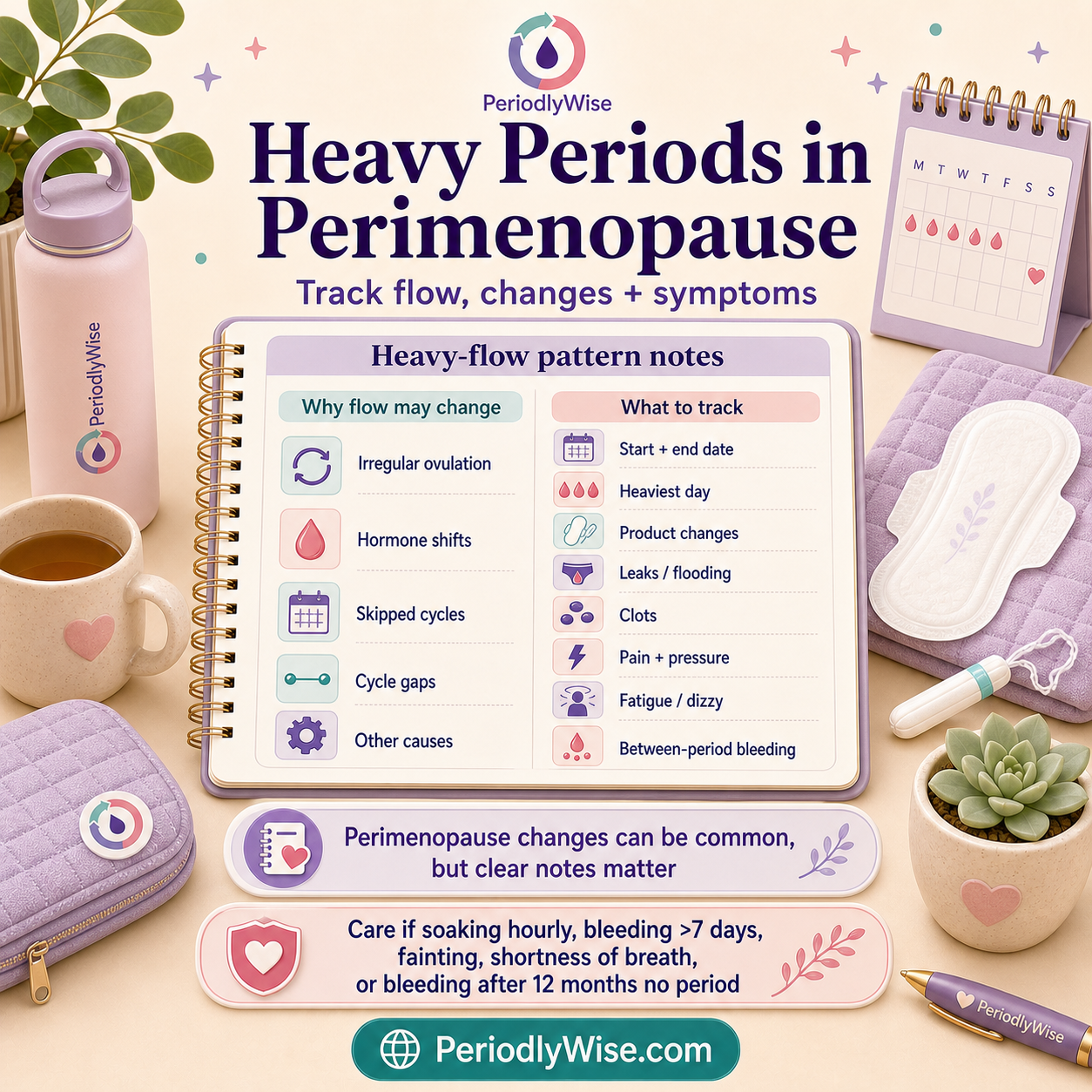
Perimenopause is the time before menopause when the body is moving toward the end of menstrual cycles. Mayo Clinic notes that ovulation becomes more unpredictable during this transition. Cycles may become longer or shorter, flow may be light or heavy, and skipped periods can happen.
When ovulation is irregular, the hormone pattern that usually organizes the uterine lining can be uneven. Some cycles may build a thicker lining or shed it in a less predictable way. That can show up as a heavier period, longer bleeding, spotting, or a period that arrives after a longer gap.
This does not mean every heavy period is caused by perimenopause. Fibroids, polyps, adenomyosis, endometriosis, thyroid issues, bleeding disorders, medication effects, pregnancy-related bleeding, and rarely cancer can also be involved. Tracking helps, but evaluation answers questions tracking cannot.
Heavy in perimenopause: what the pattern may mean
| Pattern | What it may suggest | What to do next |
|---|---|---|
| One heavier period after a late or skipped cycle | May fit perimenopause hormone variation, especially if it settles and feels familiar. | Record the start date, duration, flow level, clots, pain, and whether the next cycles repeat it. |
| Soaking through products every 1 to 2 hours or needing double protection | This fits heavy menstrual bleeding and can affect daily life. | Contact a healthcare professional, especially if it happens for several hours or repeats. |
| Heavy bleeding plus fatigue, dizziness, shortness of breath, or palpitations | Blood loss may be contributing to iron deficiency or anemia. | Ask about evaluation rather than trying to manage it with food alone. |
| Bleeding between periods, after sex, or after 12 months without a period | This is not just a heavy regular period pattern. | Arrange medical care promptly; postmenopausal bleeding should always be checked. |
What counts as heavy enough to pay attention
The NHS describes heavy periods as bleeding that affects life, requires frequent product changes, lasts longer than 7 days, causes large clots, leaks through clothing or bedding, or makes you feel tired or short of breath. ACOG also treats bleeding lasting more than 7 days or soaking products hourly for several hours as heavy menstrual bleeding.
Use your own normal as context too. If your flow has always been heavy but manageable, that is different from a sudden change after age 40. A new pattern matters because it gives your clinician a reason to look for causes beyond normal transition changes.
The key is not to panic over one surprising cycle. The key is to avoid normalizing bleeding that is extreme, prolonged, disruptive, or paired with symptoms of blood loss.
Track these details for every heavy cycle
A short, consistent record is better than trying to remember everything later.
- Start date: the first day of real bleeding, not spotting.
- End date: the last day you needed period protection.
- Heaviest day: which day required the most product changes.
- Product changes: how often you changed pads, tampons, cups, discs, or period underwear.
- Leaks or flooding: clothing, bedding, sudden gushes, or needing backup protection.
- Clots: size, number, and whether clots are new for you.
- Pain: cramps, pelvic pressure, one-sided pain, back pain, or pain during sex.
- Bleeding outside the period: spotting between periods or after sex.
- Body symptoms: fatigue, weakness, dizziness, shortness of breath, palpitations, headaches, or looking pale.
- Context: missed cycles, new medication, contraception changes, stress, weight change, illness, or possible pregnancy.
What to do when a perimenopause period is suddenly heavy
Use a calm sequence so you are not making decisions while stressed by bleeding.
- Measure the flow for a few hours. Note product changes, leaks, clots, dizziness, and pain instead of guessing.
- Check whether pregnancy is possible. If you still have periods, pregnancy is still possible until menopause is reached.
- Look for urgent symptoms. Fainting, severe dizziness, chest pain, severe one-sided pelvic pain, fever, or very heavy bleeding needs urgent care.
- Book non-urgent care for repeated heavy cycles. Bring dates, bleeding length, product-change frequency, clots, and symptoms.
- Ask about anemia and causes. A clinician may consider blood tests, pregnancy testing, thyroid testing, pelvic exam, ultrasound, or endometrial evaluation depending on your age, history, and symptoms.
When to seek care
Seek urgent care if bleeding is extremely heavy, you feel faint, you have severe dizziness, chest pain, shortness of breath, severe pelvic pain, fever, foul-smelling discharge, a positive pregnancy test with pain or heavy bleeding, or symptoms that feel unsafe.
Make a medical appointment if heavy periods affect work, sleep, exercise, sex, travel, or daily life; if you bleed longer than 7 days; if clots are large or new; if bleeding happens between periods or after sex; if your normal pattern changes suddenly; or if fatigue and shortness of breath suggest possible anemia.
After menopause, the rule changes. Menopause means 12 months in a row without a period. Bleeding after that point should be checked even if it is light.
Use PeriodlyWise to save bleeding dates, heavy-flow notes, clots, symptoms, and cycle gaps so your pattern is easier to explain.
Open the Period TrackerFAQ
Are heavy periods normal in perimenopause?
They can happen during perimenopause, but heavy does not automatically mean harmless. Track the pattern and seek care if bleeding is very heavy, prolonged, new, disruptive, or paired with anemia-like symptoms.
Why are my periods heavier after 40?
Perimenopause can make ovulation less predictable, which can change cycle length and flow. Other causes such as fibroids, polyps, adenomyosis, thyroid changes, medication effects, and pregnancy-related bleeding can also contribute.
Can heavy perimenopause periods cause anemia?
Yes. Heavy or prolonged blood loss can lower iron stores and contribute to iron deficiency anemia. Tiredness, weakness, dizziness, shortness of breath, chest discomfort, or palpitations should be discussed with a healthcare professional.
Is it normal to bleed after a year with no period?
No. Bleeding after 12 months without a period is postmenopausal bleeding and should be checked promptly, even if it is light spotting.
What should I bring to a doctor's appointment?
Bring the dates bleeding started and ended, how often you changed products, clot size, pain level, bleeding between periods or after sex, medication or contraception changes, pregnancy possibility, and symptoms such as fatigue or dizziness.
Final thoughts
Perimenopause can make periods less predictable, and that can include heavier flow. But the safest approach is not to shrug at every heavy cycle. Track what actually happened, compare it with your usual pattern, and ask for care when bleeding is extreme, repeated, or paired with concerning symptoms.
A good record turns a vague worry into useful medical context: dates, flow, clots, symptoms, and what changed.