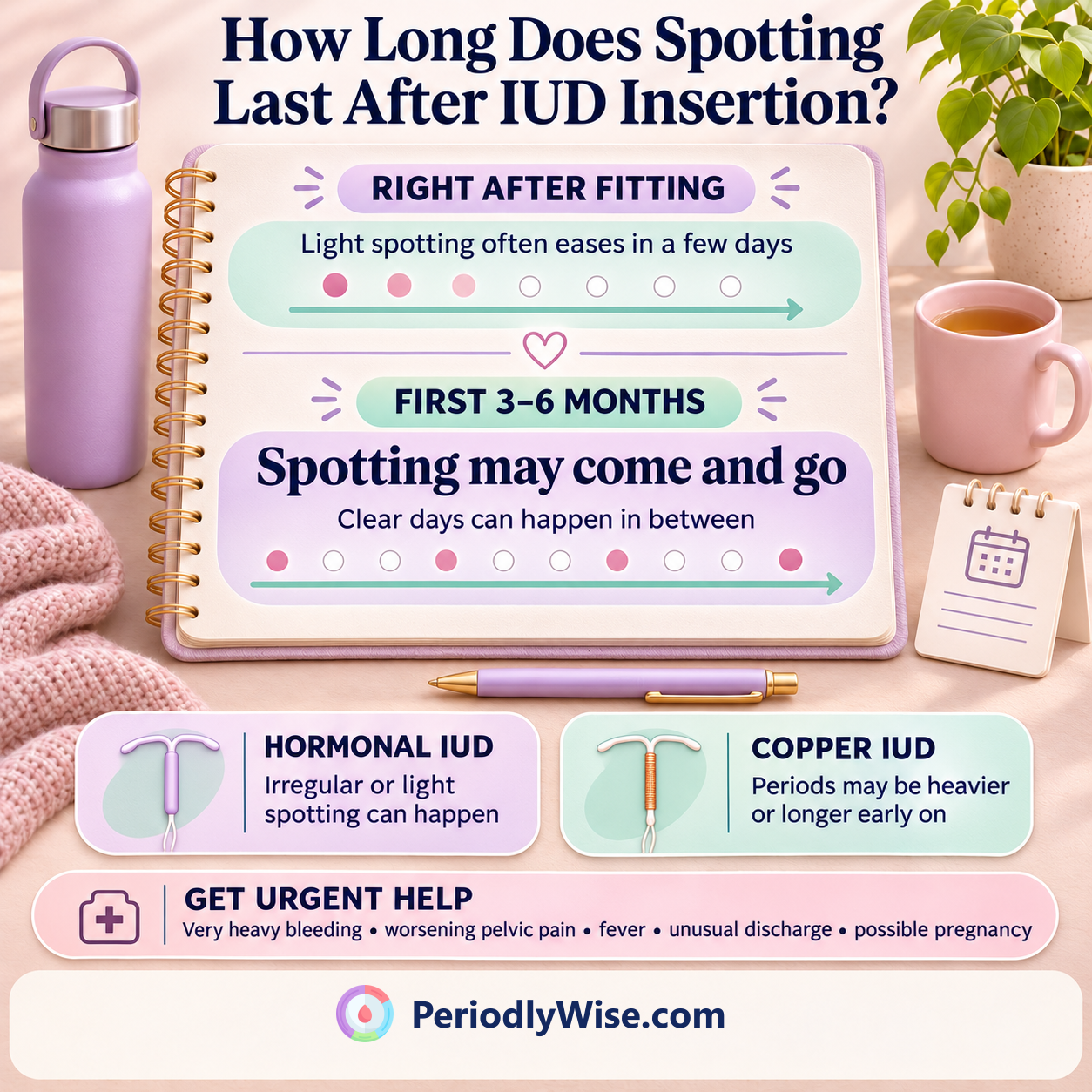
Light spotting right after IUD insertion often settles within a few days. Either type of IUD can also cause spotting that comes and goes over the first 3–6 months. That range describes an adjustment period, and the bleeding can stop for days in between. If you have very heavy bleeding, worsening pelvic pain, fever, unusual discharge or think you might be pregnant, get urgent medical advice.
The first few days and the months that follow
You might see a few spots on a liner or when you wipe, along with mild cramps like period cramps. If the spotting is light, the cramps are easing and you otherwise feel well, follow the aftercare advice your clinic gave you. A liner or pad can make it easier to tell if the amount is changing.
For example: A few spots the day after fitting that fade over the next couple of days fit the short-term pattern. If you then have clear days followed by a little spotting in the next month, write those down as separate episodes. That record tells your clinician more than saying you have been bleeding since the fitting.
Hormonal and copper IUDs can affect bleeding differently
| IUD type | First 3–6 months | Over time |
|---|---|---|
| IUD typeHormonal (levonorgestrel) | First 3–6 monthsLight spotting or irregular bleeding is common. | Over timeBleeding generally gets lighter. Periods can become less frequent or stop. |
| IUD typeCopper | First 3–6 monthsSpotting between periods can happen. Periods can be heavier, longer or more painful. | Over timeEarly changes often ease. Some people continue to have heavier periods than before. |
Spotting can be pink, red or brown. Pay more attention to the amount, the trend and how you feel than to the color alone. Spotting by itself cannot tell you whether the IUD is in place, whether it is already protecting you from pregnancy or whether you are pregnant.
What to track and when to book a check
- Write down the fitting date and IUD type. If you’re unsure which type you have, look at the card or paperwork from your clinic.
- Record spotting separately from flow. Note which days you only see spots, which days you need a pad for flow and which days are clear. Include whether it’s getting lighter or heavier and any pain, fever or discharge.
- Contact the clinic if the pattern is bothering you. Call sooner if bleeding is getting heavier, continues day after day, or comes back after a stable stretch. Arrange a check if irregular bleeding is still happening around six months. You can call earlier if it disrupts your daily life. Your clinician can check the device position or look for another cause when appropriate, and talk you through treatment or removal if you want it.
When to get urgent help
- Get urgent medical advice for very heavy bleeding, pelvic pain that gets worse or won’t settle, fever or unusual or bad-smelling discharge. Feeling feverish with worsening pain in the first few weeks after fitting needs a prompt assessment.
- Call the fitting clinic promptly if the threads are missing or feel different, or you feel hard plastic. Use condoms or avoid vaginal sex until the IUD is checked. If you recently had sex without backup contraception, ask promptly whether you need emergency contraception. Don’t pull the threads or try to reposition the device.
- Get urgent advice if you have a positive pregnancy test or suspect pregnancy with an IUD in place. Pregnancy is uncommon with an IUD, but a clinician needs to check for an ectopic pregnancy, meaning a pregnancy outside the uterus. If you might be pregnant and have one-sided lower belly pain or shoulder-tip pain, seek urgent assessment even without a positive test. Go to emergency care for sudden severe pain, fainting or very heavy bleeding with dizziness or weakness.
Frequently asked questions
Can I still be spotting two weeks after getting an IUD?
Light spotting can still occur at two weeks, especially if it comes and goes and you feel well. Call the clinic if it’s daily and isn’t easing or if you have new symptoms. Very heavy bleeding, worsening pain, fever or bad-smelling discharge need urgent advice.
Is daily spotting for three months something I should wait out?
The first few months can include frequent light bleeding, especially with a hormonal IUD. Daily spotting that hasn’t eased, is getting heavier or is hard to live with is a reason to call the clinic now. The 3–6 month range isn’t a deadline you have to wait for.
Is brown spotting after insertion expected?
Light spotting can look brown. Color alone can’t tell you the cause. Get advice if you also have pain, fever, a bad smell, heavier bleeding or possible pregnancy.
Does spotting mean my IUD isn’t working?
Spotting alone doesn’t tell you whether the IUD is working. Copper IUDs protect against pregnancy as soon as they’re fitted. A hormonal IUD can require backup for 7 days depending on timing and your situation. Follow your clinic’s instructions. If the threads feel different or are missing, use backup and get it checked.
What if the spotting stopped and came back?
This can happen during the early months. Contact the clinic for a new pattern after bleeding had settled, particularly if you have repeated bleeding after sex, new pain or a heavier flow.
Keep a record of full-flow days and note separate spotting episodes to discuss with your clinic.
Use the Period Tracker