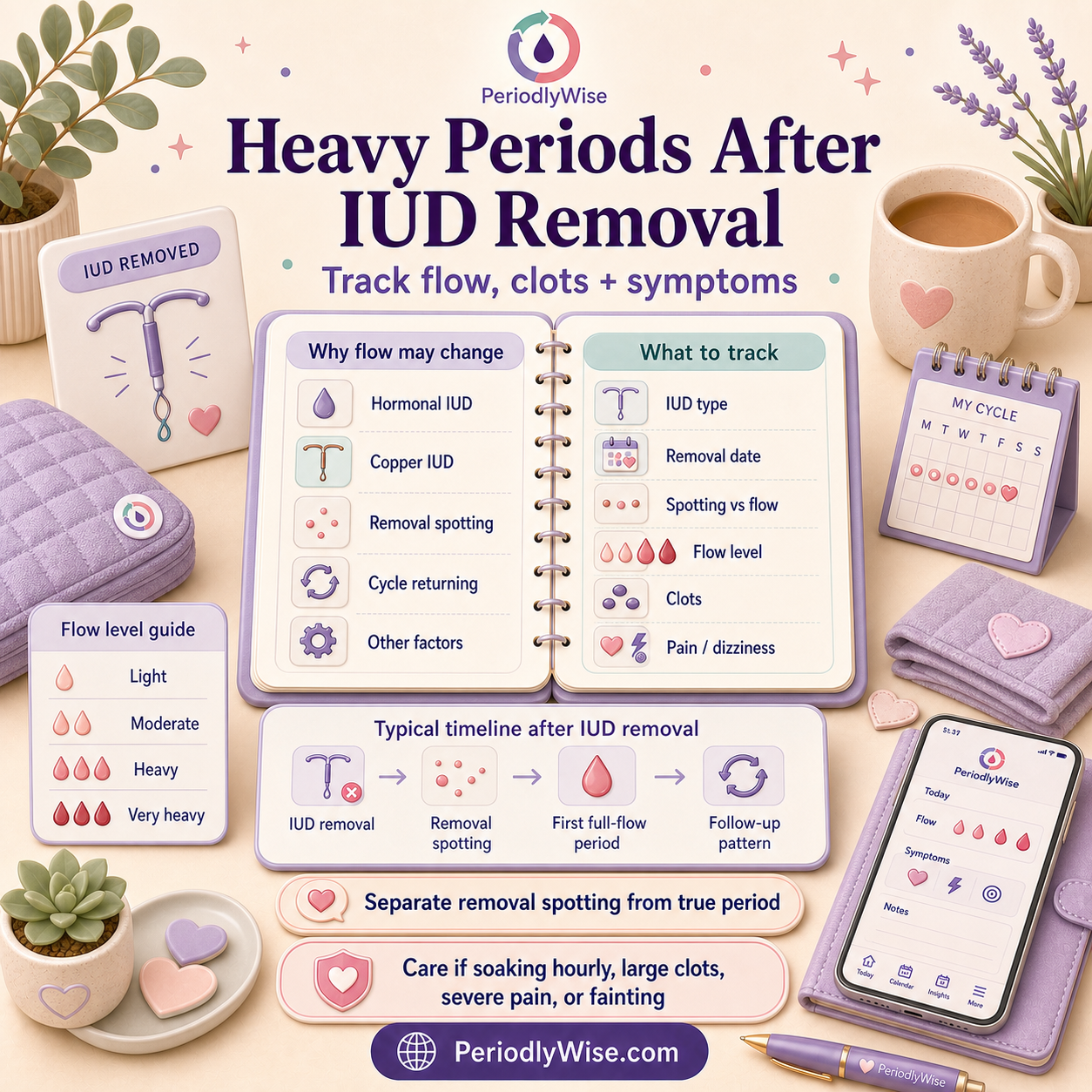
Heavy periods after IUD removal can be normal for some people, especially when a hormonal IUD had made periods very light or stopped them. But the word heavy matters. A first real period that feels stronger than your IUD years may be expected. Bleeding that soaks through products every hour, comes with dizziness, includes large clots, or happens with severe pelvic pain should be taken seriously.
The first step is to separate removal bleeding from a true period. Planned Parenthood notes that light bleeding and slight cramping can happen after an IUD is removed. That short spotting is not always the same as your first menstrual period after removal. A true period is more likely to arrive later, after your cycle resumes its own pattern. If you log both as one long period, your tracker may make the transition look more alarming or more confusing than it really is.
The second step is to remember which type of IUD you had. Hormonal IUDs often make periods lighter, shorter, or absent. Copper IUDs can make periods heavier, longer, or more painful while they are in place. After removal, your body generally moves back toward its own baseline, but the path can look different depending on where you started.
Why periods can feel heavy after IUD removal
If you had a hormonal IUD, your uterine lining may have stayed thinner while the IUD was in place. That is one reason many people have lighter periods or no periods with hormonal IUDs. When the IUD is removed, the local hormone effect stops and your natural cycle pattern gradually returns. A returning period may feel heavy simply because you have not had that kind of flow for a long time.
If you had a copper IUD, the story is different. Copper IUDs do not use hormones and are known to cause heavier bleeding and stronger cramps for some users, especially early after insertion. After removal, those IUD-related side effects usually ease. So if your bleeding remains very heavy after the copper IUD is out, or if it becomes heavier than your pre-IUD baseline, it is worth checking for other causes.
Other factors can be involved too. Stress, thyroid changes, fibroids, polyps, adenomyosis, PCOS, perimenopause, recent pregnancy, miscarriage, infection, blood-thinning medicines, bleeding disorders, and natural cycle variability can all affect flow. IUD removal may be the timing clue, but it may not be the only explanation.
How heavy is too heavy?
ACOG describes heavy menstrual bleeding as bleeding that lasts more than 7 days, soaks through one or more pads or tampons every hour for several hours in a row, requires more than one product at a time, forces night changes, or includes clots as big as a quarter or larger. Cleveland Clinic gives similar warning signs and also points to symptoms of anemia such as unusual fatigue, dizziness, and shortness of breath.
That does not mean every stronger first period is an emergency. A period can be heavier than your IUD pattern and still be manageable. A practical question is whether the bleeding stays within your normal ability to function. Are you changing products a little more often, or are you unable to leave the bathroom? Are clots small and occasional, or large and repeated? Is cramping familiar, or is pain sharp, one-sided, feverish, or severe?
If bleeding is soaking a pad or tampon in an hour for several hours, or if you feel faint, weak, short of breath, or unable to stand comfortably, seek urgent care. Heavy bleeding can lead to iron-deficiency anemia, and very heavy bleeding needs more than a calendar note.
Pregnancy after IUD removal
Fertility can return right away after an IUD is removed. That means pregnancy is possible before your periods look regular again. If you had sex around removal, had unprotected sex after removal, or are unsure whether another birth control method was active, include pregnancy testing in your plan.
A pregnancy test is most reliable after a missed period. If your cycle is irregular or your first period after removal is hard to identify, testing about 3 weeks after sex is a useful anchor. If a test is positive and you have heavy bleeding, one-sided pelvic pain, shoulder-tip pain, or fainting, seek urgent medical care. Those symptoms need evaluation, including for pregnancy complications.
If you do not want to become pregnant after removal, start another contraceptive method right away or use condoms until your chosen method is effective. Waiting for a period to come back before thinking about contraception can leave a gap, because ovulation can happen before the first period.
What to track after IUD removal
Track the IUD type, removal date, reason for removal, and whether removal was straightforward or difficult. Note any immediate spotting or cramps separately from the first full-flow period. For each bleeding day, record the flow level, number of pad or tampon changes, clots, pain score, medicine used, fatigue, dizziness, and whether bleeding disrupted sleep, work, school, or childcare.
Also track symptoms that suggest something other than a normal returning period. Fever, worsening pelvic pain, unusual or foul-smelling discharge, pain during sex, heavy bleeding after sex, or a pregnancy possibility should move the issue from simple tracking into medical follow-up. If you have a history of fibroids, anemia, endometriosis, bleeding disorders, postpartum changes, miscarriage, or thyroid disease, include that in the note you bring to your clinician.
Patterns matter. One heavy returning period after years of light hormonal-IUD bleeding may settle. Heavy bleeding that repeats for several cycles, gets worse, or feels unlike your pre-IUD baseline is more important. PeriodlyWise is useful here because you can compare the removal cycle with later cycles instead of relying on memory.
When to check in
Contact a healthcare professional if heavy bleeding lasts more than 7 days, if you are soaking through products every hour, if clots are large or frequent, if you have signs of anemia, or if heavy bleeding keeps repeating. Seek care sooner for severe pelvic pain, fever, foul-smelling discharge, fainting, a positive pregnancy test with pain or bleeding, or any bleeding that feels unsafe.
For day-to-day tracking, use the Period Tracker to mark removal spotting separately from true flow. The period clots guide, heavy-flow fatigue guide, and dizziness during period guide can help you decide what details to record. The goal is not to panic about one strong period. It is to catch the difference between a returning pattern and bleeding that deserves care.