A late period after stopping birth control can feel confusing because the calendar may not know which rhythm to follow yet. You may have had a withdrawal bleed after stopping pills, patches, or a ring. You may have spotting that does not feel like a normal period. Or you may simply be waiting for the first true bleed after your own cycle starts running again. None of that means you should ignore pregnancy possibility, but it also does not automatically mean something is wrong.
Hormonal birth control can control or change bleeding patterns while you use it. When you stop, the body has to resume its own ovulation-and-period pattern. For some people that happens quickly. For others, the first few cycles are late, early, light, heavy, or hard to label. The method you used, how regular your periods were before birth control, stress, illness, weight change, breastfeeding, perimenopause, PCOS, thyroid conditions, and possible pregnancy can all affect the timeline.
PeriodlyWise can help you keep the transition practical. The goal is not to force every spot into a period label. The goal is to record the stop date, any withdrawal bleeding, test timing if pregnancy is possible, and the first day of real menstrual flow when it arrives.
Why your period can be late after stopping birth control
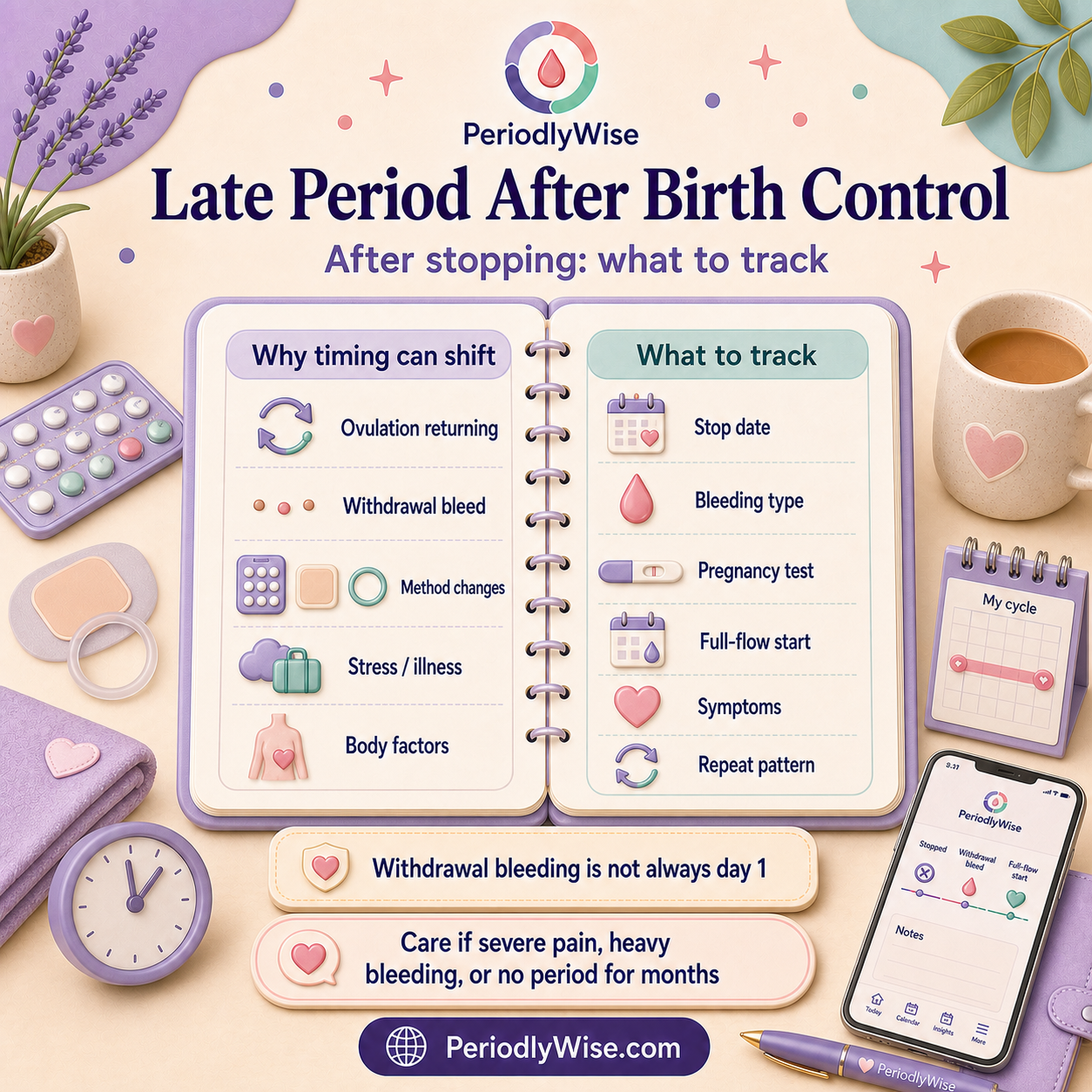
Many hormonal methods work by suppressing ovulation, changing cervical mucus, thinning the uterine lining, or changing the way bleeding happens. When you stop, your body may not immediately return to the exact pattern you remember from before. The first bleed after stopping can also be a withdrawal bleed rather than a full cycle period. That can make the next "real" period feel late even when the body is simply restarting.
Mayo Clinic notes that many people can become pregnant soon after stopping birth control pills. That point matters: waiting for a period is not a reliable sign that ovulation has not returned. Ovulation can happen before the first post-birth-control period. If you had sex where pregnancy is possible, late bleeding deserves pregnancy-test timing, not only cycle tracking.
The method you stopped matters
You may have a withdrawal bleed soon after stopping, then wait for ovulation and the next true period. The first natural cycle can be shorter or longer than expected.
Bleeding may have been light, irregular, or absent during use. After removal, tracking the first true flow can help you rebuild your baseline.
Some people need more time for regular bleeding to return after stopping injectable contraception. Ask your clinician what timeline fits your method and health history.
Emergency contraception can shift the next bleed for some people. If your period is late, pregnancy testing still matters.
If cycles were irregular before starting contraception, they may be irregular again after stopping.
Stress, illness, travel, sleep disruption, weight change, intense exercise, thyroid issues, PCOS, breastfeeding, and perimenopause can also delay bleeding.
Withdrawal bleeding is not always the same as a period
A withdrawal bleed happens when hormone levels drop after stopping or pausing a hormonal method. It can look like a period, but it does not always mean you ovulated first. A true menstrual period usually follows ovulation in a natural cycle. In real life, the distinction is not always visible from the bleeding alone, so the tracking note matters.
If you bleed a few days after stopping pills, patch, or ring, you can label it as "withdrawal bleeding" or "post-birth-control bleeding" in your notes. Then count the first day of your next clear period flow as the start of the first natural cycle. This keeps cycle length calculations from getting distorted by a hormone-withdrawal bleed.
When to take a pregnancy test
If pregnancy is possible, a late period after stopping birth control should be handled like any other late period: test based on timing and repeat if needed. Home tests are most useful when enough time has passed after sex or after the expected period. Testing too early can produce a false negative, especially if ovulation returned later than expected.
Record when you stopped or removed the method, and whether there were missed pills, delayed shots, or gaps before stopping.
Note whether it was withdrawal bleeding, spotting, brown discharge, or full flow.
If the expected period does not arrive, use a home pregnancy test according to its instructions.
If the first test is negative but bleeding still does not start, repeat in a few days or about one week, or ask for clinician testing.
This can be helpful for early testing because urine may be more concentrated.
Severe one-sided pain, fainting, shoulder pain, heavy bleeding, or severe dizziness with pregnancy possibility needs urgent care.
For a deeper testing guide, read Missed Period but Negative Pregnancy Test. For non-pregnancy reasons a period can be late, read Why Is My Period Late Besides Pregnancy?
What to track in PeriodlyWise
During the first few cycles after stopping birth control, the most helpful notes are simple and dated. Track the method you stopped, the exact stop or removal date, any withdrawal bleeding, spotting, brown discharge, cramps, mood changes, breast tenderness, acne, headaches, nausea, test timing, and when full flow starts. If you stop and restart a method, note that too.
Try not to label every small spot as day 1. Day 1 is most useful when it marks real menstrual flow, not a tiny wipe of discharge. If brown discharge appears before a bleed, note it separately and compare it with Brown Discharge Before Your Period. If stress or sleep disruption is part of the month, add that context instead of assuming birth control is the only explanation.
When to seek medical advice
Contact a healthcare professional if your period does not return within several months after stopping birth control, if you have repeated negative pregnancy tests but still no period, or if your cycles become very irregular and that is new for you. The NHS advises seeking care for missed periods that persist or come with symptoms such as weight changes, tiredness, acne or facial hair changes, or if you miss three periods in a row. ACOG and Cleveland Clinic also treat absent periods as something worth evaluating when they persist.
Seek urgent care if you may be pregnant and have severe pelvic or abdominal pain, one-sided pain, shoulder pain, fainting, severe dizziness, heavy bleeding, fever, or symptoms that feel unsafe. Heavy bleeding that soaks products quickly, severe pain, or signs of infection should not be managed only with a tracker.
FAQ
How late can a period be after stopping birth control?
It varies. Some people bleed or ovulate quickly, while others have irregular or delayed bleeding for a few cycles. If pregnancy is possible, test. If no period returns within a few months, check in with a healthcare professional.
Can I ovulate before my first period after stopping birth control?
Yes. Ovulation can happen before the first true period, which means pregnancy can be possible before you see a post-birth-control bleed.
Should withdrawal bleeding count as my period?
For tracking, it is often clearer to label it as withdrawal bleeding and count the first day of later full menstrual flow as the start of the next natural cycle.
Use PeriodlyWise to record your stop date, bleeding changes, pregnancy-test timing, symptoms, and the first true period after birth control.
Open the Period Tracker