Not everyone feels hungry during their period. Some people notice stronger cravings before bleeding starts, then a lower appetite once cramps, nausea, bloating, fatigue, or heavy flow arrive. Others feel hungry one cycle and uninterested in food the next. Appetite around your period can shift in both directions.
Low appetite during bleeding days can be frustrating because your body may need energy, fluids, and comfort, but food can feel unappealing. A full meal may feel too heavy. Strong smells may bother you. Cramps may make it hard to sit and eat. Nausea or bloating may make small portions feel like enough.
This guide explains why food can feel harder during your period, what to track, what gentle options may help, and when appetite loss should be checked rather than brushed aside.
Why can appetite drop during your period?
Appetite is not controlled by one simple switch. Pain, digestion, sleep, mood, stress, hormones, and routine can all affect hunger. During a period, several of those factors can change at once.
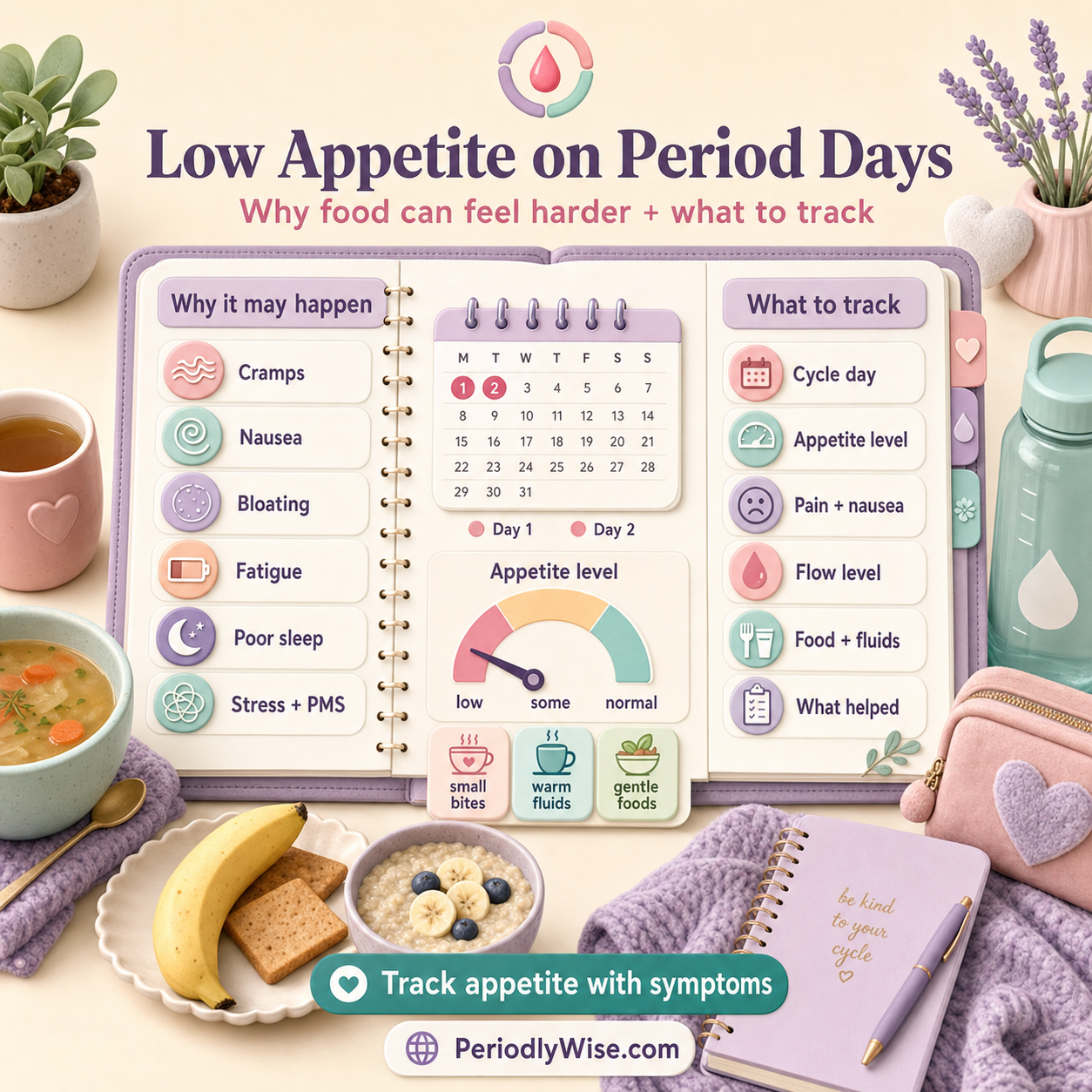
Menstrual cramps can make food feel less appealing. Mayo Clinic notes that menstrual cramps can come with nausea, loose stools, headache, and dizziness. When cramps are strong, eating may feel like too much effort or may make nausea feel worse.
Bloating and gas can also reduce appetite. If your abdomen already feels full, a normal meal can feel uncomfortable. Fatigue can make cooking or eating feel like another task. Stress and poor sleep can make hunger cues less predictable. PMS can also involve appetite changes and food cravings before the period starts, according to the Office on Women's Health.
Low appetite before your period vs during bleeding
The timing can help you understand the pattern. Appetite changes before bleeding may be part of your premenstrual pattern, especially if they happen with mood changes, sleep problems, bloating, breast tenderness, headaches, or anxiety. Appetite changes during bleeding may be more connected with cramps, nausea, heavy flow, tiredness, or digestive symptoms.
| Timing | Possible pattern | What to track |
|---|---|---|
| Before bleeding | PMS-related appetite change, stress, sleep disruption, bloating, or mood symptoms. | Cycle day, mood, sleep, cravings, appetite level, bloating, and stress. |
| Day 1 or day 2 | Cramps, nausea, heavy flow, loose stools, fatigue, or pain-related low appetite. | Pain level, nausea, flow, bowel changes, fluids, and foods tolerated. |
| Heavy flow days | Energy drain, leak worry, cramps, poor sleep, or feeling too tired to eat normally. | Product changes, fatigue, dizziness, meals, fluids, and whether appetite returns as flow slows. |
| After period ends | Less likely to be only a short period-day pattern if appetite stays low. | How long appetite loss lasts, weight changes, pain, mood, and other symptoms. |
If nausea is the main reason food feels hard, read Period Nausea and Queasiness. If bowel changes are part of the pattern, read Period Diarrhea and Constipation.
Cramps, nausea, bloating, and food aversion
Low appetite during a period often makes more sense when you track the symptoms around it. For example, "no appetite" with cramps and nausea is different from "no appetite" with sadness, anxiety, or high stress. "No appetite" with bloating is different from "no appetite" with vomiting.
NHS guidance on period pain notes that period pain is common, but also advises medical review when periods become more painful, heavier, or irregular, when period pain stops usual activities, or when symptoms such as loss of appetite or unexplained weight loss appear with pelvic or period pain.
That does not mean every low-appetite day is alarming. It means appetite loss is worth taking seriously when it is severe, repeated, worsening, or paired with other concerning symptoms.
What should you track?
Track appetite with the symptoms that may be driving it. This helps you avoid vague notes like "felt bad" and gives you a clearer pattern to compare across cycles.
- Cycle timing: days before the period, day 1, day 2, heavy flow day, or after bleeding ends.
- Appetite level: low, moderate, normal, high, or a simple 0 to 10 rating.
- Nausea: none, mild, moderate, strong, vomiting, or smell sensitivity.
- Pain: cramps, back pain, pelvic pain, headache, or pain that stops normal activities.
- Digestion: bloating, gas, constipation, loose stools, diarrhea, or early fullness.
- Flow: spotting, light, medium, heavy, clots, leaks, or product changes.
- Energy: fatigue, dizziness, weakness, sleep disruption, or feeling faint.
- Food and fluids: skipped meals, foods tolerated, caffeine, water, warm drinks, or electrolytes.
- What helped: heat, rest, smaller meals, bland food, fluids, pain relief, or less intense activity.
Use PeriodlyWise to record the period day and flow level, then add a short note about appetite and related symptoms. For example: "D1 appetite 2/10 | nausea mild | cramps 7/10 | soup + tea helped."
If the same note repeats for several cycles, you have a pattern. If the note changes suddenly, that change is also useful information.
Gentle food and fluid ideas when appetite is low
When appetite is low, the goal is not a perfect diet. The goal is to make eating and drinking more manageable. Small, simple options may be easier than a full plate.
- Toast, crackers, rice, plain noodles, or potatoes.
- Oatmeal, porridge, cereal, or soft cooked grains.
- Soup, broth, lightly spiced dal, or other warm simple foods.
- Banana, applesauce, soft fruit, or smoothies.
- Yogurt or curd if you tolerate dairy.
- Eggs, tofu, paneer, lentils, beans, or other protein in small portions if tolerated.
- Water, herbal tea, oral rehydration fluids, or electrolyte drinks when needed.
If smells bother you, cooler foods may be easier than hot meals. If large meals feel impossible, try a few bites more often. If cramps are the main barrier, heat, rest, and safe pain-management choices recommended for you may make eating easier later.
Food can support energy, but it should not be treated as a cure for severe pain, vomiting, heavy bleeding, or persistent appetite loss. If symptoms are strong, the next step is support, not self-blame.
Low appetite, heavy flow, and fatigue
Low appetite can become more draining when it happens with heavy flow. If you are bleeding heavily, sleeping poorly, changing products often, and eating less than usual, fatigue can feel stronger. Some people also feel dizzy or weak when flow is heavy, especially if they are not eating or drinking much.
Track heavy flow and appetite together. A note like "D2 heavy, low appetite, dizzy standing, only tea until afternoon" is more useful than separating those symptoms. If heavy flow is part of the pattern, read Period Fatigue on Heavy Flow Days.
When should low appetite during your period get medical advice?
Consider medical advice if appetite loss is severe, lasts beyond your period, repeats every cycle and affects daily life, or comes with vomiting, dehydration, fainting, unexplained weight loss, fever, severe pelvic pain, pain during sex, pain when peeing or pooing, bleeding between periods, or very heavy bleeding.
Also seek support if low appetite is connected with fear of eating, intentional restriction, body image distress, or a history of disordered eating. Those patterns deserve care and should not be handled alone.
If pregnancy is possible and your period is late, unusual, or much lighter than expected, consider taking a pregnancy test and seeking medical advice if symptoms worry you.
How PeriodlyWise can help
PeriodlyWise cannot diagnose PMS, PMDD, anemia, endometriosis, digestive conditions, eating disorders, pregnancy, infection, or any medical condition. What it can do is help you organize timing and context.
Use the Period Tracker to estimate your next period window, then note appetite changes alongside cramps, nausea, bloating, bowel changes, flow, sleep, stress, food, fluids, and what helped. Over a few cycles, you may see whether low appetite appears before bleeding, during the heaviest day, with nausea, or only when cramps are strong.
Record cycle timing, appetite level, nausea, cramps, bloating, flow, sleep, food, fluids, and what helped.
Open the Period TrackerFAQ
Is low appetite during your period normal?
It can happen, especially with cramps, nausea, bloating, fatigue, stress, or PMS symptoms. It is more concerning if it is severe, persistent, worsening, or paired with vomiting, dehydration, weight loss, severe pain, or very heavy bleeding.
Can cramps make you lose your appetite?
Yes. Menstrual cramps can come with nausea, loose stools, headache, or dizziness, and pain itself can reduce interest in food. Track whether appetite improves when cramps settle.
What should I eat when I have no appetite on my period?
Try small, gentle foods such as toast, rice, soup, oatmeal, banana, yogurt, smoothies, or simple protein foods you tolerate. Fluids matter too, especially if you have nausea, loose stools, or heavy bleeding.
When is appetite loss during a period more serious?
It is more serious when it lasts beyond your period, causes dehydration or weight loss, comes with severe pain, vomiting, fainting, fever, very heavy bleeding, or affects your ability to function.
Final thoughts
Low appetite during your period can be a real symptom, not a character flaw or a lack of discipline. Cramps, nausea, bloating, fatigue, poor sleep, stress, and PMS can all make food feel harder.
Track the pattern with enough detail to understand what is driving it. If appetite loss is severe, repeated, persistent, or paired with vomiting, dehydration, weight loss, severe pain, very heavy bleeding, dizziness, or fainting, medical support can help you sort out what is happening.