Feeling nauseous before or during your period can be frustrating because it does not always feel like a "period symptom" at first. You may expect cramps, mood changes, bloating, or fatigue, but a queasy stomach can make the whole day feel harder. Some people feel slightly off around mealtimes. Others feel nauseous when cramps peak, when bleeding starts, or during the days before the period arrives.
Period-related nausea can happen for several reasons. Hormone shifts before a period may affect appetite, digestion, sleep, and mood. Cramps may come with nausea, loose stools, headache, or dizziness. Pain itself can also make the stomach feel unsettled. For some people, nausea is mild and predictable. For others, it is strong enough to interfere with food, hydration, work, school, sleep, or daily plans.
This guide keeps the focus practical: what may be happening, what to track, what may help, and when nausea deserves medical attention.
Why can nausea happen before your period?
Nausea before bleeding starts is often connected with the premenstrual phase. The Office on Women's Health explains that PMS symptoms can happen after ovulation and before the period, as hormone levels shift if pregnancy has not occurred. PMS can include physical symptoms such as bloating, gassiness, cramps, headache, backache, appetite changes, and sleep problems.
For some people, those body changes show up as a sensitive stomach. You may notice that certain foods feel heavier than usual, your appetite changes, or your stomach feels unsettled even before cramps begin. Stress and poor sleep can make this worse because both can affect digestion and how strongly symptoms are felt.
Nausea before a period is not always a sign of something serious, but the timing matters. If it appears around the same point in your cycle for several months, improves once bleeding begins, and stays mild, it may be part of your premenstrual pattern. If it is new, severe, or unusual for you, it deserves closer attention.
Why can nausea happen during your period?
Nausea during bleeding is often linked with cramps. Mayo Clinic notes that menstrual cramps can come with nausea, loose stools, headache, and dizziness. Cramps happen as the uterus contracts to help shed its lining. Prostaglandins, which are hormone-like substances involved in pain and inflammation, help trigger those uterine contractions. Higher prostaglandin levels are associated with more intense cramps.
That does not mean every wave of nausea is automatically "just prostaglandins." It means cramps and stomach symptoms can travel together. If your nausea tends to peak when cramps peak, or on the first heavy day of bleeding, that pattern is useful to track.
Some people also notice nausea when flow is heavy, when pain interrupts sleep, or when they have gone too long without food. Others feel worse after caffeine, greasy food, intense exercise, or poor hydration during the first days of bleeding.
Nausea, cramps, and digestive changes
The period window can affect the whole abdomen, not only the uterus. Period-related digestive changes may include:
- Queasiness.
- Reduced appetite.
- Loose stools.
- Constipation.
- Bloating.
- Gas.
- Cramping that feels hard to separate from stomach pain.
If you already have a sensitive gut, your cycle may make it more noticeable. The Office on Women's Health notes that IBS symptoms may worsen before a period for some people. This is why it helps to track digestive symptoms alongside cycle day instead of treating them as random.
A useful note might be: "Nausea started the night before bleeding," "loose stools and cramps on day 1," or "queasy after coffee during heavy flow." Small notes can reveal patterns over time.
Could it be PMS, period pain, or something else?
Sometimes nausea is part of a familiar PMS or cramp pattern. Sometimes it may be related to something else. The goal is not to diagnose yourself, but to notice when symptoms do not fit your normal pattern.
| Pattern | What it may suggest | What to track |
|---|---|---|
| Nausea 3 to 7 days before bleeding | Premenstrual pattern may be involved. | Cycle day, mood, sleep, appetite, bloating. |
| Nausea with strong cramps | Cramps and pain response may be involved. | Pain level, flow, location, what helped. |
| Nausea with loose stools | Digestive cycle changes may be involved. | Food, fluids, bowel changes, cramps. |
| Nausea with dizziness or weakness | Hydration, heavy flow, food intake, or other factors may matter. | Flow level, fluids, meals, dizziness severity. |
| Nausea with late period | Pregnancy may need to be ruled out if possible. | Period timing, test timing, unusual symptoms. |
If pregnancy is possible and your period is late, lighter than usual, or different from your normal pattern, taking a pregnancy test is a practical step. Nausea can overlap with PMS, so timing alone is not enough to know.
What to track for period nausea
Tracking nausea does not need to be complicated. The most useful details are the ones that show timing and severity.
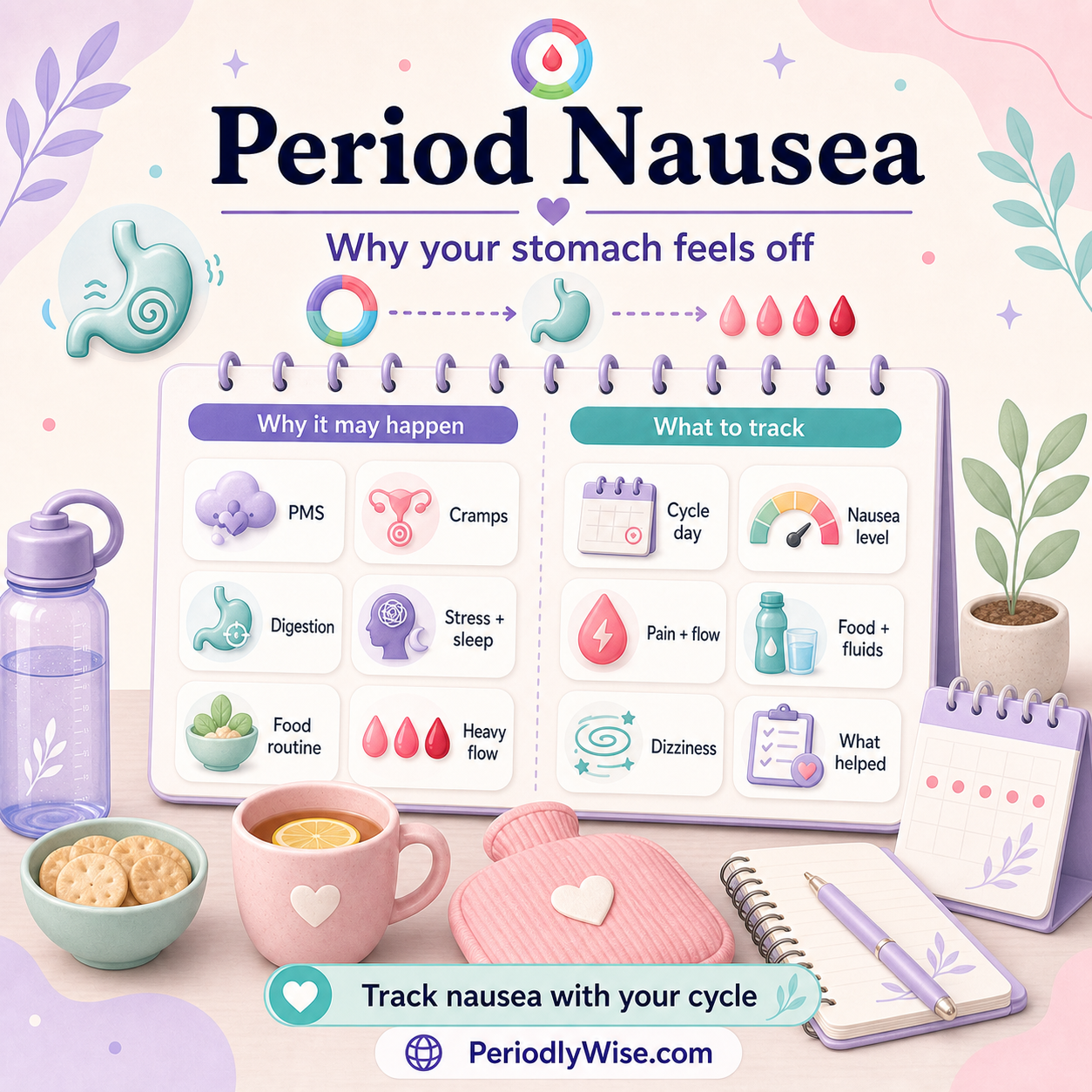
- Cycle day: did nausea start before bleeding, on day 1, during heavy flow, or after the period?
- Nausea level: mild, moderate, severe, or vomiting.
- Cramps: pain level, location, and whether nausea rises when cramps rise.
- Flow: light, moderate, heavy, clots, or sudden change from usual.
- Food and fluids: skipped meals, caffeine, alcohol, greasy foods, hydration.
- Digestive symptoms: loose stools, constipation, bloating, gas, stomach cramps.
- Sleep: poor sleep can make nausea and pain harder to tolerate.
- Stress: stress may affect appetite, digestion, and symptom intensity.
- What helped: heat, rest, bland food, fluids, gentle movement, medication if appropriate for you.
The goal is not to record everything forever. Track for a few cycles so you can see whether nausea is predictable, changing, or connected to other symptoms.
What may help mild period-related nausea?
If nausea is mild and familiar, small comfort steps may help. Keep this gentle and realistic.
- Small, simple meals instead of large meals.
- Bland foods if your stomach feels sensitive.
- Sipping water or an electrolyte drink.
- Ginger tea or peppermint tea if they suit you.
- Avoiding heavy, greasy, or very sweet foods when nausea is active.
- Reducing caffeine if it makes your stomach or anxiety worse.
- Heat on the lower belly if cramps are part of the nausea pattern.
- Resting in a comfortable position.
- Gentle walking or stretching if movement feels good.
Pain relief may help some people when nausea is tied to cramps, but medication choices depend on your health, age, other medicines, stomach sensitivity, and medical history. If you are unsure what is safe for you, ask a healthcare professional.
When nausea should not be ignored
Period nausea can be common, but vomiting repeatedly or feeling severely unwell should not be normalized. Get medical advice if:
- Nausea is severe or new for you.
- You are vomiting and cannot keep fluids down.
- You feel faint, confused, weak, or dehydrated.
- You have severe pelvic pain or pain worse than usual.
- Pain or nausea disrupts your life every cycle.
- Symptoms are progressively worsening.
- You have fever, unusual discharge, or pain with urination.
- You have very heavy bleeding or bleeding between periods.
- You may be pregnant.
- Your period pattern has changed suddenly.
The NHS advises seeking help if period pain becomes severe, worse than usual, heavier, irregular, or affects usual daily activities. Mayo Clinic also recommends medical care when menstrual cramps disrupt life every month, worsen over time, or start severely after age 25.
How PeriodlyWise can help you see the pattern
PeriodlyWise cannot diagnose nausea, stomach pain, PMS, or any medical condition. What it can do is help you organize the pattern.
Use the Period Tracker to estimate your next period window, then note when nausea appears. If you notice nausea repeatedly before bleeding, during heavy flow, or with cramps, that information can help you prepare earlier. It can also make it easier to explain your symptoms clearly if you decide to speak with a healthcare professional.
Simple tracking can turn "my stomach always feels weird" into something clearer: "I feel queasy the day before bleeding and on day 1, especially when cramps are strong and I skip breakfast." That kind of pattern is much easier to act on.
Use PeriodlyWise to record cycle timing, cramps, flow, food, fluids, dizziness, sleep, and what helped so stomach symptoms are easier to understand across cycles.
Open the Period TrackerFAQ
Is nausea before a period normal?
It can happen as part of a premenstrual pattern, especially if it is mild, familiar, and happens at a similar time each cycle. New, severe, or worsening nausea should be taken seriously.
Why do cramps make me feel nauseous?
Cramps, pain, and prostaglandin-related uterine contractions can be associated with nausea, loose stools, headache, and dizziness in some people. Tracking whether nausea peaks with pain can help show the connection.
Can nausea mean my period is coming?
For some people, yes. Nausea may show up before bleeding as part of PMS. But nausea can also happen for many non-period reasons, and if pregnancy is possible, a late or unusual period should be checked with a pregnancy test.
What should I eat when I feel nauseous on my period?
Simple foods may feel easier: toast, crackers, rice, bananas, soup, oatmeal, or small frequent meals. Hydration matters too. Choose what your stomach tolerates.
When should I get help for period nausea?
Get help if you are vomiting repeatedly, cannot keep fluids down, feel faint, have severe pain, have fever or unusual discharge, have very heavy bleeding, may be pregnant, or symptoms are new or worsening.
Final thoughts
Period nausea can be mild and predictable, or it can be strong enough to disrupt food, fluids, sleep, and daily life. The safest approach is neither panic nor dismissal. Track when it happens, what comes with it, and whether the pattern repeats.
If nausea is familiar and manageable, simple preparation may help. If it is severe, new, worsening, or paired with concerning symptoms, get medical advice instead of assuming it is only part of your period.