Period flu is a phrase people often use when they feel strangely unwell before or during their period. You may feel achy, exhausted, chilly, nauseous, headachy, sensitive, or generally run down, almost as if your body is coming down with something.
Period flu is not the same as influenza, and it is not a formal diagnosis. It is a common way to describe flu-like symptoms that seem to follow a menstrual-cycle pattern. For some people, these symptoms show up a few days before bleeding starts. For others, they appear on the first day or two of the period and then ease as bleeding continues.
The key is the pattern. If the same "sick but not quite sick" feeling keeps appearing around your period, tracking it can help you understand whether it may be related to PMS, cramps, sleep changes, digestion changes, stress, or something that deserves medical attention.
What does period flu feel like?
Period flu can feel different from person to person. Some people mainly feel tired and heavy. Others feel body aches, chills, nausea, headaches, digestive changes, or a low-energy "I need to lie down" feeling.
Common symptoms people describe include:
- Body aches, muscle aches, or joint discomfort.
- Unusual tiredness or low stamina.
- Headache or migraine-like discomfort.
- Nausea, appetite changes, or a queasy stomach.
- Loose stools, constipation, bloating, or cramping.
- Feeling chilly, warm, flushed, or generally unwell.
- Poor sleep, brain fog, or lower concentration.
- Mood sensitivity, irritability, anxiety, or low mood.
These symptoms can overlap with PMS, painful periods, digestive changes, and normal cycle-related hormone shifts. They can also overlap with a real viral illness, so it is important not to assume every flu-like symptom is period-related.
Why can you feel sick before your period?
In the days after ovulation and before your period, estrogen and progesterone change. If pregnancy does not happen, these hormone levels fall before bleeding begins. Some people are more sensitive to these shifts than others, and that sensitivity may show up as tiredness, mood changes, headaches, appetite changes, breast tenderness, bloating, or a general unwell feeling.
Prostaglandins may also play a role, especially around the start of bleeding. Prostaglandins help the uterus contract so it can shed its lining. Higher prostaglandin activity can be linked with stronger cramps, back pain, nausea, diarrhea, headache, and that heavy, achy feeling some people describe as period flu.
This does not mean your body is doing anything wrong. But if the symptoms are strong enough to disrupt school, work, sleep, relationships, or normal routines, they are worth taking seriously.
Is period flu the same as PMS?
Period flu is best understood as a casual description, not a separate medical condition. Many symptoms people call period flu fit within the broader pattern of premenstrual symptoms or PMS.
PMS can include physical symptoms such as fatigue, headache, bloating, cramps, breast tenderness, appetite changes, constipation, diarrhea, and backache. It can also include emotional symptoms such as irritability, anxiety, mood swings, sadness, sleep changes, and difficulty concentrating.
The difference is mostly language. PMS is the broader term. Period flu is the way some people describe the achy, tired, sick-feeling side of that experience. If mood symptoms are very intense, long-lasting, or disruptive, read our guide on PMS vs PMDD and consider professional support.
Could it actually be the flu or another illness?
Yes, it could. A real infection can happen at any point in your cycle. Fever, sore throat, cough, body aches, swollen glands, vomiting, worsening diarrhea, or symptoms that spread to other people around you may point to something more than period-related symptoms.
A useful question is: does this happen in a predictable pattern? If the symptoms appear around the same cycle days, improve after your period starts, and repeat over several cycles, they may be cycle-related. If symptoms are new, intense, contagious-feeling, or do not improve, it is safer to treat them as a health concern rather than assuming they are just hormones.
What should you track?
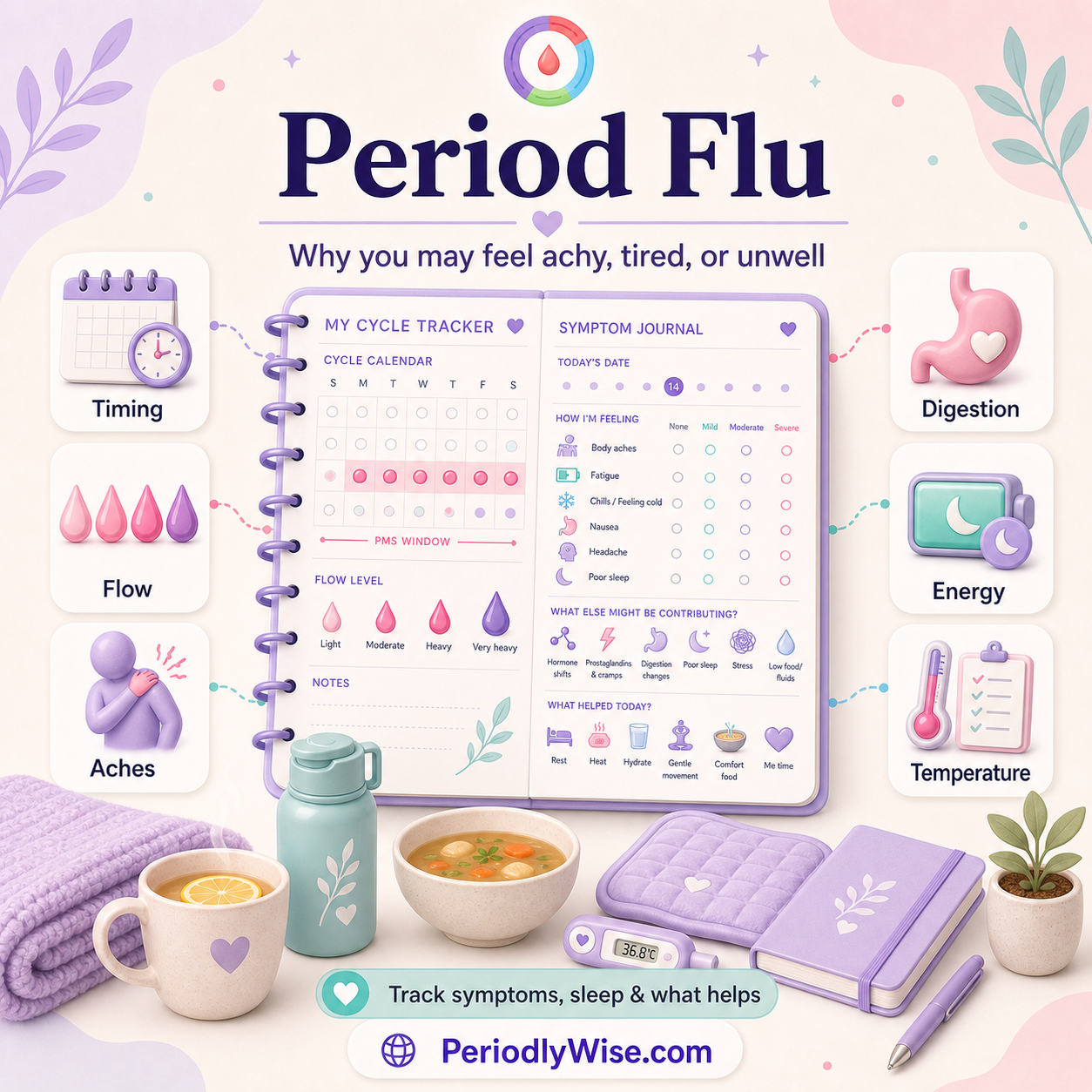
Tracking helps you separate one bad day from a repeating pattern. For period flu symptoms, note timing, intensity, and what else is happening in your body.
- Cycle day: when symptoms start and when they ease.
- Bleeding: spotting, light, moderate, heavy, or very heavy flow.
- Pain: cramps, back pain, pelvic pain, body aches, or headache.
- Digestive symptoms: nausea, diarrhea, constipation, bloating, appetite changes.
- Energy: fatigue level, sleep quality, and ability to do normal tasks.
- Temperature: whether you have a true fever or just feel warm or chilly.
- Comfort steps: heat, rest, fluids, food, pain relievers, movement, or sleep.
- Pattern: whether the same symptoms repeat for two or three cycles.
Tracking is especially helpful if you later speak with a healthcare professional. Instead of saying "I feel sick before my period," you can show when it happens, how long it lasts, how severe it is, and whether it affects daily life.
What may help you feel more comfortable?
Gentle support can make a noticeable difference. Rest when you can, drink enough fluids, eat simple meals you tolerate well, and use heat for cramps or back discomfort. Light movement, stretching, walking, or yoga may help some people, while others genuinely need rest.
Over-the-counter pain relievers may help some period-related aches, cramps, headaches, or back pain, but they are not right for everyone. Follow the label and avoid them if you have been told not to use them because of stomach, kidney, bleeding, allergy, medication, or other medical concerns.
Sleep also matters. Poor sleep can make pain, nausea, mood changes, and fatigue feel worse. If you notice period flu symptoms after several nights of poor sleep, track that too. You may also find the guides on period fatigue, digestive changes during your period, and period headaches useful.
When should you get medical advice?
Get medical advice if symptoms are severe, new, worsening, or affecting your ability to function. Also seek help if you have a true fever, fainting, severe pelvic pain, chest pain, shortness of breath, dehydration, repeated vomiting, unusual discharge, pain with sex, very heavy bleeding, bleeding between periods, or symptoms that do not improve after your period starts.
You should also consider medical support if the emotional side feels intense, such as severe anxiety, depression, hopelessness, or thoughts of self-harm. Strong premenstrual mood symptoms can sometimes point to PMDD or another condition that deserves care.
The bottom line
Period flu is not an actual flu diagnosis, but the symptoms people describe are real. Feeling achy, tired, nauseous, chilled, headachy, or generally unwell before your period may be connected to hormone shifts, PMS, prostaglandins, cramps, digestion changes, poor sleep, or stress.
The most useful next step is tracking. Notice when symptoms start, how intense they are, what helps, and whether the pattern repeats. If the symptoms are mild and predictable, comfort care may be enough. If they are strong, unusual, or disruptive, medical advice can help you rule out other causes and find better support.
Use PeriodlyWise to estimate your period window and keep notes on aches, fatigue, nausea, chills, headaches, flow, sleep, and what helps.
Open the Period TrackerFAQs
Is period flu contagious?
No. Period flu itself is not contagious because it is not influenza. But if you have a real virus at the same time as your period, that illness may be contagious.
Can period flu cause a fever?
Some people feel warm, flushed, or chilly around their period. A true fever should not automatically be blamed on your cycle. If you have a measured fever or feel seriously unwell, consider medical advice.
How long does period flu last?
It may last a day or two for some people, while others notice symptoms for several days before bleeding starts. If it lasts longer than usual or does not improve after your period begins, track it and consider getting checked.
Can tracking help with period flu?
Yes. Tracking timing, body aches, fatigue, nausea, headache, flow, cramps, sleep, and what helped can make patterns clearer and help you explain symptoms more accurately if you speak with a healthcare professional.