Missed periods while breastfeeding can be normal. After birth, your cycle does not restart on one fixed schedule, and breastfeeding can delay ovulation and the return of regular periods. Some people see periods return within weeks, especially with formula feeding or mixed feeding. Others who fully breastfeed, including at night, may not have regular periods for months. Healthdirect notes that periods can take months, and in some cases longer, to return while breastfeeding.
The reason is hormonal. Frequent breastfeeding supports higher prolactin and other postpartum hormone patterns that can suppress ovulation. If ovulation does not happen, a true menstrual period usually does not happen either. This is called lactational amenorrhea. It can be a normal part of breastfeeding, but it should not be treated as a permanent or automatic pregnancy-prevention method.
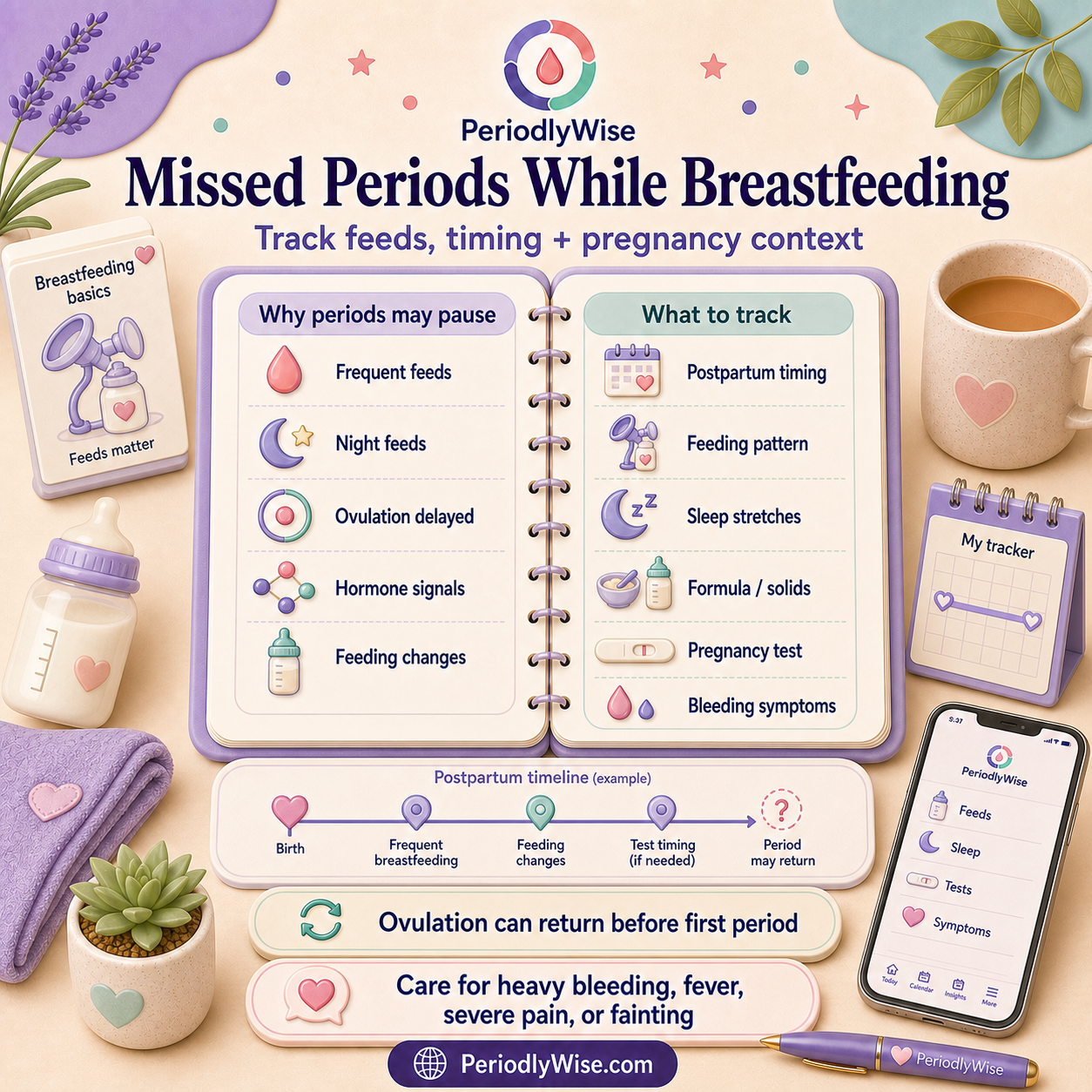
The most practical way to think about missed periods while breastfeeding is to track the whole postpartum context: how many weeks or months it has been since birth, whether you are fully breastfeeding or mixed feeding, whether your baby sleeps long stretches at night, whether solids have started, whether you have had any bleeding, whether sex or contraception could make pregnancy possible, and whether symptoms feel like ordinary postpartum recovery or something that needs care.
Why breastfeeding can stop periods
Breastfeeding can delay the hormonal pattern that leads to ovulation. When feeding is frequent and there are not long gaps between feeds, the body may keep ovulation quiet for a while. Without ovulation, the cycle does not always create a predictable period. This is why a missed period during breastfeeding may not mean the same thing as a missed period at another time in life.
Feeding pattern matters. The NHS explains that if you fully breastfeed, including at night, periods may not start again until breastfeeding is reduced. Healthdirect lists common turning points: the baby breastfeeds less often, feeds for shorter times, starts bottles or formula top-ups, sleeps for longer stretches, sleeps through the night, or starts solid foods. Each of those changes can lower the breastfeeding signal enough for ovulation to restart.
Once periods return, they may still be irregular at first. You might have one period, skip the next one, or go a few months before the next bleed while still lactating. That can feel strange if your cycles were predictable before pregnancy, but it can be part of the transition back to your own cycle rhythm.
Breastfeeding is not always birth control
The lactational amenorrhea method, often called LAM, is a real temporary contraceptive method, but it only works under specific conditions. CDC guidance describes three main criteria: no menstrual periods after birth, fully or nearly fully breastfeeding with no long gaps, and being less than 6 months postpartum. CDC defines no long gaps as feeding intervals that do not exceed 4 hours during the day or 6 hours at night.
If any one of those criteria is not met, breastfeeding should not be relied on as birth control. That means LAM is not the same as simply breastfeeding sometimes. Mixed feeding, regular formula top-ups, long night stretches, a period returning, or being 6 months or more postpartum all make the method less dependable. If avoiding pregnancy matters, talk with a clinician about contraception that is compatible with breastfeeding.
It is also possible to ovulate before the first postpartum period. The NHS notes that pregnancy can happen even if you are breastfeeding and periods have not started again. That is the tricky part: the first ovulation can happen before the first bleed, so waiting for a period before thinking about contraception can leave a gap.
When to take a pregnancy test
If your periods have not returned at all, there may not be a clear missed-period date to use. In that situation, use sex timing as the anchor. If you had unprotected sex, a condom break, missed contraception, or sex before a new method was effective, a pregnancy test about 3 weeks after sex is a practical checkpoint. If you already had periods return and then one is late, test after the period is late or if symptoms make you concerned.
Breastfeeding symptoms can overlap with early pregnancy symptoms. Fatigue, breast tenderness, nausea, mood changes, appetite changes, and cramping can happen from sleep loss, lactation, postpartum recovery, PMS, or pregnancy. Symptoms alone are not a reliable answer. A test and a clear timeline are better than trying to guess from how your body feels on one day.
If a test is negative but pregnancy is still possible, repeat it in a few days or ask a healthcare professional. Testing too early, using diluted urine, or having ovulated later than expected can make timing confusing.
What to track while breastfeeding
Track postpartum timing, feeding pattern, sleep stretches, formula or bottle use, solids, pumping changes, return-to-work changes, and weaning steps. For bleeding, separate lochia from later bleeding. Lochia is postpartum bleeding that gradually changes and fades after birth. A true period is more likely later, after your cycle starts returning. Mixing those labels can confuse your tracker.
For each bleed, record start date, flow level, clots, cramps, pelvic pain, fever, odor, discharge, and whether bleeding happened after sex. Also record contraception method, start date, missed pills or late injections if relevant, and pregnancy-test dates. If you are using the Period Tracker, mark uncertain bleeding as a note until you know whether it behaves like a period.
Seek care quickly for very heavy bleeding, large clots, fainting, severe dizziness, fever, foul-smelling discharge, severe pelvic pain, one-sided pain with a positive test, or bleeding that feels unsafe. Make a non-urgent appointment if bleeding patterns worry you, periods are very irregular after they return, spotting continues, bleeding happens after sex, or you want a contraception plan that fits breastfeeding. The goal is not to panic about missed periods; it is to know when missed periods are expected and when the context has changed.