Breakouts before your period can feel unfairly predictable. Your skin may look calm for part of the month, then suddenly become oilier, more sensitive, bumpy, painful, or inflamed in the days before bleeding starts. For some people, this means one or two pimples. For others, it means deep jawline acne, dark marks after spots heal, or breakouts that return almost every cycle.
Period acne is not a hygiene problem, and it is not a sign that you are doing something wrong. Acne happens when pores become blocked with oil and dead skin cells, and bacteria and inflammation can make the breakout more noticeable. Hormone changes around the menstrual cycle can make this process easier to trigger.
PeriodlyWise can help you track when breakouts happen in relation to your cycle, but it cannot diagnose acne, PCOS, hormone imbalance, or a skin condition. If acne is painful, persistent, sudden, severe, scarring, or connected with irregular periods or other symptoms, a qualified healthcare professional can help you understand what is going on.
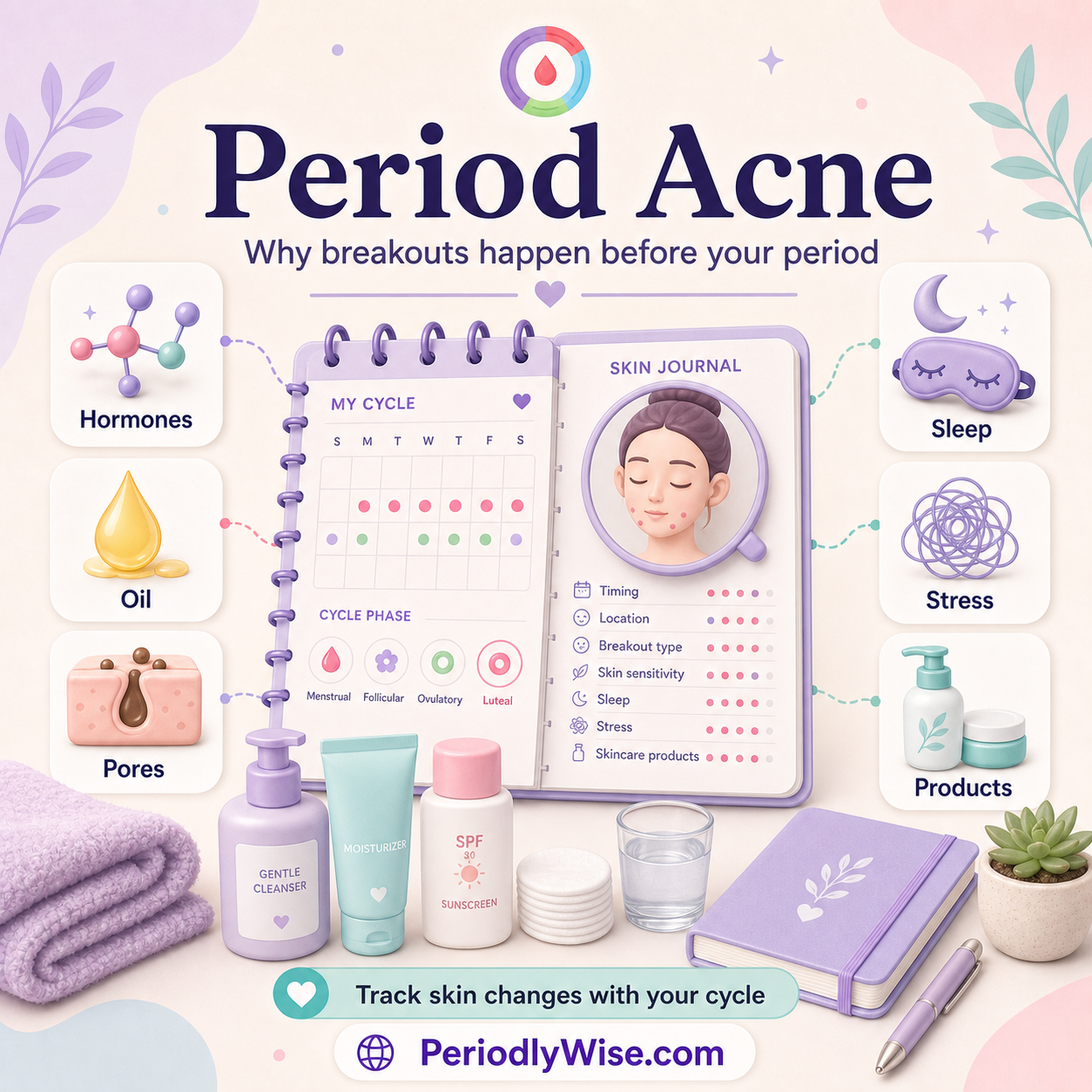
What is period acne?
Period acne means acne that appears or worsens in a repeating pattern around your menstrual cycle. Many people notice it in the late cycle window, before the period starts. It may improve once bleeding begins or a few days after the period starts, then return again before the next cycle.
It can look like whiteheads, blackheads, clogged pores, small red bumps, pus-filled pimples, tender bumps under the skin, deeper nodules, cyst-like spots, or dark marks after acne heals. Dark marks can be especially noticeable in deeper skin tones.
The pattern matters. A random breakout after trying a new product is different from breakouts that reliably appear before almost every period. Tracking can help you separate one-off triggers from cycle-linked patterns.
Why do breakouts happen before your period?
Acne develops when oil, dead skin cells, bacteria, and inflammation interact inside hair follicles. Around the menstrual cycle, hormone shifts can affect the oil glands in the skin. When oil production increases, pores may clog more easily. If inflammation rises too, a clogged pore can become red, sore, swollen, or deeper.
This does not mean your hormones are necessarily abnormal. Many people with regular cycles can still notice hormone-related breakouts. The skin can be sensitive to normal hormone shifts, especially in areas with more oil glands.
Mayo Clinic notes that acne flares are common for many women about a week before menstruation, and the American Academy of Dermatology describes predictable breakouts during the period as one sign of hormonal acne that may respond to medical treatment when routine care is not enough.
Where does period acne usually show up?
Period acne can appear anywhere acne-prone skin has oil glands, but many people notice it on the lower face.
- Chin and jawline: common areas for cycle-linked or hormonal acne patterns.
- Lower cheeks and neck: often noticed with deeper or tender breakouts.
- Forehead: may be linked with oil, hair products, sweat, friction, or clogged pores.
- Chest, back, and shoulders: can flare with sweat, tight clothing, backpacks, sports bras, or oil-based products.
Location alone is not a diagnosis. Acne-like bumps can also come from folliculitis, irritation, rosacea, perioral dermatitis, ingrown hairs, hair products, makeup, friction, or sweat. If the pattern is unusual or not improving, a dermatologist can help confirm whether it is acne.
Common skin changes before a period
Premenstrual skin changes are not limited to pimples. Some people notice several changes at once.
| Skin change | What it may feel like | What to track |
|---|---|---|
| Oilier skin | Shiny face, greasy scalp, clogged pores | Cycle day, oiliness, products used |
| Clogged pores | Tiny bumps, whiteheads, blackheads | Location, texture, makeup or sunscreen changes |
| Inflamed pimples | Red, tender, swollen spots | Pain level, size, timing |
| Deep bumps | Sore jawline or chin acne under the skin | Whether it repeats each cycle |
| Sensitivity | Stinging, burning, redness, dryness | New actives, exfoliation, retinoids, waxing |
| Dark marks | Brown, purple, or gray marks after acne | Picking, sun exposure, healing time |
| Body breakouts | Chest, back, shoulder spots | Sweat, tight clothing, hair products |
The goal is not to track everything forever. Track enough for two or three cycles so you can see whether the pattern is predictable.
Is period acne the same as hormonal acne?
They overlap, but they are not always identical. Period acne is acne that follows the menstrual cycle. Hormonal acne is a broader term for acne influenced by hormone activity. Hormonal acne may flare before periods, during pregnancy, around contraception changes, in perimenopause, or with conditions that affect androgen levels, such as PCOS.
Signs that acne may have a hormonal pattern include predictable breakouts before your period, stubborn acne on the chin or jawline, deeper tender bumps, acne that does not respond well to basic over-the-counter care, or acne linked with irregular periods, excess facial or body hair, or scalp hair thinning.
Tracking helps because "my skin is bad sometimes" is hard to interpret. "I get painful jawline bumps 5 to 7 days before bleeding starts, and my cycles are often 40 to 50 days" is much more useful.
Could period acne be a sign of PCOS?
Sometimes, but acne alone does not diagnose PCOS. PCOS can involve irregular or absent periods, difficulty ovulating, excess facial or body hair, weight changes, thinning scalp hair, oily skin, and acne. Not everyone with PCOS has all symptoms, and not everyone with acne has PCOS.
Consider medical advice if acne comes with irregular periods, no periods for months, very long cycles, excess hair growth on the face or body, thinning hair on the scalp, unexplained weight changes, difficulty getting pregnant, dark velvety skin patches, or acne that is deep, persistent, or worsening.
A healthcare professional may ask about your cycle history, examine your skin, review medications and contraception, and decide whether testing is needed.
What else can make premenstrual breakouts worse?
Stress and sleep disruption
Stress does not usually act as the only cause of acne, but it may worsen acne that already exists. Poor sleep can also make it harder to keep a steady routine, and some people touch, squeeze, or pick their skin more when stressed.
If your breakouts worsen before deadlines, travel, night shifts, exams, or poor sleep, track that context with the breakout timing. You may also find How Sleep and Stress Affect Your Menstrual Cycle useful.
New skincare or too many actives
Starting several products at once can irritate the skin. Irritation can look like acne, worsen acne, or damage the skin barrier. This is especially common when using strong exfoliants, scrubs, alcohol-heavy toners, retinoids, acids, or acne treatments too often.
Makeup, sunscreen, and hair products
Acne-prone skin often does better with products labeled non-comedogenic or "won't clog pores." Heavy oils, certain styling products, sleeping in makeup, or letting oily hair sit against the face can contribute to clogged pores in some people.
Sweat, friction, and tight clothing
Body acne can flare with sweat, tight collars, helmets, backpacks, sports bras, or workout clothing. Showering after sweating and changing out of tight, sweaty clothing can help reduce irritation.
Diet patterns
Diet does not affect everyone's acne the same way. Research suggests high-glycemic foods may worsen acne for some people, and dairy may be a factor for some, but strict restriction is not automatically necessary. It is better to notice your own pattern and avoid blaming one food without evidence from your own body.
What should you track for period acne?
Track the acne together with cycle timing. The useful question is not only "Do I have acne?" but "When does it happen, what does it look like, and what else changed?"
- Cycle timing: first day of your period, day breakouts start, and whether acne appears before, during, or after bleeding.
- Breakout location: chin, jawline, cheeks, neck, forehead, chest, back, or shoulders.
- Breakout type: clogged pores, whiteheads, inflamed pimples, deep bumps, or cyst-like lesions.
- Skin feel: oiliness, dryness, redness, burning, stinging, or sensitivity.
- Daily context: sleep quality, stress level, exercise, sweating, friction, and travel.
- Product changes: skincare, makeup, sunscreen, hair products, laundry products, or acne treatments.
- Hormone context: contraception changes, missed pills, new medication, supplements, missed periods, or irregular cycles.
- Other period symptoms: cramps, fatigue, bloating, mood changes, headaches, or digestive changes.
You can use PeriodlyWise to compare period timing and symptoms across cycles. If PMS symptoms are part of the pattern, the guide on PMS vs PMDD may also help.
A gentle skincare approach before your period
You do not need a dramatic period skincare routine. In many cases, consistency works better than panic-changing products every month.
A simple acne-prone routine may include a gentle cleanser, non-comedogenic moisturizer, non-comedogenic sunscreen in the morning, one acne treatment used consistently, makeup removal before bed, and avoiding picking or squeezing.
Common acne ingredients include benzoyl peroxide, salicylic acid, adapalene, azelaic acid, and prescription treatments from a clinician. Which one is best depends on the type of acne, skin sensitivity, pregnancy possibility, other medications, and whether you have dark marks or scarring.
Do not start strong actives all at once. If your skin is sensitive before your period, adding multiple exfoliants, scrubs, or harsh treatments can make redness, peeling, burning, and breakouts worse.
What not to do when period acne flares
Avoid common mistakes that can irritate skin or make acne harder to control.
- Switching acne treatments every week.
- Scrubbing the skin hard.
- Washing your face many times a day.
- Drying the skin out with harsh products.
- Using too many active ingredients together.
- Popping or squeezing pimples.
- Sleeping in makeup.
- Using oily products that clog your pores.
- Stopping prescribed treatment too early.
The American Academy of Dermatology notes that acne treatments often need 6 to 8 weeks before improvement is visible, and clearing can take longer. That timeline is frustrating, but it is also important. Acne care usually rewards steady routines more than emergency routines.
Period acne and dark marks
For people with deeper skin tones, acne may leave dark spots or patches after the breakout clears. This is often called post-inflammatory hyperpigmentation. Picking, squeezing, harsh treatments, and sun exposure can make marks more noticeable or longer-lasting.
Helpful habits include treating acne early, avoiding squeezing or picking, using sunscreen regularly, avoiding harsh scrubs and unapproved peels, asking a dermatologist about dark marks if they persist, and using non-comedogenic products.
Dark marks are treatable, but they need patience and the right approach for your skin tone.
When should you see a dermatologist or doctor?
Consider medical advice if acne is painful, deep, cyst-like, scarring, moderate to severe, sudden, persistent, or affecting your confidence, mood, school, work, or social life. Also seek advice if over-the-counter care has not helped after consistent use, acne appears with irregular periods or missed periods, acne appears with excess facial or body hair, acne appears with scalp hair thinning, or acne worsens after starting, stopping, or changing contraception.
If you may be pregnant, are trying to conceive, or are breastfeeding, ask a clinician before using acne medication. Some acne treatments are not safe during pregnancy or when trying to conceive.
A clinician may discuss topical treatments, benzoyl peroxide, retinoids, azelaic acid, salicylic acid, antibiotics, hormonal options such as certain combined oral contraceptives, spironolactone, clascoterone, or isotretinoin for severe cases. Treatment depends on your health history and acne type.
How to prepare for a medical visit
Bring a simple pattern summary. It does not need to be perfect.
- When breakouts start in relation to your period.
- Where acne appears.
- Whether bumps are painful or deep.
- Whether acne leaves marks or scars.
- Current skincare products.
- Current medications and supplements.
- Contraception history or recent changes.
- Pregnancy possibility.
- Period regularity.
- Symptoms such as excess hair growth, hair thinning, weight changes, fatigue, mood changes, or heavy bleeding.
- What you have already tried and for how long.
Photos can also help if your skin looks different by the time of the appointment.
How PeriodlyWise can help
PeriodlyWise is useful because period acne is often about timing. When you track breakouts with cycle dates, PMS symptoms, sleep, stress, and flow, you can see whether acne is random or repeating.
You may notice that breakouts usually start five days before bleeding, that jawline acne appears after poor sleep, that body breakouts increase during high-sweat weeks, or that acne worsened after a contraception change. That information can make skincare decisions calmer and medical conversations clearer.
Use PeriodlyWise to estimate your period window, compare symptoms across cycles, and notice whether breakouts follow a repeating pattern.
Open the Period TrackerFAQ
Why do I get acne before my period?
Acne before a period is often linked with hormone changes that affect oil production, clogged pores, and inflammation. If the same breakout pattern repeats before many periods, it may be cycle-related.
How many days before my period does acne start?
Many people notice acne in the days before bleeding starts, sometimes about a week before the period. Your timing may vary, so tracking for a few cycles can show your personal pattern.
Where does hormonal period acne appear?
Hormonal acne often appears on the chin, jawline, lower cheeks, neck, chest, back, or shoulders, but location alone cannot diagnose the cause.
Can period acne mean I have PCOS?
Acne alone does not mean PCOS. But acne with irregular periods, missed periods, excess facial or body hair, scalp hair thinning, or difficulty getting pregnant should be discussed with a healthcare professional.
Should I change my skincare routine before my period?
Usually, consistency is better than sudden changes. A gentle cleanser, non-comedogenic moisturizer, sunscreen, and one appropriate acne treatment may work better than adding multiple harsh products before your period.
Is it okay to pop period pimples?
No. Popping or squeezing can increase inflammation, pain, scarring, and dark marks. Deep or painful acne is a good reason to ask a dermatologist for treatment options.
Final thoughts
Period acne is common, but that does not mean you have to ignore it. If breakouts are mild and predictable, tracking and a steady skincare routine may help you plan better. If acne is painful, deep, scarring, sudden, persistent, or connected with irregular periods or excess hair growth, it deserves medical attention.
The most useful approach is calm and practical: track the timing, avoid harsh last-minute fixes, protect your skin barrier, and get help when acne is affecting your comfort, confidence, or health.