Lower back pain before or during your period can feel like a dull ache, pressure, tightness, or cramping across the lower back. Sometimes it stays in one area. Sometimes it spreads into the hips, pelvis, buttocks, or thighs. For some people, it is mild and predictable. For others, it can make sitting, walking, sleeping, working, or studying harder.
In many cases, period back pain is connected to the same process that causes menstrual cramps. During a period, the uterus tightens and relaxes to help shed its lining. That cramping sensation may be felt in the lower abdomen, but it can also spread toward the lower back and thighs.
That does not mean every backache is "just a period symptom." The pattern matters. If lower back pain appears around the same time each cycle, improves after the first few days of bleeding, and feels similar month to month, tracking can help you understand it better. If the pain is severe, new, worsening, unusual, or affecting daily life, it is worth seeking medical advice.
What does period back pain feel like?
Period back pain is usually felt in the lower back. It may feel like:
- A dull ache across the lower back.
- Cramping that comes and goes in waves.
- Pressure in the pelvis and lower back.
- Tightness after sitting for a long time.
- Soreness that spreads to the hips or thighs.
- Back discomfort that appears just before bleeding starts.
- Pain that feels strongest on day 1 or day 2 of the period.
Some people feel more abdominal cramps. Others feel more back pain than belly pain. Both patterns can happen.
Why can your lower back hurt before your period?
Back pain before a period can happen because the body is already shifting toward menstruation. Some people notice cramps, pelvic heaviness, bloating, fatigue, mood changes, breast tenderness, digestive changes, or lower back aching before bleeding begins.
As the period gets closer, the uterus prepares to shed its lining. Cramping may begin before visible bleeding. Because pain signals from the pelvis can be felt in connected areas, the discomfort may show up as lower back pain, hip pain, or thigh pain.
Poor sleep, stress, long sitting, constipation, or muscle tension can also make the lower back feel worse before a period.
Why can back pain happen during your period?
During bleeding, the uterus contracts to help move the uterine lining out of the body. These contractions are a normal part of the menstrual cycle, but they can be uncomfortable or painful.
The NHS notes that period cramps can spread to the back and thighs. This is why some people describe their period pain as "back cramps" rather than stomach cramps.
Back pain may feel stronger during the first few days of bleeding because cramps are often stronger then. For many people, the pain eases as bleeding continues.
Is period back pain the same as cramps?
Often, yes. Period back pain can be one way cramps show up.
But it is still useful to track the details. Back pain that repeats before or during your period is different from back pain that happens randomly, after exercise, after lifting something, during illness, or outside your usual period window.
| Pattern | What it may suggest | What to do |
|---|---|---|
| Appears before or during bleeding and improves after a few days | May fit your usual period pain pattern. | Track timing, pain level, flow, and what helps. |
| New, severe, one-sided, worsening, or unrelated to bleeding | Needs more attention. | Seek medical advice instead of guessing. |
What can make period back pain feel worse?
Stronger cramps
If cramps are stronger, the pain may spread more noticeably into the back, hips, or thighs.
Long sitting
Sitting for many hours can make the lower back feel stiff, especially if you are already cramping.
Poor sleep
Poor sleep can lower your tolerance for discomfort and make body aches feel more intense.
Stress
Stress can increase muscle tension. If you tense your abdomen, hips, or lower back when you are uncomfortable, back pain may feel worse.
Bloating or constipation
Bloating, gas, or constipation can increase pressure in the abdomen and pelvis. That pressure may make back discomfort more noticeable. If digestive symptoms repeat around your period, you may also find Period Diarrhea, Constipation, and Digestive Changes useful.
Heavy flow days
Some people notice stronger cramps and more back discomfort on heavier flow days. Track whether back pain matches your heavier bleeding days.
What should you track?
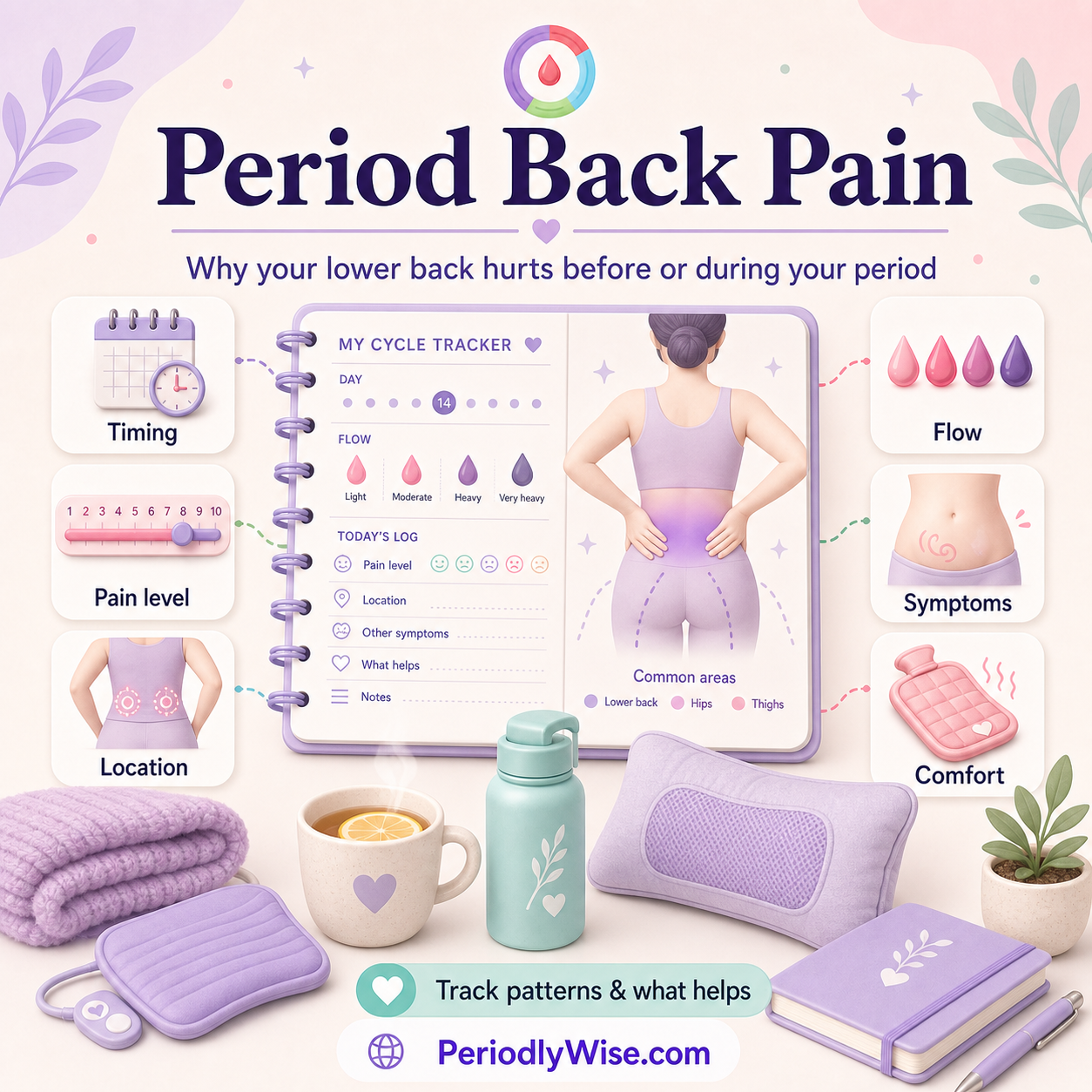
Tracking helps you understand whether back pain is predictable, changing, or connected with other symptoms. You do not need to track everything forever. Two or three cycles can already show useful patterns.
- Period timing: period start date and when back pain starts.
- Pain window: whether pain begins before bleeding, during bleeding, or after bleeding starts.
- Pain level: a simple 1 to 10 score.
- Pain location: lower back, hips, thighs, one side, or both sides.
- Pain type: dull, sharp, cramping, pressure, or tightness.
- Flow level: spotting, light, moderate, heavy, or very heavy.
- Other symptoms: cramps, bloating, fatigue, headache, nausea, diarrhea, or constipation.
- Daily context: sleep quality, stress level, sitting time, travel, or unusual activity.
- Comfort steps: heat, rest, walking, stretching, medicine, lying down, or lower-back support.
- Daily impact: whether pain affected work, school, sleep, or normal tasks.
A note like "back pain happens every month" is useful, but a note like "lower back ache starts the night before bleeding, peaks on day 1, and improves by day 3" is much clearer.
When should period back pain be checked?
Most mild or moderate period back pain can be tracked and managed with simple comfort steps. But some patterns deserve medical advice.
- Pain is severe or worse than usual.
- Pain stops you from work, school, sleep, or normal activities.
- Pain is new or suddenly different.
- Pain keeps getting worse over time.
- Pain happens outside your period window.
- Pain is mostly on one side.
- Bleeding is very heavy.
- You feel dizzy, faint, weak, or unusually exhausted.
- You have fever or unusual discharge.
- You have bleeding between periods.
- You have pain during sex.
- You have pain when peeing or pooping.
- You may be pregnant.
- Usual comfort steps do not help.
This does not mean something serious is definitely happening. It simply means the pattern is worth checking instead of guessing.
Could another issue be involved?
Sometimes back pain around a period is not only from normal cramps. It can overlap with digestive symptoms, urinary symptoms, muscle strain, pelvic pain, contraception changes, or another health issue.
PeriodlyWise should not be used to diagnose the cause. The safer approach is to track the pattern and seek care when the pain is severe, unusual, persistent, or connected with other concerning symptoms.
The goal is not to worry. The goal is to notice when something does not match your normal pattern.
Gentle comfort tips for period back pain
Use heat
A heating pad, hot water bottle, warm bath, or warm shower may help relax the lower back and abdomen. Some people prefer heat on the belly. Others prefer heat across the lower back.
Change position often
If sitting makes the pain worse, try standing, walking slowly, lying on your side, or placing a pillow behind your lower back.
Try gentle movement
Gentle movement can help stiffness for some people. Walking, slow stretching, or light yoga-style movement may feel good. If movement worsens pain, rest is valid.
Support your lower back
A small pillow, folded towel, or cushion behind the lower back can make sitting more comfortable.
Keep stretches soft
Useful gentle options may include knees-to-chest, child's pose, cat-cow, pelvic tilts, or a gentle twist. Avoid forcing deep stretches when pain is strong.
Hydrate and eat simply
Water, warm drinks, and simple balanced meals can support general comfort. If constipation or bloating makes back pressure worse, hydration and gentle movement may help.
Be careful with pain relief
Some people use over-the-counter pain relief for period pain. Follow the label, avoid medicines you have been told not to take, and ask a healthcare professional if you are unsure, pregnant, trying to conceive, breastfeeding, on other medication, or have a health condition.
How PeriodlyWise can help
PeriodlyWise can help you organize the timing of back pain with your cycle. You can track period dates, flow, symptoms, and notes so patterns become easier to see.
Instead of relying on memory, you can notice things like back pain starting one day before bleeding, pain being strongest on day 1, pain improving with heat and walking, pain feeling worse during heavy flow, pain appearing with bloating or constipation, or pain becoming stronger over the last few cycles.
This kind of pattern can help you plan comfort earlier and explain symptoms more clearly if you ever speak with a clinician.
Use PeriodlyWise to estimate your period window, compare symptoms across cycles, and notice whether lower back pain follows a repeating pattern.
Open the Period TrackerFAQ
Why does my lower back hurt before my period?
Lower back pain before a period can happen when early cramping, pelvic pressure, bloating, constipation, stress, or muscle tension begins before bleeding. If it repeats each cycle, tracking can help confirm the pattern.
Why does my back hurt more on the first day of my period?
The first day of bleeding is often when cramps feel strongest. Cramping can spread to the lower back, hips, or thighs, so back pain may feel worse at the start of your period.
Is lower back pain during a period normal?
Mild to moderate lower back aching can be common, especially if it follows your usual pattern and improves within a few days. Severe, worsening, unusual, or disabling pain should be checked.
Can period cramps spread to the back?
Yes. Period cramps can spread to the lower back and thighs. Some people feel cramps mostly in the abdomen, while others feel them more in the back.
What helps period back pain?
Heat, rest, gentle movement, lower-back support, hydration, and careful use of pain relief may help some people. Track what works for you.
When should I worry about period back pain?
Seek medical advice if pain is severe, new, worsening, happens outside your period, affects daily life, comes with very heavy bleeding, fever, dizziness, unusual discharge, pain during sex, pain while peeing or pooping, or possible pregnancy.
Final thoughts
Period back pain is often part of menstrual cramping, especially when it appears just before or during bleeding and improves after the first few days. But pain that is severe, unusual, worsening, or disruptive should not be ignored.
A balanced approach is best: track the pattern, use gentle comfort measures, and seek medical advice when the pain does not feel like your normal cycle.