If you notice that sleep gets lighter, shorter, or more restless before your period, you are not imagining it. Some people sleep normally through most of the month, then suddenly spend a few nights waking often, feeling too warm, feeling uncomfortable, or lying awake with a busy mind.
This can happen before bleeding starts, during the first days of your period, or both. The important thing is not to panic after one difficult night. A better first step is to track when it happens, what else is happening in your body, and whether the pattern repeats.
PeriodlyWise is not a medical service, and this article is not a diagnosis. It is a practical guide to help you notice your sleep pattern more clearly and know when it may be worth asking for help.
Is period insomnia a real thing?
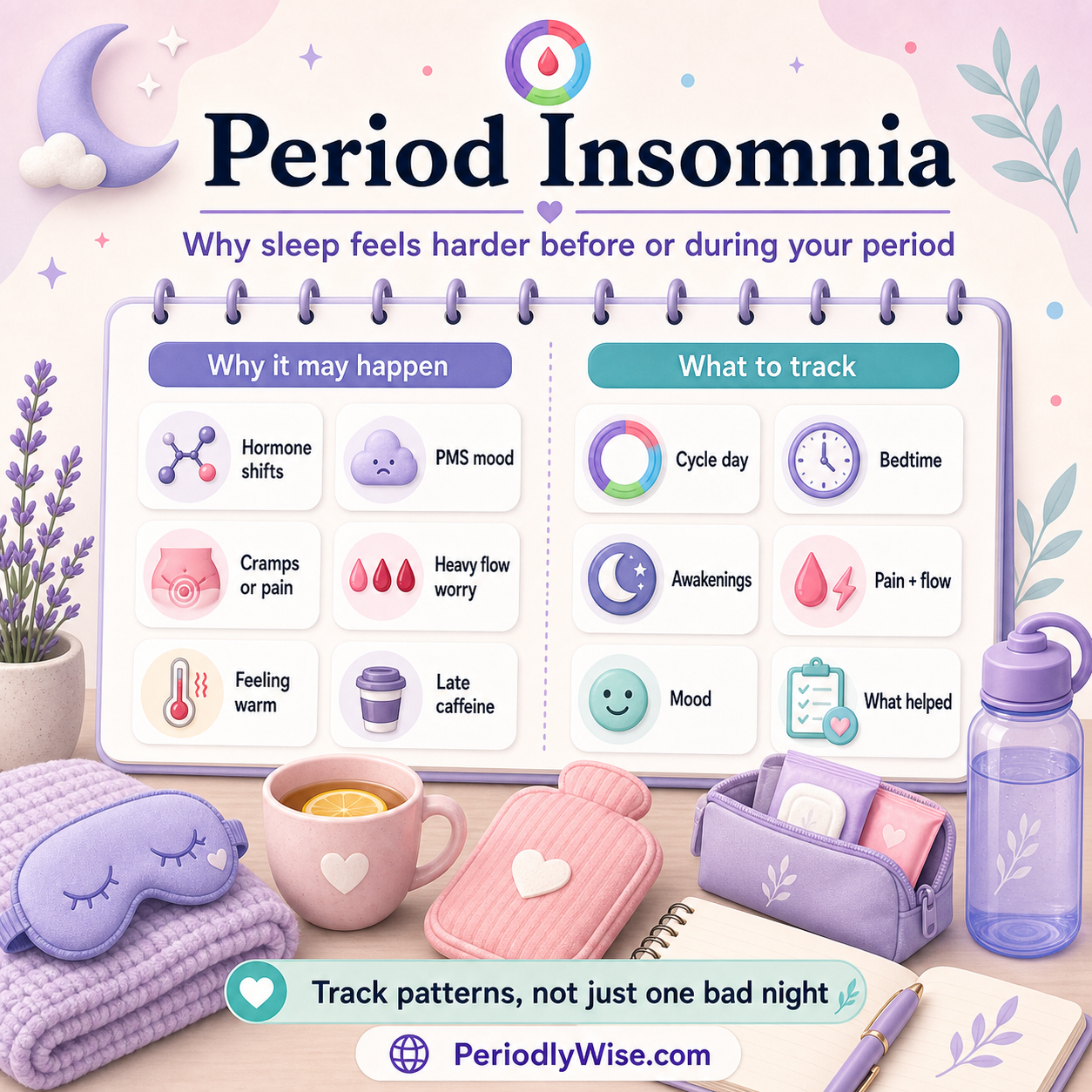
"Period insomnia" is not always used as a formal diagnosis, but the experience is real. Many people report trouble falling asleep, waking during the night, or feeling less rested around the premenstrual days or during bleeding.
PMS can include tiredness, sleep difficulty, mood changes, cramping, headaches, appetite changes, and breast tenderness. That does not mean every sleep problem is caused by your cycle, but it does mean sleep is a valid symptom to track.
Why sleep may change before your period
Hormone changes may affect your sleep rhythm
During the menstrual cycle, estrogen and progesterone rise and fall. Some people are more sensitive to these shifts than others. In the days before a period, hormone changes may line up with mood changes, fatigue, cravings, headaches, or a general "wired but tired" feeling.
You do not need to fully understand hormone science to track this well. What matters is whether your poor sleep shows up in a repeated window, such as three to seven days before bleeding starts.
PMS can make it harder to relax
PMS can affect both body and mood. You might feel more anxious, more emotionally sensitive, more irritable, or more tense before your period. Even mild mood changes can make bedtime feel less peaceful.
This does not mean the feelings are "just hormones" or not real. It means your body may be going through a predictable phase where your nervous system feels less settled than usual.
Cramps and body discomfort can wake you up
Period cramps, lower back pain, leg aches, headaches, nausea, digestive changes, and breast tenderness can all disturb sleep. Pain may feel more noticeable at night because there are fewer distractions, you are lying still, and you are trying to rest.
If cramps are the main reason you wake up, track pain timing, pain location, flow level, and what helped. That gives you a clearer picture than simply writing "bad sleep."
Heavy flow can interrupt sleep
Some people sleep lightly during their period because they are worried about leaks, needing to change products, or waking to check flow. Heavy bleeding can also make nights feel less restful.
If this happens, track how often you wake, whether you had to change products overnight, whether clots were present, and whether this is normal for you or a change from your usual pattern.
Feeling warmer may affect sleep comfort
Many people sleep better in a cool, dark room. Around the premenstrual phase, some people feel warmer, sweat more, or feel more uncomfortable under blankets. Even a small temperature change can make sleep feel lighter.
This is worth tracking, especially if you wake hot, sweaty, restless, or thirsty before your period.
What to track when sleep gets worse around your period
You do not need a perfect sleep diary. A simple pattern is enough. Track these details for at least two cycles if symptoms are mild and familiar. If symptoms feel severe or worrying, seek advice sooner.
| What to track | Why it helps |
|---|---|
| Cycle day | Shows whether sleep changes happen in the same cycle window. |
| Expected period date | Helps connect sleep changes to PMS timing. |
| Bedtime and wake time | Shows whether schedule changes are involved. |
| Time to fall asleep | Helps separate insomnia from short sleep opportunity. |
| Night awakenings | Shows whether sleep is broken by pain, flow, heat, or worry. |
| Cramps or pain level | Helps identify physical triggers. |
| Flow level | Helpful if heavy bleeding wakes you. |
| Mood or anxiety | Helps spot premenstrual tension patterns. |
| Caffeine, naps, screens, and late meals | These can affect sleep quality and make cycle-linked sleep changes feel worse. |
| What helped | Builds a personal comfort plan for future cycles. |
Gentle bedtime ideas that may help
These ideas are not cures, but they can make difficult nights easier. Choose the ones that fit your body and routine.
Keep the same sleep window when possible
Try to keep bedtime and wake time reasonably consistent, especially in the few days before your period. A stable sleep schedule helps your body know when to wind down.
If you had a bad night, try not to "fix" it with a very long nap late in the day. A short earlier nap may be gentler if you truly need one.
Make the room cooler, darker, and quieter
A cooler room, lighter bedding, breathable sleepwear, and less light can help when you feel warm or restless. If cramps wake you, keep comfort items close so you do not fully wake yourself searching for them.
Use a calmer wind-down routine
A simple wind-down can help your body shift out of alert mode. You might try gentle stretching, a warm shower, slow breathing, quiet reading, or a heating pad before sleep if heat usually helps your cramps.
Avoid turning bedtime into a strict routine you can "fail." The goal is to make sleep easier, not create another task.
Watch late caffeine
Caffeine can stay active for hours. If sleep gets worse before your period, it may help to track coffee, tea, energy drinks, cola, and chocolate, especially in the afternoon or evening.
You do not have to remove everything at once. First, track whether caffeine timing and poor sleep happen together.
Plan for flow-related waking
If heavy flow makes you anxious about leaks, prepare your night setup before bed. Use your usual reliable products, keep extras nearby, and consider dark towels or protective layers if that helps you relax.
The goal is not to make your period feel dramatic. It is to reduce the "what if I leak?" worry enough that your brain can rest.
When period insomnia may need more attention
Occasional poor sleep before your period is common. But you should consider medical or professional support if:
- Sleep problems happen most cycles and affect work, school, driving, relationships, or daily life.
- You regularly cannot fall asleep or stay asleep for several nights in a row.
- Cramps or pelvic pain wake you often or feel severe.
- Bleeding is very heavy, suddenly different, or includes large clots.
- You feel very anxious, depressed, hopeless, or unlike yourself before your period.
- You have symptoms that may suggest PMDD, such as intense mood changes that strongly affect daily life.
- You feel exhausted despite enough time in bed.
- You snore loudly, gasp during sleep, or wake unrefreshed often.
If you ever feel at risk of harming yourself, seek urgent help immediately in your country or local area.
A simple way to understand your pattern
After two cycles, look back and ask:
- Does poor sleep happen before bleeding, during bleeding, or randomly?
- Is it linked to cramps, heavy flow, anxiety, heat, cravings, or headaches?
- Does it improve once bleeding starts?
- Is it mild and manageable, or does it affect daily life?
- What helped even a little?
This turns a frustrating symptom into useful information.
How PeriodlyWise can help
PeriodlyWise cannot diagnose insomnia, PMS, PMDD, pain conditions, or sleep disorders. What it can do is help you organize timing and symptom clues so you are not relying on memory after a rough night.
Use the Period Tracker to compare sleep changes with your expected period window, flow, cramps, and mood. If sleep trouble appears with stronger worry or tension, read our guide to period anxiety before your period. If cramps wake you at night, our article on period cramps at night may also help.
Use PeriodlyWise to record period timing, sleep disruption, cramps, flow, mood, caffeine, and what helped so repeated patterns become easier to see.
Open the Period TrackerFAQ
Why can I not sleep before my period?
Sleep may feel harder before your period because PMS symptoms, hormone shifts, cramps, anxiety, breast tenderness, cravings, temperature changes, and routine changes can overlap. Track whether it happens in the same premenstrual window each cycle.
Can PMS cause insomnia?
PMS can include sleep difficulty for some people. That does not prove every sleep issue is PMS, but if trouble sleeping repeats before your period and improves afterward, it is worth tracking and discussing if it affects daily life.
Why do I wake up during my period?
You may wake because of cramps, heavy flow, leak worry, needing the bathroom, feeling warm, digestive discomfort, or anxiety. Track what wakes you and whether it happens on heavy-flow days, cramp-heavy days, or premenstrual days.
What helps period-related sleep problems?
A consistent sleep window, cooler room, gentle wind-down, tracking caffeine timing, preparing period supplies before bed, and managing cramps safely may help. If sleep problems are frequent or severe, professional support is reasonable.
When should I get help for period insomnia?
Get help if sleep problems happen most cycles, affect daily life, come with severe pain or heavy bleeding, or occur with intense anxiety, depression, hopelessness, or mood changes that feel hard to manage.
Final thoughts
Sleep changes before or during your period can happen for many reasons, including PMS symptoms, discomfort, mood changes, cramps, heavy flow, and routine changes. One restless night is usually not a reason to worry. A repeated pattern is worth tracking.
Try to note when sleep changes happen, what symptoms show up with them, and what helps. If poor sleep keeps repeating, affects your daily life, or comes with severe pain, heavy bleeding, or intense mood symptoms, it is reasonable to ask a healthcare professional for guidance.