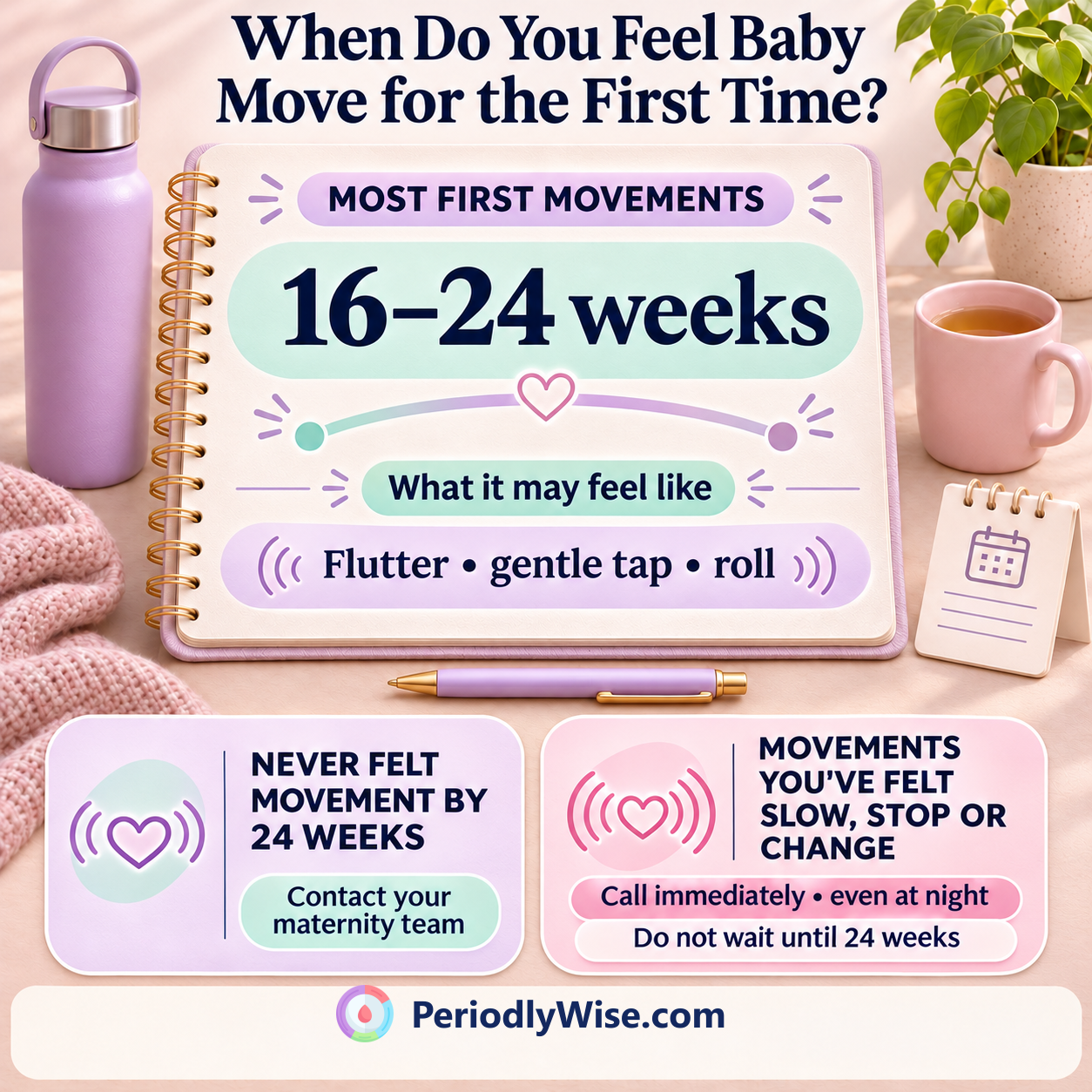
You’ll usually first feel your baby move between 16 and 24 weeks of pregnancy. Many people notice the first movements around 18–20 weeks. In a first pregnancy, you might not recognize them until after 20 weeks. These first movements you can feel are sometimes called quickening.
If you’ve never felt movement by 24 weeks, contact your midwife or maternity team. If your baby is moving less than usual, has stopped moving or is moving differently, call immediately. That advice applies even if you haven’t reached 24 weeks and have noticed a change.
What first movements can feel like
You might notice a flutter, a little tap, a swish or a rolling feeling low in your belly. It may last only a moment. At first it can be hard to tell a movement from a sensation in your gut. You may recognize it more easily as it repeats and becomes clearer over the next few weeks. Seeing movement on an ultrasound before you can feel it is possible.
For example: At 19 weeks, you notice a brief flutter and aren’t sure whether it was the baby. Over the following weeks, similar sensations start to feel more distinct. If you later notice a clear drop or change in the movements you’ve been feeling, call your maternity team then.
Why the timing can vary
| Situation | What you might notice |
|---|---|
| SituationFirst pregnancy | What you might noticeIt can take until after 20 weeks to recognize those small sensations. |
| SituationPrevious pregnancy | What you might noticeYou may recognize a familiar feeling as early as 16 weeks. |
| SituationAnterior placenta | What you might noticeA placenta at the front of the uterus can make movements harder to feel. |
You may notice more when you are sitting quietly than when you’re busy. Placental location can help explain why early movements are subtle. Call about reduced or changed movement even if you have an anterior placenta. Its position cannot tell you why a change has happened.
From a first flutter to a familiar pattern
Early sensations may be subtle and uneven. Over time you may notice stronger taps, kicks or rolls and start to recognize when your baby is usually active. Babies have their own patterns. There’s no single daily movement count that applies to everyone. Follow any individual instructions your care team has given you, and call right away if you notice a change that worries you.
- If you’re still waiting for a first movement: Use the pregnancy weeks from your maternity record. Contact your team if you reach 24 weeks without ever feeling movement, or sooner if you’re concerned.
- If you already recognize movements: Pay attention to changes from what you’ve been feeling, including movements that are weaker, fewer or absent.
- As your due date approaches: Movements may feel more like rolls and stretches. You should continue to feel them up to and during labor.
What to do if you’re worried about movement
- Call your maternity unit, midwife or obstetric team immediately if movement slows, stops or changes. Call even overnight. If you can’t reach your team, seek urgent assessment at a hospital with maternity services.
- Tell them how many weeks pregnant you are, what you normally feel, what changed and when you last noticed movement. If you have never felt movement, say that clearly.
- Follow their advice about where to go. Don’t delay the call to try a snack, a cold drink, a kick-count app or a home Doppler. Hearing a heartbeat at home cannot confirm that your baby is well. If the change happens again after a check, call again.
Frequently asked questions
Is it unusual to feel nothing at 18 or 20 weeks?
It can still be within the usual window if you’ve never felt movement, especially in a first pregnancy. If you reach 24 weeks without feeling any, contact your maternity team. If you felt movements and they’ve slowed, stopped or changed, call immediately.
Can a partner feel the first movements from the outside?
They often feel movements later than you do. The first flutters can be too subtle to notice through your belly, and there’s no set week for someone else to feel them.
Does an anterior placenta change the 24-week advice?
No. If you reach 24 weeks and have never felt movement, contact your maternity team. If movements you’ve been feeling become weaker, less frequent or different, call right away regardless of placental position.
Do I need to count kicks from the first flutter?
There’s no universal daily target. Follow your care team’s instructions if they’ve asked you to track movements in a specific way. If you notice a change or reduction, call immediately without waiting to reach a count.
What if I’ve already been checked and movements change again?
Call your maternity team again immediately. A check earlier in pregnancy or even earlier that day doesn’t answer a new concern about movement.
Use the week-by-week guide to explore the second trimester. For care decisions, use the pregnancy age in your maternity record.
Explore the Pregnancy Calculator