
A tampon may feel unfamiliar while you learn, but it should not cause ongoing sharp, burning, pinching, or deep pelvic pain. ACOG says that once a tampon is inserted correctly, you should not feel it. The FDA advises stopping tampon use and contacting a healthcare professional if insertion or wear causes pain, discomfort, unusual discharge, or another unexpected symptom.
The most useful clue is where the pain happens and when it begins. Pain only at the entrance, pain as the applicator moves in, a low pressure feeling after insertion, dry pulling during removal, and deep pelvic pain are different patterns. Your flow, tampon absorbency, recent infections, skin symptoms, pelvic exams, sexual pain, childbirth history, and whether other penetration hurts add important context.
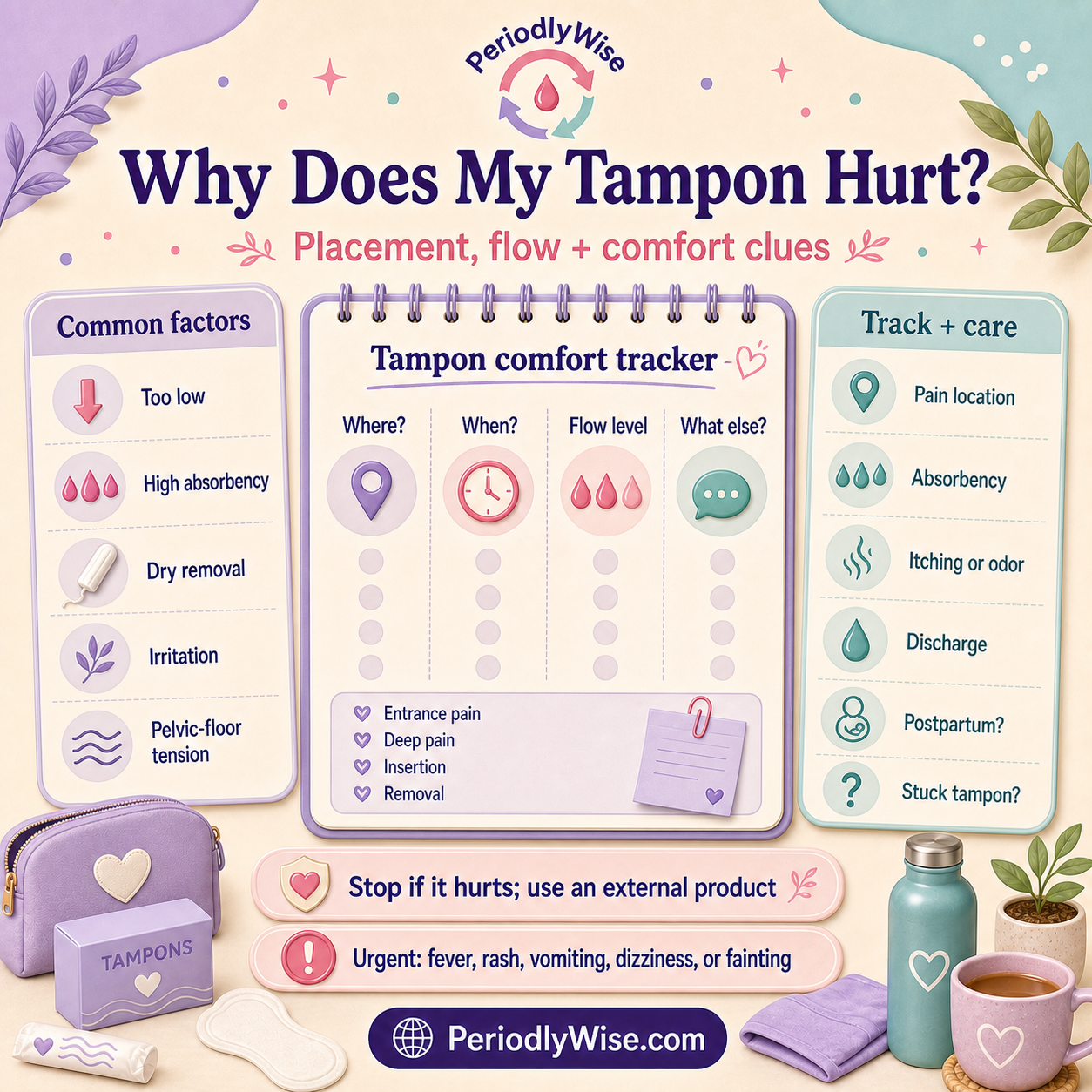
Do not keep pushing through pain to prove that your body can use a tampon. Pads, period underwear, or another comfortable external option are valid while you pause. A tracker can record the pattern, but recurrent insertion pain deserves an assessment rather than repeated trial and error.
Start with the location and timing of the pain
If you feel the tampon low in the vagina or as if it is pressing at the opening, it may not be inserted far enough or may be sitting at an uncomfortable angle. The vaginal canal angles back toward the lower spine rather than straight upward. Follow the package directions, relax your jaw and pelvic muscles, and stop if gentle insertion does not work. Never use force to get past resistance.
Dry, scratchy pain is more likely when flow is light, the tampon is more absorbent than needed, or it is removed before it has absorbed much blood. The FDA recommends using tampons only during a period and choosing the lowest absorbency needed. A tampon that remains mostly dry can drag against sensitive tissue during removal.
Burning or soreness at the vulva or vaginal entrance, especially with itching, unusual discharge, odor, cracks, swelling, or pain during sex, needs a different response. MedlinePlus notes that vaginitis can cause pain, itching, discharge, and odor; ACOG also lists skin disorders, vulvodynia, vaginismus, hormonal dryness, infection, and childbirth injury among causes of penetration pain.
What the pain pattern may suggest
| What you notice | Possible explanation | What to do next |
|---|---|---|
| Pressure or rubbing after insertion | The tampon may be too low, poorly angled, or larger than comfortable. | Remove it gently; do not repeatedly reposition the same tampon. |
| Dry pulling during removal | Flow may be light or absorbency may be too high. | Use the lowest absorbency needed and wait for adequate flow before using another. |
| Burning, itching, odor, or discharge | Irritation, sensitivity, vaginitis, or an STI may be possible. | Stop internal products and arrange an assessment rather than self-diagnosing. |
| Muscles clamp or insertion feels impossible | Pelvic-floor tightening or vaginismus may contribute. | Do not force it; ask about pelvic-floor or gynecologic care. |
| Touch at the entrance causes stinging | Vulvar or vestibular pain, skin irritation, or a small injury may be involved. | Use an external product and seek care if it persists or recurs. |
| Deep pelvic pain | The problem may not be the tampon itself. | Seek medical advice, especially with fever, bleeding, bowel or bladder symptoms. |
Common reasons a tampon can hurt
Sometimes the explanation is practical and changes with a smaller, lower-absorbency product and calmer technique. But the same symptom can also reflect inflamed tissue or an involuntary muscle response. The goal is not to name the condition yourself; it is to notice which pattern fits and avoid making the area more irritated.
Pain can also begin after a change. A new fragranced product, recent antibiotic use, a yeast or bacterial infection, breastfeeding-related dryness, perimenopause, a difficult birth, a tear or episiotomy, pelvic surgery, or a previously painful attempt may all change how penetration feels. If tampons used to be comfortable and suddenly are not, that change is worth recording.
- Shallow placement: the tampon remains near the sensitive entrance instead of sitting comfortably inside the vaginal canal.
- High absorbency or light flow: an overly dry tampon can create friction, especially during removal.
- Rushing or an uncomfortable angle: tense muscles and repeated forceful attempts can make insertion harder and more painful.
- Contact irritation: fragrance, cleansers, lubricants, applicator material, or another product may irritate vulvar or vaginal tissue.
- Vaginitis or another infection: pain may occur with itching, burning, discharge, odor, urinary symptoms, or sexual discomfort.
- Pelvic-floor tightening: vaginismus can cause involuntary tightening when a tampon, finger, speculum, or penis approaches the vagina.
- Vulvodynia or other pelvic pain: pain at the entrance or deeper in the pelvis can require a tailored examination and treatment plan.
Technique check without forcing your body
| Check | Safer approach |
|---|---|
| Timing | Use a tampon only during menstrual flow, not to test whether a period might start. |
| Absorbency | Choose the lowest absorbency that manages your current flow. |
| Position | Try a relaxed position and follow the package diagram; the canal angles back, not straight up. |
| Insertion | Use gentle, steady pressure. Stop at pain or firm resistance. |
| Wear time | Change it every 4 to 8 hours and never leave one in longer than 8 hours. |
| Removal | Pull gently in the direction that feels natural; stop and seek help if it is stuck or removal is very painful. |
What to do when a tampon hurts
Treat pain as useful information. A calm reset is safer than repeated attempts.
- Stop the attempt. Remove the tampon gently if you can and switch to a pad or period underwear. Do not insert another immediately into sore tissue.
- Write down the pattern. Note entrance pain versus deep pain, insertion versus removal, flow level, absorbency, applicator type, discharge, odor, itching, urinary symptoms, and whether sex or pelvic exams also hurt.
- Review the basics once. On a later moderate-flow day, read the package instructions, wash your hands, choose a smaller or lower-absorbency tampon, and use a relaxed position. Stop again if it hurts.
- Avoid numbing the warning. Do not use anesthetic cream or force to push through unexplained pain unless a clinician has specifically advised a treatment plan.
- Arrange care for recurrence. A clinician can check for irritation, vaginitis, skin conditions, a retained tampon, vulvar pain, pelvic-floor tightening, or another pelvic cause. Pelvic-floor physical therapy may help some people.
- Use any comfortable product. You do not have to use tampons. External products are a complete period-care choice, not a failed step.
When tampon pain needs medical care
Contact a healthcare professional if pain is severe, keeps returning, began suddenly after tampons were previously comfortable, prevents any penetration, or comes with itching, swelling, sores, unusual discharge, strong odor, fever, pelvic pain, bleeding outside your expected period, or pain with urination or sex. If a tampon is stuck, you cannot remove it, or you are unsure whether one is still inside, seek prompt help rather than inserting another.
If you recently gave birth, follow your postpartum instructions. The NHS advises avoiding tampons until after the 6-week postnatal check because the placental site and any tears or cuts are still healing and internal products may increase infection risk. Ongoing postpartum pain or dryness also deserves discussion at or before that visit.
Toxic shock syndrome is rare but can become life-threatening. The FDA says to remove the tampon and seek immediate medical attention if sudden fever, vomiting, diarrhea, dizziness, fainting, or a sunburn-like rash develops during or soon after a period. Do not wait to see whether changing tampon brands fixes those symptoms.
Record flow, absorbency, insertion or removal timing, the exact pain location, discharge, odor, and other symptoms. A short timeline can make a product change or medical visit much more useful.
Open the period trackerFrequently asked questions
Is it normal for a tampon to hurt the first time?
It may feel unfamiliar, but sharp or continuing pain is not something to push through. Stop, use an external product, review the directions on a later flow day, and seek advice if insertion remains painful.
Why can I feel my tampon when I sit down?
It may be sitting too low, be at an uncomfortable angle, or be larger than feels comfortable. Remove it gently rather than repeatedly pushing or repositioning it.
Why does removing a tampon hurt?
A tampon can feel dry and drag when flow is light or absorbency is too high. Use the lowest absorbency needed and do not use tampons outside your period. Severe or recurrent removal pain should be assessed.
Can vaginismus make tampon insertion painful?
Yes. Involuntary pelvic-floor tightening can make a tampon, finger, pelvic exam, or sex painful or impossible. Treatment can include education, pelvic-floor physical therapy, and other individualized support.
Does tampon pain mean I have an infection?
Not always. Placement and dryness are common possibilities, but itching, burning, odor, discharge, urinary symptoms, or new sexual pain can occur with vaginitis or another condition and should be evaluated.
The bottom line
A tampon that fits your flow and is placed correctly should usually fade from your awareness. Pain is a reason to stop, not a challenge to overcome. One uncomfortable attempt may be a fit or dryness problem; repeated pain, burning, muscle tightening, discharge, or deep pelvic pain needs a broader look.
Use the lowest absorbency needed, change tampons within 4 to 8 hours, never exceed 8 hours, and keep an external product available. Most importantly, choose the period product your body can use comfortably and ask for care when the pattern says more than technique is involved.