Anxiety after your period can feel especially confusing because most cycle-mood advice talks about the days before bleeding starts. You may expect relief once the period ends, then feel tense, shaky, tearful, restless, or full of worry instead.
Post-period anxiety can happen, but it is not something to explain away with one simple hormone sentence. Timing matters, but so do sleep, blood loss, stress, pain, appetite, medication changes, and whether anxiety is present outside your cycle too.
This guide walks through the most practical causes to consider, what to track, and when to ask for medical or mental health support.
Why anxiety can show up after bleeding starts or ends
PMS and PMDD are usually described as premenstrual patterns, often improving within a few days after bleeding begins. The Office on Women's Health notes that PMDD symptoms usually go away two to three days after a period starts. That means anxiety that continues into the period or just after it can still be connected to the same cycle window for some people.
Research on anxiety and the menstrual cycle is mixed and individual. A PubMed review notes that menstrual-cycle hormones can affect anxiety and PTSD symptom expression, but patterns differ between people. That is why a daily symptom record is more useful than assuming every person has the same emotional calendar.
Post-period anxiety may also be less about the cycle phase itself and more about recovery. Heavy bleeding, pain, poor sleep, skipped meals, caffeine, pressure to catch up, and fear of the next cycle can all keep the nervous system activated.
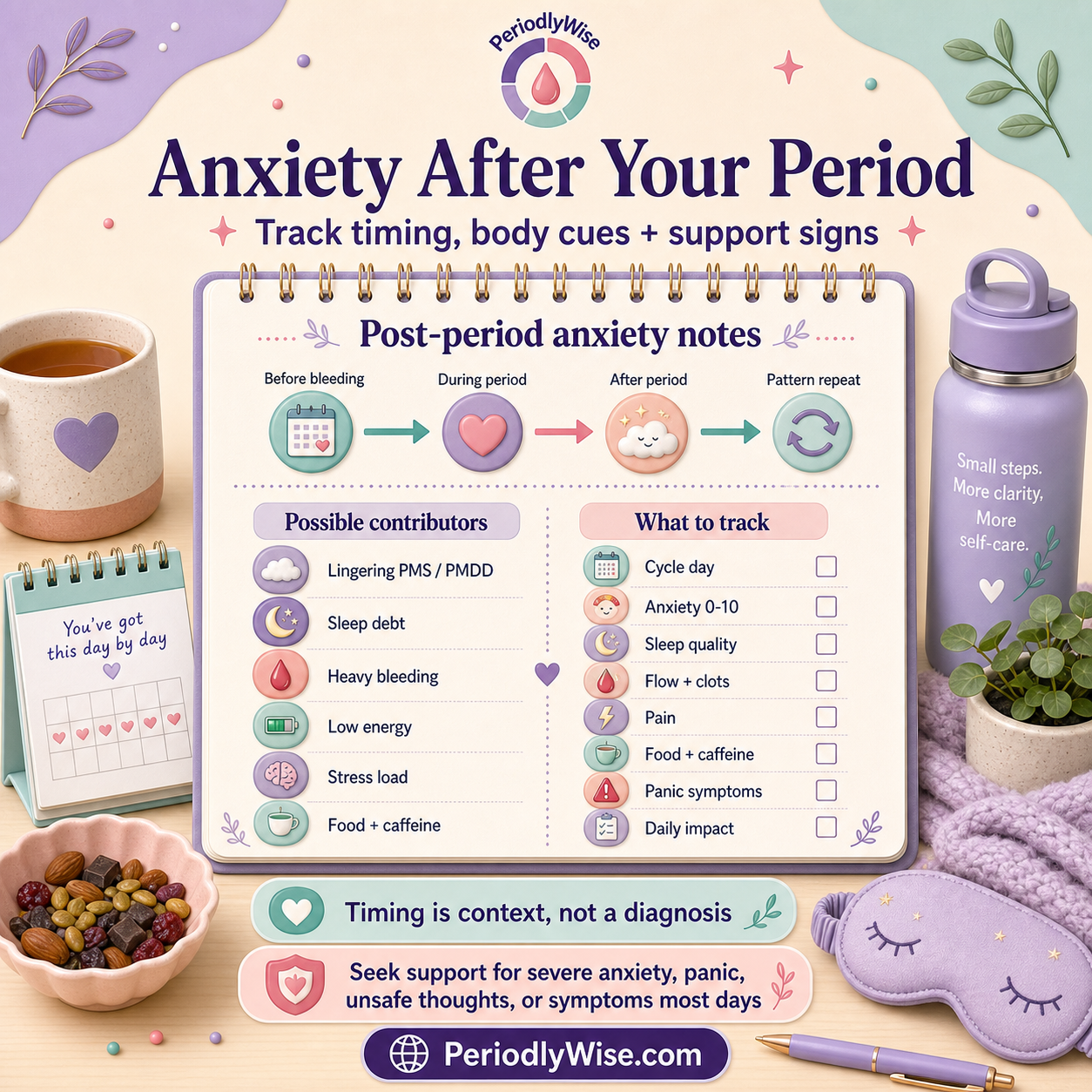
Anxiety after period: possible causes to compare
| Clue | Possible contributor | What to track |
|---|---|---|
| Anxiety began before bleeding and fades slowly after day 1 or 2 | PMS or PMDD symptoms may be lingering into the period. | Daily mood score, period start, symptom peak, and when relief begins. |
| Anxiety appears after heavy bleeding, dizziness, weakness, or shortness of breath | Blood loss or iron deficiency symptoms may be part of the picture. | Flow level, clots, product changes, fatigue, breathlessness, palpitations, and dizziness. |
| Anxiety is strongest after poor sleep or painful nights | Sleep debt and body stress can make worry louder. | Bedtime, wake-ups, cramps, pain medicine if used safely, caffeine, and next-day anxiety. |
| Anxiety happens most of the month, not just after periods | A broader anxiety disorder, life stress, thyroid issue, medication effect, or another factor may need support. | Cycle timing plus non-cycle triggers, panic symptoms, medications, and daily impact. |
Why it may not be classic PMS
Classic PMS symptoms usually happen before a period and improve after bleeding starts. ACOG and Mayo Clinic both describe anxiety, irritability, sleep changes, appetite changes, and mood symptoms as possible premenstrual symptoms. PMDD is more severe and can include anxiety, panic attacks, depression, irritability, and feeling out of control.
If anxiety consistently starts only after the period ends, it may not fit the usual PMS pattern. That does not make it fake. It just means the tracking question changes: what else is happening in those days?
Look for recovery stress, heavy-flow fatigue, low appetite, headaches, caffeine changes, sleep disruption, pain, relationship or work pressure, and anxiety that was present but easier to ignore before your period.
What to track for post-period anxiety
Track for two or three cycles if symptoms are manageable. If they feel unsafe or severe, seek help sooner.
- Cycle day: day 1, day 2, last bleeding day, or days after bleeding ends.
- Anxiety intensity: use a 0 to 10 scale once or twice daily.
- Main feeling: worry, panic, dread, tension, irritability, sadness, overwhelm, or restlessness.
- Bleeding pattern: heavy flow, long bleeding, clots, leaks, or spotting.
- Iron-like symptoms: fatigue, weakness, dizziness, shortness of breath, palpitations, headaches, or looking pale.
- Sleep: bedtime, wake-ups, nightmares, early waking, or feeling unrefreshed.
- Food and caffeine: skipped meals, appetite drop, cravings, coffee, energy drinks, or alcohol.
- Pain and body symptoms: cramps, pelvic pain, nausea, headache, breast tenderness, digestive changes, or bloating.
- Stress context: deadlines, conflict, travel, caregiving, money stress, or pressure to catch up after period days.
- Safety and impact: panic attacks, avoiding normal activities, relationship strain, self-harm thoughts, or feeling unable to cope.
A calm next-step plan
Use this sequence when anxiety shows up after your period and you are trying to understand it.
- Name the timing. Write the exact day: still bleeding, first day after bleeding, or several days after.
- Check body basics. Ask whether you slept, ate, hydrated, lost a lot of blood, or had pain.
- Reduce one amplifier. Choose one small step: food, water, lower caffeine, rest, a walk, breathing, or asking someone to sit with you.
- Track the repeat pattern. If the same post-period window returns, bring the notes to a healthcare professional.
- Escalate sooner if needed. Severe anxiety, panic attacks, hopelessness, unsafe thoughts, or symptoms most days of the month deserve support now.
When to seek help
Seek urgent help now if you may harm yourself, cannot stay safe, feel out of control, have chest pain, fainting, severe shortness of breath, severe one-sided pelvic pain, or heavy bleeding with weakness or dizziness.
Book medical or mental health support if anxiety disrupts work, school, sleep, relationships, parenting, eating, or daily routines; if panic attacks happen; if symptoms repeat every cycle; if anxiety lasts most of the month; or if heavy periods, dizziness, breathlessness, or palpitations suggest possible anemia.
You do not need a perfect cycle explanation to deserve help. If anxiety is frightening or interfering with life, support is appropriate even if the timing is unusual.
Use PeriodlyWise to compare anxiety, sleep, bleeding, pain, stress, and energy across cycles without relying on memory alone.
Open the Period TrackerFAQ
Is anxiety after a period normal?
Some people notice anxiety during or after bleeding, but it is not the most classic PMS timing. Track it if it repeats, especially alongside heavy bleeding, poor sleep, pain, panic symptoms, or daily disruption.
Can PMDD cause anxiety after my period starts?
PMDD usually happens before the period and often improves within a few days after bleeding starts. Some people may still feel symptoms for a short time into the period, but symptoms that persist or feel severe deserve care.
Can low iron feel like anxiety?
Iron deficiency anemia can cause tiredness, weakness, dizziness, shortness of breath, chest discomfort, headache, or a fast heartbeat. Those body sensations can feel anxiety-like, especially after heavy bleeding.
How many cycles should I track?
If symptoms are mild and manageable, two to three cycles can show whether the pattern repeats. If anxiety is severe, unsafe, or disruptive, do not wait to seek support.
What should I tell a clinician?
Share when anxiety starts and ends, period dates, flow level, sleep, stress, panic symptoms, medication or contraception changes, heavy bleeding, dizziness, breathlessness, and whether symptoms happen outside the cycle.
Final thoughts
Anxiety after your period can feel like your body missed the expected relief cue. Rather than forcing one explanation, track the timing and the body context around it. The answer may involve cycle sensitivity, recovery from bleeding, sleep, stress, or a broader anxiety pattern.
A clear record can help you respond with less self-blame and get the right kind of support sooner.