Night can make worry feel louder. There are fewer distractions, your body is tired, and small thoughts can turn into long loops right when you want to rest. If this happens before or during your period, it may feel even more confusing: "Why am I fine during the day, but anxious at night?"
For some people, anxiety, tension, irritability, low mood, and sleep problems can appear or worsen in the days before bleeding starts. This does not mean your feelings are imaginary, and it does not mean every nighttime worry is caused by your cycle. Stress, pain, caffeine, poor sleep, heavy flow, existing anxiety, depression, PMDD, and life pressure can all overlap. Tracking the pattern helps you see whether nights feel harder at a specific point in your cycle.
Why anxiety may feel stronger at night before your period
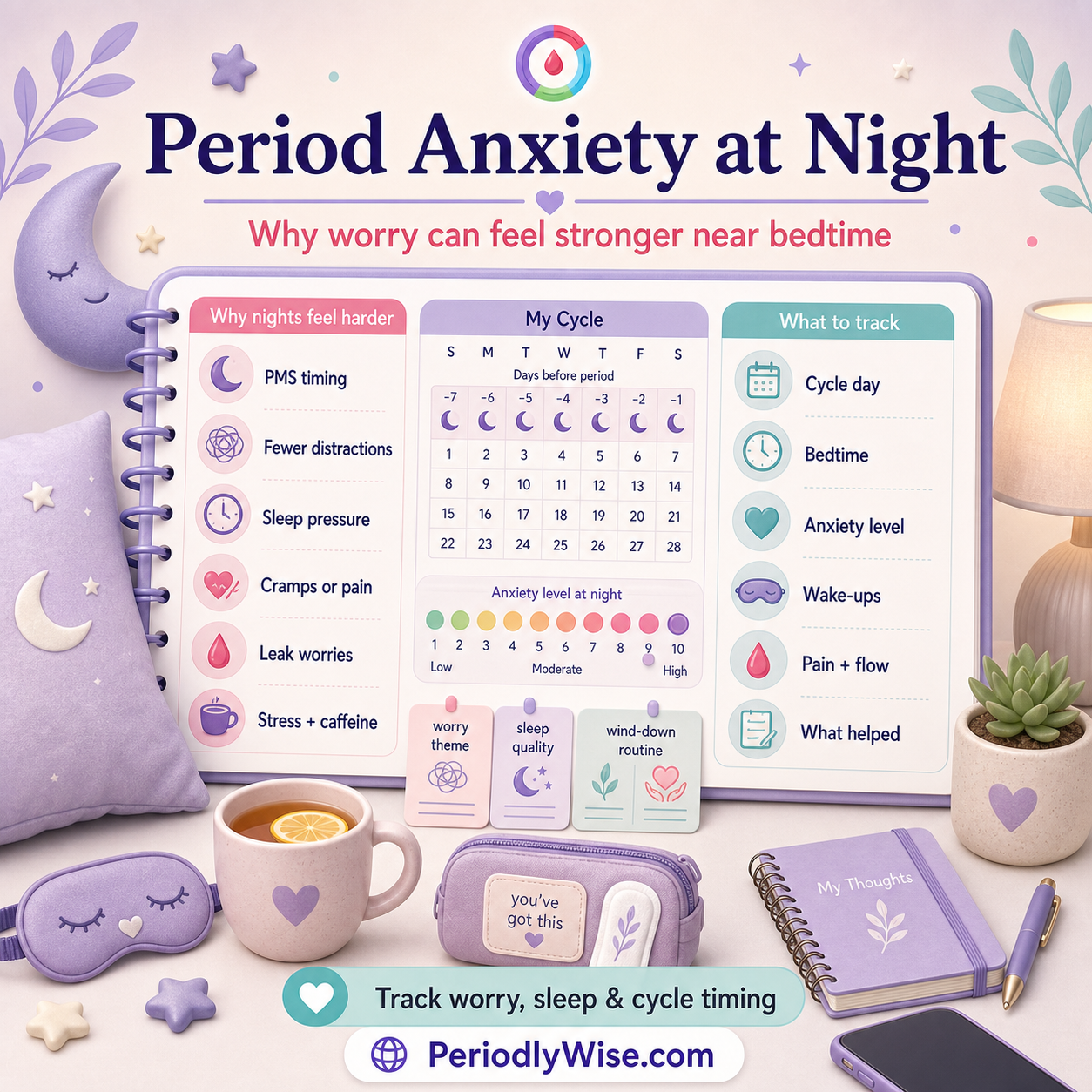
PMS can include emotional and behavioral symptoms such as tension, anxiety, mood swings, irritability, fatigue, food cravings, poor concentration, and trouble sleeping. These symptoms often happen after ovulation and before bleeding starts, then improve after the period begins. Hormonal changes may play a role, but they are not the whole story.
Some people are more sensitive to normal cycle changes, especially when stress, poor sleep, pain, or an existing mental health condition is already present. Night can intensify the feeling. During the day, tasks and conversations may keep your mind occupied. At bedtime, the brain has more room to replay worries.
If you are also dealing with cramps, breast tenderness, nausea, bloating, leak worries, or heavy flow, your body may feel less settled. Caffeine, late scrolling, irregular meals, alcohol, and inconsistent sleep can also make anxiety and sleep feel harder.
Is it period anxiety or general anxiety?
It can be both. Cycle-related anxiety usually has a timing pattern. It may build in the days before your period, feel stronger at night, and ease after bleeding starts. General anxiety may happen across the month, but it can still worsen before a period. Some people also experience premenstrual worsening, where an existing anxiety or mood condition feels stronger during the premenstrual phase.
Tracking does not diagnose the cause. It gives you a clearer timeline. If anxiety is intense, repeats before each period, or affects daily life, that timeline can help a healthcare or mental health professional understand what is happening.
If anxiety is also strong during the day, read Period Anxiety Before Your Period. If sleep itself is the main issue, read Period Insomnia.
What should you track?
Track the pattern for at least two or three cycles if you can. The goal is not to prove that your cycle explains everything. The goal is to understand whether nighttime anxiety has a rhythm.
- Cycle timing: cycle day, expected period date, and whether bleeding has started.
- Anxiety level: a simple 1 to 10 score at bedtime.
- Main worry theme: health, relationships, work, school, safety, leaks, pain, or no clear reason.
- Sleep: bedtime, wake-ups, nightmares, early waking, or trouble falling asleep.
- Body symptoms: cramps, nausea, breast tenderness, headache, heavy flow, fatigue, or dizziness.
- Triggers: caffeine, alcohol, late meals, screen time, conflict, deadlines, travel, or stress.
- What helped: breathing, journaling, heat, talking, prayer, meditation, stretching, or changing bedtime routine.
A note like "cycle day 26, anxiety 8/10, cramps, late caffeine, slept 5 hours" is more useful than trying to remember everything after your period has passed.
Why bedtime can trigger worry loops
Bedtime can bring a specific kind of pressure: "I need to sleep now." That pressure can make the body more alert. If you are already tense from PMS, cramps, heavy flow, or emotional stress, the thought of not sleeping can become another worry on top of everything else.
Nighttime also removes distractions. A worry that felt small during the day may feel bigger in a quiet room. If you are checking for leaks, noticing body sensations, or replaying the day, your brain may stay active even when your body is tired.
This does not mean you should blame yourself for anxious nights. It means the pattern has practical pieces you can track and support.
What may help at night?
A small evening plan can reduce the sense of being ambushed by worry. Prepare period supplies before bed if leaks are part of the anxiety. Use comfortable sleepwear, a period product you trust overnight, and a towel or dark underwear if that helps you relax. If cramps or discomfort are part of the pattern, use comfort methods that are safe and familiar for you, such as heat, hydration, gentle stretching, or rest.
For racing thoughts, try moving the worry out of your head and onto paper. Write: "What am I worried about?" "What can wait until morning?" and "What is one kind thing I can do right now?" Keep the routine simple: dim lights, reduce scrolling, avoid late caffeine, and give your body a predictable wind-down cue.
- Prepare period supplies before bedtime.
- Keep a brief worry note or journal near the bed.
- Use a calm routine instead of checking symptoms repeatedly.
- Limit late caffeine if it worsens sleep or anxiety for you.
- Try breathing, grounding, prayer, meditation, calming audio, or gentle stretching if these feel supportive.
- Talk to someone you trust if worry feels too heavy to hold alone.
When anxiety may need extra support
Get medical or mental health support if nighttime anxiety repeatedly disrupts sleep, affects daily life, causes panic attacks, or feels much stronger before every period. Also seek help if mood symptoms include severe depression, feeling out of control, intense anger, hopelessness, or major relationship, work, or school disruption.
These patterns may need evaluation for PMS, PMDD, premenstrual worsening of an existing anxiety or mood condition, or another cause. Support can include therapy, stress strategies, sleep support, medication, cycle-related care, or a combination, depending on your situation.
If you feel at risk of harming yourself or you may not be safe, seek urgent help now. In the U.S., call or text 988 for the Suicide & Crisis Lifeline, or use local emergency services where you live.
How PeriodlyWise can help
PeriodlyWise cannot diagnose anxiety, PMS, PMDD, insomnia, depression, or any mental health condition. What it can do is help you see timing. You can track when nighttime worry rises, whether it appears before bleeding, whether sleep worsens, and whether symptoms improve after your period starts.
Use the Period Tracker to estimate your next period window, then add notes about anxiety, sleep, pain, flow, caffeine, stress, and what helped. Over time, you may see whether your nighttime anxiety is random, stress-linked, or strongly tied to your premenstrual days.
Record cycle day, bedtime, anxiety level, sleep, pain, flow, stress, caffeine, and what helped calm the night.
Open the Period TrackerFAQ
Can PMS cause anxiety at night?
PMS can include anxiety and sleep problems for some people, and nighttime may make those feelings more noticeable because there are fewer distractions.
Why does worry feel worse before bed?
There are fewer distractions, the body is tired, and physical symptoms may feel bigger when you are trying to sleep. Sleep pressure can also make anxiety stronger.
Should I track anxiety if I already have anxiety?
Yes. Tracking can show whether symptoms worsen at a certain cycle phase, which can be useful information for a healthcare or mental health professional.
When is it more than normal PMS?
If anxiety is intense, disabling, unsafe, or consistently disrupts sleep, work, school, relationships, or daily life, it deserves professional support.
Final thoughts
Period anxiety at night can feel isolating, but it is not something you have to dismiss or silently endure. PMS symptoms, stress, pain, sleep disruption, caffeine, heavy flow worries, and existing anxiety can all overlap near bedtime.
Track the timing with kindness. If the pattern is strong, repeating, or affecting your life, reach out for support. Your worry is real, and getting help is a reasonable part of caring for your cycle and your mind.