
Brown discharge during the fertile window can feel especially confusing because many people expect fertile cervical mucus to be clear, slippery, watery, or stretchy. When the discharge is brown instead, it may raise several questions at once: Is this ovulation spotting? Is it old blood? Does it mean pregnancy? Does it mean the fertile window estimate is wrong?
The short version is that brown discharge around fertile days can sometimes happen, but the context matters. Brown color usually suggests a small amount of blood has mixed with vaginal or cervical fluid and darkened before leaving the body. Around mid-cycle, that might be light ovulation spotting for some people. It might also be leftover blood, irritation, contraception-related spotting, infection-related discharge, or abnormal bleeding that happens to fall near a predicted fertile window.
PeriodlyWise can help by placing the symptom beside cycle day, fertile-window estimate, ovulation estimate, sex timing, and whether the pattern repeats. A single brown spot is different from several days of discharge with odor, itching, burning, pain, fever, or bleeding after sex.
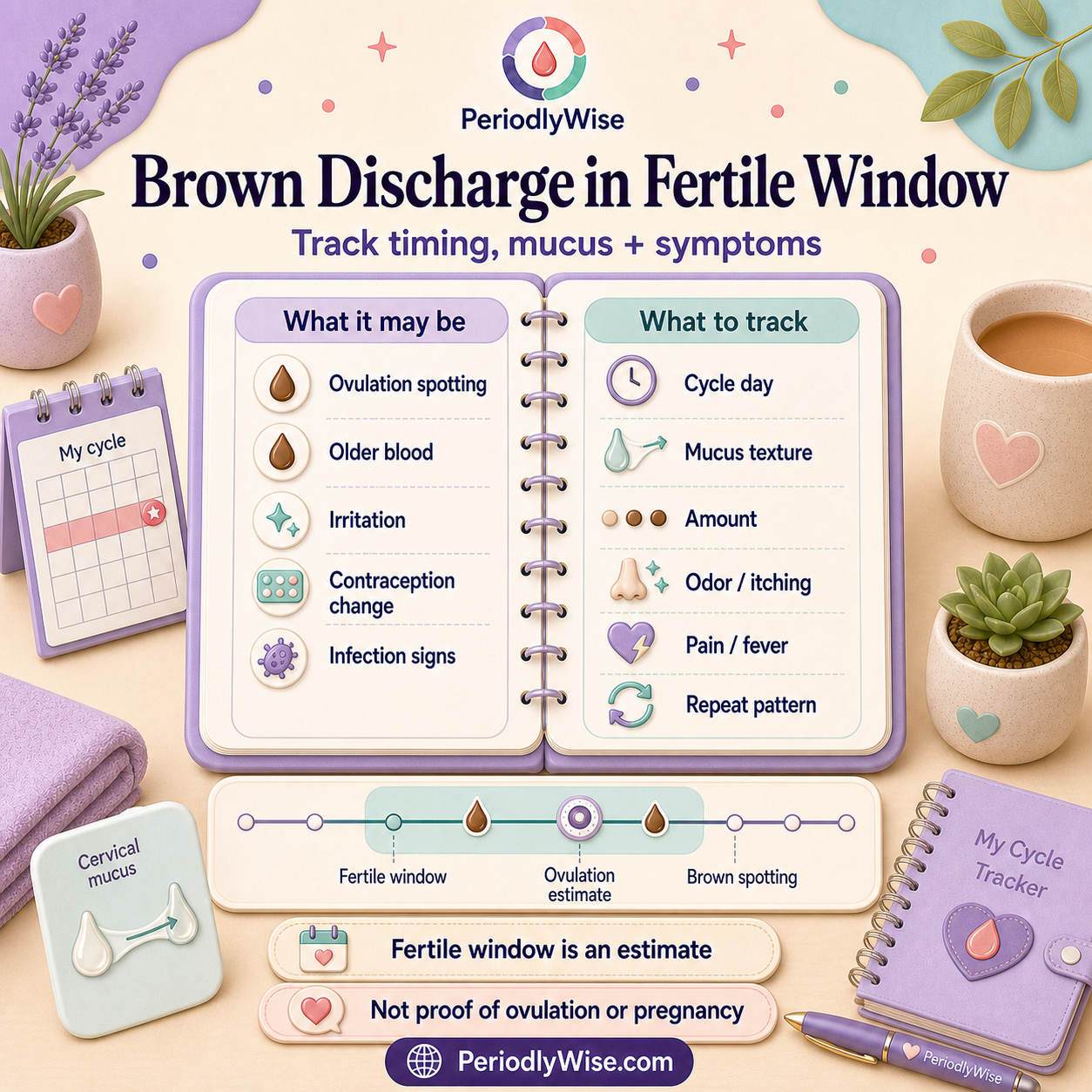
Why brown discharge can happen near fertile days
During the fertile window, estrogen rises and cervical mucus often becomes wetter, clearer, stretchier, or more slippery. ACOG describes fertility awareness methods as using signs such as cervical mucus and cycle timing to estimate fertile days. Brown discharge is not the classic fertile mucus sign. It usually means a small amount of blood is present too.
Cleveland Clinic explains that spotting can happen around ovulation for some people, and brown discharge can reflect blood mixed with vaginal discharge. If a tiny amount of blood leaves slowly, it may look brown rather than red. This can make mid-cycle spotting show up as pink, red, or brown discharge.
Possible causes to consider
Light spotting around ovulation can happen for some people. It is usually brief and not heavy.
Small leftover blood from an earlier period may mix with cervical mucus and look brown.
Sex, dryness, a pelvic exam, or irritation may cause light bleeding that turns brown.
Starting, stopping, missing, or changing contraception can cause spotting at unexpected times.
Discharge with odor, itching, burning, pelvic pain, pain while urinating, fever, or unusual color deserves medical care.
If pregnancy is possible, any unusual bleeding should be interpreted carefully, especially with pain, dizziness, fainting, or heavy bleeding.
A fertile-window estimate is not proof of ovulation
A calendar fertile window is an estimate, not a test. PeriodlyWise estimates fertile days from cycle details, but ovulation can shift earlier or later. Brown discharge does not prove ovulation happened, and a fertile-window label does not prove the discharge is ovulation spotting. If your cycles are irregular, if you recently stopped birth control, or if stress, illness, travel, or sleep disruption changed your routine, the estimated window may be wider or less certain.
It is also important not to use brown discharge as contraception guidance. Fertile-window calculators and mucus observations can support body awareness, but they cannot guarantee safe days. If pregnancy prevention matters, use a reliable contraceptive method and speak with a clinician about the best fit for you.
Does brown discharge in the fertile window mean pregnancy?
Brown discharge during a predicted fertile window does not automatically mean pregnancy. Implantation, when it occurs, would be after ovulation, not before ovulation. Because fertile-window dates are estimates, though, timing can be uncertain if ovulation happened earlier than the calculator expected. If sex could lead to pregnancy and your period becomes late, use a pregnancy test at the right time instead of judging from discharge color.
If you have a late period and a negative test, read Missed Period but Negative Pregnancy Test. If brown discharge usually appears just before bleeding starts, the guide to Brown Discharge Before Your Period may fit better than a fertile-window explanation.
What to track in PeriodlyWise
When brown discharge appears around fertile days, write down the details that separate a one-off mid-cycle spot from a pattern that deserves care. Keep the note short, but specific.
Record the date, cycle day, and where PeriodlyWise placed the fertile and ovulation windows.
Only when wiping, a few underwear spots, needing a liner, or heavier bleeding are different patterns.
Note whether discharge was clear and stretchy, watery, sticky, creamy, brown, pink-brown, or mixed with blood.
Track one-sided pelvic twinges, cramps, odor, itching, burning, fever, pain with sex, or pain while urinating.
Record only what you need: recent sex, condom break, missed pill, new method, stopped method, or emergency contraception.
One cycle of light spotting is different from repeated mid-cycle bleeding or bleeding after sex.
When to seek medical advice
The NHS recommends getting help for discharge that changes in color, smell, or texture when it comes with itching, soreness, bleeding between periods, bleeding after sex, pain when peeing, or pelvic pain. ACOG also advises evaluation for abnormal bleeding patterns, including bleeding between periods or after sex. Contact a healthcare professional if brown discharge is new, repeated, happens after sex, becomes heavy, smells unpleasant, comes with itching or burning, or causes pelvic pain or fever.
Seek urgent care if pregnancy is possible and you have severe one-sided pelvic pain, shoulder pain, fainting, severe dizziness, heavy bleeding, or symptoms that feel unsafe. If you are past menopause, any bleeding or brown discharge that could be blood should be checked promptly.
FAQ
Can ovulation spotting be brown?
Yes, light ovulation spotting can sometimes look brown if a small amount of blood mixes with discharge and leaves the body slowly. It should be brief and light; repeated or symptomatic bleeding deserves care.
Is brown discharge a sign of fertile days?
Not by itself. Fertile mucus is often clear, wet, slippery, or stretchy. Brown color suggests blood may be mixed in, so track timing and symptoms instead of treating it as a fertility sign.
Should I take a pregnancy test?
If pregnancy is possible and your period becomes late, a properly timed pregnancy test is more useful than guessing from discharge color. Seek urgent care for severe pain, fainting, heavy bleeding, or severe dizziness.
Use PeriodlyWise to compare brown discharge with fertile-window estimates, ovulation timing, symptoms, contraception context, and your next period.
Open the Fertility Window Tracker