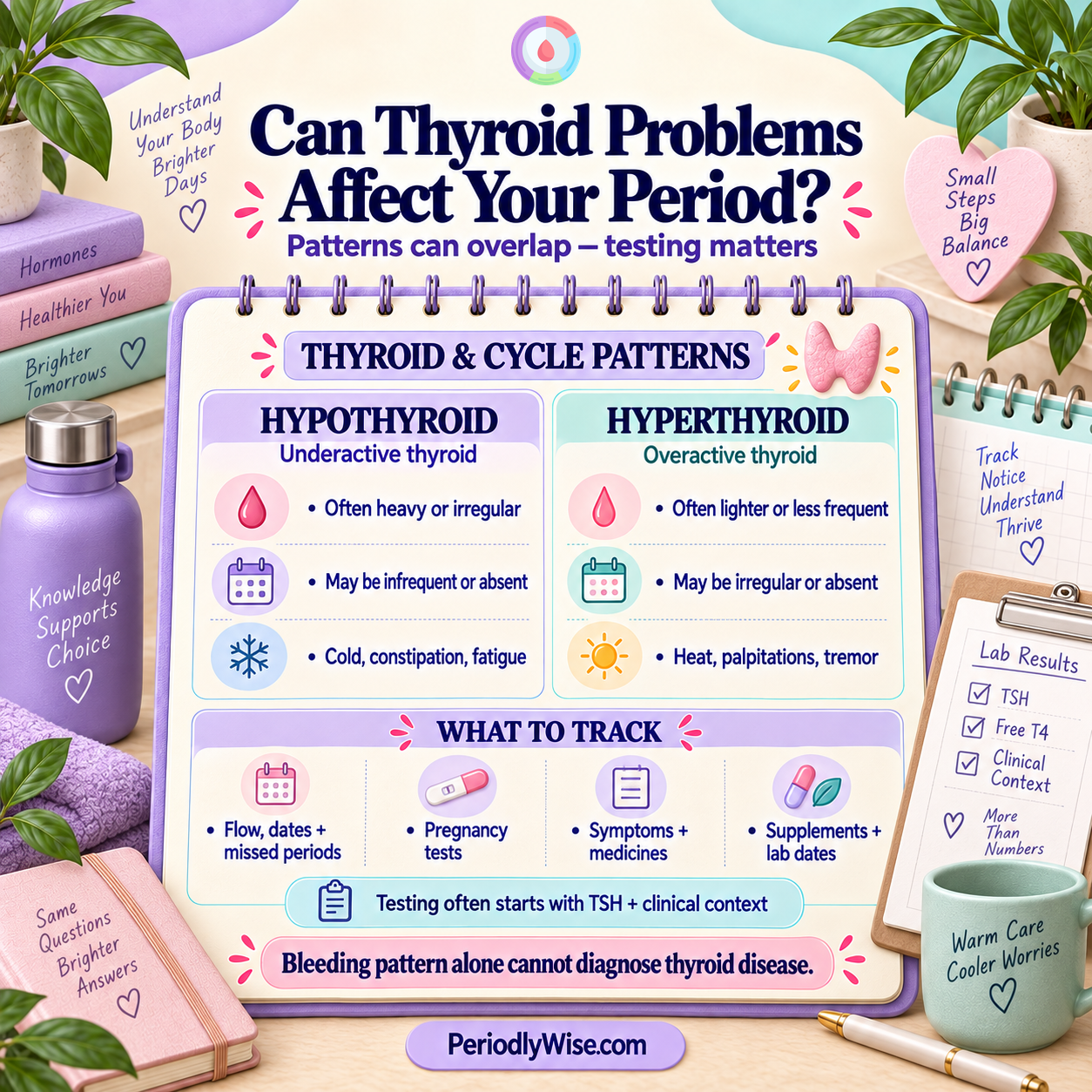
Yes. Thyroid problems can affect period timing, flow, regularity, and ovulation. The thyroid makes hormones that help regulate metabolism and interact with the wider hormone systems involved in reproduction. When thyroid hormone is too low or too high, periods may become heavier, lighter, longer, less frequent, irregular, or absent.
The pattern is not a home thyroid test. Hypothyroidism can be associated with heavy or irregular bleeding, but it can also contribute to infrequent or absent periods. Hyperthyroidism more often causes lighter or less frequent periods, yet irregular bleeding can occur for many other reasons. Pregnancy, contraception, fibroids, PCOS, prolactin changes, perimenopause, weight or energy changes, medication effects, and bleeding disorders may overlap.
A useful approach is to connect the menstrual timeline with symptoms, medicines, pregnancy possibility, and laboratory dates. One unusual cycle cannot show whether the thyroid is underactive, overactive, or normal.
How thyroid states may affect periods
| Thyroid context | Possible period pattern | Other clues that may coexist | What the pattern cannot prove |
|---|---|---|---|
| Hypothyroidism (too little thyroid hormone) | Heavy, prolonged, irregular, infrequent, or absent periods may occur. | Cold sensitivity, constipation, tiredness, dry skin, slower heart rate, hair changes, or weight change. | Heavy bleeding alone does not diagnose hypothyroidism; fibroids, adenomyosis, anovulation, medication, and bleeding disorders also matter. |
| Hyperthyroidism (too much thyroid hormone) | Periods may become lighter, less frequent, irregular, or absent. | Heat sensitivity, sweating, tremor, palpitations, anxiety, sleep difficulty, frequent bowel movements, or weight loss. | A light or late period does not prove hyperthyroidism; pregnancy, contraception, stress, low energy intake, and perimenopause can look similar. |
| Postpartum thyroiditis | Cycle changes may coexist, but breastfeeding and postpartum recovery also strongly affect when periods return. | A temporary overactive phase may be followed by an underactive phase; symptoms can resemble ordinary postpartum exhaustion or mood change. | Postpartum bleeding is not a period, and a missing period while breastfeeding does not by itself show thyroiditis. |
| Known thyroid disease on treatment | Periods may improve as thyroid levels are controlled, remain variable during adjustment, or change for another reason. | Recent dose changes, missed doses, pregnancy, interacting medicines or supplements, and lab trends matter. | A period change cannot tell you how to change your dose. |
| Normal thyroid tests | Irregular, heavy, light, or absent periods can still happen. | Other reproductive, structural, metabolic, medication, and life-stage factors may need review. | A normal thyroid result does not make the symptoms unreal; it redirects the evaluation. |
Why the thyroid and menstrual cycle are connected
Menstruation depends on coordinated signals among the hypothalamus, pituitary gland, ovaries, uterus, and thyroid system. Thyroid dysfunction can disturb ovulation. When ovulation is delayed or does not occur, the next period may be late or absent, and the uterine lining may shed unpredictably or heavily.
Severe or prolonged hypothyroidism can also influence prolactin signalling in some people. Elevated prolactin may interfere with ovulation and contribute to infrequent or absent periods. This is one reason a clinician evaluating amenorrhea may check both TSH and prolactin rather than assuming one cause from symptoms.
Thyroid disease can affect fertility through irregular or absent ovulation, but an irregular period is not proof that ovulation never occurs. Pregnancy can still happen unexpectedly. Calendar fertile-window estimates become less reliable when cycle timing is unstable.
- Thyroid hormone outside the optimal range can alter reproductive hormone signalling and ovulation.
- No ovulation or inconsistent ovulation can lead to late, absent, or irregular heavy bleeding.
- Autoimmune thyroid diseases such as Hashimoto disease or Graves disease may coexist with other autoimmune or reproductive conditions.
- Illness severity, duration, treatment status, age, postpartum state, contraception, and other diagnoses shape the pattern.
- A tracker records timing and context; it cannot measure TSH, free T4, ovulation, anemia, or thyroid antibodies.
What to do with a specific period change
| Situation | Check now | Reasonable next step | Do not assume |
|---|---|---|---|
| Late or missed period | Pregnancy possibility, contraception, last true period, and test timing. | Take a pregnancy test when appropriate; arrange review if absence persists or repeats. | Do not attribute a missed period to thyroid disease without excluding pregnancy. |
| Heavier or longer bleeding | Hours between product changes, flooding, clots, bleeding days, fatigue, dizziness, or breathlessness. | Seek assessment for repeated or disruptive heavy bleeding; urgent care for rapid blood loss or instability. | A high-volume period does not identify the cause or thyroid state. |
| Lighter or less frequent periods | Contraception, pregnancy, weight or energy change, stress, exercise, perimenopause, and thyroid symptoms. | Document several cycles and seek review for a new persistent pattern. | Light bleeding is not always a true period and does not exclude pregnancy. |
| Known thyroid condition | Latest TSH/free T4, dose and timing, missed doses, new medicines, supplements, and pregnancy plans. | Contact the prescriber about symptoms or abnormal results; keep taking medicine as directed unless told otherwise. | Do not increase, decrease, or stop treatment based on a cycle app. |
| Within a year after birth | Breastfeeding, lochia versus a returning period, sleep, mood, palpitations, heat/cold intolerance, and lab history. | Discuss possible postpartum thyroiditis when symptoms are notable or persistent. | Do not label normal lochia, lactational amenorrhea, or postpartum fatigue as thyroid disease without assessment. |
| Trying to conceive | Cycle pattern, ovulation uncertainty, known thyroid diagnosis, treatment, and pregnancy testing. | Seek preconception or fertility guidance when cycles are very irregular or thyroid disease is known. | An app estimate cannot confirm ovulation or thyroid control. |
| Thyroid tests normal but periods changed | Timing of tests, symptoms, medicines, contraception, pregnancy, PCOS, prolactin, fibroids, and other causes. | Ask what else should be evaluated instead of repeatedly treating the thyroid without evidence. | Normal tests do not dismiss the menstrual concern. |
What to track before an appointment
A concise record helps a clinician compare the menstrual change with thyroid symptoms and treatment. Record what happened rather than trying to label the thyroid state yourself. Include normal months too, because the contrast shows whether the change is isolated or persistent.
Product counts are only rough measures because pad, tampon, cup, disc, and period-underwear capacities differ. Note how quickly protection becomes saturated, whether blood floods through clothing or bedding, and how the bleeding affects sleep, work, exercise, or school.
- first day of full flow, final bleeding day, spotting, and cycle length
- flow speed, nighttime changes, leaks or flooding, clots, and pain
- missed periods, pregnancy-test dates and results, contraception, and pregnancy plans
- cold or heat intolerance, palpitations, tremor, bowel changes, sleep, energy, mood, skin, hair, and unexplained weight change
- thyroid diagnosis, medicine name and dose, dose changes, missed doses, and how medicine is taken
- TSH, free T4, and other laboratory dates and results when available, including the lab reference range
- iron, calcium, antacids, estrogen-containing contraception, amiodarone, lithium, seizure medicines, and other medicines or supplements
- biotin-containing hair, skin, nail, or multivitamin supplements and the laboratory's preparation instructions
- recent pregnancy, birth, miscarriage, breastfeeding, postpartum bleeding, or menopause transition
How clinicians may evaluate the pattern
Testing is individualized. The sequence below explains common reasoning, not a test order for every reader.
- Clarify the bleeding. Separate full menstrual flow from spotting, bleeding after sex, postpartum lochia, and bleeding in pregnancy.
- Exclude pregnancy when relevant. A late or absent period can be an early sign of pregnancy even in someone with thyroid disease.
- Review the full timeline. Compare cycle changes with thyroid symptoms, treatment, contraception, weight or energy changes, stress, medicines, and life stage.
- Check for anemia or instability. Heavy or prolonged bleeding may prompt a blood count, ferritin, and urgent assessment depending on symptoms.
- Assess thyroid function. TSH is commonly the initial test, often interpreted with free T4; additional thyroid tests depend on the result and clinical question.
- Consider other causes. Prolactin, PCOS, fibroids, adenomyosis, bleeding disorders, perimenopause, pituitary or ovarian conditions, and medication effects may need evaluation.
- Repeat or confirm when appropriate. An unexpected result may need confirmation, particularly when illness, pregnancy, medicines, supplements, or laboratory interference could matter.
- Treat the identified cause and reassess. Cycle improvement can support the explanation, but persistent bleeding changes still deserve follow-up.
Understanding thyroid tests without self-diagnosing
TSH is produced by the pituitary gland and tells the thyroid how strongly to work. In primary hypothyroidism, TSH is often high; in hyperthyroidism it is often low. Free T4 helps show the circulating thyroid hormone level. The exact interpretation depends on the laboratory range, pregnancy status, illness, medicines, and whether a pituitary problem is possible.
An isolated TSH value is not a menstrual diagnosis. Mild thyroid abnormalities can coexist with another cause of amenorrhea or abnormal bleeding. ASRM guidance advises pregnancy exclusion and includes TSH among first-line tests for amenorrhea, with prolactin and other reproductive hormones selected according to the case.
Biotin deserves special mention because it is common in hair and nail supplements and can make some thyroid assays appear abnormal. Tell the clinician and laboratory about every supplement and follow their preparation instructions. Do not conceal supplements or change prescribed thyroid medicine to make a result look better.
- Ask which result is TSH, free T4, total T4, or T3; they answer different questions.
- Keep the units and reference range with the result instead of comparing a bare number from another laboratory.
- Tell the care team about pregnancy, postpartum status, estrogen therapy or contraception, and significant acute illness.
- Disclose biotin, iron, calcium, antacids, and all medicines because they may affect testing or thyroid-hormone absorption.
- Ask when a result should be repeated and who will review it; do not interpret one number in isolation.
Will thyroid treatment make periods regular again?
Periods often become more predictable after an underactive or overactive thyroid is appropriately treated and thyroid levels stabilize. The timing is not fixed. A cycle already in progress may still be unusual, medication adjustments take time, and another menstrual condition may coexist. Improvement is possible, not guaranteed on a particular date.
Do not stop levothyroxine, antithyroid medicine, or other thyroid treatment because bleeding changed. Too little and too much replacement can both cause problems, and some antithyroid medicines have important safety instructions. Contact the prescriber for dose decisions and report a pregnancy promptly because thyroid monitoring and medication needs can change during pregnancy.
Iron and calcium supplements, some antacids, soy, and other medicines can reduce absorption of thyroid hormone when taken too close together. Estrogen-containing contraception and other drugs may affect dose needs or test interpretation. Follow the exact dosing instructions and ask the pharmacist or prescriber how to separate products rather than improvising.
Postpartum thyroiditis and returning periods
Postpartum thyroiditis can develop during the first year after birth. NIDDK explains that some people have a temporary hyperthyroid phase followed by a hypothyroid phase, while others experience only one phase. Heat intolerance, fast heartbeat, irritability, and poor sleep can occur in the first phase; cold intolerance, dry skin, concentration trouble, fatigue, and low mood may appear in the second.
These symptoms overlap with postpartum recovery, sleep deprivation, anxiety, depression, and ordinary demands of caring for a baby. Menstrual timing is also affected by breastfeeding and postpartum hormone changes. Lochia is healing-related bleeding after birth, not a menstrual period. Blood tests, not the return date of the period, diagnose postpartum thyroiditis.
Seek prompt professional support for significant palpitations, marked mood symptoms, worsening depression, inability to function, or thyroid symptoms that persist. If there is any risk of self-harm or inability to stay safe, contact local emergency or crisis support immediately.
When a period change needs medical care
Arrange a non-emergency appointment when periods become repeatedly irregular, a previously stable pattern changes, bleeding lasts more than seven days, heavy flow affects daily life, periods stop for three months without a known explanation, or you are having difficulty conceiving. Seek earlier assessment when menstrual changes occur with a neck swelling, persistent palpitations, major heat or cold intolerance, tremor, unexplained weight change, marked bowel change, severe fatigue, or known thyroid disease that may be uncontrolled.
If pregnancy is possible, use appropriate pregnancy-test timing. One condition does not protect against another: a person can have thyroid disease and pregnancy, fibroids, PCOS, anemia, perimenopause, or a medication effect at the same time.
Three realistic examples
Example 1: A person develops heavier, longer periods plus constipation, cold sensitivity, dry skin, and fatigue. The combination makes thyroid testing reasonable, but a blood count and gynecologic causes still need consideration. This is not a diagnosis from symptoms alone.
Example 2: A person with treated Graves disease has a late, very light bleed. They check pregnancy timing, record palpitations and medicine adherence, and contact their clinician rather than increasing antithyroid medicine. Thyroid tests and pregnancy status guide the next step.
Example 3: Four months after birth, someone has insomnia, a fast heartbeat, anxiety, and no period while breastfeeding. Lactational amenorrhea can explain the missing period but not every systemic symptom. Their clinician evaluates postpartum thyroiditis and other postpartum causes.
Frequently asked questions
Can hypothyroidism make a period late or stop it?
Yes. Hypothyroidism can disrupt ovulation and may cause irregular, infrequent, or absent periods, although heavy bleeding is also associated with it. Exclude pregnancy when relevant and use TSH and free T4 with clinical assessment rather than the period pattern alone.
Can hyperthyroidism stop periods?
It can make periods lighter, less frequent, irregular, or absent by affecting ovulation and reproductive hormone signalling. Other causes, including pregnancy, contraception, energy deficiency, stress, PCOS, and perimenopause, may produce a similar pattern.
Can thyroid disease cause heavy bleeding and clots?
Hypothyroidism and ovulatory dysfunction can be associated with heavy or irregular bleeding. Clots reflect the amount and speed of bleeding, not a thyroid diagnosis. Repeated heavy flow, bleeding longer than seven days, fatigue, dizziness, or breathlessness needs medical assessment.
How long after thyroid treatment will periods normalize?
There is no reliable number of days or cycles. Improvement may follow stable thyroid levels, but a cycle already underway can remain unusual and another cause may coexist. Keep taking treatment as prescribed and follow up if the pattern persists.
When should thyroid testing be considered for period changes?
Testing is reasonable when irregular, absent, or heavy periods persist, especially with thyroid symptoms, known thyroid disease, fertility concerns, postpartum symptoms, or a new change from baseline. Pregnancy is usually excluded first when possible.
Can periods stay irregular when thyroid tests are normal?
Yes. PCOS, prolactin changes, contraception, pregnancy, stress, low energy availability, major weight change, fibroids, adenomyosis, perimenopause, bleeding disorders, and medicines are among other possibilities. Normal thyroid results redirect rather than dismiss the evaluation.
Save period dates and add flow, symptoms, medication changes, pregnancy tests, and thyroid laboratory dates. A clear timeline can make a clinical conversation more precise.
Open the Period TrackerThe bottom line
Thyroid problems can affect periods, but the relationship is not one symptom to one diagnosis. Hypothyroidism often appears alongside heavy or irregular bleeding; hyperthyroidism often appears alongside lighter or less frequent periods. Either can disturb ovulation and, in some cases, stop periods.
Use the menstrual pattern as a reason to gather context and seek appropriate testing, not as a substitute for it. Exclude pregnancy when relevant, document treatment and supplements, and pursue other causes when thyroid results do not explain the change.