No: after the uterus is removed, you no longer have uterine menstrual periods. A period normally comes from shedding the lining inside the uterus. Keeping your ovaries does not recreate that lining or make menstrual blood build up somewhere else. However, the word period is sometimes used for several different experiences after surgery, and those differences matter.
You may have light vaginal bleeding while surgical tissues heal. If a subtotal or supracervical hysterectomy leaves the cervix in place, small amounts of remaining hormone-responsive tissue can sometimes cause recurring spotting. Ovaries that remain may still produce hormones and ovulate, so some familiar cyclical symptoms can continue without a uterine period.
This guide separates those situations, explains what to confirm in your operation record, and sets out when to ask for help. It cannot identify the source of an individual bleed. Your surgeon's discharge instructions and follow-up plan take priority, particularly after cancer surgery, complications or additional pelvic procedures.
First, check exactly what was removed
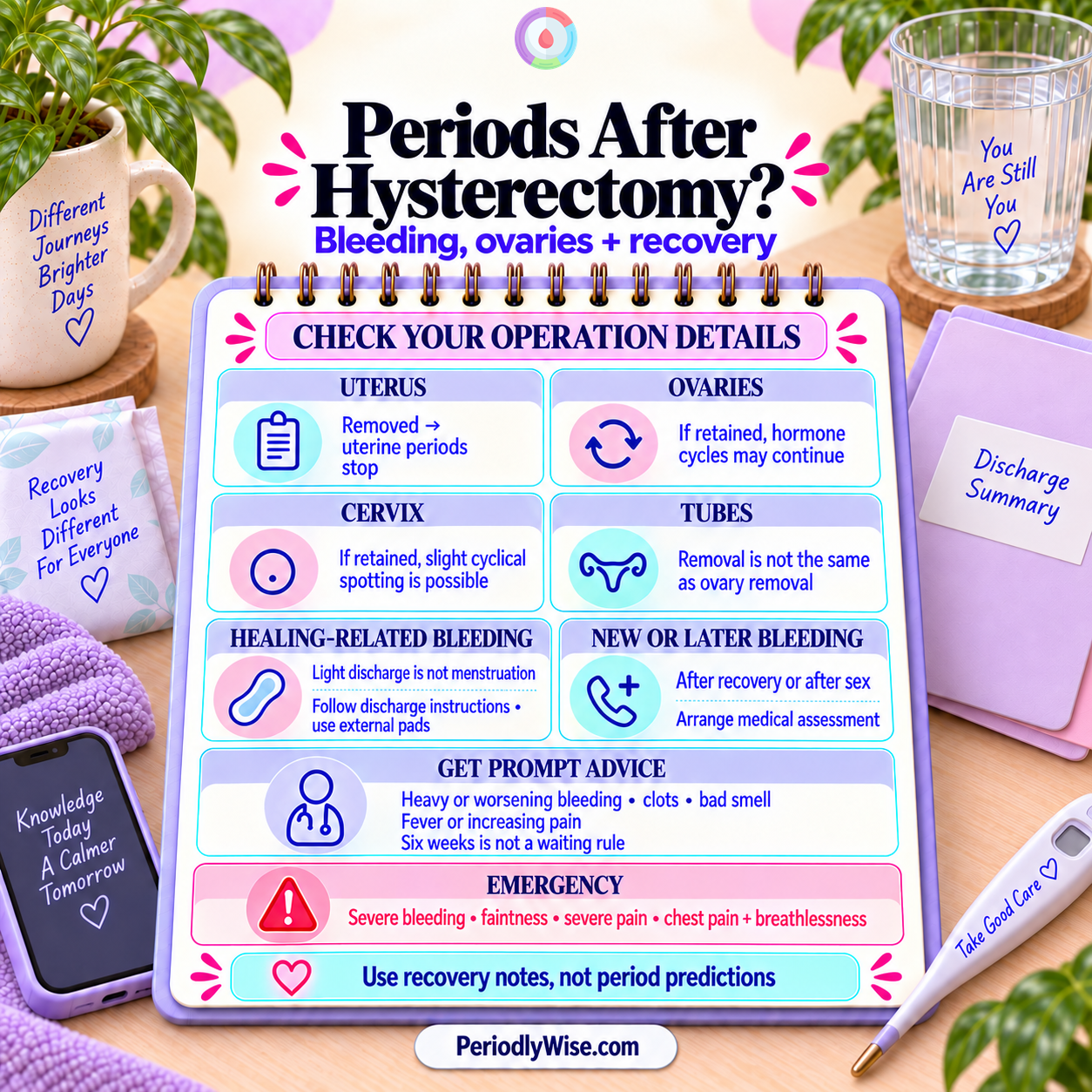
A hysterectomy removes the uterus, but it does not automatically remove the ovaries. A total hysterectomy removes the uterus and cervix. A subtotal, also called supracervical, operation removes the main body of the uterus while retaining the cervix. The informal phrase partial hysterectomy is not enough to tell you which organs remain.
The route of surgery is a separate detail. Abdominal, vaginal, laparoscopic and robot-assisted describe how the operation is performed, not a guaranteed list of organs removed. A total laparoscopic hysterectomy, for example, can leave the ovaries in place. Check the operation report or discharge summary instead of inferring anatomy from the scar or the word keyhole.
| Operation or detail | What it tells you | What it means for bleeding or hormones |
|---|---|---|
| Operation or detailTotal hysterectomy | What it tells youUterus and cervix removed. | What it means for bleeding or hormonesNo uterine periods; ovaries may or may not have been removed. |
| Operation or detailSubtotal / supracervical hysterectomy | What it tells youMain uterine body removed; cervix retained. | What it means for bleeding or hormonesNo usual uterine period; slight cyclical cervical-stump bleeding is possible. |
| Operation or detailOne or both ovaries retained | What it tells youSome ovarian tissue remains. | What it means for bleeding or hormonesHormone production and ovulation may continue, without uterine menstruation. |
| Operation or detailBoth ovaries removed with hysterectomy | What it tells youBilateral oophorectomy is part of the surgery. | What it means for bleeding or hormonesIf premenopausal, this causes surgical menopause; discuss symptom and hormone care. |
| Operation or detailTubes removed, ovaries retained | What it tells youSalpingectomy, not removal of the ovaries. | What it means for bleeding or hormonesRemoving tubes is not the same as removing the organs that produce ovarian hormones. |
Can ovaries still cycle without a period?
Yes, ovarian activity and menstrual bleeding are different processes. If functioning ovaries remain, they may continue producing changing levels of hormones and releasing eggs until menopause. The NHS explanation of ovarian preservation makes clear that retaining ovaries is different from removing them. It does not guarantee a precise future timetable for any individual.
Some people notice recurring breast tenderness, bloating, mood changes or other familiar premenstrual-type symptoms without bleeding. Others do not notice a predictable pattern. Symptoms alone cannot confirm ovulation or measure hormone levels, and new symptoms should not automatically be blamed on a cycle.
There is no monthly uterine lining left to accumulate after hysterectomy. An egg released by a retained ovary does not create a menstrual period without a uterus. Do not use a period calculator to predict bleeding or fertility after this surgery. Pelvic discomfort also is not proof that a period is trying to happen; persistent, new or worsening pain deserves review.
Light bleeding while healing is not your period returning
Surgical tissue can release small amounts of blood or blood-stained discharge while it heals. After removal of the cervix, the top of the vagina is closed with stitches; this healing area is often called the vaginal cuff or vault. Red, brown or pink discharge can look familiar without being menstruation. Color alone cannot establish whether healing is uncomplicated.
Recovery guidance varies with the procedure. RCOG's vaginal-hysterectomy guide describes light bleeding commonly over one to two weeks, while NHS recovery guidance allows for light discharge lasting up to six weeks. These are general descriptions, not a requirement to bleed for that long or permission to ignore a change.
Use external sanitary pads as advised rather than inserting tampons or menstrual cups during recovery. Follow the team's instructions about vaginal sex, lifting and activity; a dry pad or feeling better does not prove internal healing is complete. If bleeding becomes heavier, unpleasant-smelling or concerning, call rather than waiting for the scheduled postoperative appointment.
What if you kept your cervix and spot every month?
Slight cyclical bleeding can occur after a subtotal hysterectomy. Northern Care Alliance patient guidance specifically notes this possibility. A small amount of hormone-responsive lining can remain in the cervical stump and bleed as ovarian hormones change. This is different from the usual period produced by an intact uterus.
A study of persistent bleeding after supracervical hysterectomy also documents cervical-stump bleeding, but published rates depend on the procedure, population and follow-up. A percentage from a study cannot tell you the cause or expected amount of your own bleeding. Not everyone who retains a cervix will spot, and recurring spotting does not mean the whole uterus was left behind.
Tell your gynaecology team about a new, persistent or bothersome pattern. They can check the operation details and examine the source if needed. Do not presume that a monthly interval makes bleeding harmless. A change in amount, pain, discharge or bleeding after sex needs its own assessment; heavy bleeding should not be normalized as a mini-period.
Bleeding months or years later needs a fresh explanation
After healing, new vaginal bleeding is not a normal uterine period after a total hysterectomy. Possible sources include the vagina or the healing scar, infection, fragile tissue associated with dryness, or the cervix if it remains. The cause cannot be chosen from color, an app forecast or a social-media comparison. Assessment may include an examination tailored to the operation and symptoms.
If you notice blood only when using the toilet, tell the clinician whether it seems to come from the vagina, urine or bowel. It may be difficult to distinguish, and uncertainty is a reason to ask for help rather than perform an internal self-examination. Give the date, amount, triggers and accompanying symptoms without deciding the diagnosis first.
Bleeding after sex, bleeding after an established menopause, or bleeding that starts again after a long symptom-free interval should be assessed promptly, even if light. This does not mean every spot is cancer, but a reassuring previous screening test does not explain a current symptom. Your earlier diagnosis, including any cancer or precancer history, matters to the follow-up plan.
When to contact the team, and when to seek emergency care
Keep the discharge contact number accessible. For a new problem after surgery, the surgical unit may be the most useful first contact; use an urgent local service if you cannot reach them. Mayo Clinic's bleeding guidance advises contact for bleeding as heavy as a period, foul smell or bleeding beyond six weeks. Your team may give an earlier threshold.
Seek emergency help for severe or continuous heavy bleeding, fainting or marked dizziness, severe or rapidly worsening abdominal pain, or chest pain and difficulty breathing. A painful, swollen leg after surgery also needs urgent medical advice because a clot is possible. Do not wait to collect a diary or reach a pad-count threshold if you feel seriously unwell. These symptoms do not identify a diagnosis by themselves.
| Situation | Why the distinction matters | What to do |
|---|---|---|
| SituationLight early postoperative discharge | Why the distinction mattersCan be part of healing, not menstruation. | What to doFollow the discharge plan; call if the pattern changes or worries you. |
| SituationSlight recurring spotting with a retained cervix | Why the distinction mattersCervical-stump bleeding is possible, not certain. | What to doDiscuss a new or persistent pattern; do not assume its source. |
| SituationNew bleeding after recovery or after sex | Why the distinction mattersA normal uterine period is not the explanation after hysterectomy. | What to doArrange prompt assessment, including light or isolated bleeding. |
| SituationHeavy or worsening bleeding, clots, foul smell, fever or increasing pain | Why the distinction mattersMay indicate a complication that needs examination. | What to doContact the surgical team or urgent service promptly; use emergency care if severe or unwell. |
| SituationSevere bleeding with faintness, severe pain, chest pain or breathlessness | Why the distinction mattersCould represent a serious postoperative problem. | What to doSeek emergency care now; do not wait for a cycle or routine review. |
Does no period mean menopause, and can HRT bring periods back?
The absence of periods after removal of the uterus is not, by itself, evidence that the ovaries have stopped functioning. If both ovaries are removed before natural menopause, surgical menopause begins after surgery. If one or both remain, menopause may occur later, although ovarian function can end earlier than it otherwise would. Ask about new hot flushes, night sweats, vaginal dryness or sleep changes instead of using a calendar alone.
The usual twelve-month no-period rule cannot be applied in the same way when surgery removed the source of periods. NICE menopause guidance uses the symptom pattern to identify menopause in otherwise healthy people aged 45 or over after hysterectomy. Younger age, hormone treatment and other clinical circumstances may need a different assessment; a single home hormone result is not a universal answer.
Hormone replacement therapy does not regrow a removed uterus or restore uterine menstruation. The appropriate regimen depends on the exact surgery and medical history. NICE generally recommends estrogen-only HRT after total hysterectomy, but conditions such as endometriosis or a retained cervix require individualized discussion. Do not assume bleeding is simply an HRT period, or start, stop or change hormone treatment without your prescriber's advice.
Use a recovery and symptom diary, not period predictions
A short record can help you communicate clearly, but it is not a safety test or a reason to delay care. Record what happened, not what an app says should happen. After hysterectomy, adding a bleeding episode as a new menstrual start may generate misleading period or fertile-window predictions. Keep the episode clearly labelled as postoperative or unexplained bleeding instead.
You can also record mood, breast tenderness, sleep, pain and hot flushes if retained ovaries or menopause symptoms are part of the discussion. A repeated rhythm is useful context, not proof of ovulation or the cause of bleeding. Store only information you need and choose a record you are comfortable sharing with your care team.
| Useful note | Example | Purpose |
|---|---|---|
| Useful noteOperation details | ExampleTotal hysterectomy; ovaries retained, confirmed in summary. | PurposeAvoids guessing what partial or total meant. |
| Useful noteTime and amount | ExampleTwo weeks after surgery; small brown marks on a pad. | PurposeGives an observed pattern without calling it a period. |
| Useful noteAssociated symptoms | ExamplePain improving, or new pain, fever or dizziness noted. | PurposeHelps the team judge urgency and next steps. |
| Useful noteMedicines and changes | ExamplePrescribed HRT or anticoagulant, with actual start date. | PurposeAdds context without directing a treatment change. |
| Useful noteCare already sought | ExampleCalled the ward; instructions and review time recorded. | PurposeKeeps the medical plan separate from app predictions. |
- Confirm the operation: note the date and whether the uterus, cervix, one or both ovaries and tubes were removed.
- Describe the episode: record when it began, whether it is spotting or more substantial bleeding, and how often pads are changed.
- Separate accompanying symptoms: note pain, fever, smell, dizziness, urinary or bowel symptoms and any change in your general condition.
- Record relevant context: medicines, prescribed hormones, anticoagulants, recent sex or activity, without assuming any one item caused it.
- Bring the discharge plan: include the contact number, restrictions and dates of follow-up or expected pathology results.
- Act on warning signs first: contact the appropriate service before finishing the record if bleeding or symptoms require urgent help.
Do you still need cervical screening and gynaecology follow-up?
If the cervix remains, continue cervical screening according to local guidance and your personal history. If it was removed, routine screening may no longer be needed for people without relevant high-grade precancer or cervical cancer history. ACOG's 2026 recommendations preserve that distinction. Surveillance after previous disease is a different situation and may still be necessary.
Ask the team to put your individual plan in writing rather than assuming all screening ends with hysterectomy. Keep appointments for pathology results and any cancer-related surveillance. Screening is for people without symptoms; a new bleed needs assessment even if screening is current. Menopause symptoms, pelvic pain, urinary problems and sexual discomfort may also need care after the uterus is removed.
Questions to ask before discharge or at your review
You do not need to remember surgical vocabulary while recovering. Ask for a plain-language summary and check whom to contact out of hours. If surgery has not happened yet, discuss alternatives, expected benefit, fertility consequences and the separate decision about preserving ovaries with your surgeon. This article is not a reason to request an additional operation simply to avoid possible spotting.
Recovery can involve relief, fatigue, worry or grief, and not everyone feels the same way about losing periods or the ability to carry a pregnancy. Seek support if emotional changes interfere with daily life. Care should be sensitive to women, trans men and nonbinary people who have had this operation, without assuming that menstruation defines anyone's identity.
- Anatomy: Was my cervix retained, and were either of my ovaries removed?
- Bleeding: What amount and duration do you expect for my procedure, and what change should make me call?
- Healing: When can I safely resume vaginal sex, internal products, lifting and usual activities?
- Hormones: What symptoms need a menopause review, and is any treatment appropriate for my history?
- Follow-up: When will pathology results be available, and what screening or surveillance should continue?
- Access: Which number or urgent service should I use at night or during a weekend?
Frequently asked questions
Will I have periods if I keep my ovaries?
No uterine periods after removal of the uterus. Ovaries may still cycle and ovulate, so some familiar cyclical symptoms can remain. That does not make bleeding a normal period or validate a period-app forecast.
Can a partial hysterectomy leave monthly spotting?
If partial means a subtotal or supracervical operation with the cervix retained, slight cyclical cervical-stump bleeding is possible. Confirm the operation record and discuss new or persistent spotting. Heavy bleeding must not be dismissed as this exception.
How long can light bleeding last after surgery?
It depends on the operation and healing. Some guides describe one to two weeks; others describe light discharge up to six weeks. Follow your team's plan and call earlier for heavy, worsening or foul-smelling bleeding, clots, fever or pain. Six weeks is not a waiting rule.
Does hysterectomy always cause immediate menopause?
No. Removing both ovaries before natural menopause causes surgical menopause; removing the uterus alone does not necessarily do so. Retained ovaries may continue functioning, although menopause can come earlier. No periods after surgery alone cannot diagnose it.
Why do I feel cramps if there is no period?
Pelvic pain can have causes other than menstrual shedding. Symptoms do not prove ovulation or a period trying to return. Discuss persistent or new pain with your clinician, seek prompt help if it is worsening, and emergency care if severe or associated with serious illness.
Is a small bleed months later or after sex safe to ignore?
No. Arrange prompt assessment for new bleeding after recovery, including light bleeding after sex or after menopause. A benign explanation is possible, but color, timing and previous normal screening cannot establish the cause.
Can HRT restart periods after hysterectomy?
HRT cannot recreate a removed uterus or its normal periods. The regimen depends on surgery and medical history. Report unexplained bleeding rather than calling it a hormone-withdrawal period, and do not change treatment without the prescriber's advice.
Can I stop Pap or HPV screening after hysterectomy?
Not automatically. A retained cervix generally means ongoing screening, while removal may end routine screening if there is no relevant precancer or cancer history. Previous disease can require continued surveillance. Ask for your personal plan; screening does not replace assessment of a new bleed.
PeriodlyWise's educational guides can support informed questions, but the period and fertile-window calculators are not appropriate for predicting bleeding after hysterectomy. Use a separate symptom and recovery record for your care team, and act on warning signs without waiting for an app date.
Explore the visual health guidesThe takeaway
Hysterectomy stops uterine periods, not necessarily ovarian hormones or every pelvic symptom. Know whether your cervix and ovaries remain, distinguish healing-related bleeding from later symptoms, and follow your surgical plan. Possible cervical-stump spotting is not a reason to normalize heavy or new unexplained bleeding. Seek the right level of care rather than waiting for another cycle.