
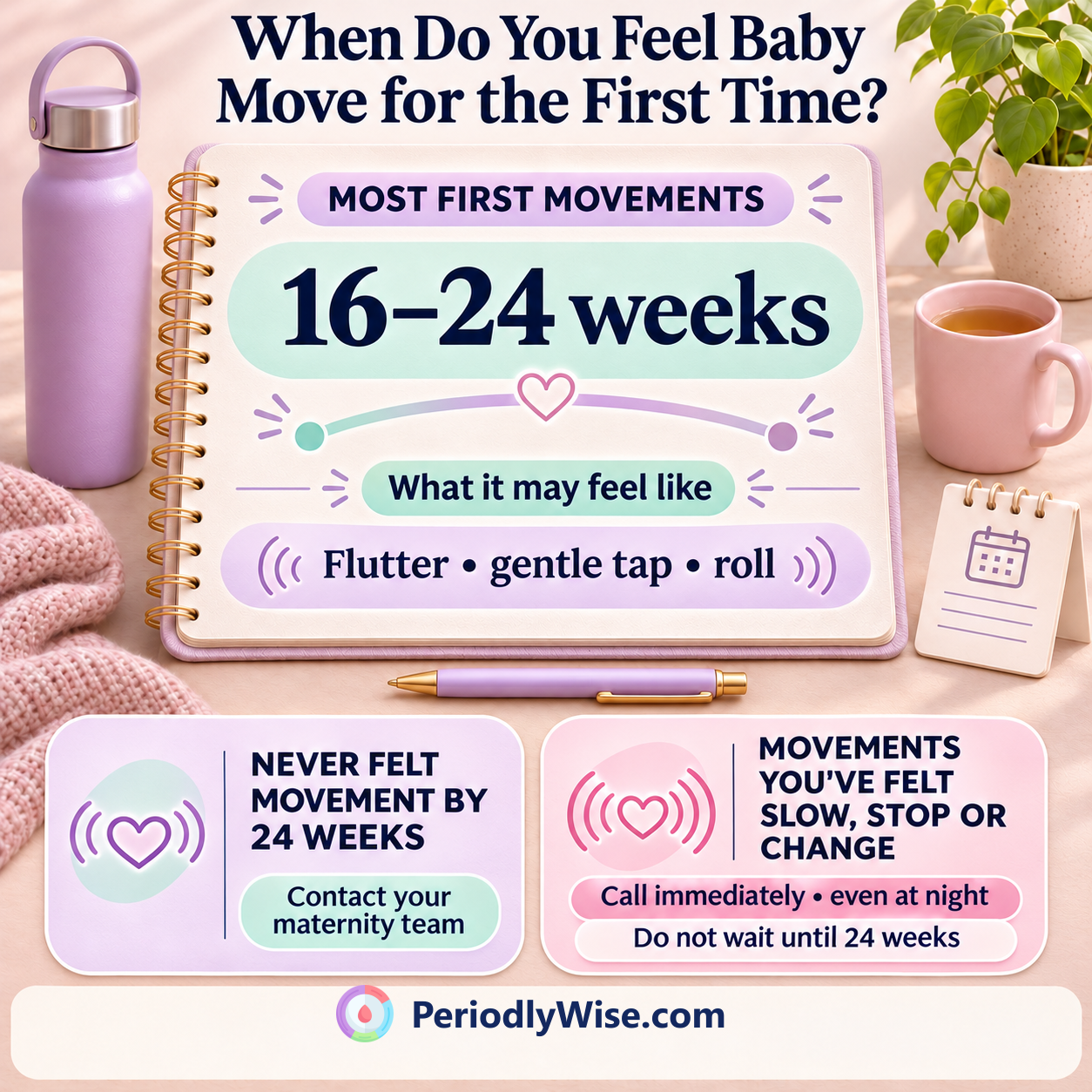
When Do You Feel Your Baby Move for the First Time?
First baby movements are usually felt between 16 and 24 weeks. Learn what they feel like, what can affect timing, and when to call your maternity team.
Read the guideVisual guides
Browse PeriodlyWise square visual guides for common period symptoms, cycle changes, PMS patterns, flow questions, and everyday period care. Each visual links to a full article with context, tracking notes, and medical limits.
These images are collected from PeriodlyWise articles and kept in one place for easier discovery.
First baby movements are usually felt between 16 and 24 weeks. Learn what they feel like, what can affect timing, and when to call your maternity team.
Read the guide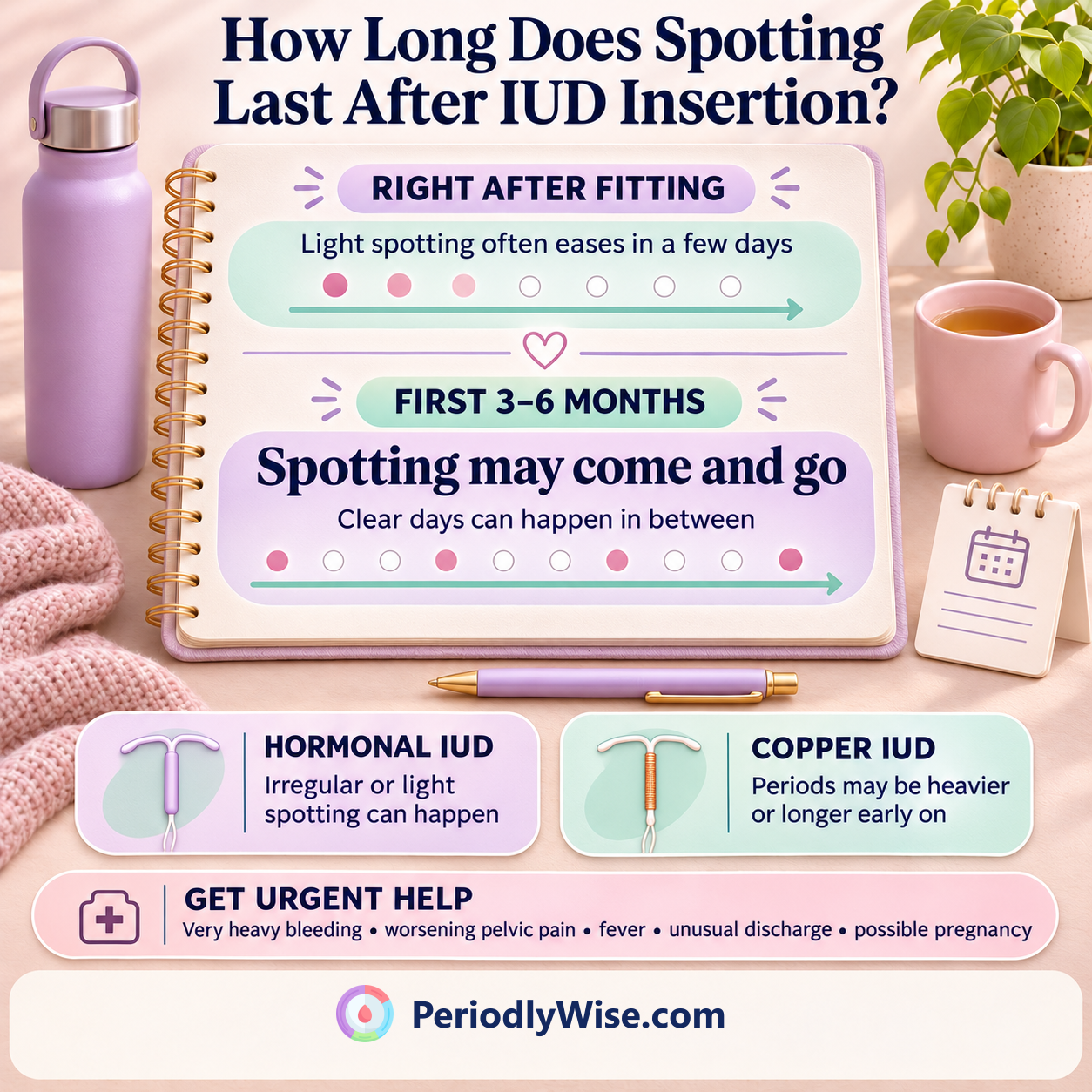
Light spotting often settles within a few days after IUD insertion. See why it can return over the first 3–6 months, and when to call your clinic.
Read the guide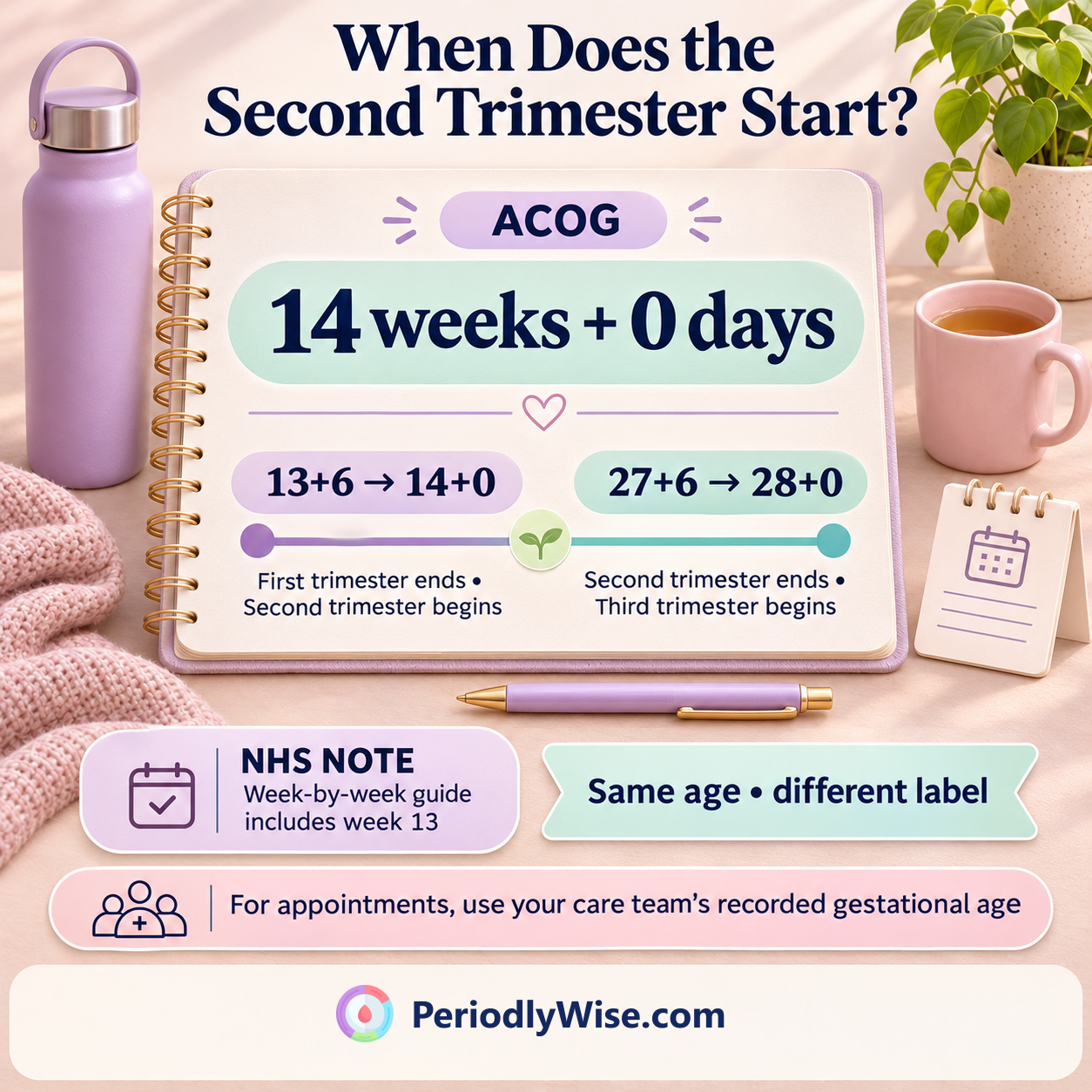
The second trimester starts at 14 weeks, 0 days by ACOG’s definition. Learn why some guides say week 13 and how to find the date on your own timeline.
Read the guide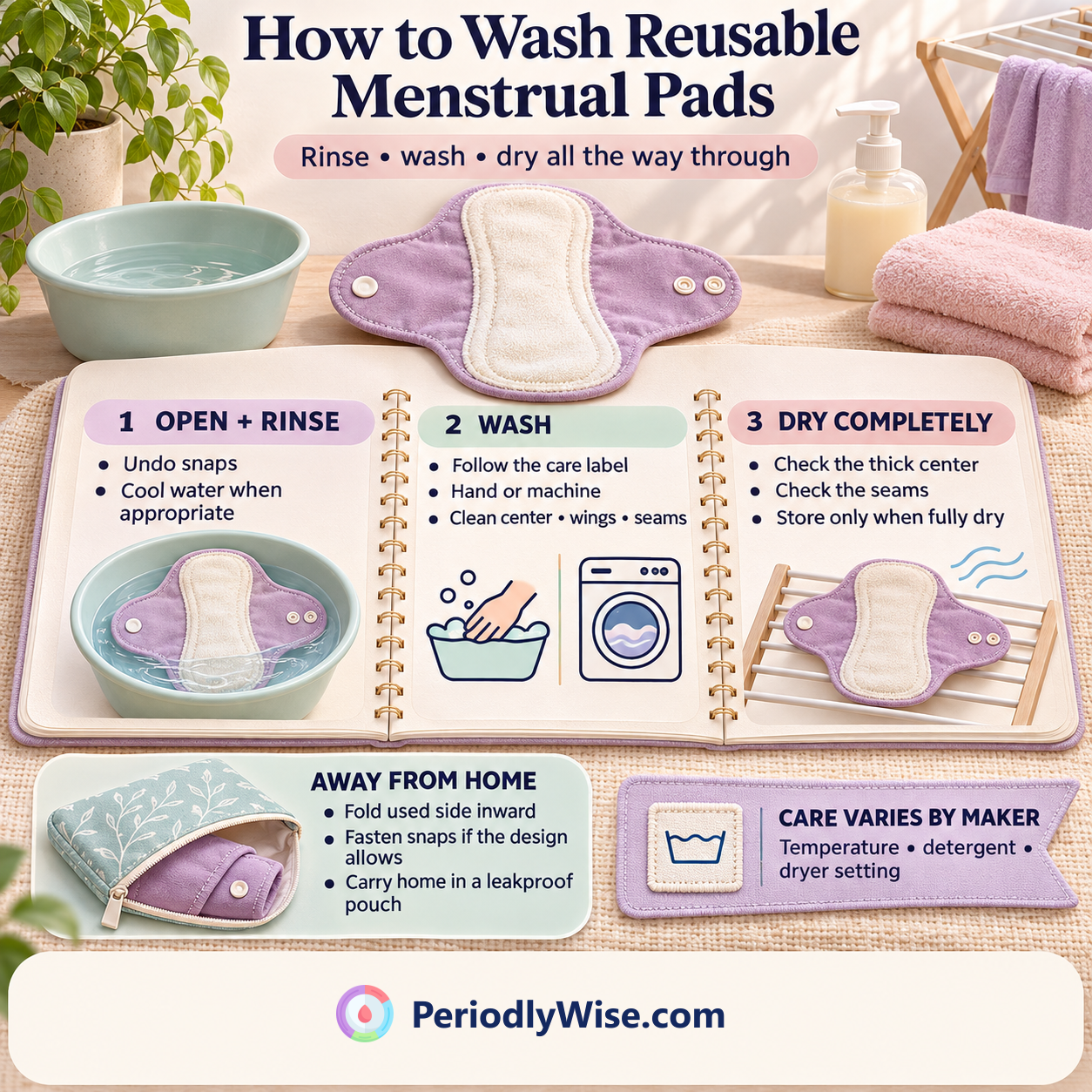
Learn how to rinse, hand wash or machine wash reusable menstrual pads, dry the inner layers fully, and handle stains and damp pads away from home.
Read the guide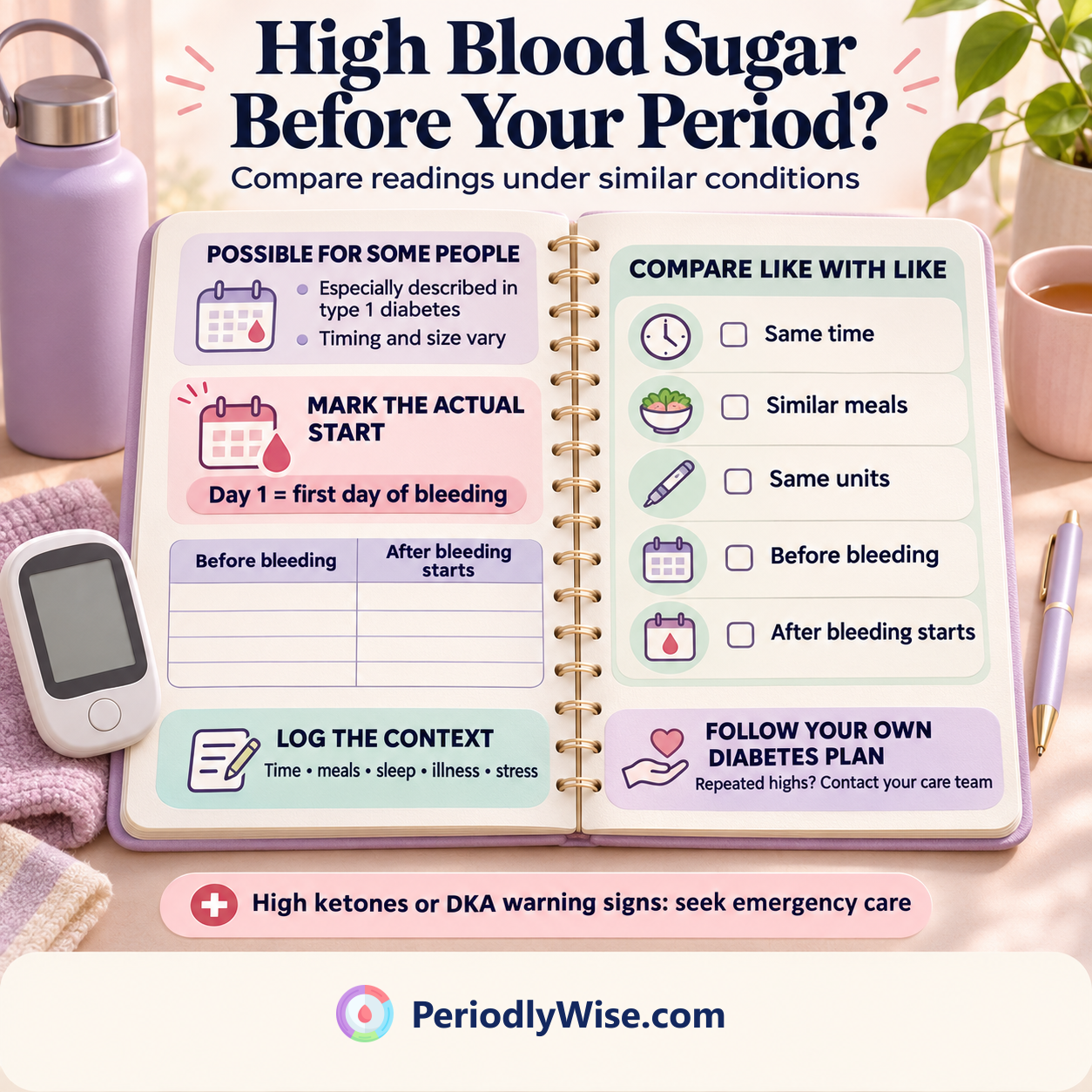
Blood sugar can rise before a period, especially for some people with type 1 diabetes. Learn what to compare, when to call your care team, and which signs need urgent care.
Read the guide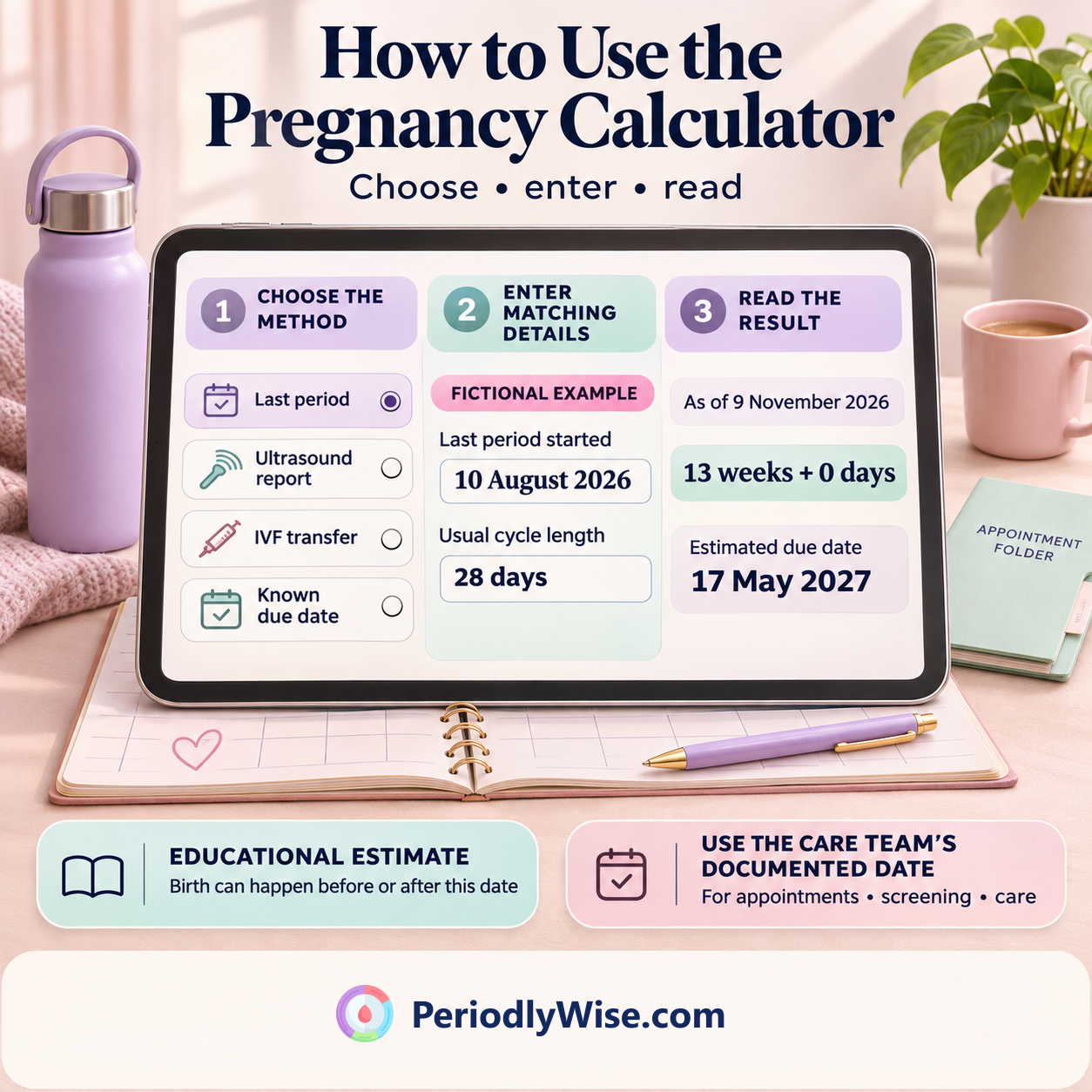
Choose the right pregnancy dating method, follow verified examples, and learn to read, save and export your PeriodlyWise pregnancy estimate.
Read the guide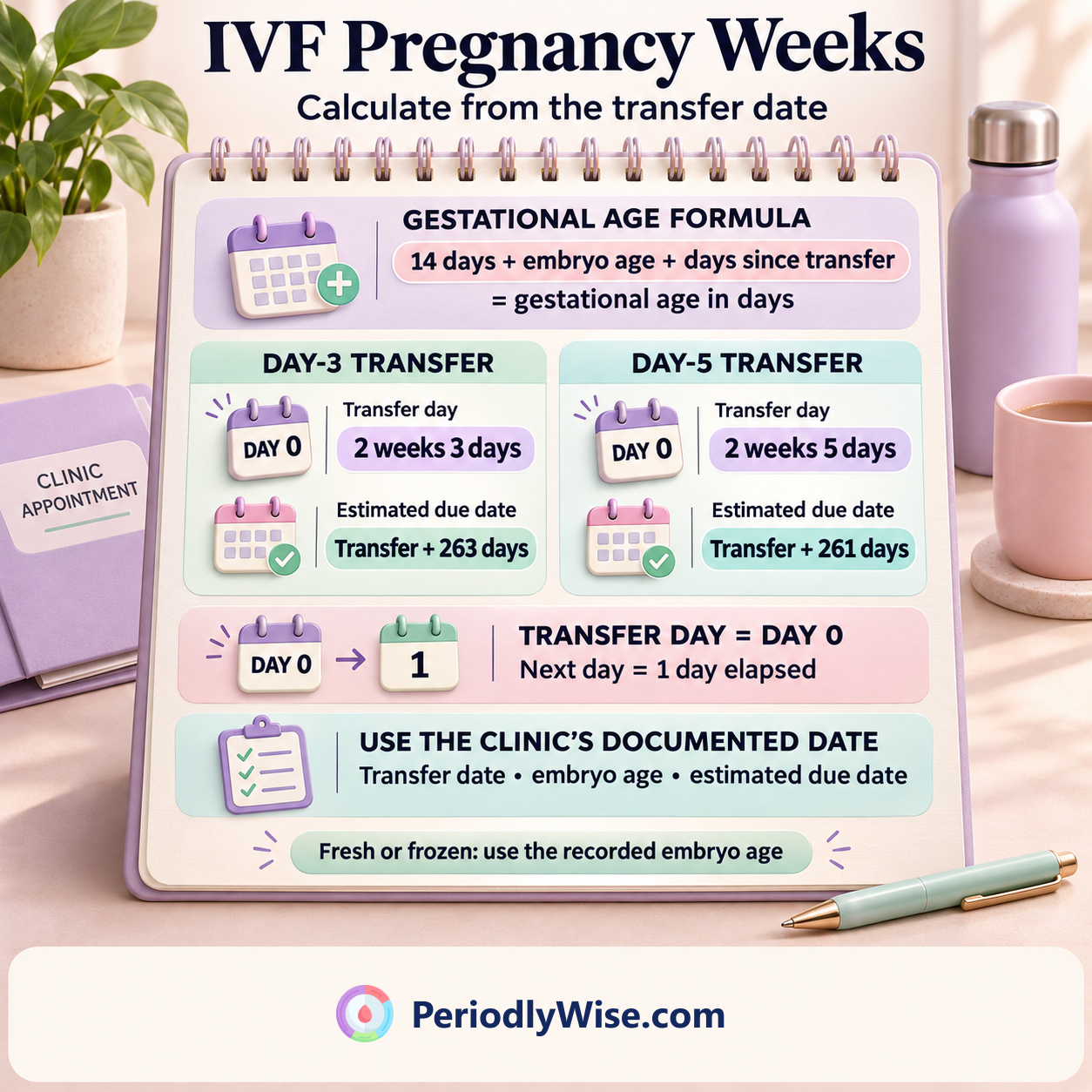
Calculate gestational weeks and your estimated due date after a day-3 or day-5 IVF transfer. See worked examples for fresh and frozen embryos.
Read the guide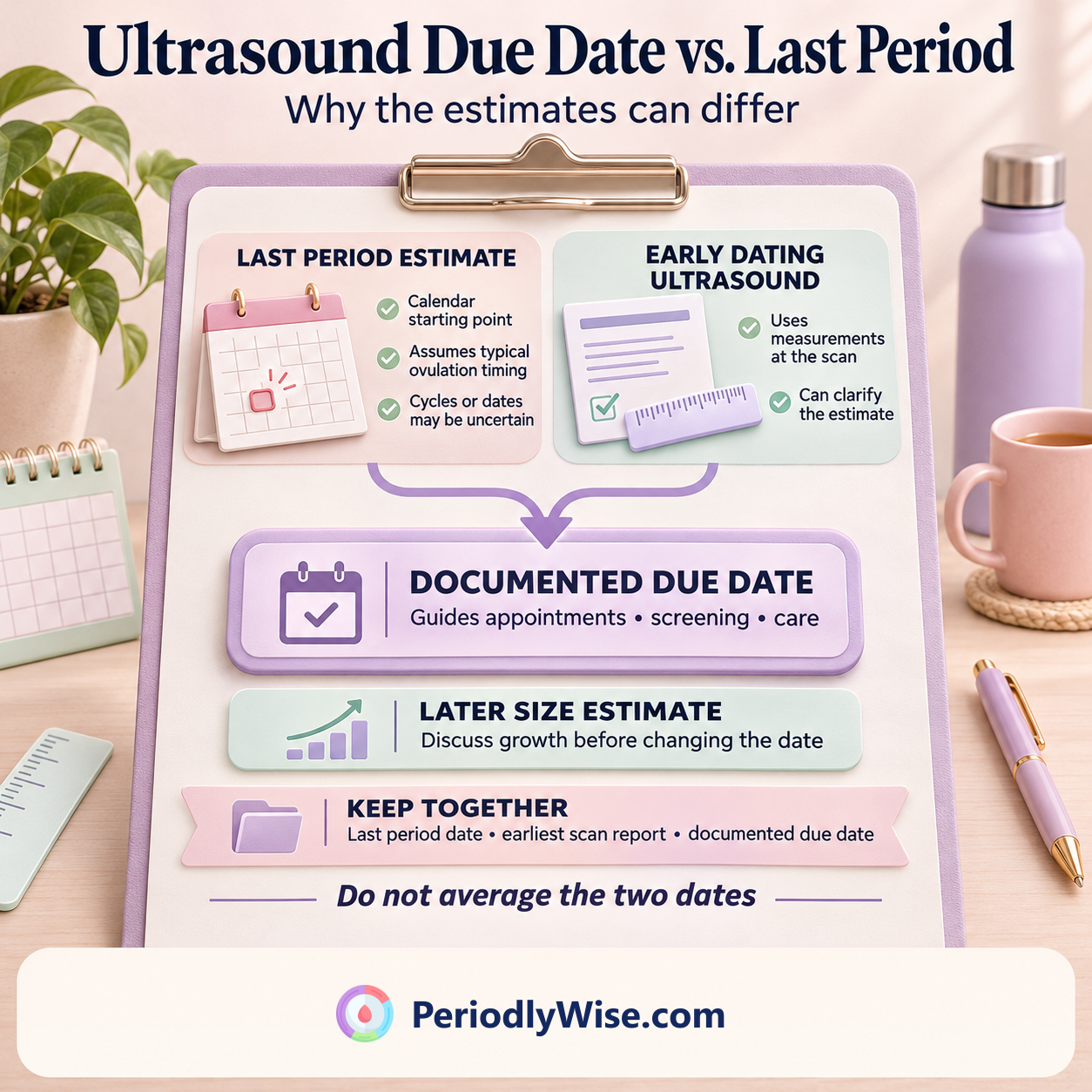
Compare ultrasound and last-period due dates, see when ACOG guidance supports reviewing an estimate, and learn which date to use for care.
Read the guide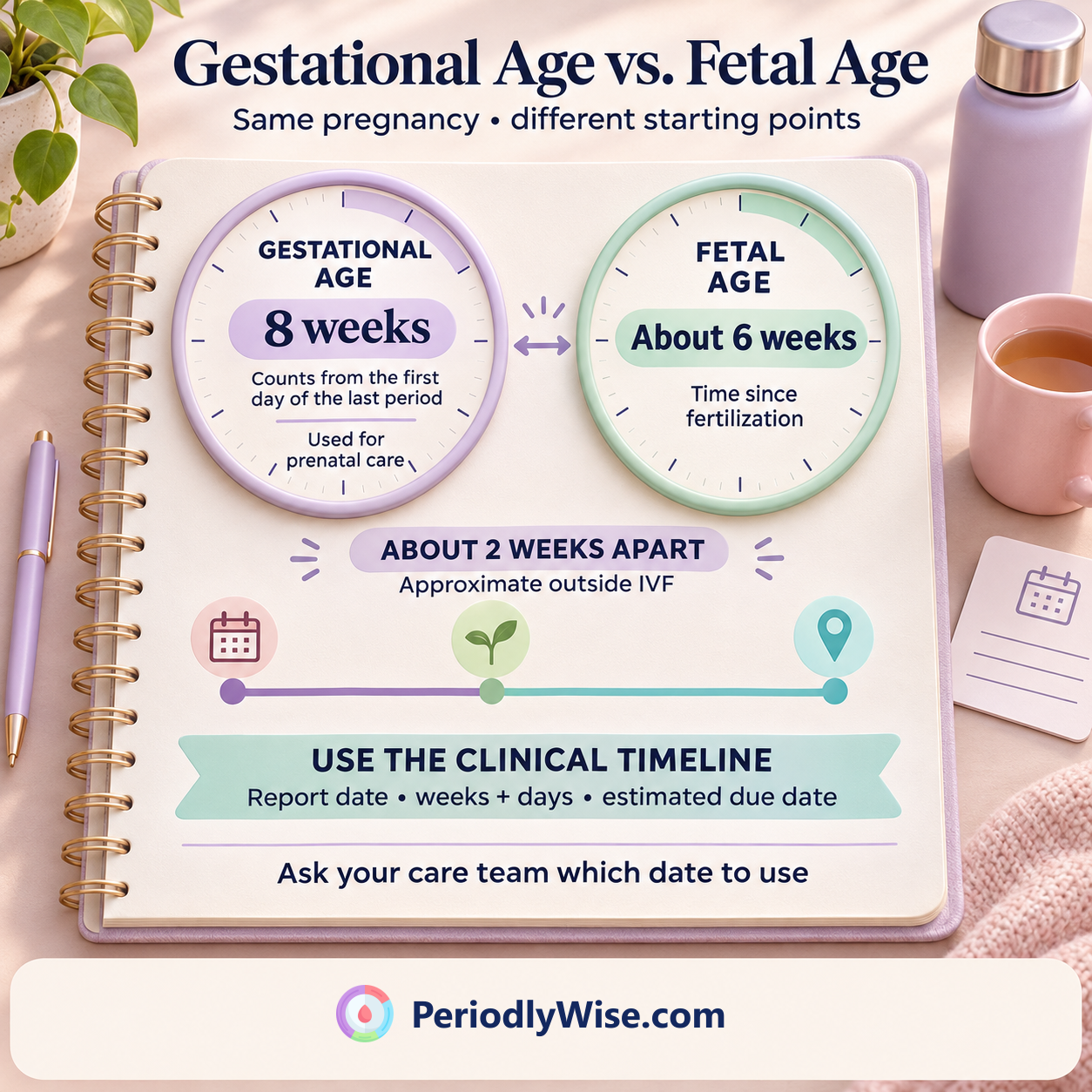
Learn why gestational age is usually about two weeks ahead of fetal age, how to read weeks and days, and which number to use for prenatal care.
Read the guide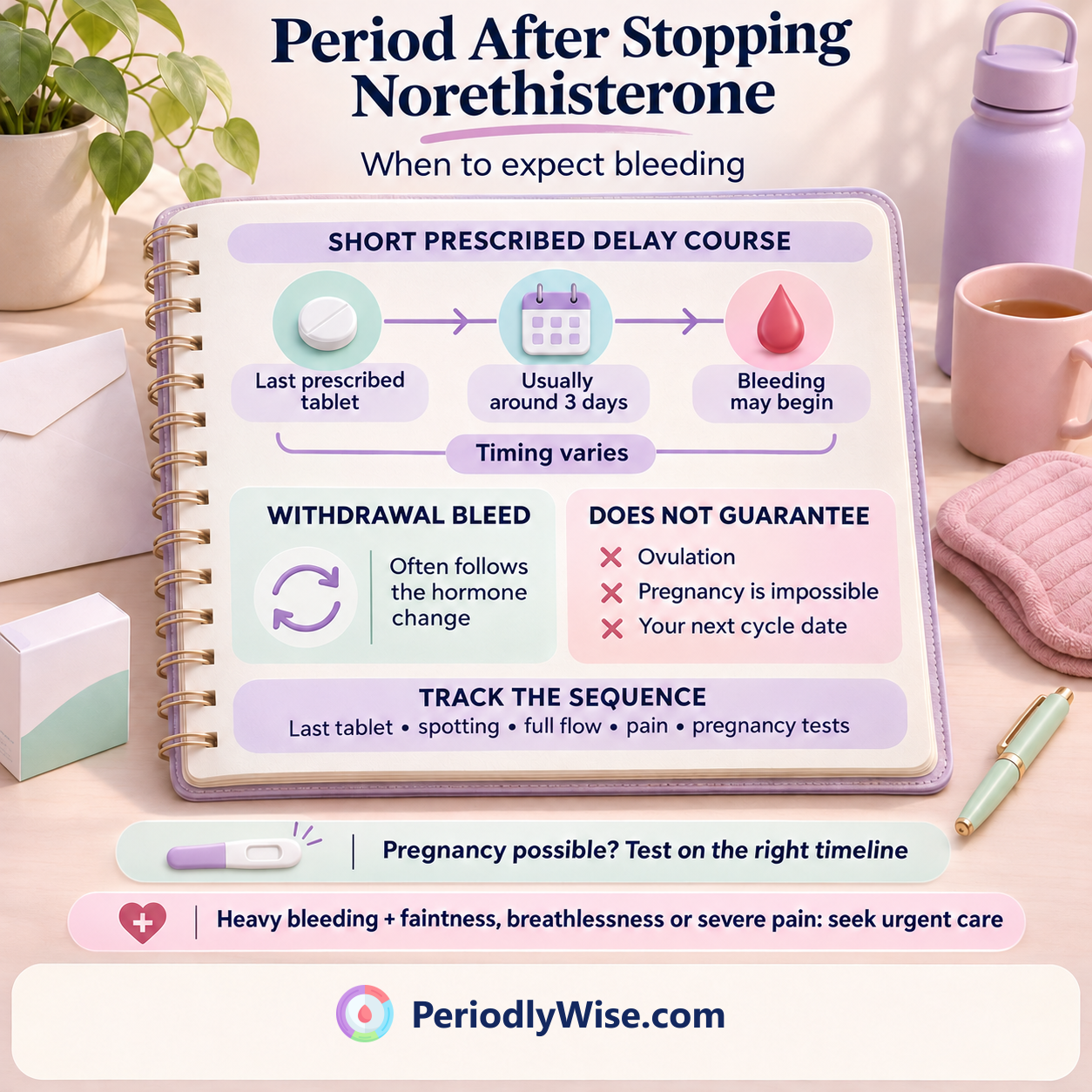
Bleeding usually starts within about 3 days after a short norethisterone period-delay course. Learn what to track, when to test, and when to seek care.
Read the guide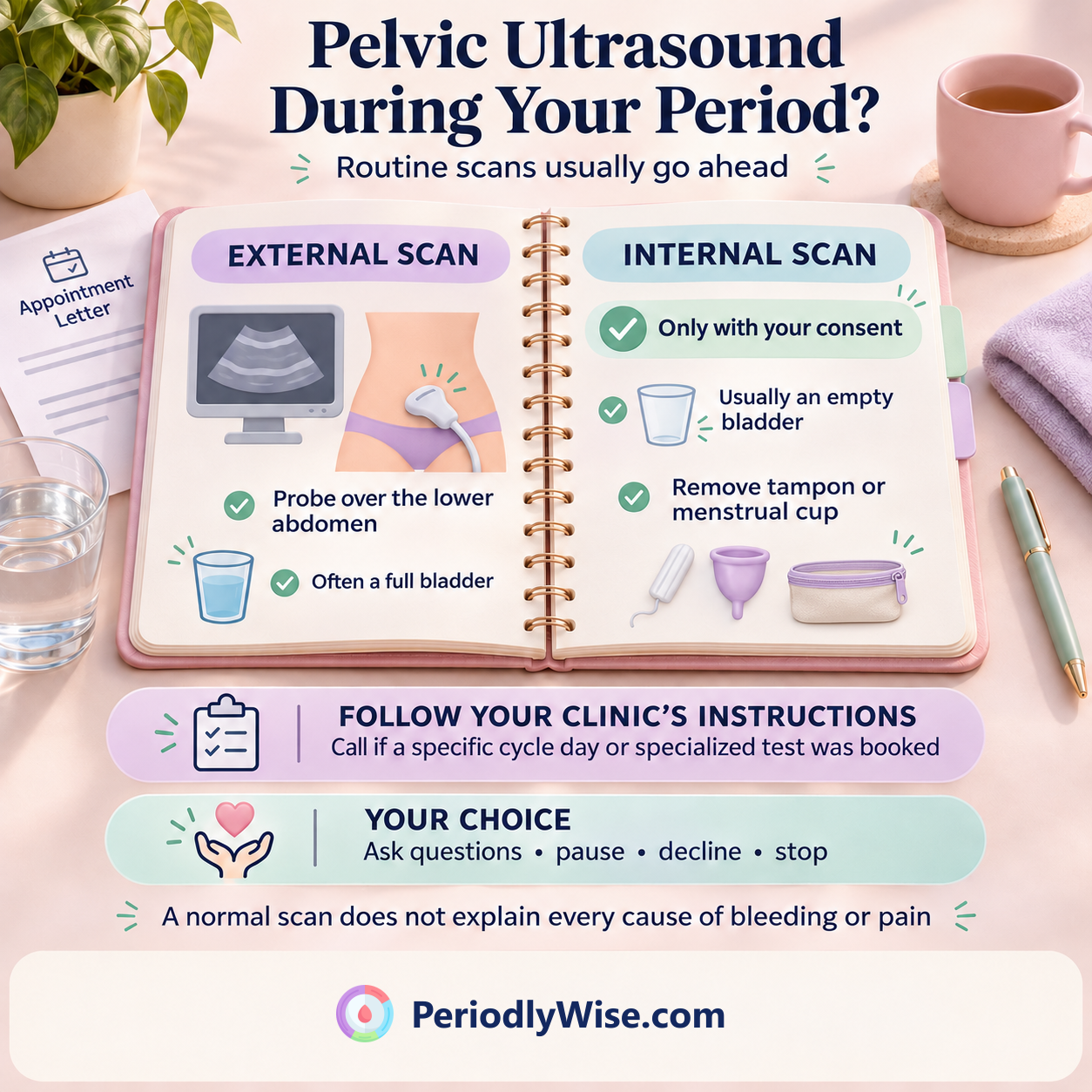
You can usually have a pelvic ultrasound during your period. Learn when to keep or call about the appointment, bladder preparation, and what to expect.
Read the guide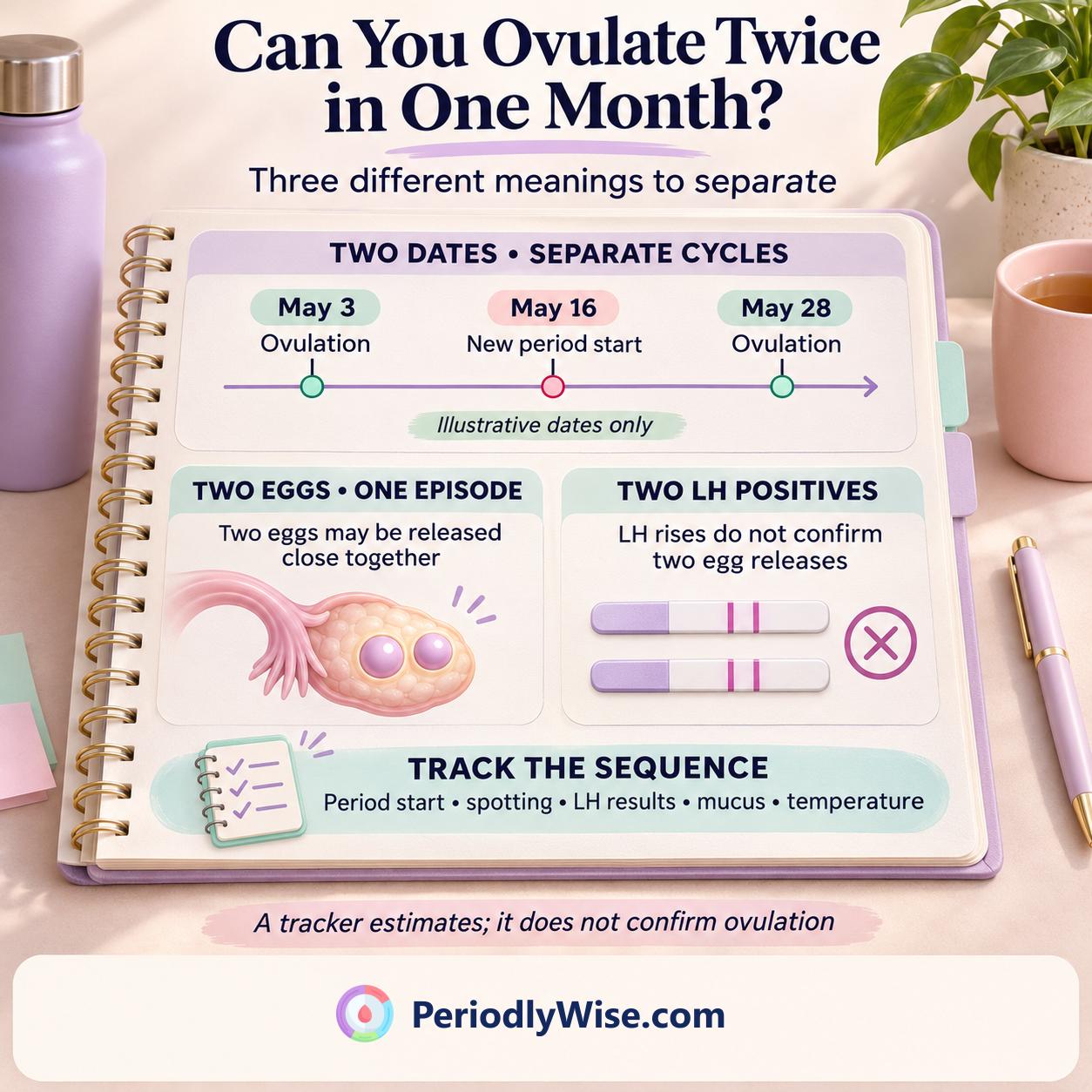
Two ovulations in one calendar month can belong to separate cycles. Learn how that differs from two eggs, two LH peaks and a predicted fertile window.
Read the guide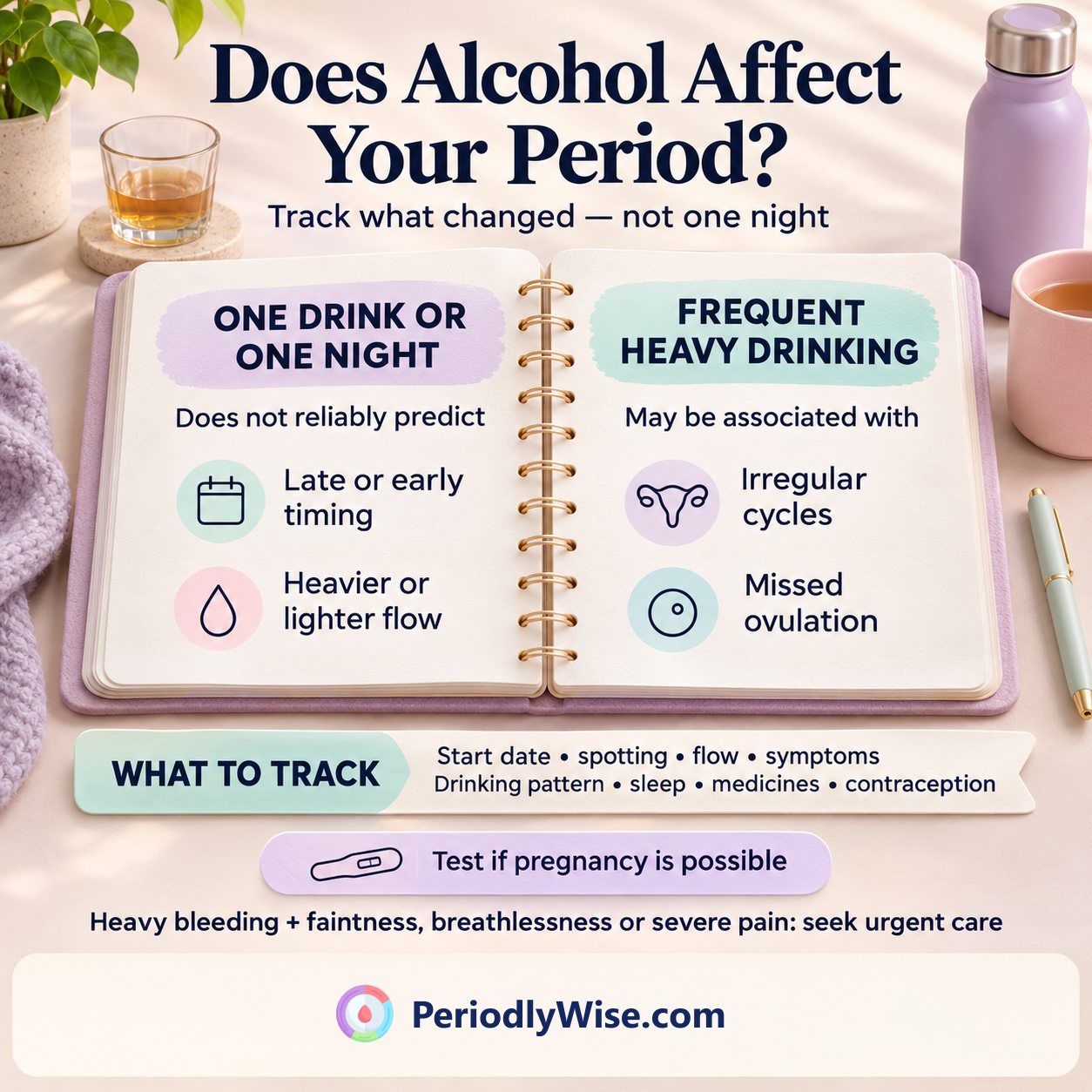
Learn what research says about alcohol and period timing, flow and cramps, what to track, and when a change deserves medical care.
Read the guide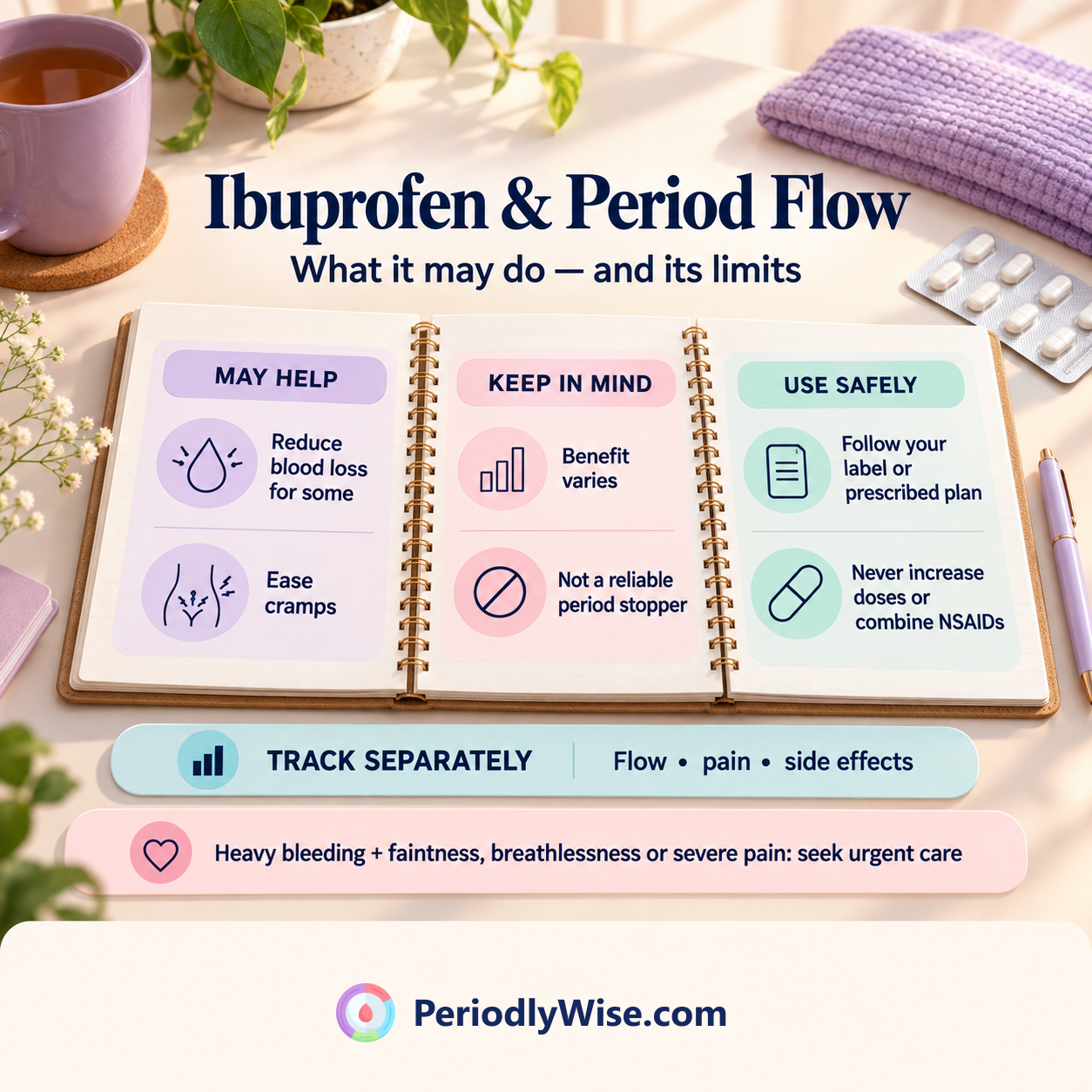
Ibuprofen can reduce period blood loss for some people and relieve cramps. Learn what the evidence shows, its limits, safety checks and when to seek care.
Read the guide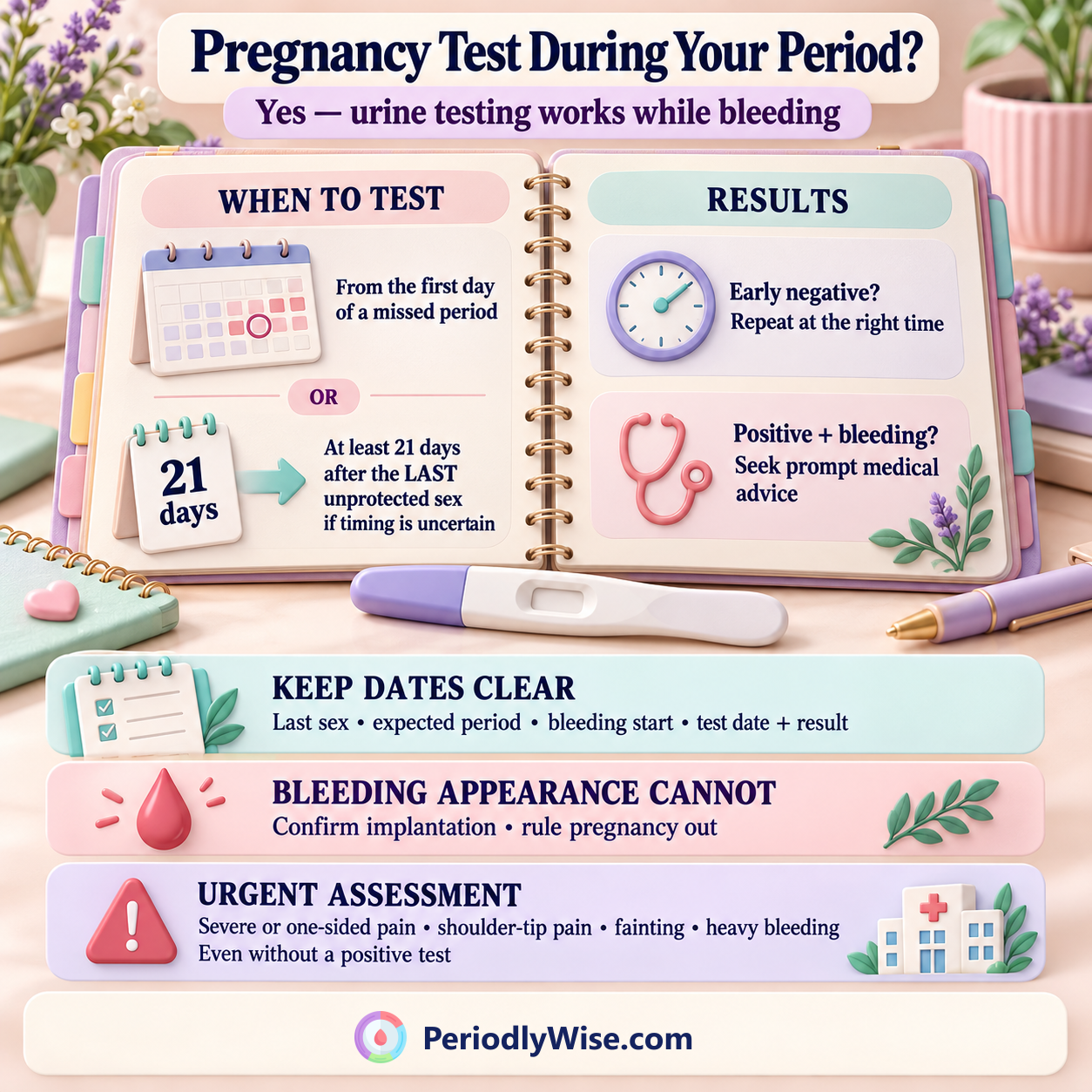
Yes, you can test while bleeding. Learn when a pregnancy test is useful, what negative or positive results mean, and which bleeding symptoms need urgent care.
Read the guide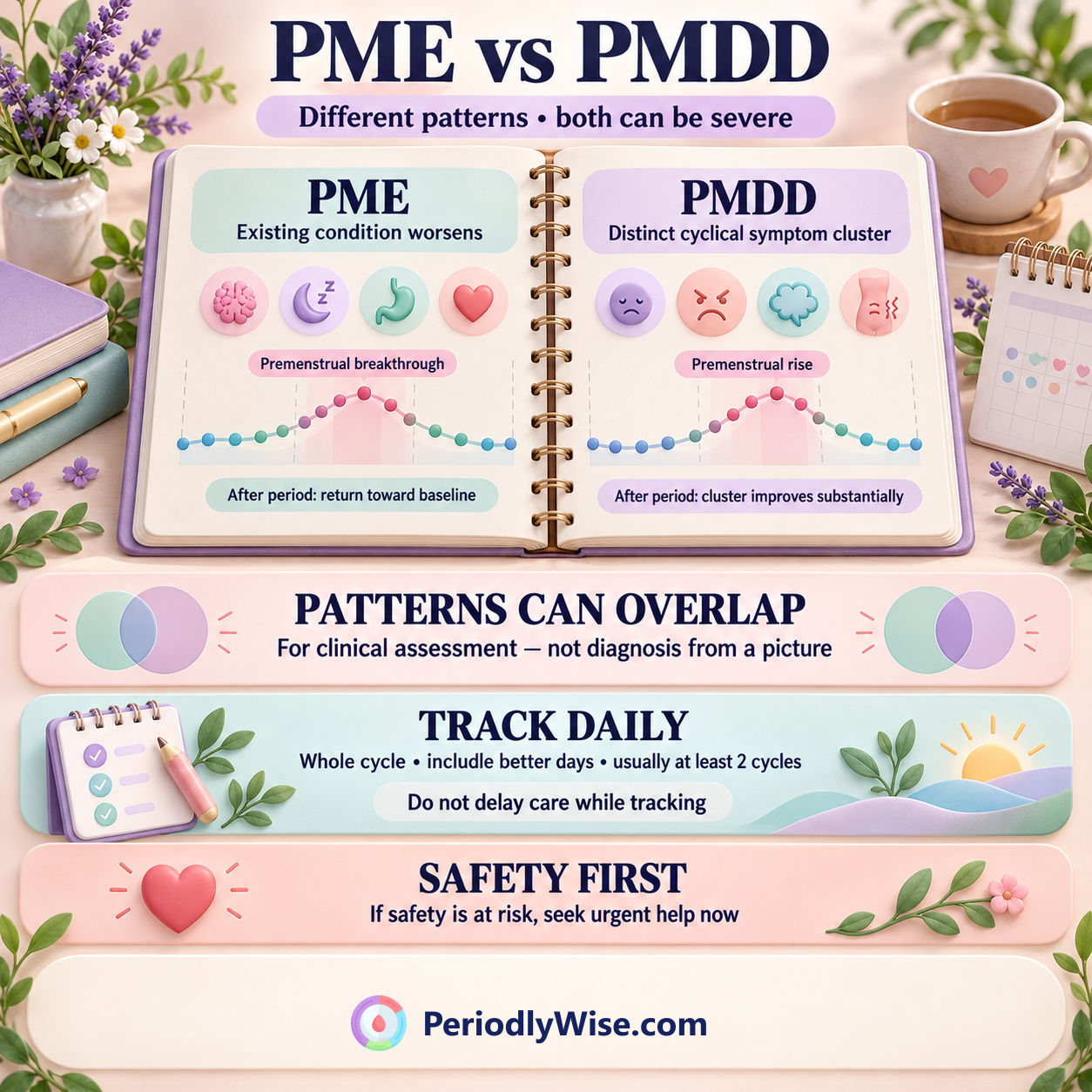
Learn how premenstrual exacerbation differs from PMDD, why daily symptom patterns matter, how conditions can overlap and what to discuss with a clinician.
Read the guide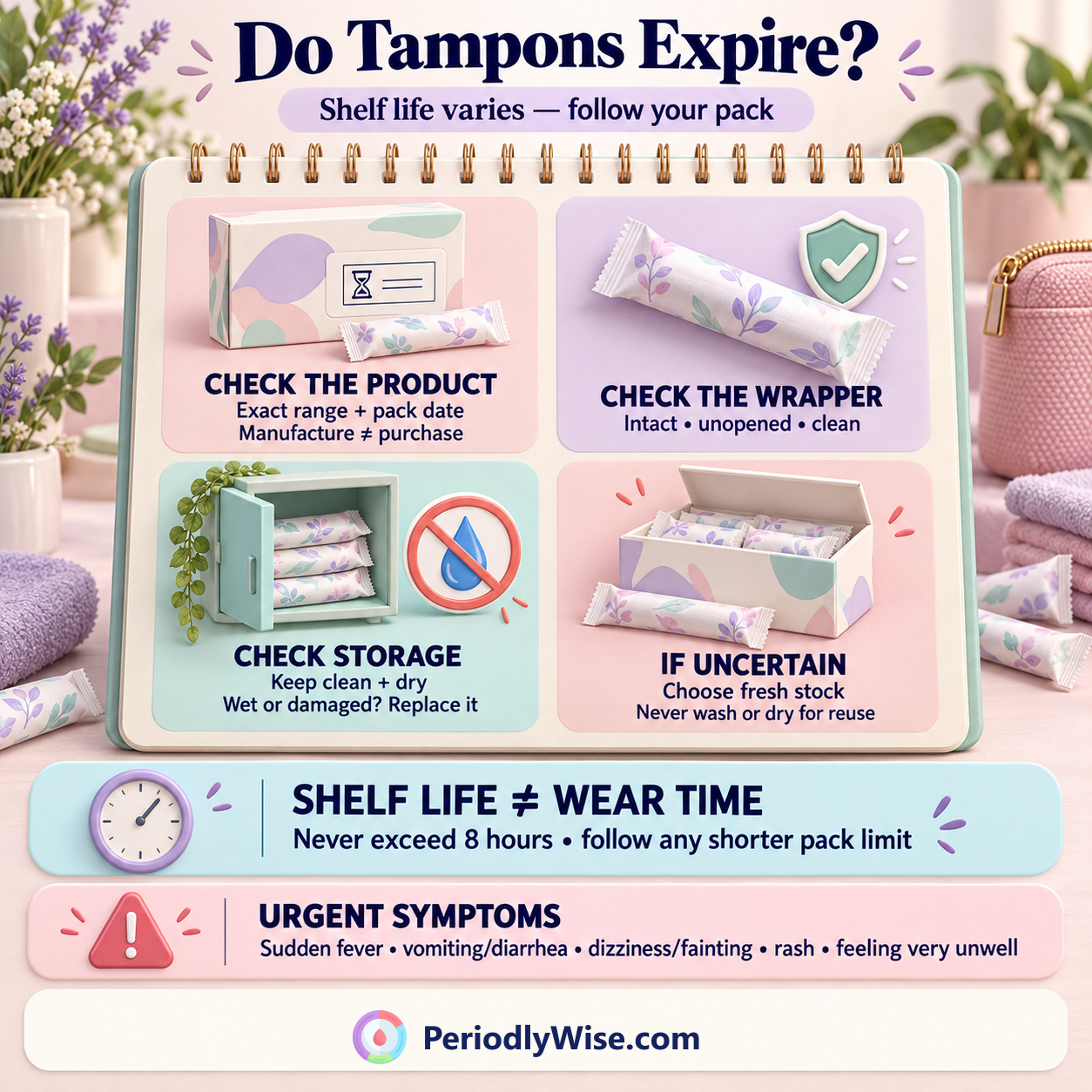
Tampon shelf life varies by product. Learn how to check dates and wrappers, store tampons, handle accidental use and recognize symptoms that need medical care.
Read the guide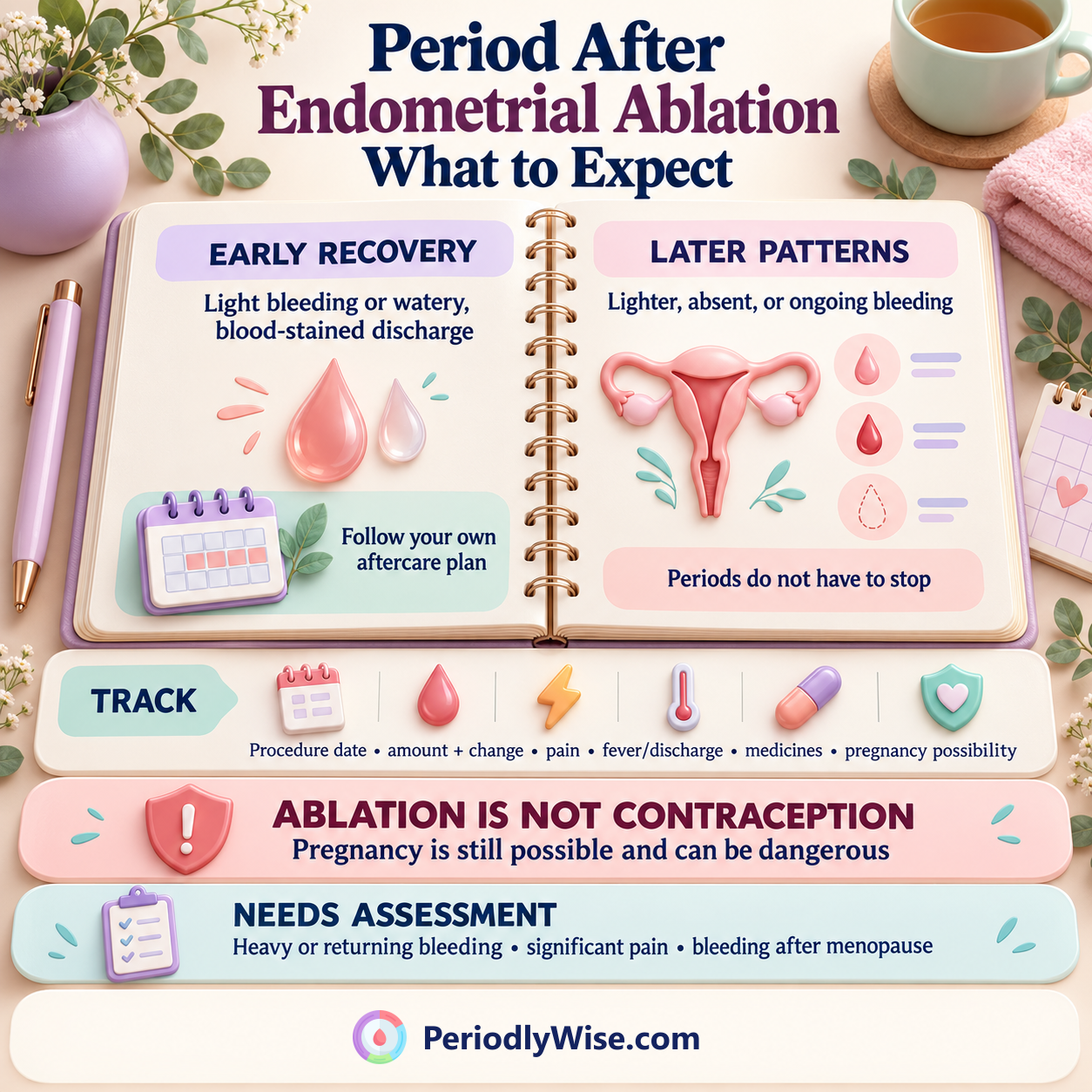
Understand recovery bleeding, lighter or absent periods, bleeding that returns years later, pregnancy risk and symptoms that need care after endometrial ablation.
Read the guide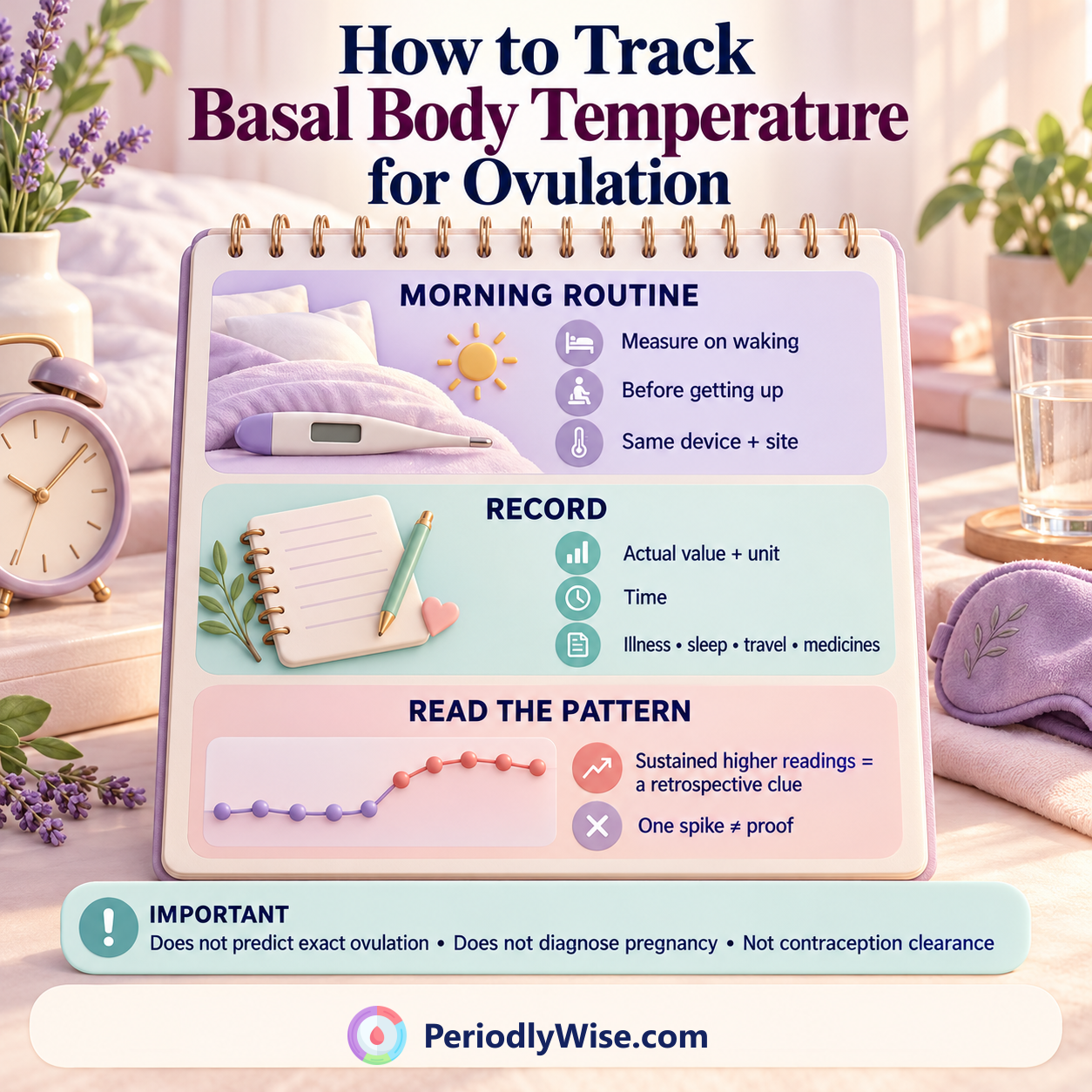
Learn a consistent BBT routine, how to read a sustained temperature shift, what disrupts a chart, and why temperature alone cannot predict ovulation or pregnancy.
Read the guide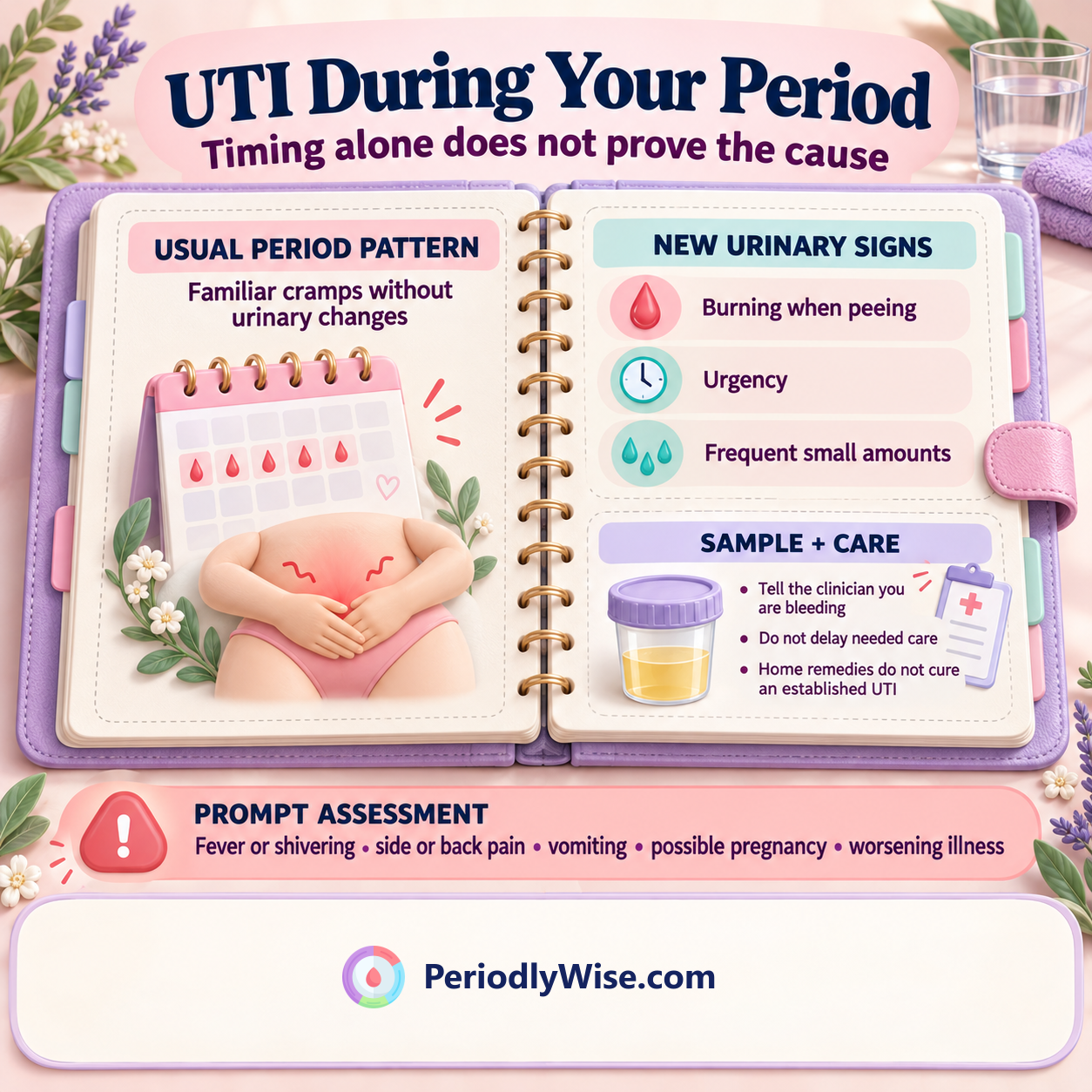
Learn how urinary symptoms differ from period cramps and irritation, how menstruation affects urine samples, and when a possible UTI needs prompt treatment.
Read the guide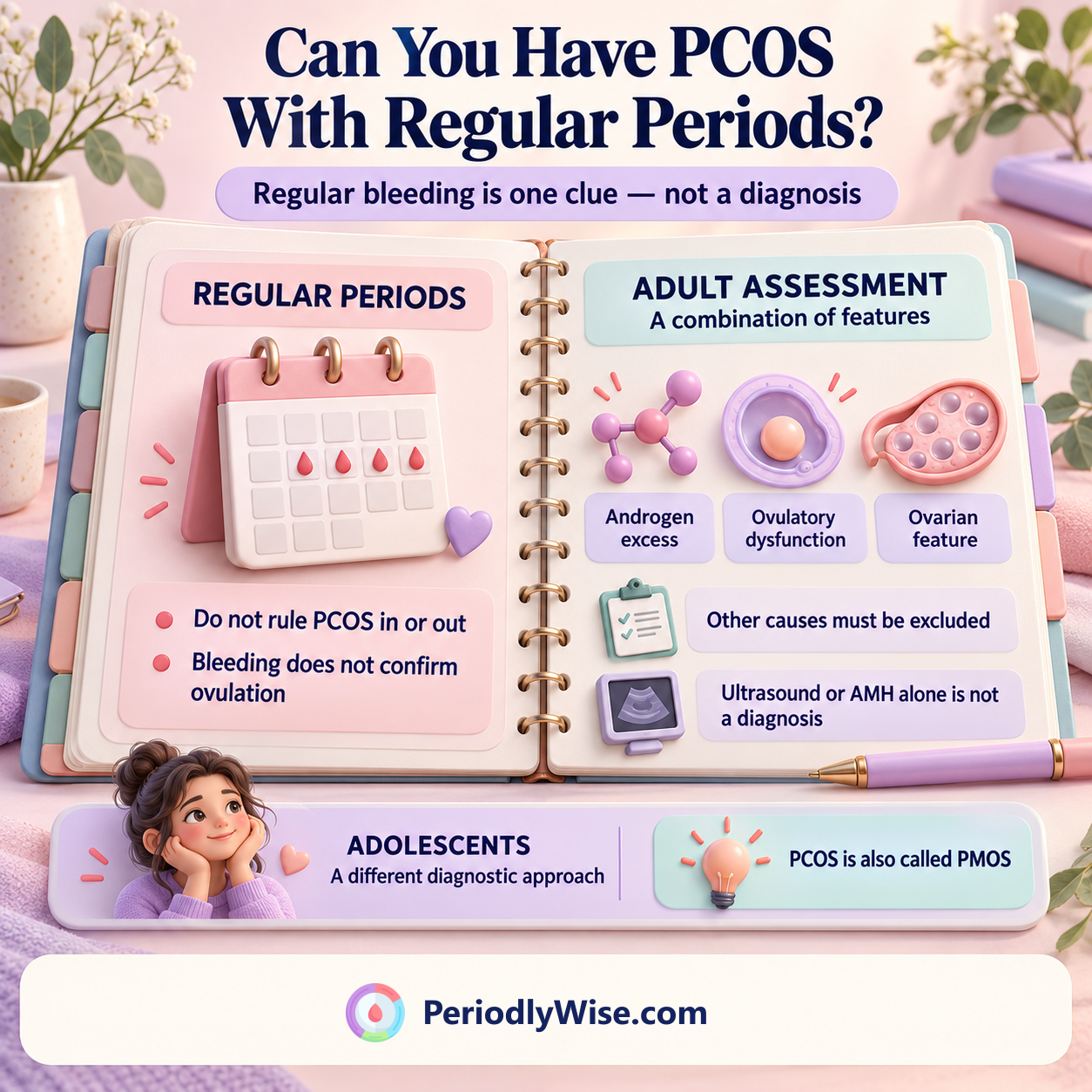
Regular periods do not always rule out PCOS. Understand adult diagnostic criteria, ovulation testing, ultrasound and AMH limits, and when to seek assessment.
Read the guide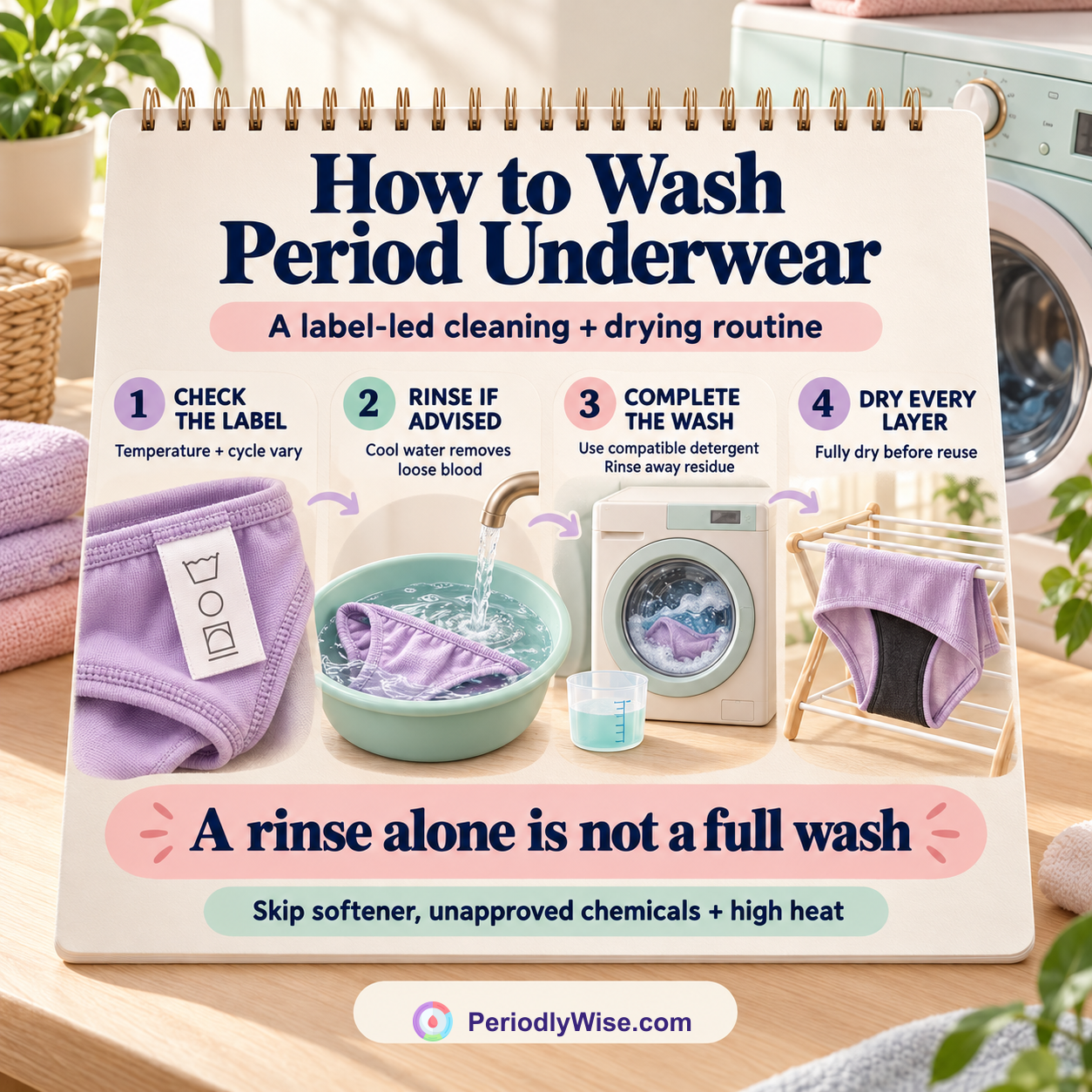
Learn how to wash period underwear by hand or machine, choose label-safe detergent and temperature, dry it fully, and troubleshoot stains, odour and leaks.
Read the guide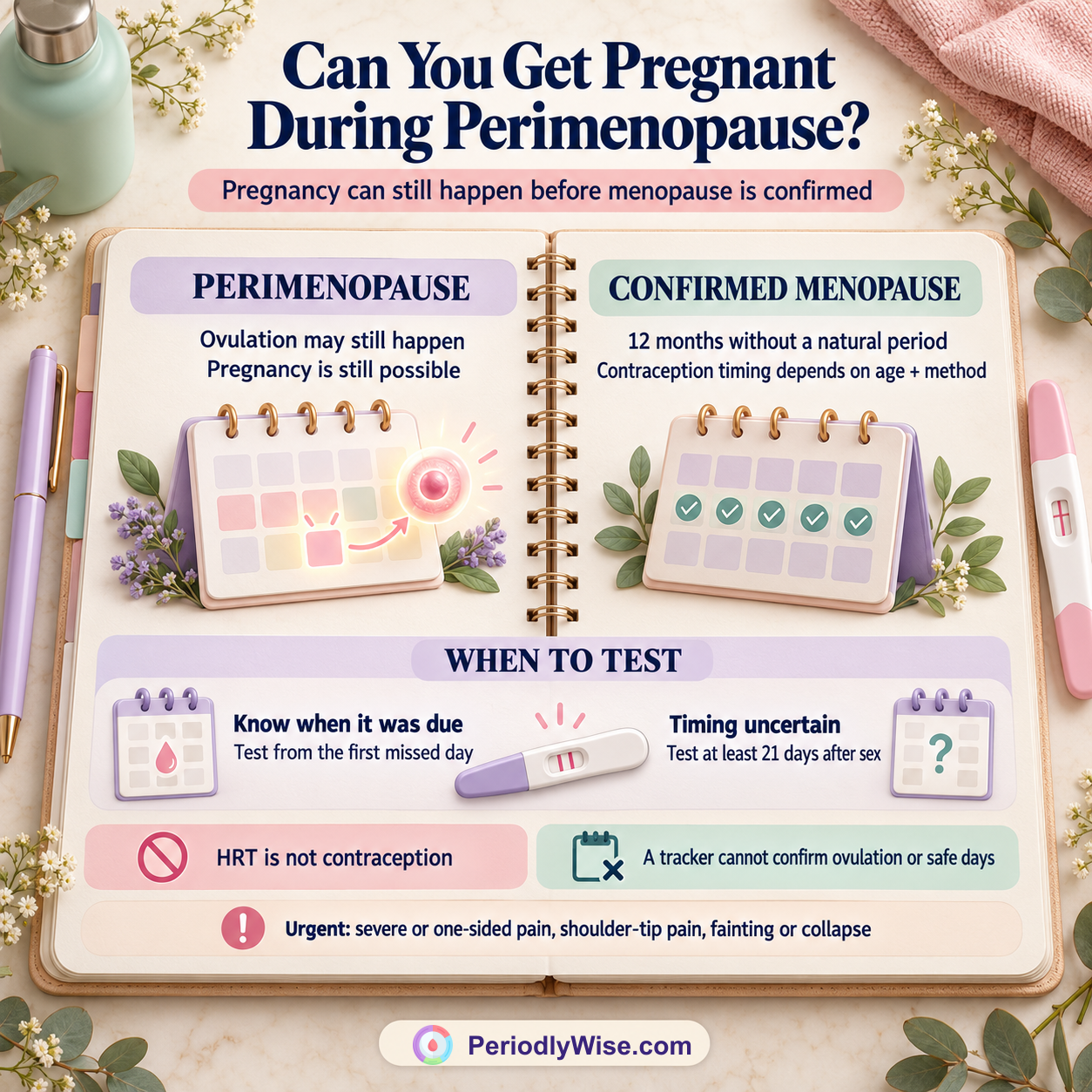
Pregnancy is still possible during perimenopause. Learn when to test, why HRT is not contraception, when birth control can stop and when to seek care.
Read the guide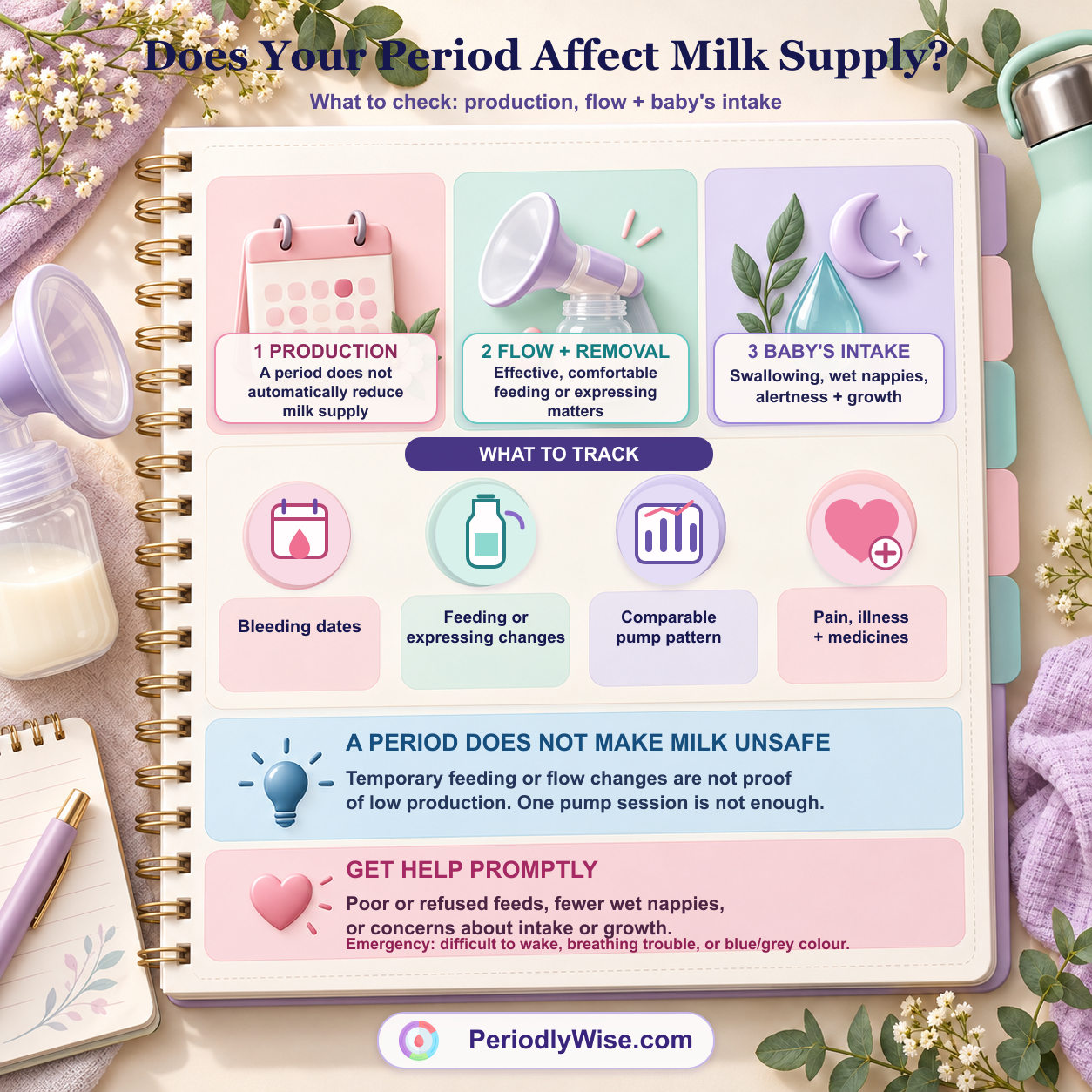
Understand period-related feeding changes, milk supply versus flow, pumping, infant intake signs, supplement claims and when to get breastfeeding support.
Read the guide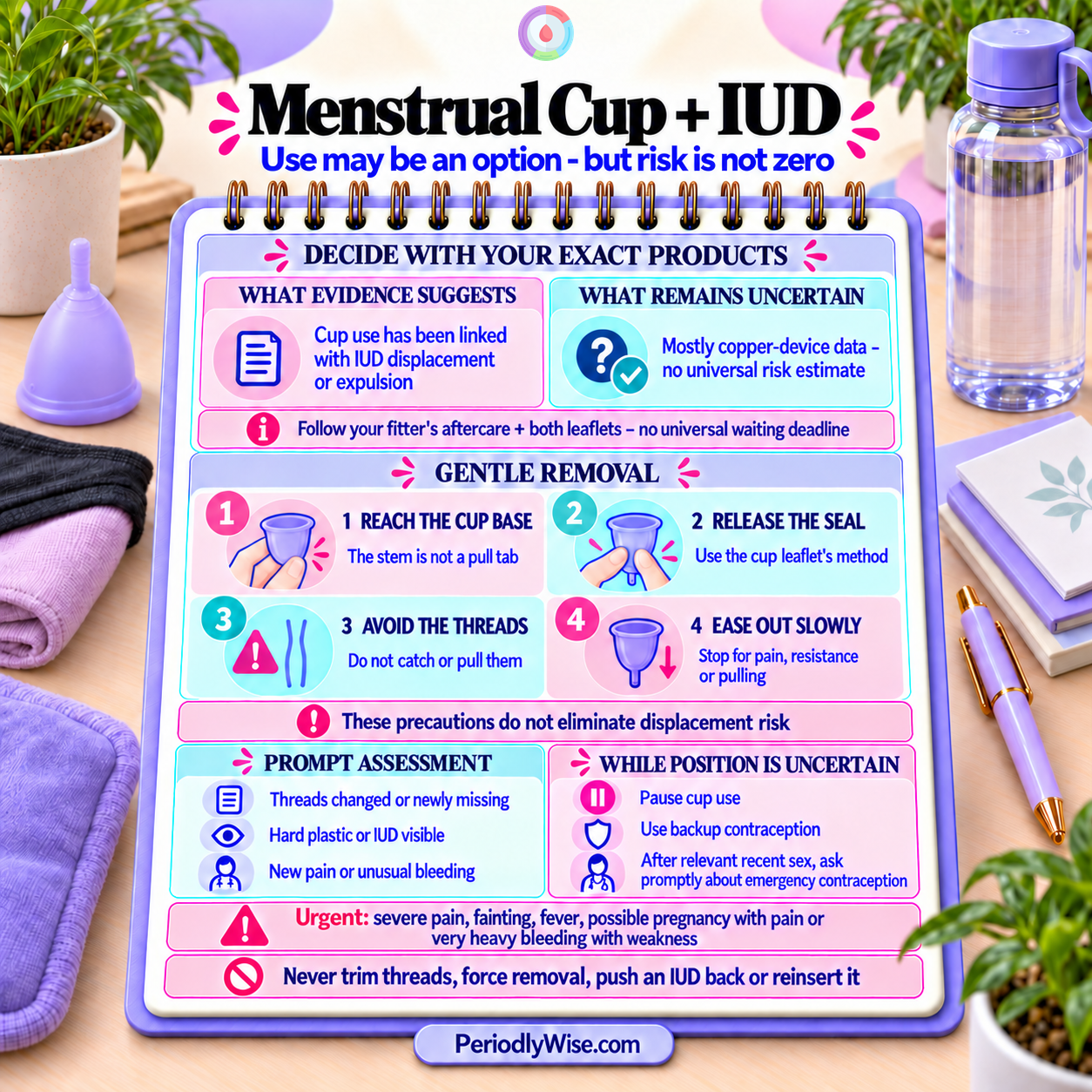
Understand menstrual cup and IUD risks, copper versus hormonal devices, aftercare, gentle removal, changed threads and when to seek medical help.
Read the guide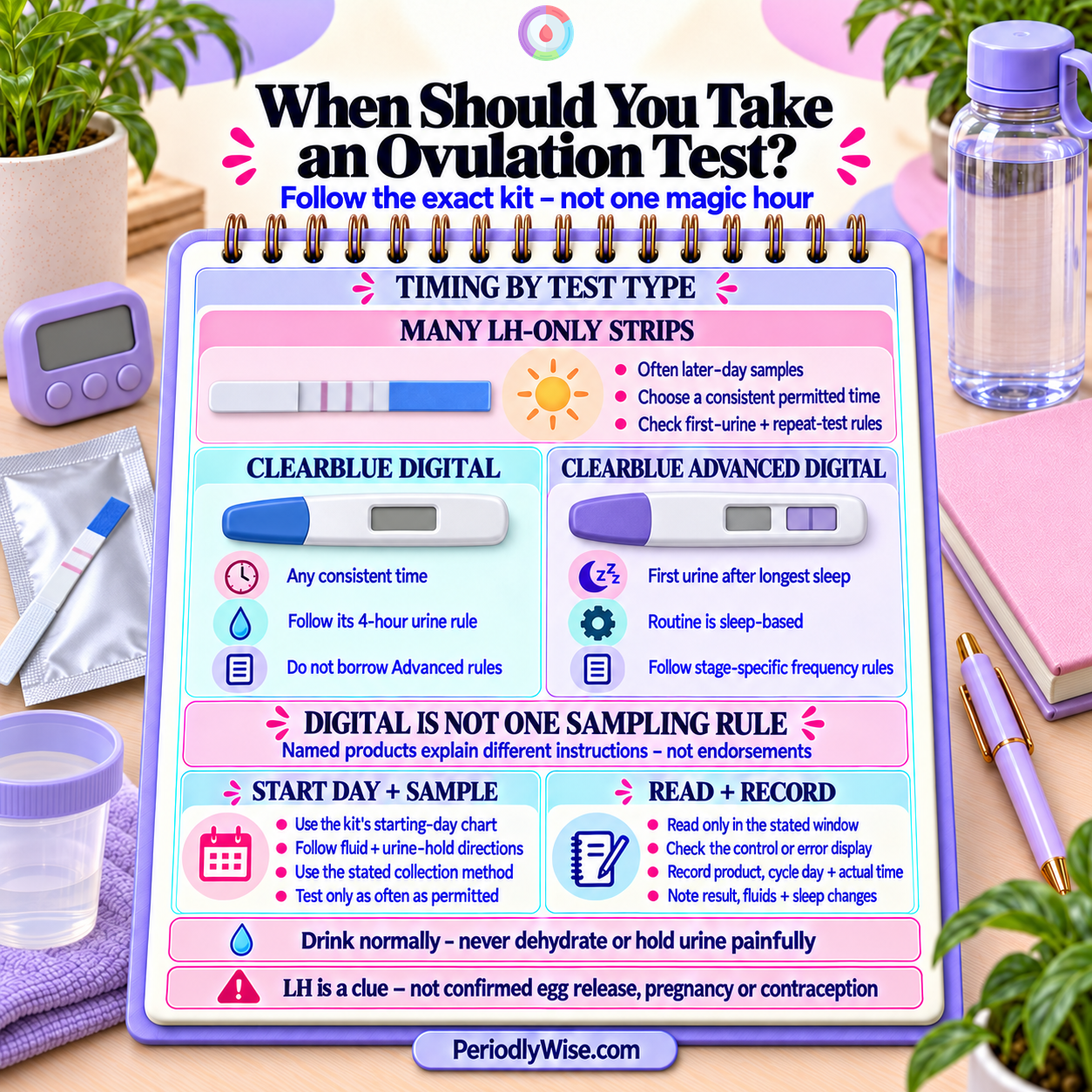
Find the right ovulation-test time for your exact kit, including first-urine exceptions, fluids, shift work, daily testing and confusing LH results.
Read the guide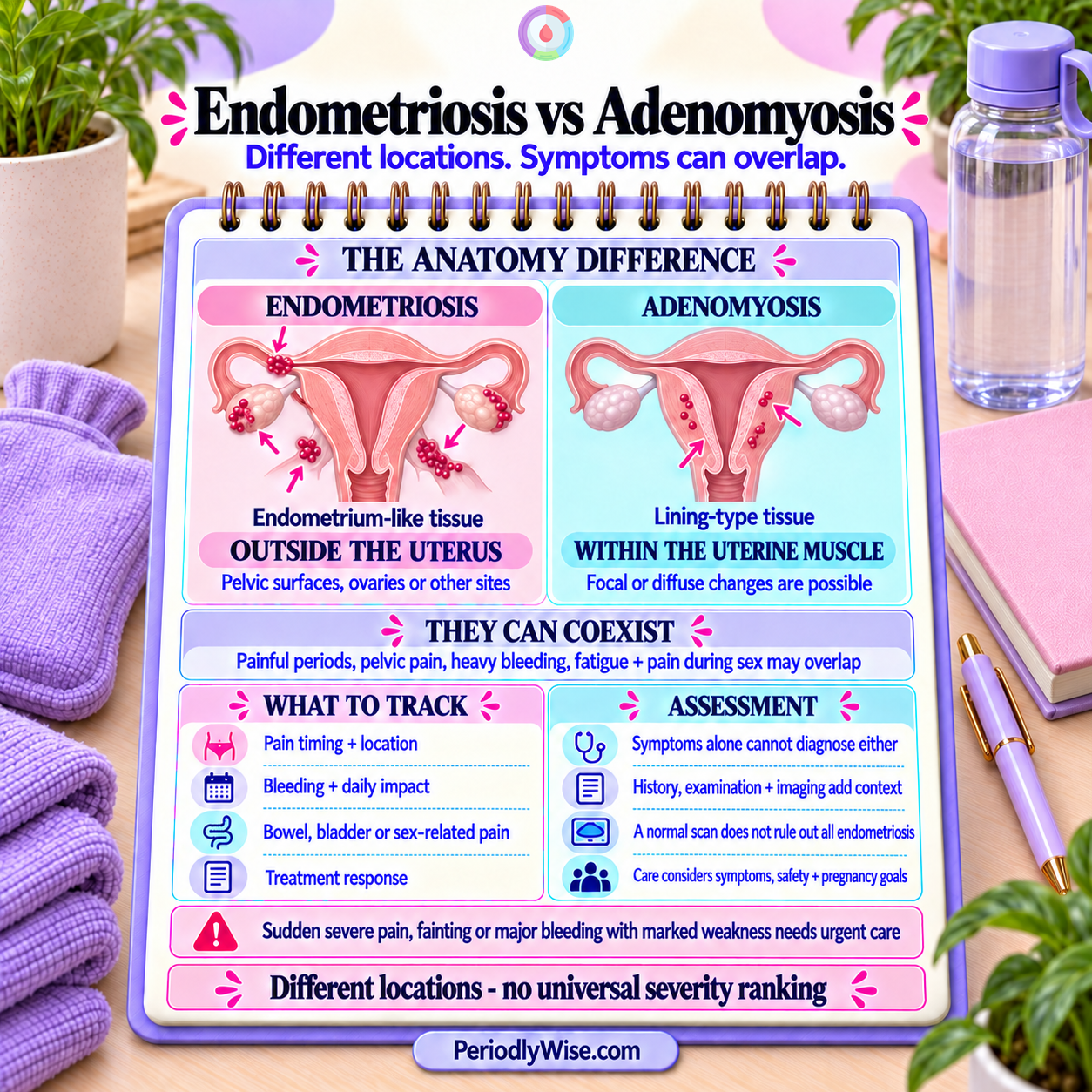
Compare endometriosis and adenomyosis: where the tissue is, overlapping symptoms, scan limits, treatment and fertility choices, and when to seek care.
Read the guide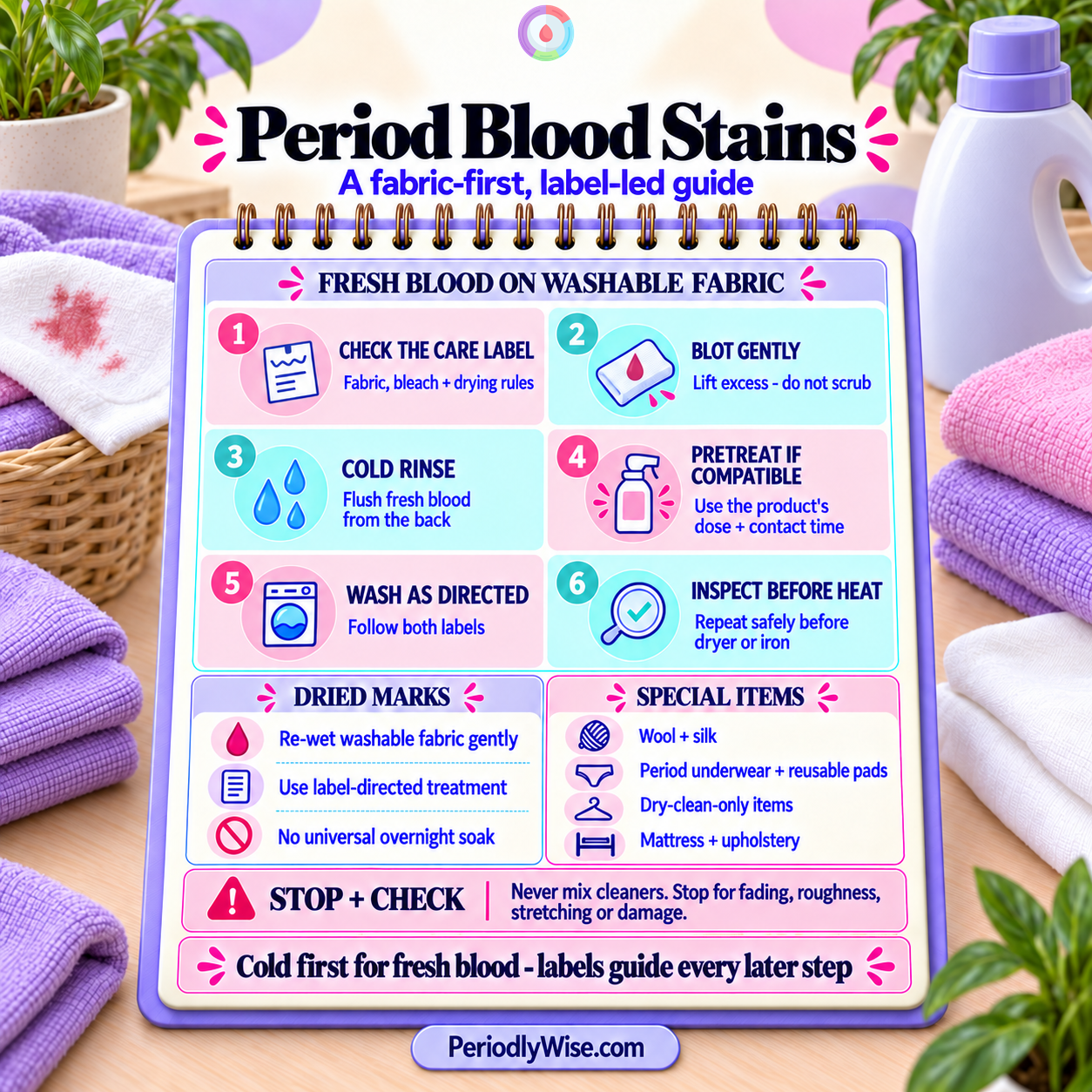
A fabric-first guide to fresh and dried period blood stains, pretreatment, bedding and period underwear, with drying checks and cleaner safety cautions.
Read the guide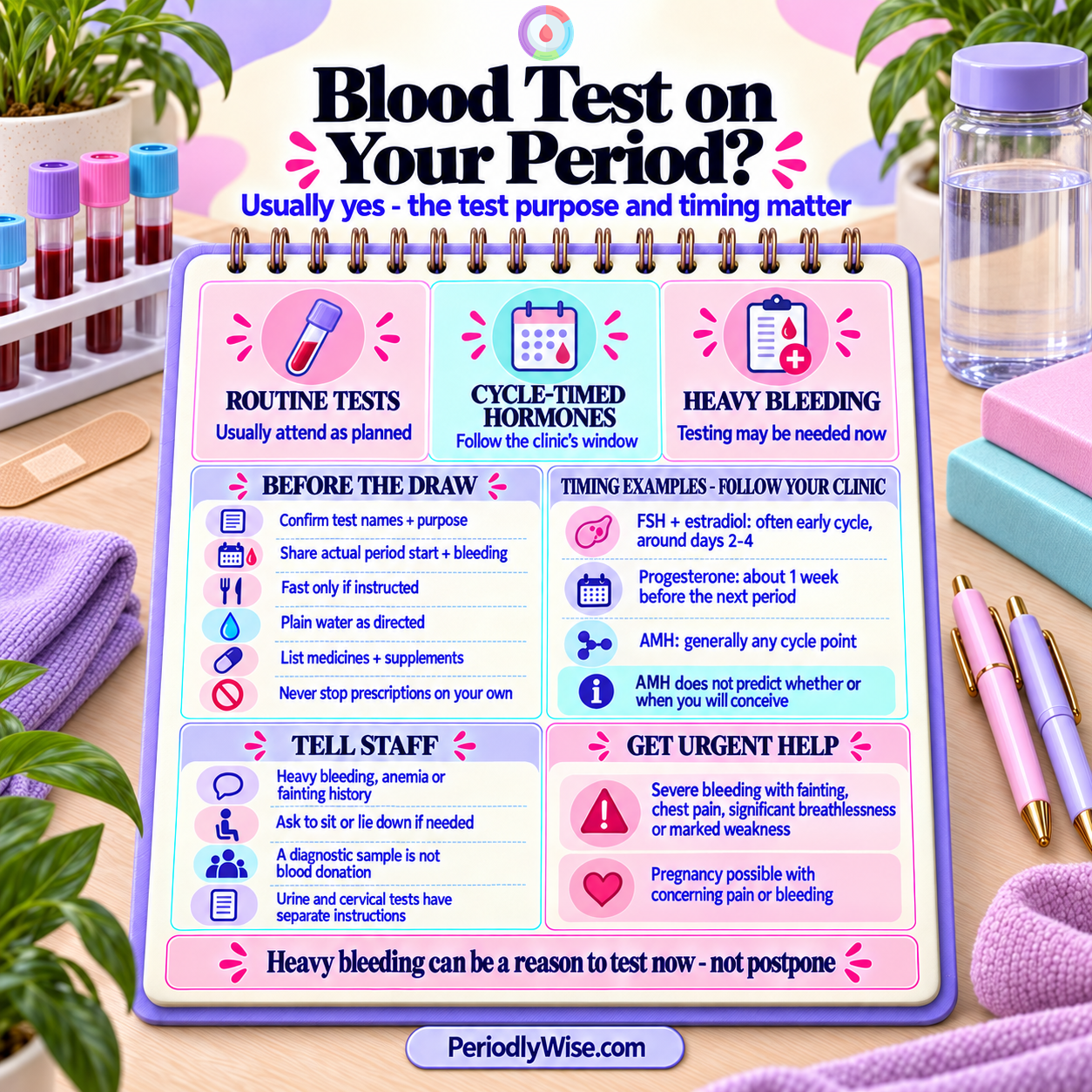
Usually, yes. Learn when period-day blood tests are appropriate, how hormone timing and heavy bleeding matter, and what to ask about fasting and medicines.
Read the guide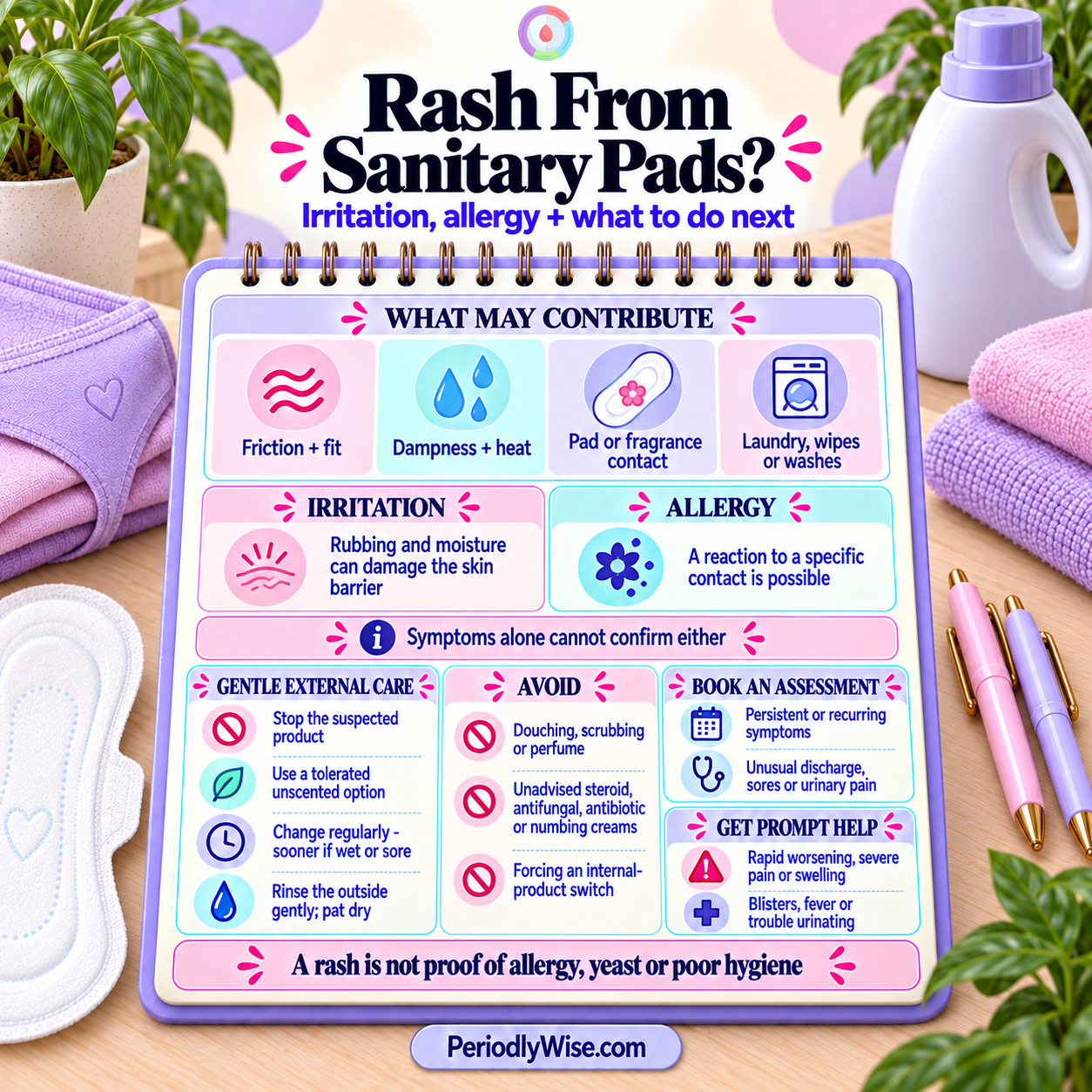
Itching, burning or a rash where your pad touches? Learn about irritation versus allergy, gentle external care, product changes, cream cautions and warning signs.
Read the guide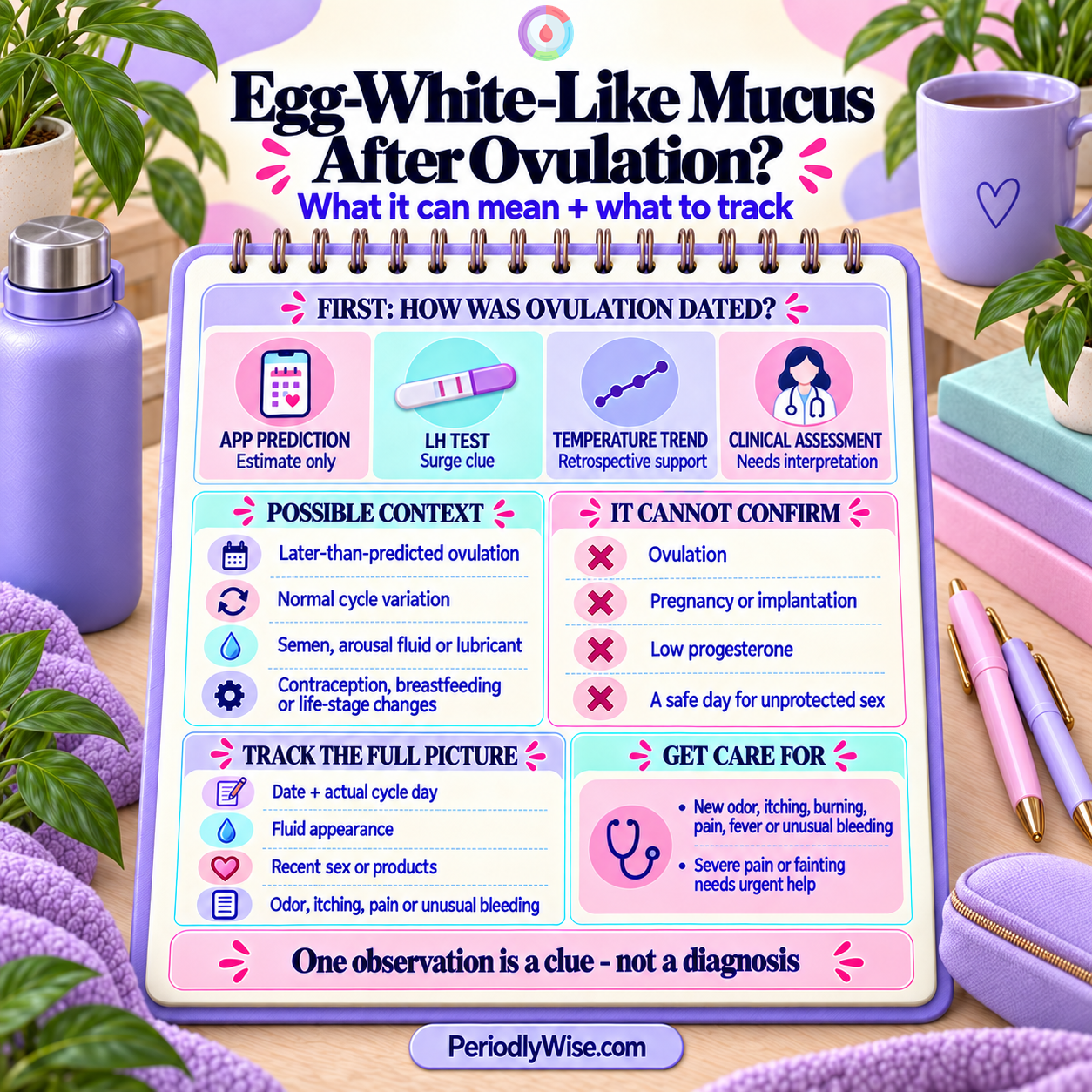
Seeing clear, stretchy mucus after expected ovulation? Understand timing uncertainty, hormone changes, other fluids, pregnancy testing and symptoms that need care.
Read the guide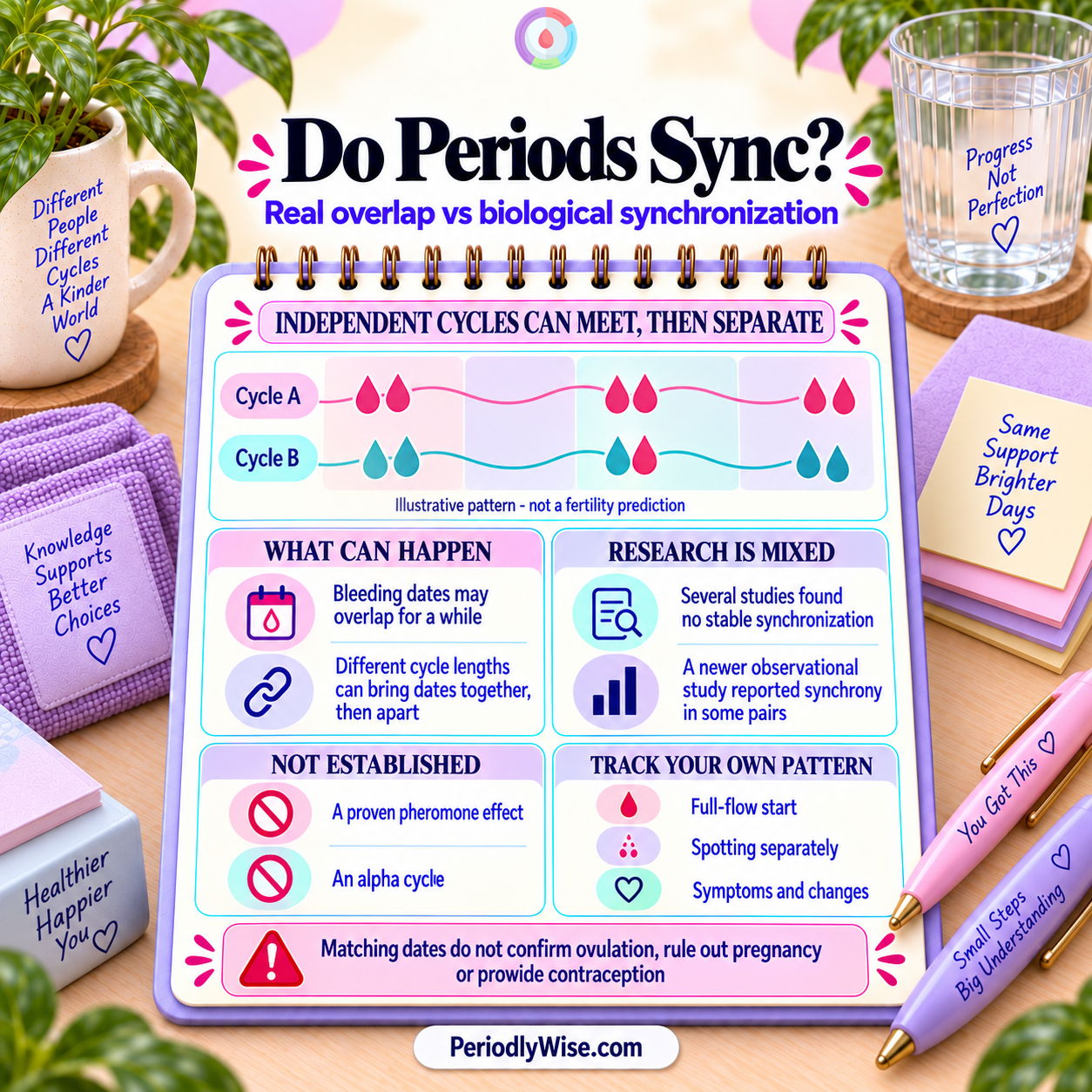
Do periods sync when people live together? Separate real overlap from biological synchrony, explore the research, and learn what to track when your own cycle changes.
Read the guide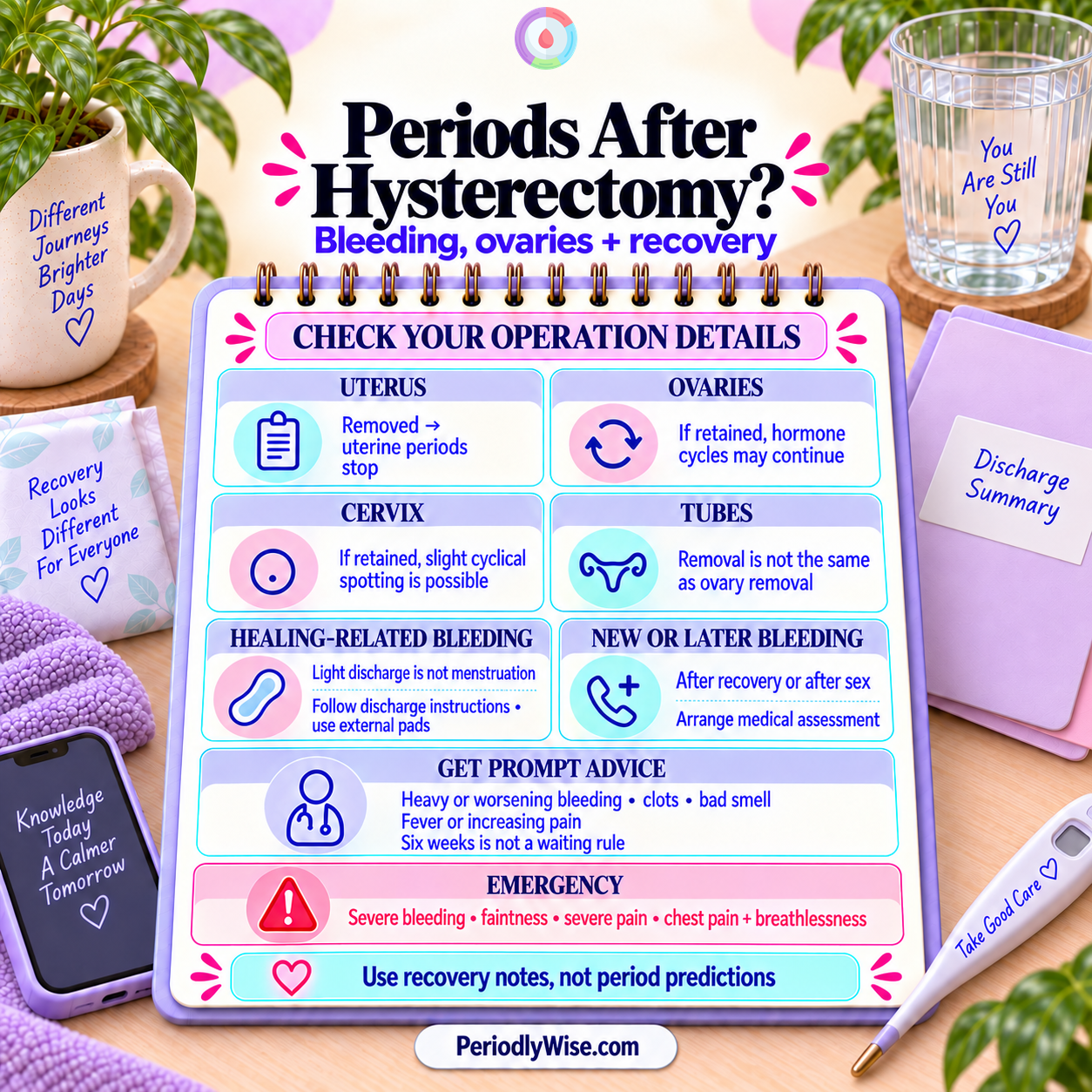
Why uterine periods stop after hysterectomy, what retained ovaries or a cervix can mean, how healing-related bleeding differs, and when to contact your surgical team.
Read the guide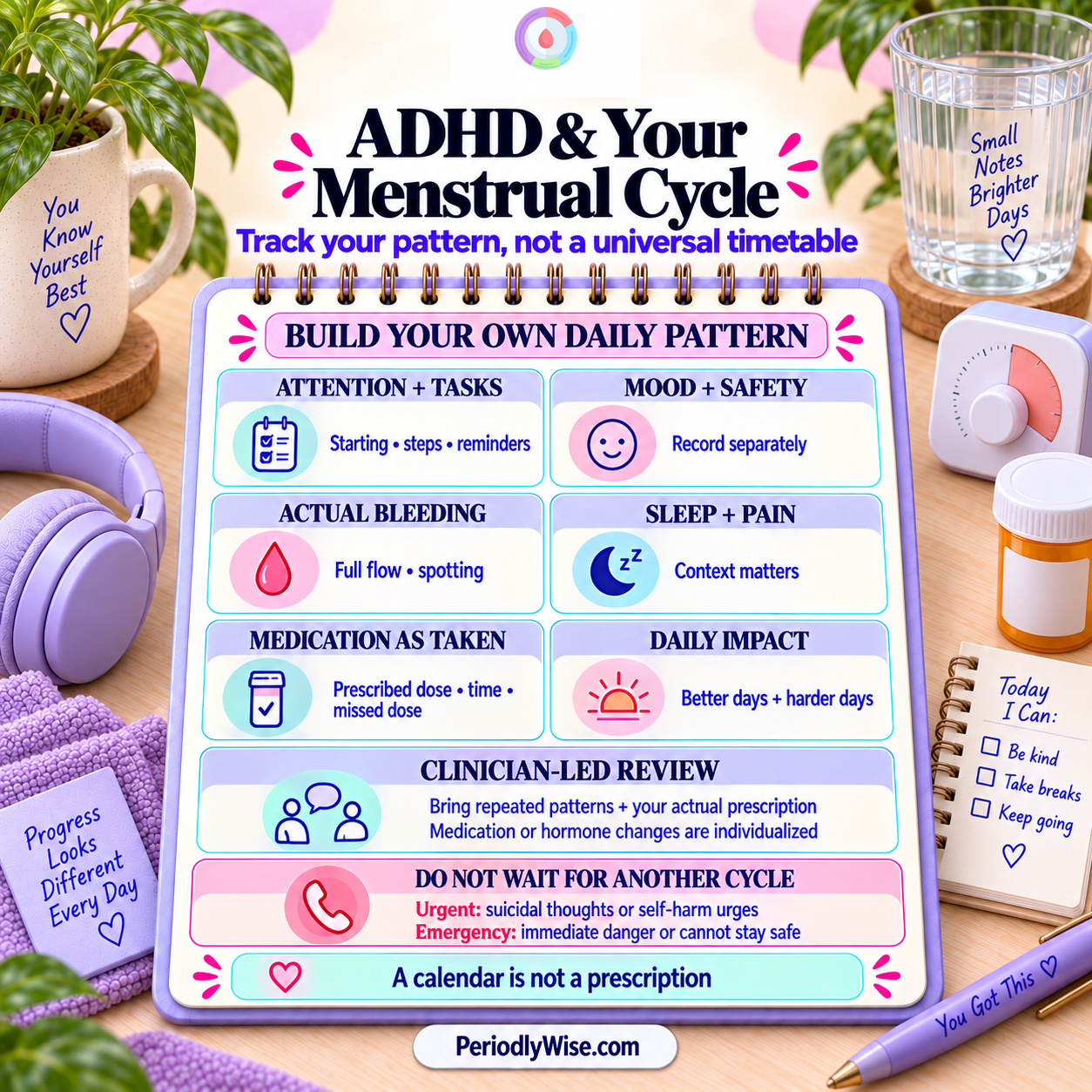
Explore how ADHD symptoms may vary around your period, what research can and cannot show, PMDD versus premenstrual worsening, simple tracking and safe medication discussions.
Read the guide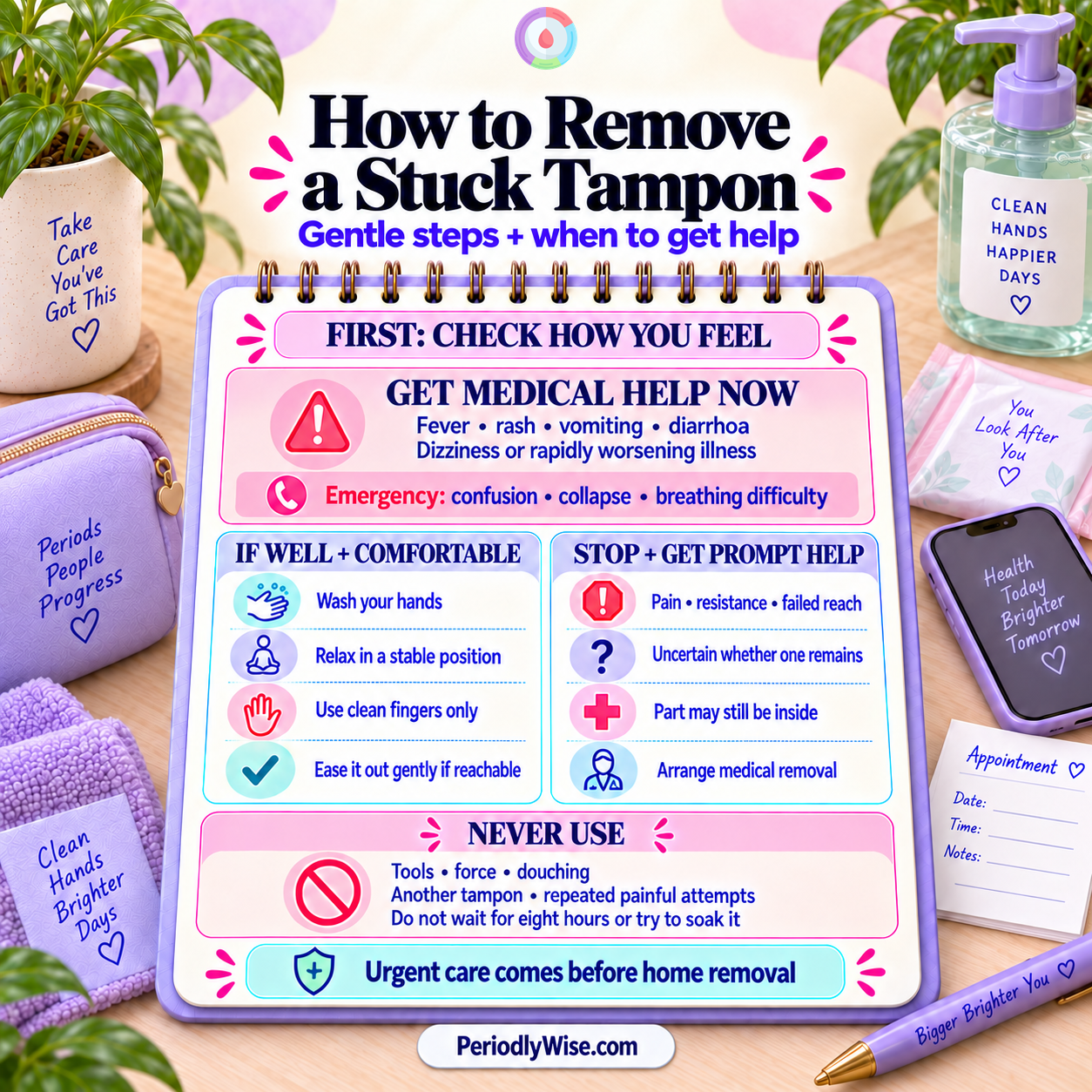
Learn a gentle finger-only approach to a stuck tampon, when to stop, how to get medical removal, aftercare and urgent toxic shock syndrome warning signs.
Read the guide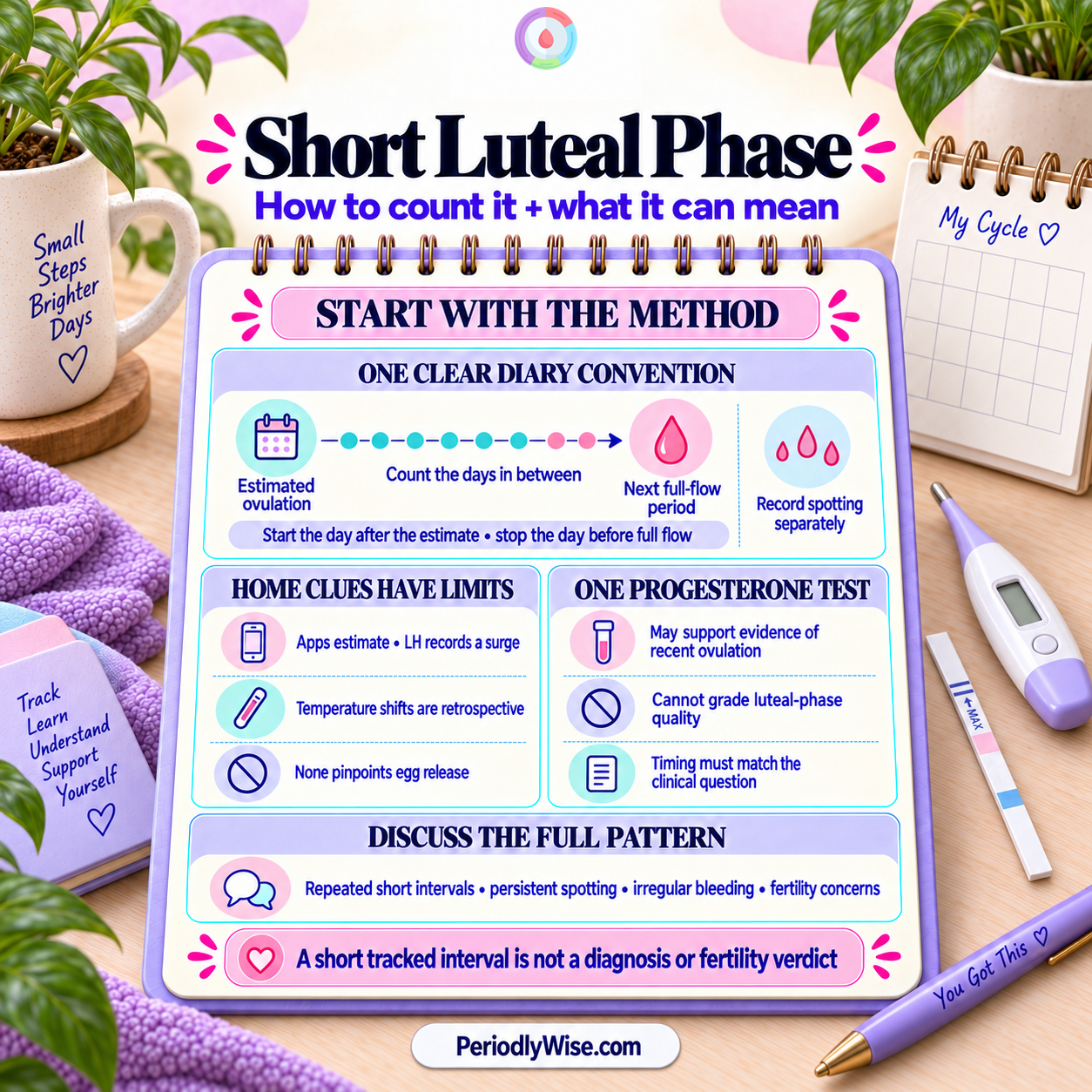
Understand a short luteal phase, counting differences, ovulation clues, progesterone-test limits, fertility evidence and when to seek medical assessment.
Read the guide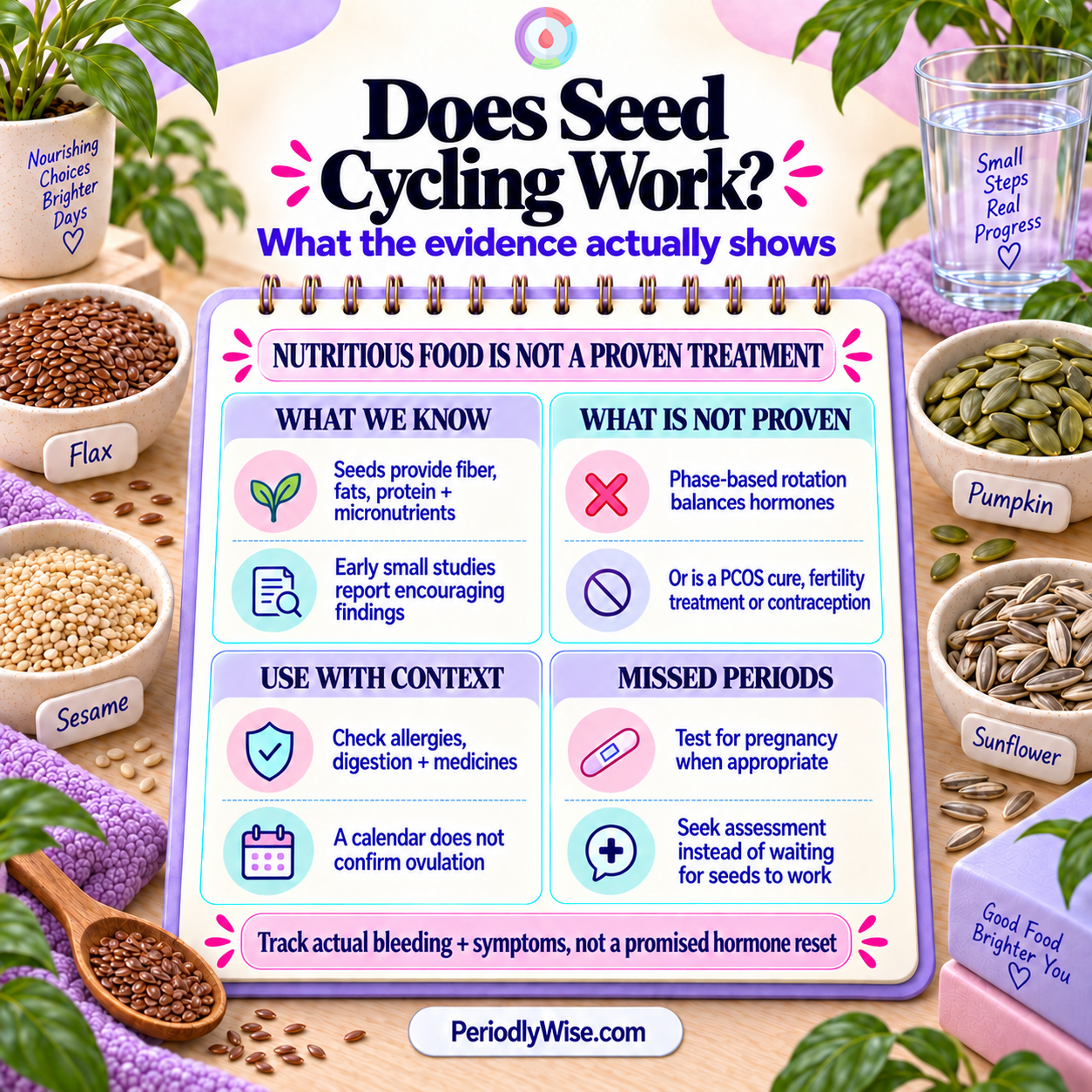
Seed cycling is not a proven hormone-balancing treatment. Compare the research, PCOS and PMS claims, practical food choices, safety, and what to track.
Read the guide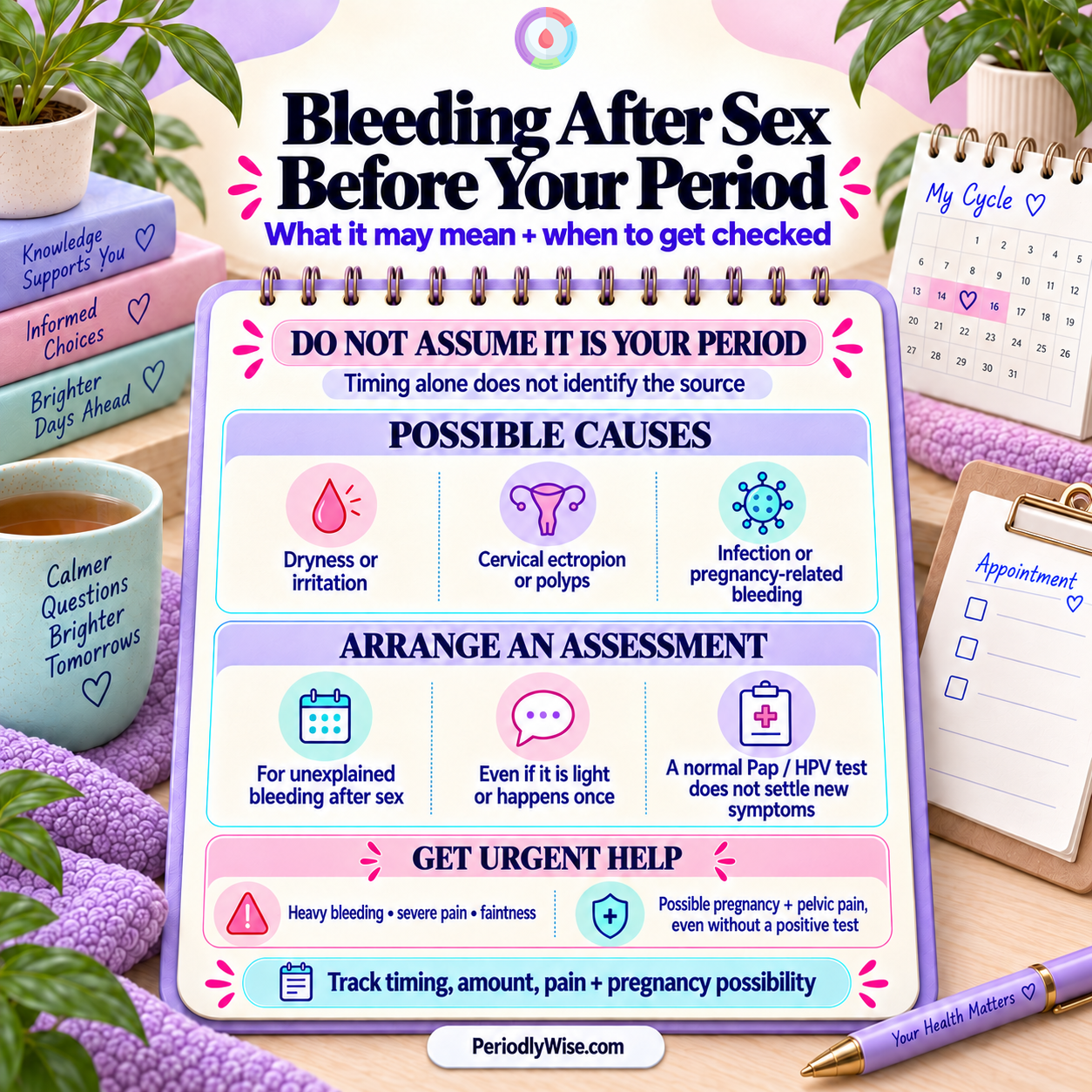
Bleeding after sex before a period is not automatically menstrual. Learn possible causes, pregnancy-test timing, warning signs, and what to tell a clinician.
Read the guide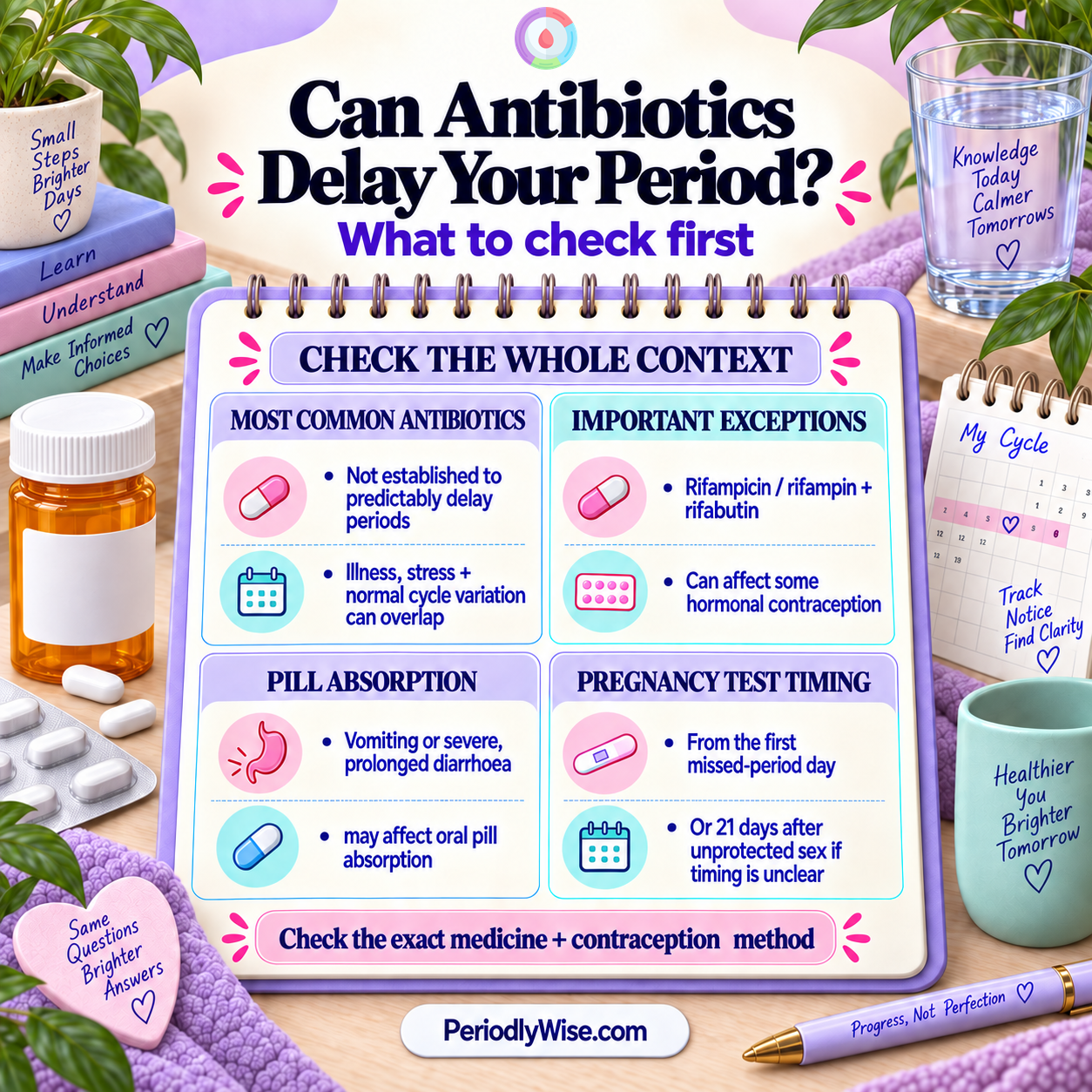
Most common antibiotics are not established causes of a predictable period delay. Check illness, pregnancy, rifampicin interactions, and pill absorption.
Read the guide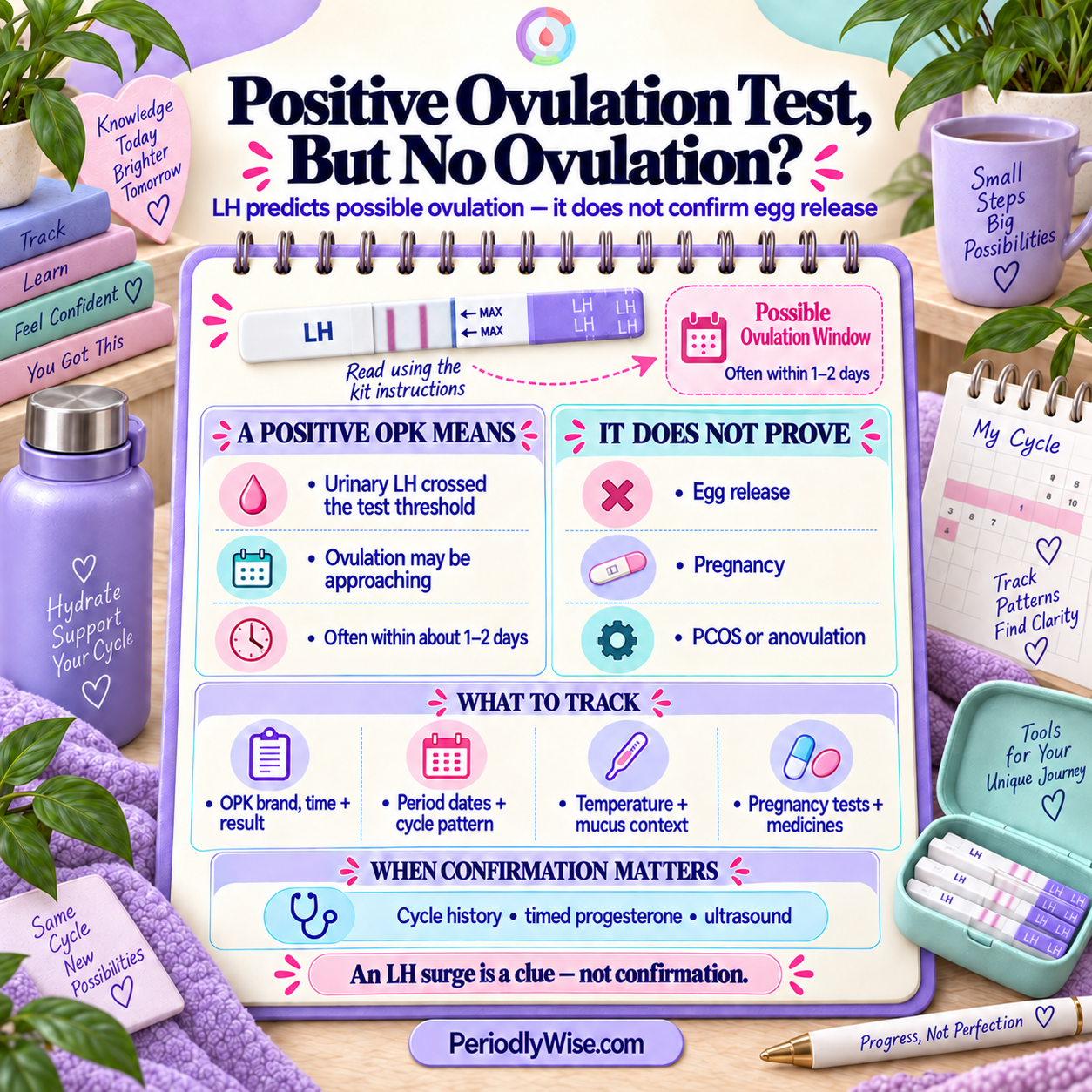
A positive ovulation test detects an LH surge but does not prove egg release. Learn about delayed surges, PCOS, confirmation methods, and when to seek care.
Read the guide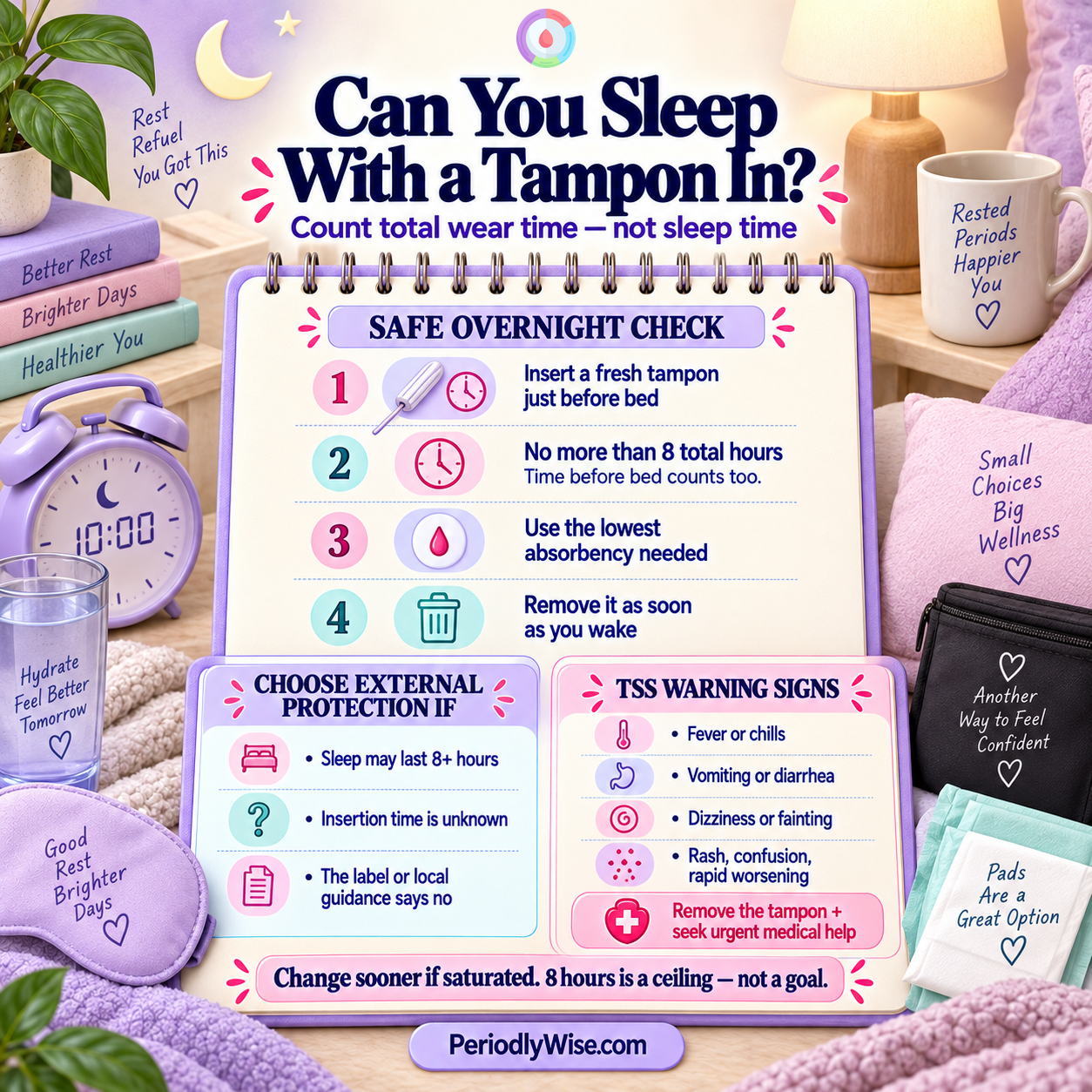
You may sleep with a tampon only when total wear stays within the product instructions and never exceeds 8 hours. Learn timing, TSS signs, and safer alternatives.
Read the guide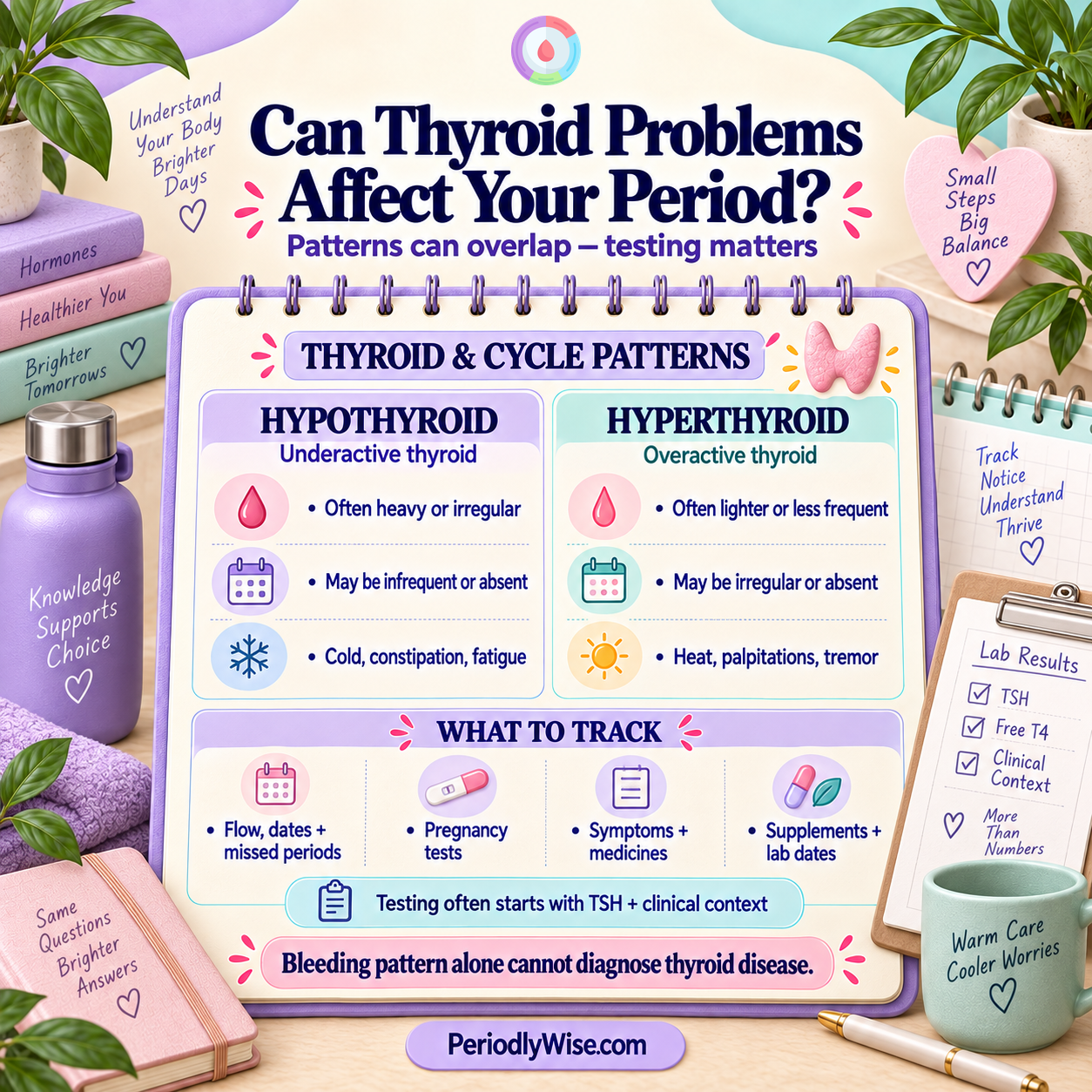
Thyroid problems can make periods heavy, light, irregular, late, or absent. Compare hypothyroid and hyperthyroid patterns, testing, treatment, and warning signs.
Read the guide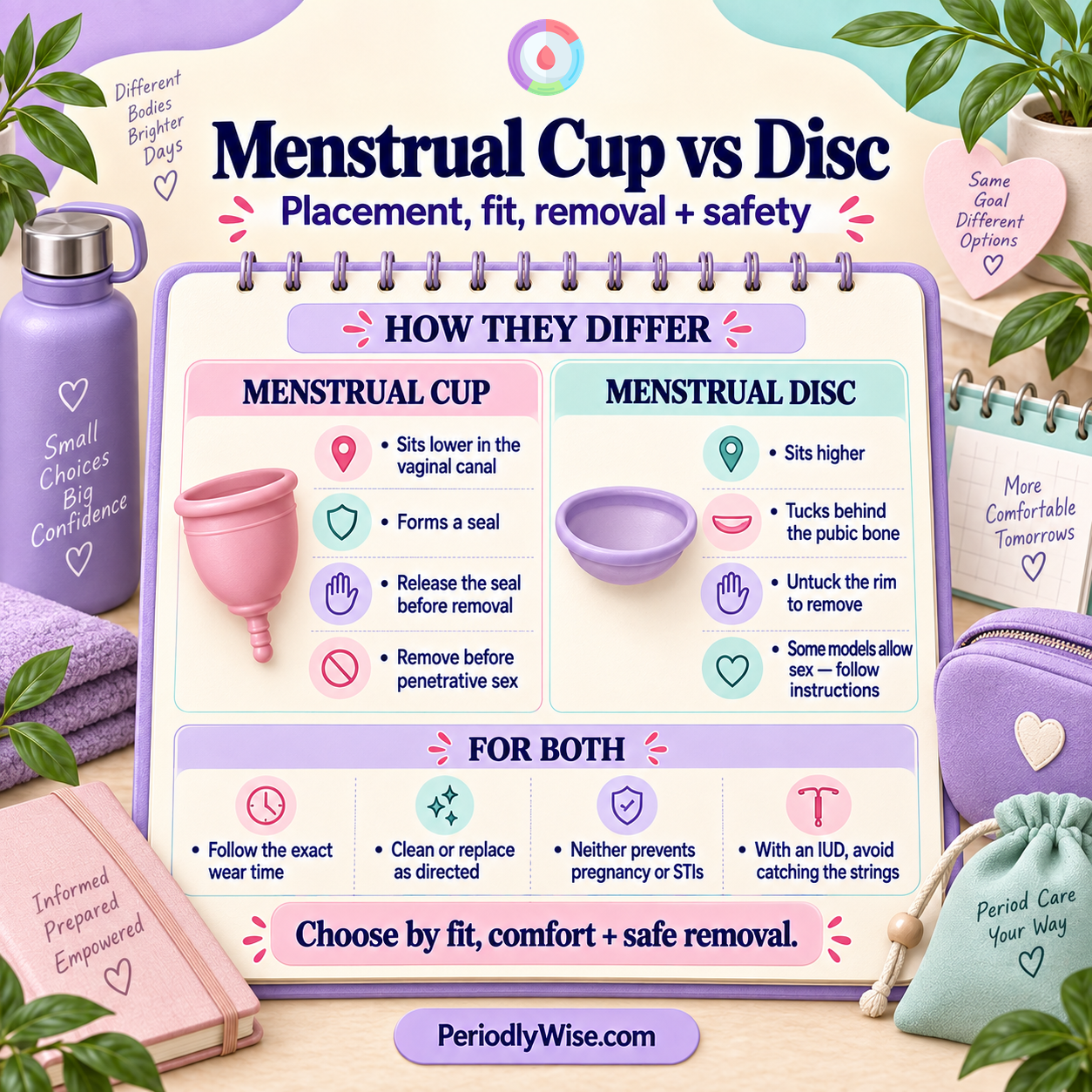
Compare a menstrual cup vs disc by placement, fit, removal, leaks, cleaning, sex, IUD considerations, heavy flow, cost, and safety.
Read the guide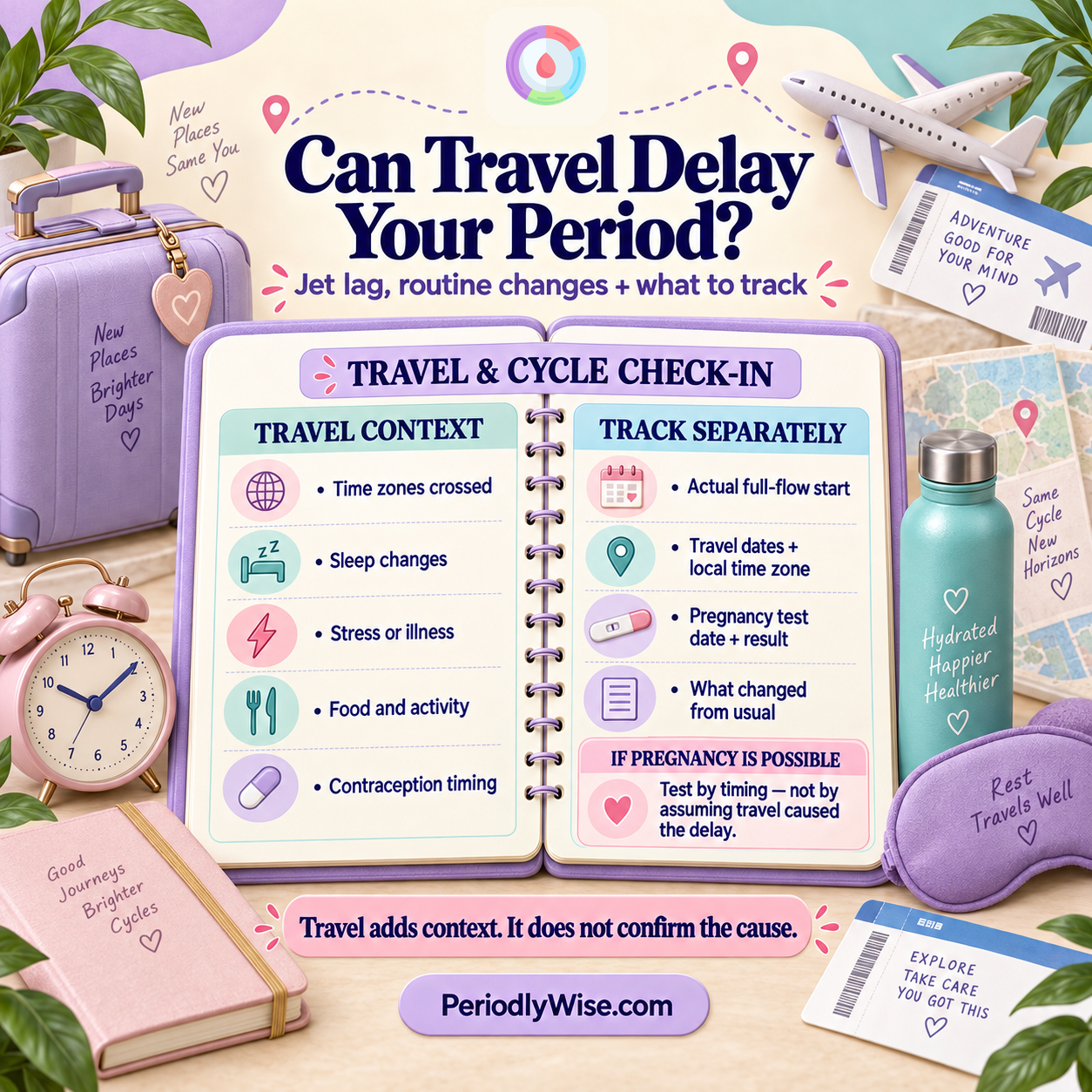
Travel may coincide with a late period through sleep disruption, stress, illness, routine changes, or later ovulation. Learn what to track and when to test or seek care.
Read the guide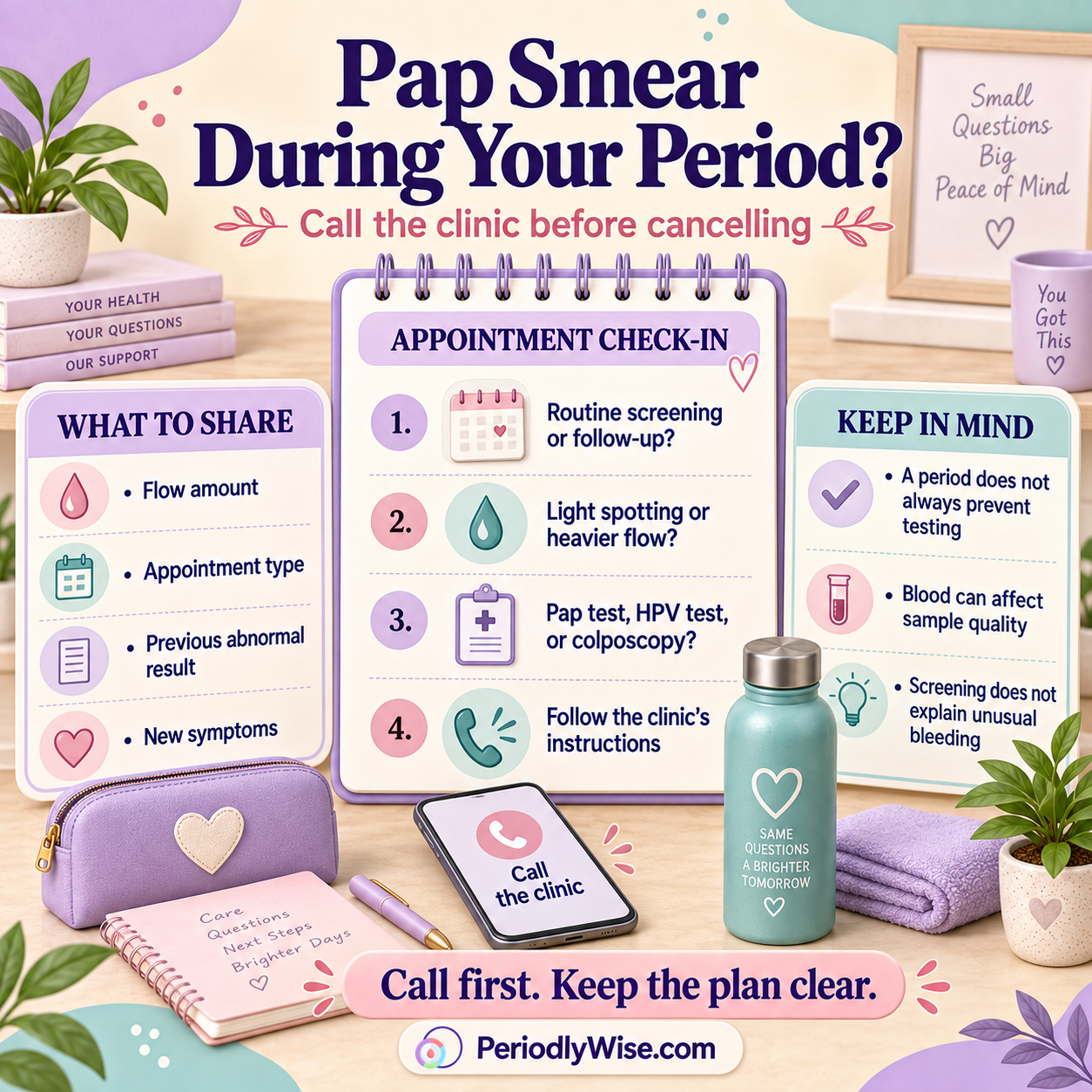
A period does not always prevent a Pap test. Learn how flow, test type, clinic rules, and unusual bleeding affect whether to attend or rearrange.
Read the guide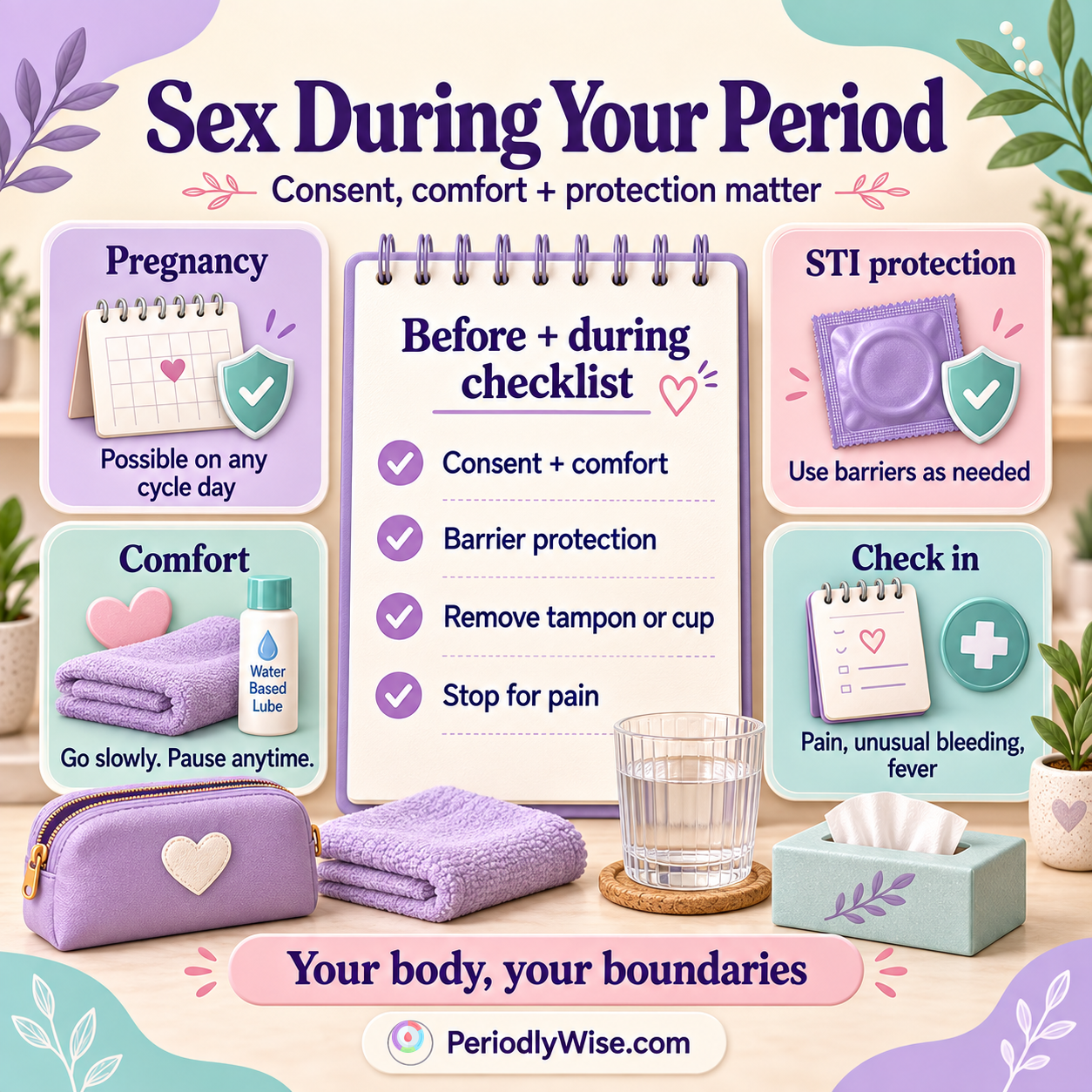
Sex during a period is generally possible when it is consensual and comfortable, but pregnancy, STI protection, pain, period products, and unusual bleeding still matter.
Read the guide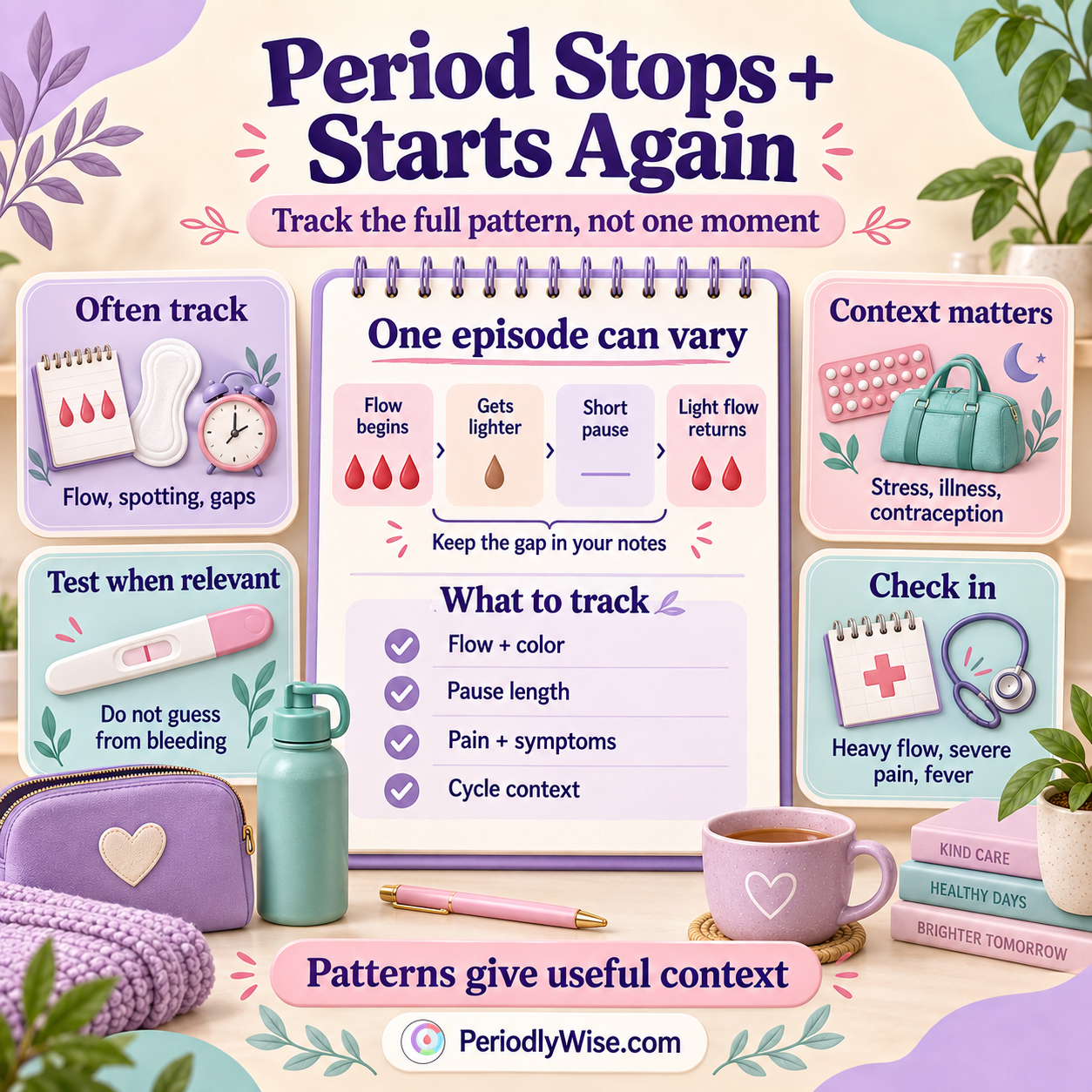
A period may become light, pause, and return within the same episode. Learn what can be normal, what else causes stop-start bleeding, what to track, and when to seek care.
Read the guide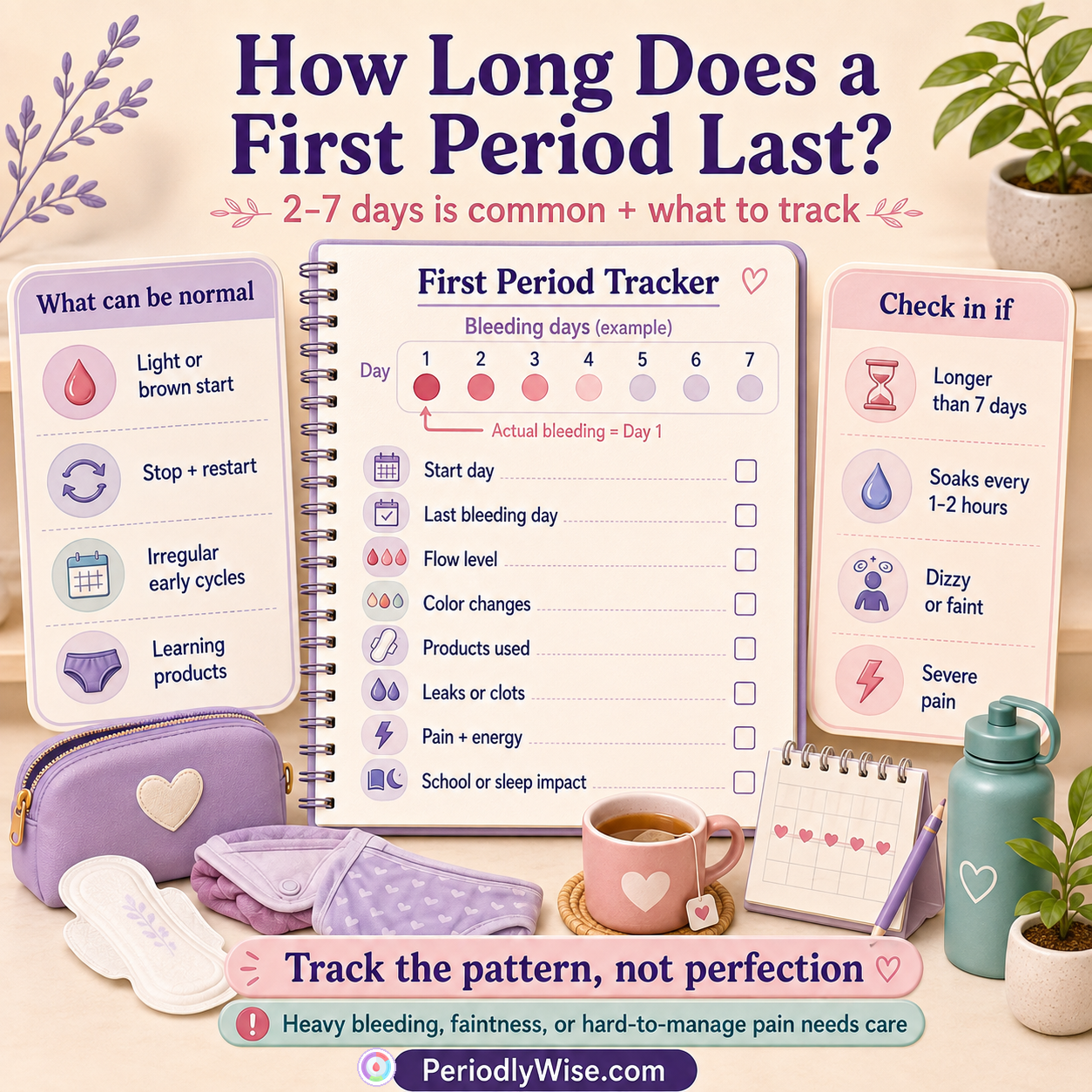
A first period commonly lasts 2 to 7 days and may be light, brown, or irregular. Learn how to count the days, what to track, product basics, and when heavy bleeding needs care.
Read the guide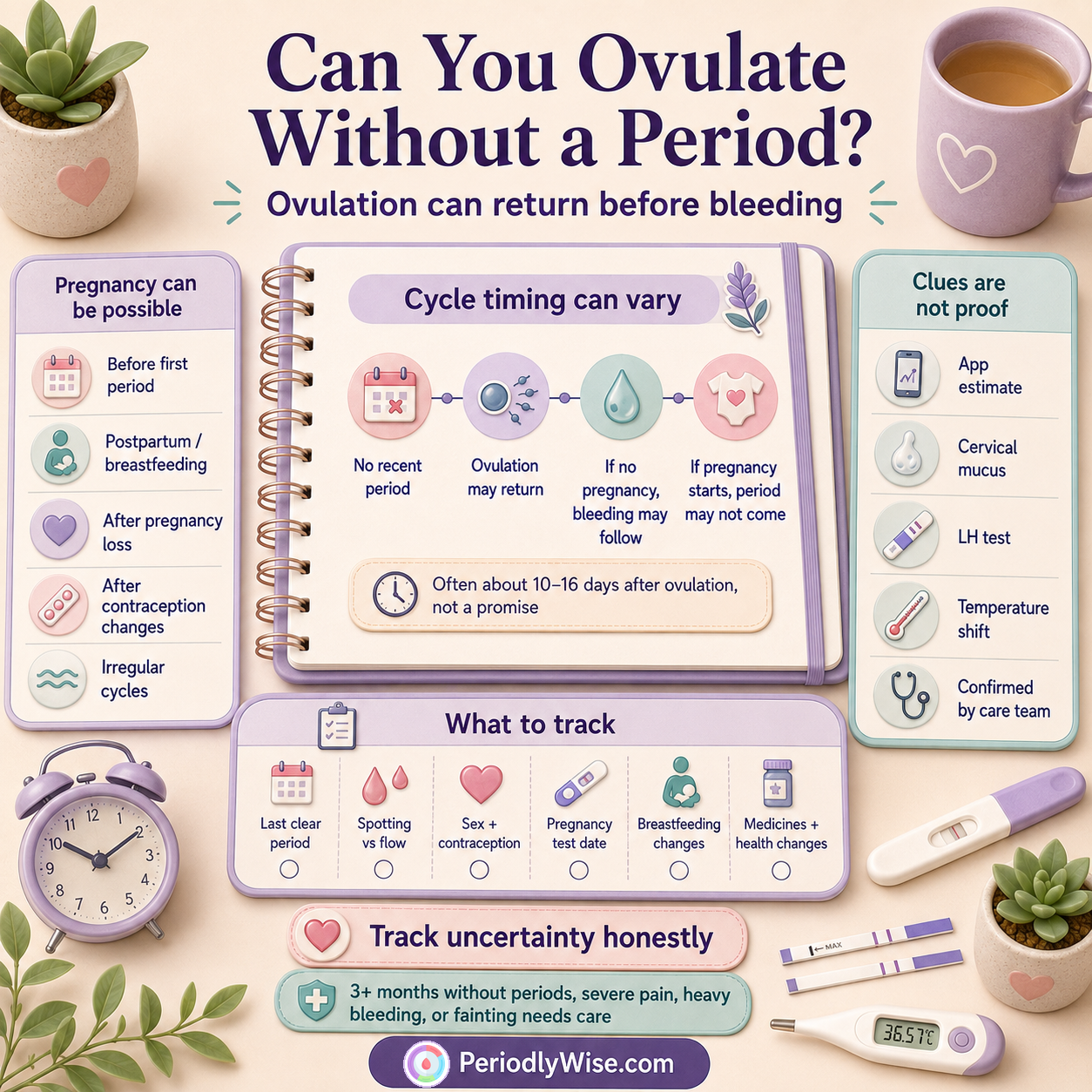
You can ovulate before a first or returning period, and pregnancy can prevent the next bleed. Learn what amenorrhea means, when pregnancy is possible, and how ovulation is confirmed.
Read the guide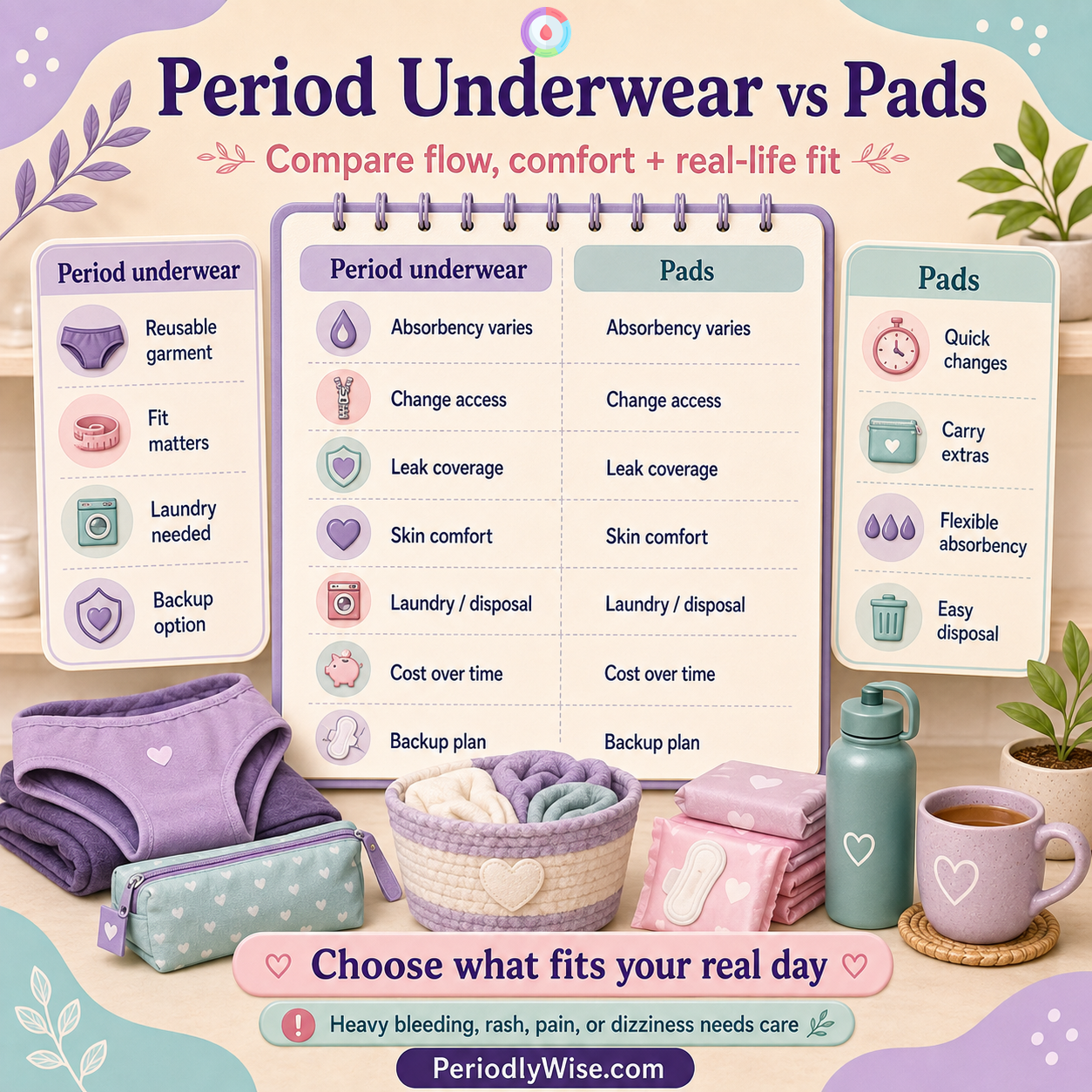
Compare period underwear and pads for absorbency, leaks, comfort, skin sensitivity, washing, cost, PFAS questions, heavy flow, school, work, travel, and overnight use.
Read the guide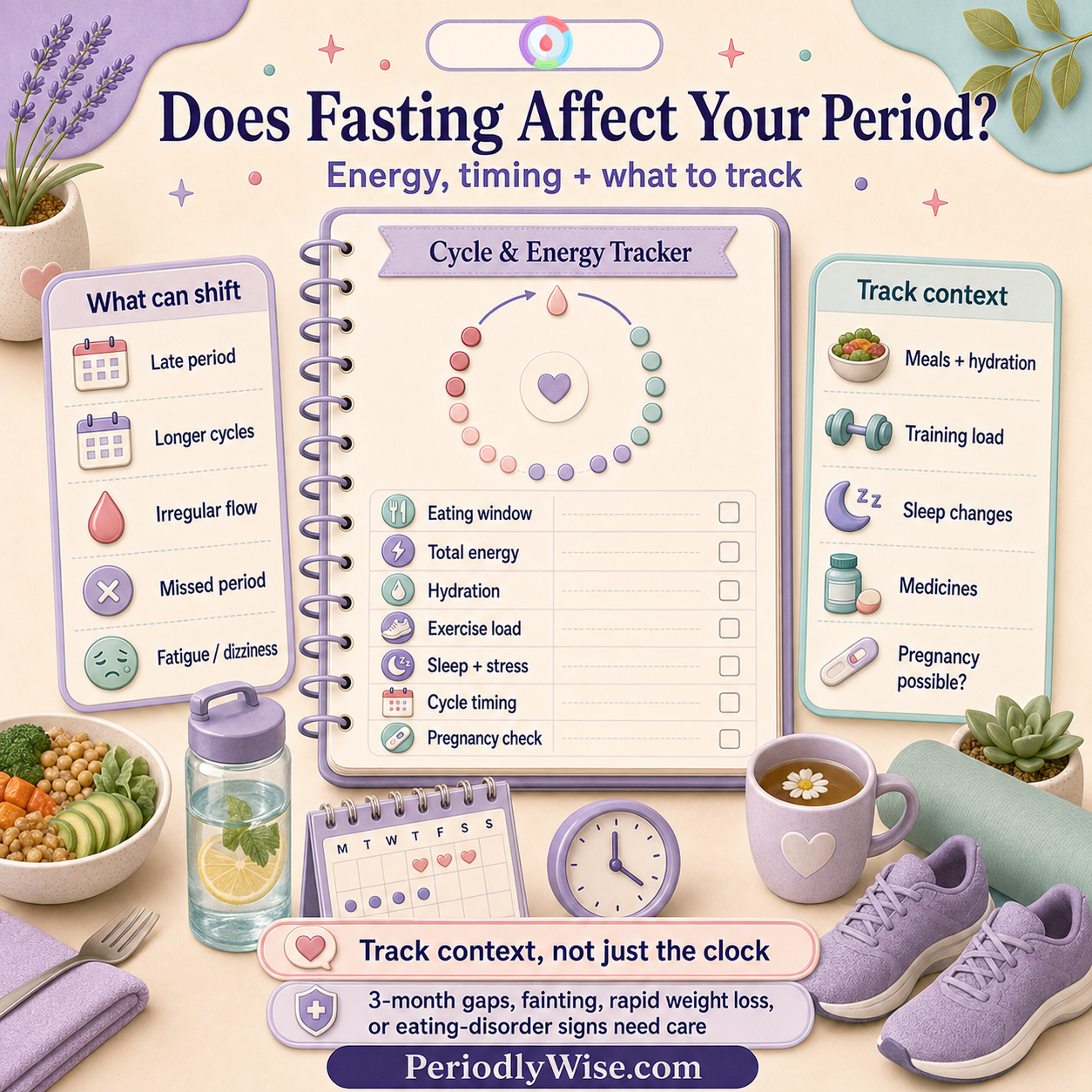
Fasting may affect a period when it creates sustained low energy availability, weight loss, stress, sleep change, or illness. Learn what evidence shows and what to track.
Read the guide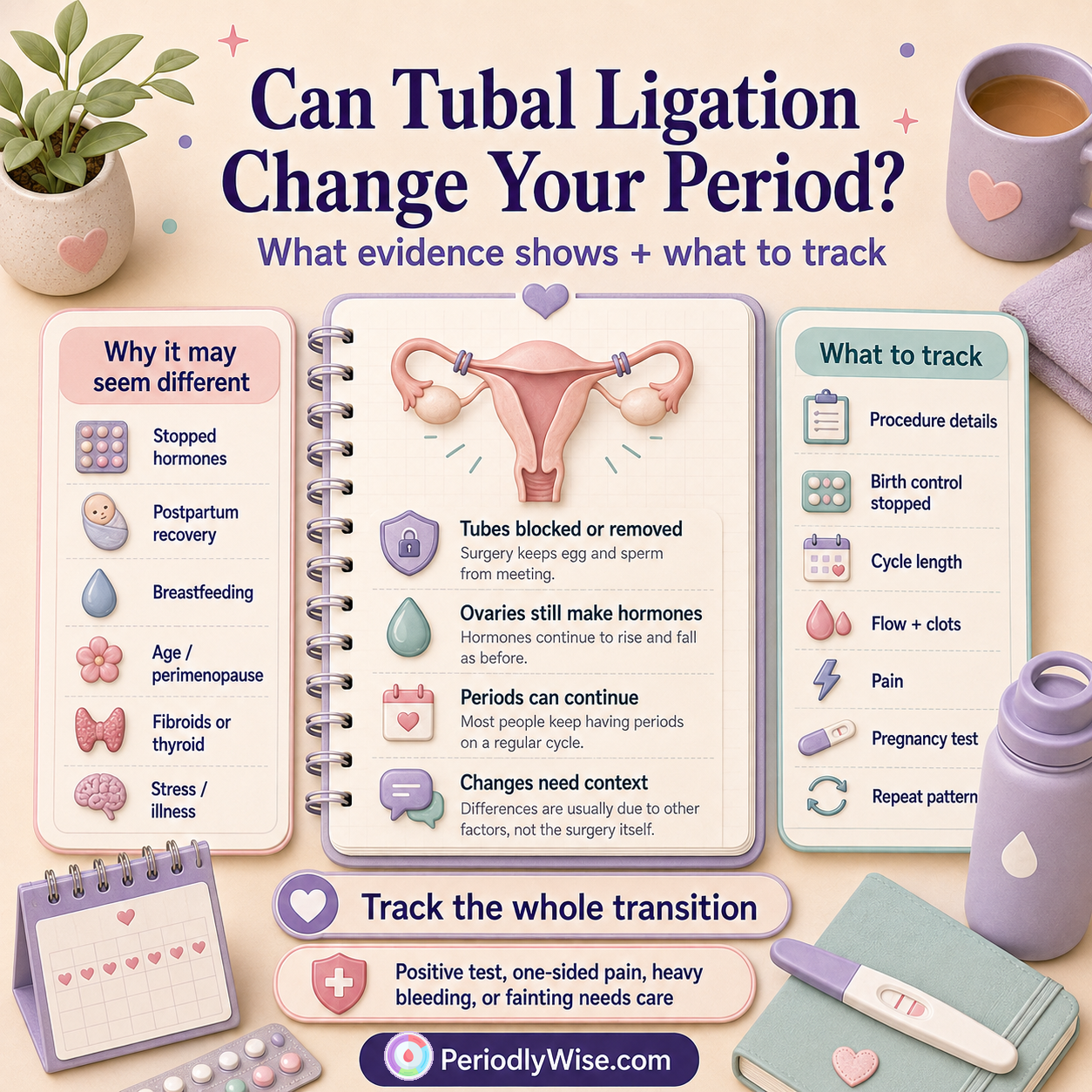
Tubal ligation should not change menstrual hormones, but periods may seem different after surgery. Learn why, what to track, and when pregnancy or bleeding needs care.
Read the guide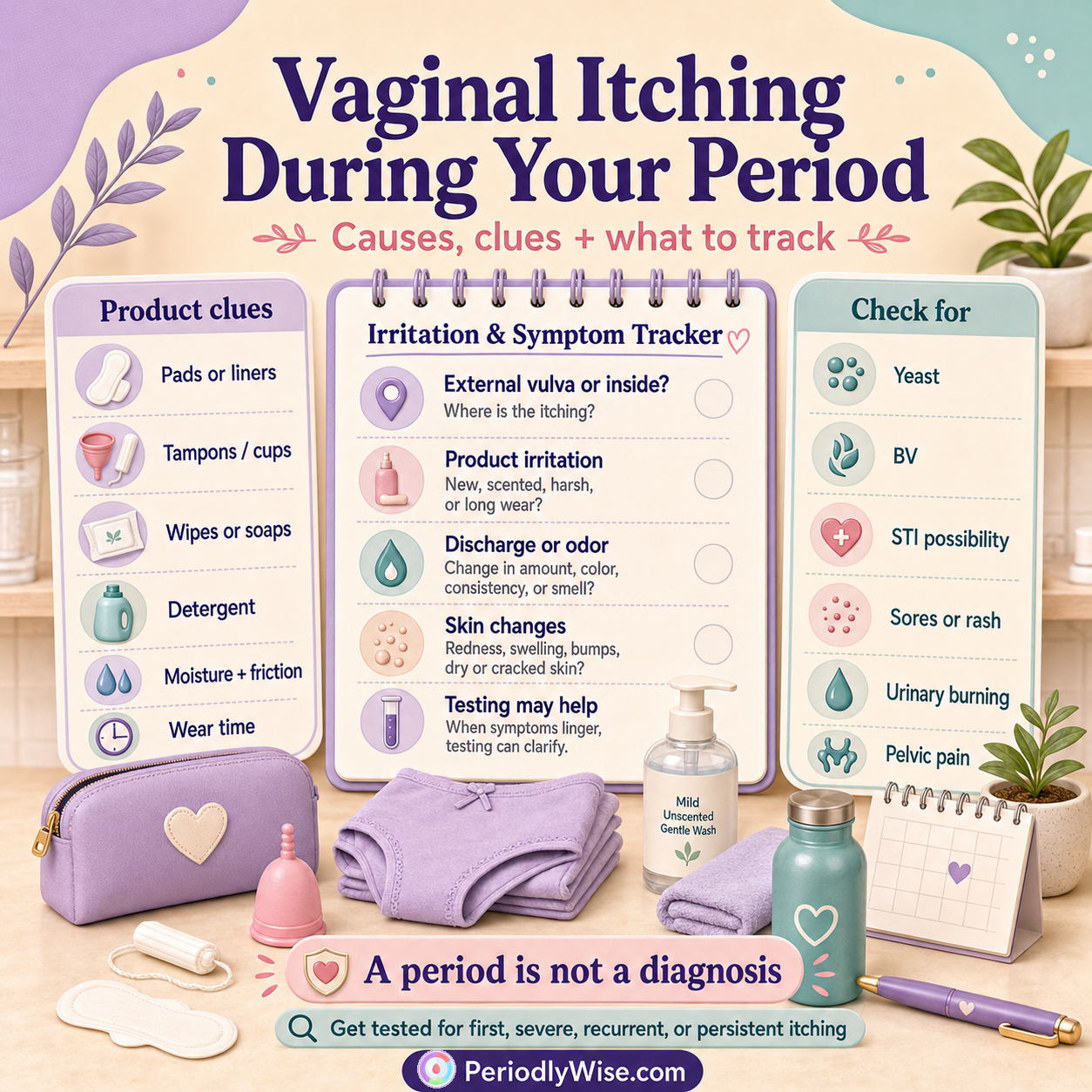
Itching during a period may come from vulvar irritation, yeast, BV, an STI, skin disease, or dryness. Learn what to track, what to avoid, and when to get tested.
Read the guide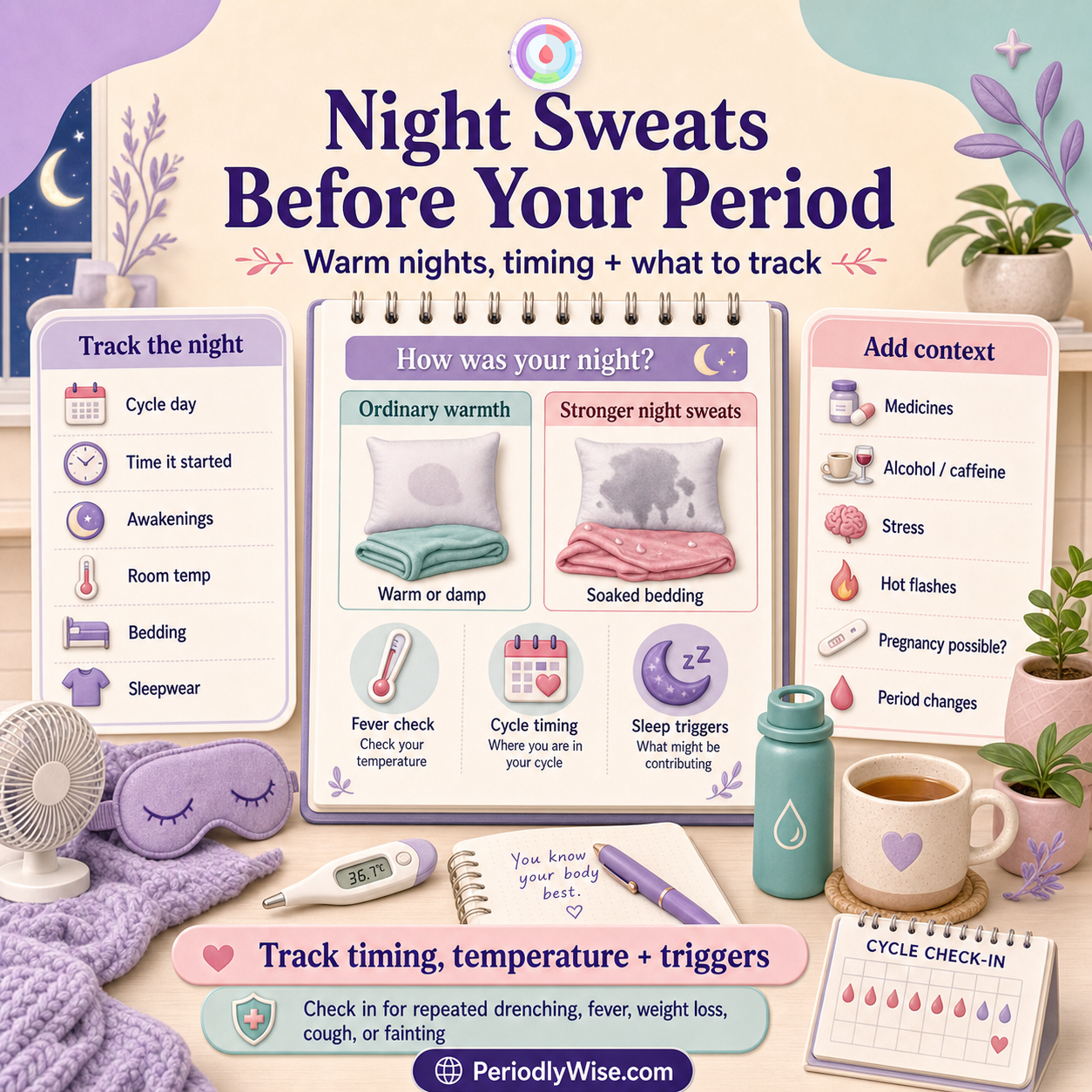
Learn why you may sweat at night before a period, how luteal-phase temperature differs from drenching night sweats, what to track, and when to seek medical care.
Read the guide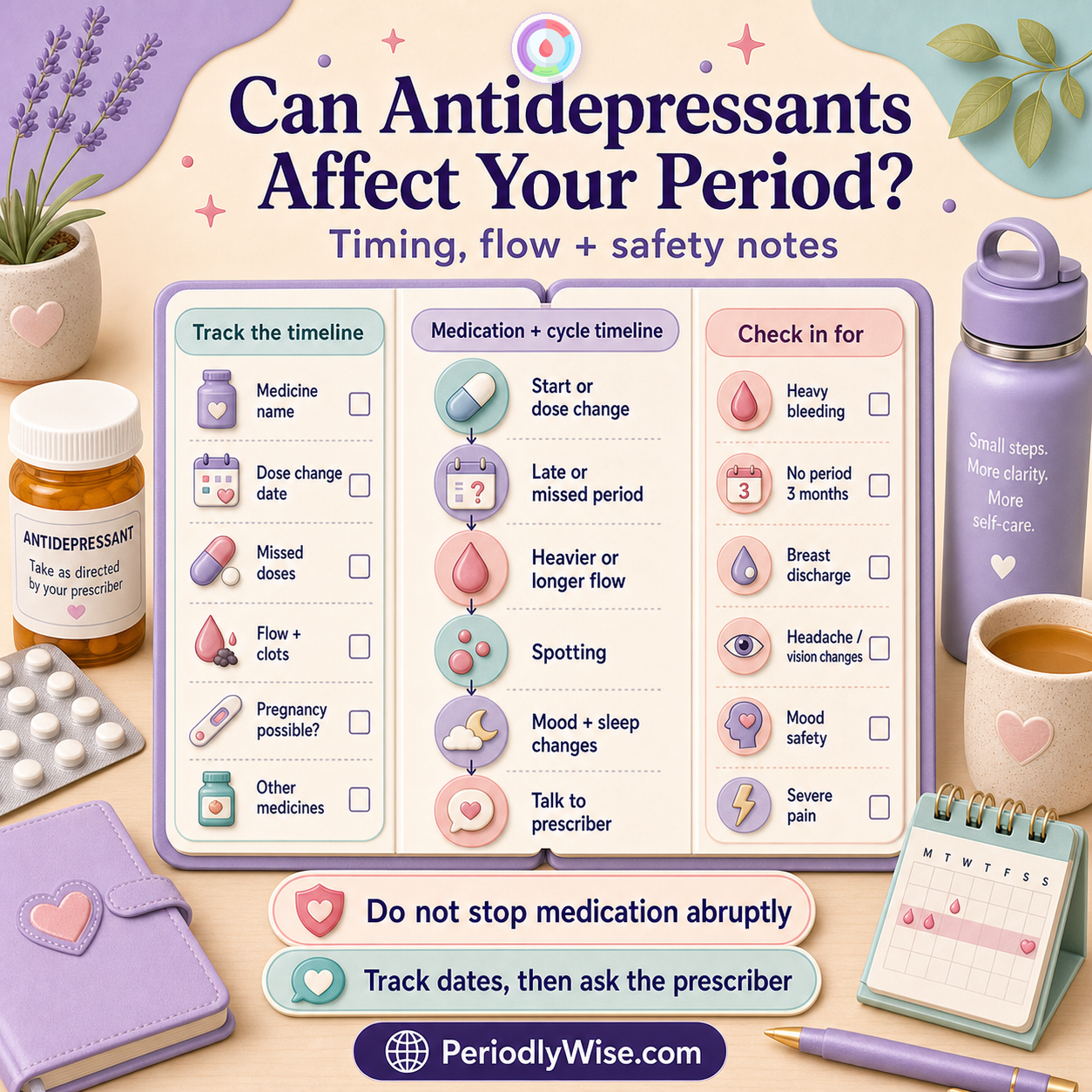
Antidepressants may coincide with late, missed, heavier, lighter, or irregular periods. Learn the possible mechanisms, what else to check, and why not to stop medication abruptly.
Read the guide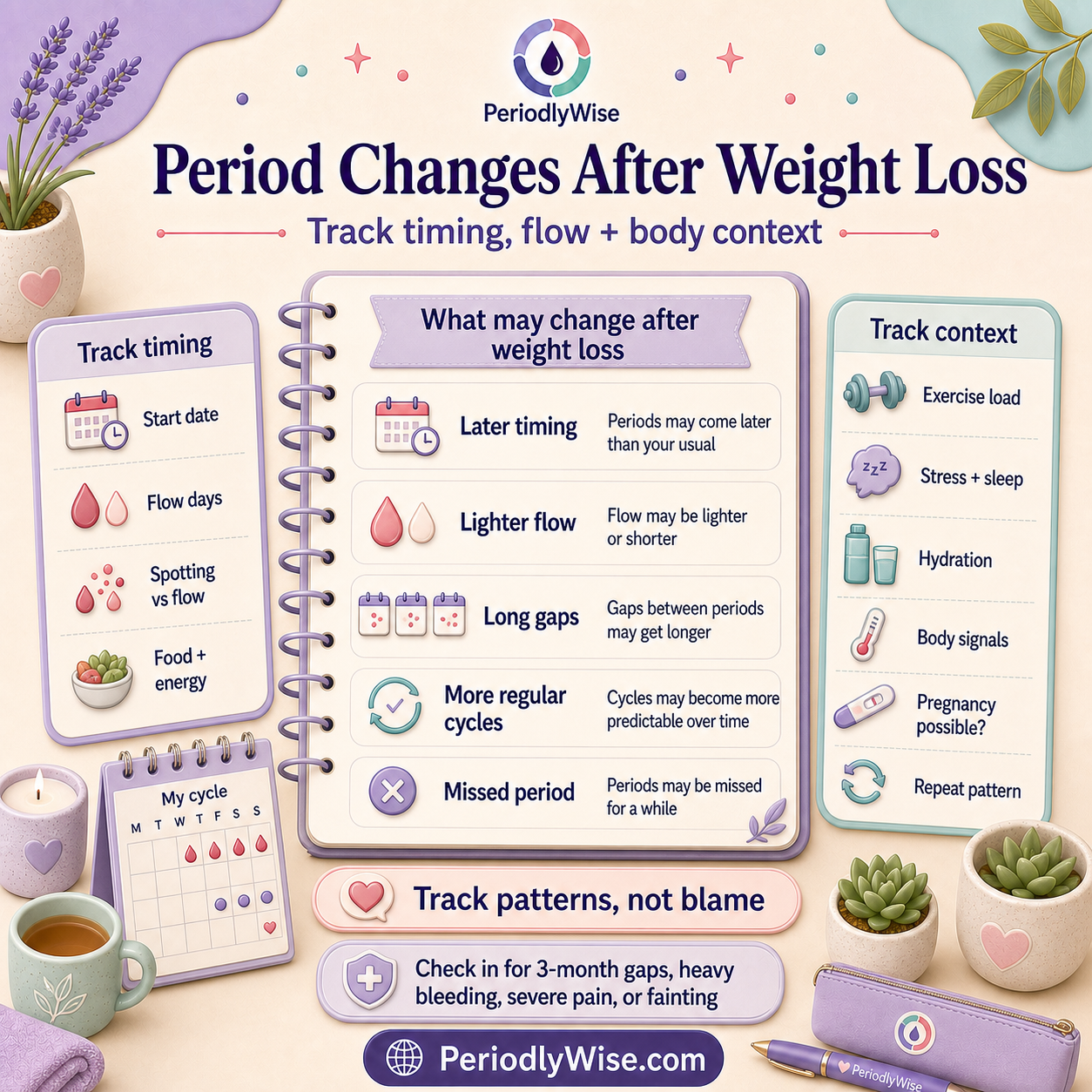
Learn why periods may become later, lighter, irregular, absent, or more regular after weight loss, what context matters, and when to seek medical care.
Read the guide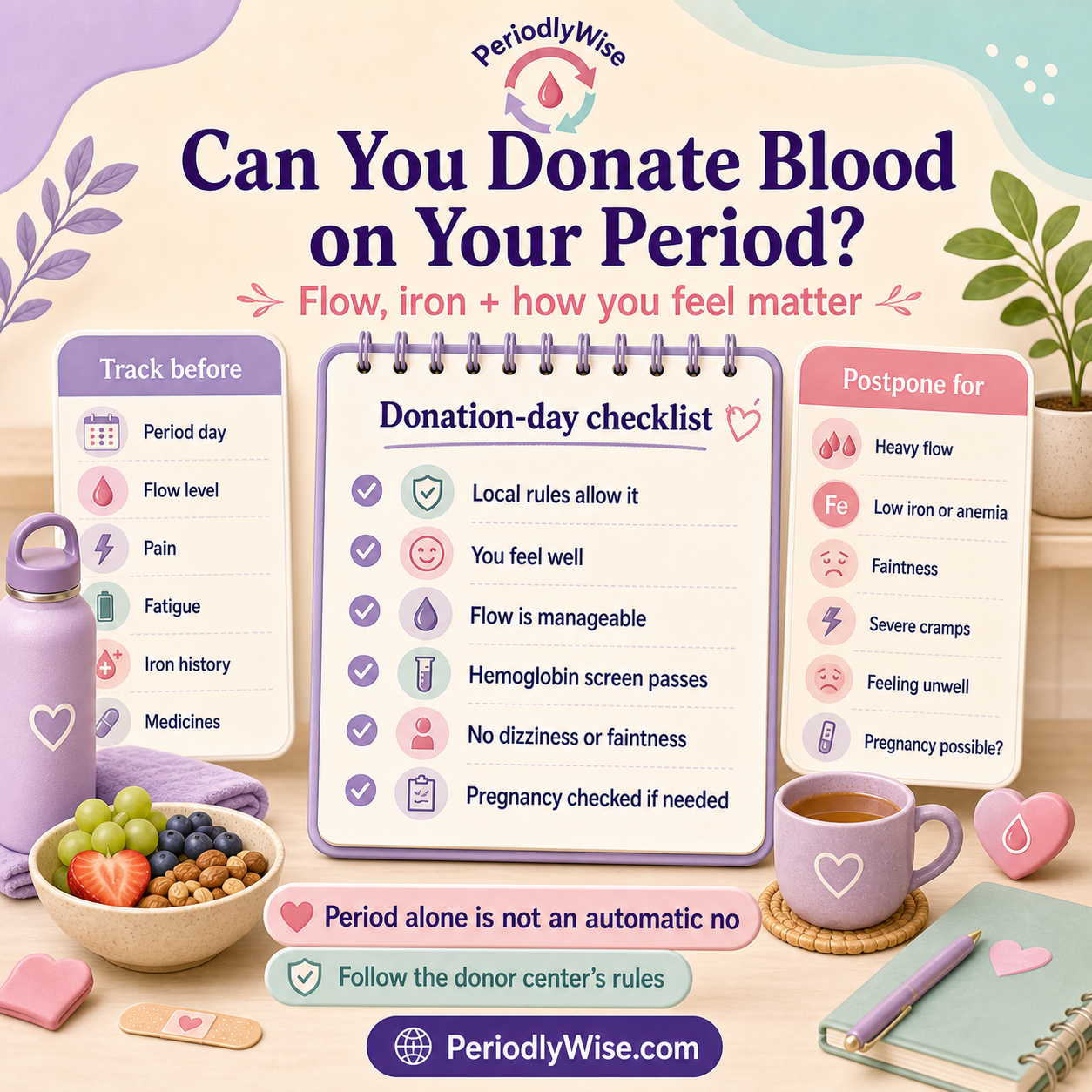
Learn when blood donation during a period may be allowed, how flow, symptoms, hemoglobin, iron stores, medicines, and local donor rules affect the decision.
Read the guide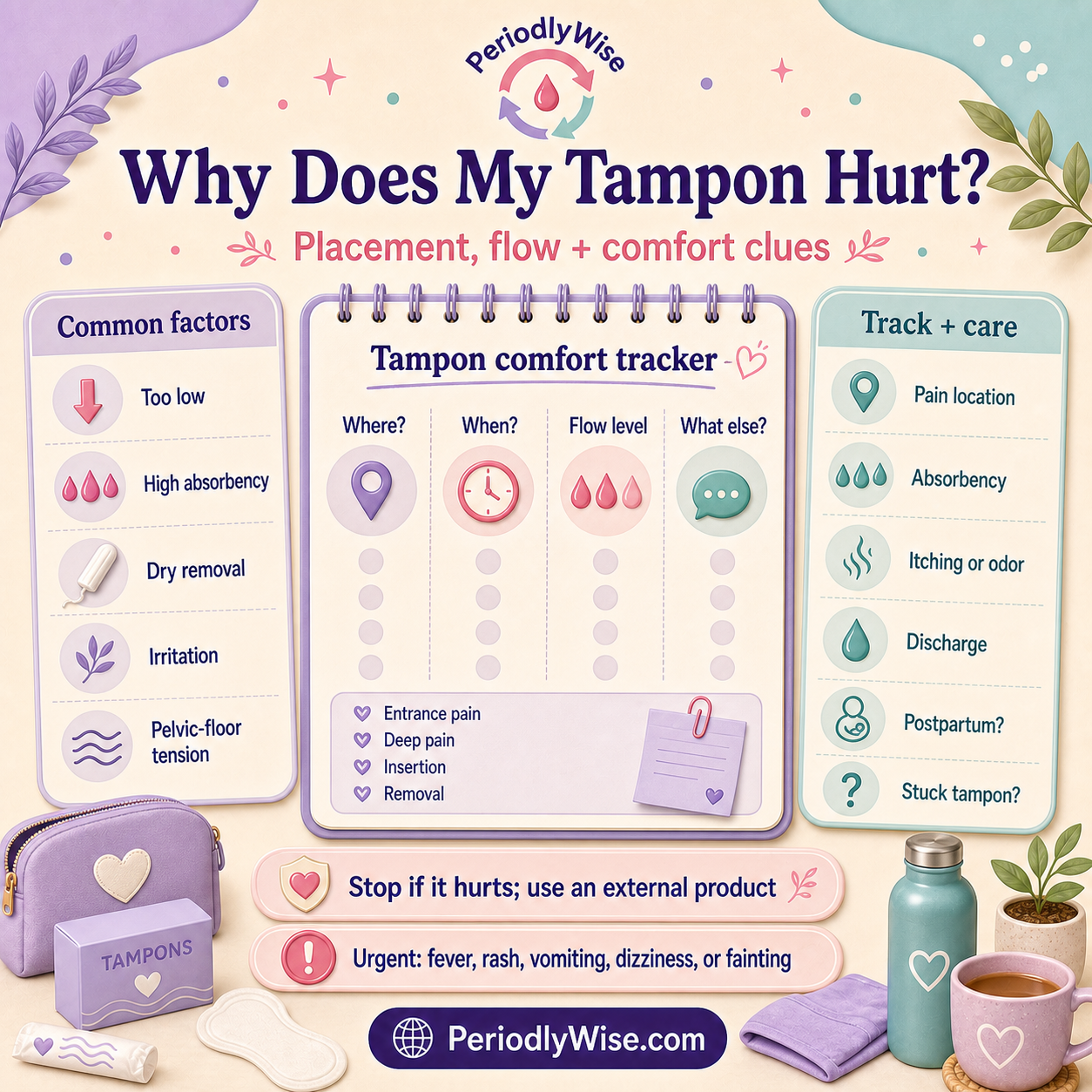
A tampon should not keep hurting. Learn how placement, absorbency, dryness, irritation, infection, pelvic-floor tightening, vulvar pain, and postpartum changes can affect comfort and when to seek care.
Read the guide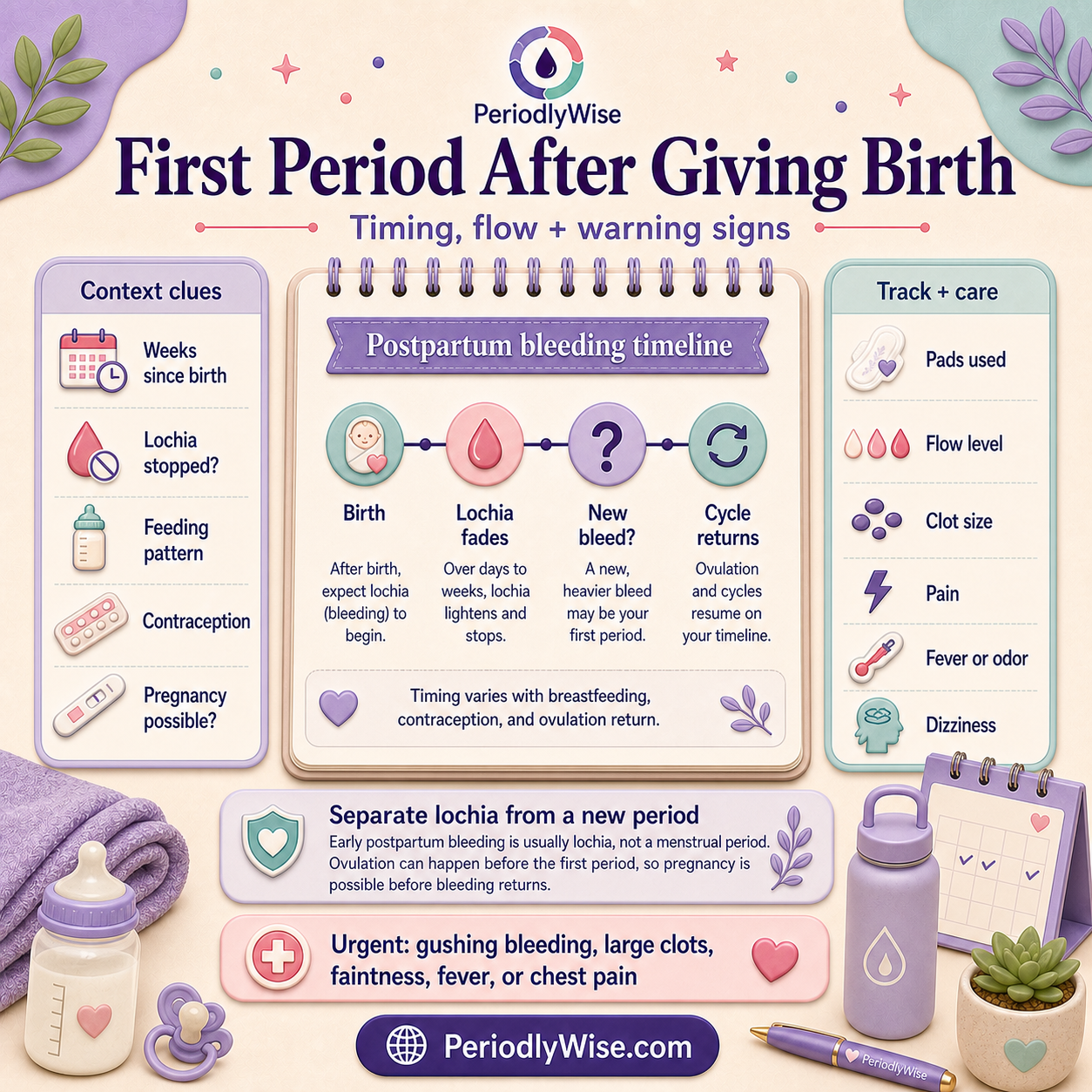
Learn when the first period after giving birth may return, how to distinguish it from lochia, how breastfeeding and contraception affect timing, what to track, and which bleeding needs urgent care.
Read the guide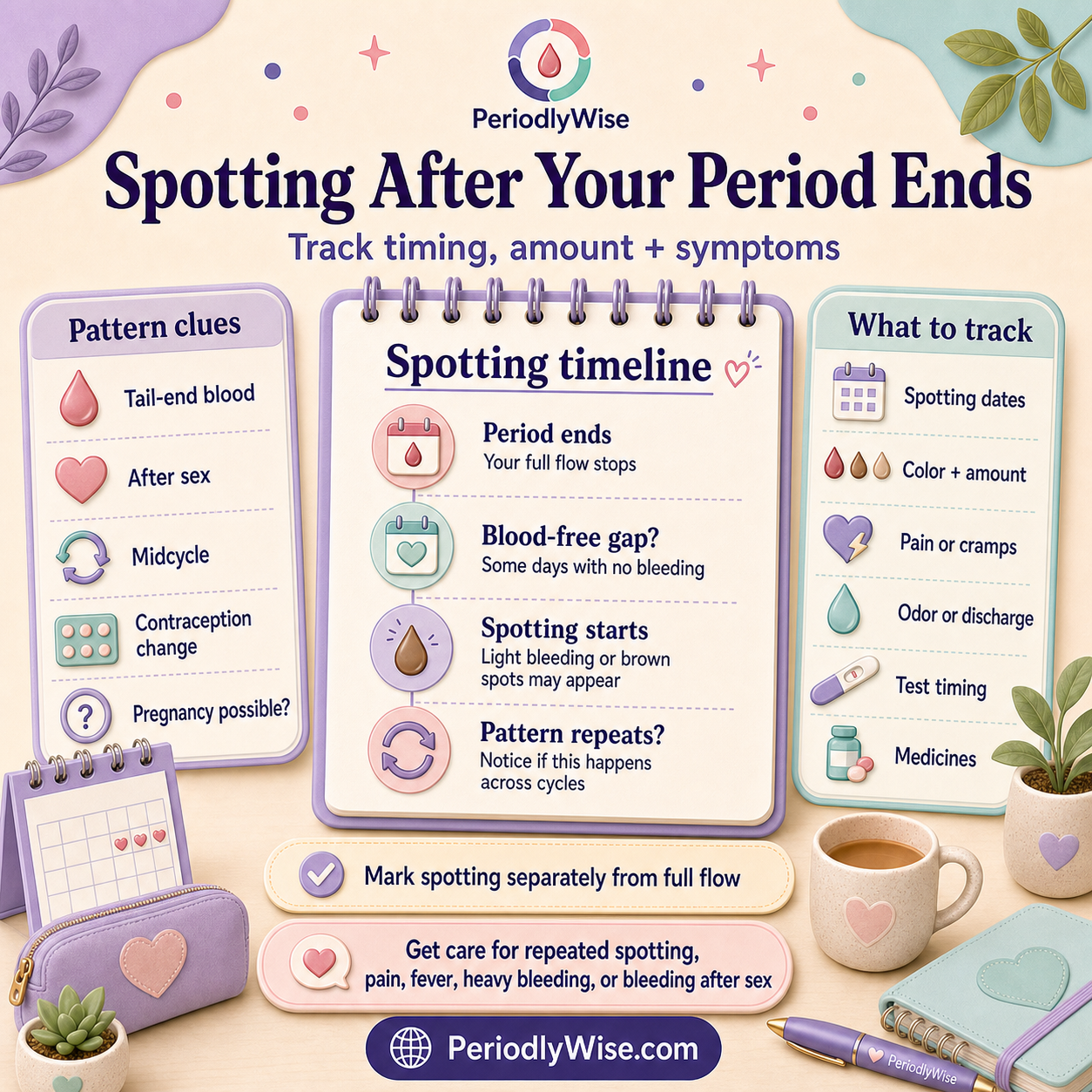
Spotting after a period may be leftover blood, but it can also relate to ovulation, contraception, pregnancy, infection, polyps, fibroids, or other abnormal bleeding. Learn what to track and when to seek care.
Read the guide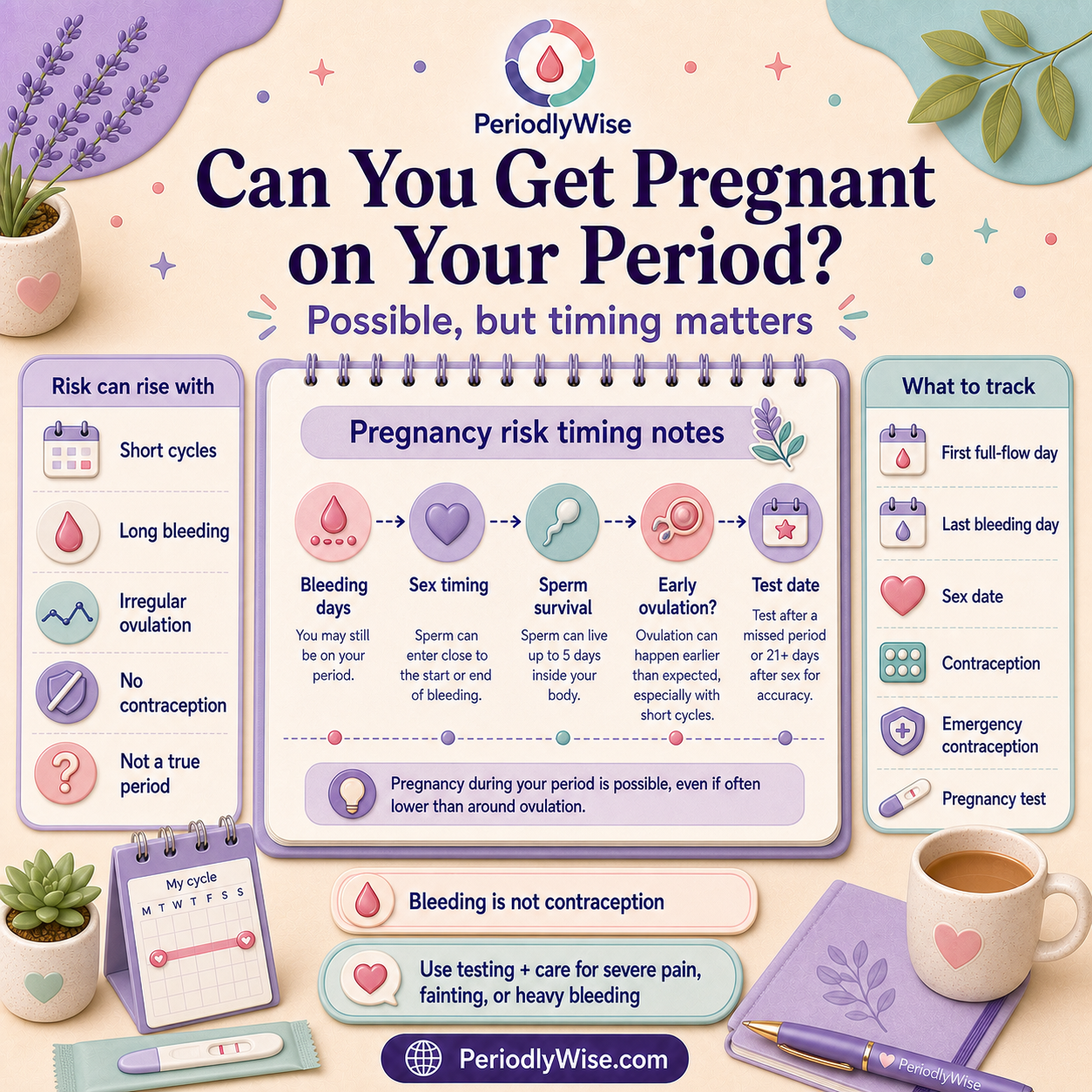
Yes, pregnancy during period bleeding is possible. Learn how sperm survival, early ovulation, short or irregular cycles, emergency contraception, and pregnancy-test timing affect the risk.
Read the guide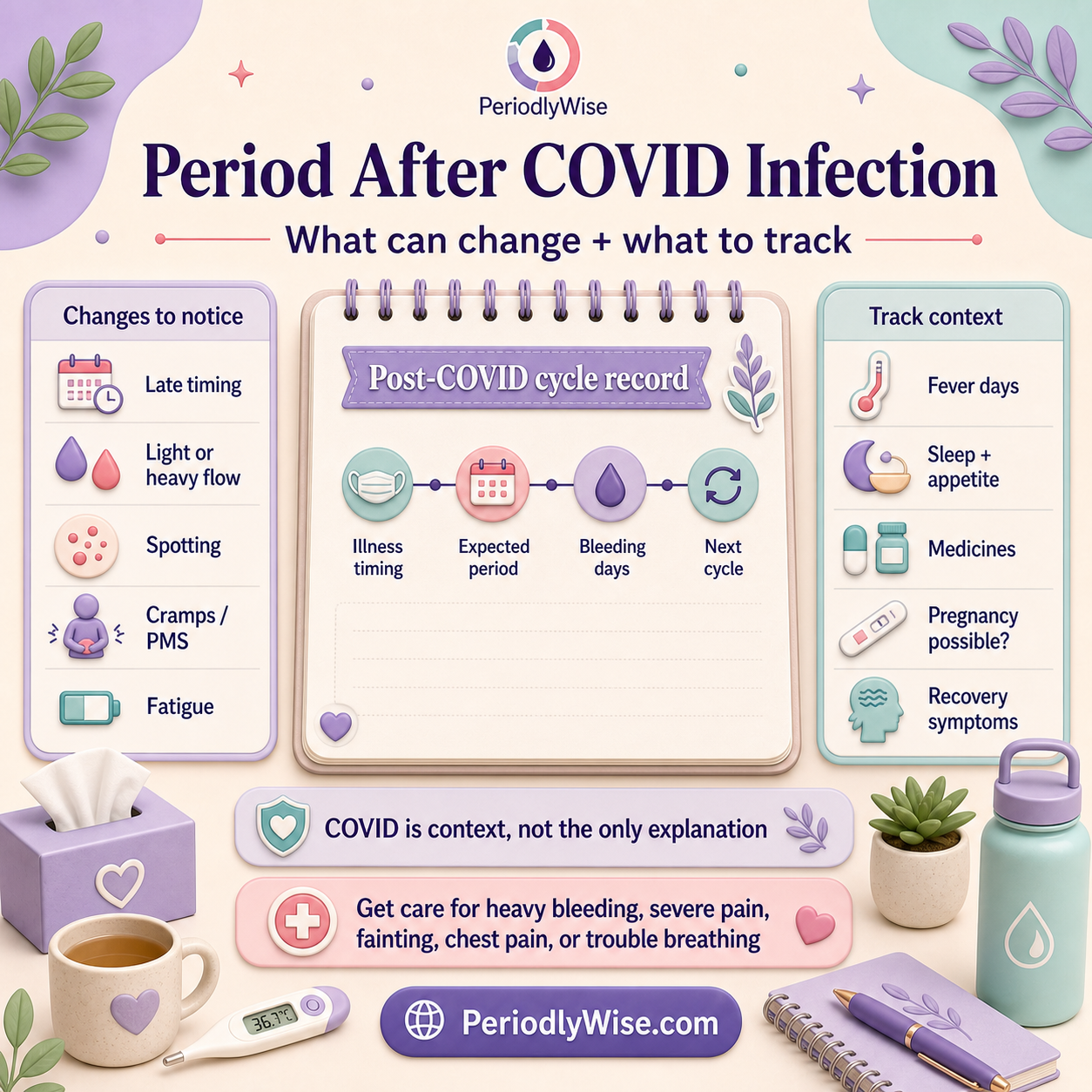
A careful guide to period changes after COVID infection, including late periods, lighter or heavier flow, cramps, fatigue, pregnancy testing, what to track, and when to seek care.
Read the guide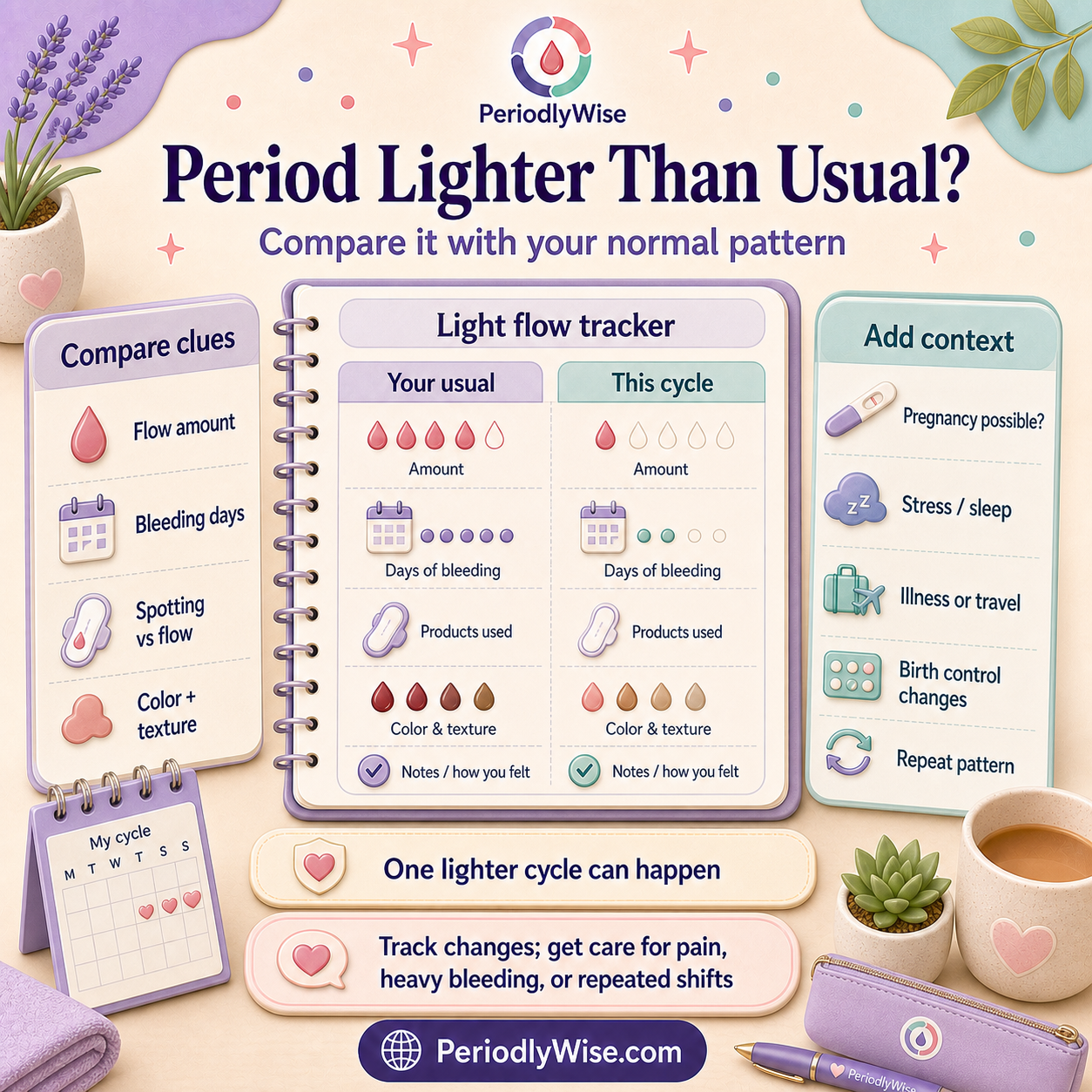
A careful guide to lighter-than-usual periods, including normal variation, spotting vs flow, pregnancy testing, stress, illness, birth control, thyroid signs, and what to track.
Read the guide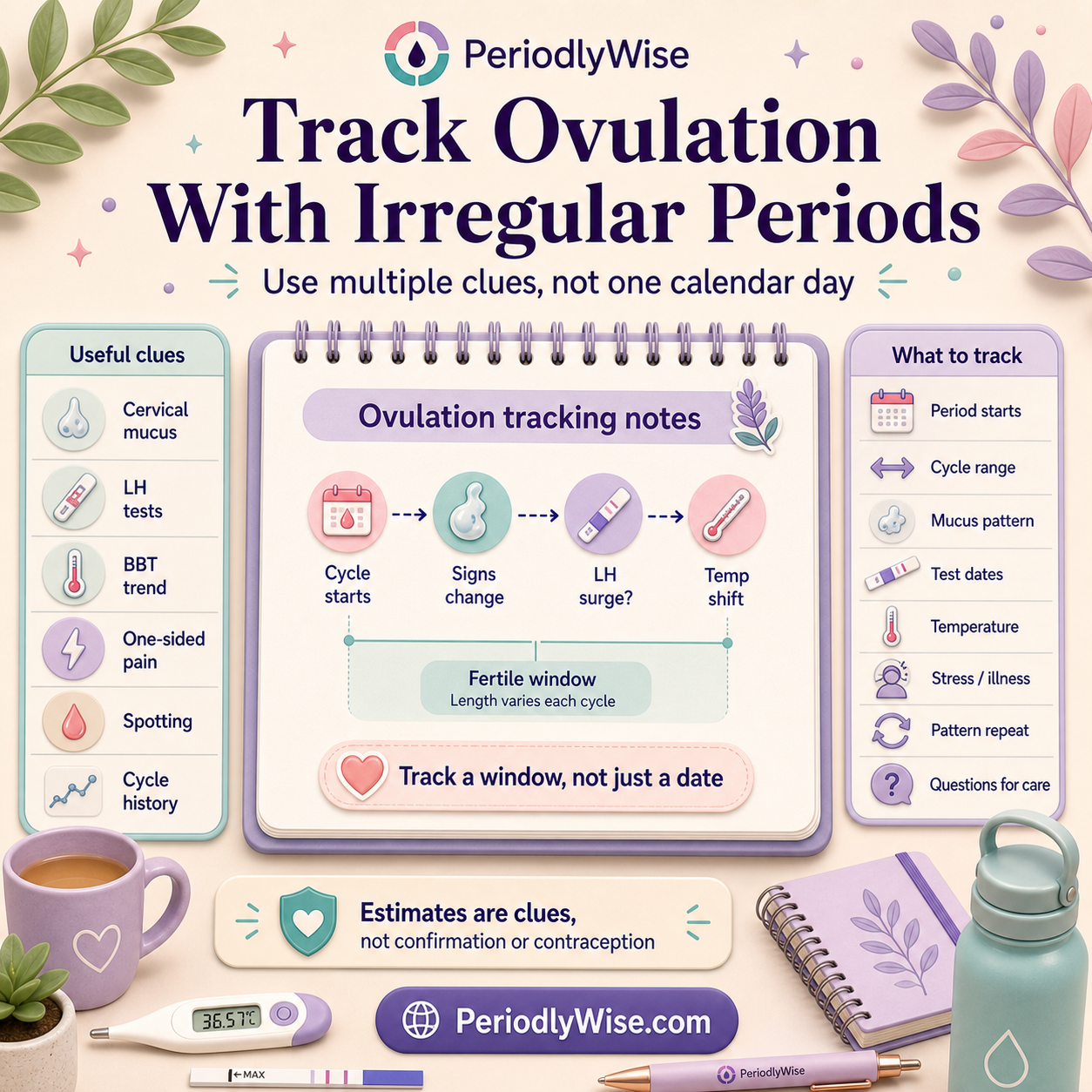
Learn how to track ovulation with irregular periods using cycle ranges, cervical mucus, LH tests, basal body temperature, symptoms, and medical follow-up when cycles are very unpredictable.
Read the guide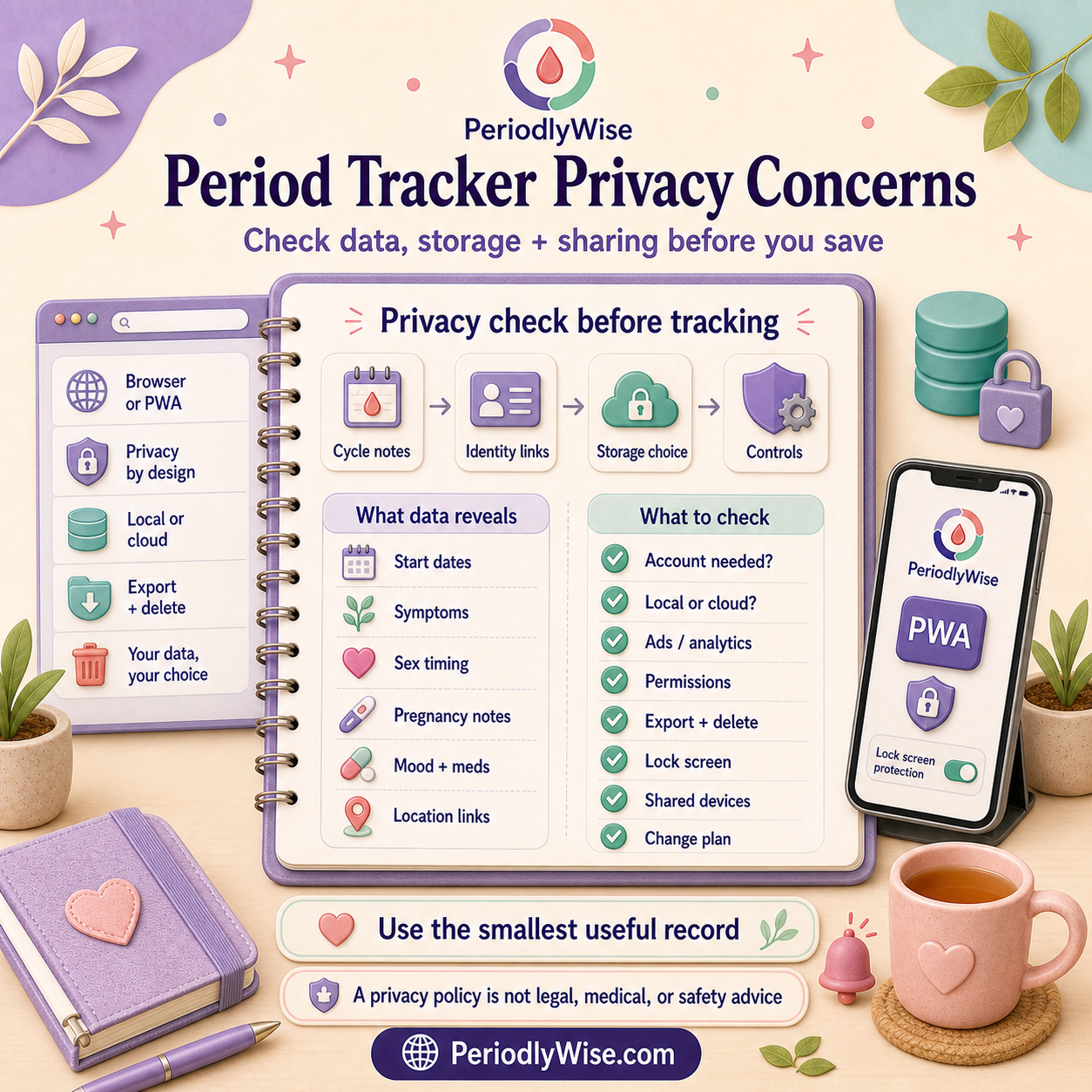
Period tracker privacy concerns are real because cycle dates, symptoms, pregnancy notes, fertile-window entries, and account data can be sensitive. Learn what to check before saving period data.
Read the guide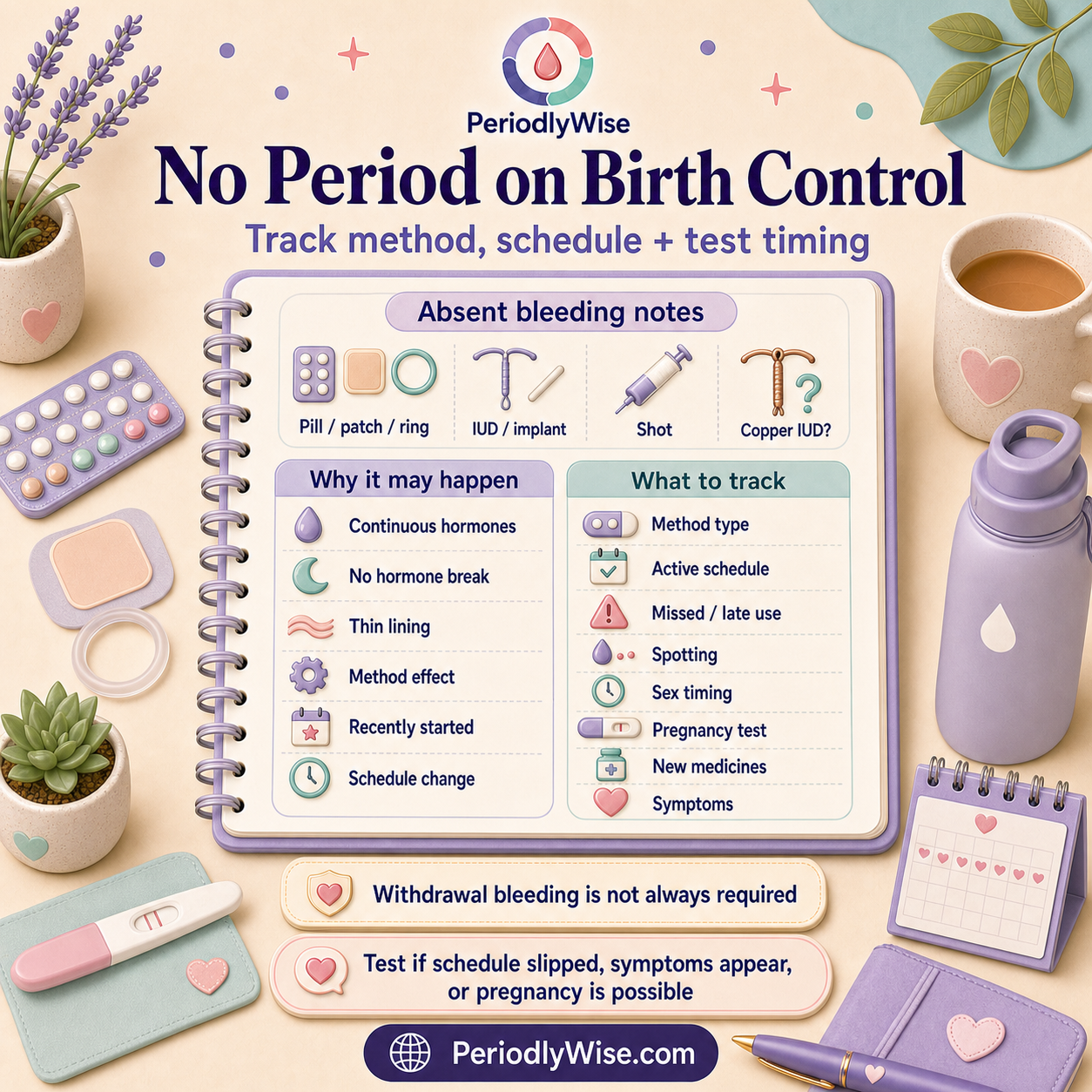
No period on hormonal birth control can be normal, especially with continuous use, hormonal IUDs, injections, implants, or thin uterine lining. Learn when to test and when to seek care.
Read the guide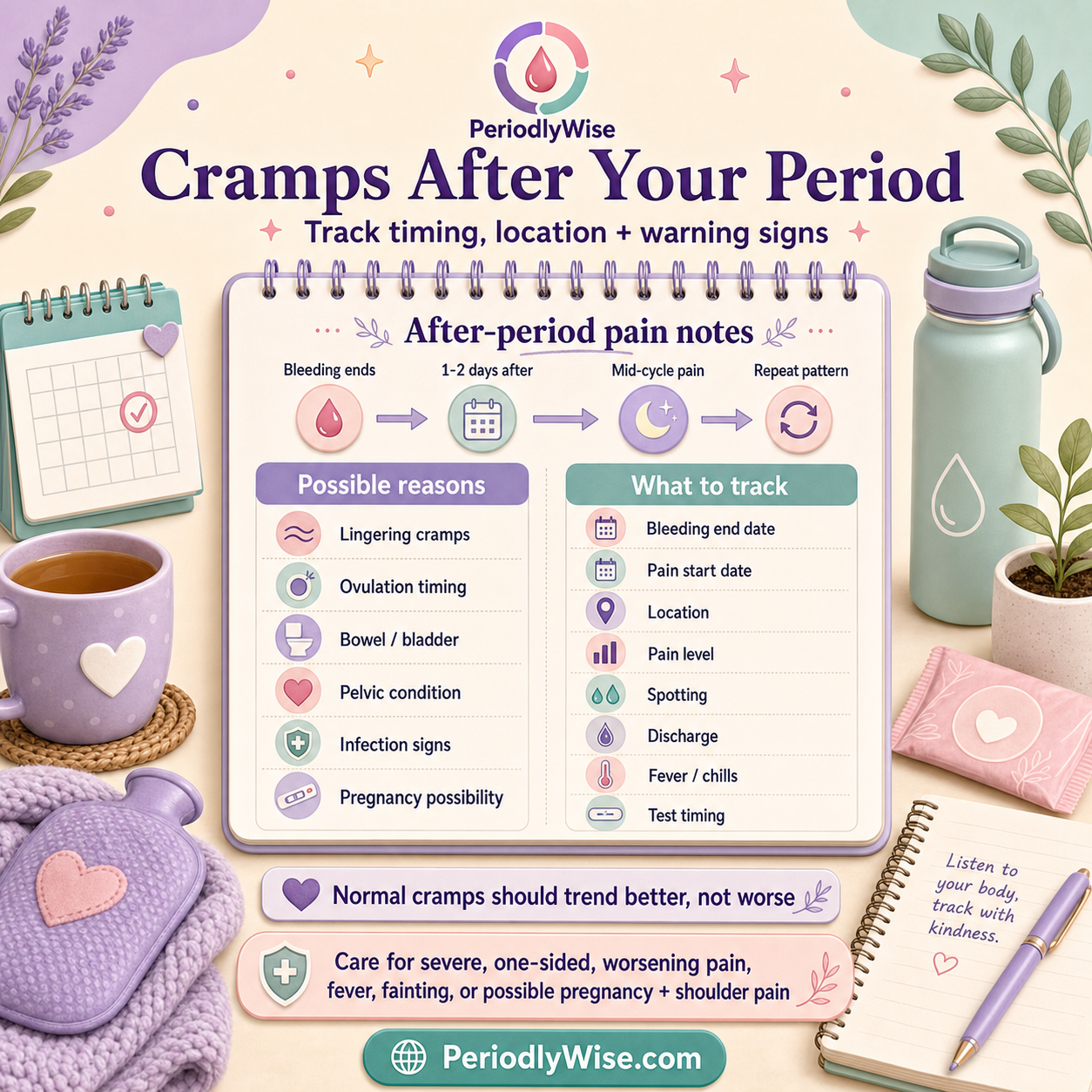
Period cramps after your period can be from lingering uterine cramping, ovulation timing, pelvic conditions, infection, pregnancy-related concerns, or non-gynecologic pain. Learn what to track and when to seek care.
Read the guide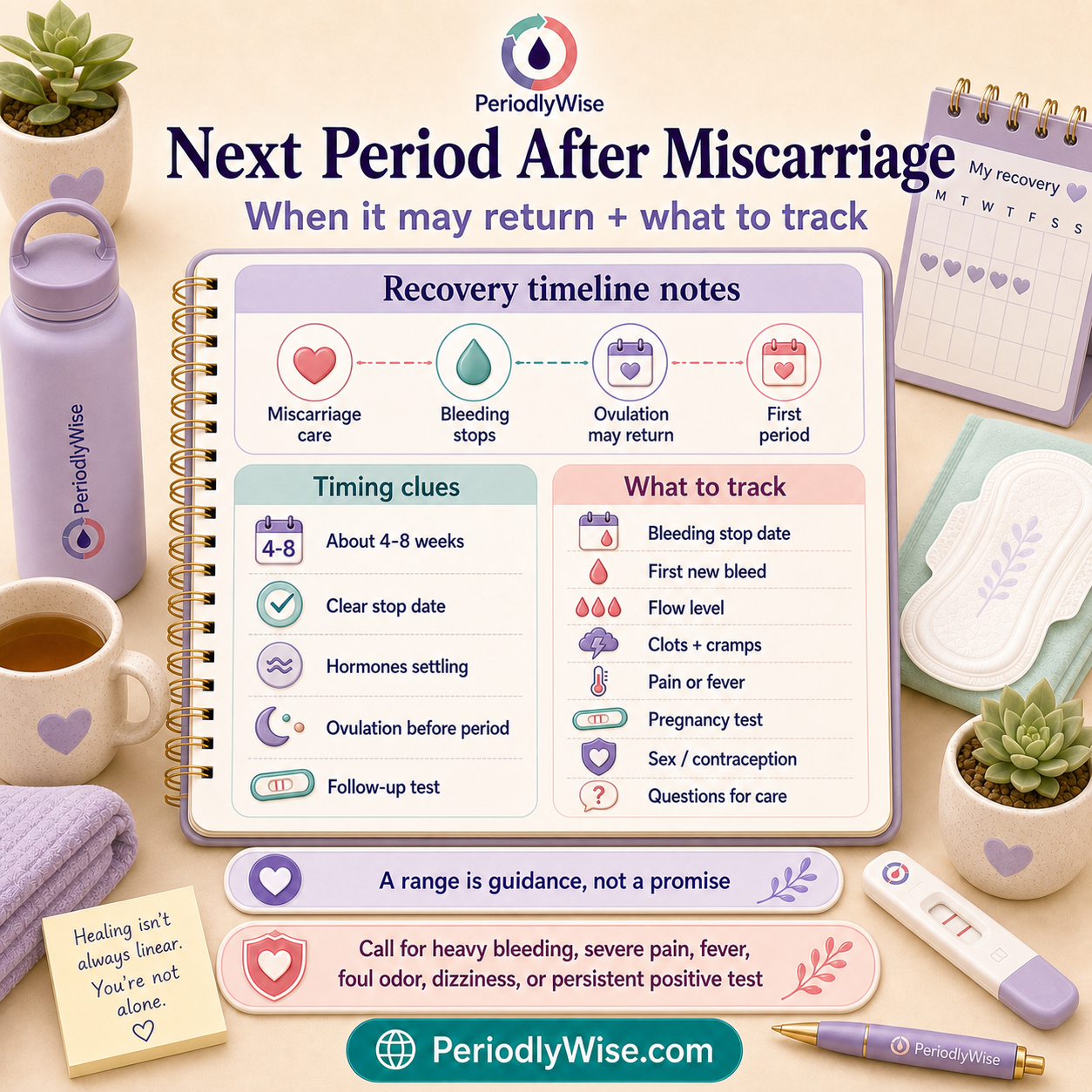
Your next period after miscarriage may return in about 4 to 8 weeks, but ovulation can happen before it. Learn what affects timing, what to track, and when to seek care.
Read the guide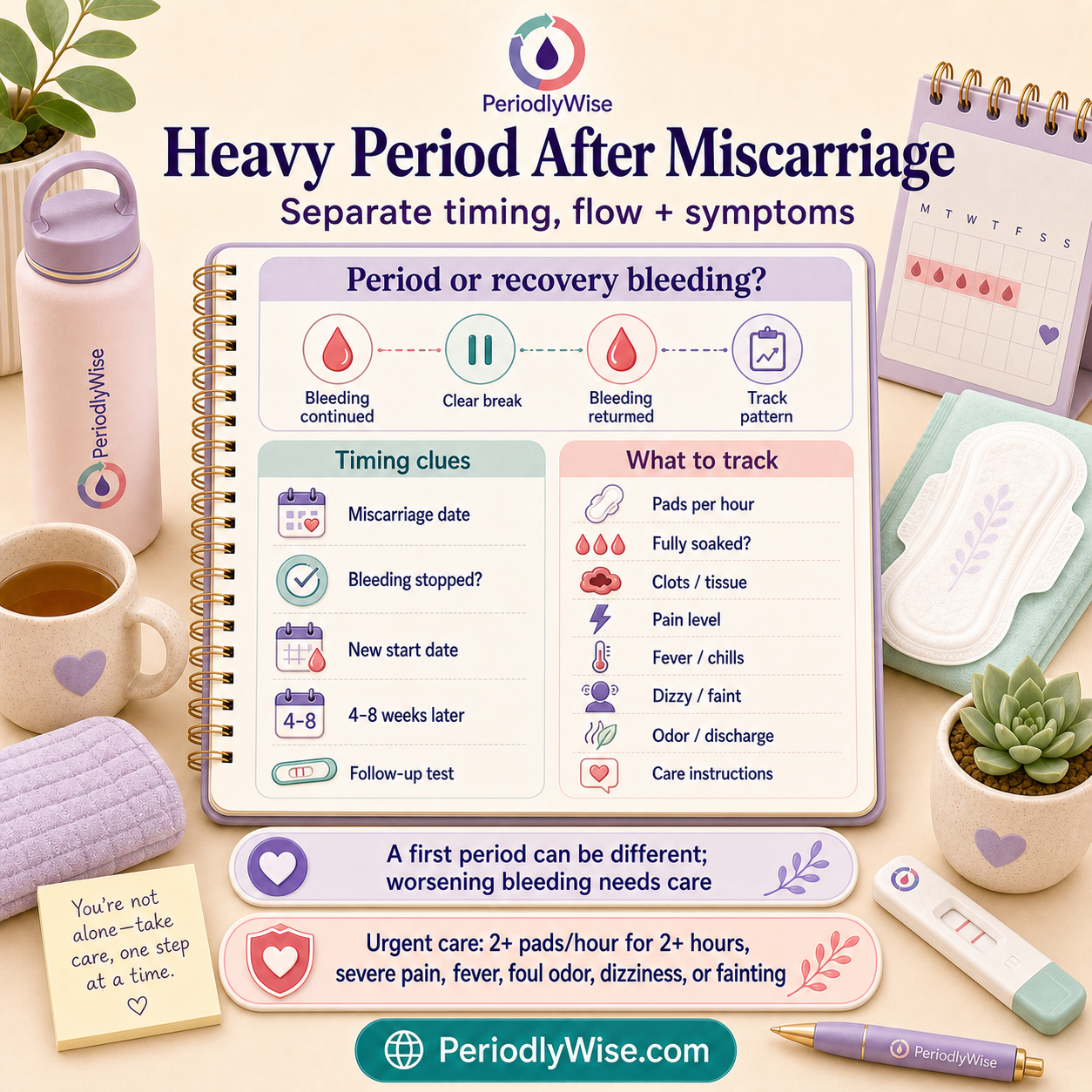
A heavy period after miscarriage can happen, but very heavy bleeding, severe pain, fever, dizziness, foul-smelling discharge, or bleeding that does not ease should be checked.
Read the guide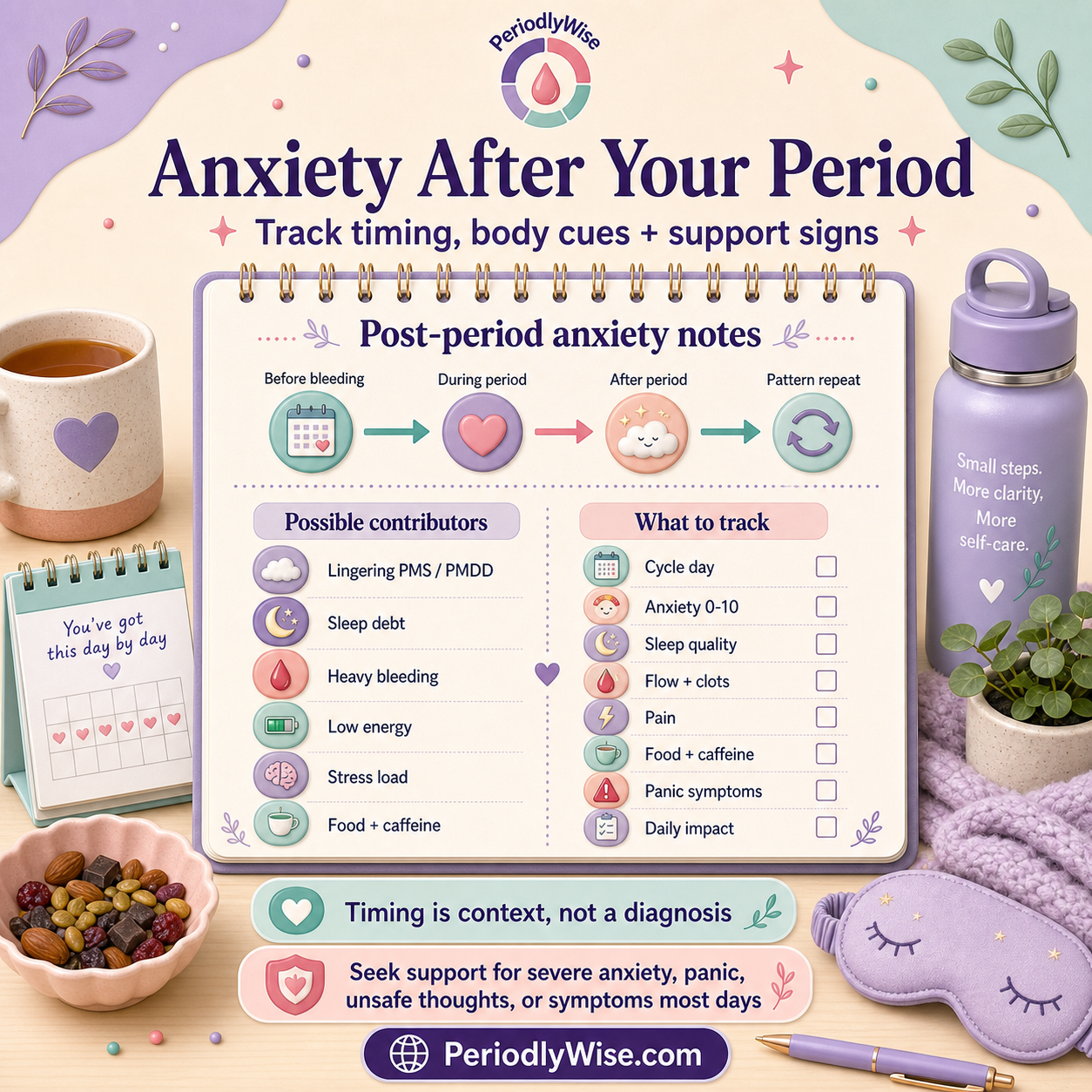
Anxiety after a period can come from cycle-related mood sensitivity, PMDD symptoms that linger, sleep debt, stress, low energy, heavy bleeding, or an anxiety pattern that needs support.
Read the guide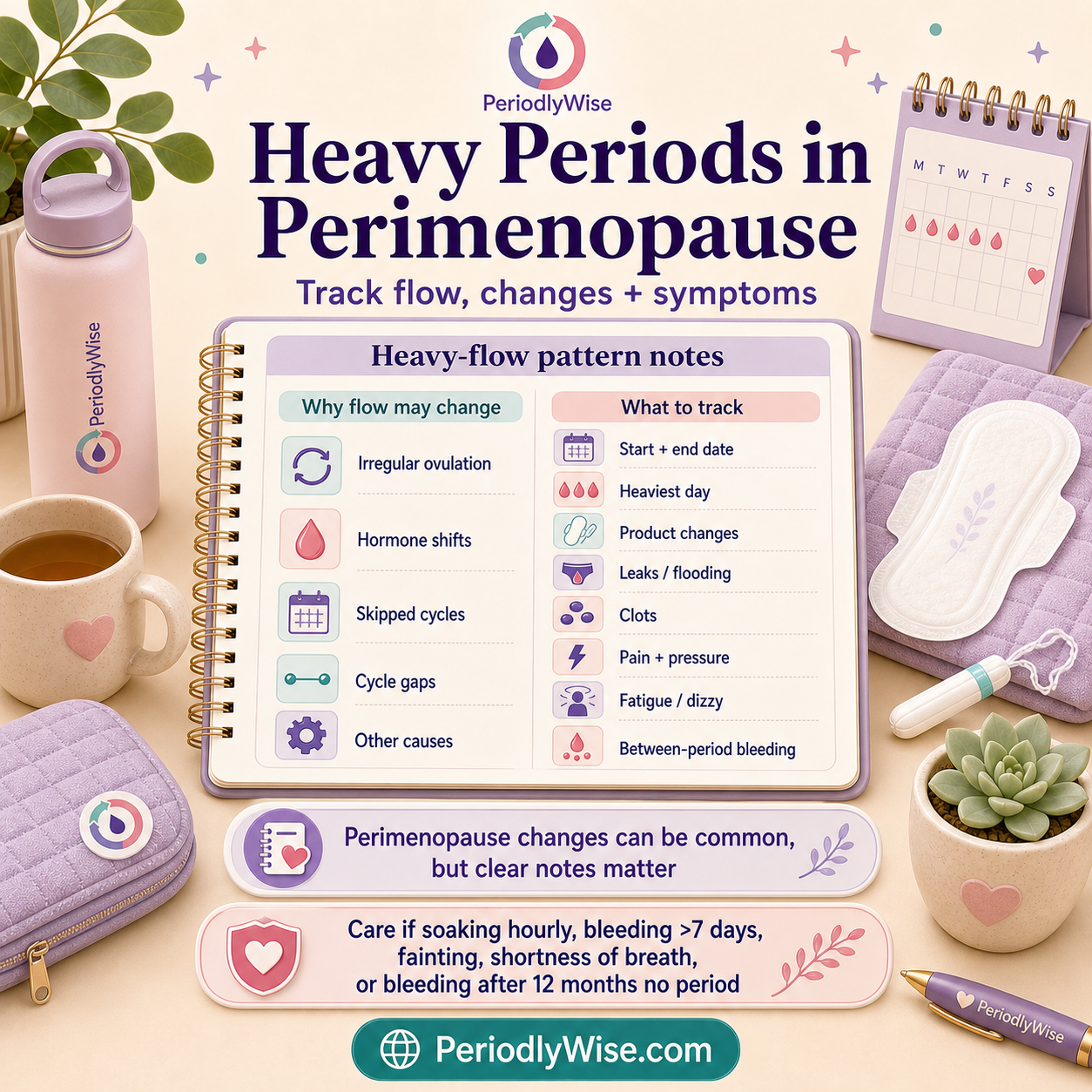
Heavy periods can happen during perimenopause, but very heavy, prolonged, new, or postmenopausal bleeding should be checked. Learn what to track and when to seek care.
Read the guide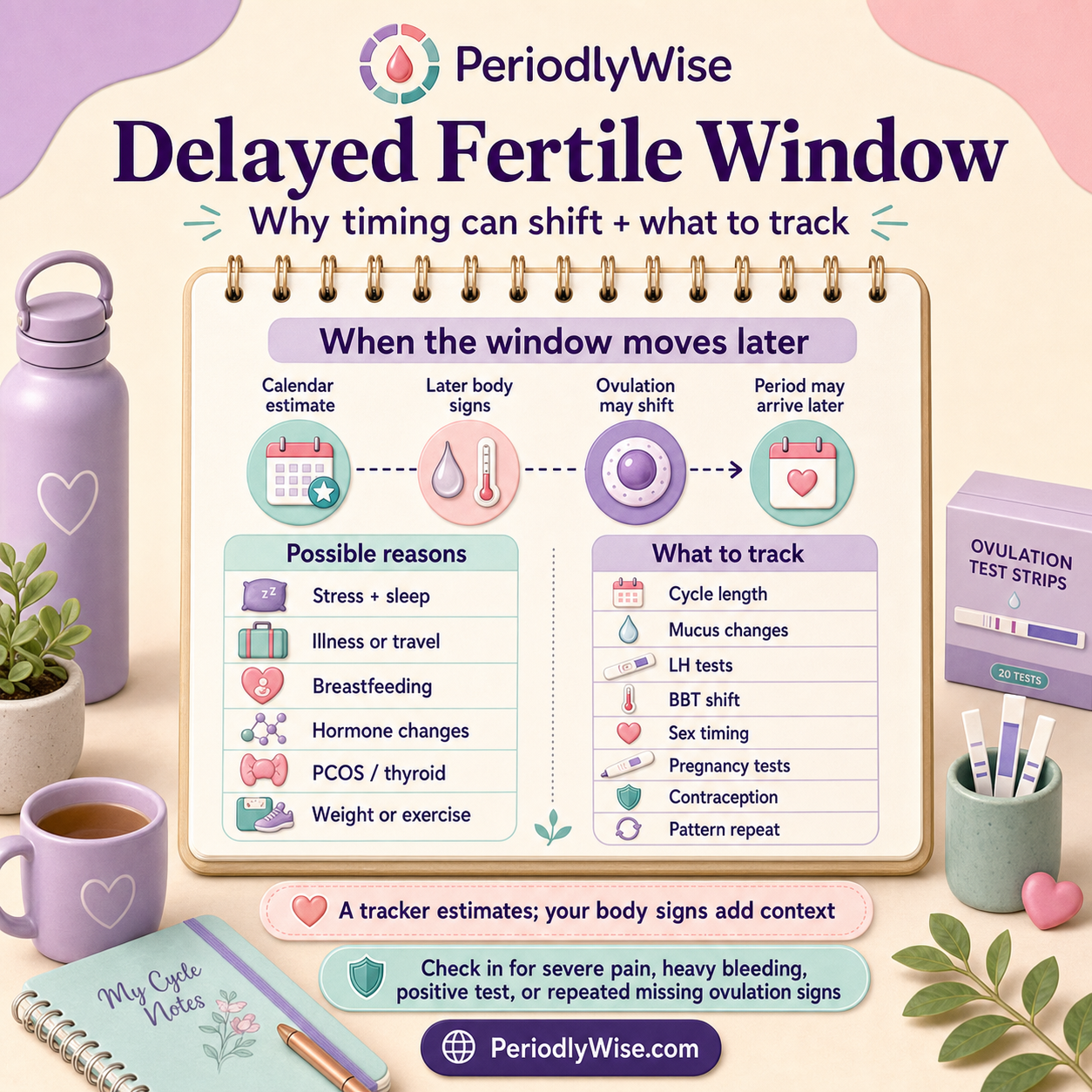
A medically careful guide to what causes a fertile window to be delayed, including late ovulation, cycle length changes, stress, illness, breastfeeding, PCOS, thyroid changes, tracking signs, and when to seek care.
Read the guide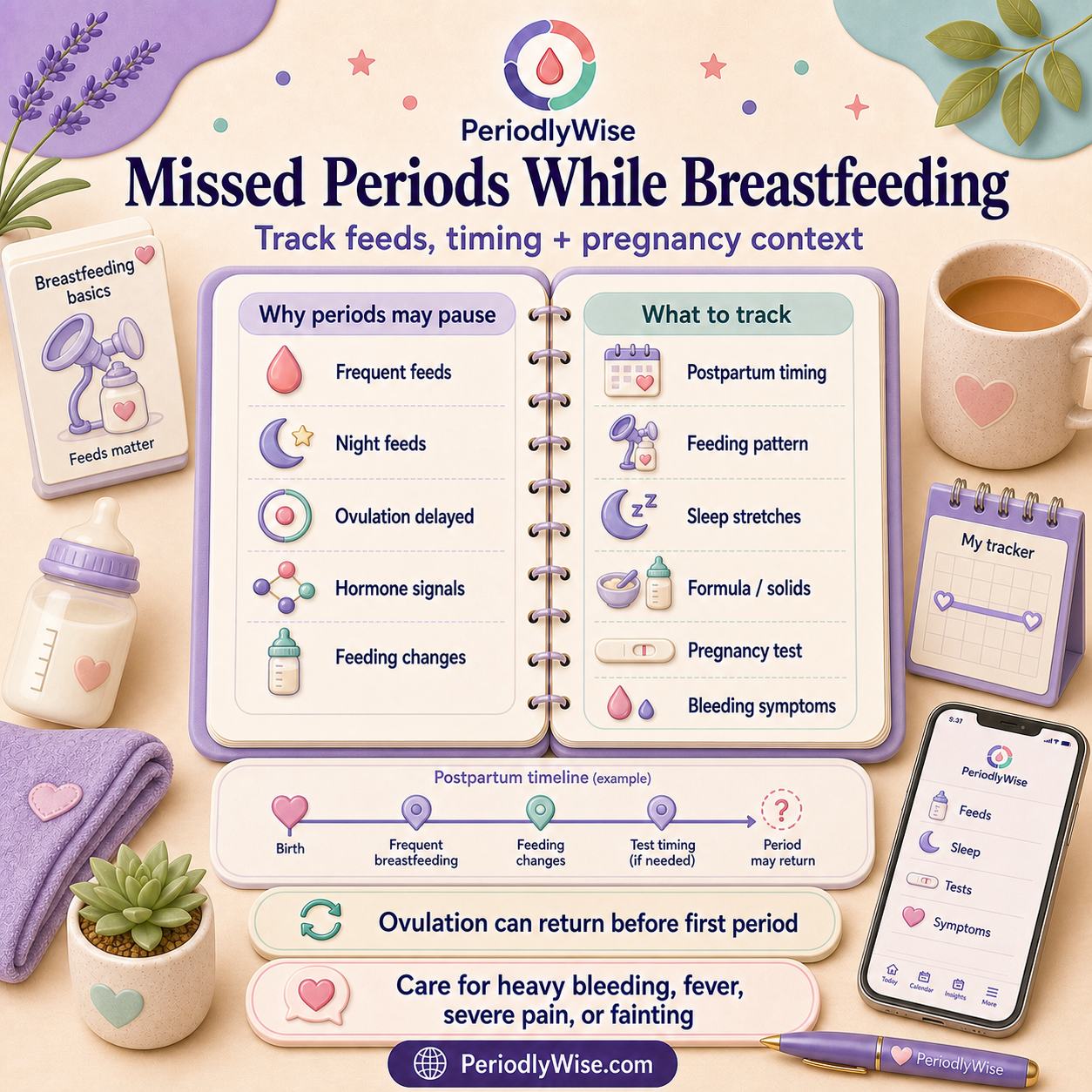
A medically careful guide to missed periods while breastfeeding, including lactational amenorrhea, feeding pattern changes, pregnancy possibility, contraception, returning periods, red flags, and what to track.
Read the guide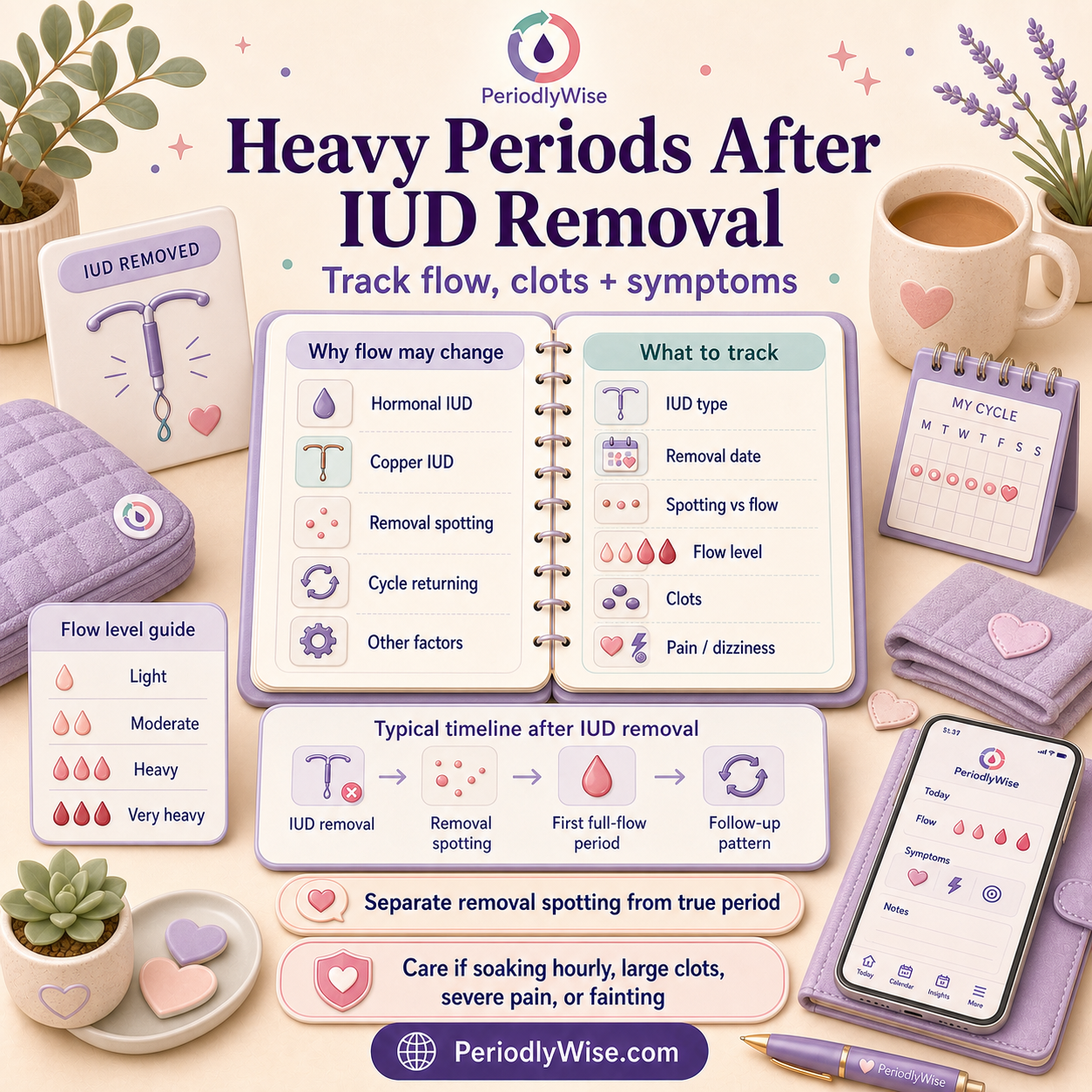
A medically careful guide to heavy periods after IUD removal, including hormonal and copper IUD differences, removal spotting, first true periods, pregnancy testing, anemia signs, red flags, and what to track.
Read the guide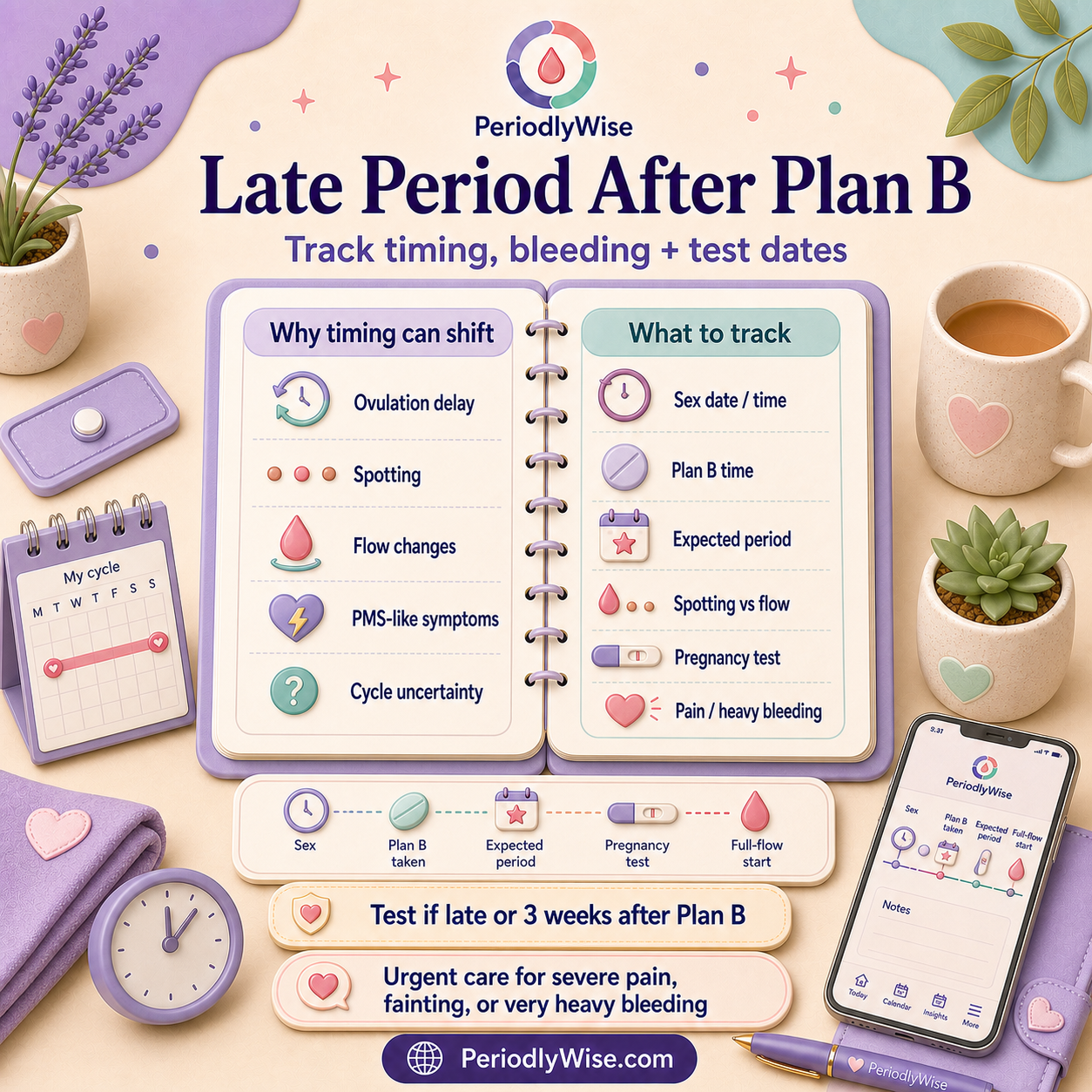
A medically careful guide to late periods after taking Plan B, including emergency contraception timing, spotting, pregnancy test timing, side effects, red flags, and what to track.
Read the guide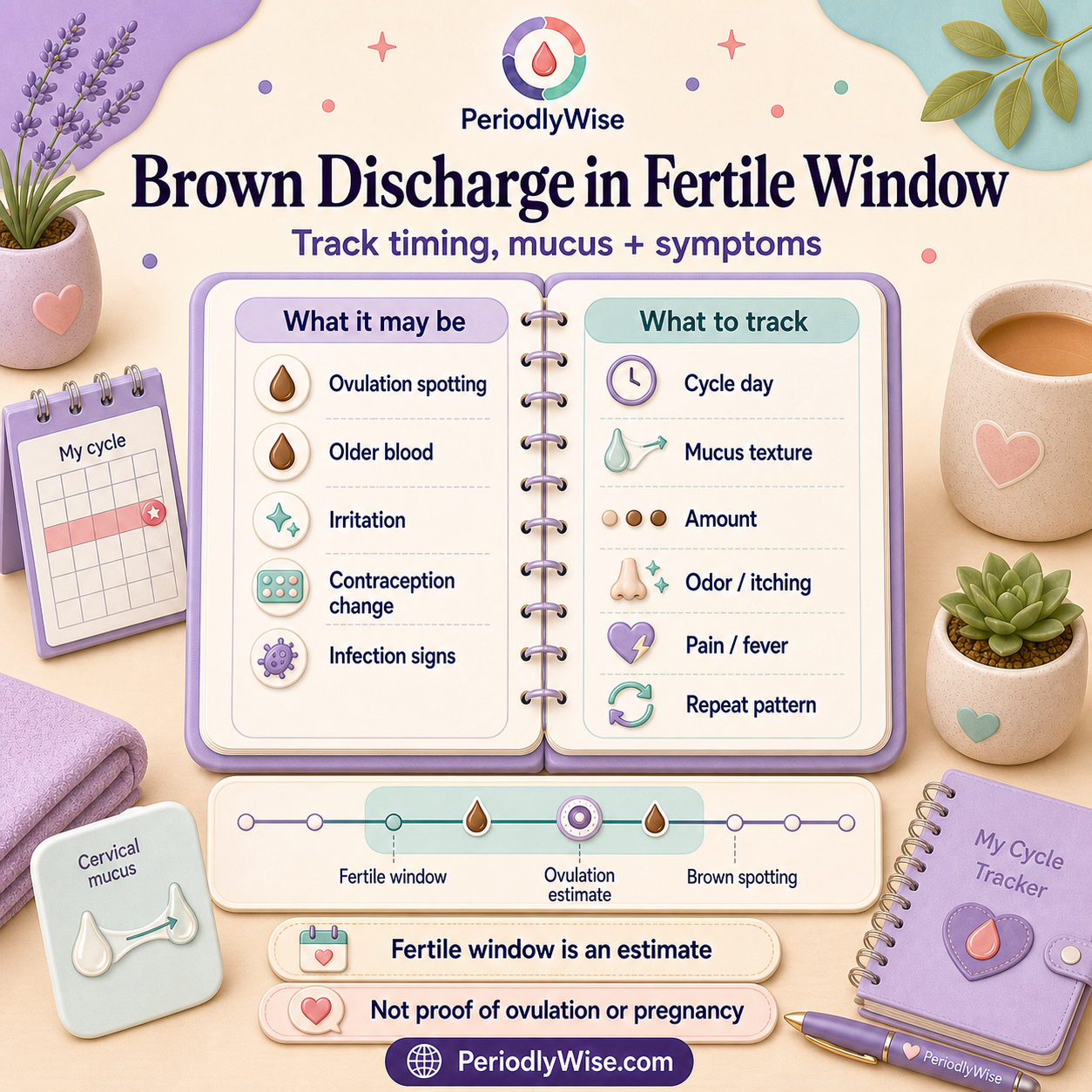
A medically careful guide to brown discharge during the fertile window, including ovulation spotting, cervical mucus, pregnancy timing, infections, contraception, and what to track.
Read the guide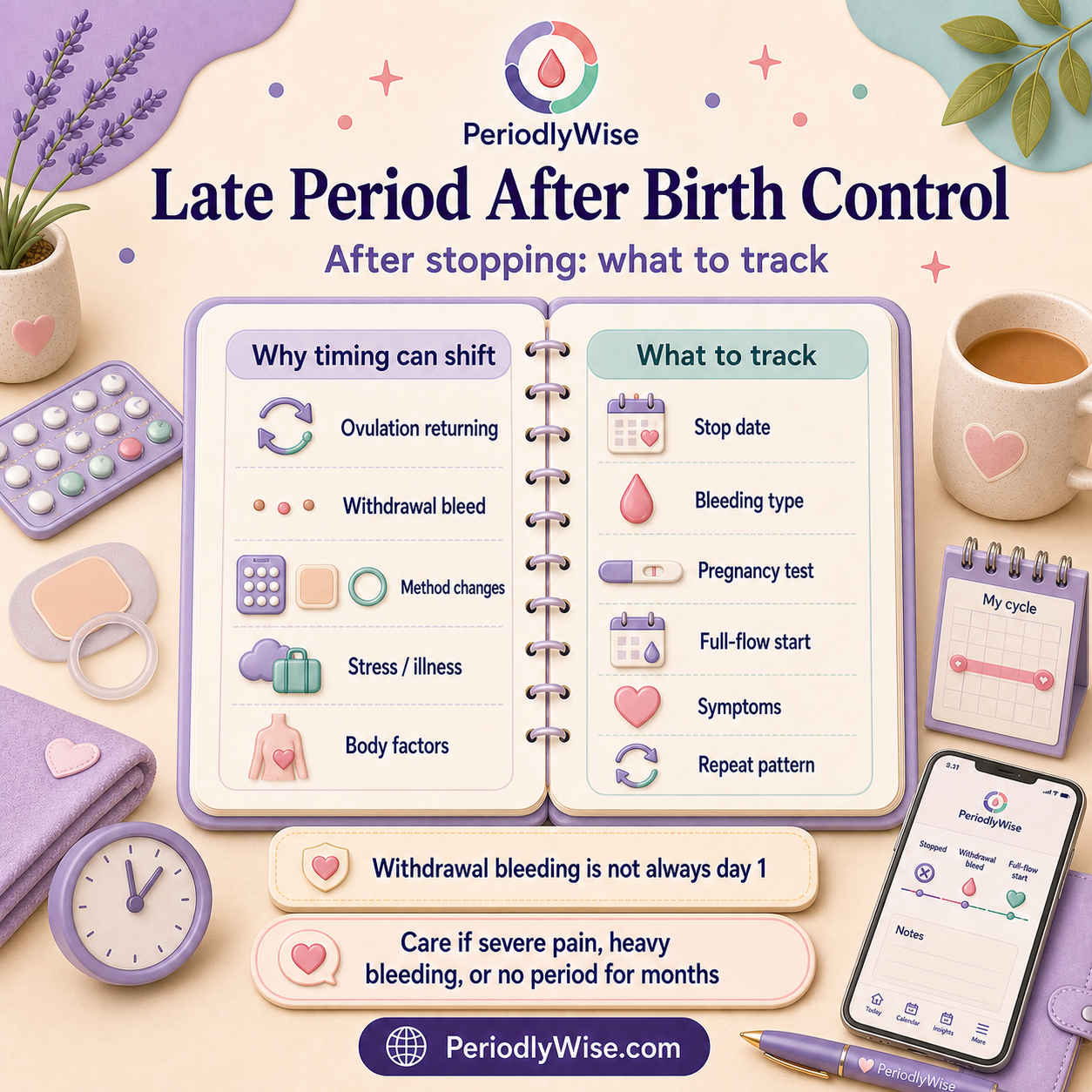
A medically careful guide to late periods after stopping birth control, including withdrawal bleeding, ovulation returning, pregnancy testing, method changes, symptoms, and when to seek care.
Read the guide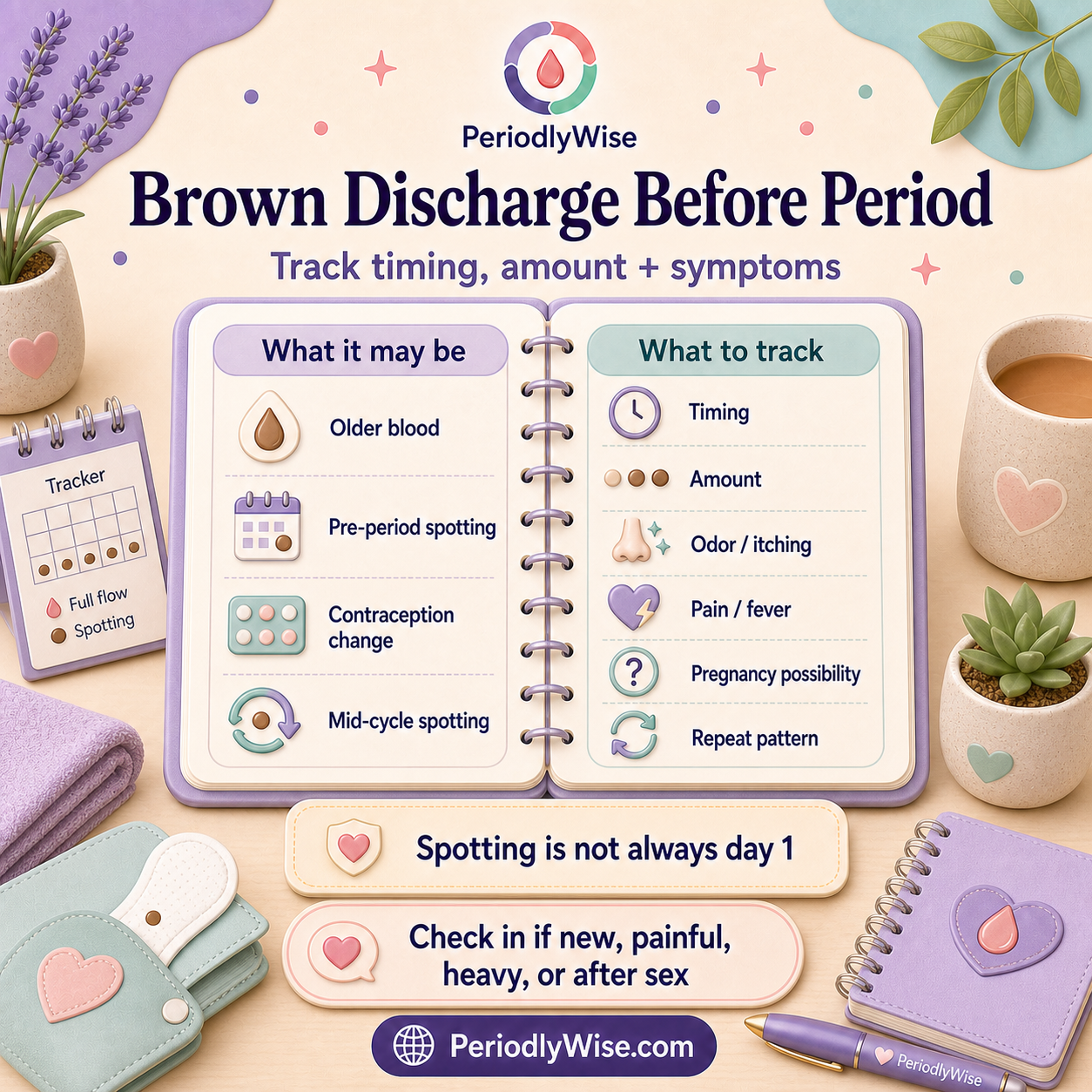
A medically careful guide to brown discharge before a period, including older blood, spotting, cycle timing, contraception, infection signs, pregnancy possibility, and what to track.
Read the guide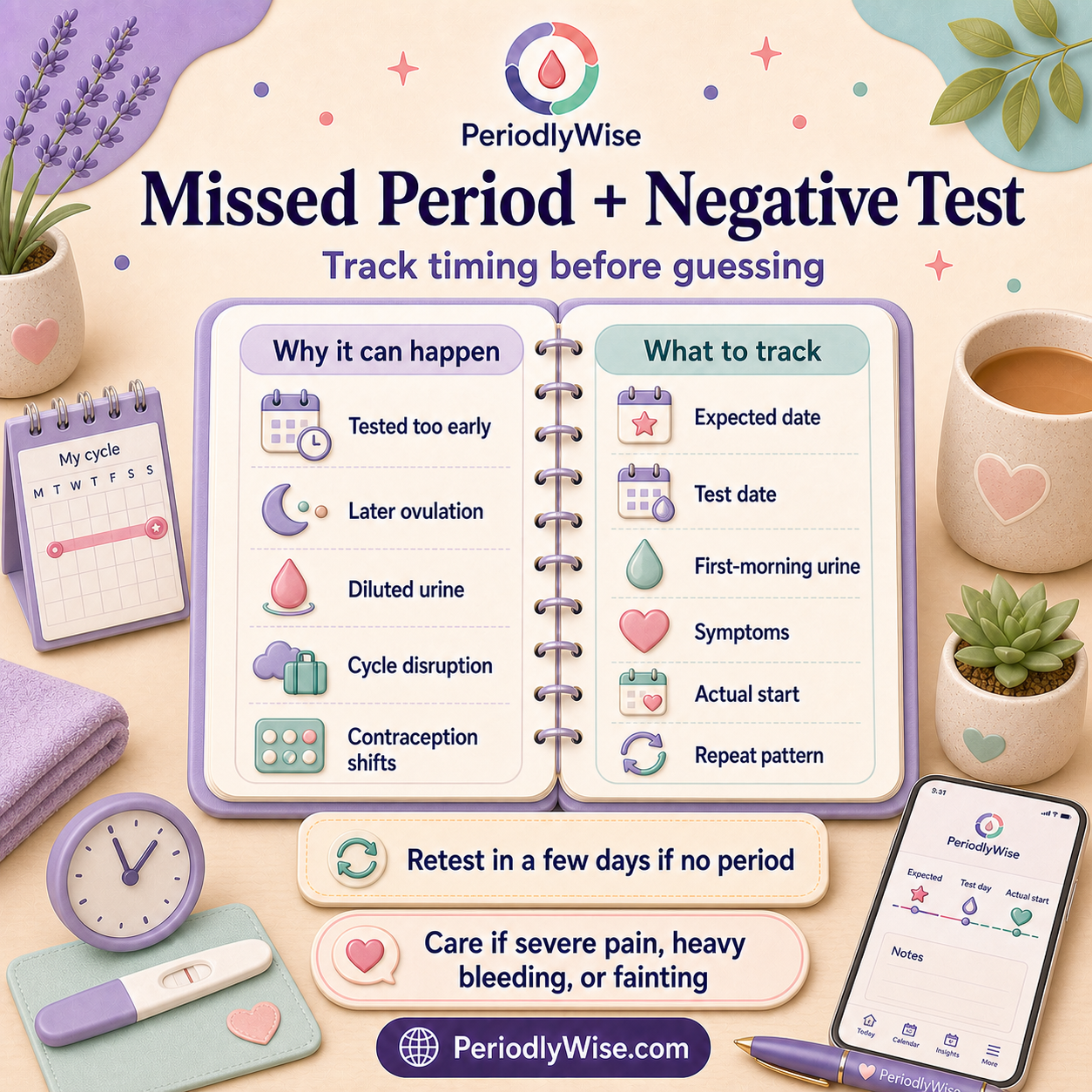
Understand why a period can be missed while a pregnancy test is negative, including early testing, delayed ovulation, irregular cycles, stress, contraception, PCOS, thyroid changes, and when to seek care.
Read the guide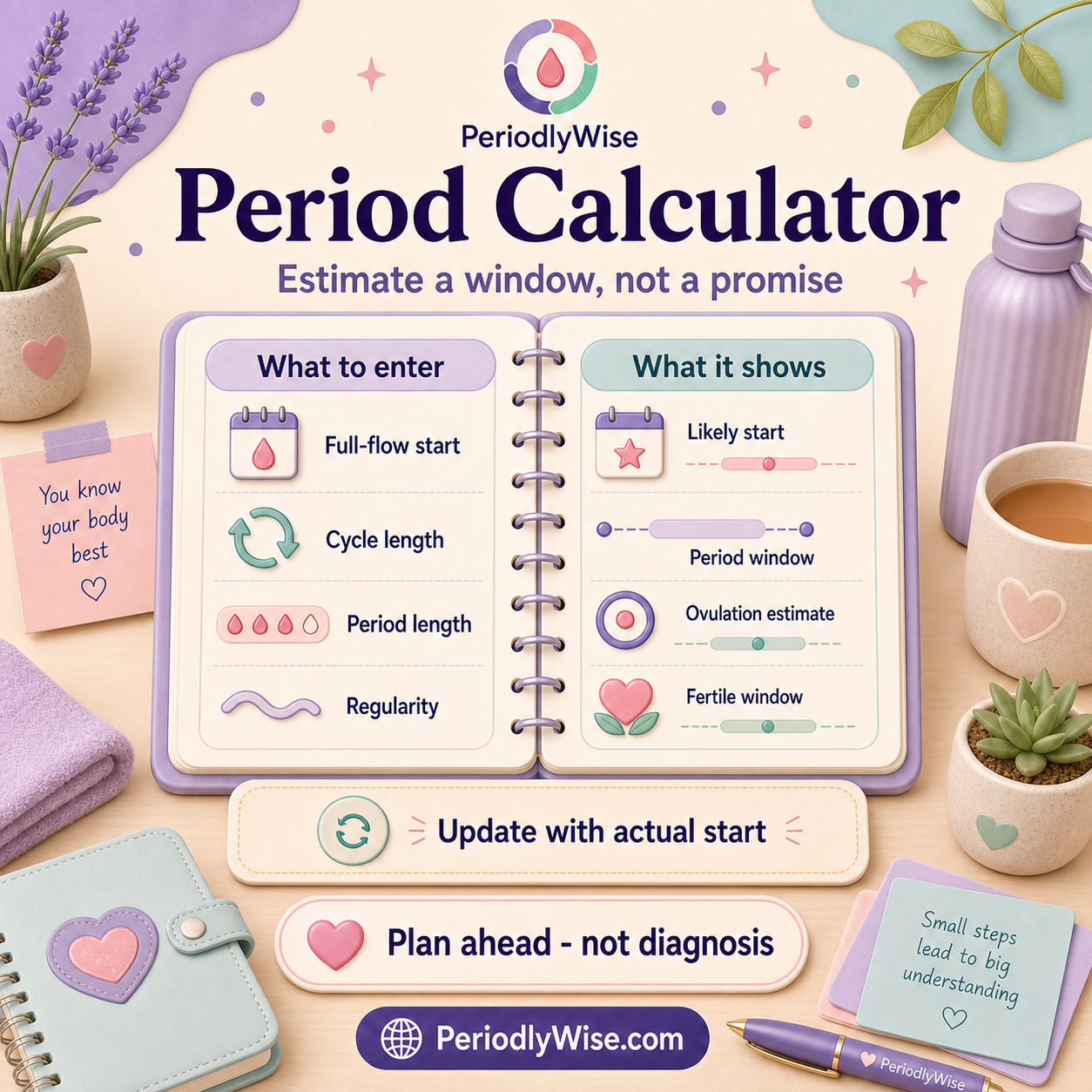
Use a period calculator with confidence: learn which dates to enter, how the estimate is produced, how to read period and fertile windows, and when a calculator is not enough.
Read the guide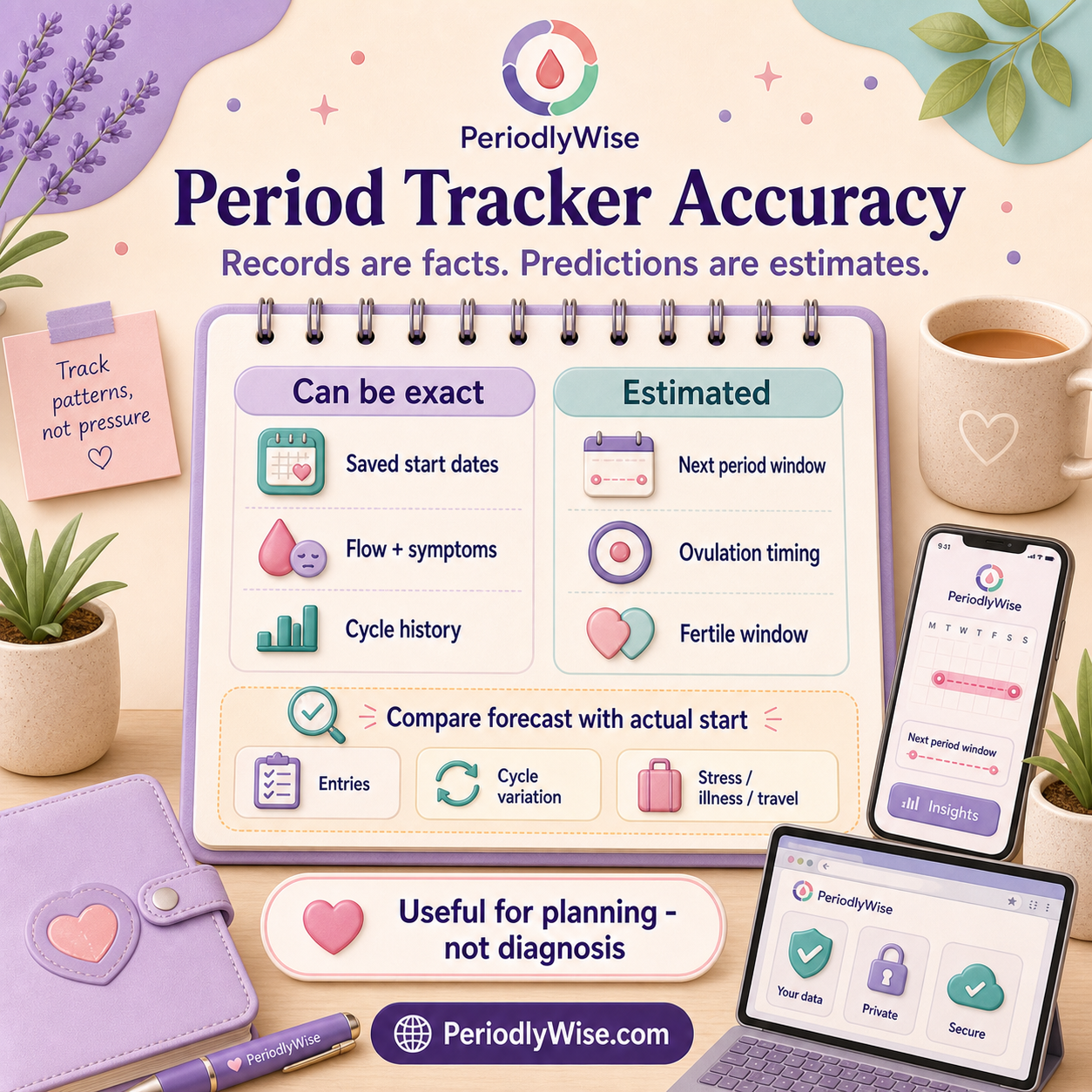
Find out how accurate period trackers can be for period dates, why ovulation predictions are less certain, what changes results, and how to judge your own tracker responsibly.
Read the guide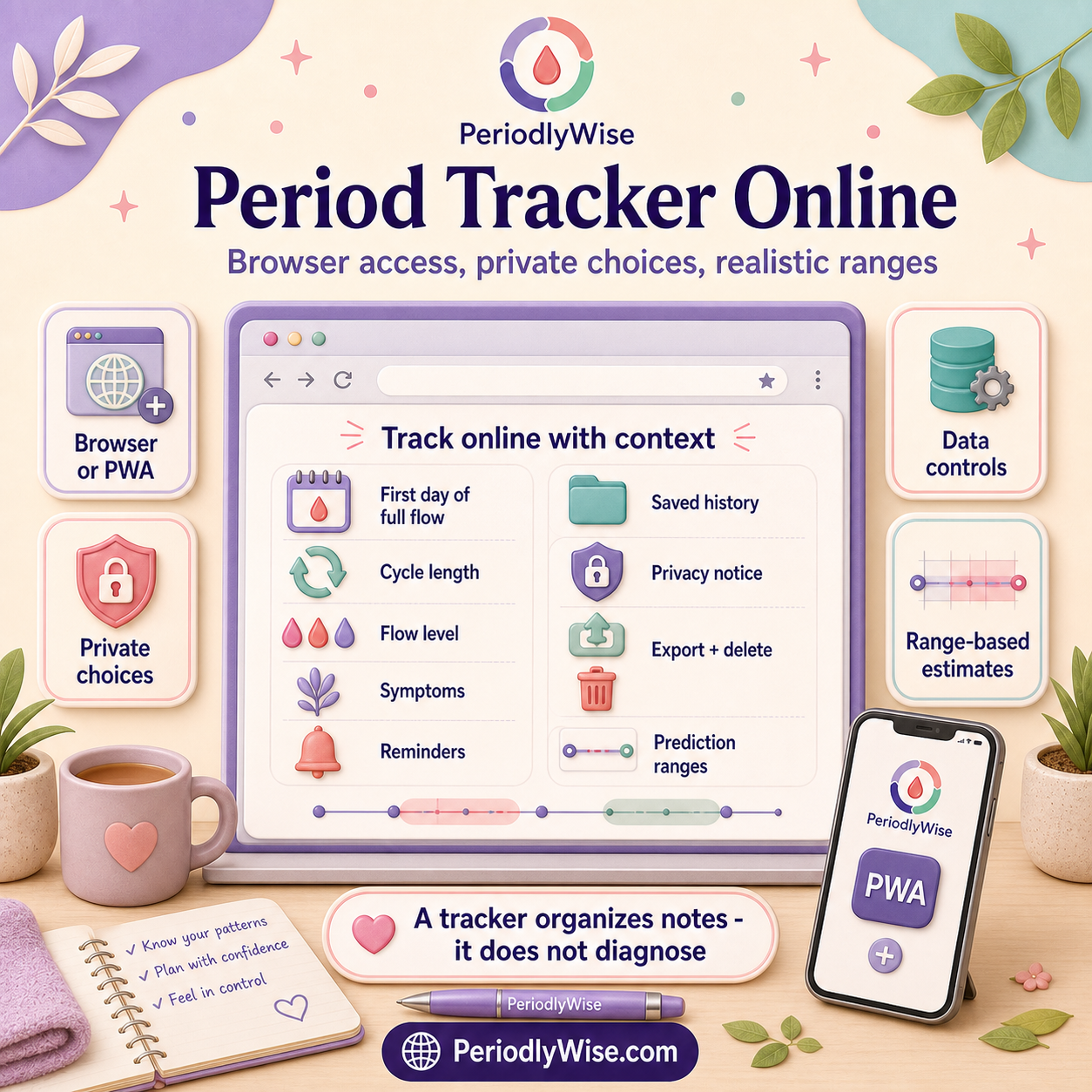
Learn how to use an online period tracker with privacy awareness, realistic prediction ranges, symptom context, saved history choices, and medical limits.
Read the guide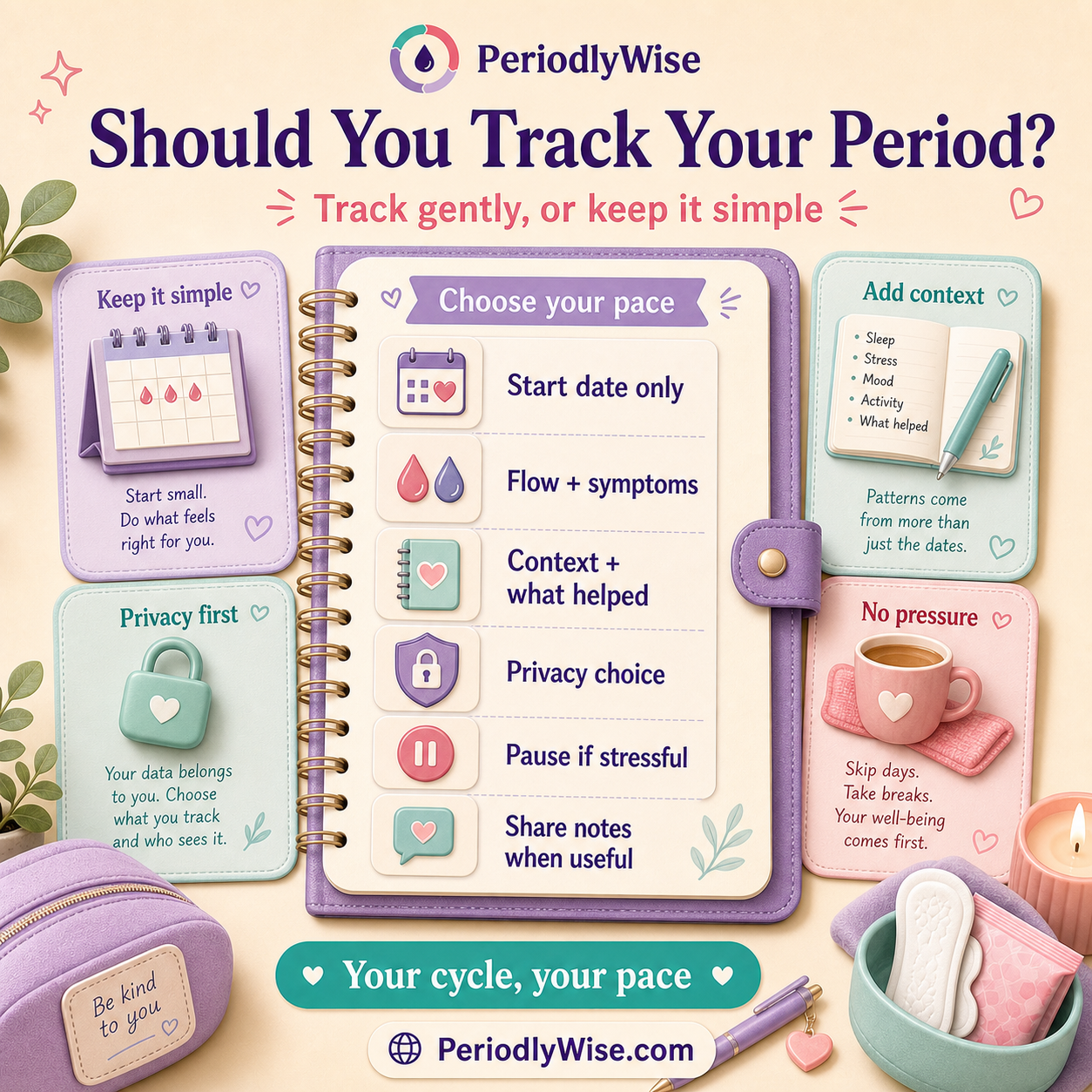
Decide whether period tracking is useful for you, what to track lightly, how to avoid obsession, how tracking can support care, and when symptoms need medical attention.
Read the guide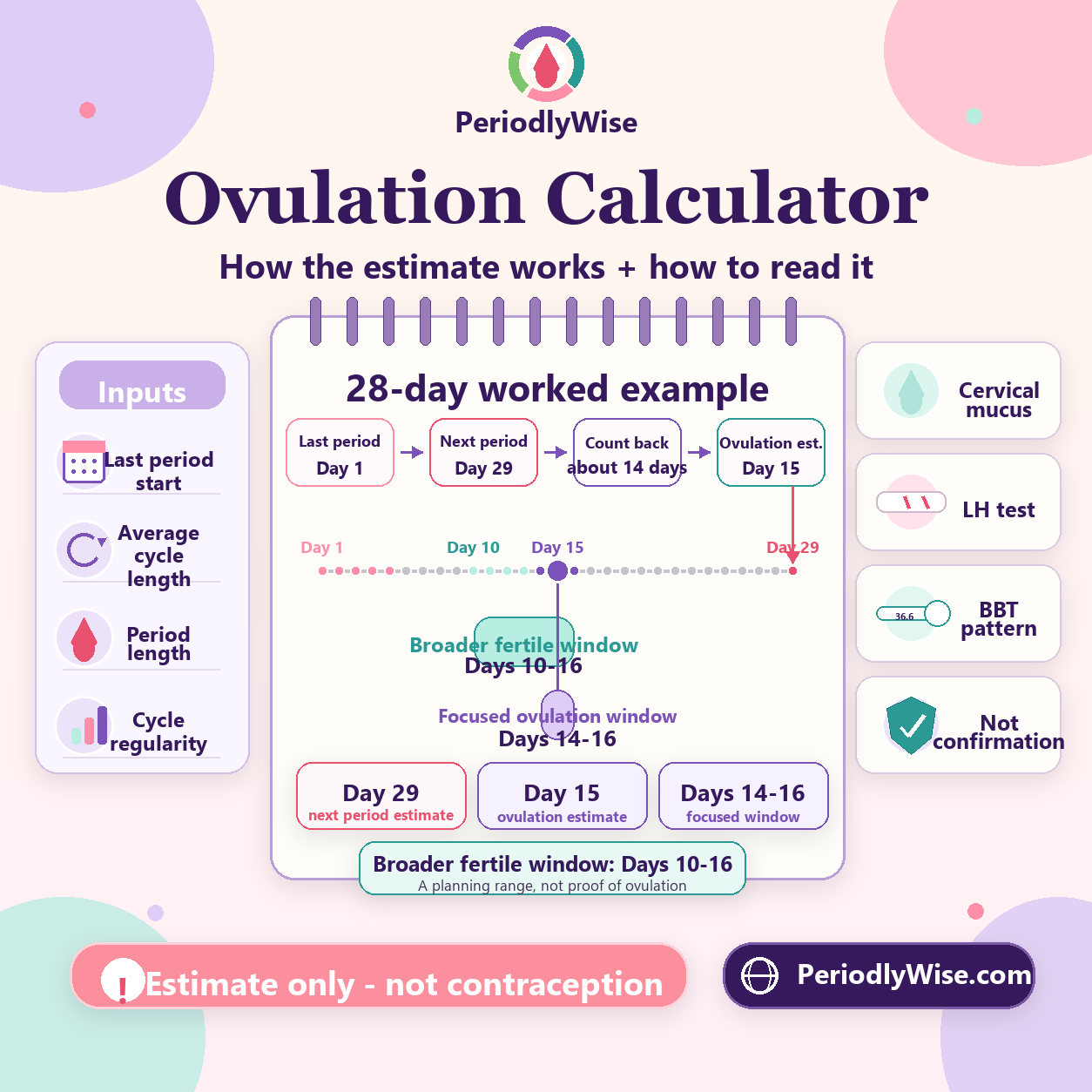
Learn how an ovulation calculator estimates ovulation from your last period and cycle length, how to read the result, what can shift timing, and when calendar estimates are not enough.
Read the guide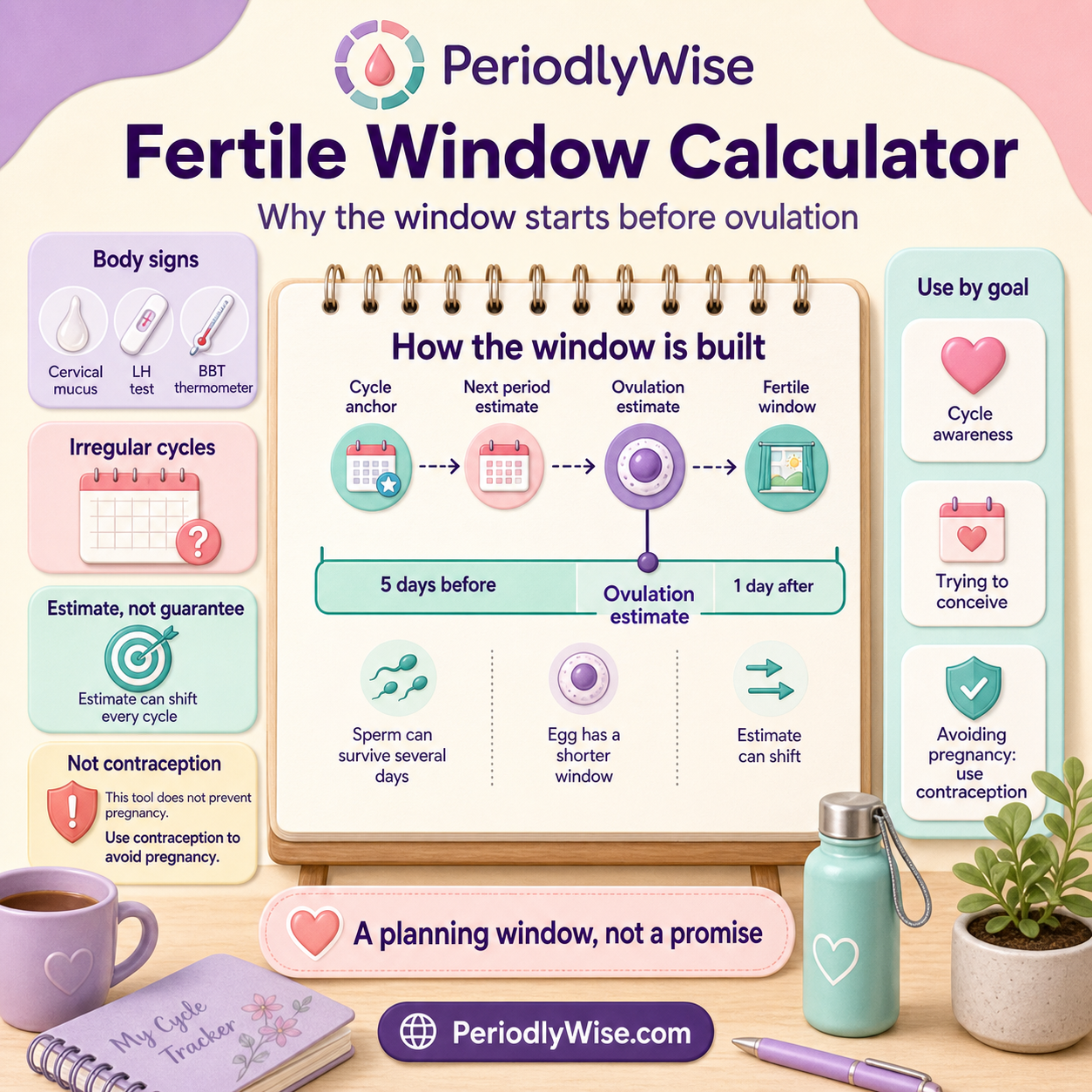
Understand how a fertile window calculator estimates fertile days, why the window starts before ovulation, how to use the dates for different goals, and what can make the estimate shift.
Read the guide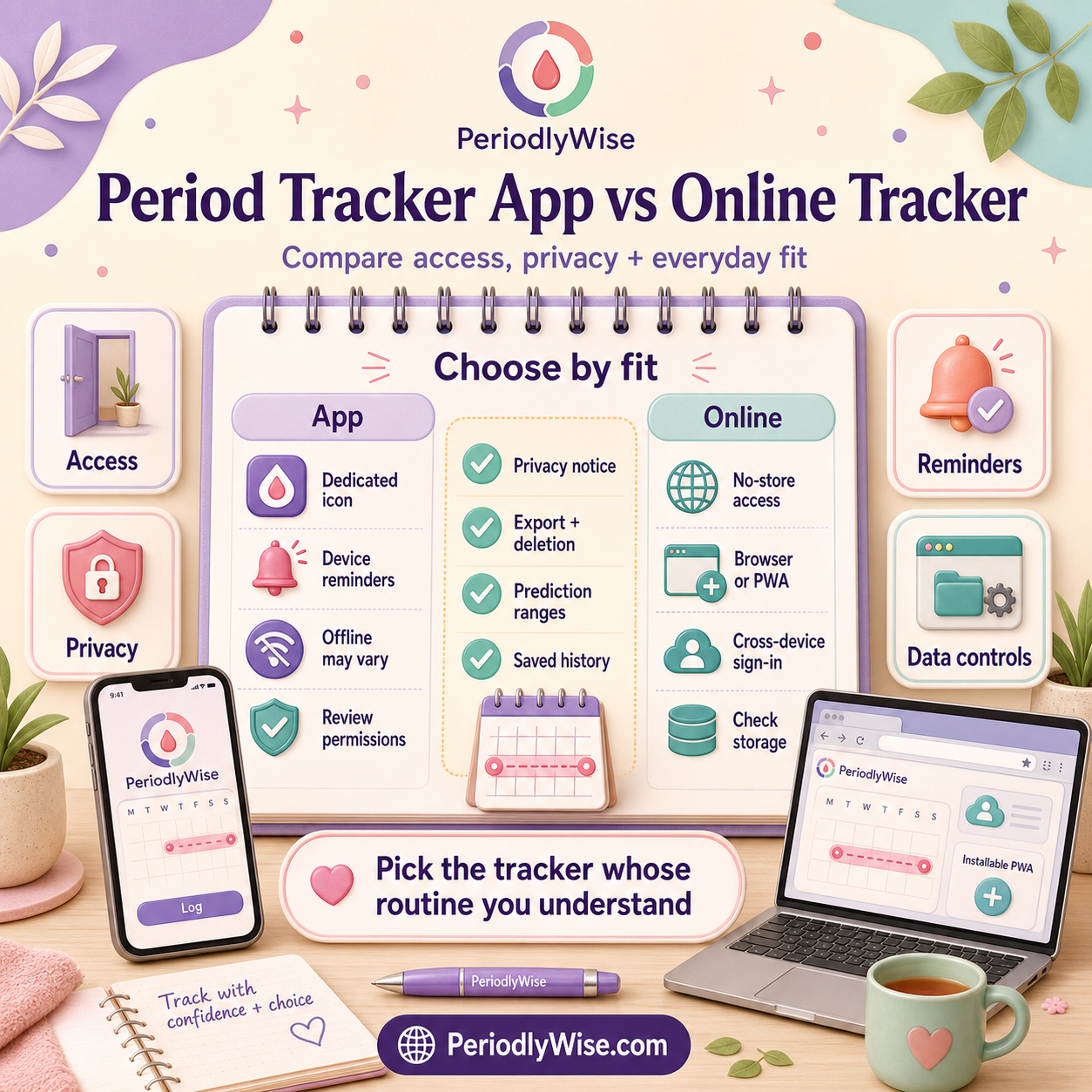
Compare a period tracker app with an online period tracker across privacy, access, installation, saved history, reminders, device changes, and everyday convenience.
Read the guide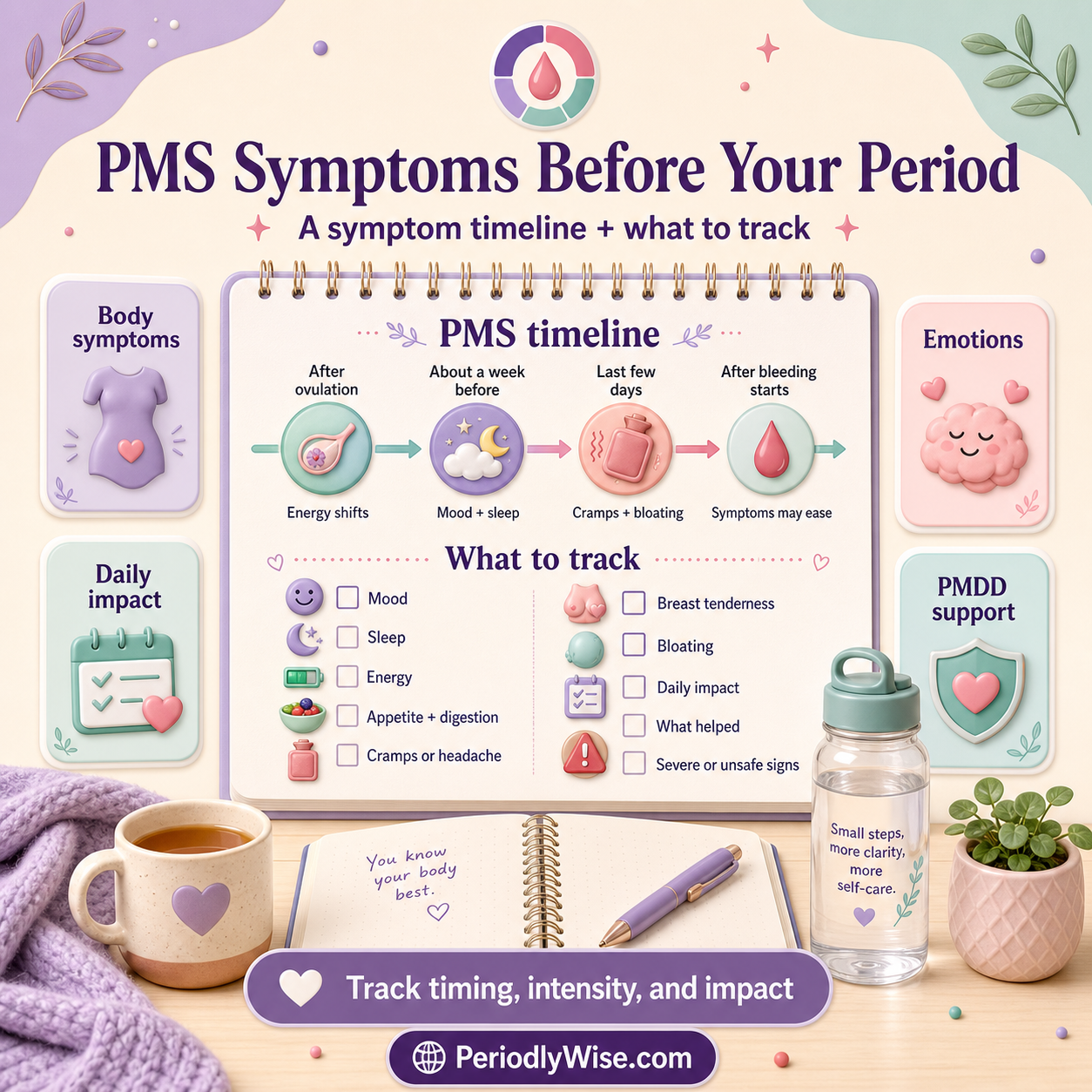
Understand common PMS symptoms before a period, when they tend to appear, how to track physical and emotional patterns, what can mimic PMS, and when to seek support.
Read the guide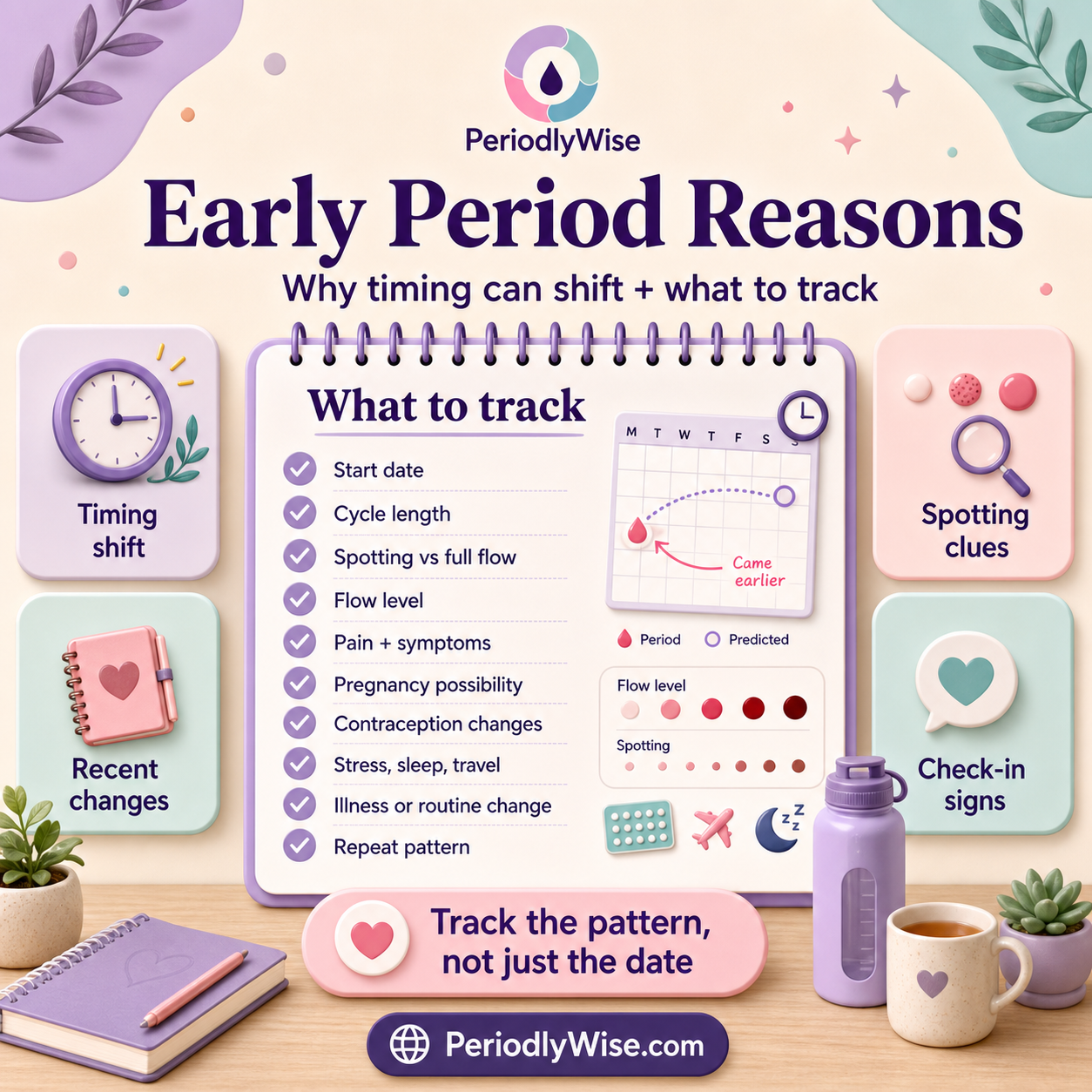
A medically careful guide to early period reasons, including normal cycle variation, stress, illness, travel, contraception changes, ovulation timing, spotting, pregnancy possibility, PCOS, thyroid issues, perimenopause, and what to track.
Read the guide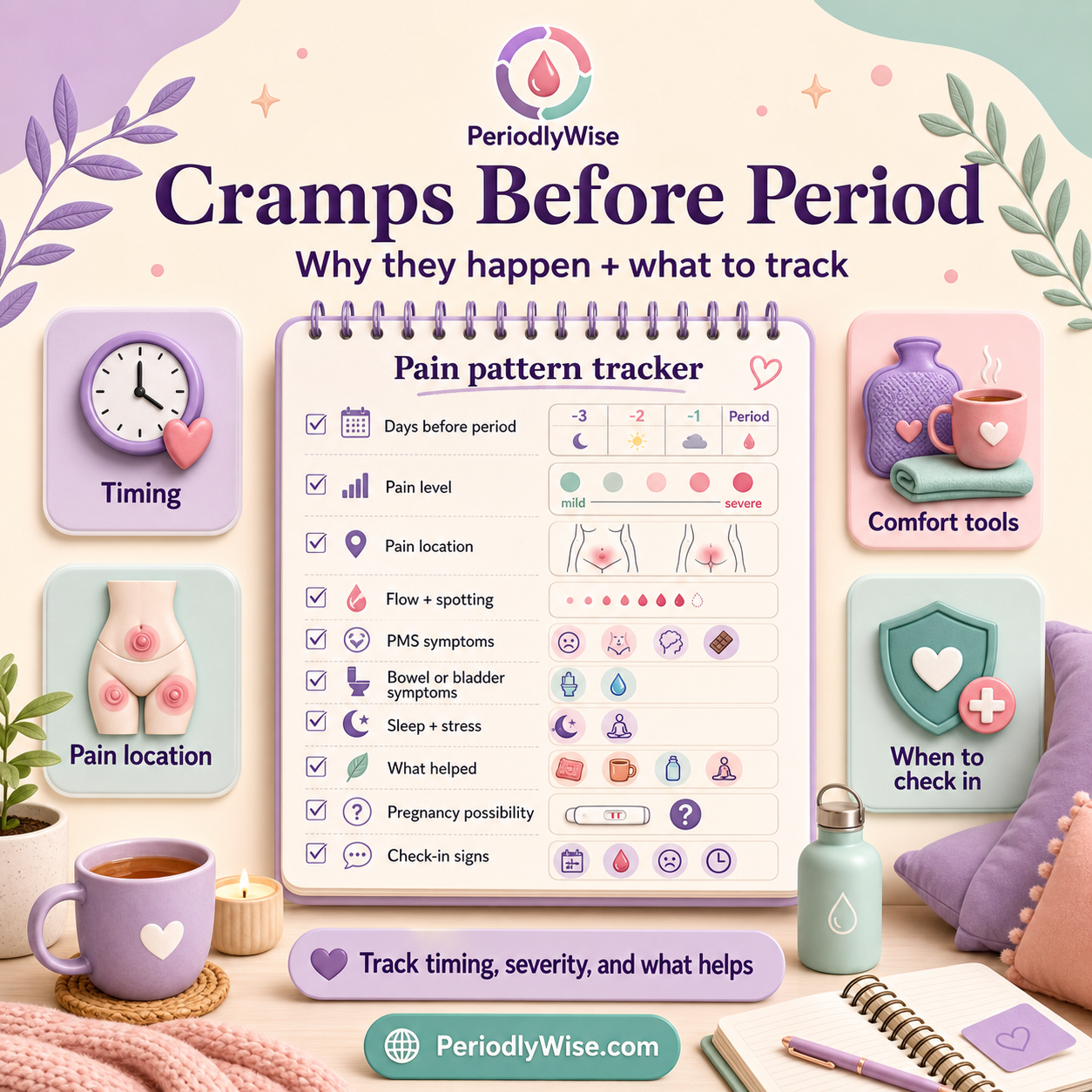
A medically careful guide to cramps before period, including prostaglandins, PMS, primary and secondary dysmenorrhea, endometriosis, fibroids, adenomyosis, GI symptoms, pregnancy possibility, and when to seek care.
Read the guide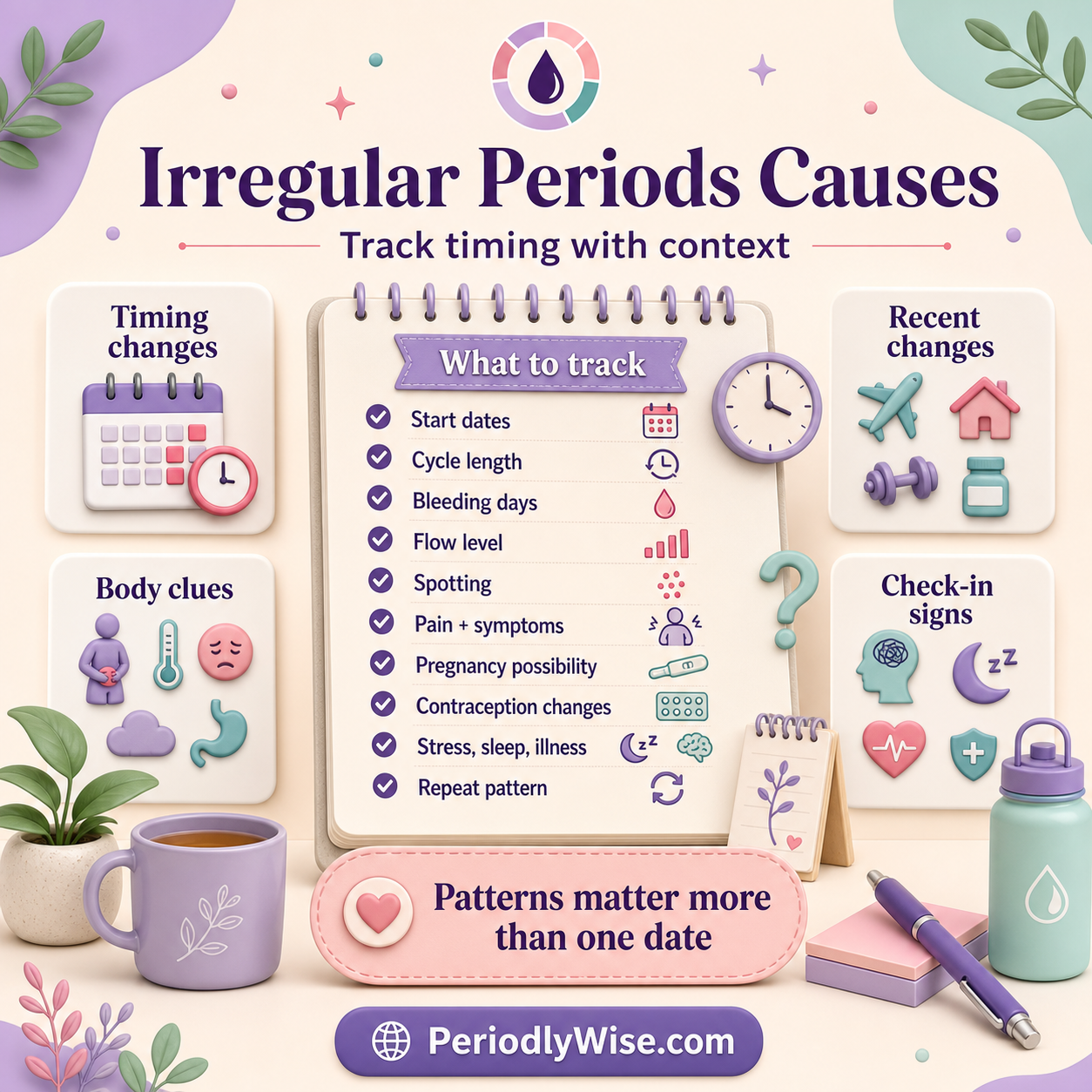
A medically careful guide to irregular periods causes, including stress, sleep, illness, weight change, intense exercise, PCOS, thyroid issues, prolactin, pregnancy, contraception, perimenopause, puberty, and what to track before seeking care.
Read the guide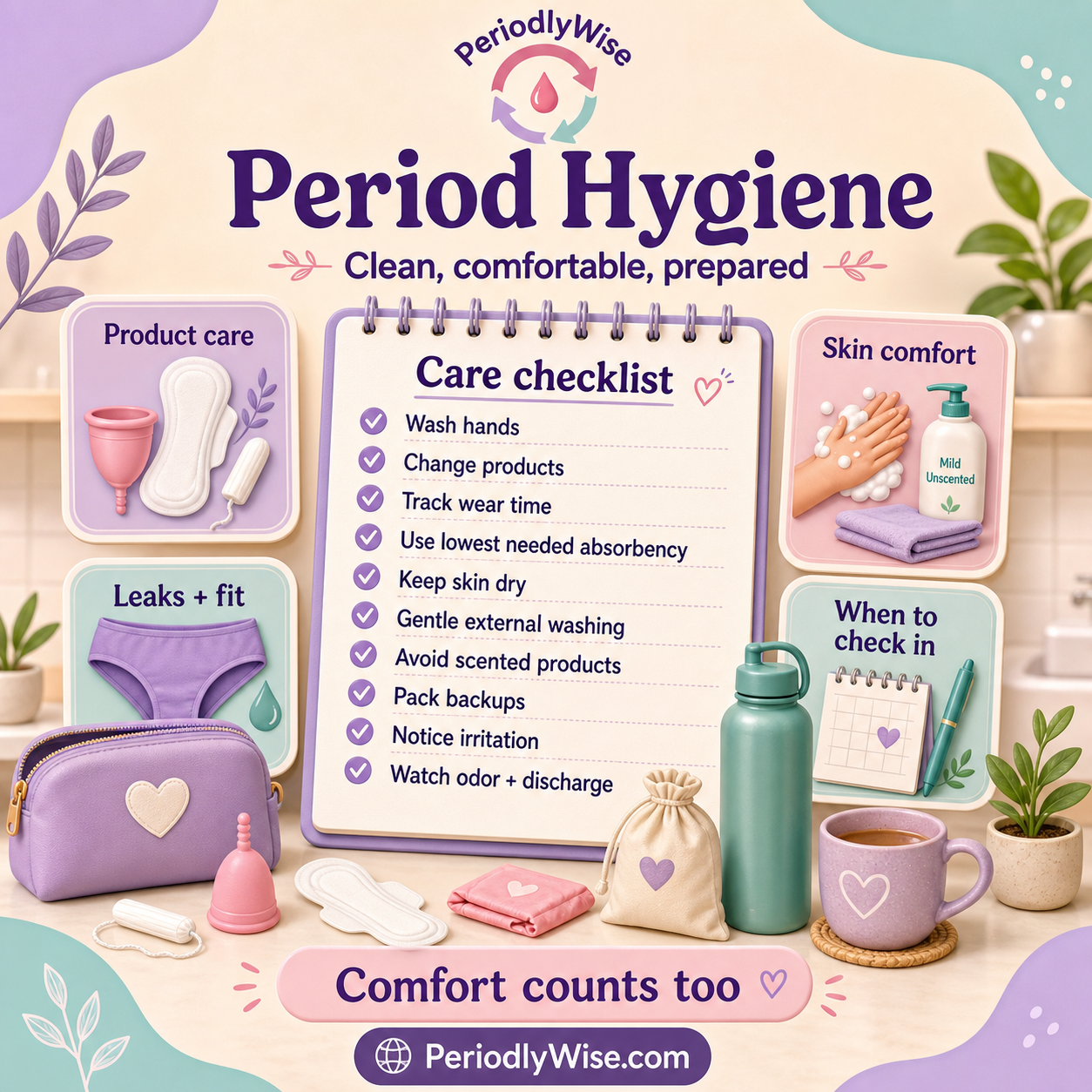
A practical, medically careful guide to period hygiene, including handwashing, changing pads and tampons, menstrual cup care, reusable product cleaning, vulva-friendly washing, scent-free comfort, travel planning, and when symptoms need care.
Read the guide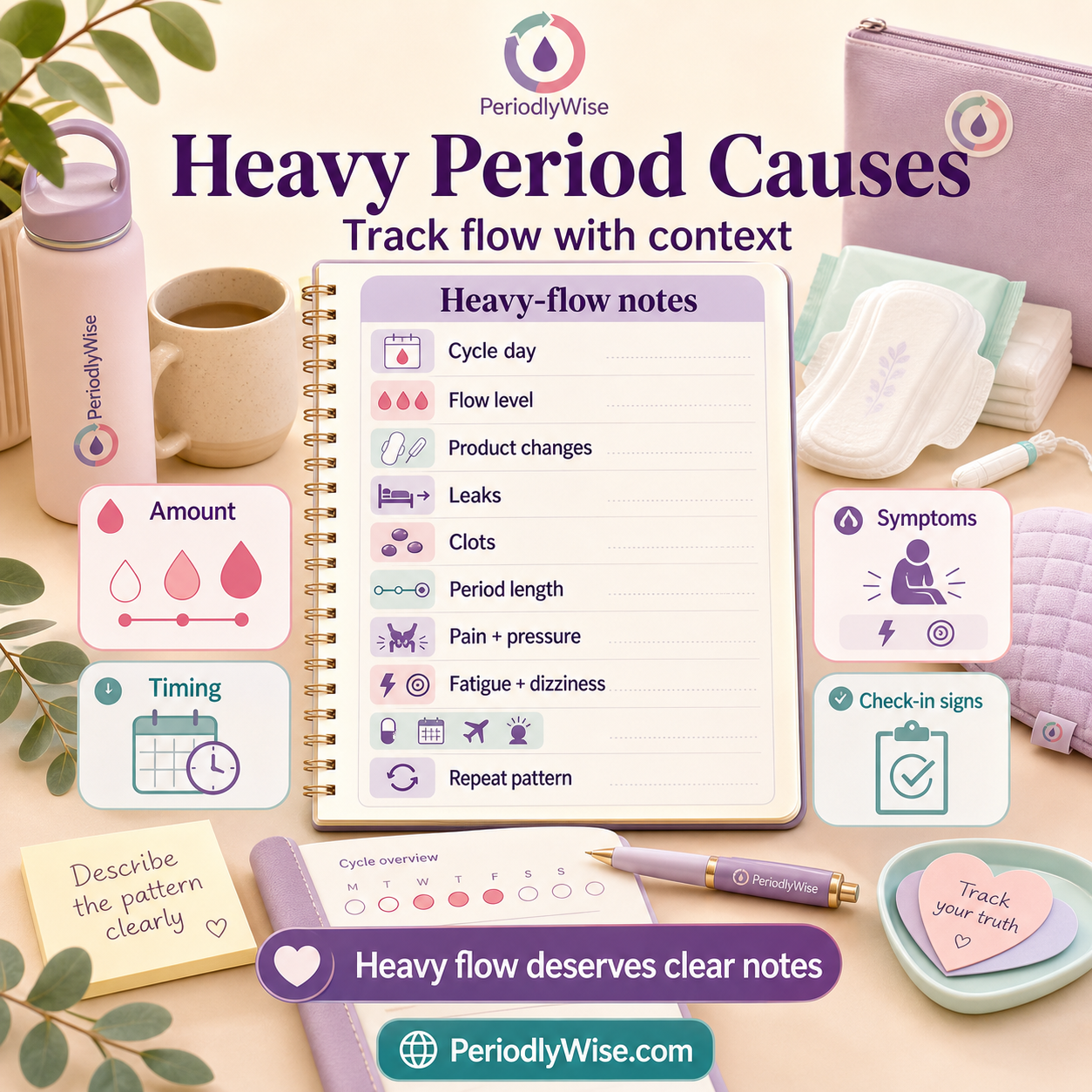
A medically careful guide to heavy period causes, including normal flow variation, hormonal changes, fibroids, polyps, adenomyosis, bleeding disorders, thyroid issues, contraception, pregnancy-related bleeding, anemia signs, and when to seek care.
Read the guide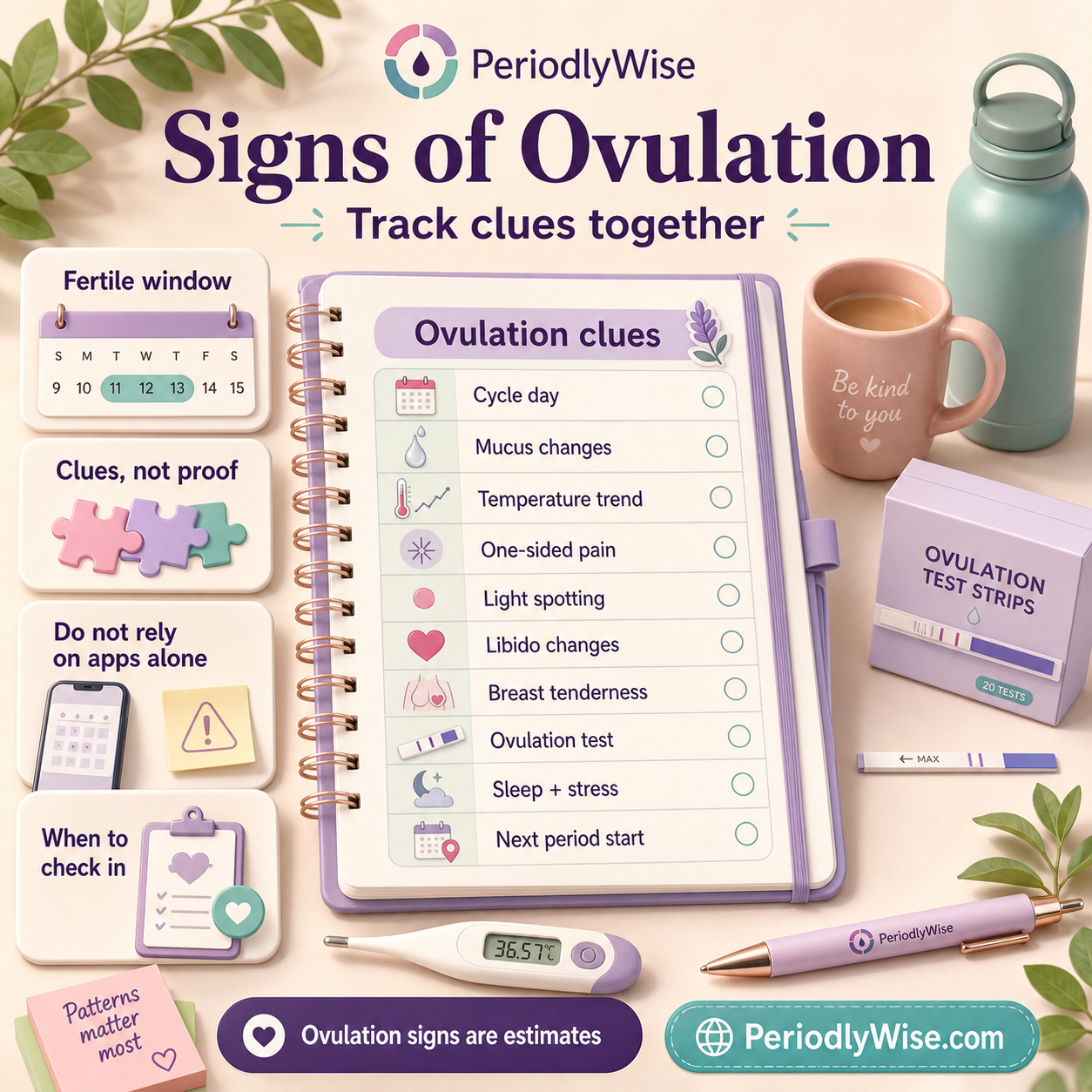
A medically careful guide to signs of ovulation, including cervical mucus, basal body temperature, mild ovulation pain, libido changes, spotting, fertile-window timing, ovulation tests, and when symptoms need care.
Read the guide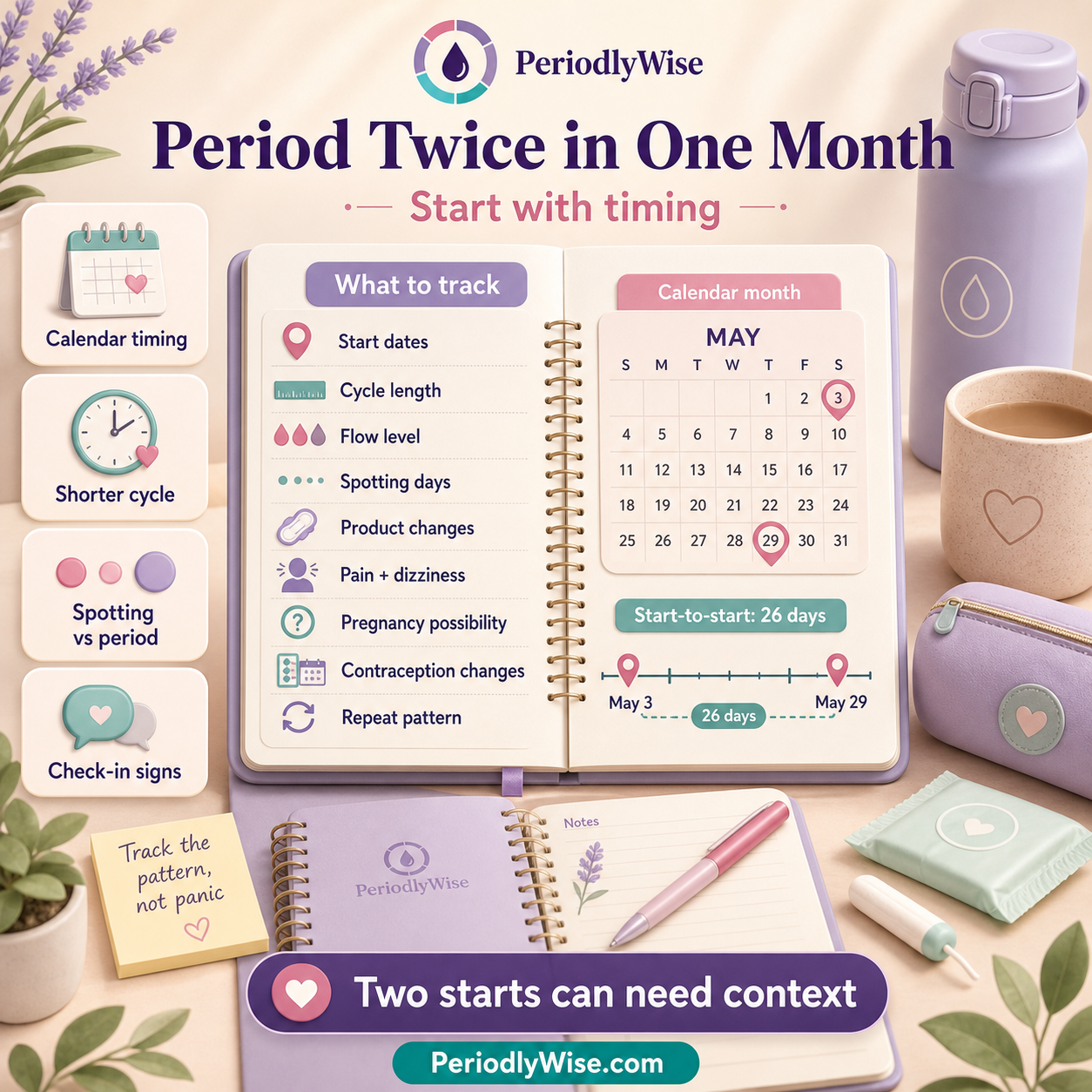
A medically careful guide to having a period twice in one month, including calendar timing, short cycles, spotting, bleeding between periods, symptoms, and when to seek care.
Read the guide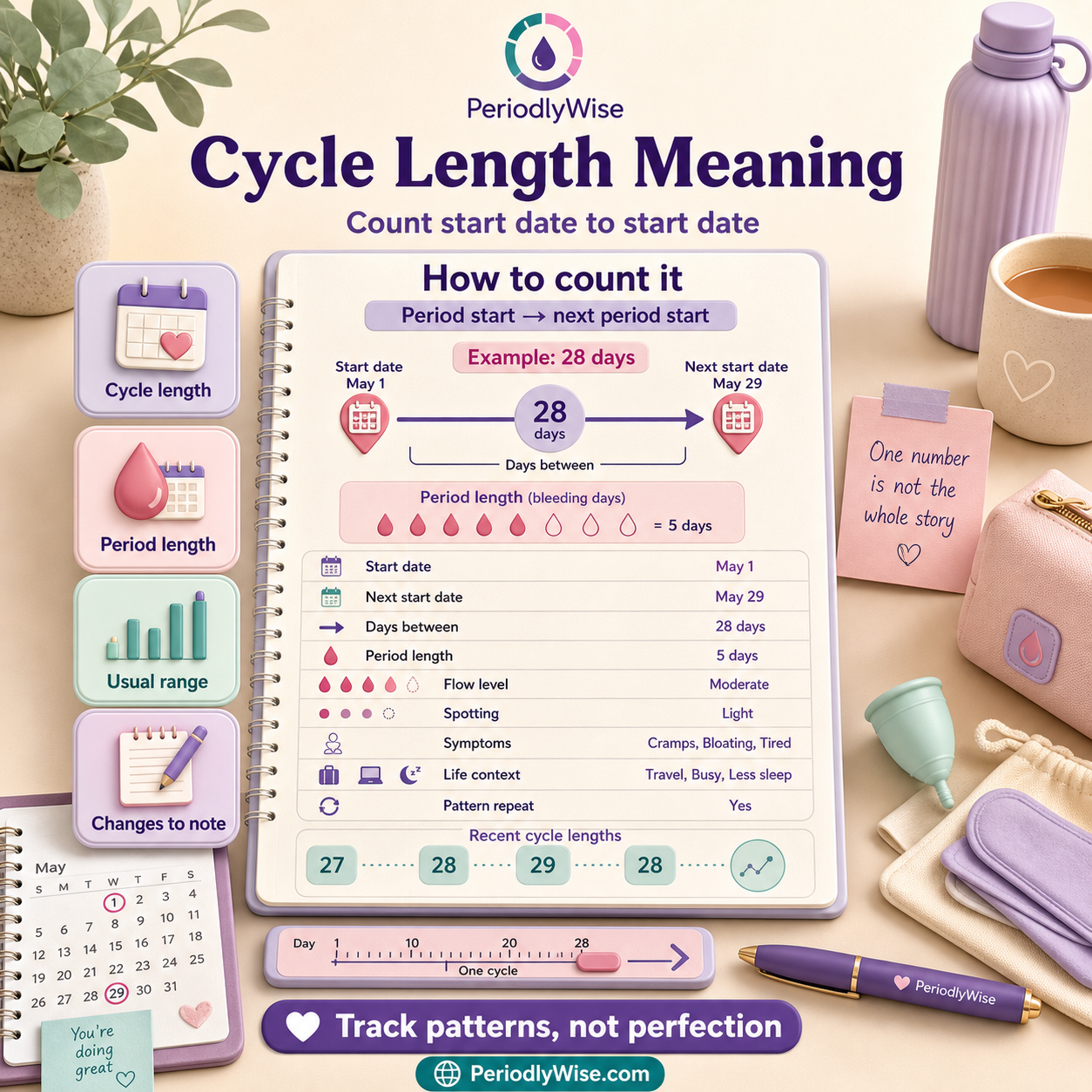
Learn what cycle length means, how to count it correctly, what short, long, and changing cycles can suggest, and what to track before you worry.
Read the guide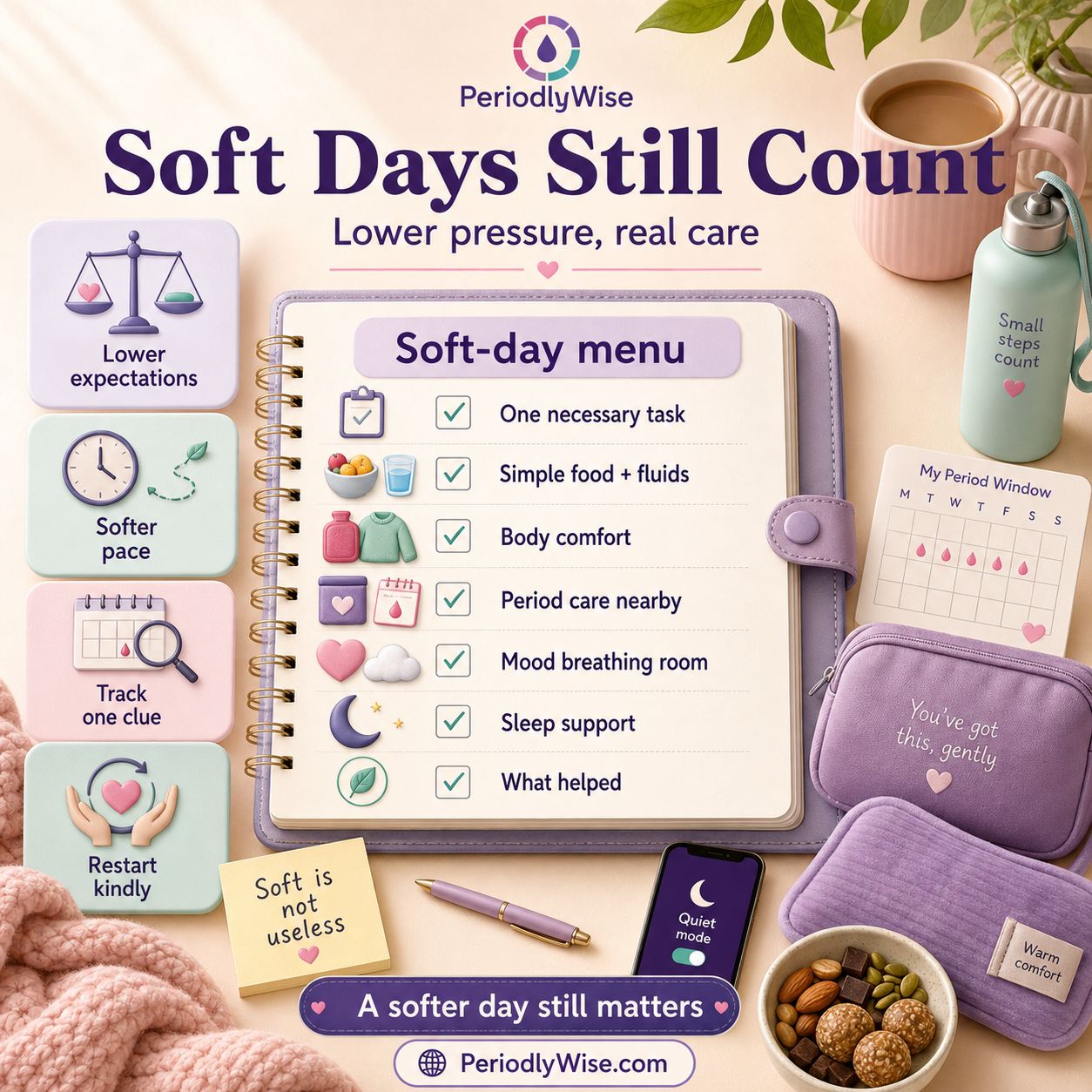
A warm, practical guide to why soft days still count, how rest, lower expectations, cycle awareness, mood, sleep, and body comfort can support real life.
Read the guide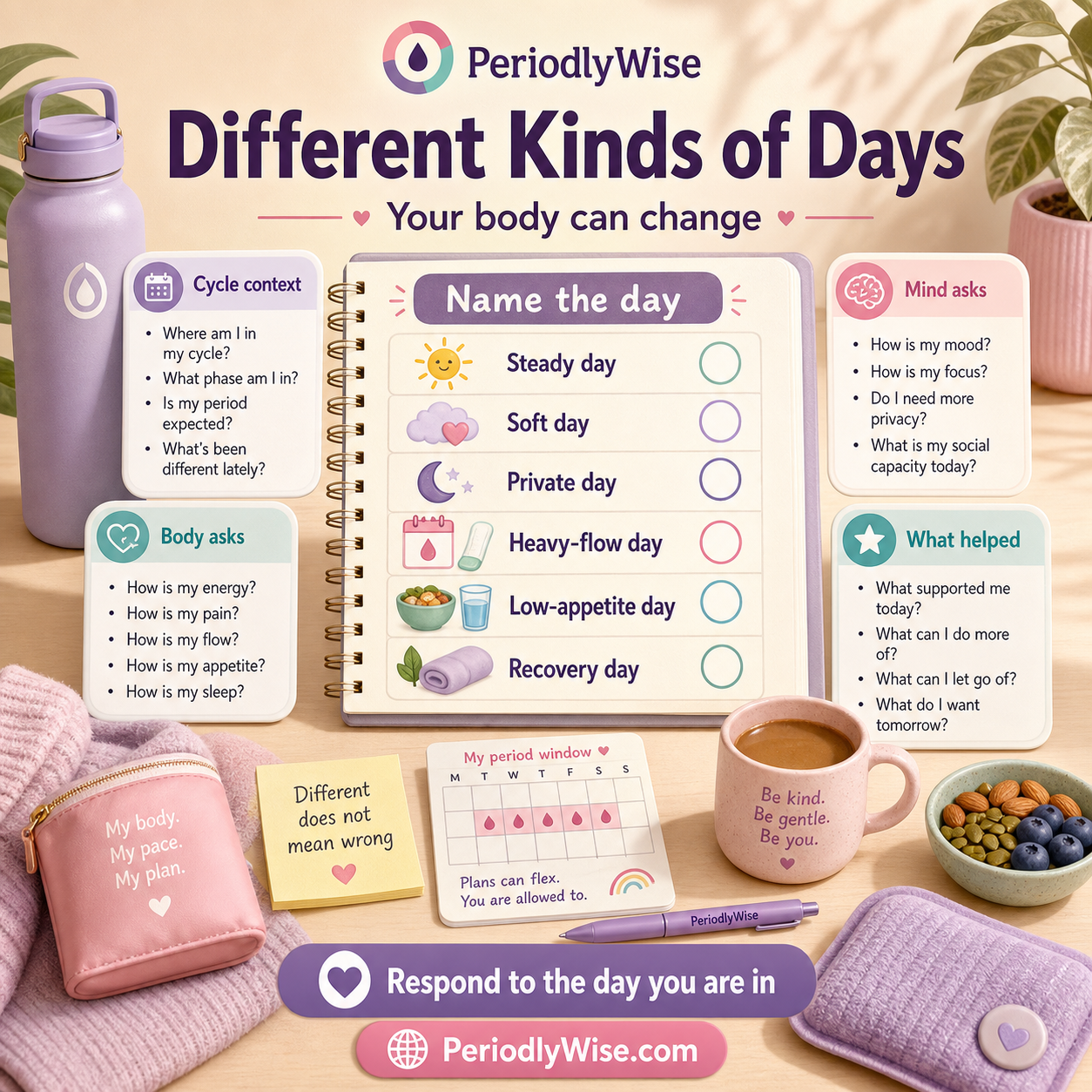
Learn how to let your body have different kinds of days with less shame, using cycle awareness, rest, comfort, mood notes, planning, and self-trust.
Read the guide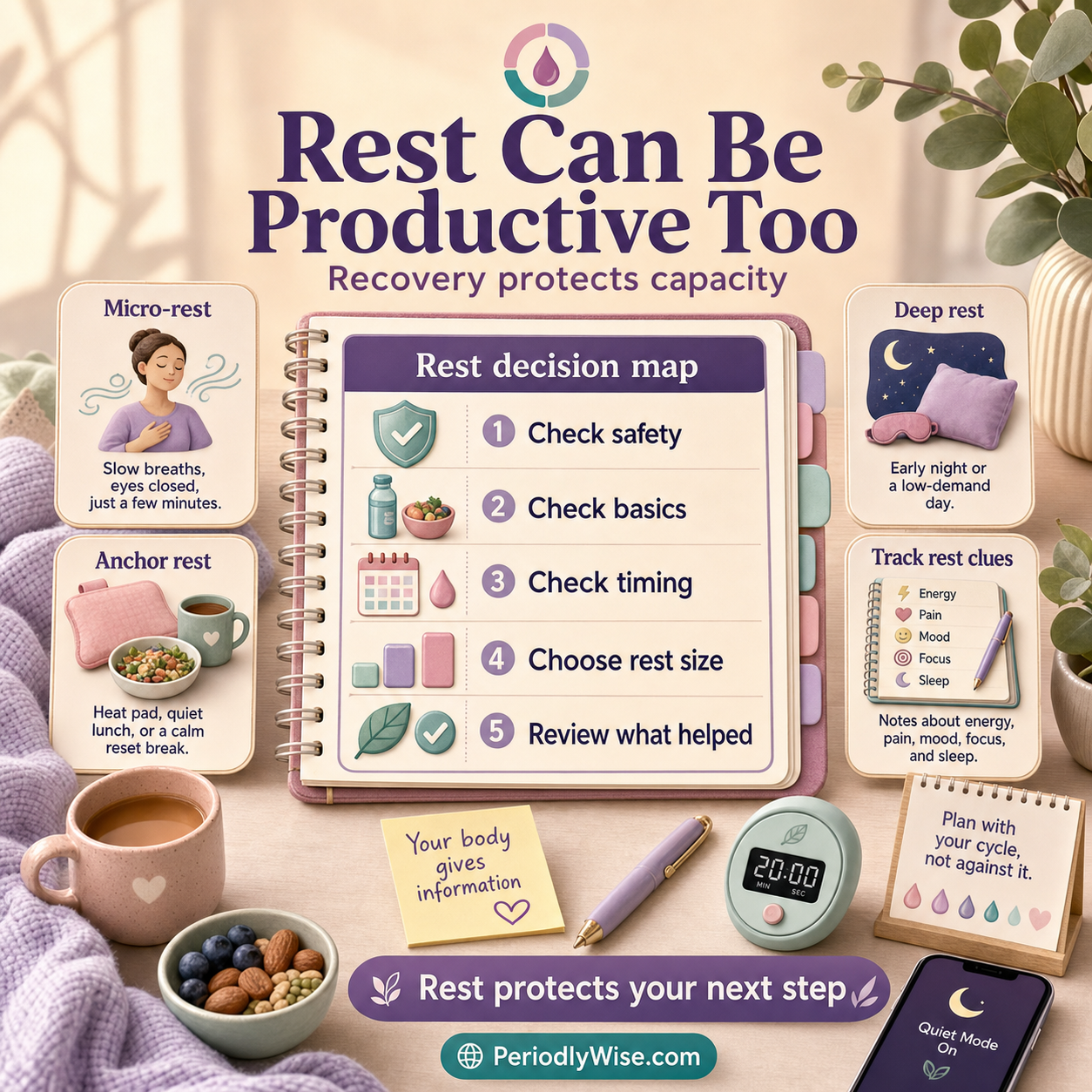
Learn why rest can be productive, how recovery supports energy, focus, mood, periods, stress, and daily planning, and how to track when rest helps.
Read the guide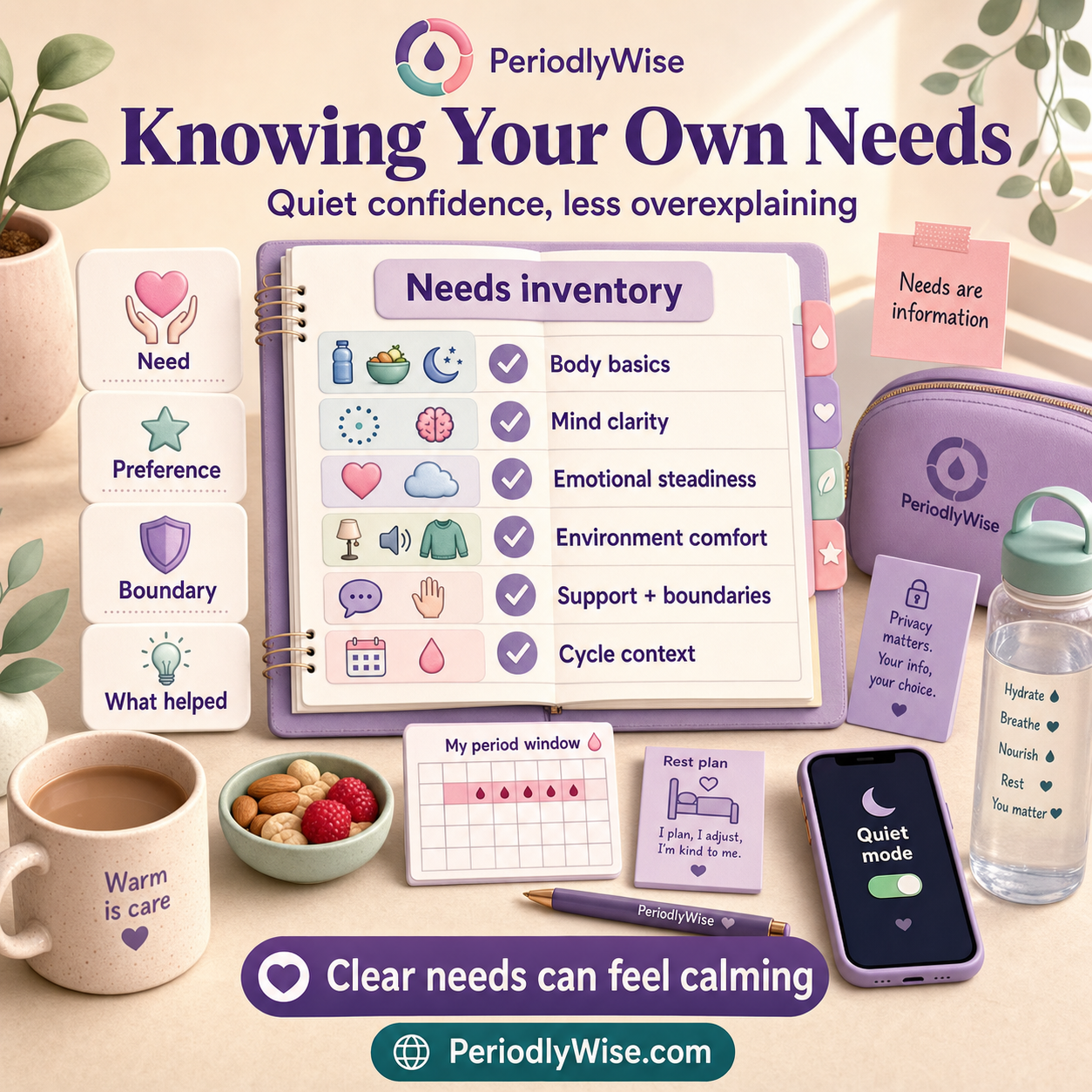
Explore how knowing your needs can build quiet confidence in daily life, relationships, work, rest, period care, and cycle awareness without shame.
Read the guide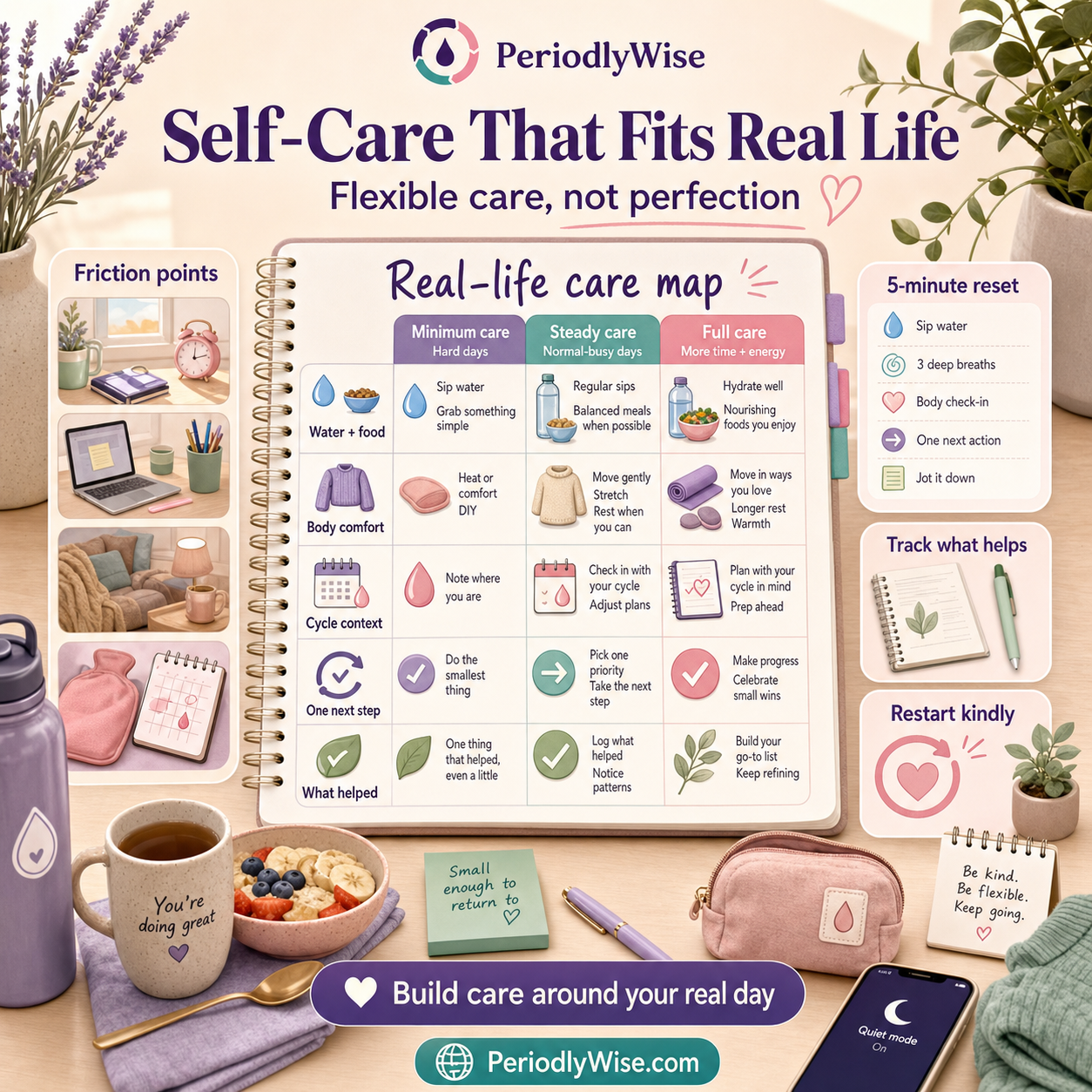
Build a realistic self-care routine that fits work, home, periods, energy changes, stress, sleep, and ordinary busy days without pressure or perfection.
Read the guide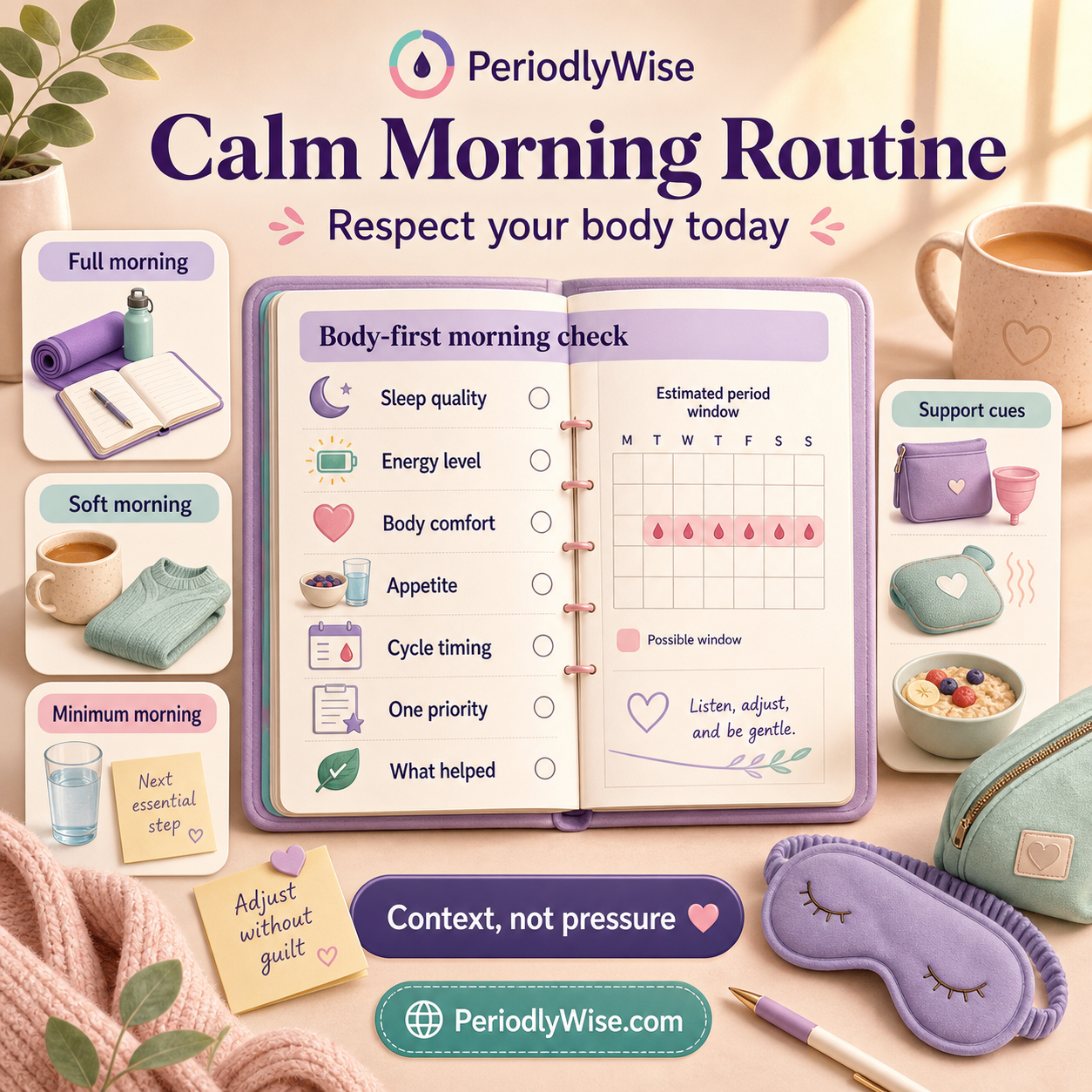
Build a calm morning routine that respects your body, energy, mood, sleep, cycle patterns, and real-life responsibilities without pressure or perfection.
Read the guide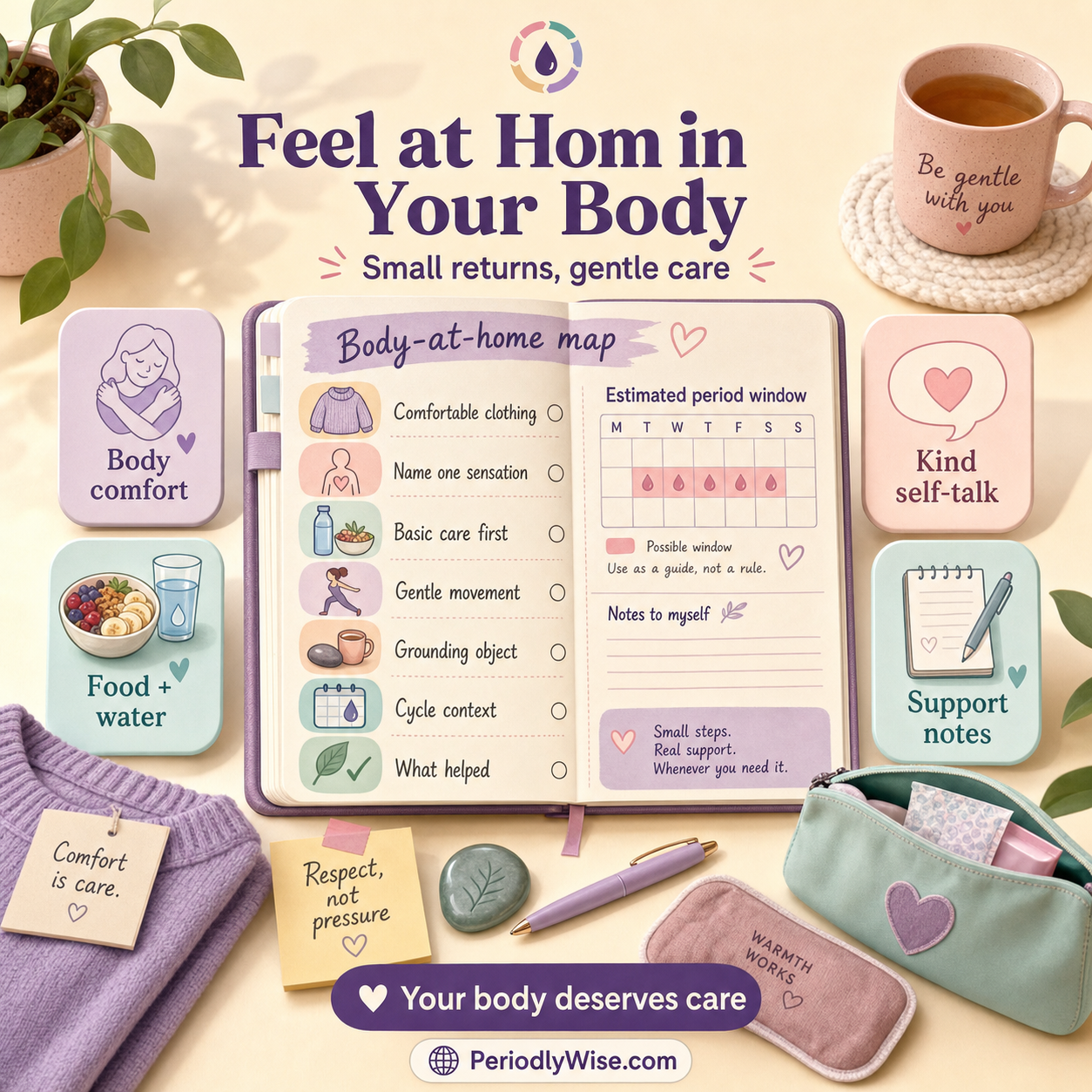
Explore gentle, practical ways to feel more at home in your body through comfort, clothing, food, movement, body awareness, cycle context, and kinder self-talk.
Read the guide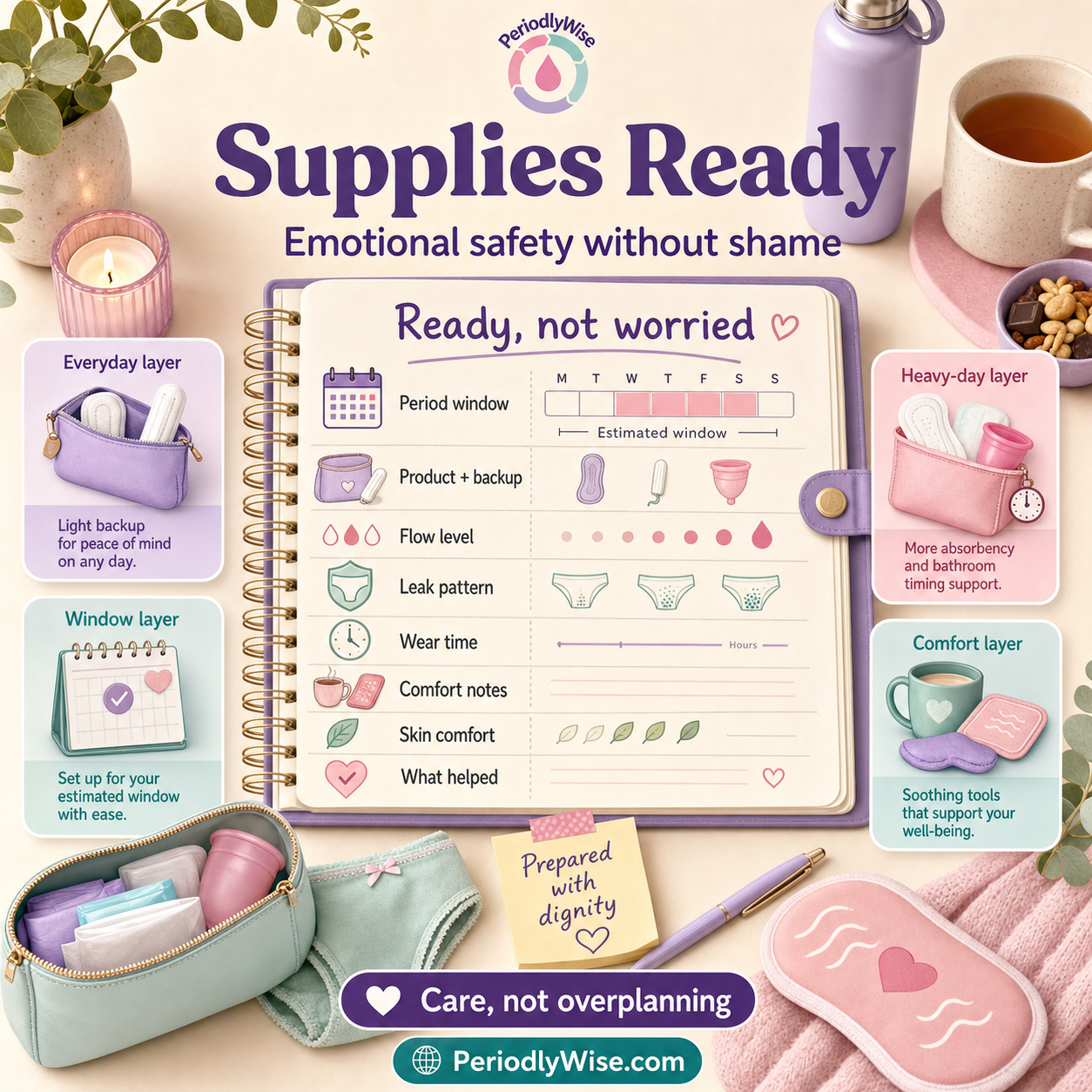
Explore why having period supplies ready can create emotional safety, reduce period worry, support dignity, and make cycle days feel calmer without shame or overplanning.
Read the guide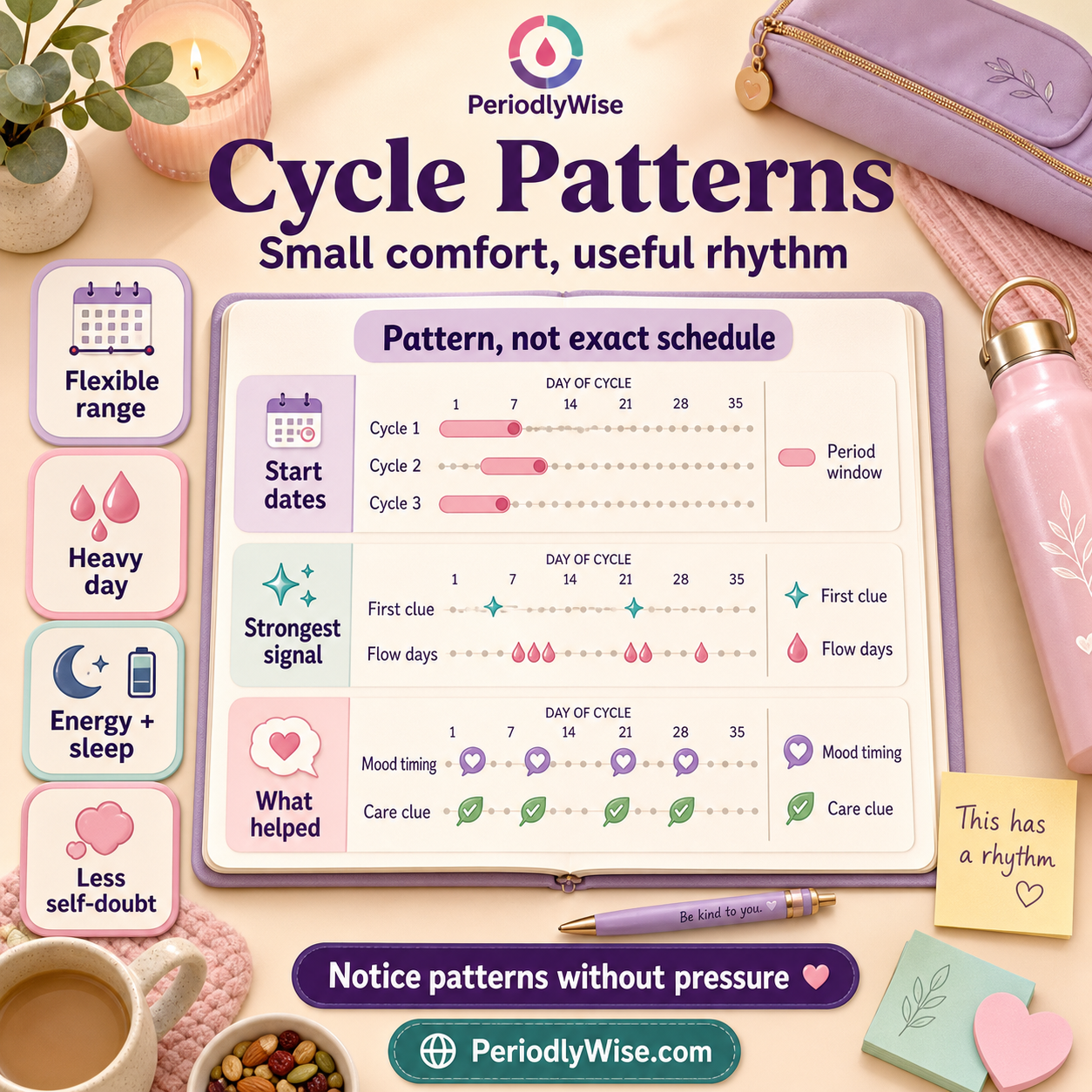
Learn why recognizing a menstrual cycle pattern can bring comfort, reduce self-doubt, support planning, and help you track your period without pressure or shame.
Read the guide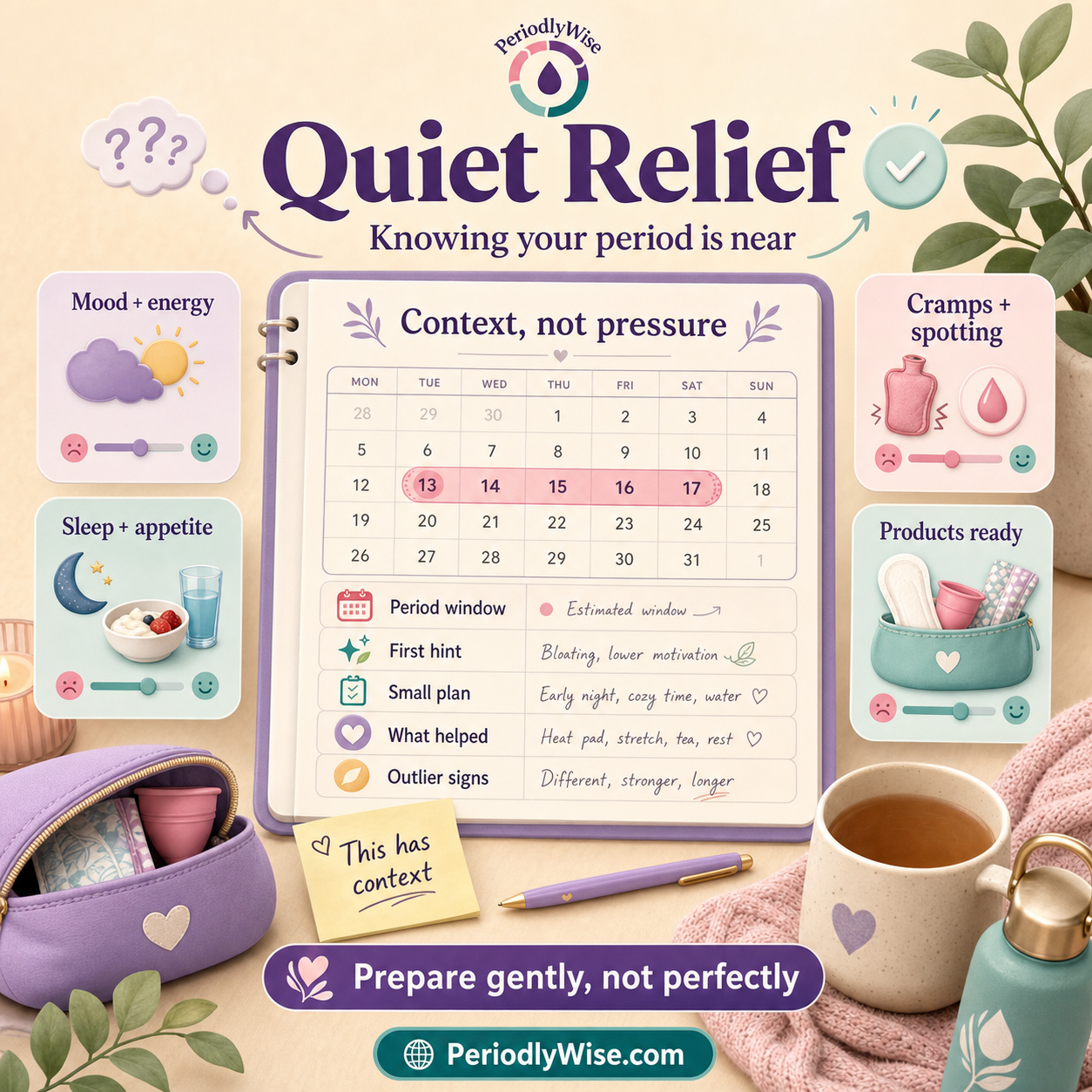
Explore why knowing your period is coming can feel quietly relieving, how period tracking reduces surprise, what to notice, and how to prepare without pressure or shame.
Read the guide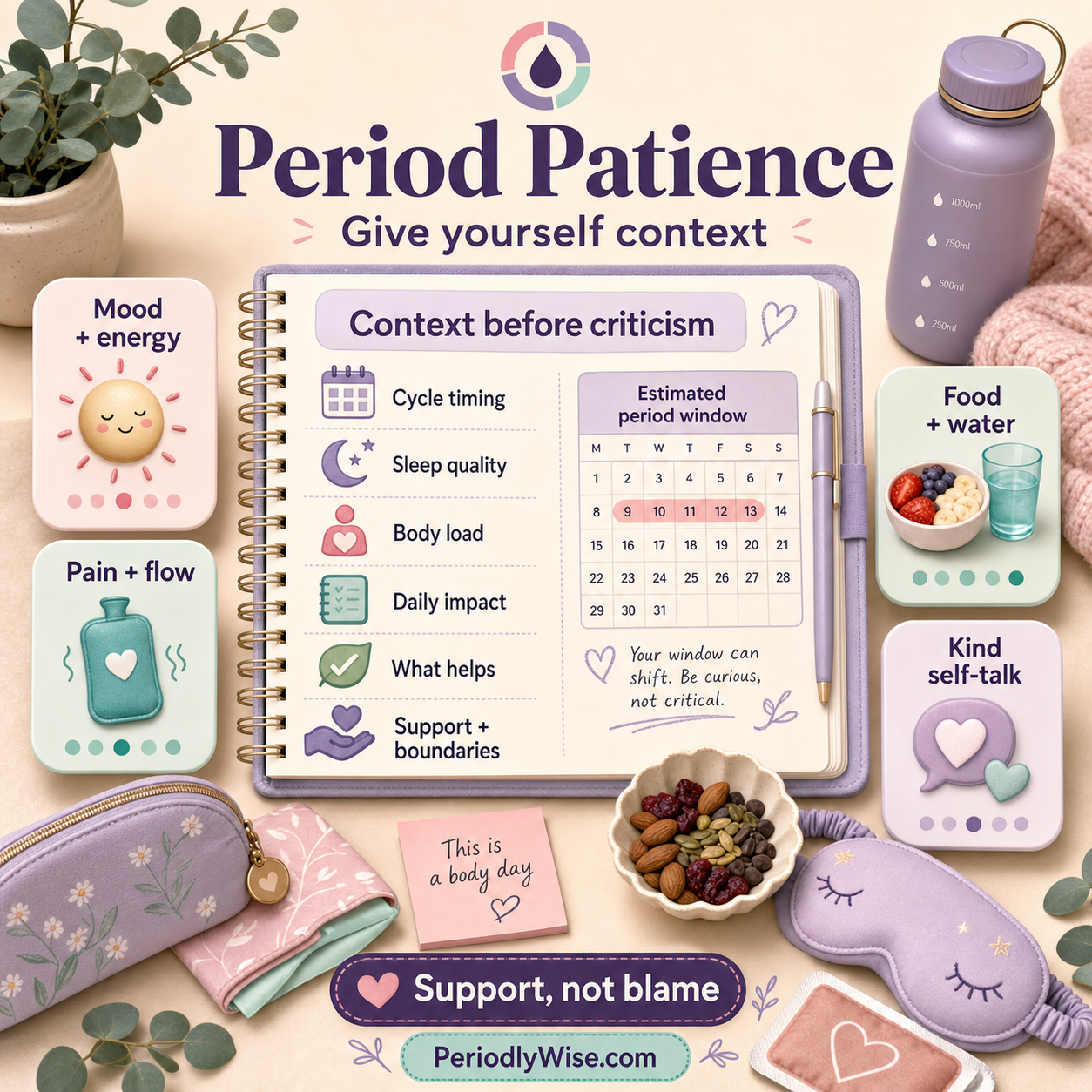
Learn how to feel more patient with yourself around your period by understanding cycle context, mood, energy, pain, sleep, appetite, boundaries, and gentle self-support.
Read the guide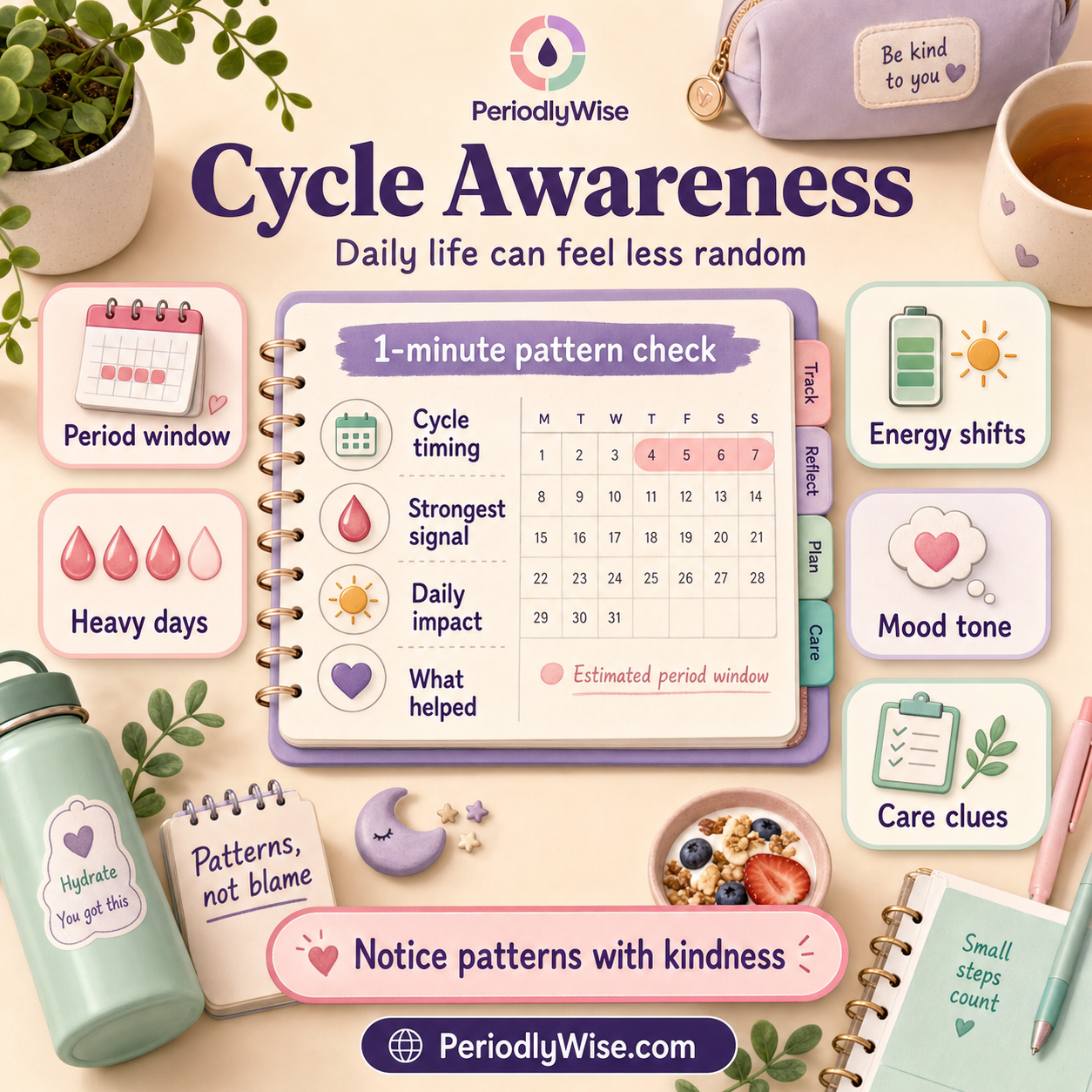
Learn how cycle awareness can make daily life feel less random by connecting period timing, mood, energy, sleep, flow, appetite, comfort, and planning patterns.
Read the guide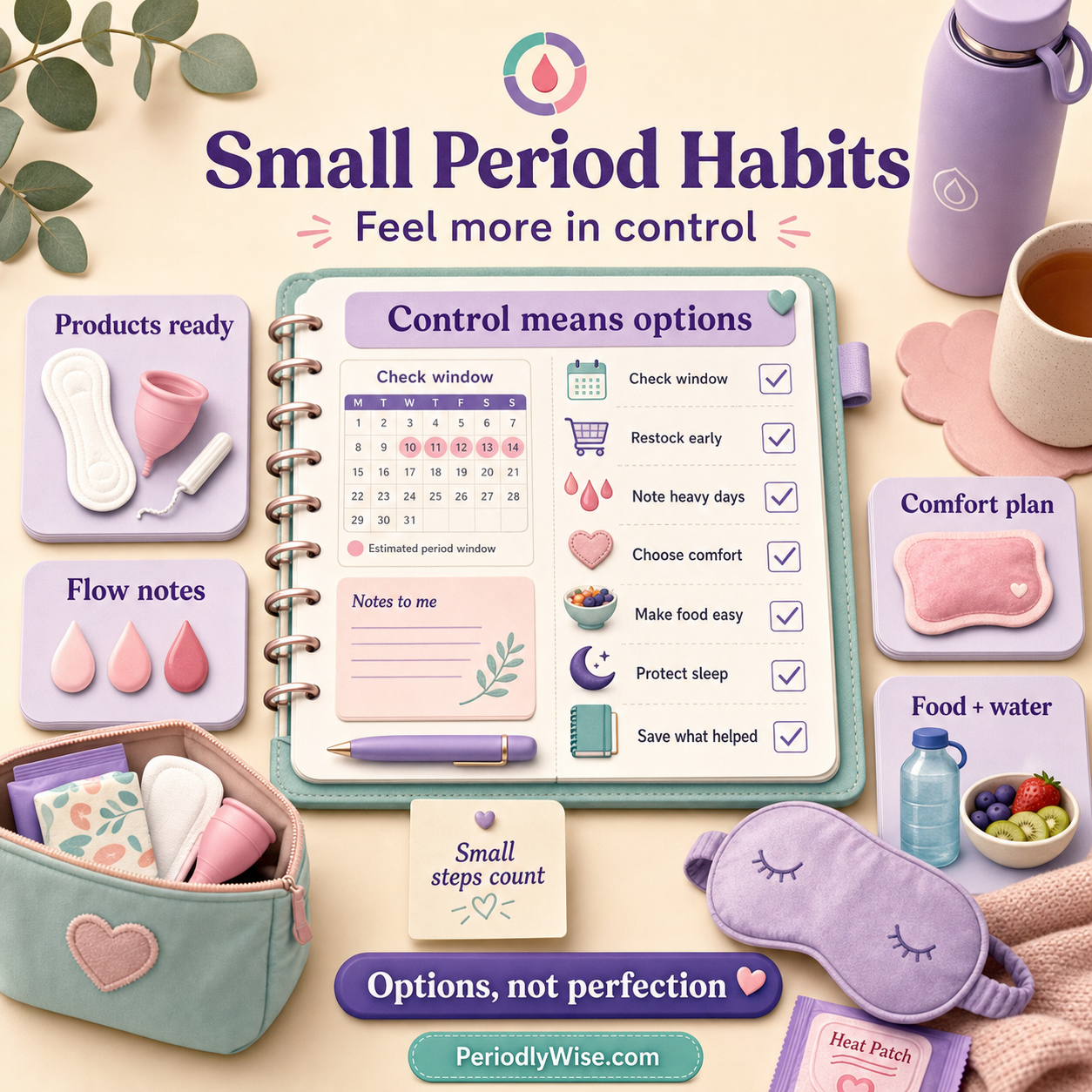
Build small period habits that help you feel more in control through cycle tracking, product planning, comfort notes, sleep, food, flow awareness, and support.
Read the guide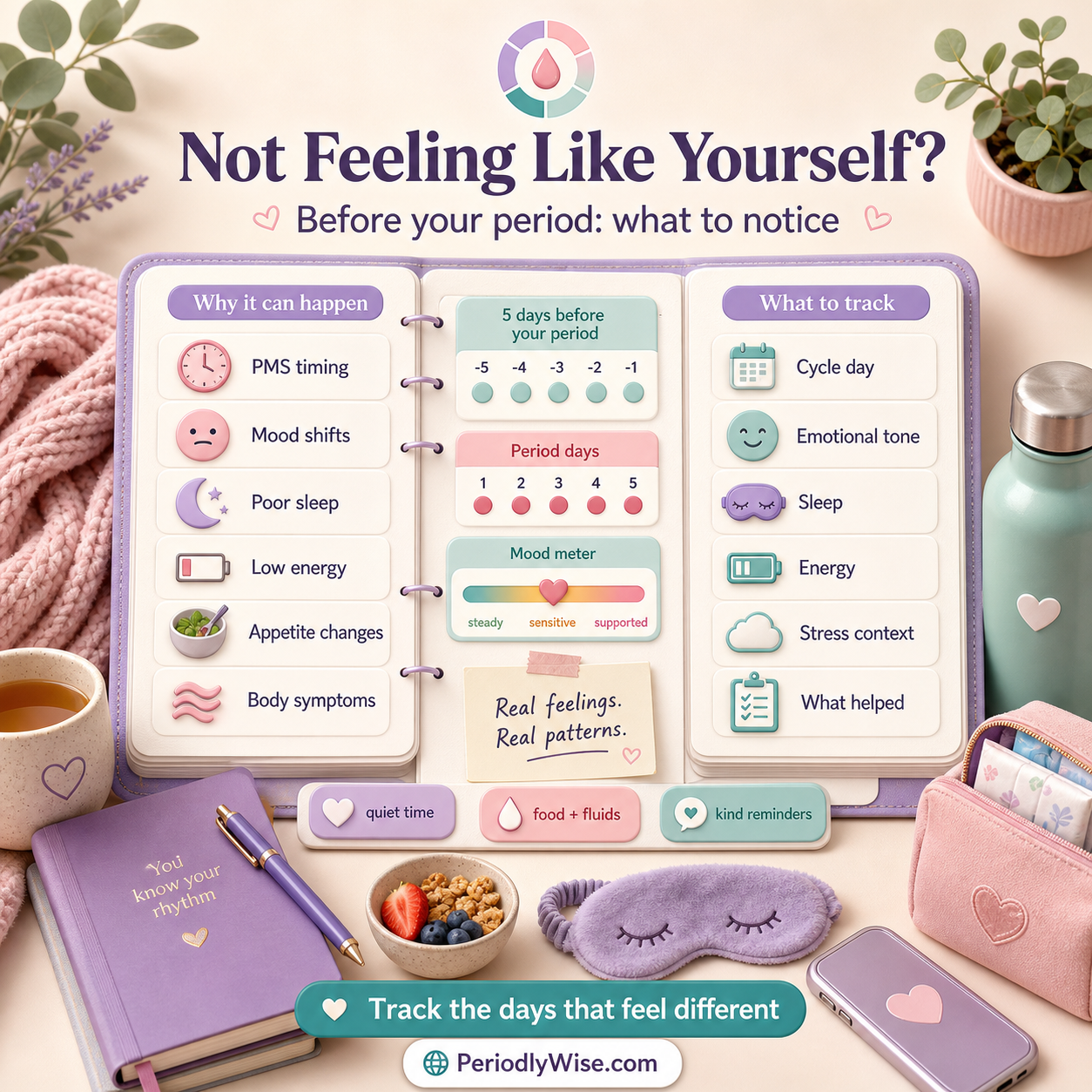
Learn why you may feel unlike yourself before your period, how PMS, sleep, stress, mood, appetite, and body symptoms can overlap, what to track, and when to get support.
Read the guide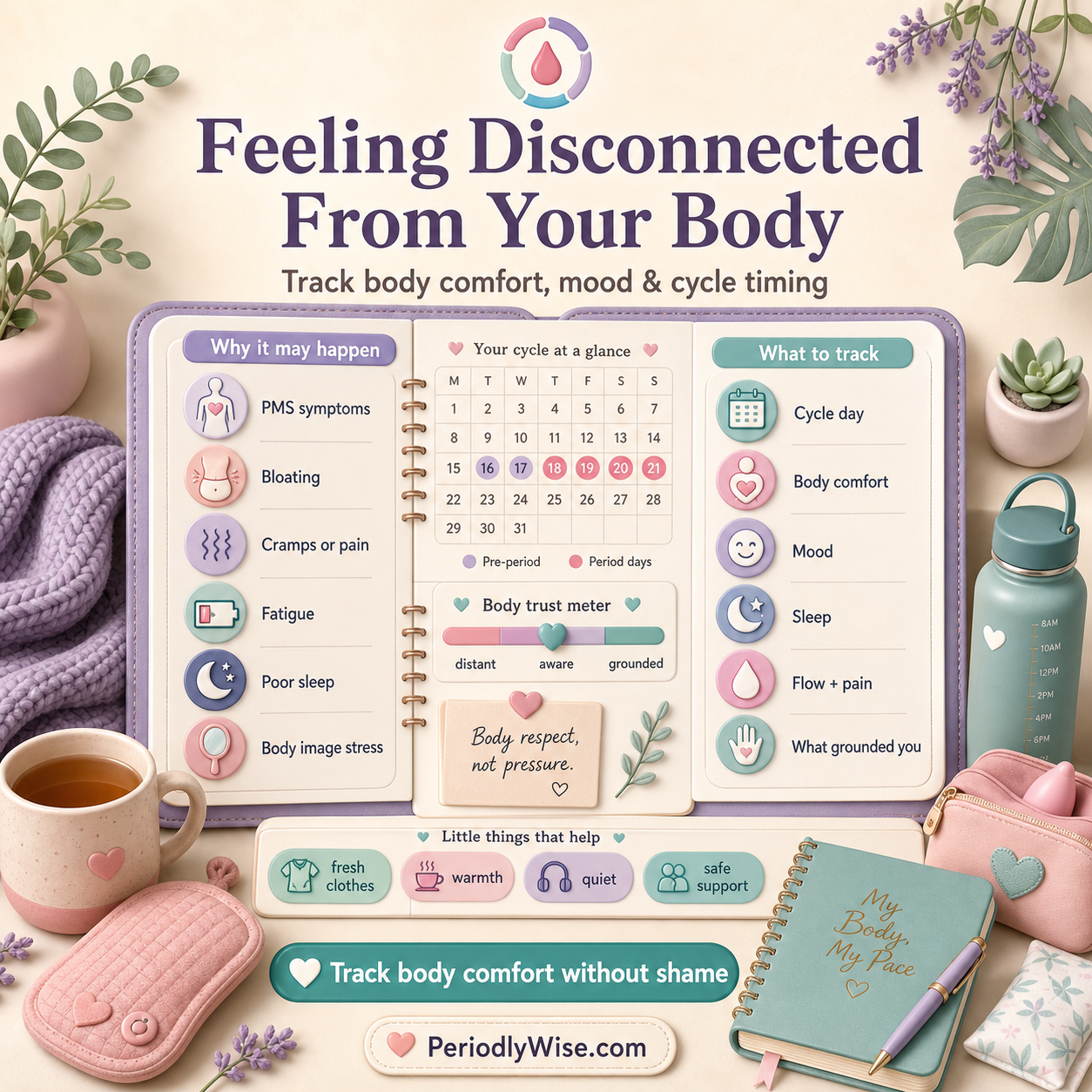
Learn why you may feel disconnected from your body before or during your period, how cycle symptoms can affect body trust, what to track, and how to respond with care.
Read the guide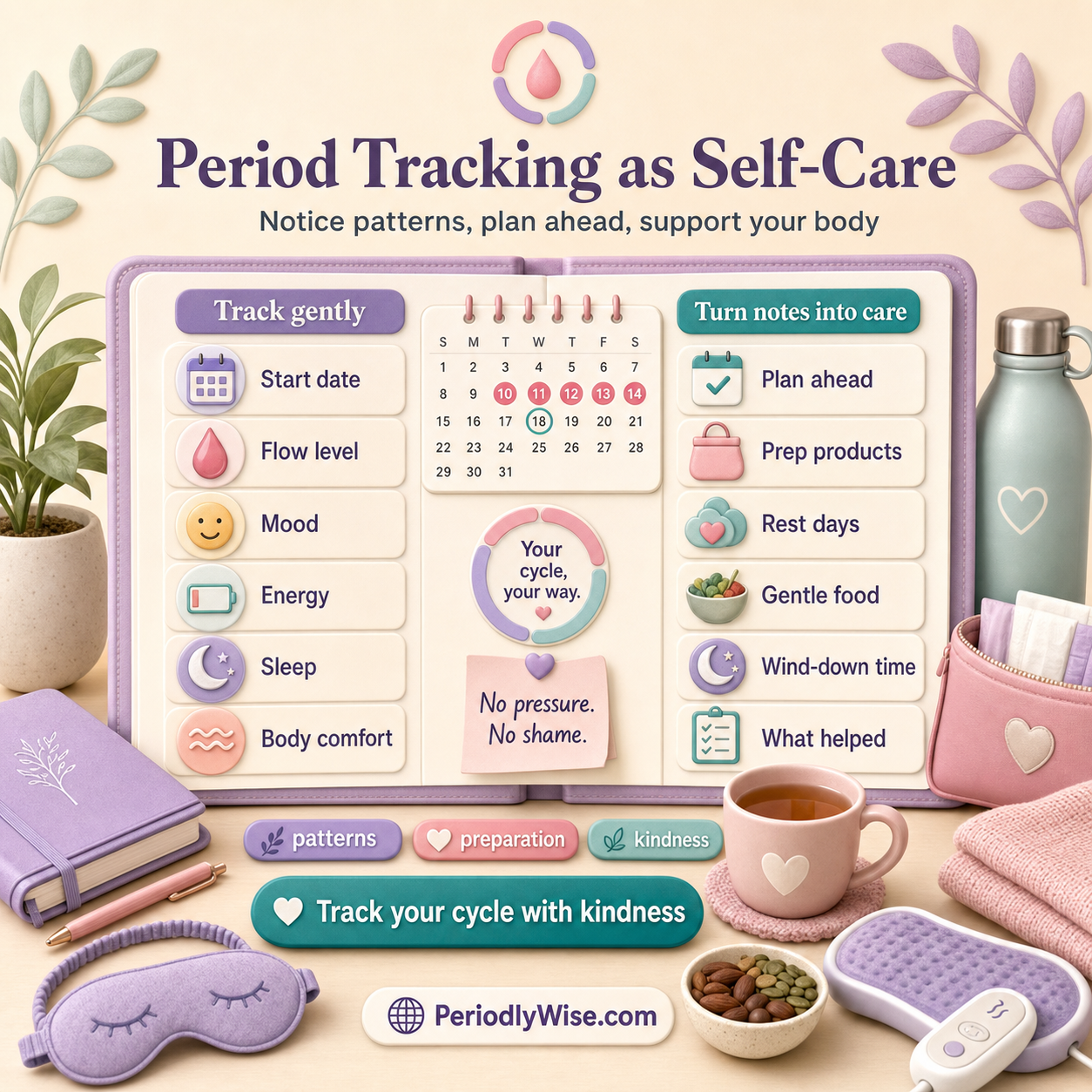
Learn how period tracking can become a gentle self-care habit: a positive way to notice your cycle, plan ahead, honor your body, and remove shame from a natural journey.
Read the guide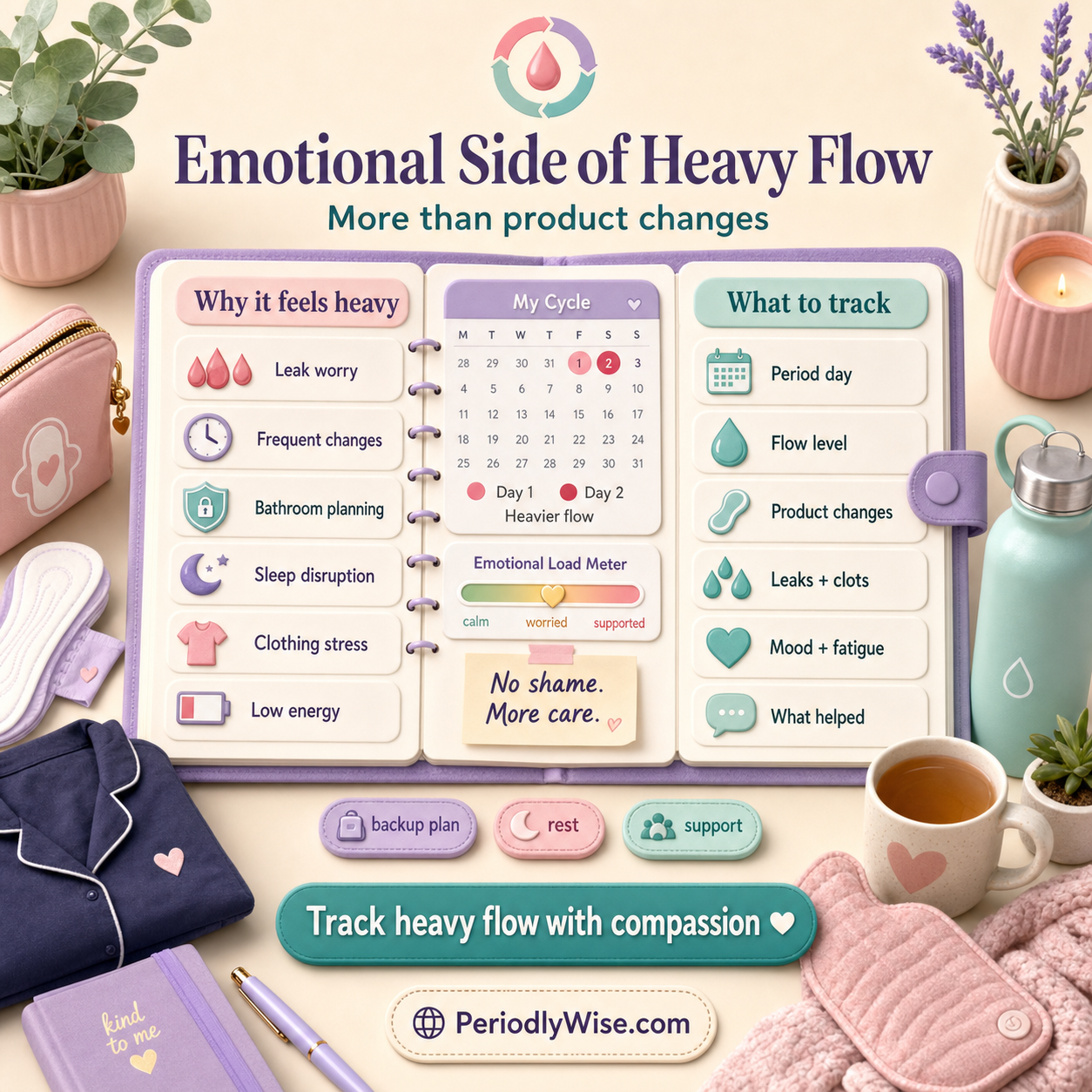
Heavy flow can affect more than product changes. Learn why heavy period days can feel emotionally intense, how to track patterns, and how to support yourself without shame.
Read the guide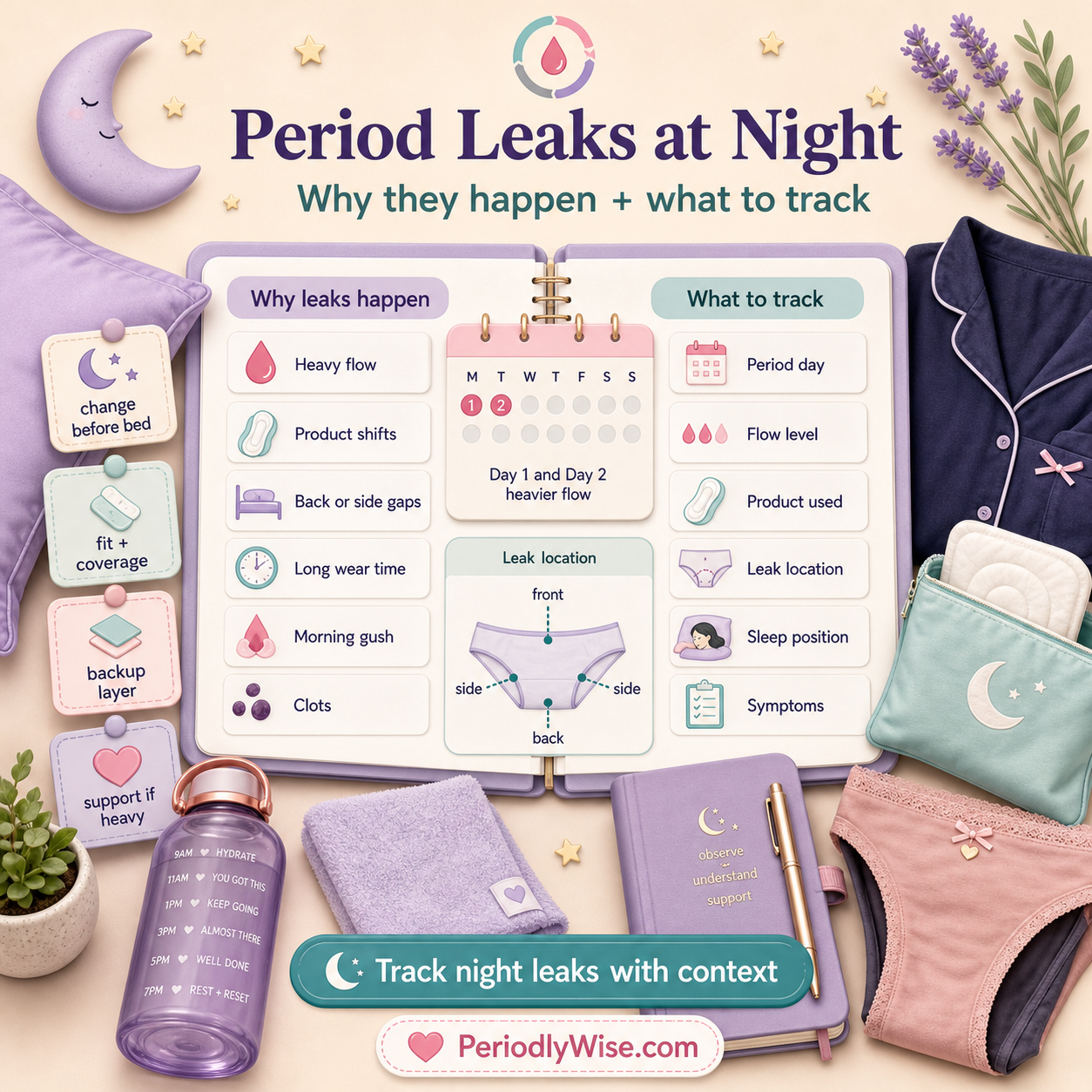
Learn why period leaks can happen at night, how sleep position, flow, product fit, clots, and overnight wear time can affect leaks, and when heavy bleeding needs medical advice.
Read the guide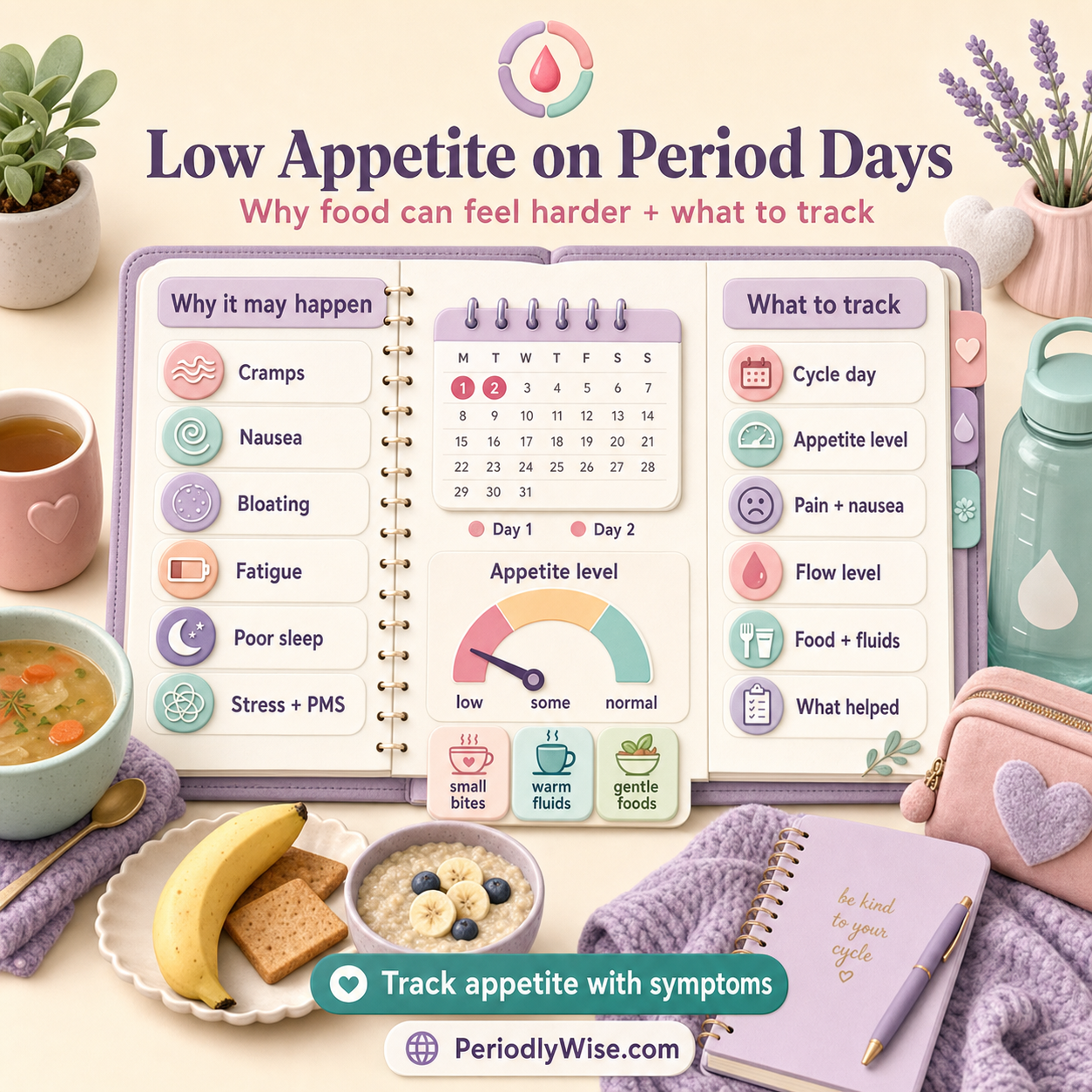
Learn why low appetite can happen during your period, how cramps, nausea, bloating, PMS, fatigue, and stress can affect hunger, what to track, and when to get medical advice.
Read the guide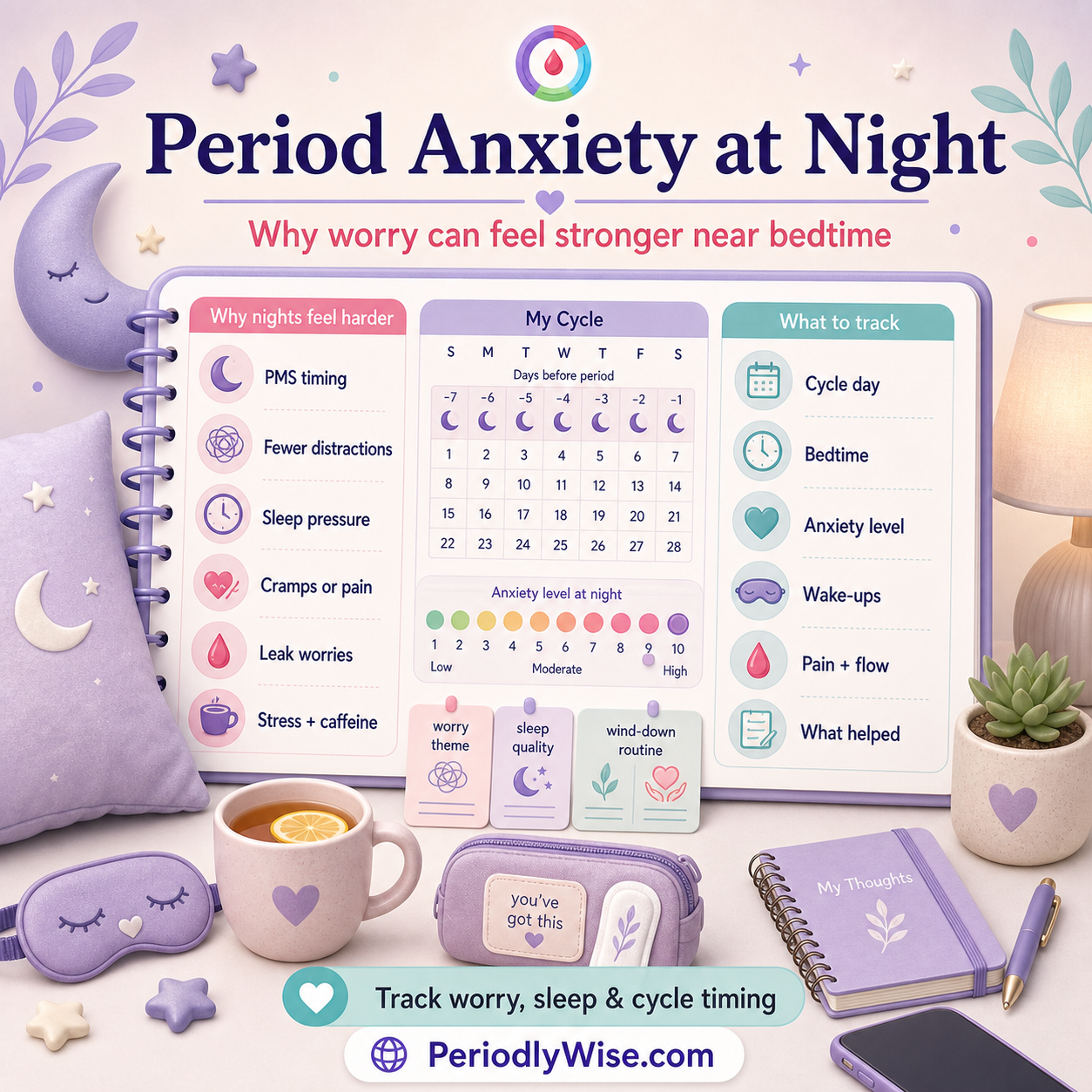
Learn why anxiety may feel stronger at night before or during your period, what to track, what may help, and when to seek extra support.
Read the guide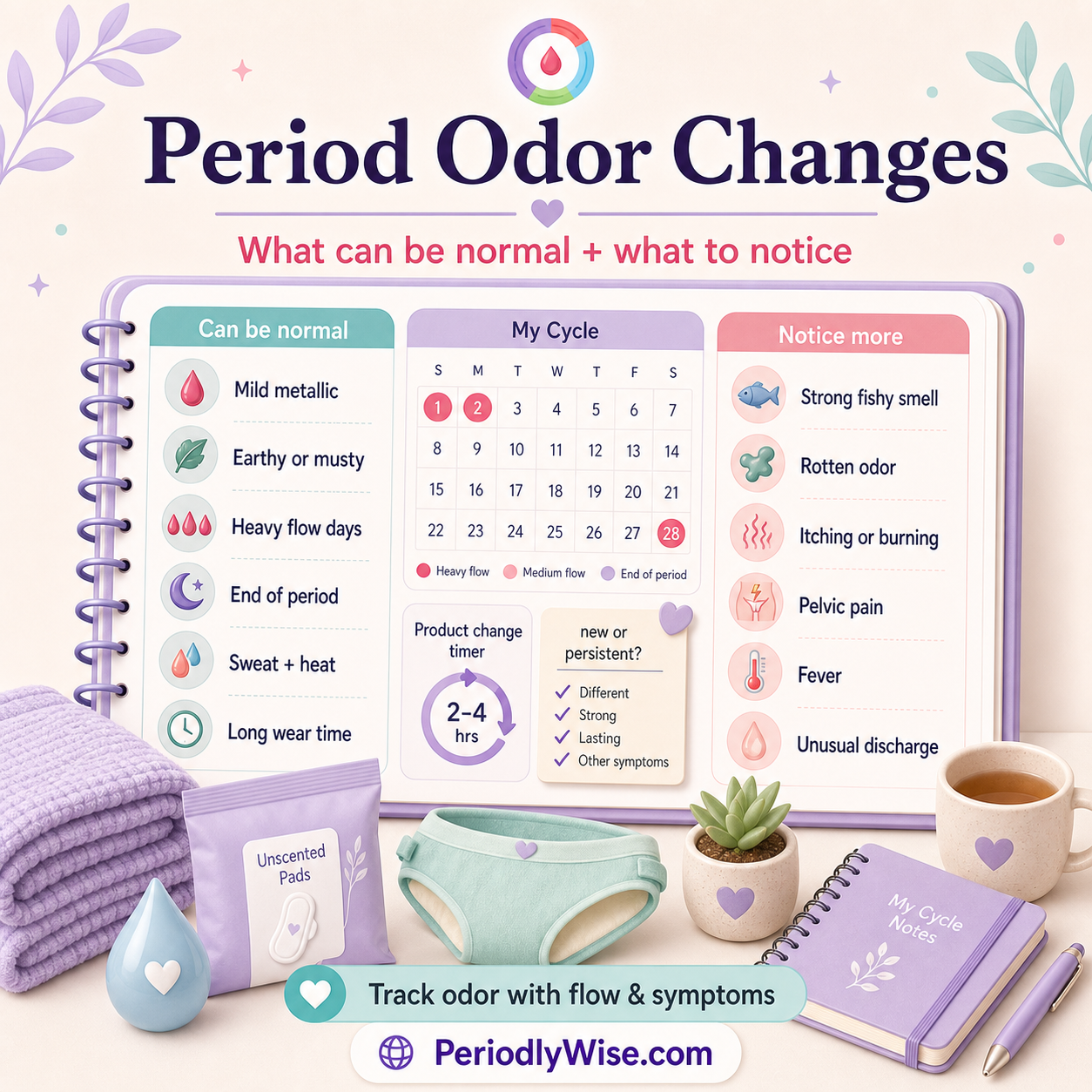
Learn why period smell can change, what may be normal, what to track, and when odor changes may need medical advice.
Read the guide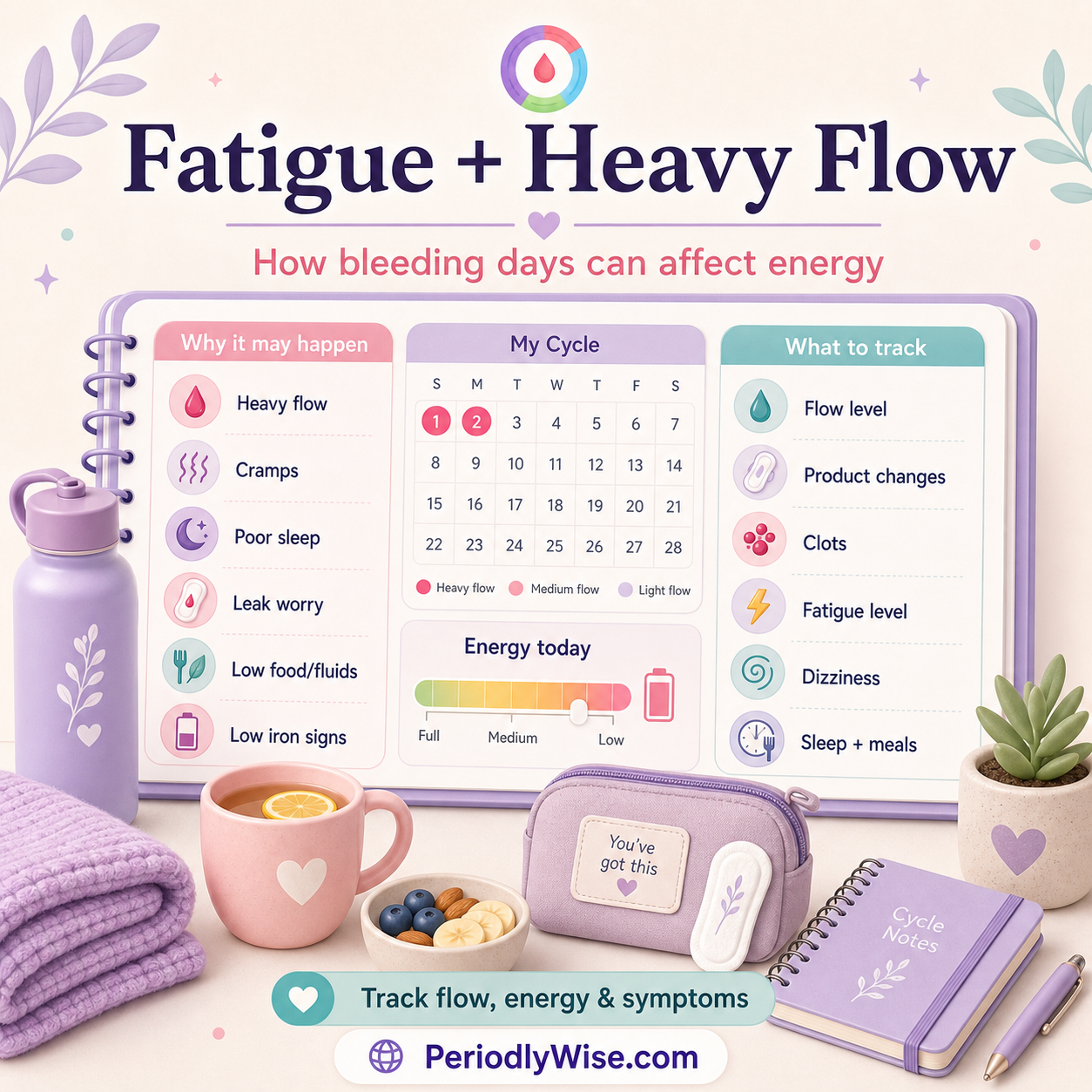
Learn why fatigue can feel stronger on heavy period days, what to track, what may help, and when tiredness may need medical advice.
Read the guide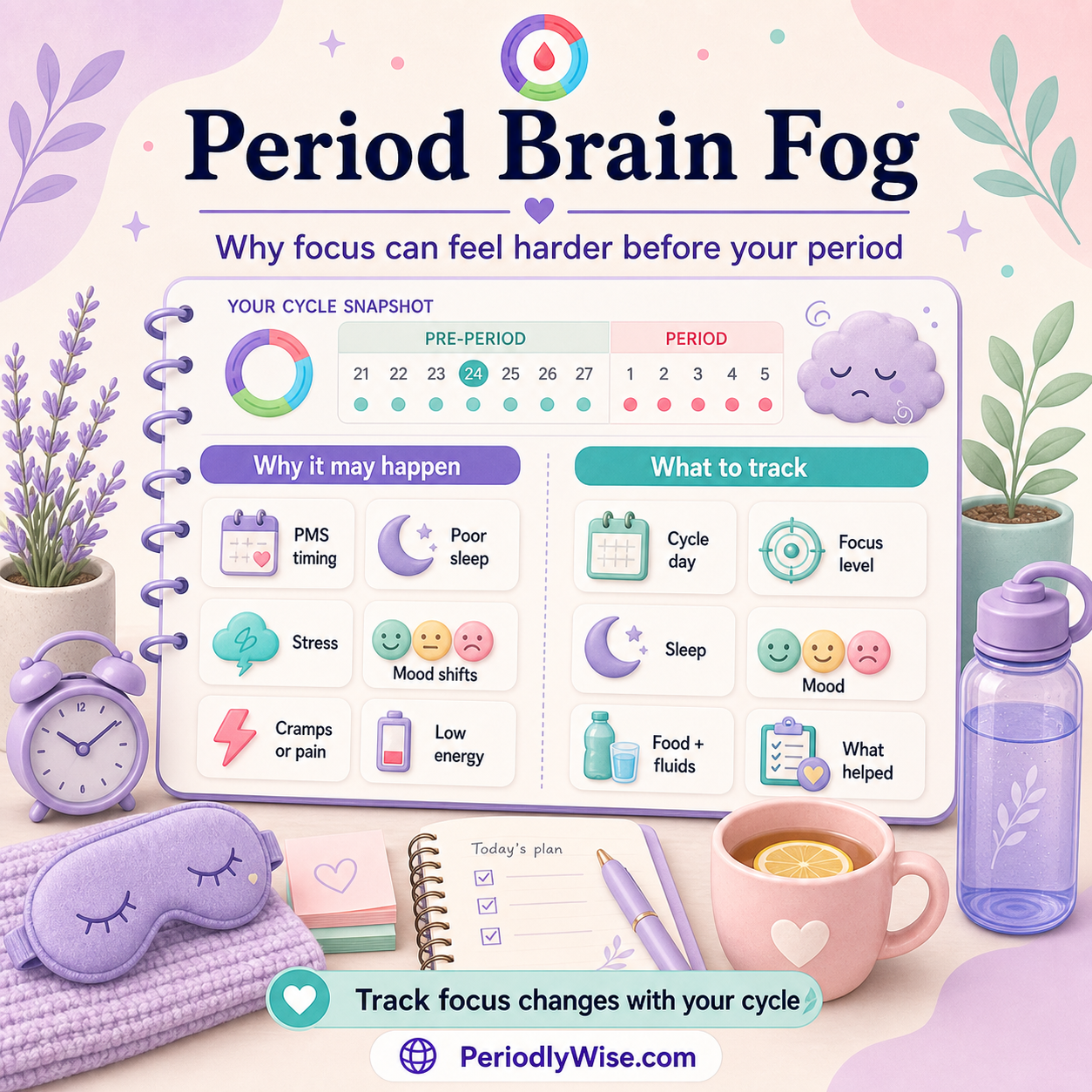
Learn why focus, memory, and mental clarity can feel harder before your period, what to track, what may help, and when symptoms need support.
Read the guide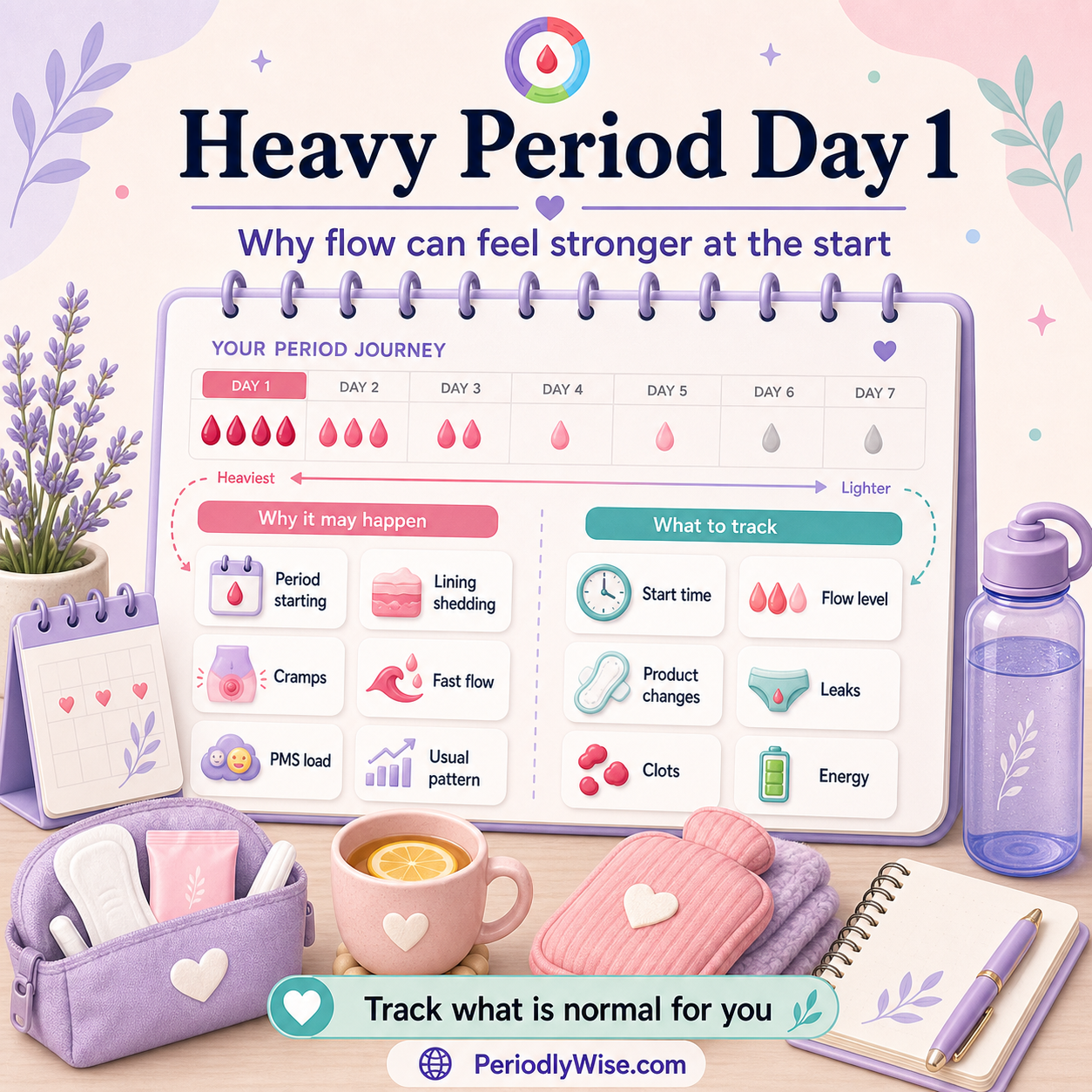
Learn why period flow can feel heavier on day 1, what details to track, what may be normal for you, and when heavy bleeding deserves medical advice.
Read the guide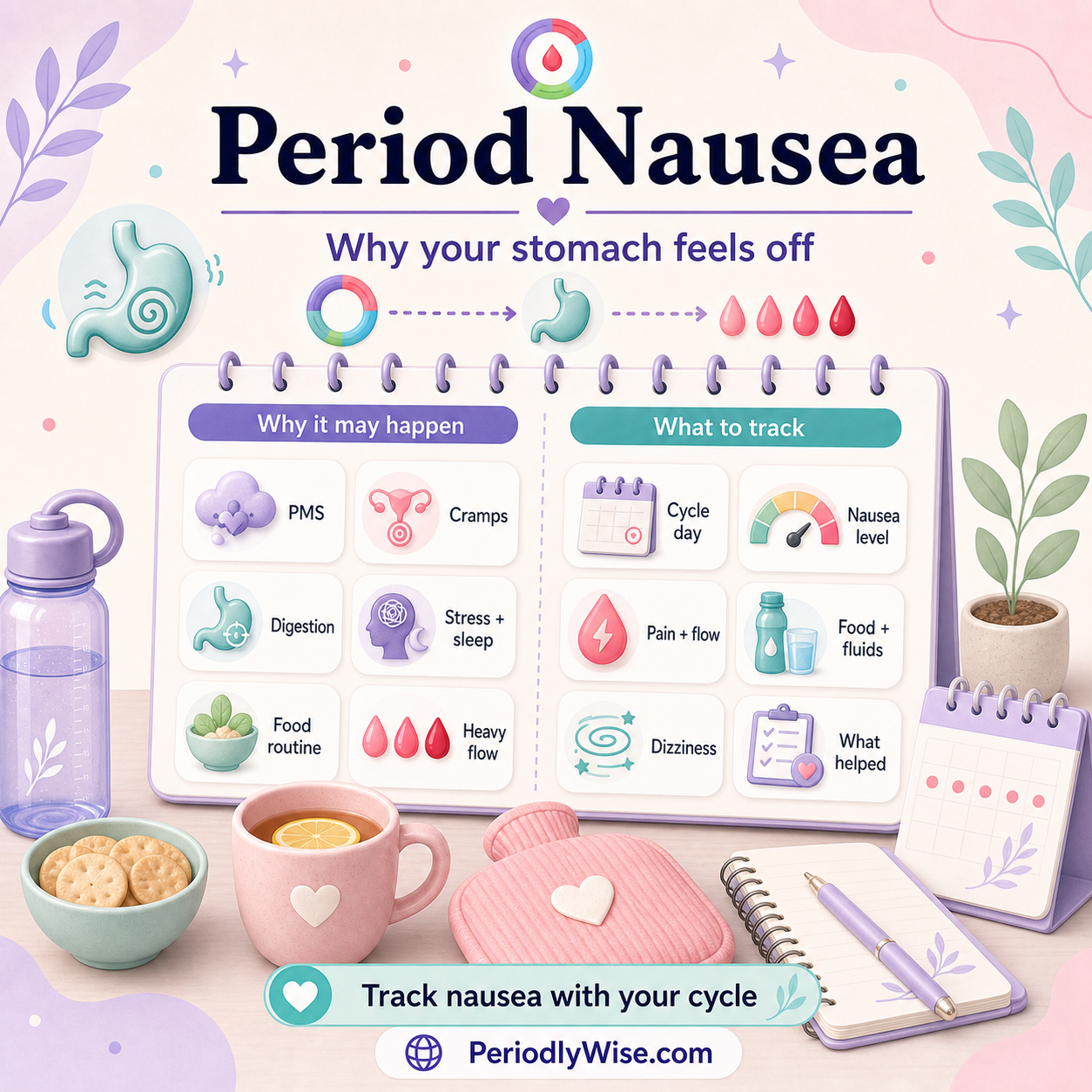
Learn why nausea, queasiness, and stomach upset can happen before or during your period, what to track, what may help, and when to get medical advice.
Read the guide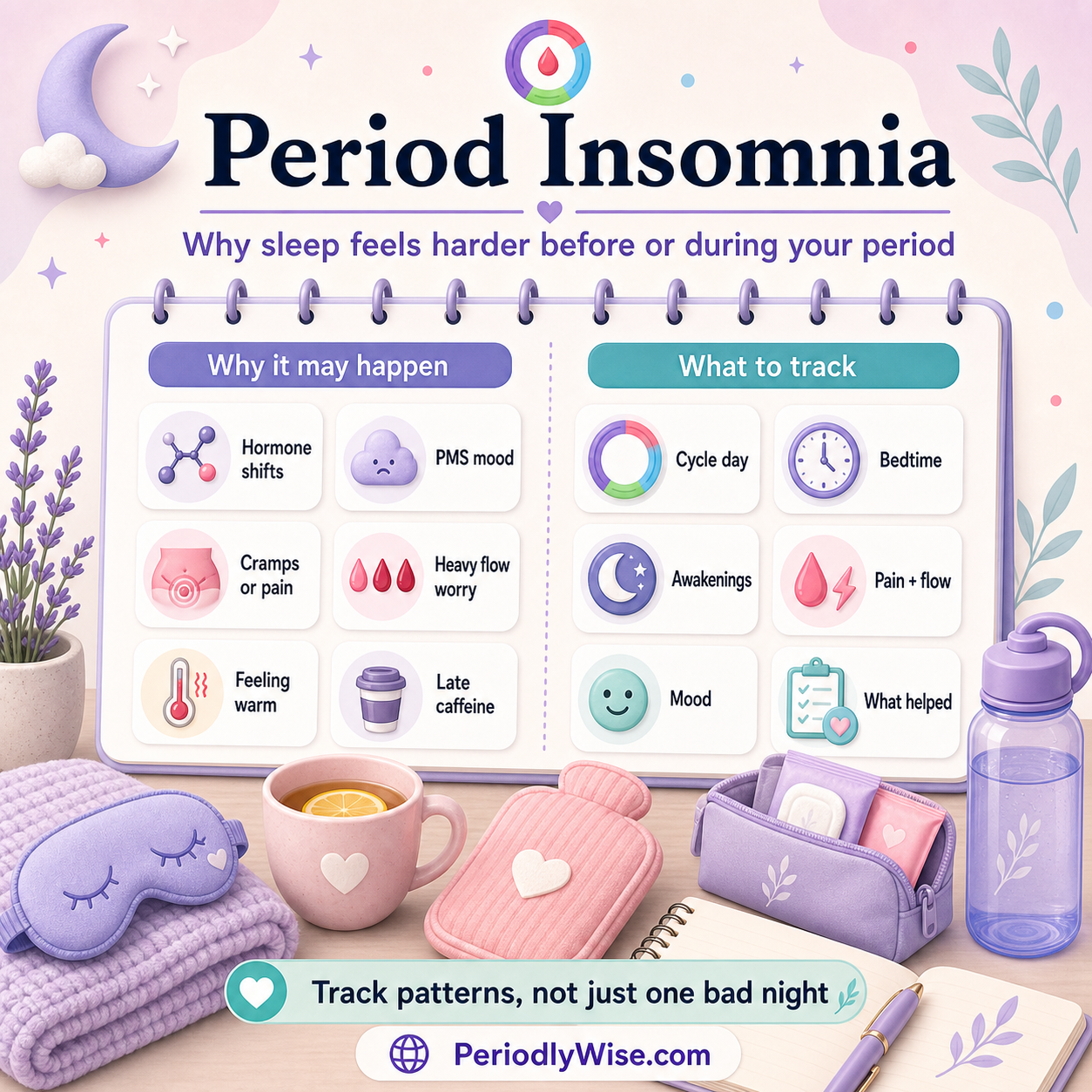
Learn why sleep can feel harder before or during your period, what symptoms to track, gentle bedtime ideas, and when period-related insomnia needs support.
Read the guide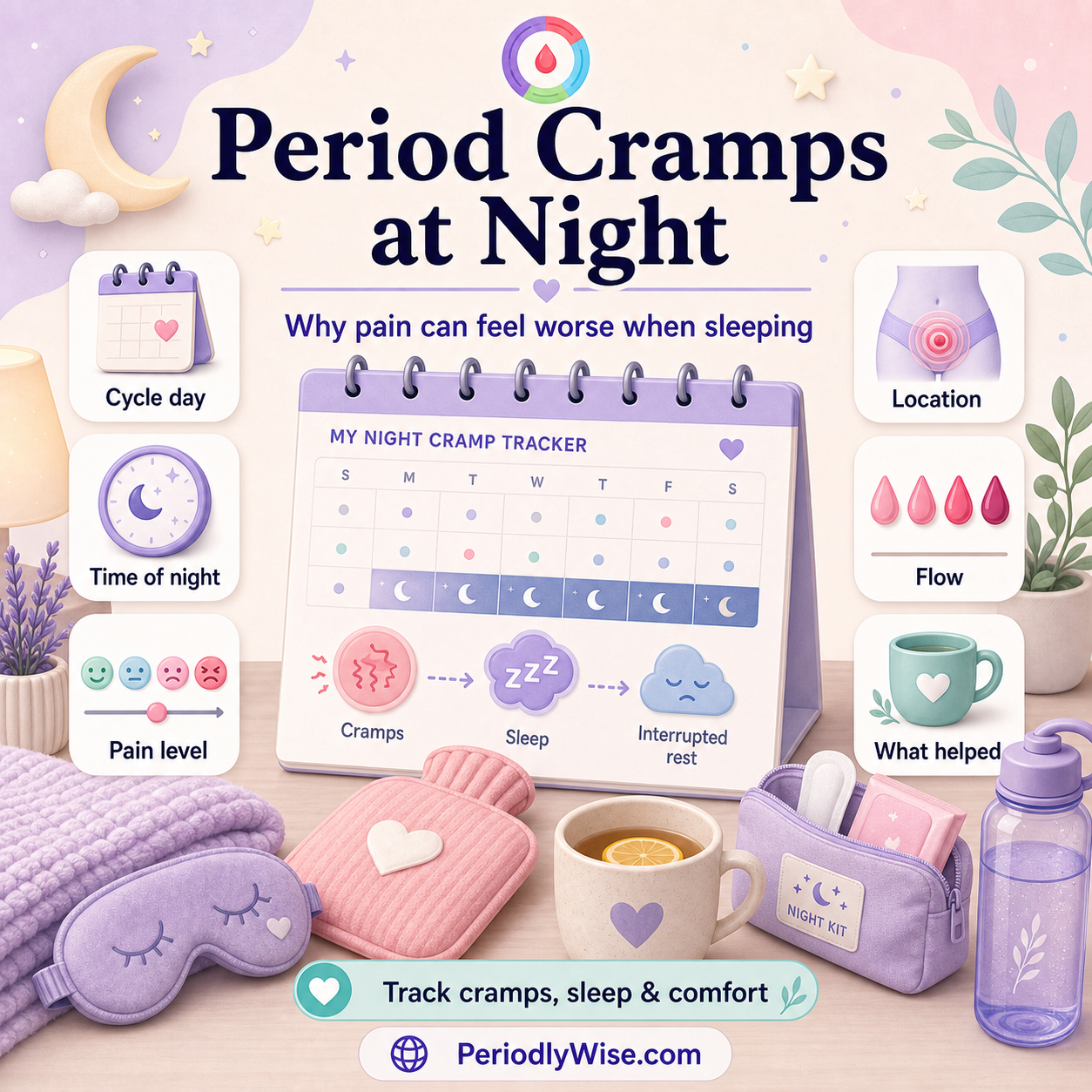
Learn why period cramps can feel worse at night, what to track, gentle comfort ideas for sleep, and when nighttime period pain needs medical advice.
Read the guide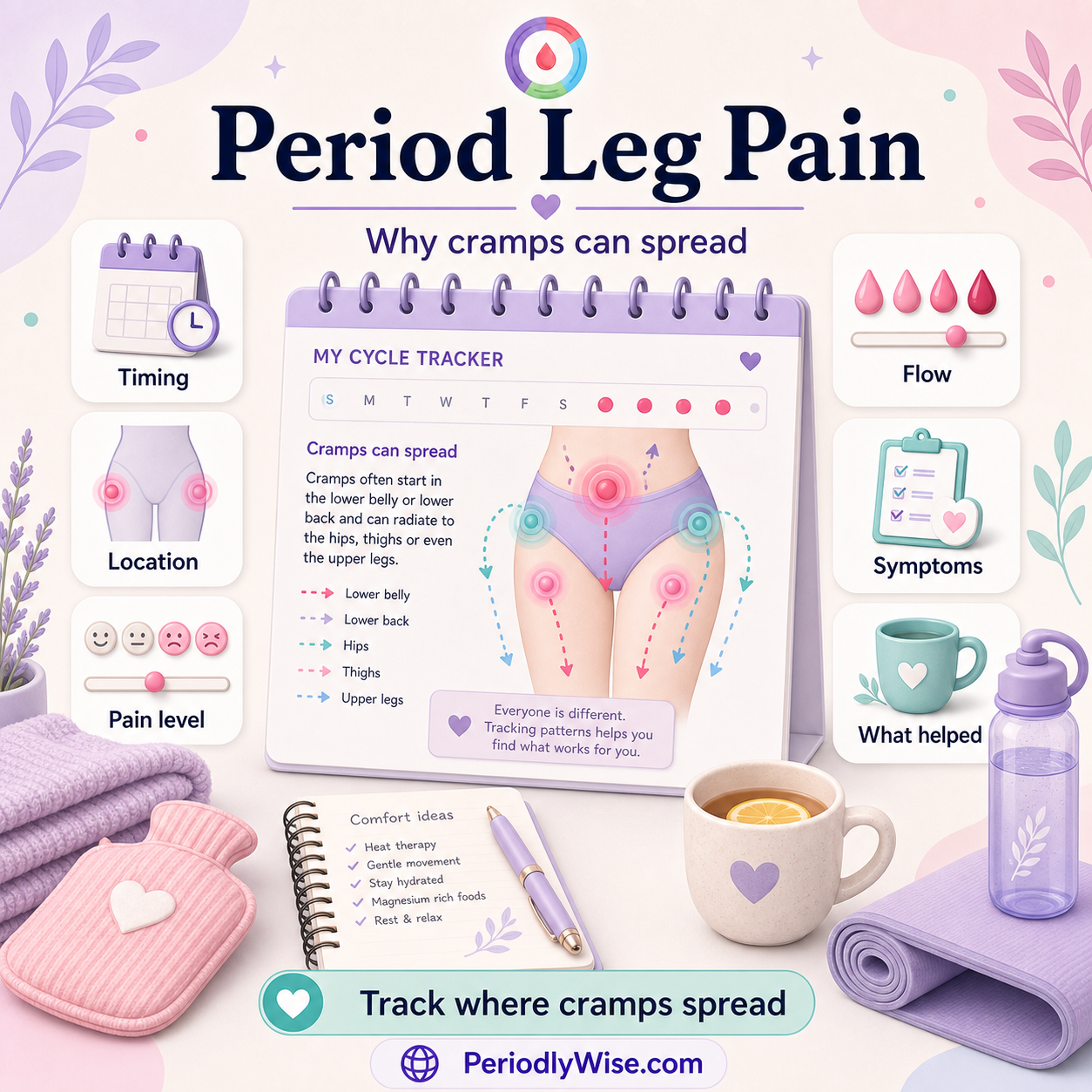
Learn why period cramps can spread into the thighs, hips, and legs, what to track, what may help, and when leg pain during your period deserves medical advice.
Read the guide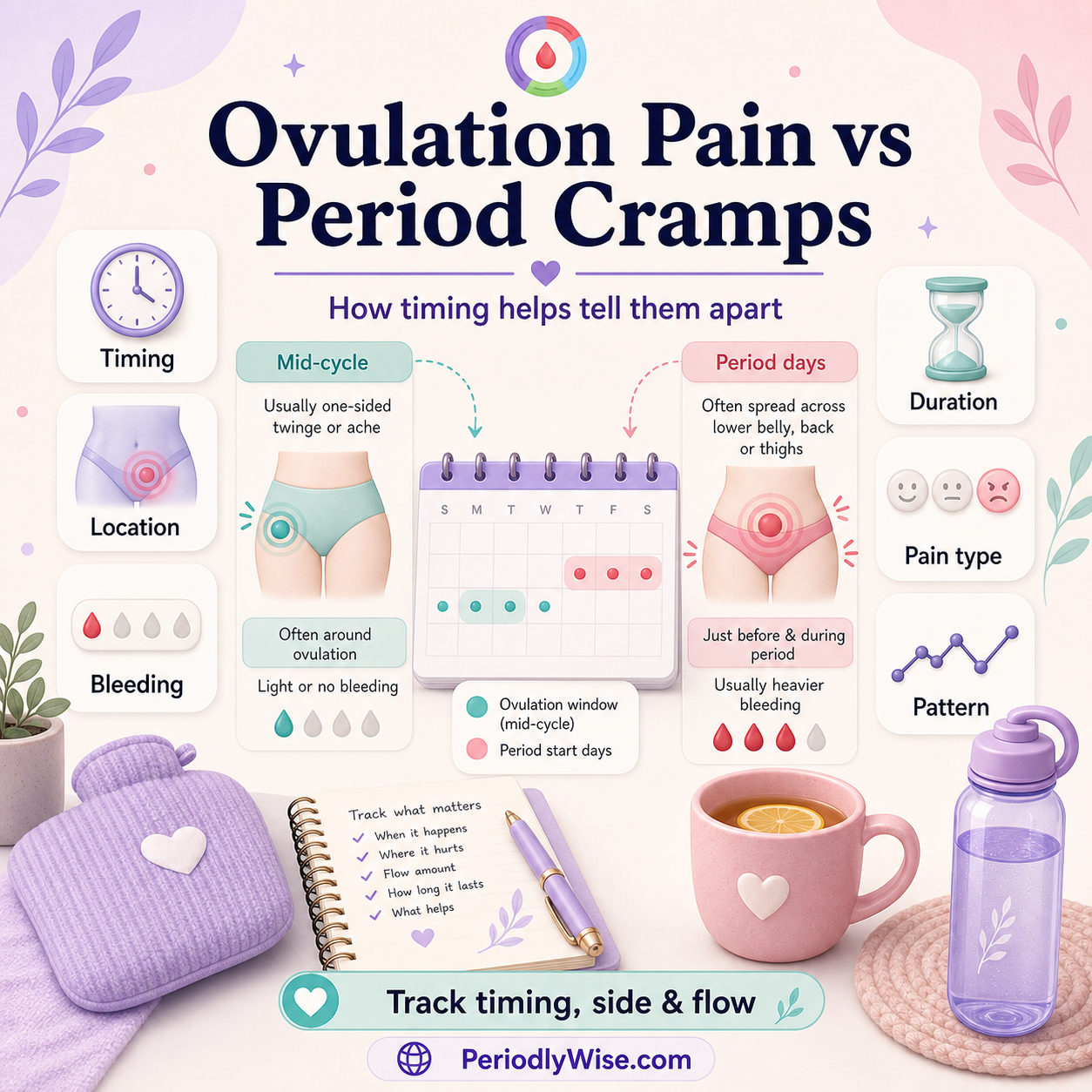
Learn how ovulation pain and period cramps differ by timing, location, symptoms, and cycle pattern, plus what to track and when to get medical advice.
Read the guide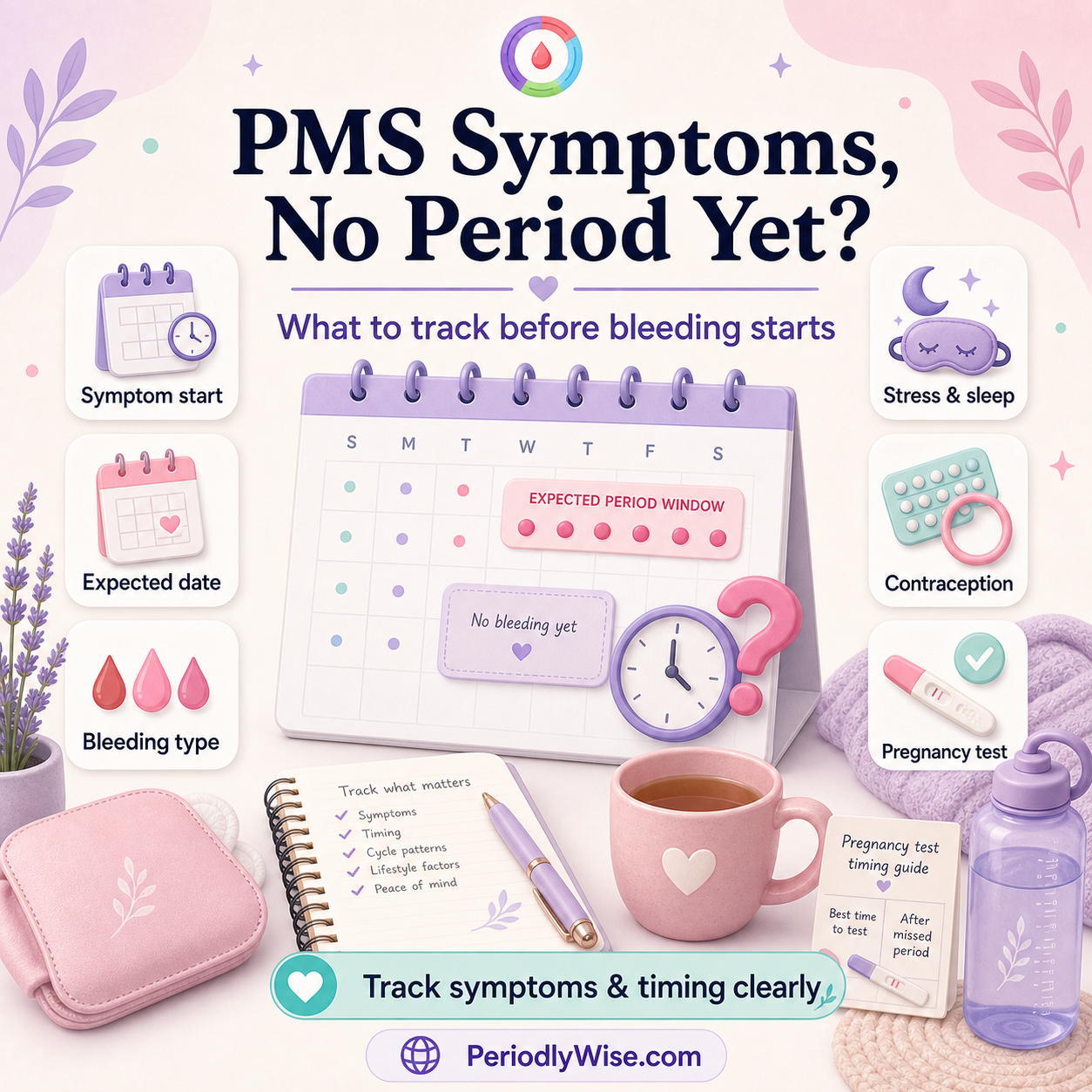
Feeling cramps, bloating, mood changes, or breast tenderness but no period yet? Learn why PMS-like symptoms can happen before bleeding, what to track, and when to get help.
Read the guide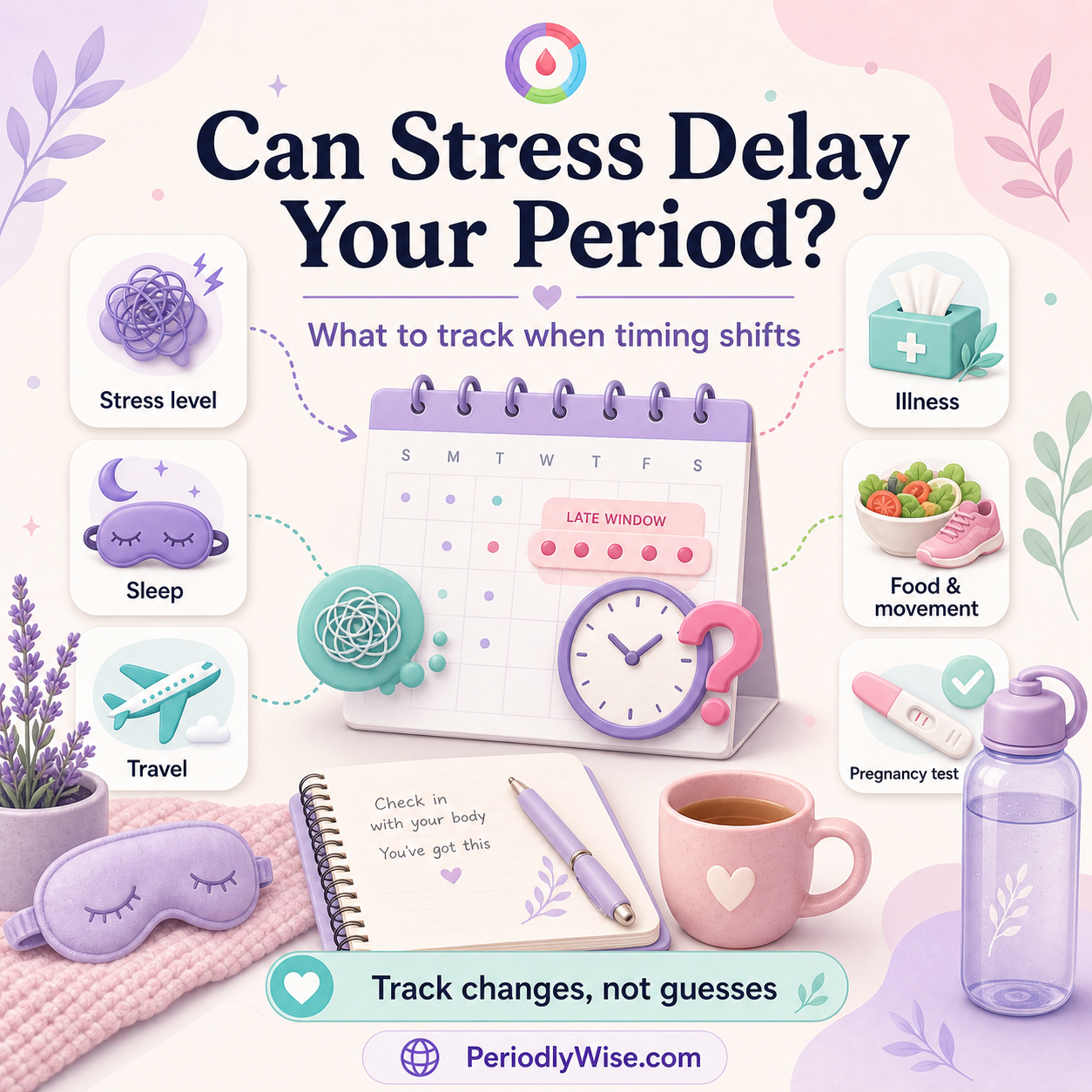
Stress can sometimes delay your period by affecting cycle timing. Learn how stress may shift your cycle, what else can cause a late period, what to track, and when to get help.
Read the guide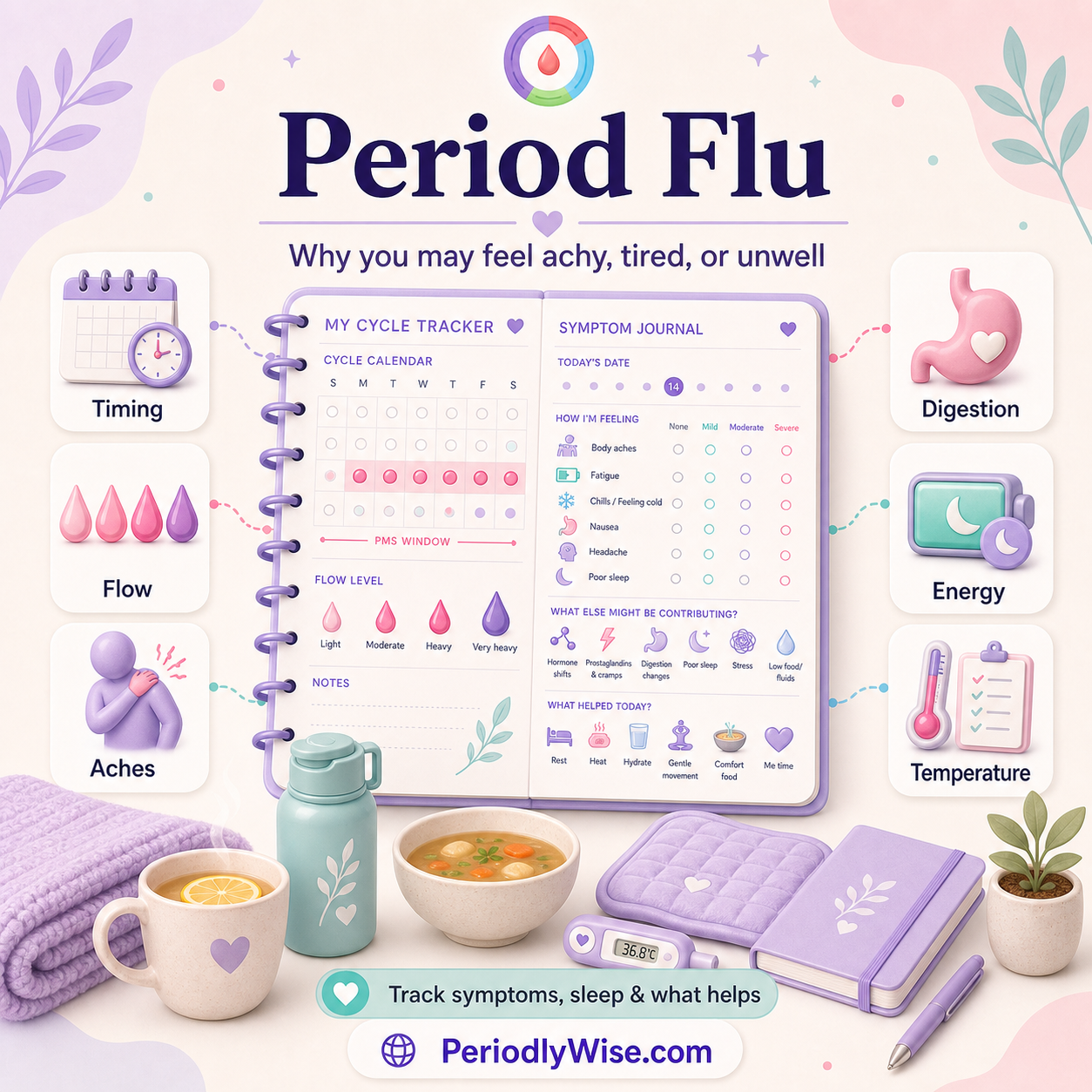
Feeling achy, tired, chilled, nauseous, or unwell before your period? Learn what period flu can mean, what to track, and when to get medical advice.
Read the guide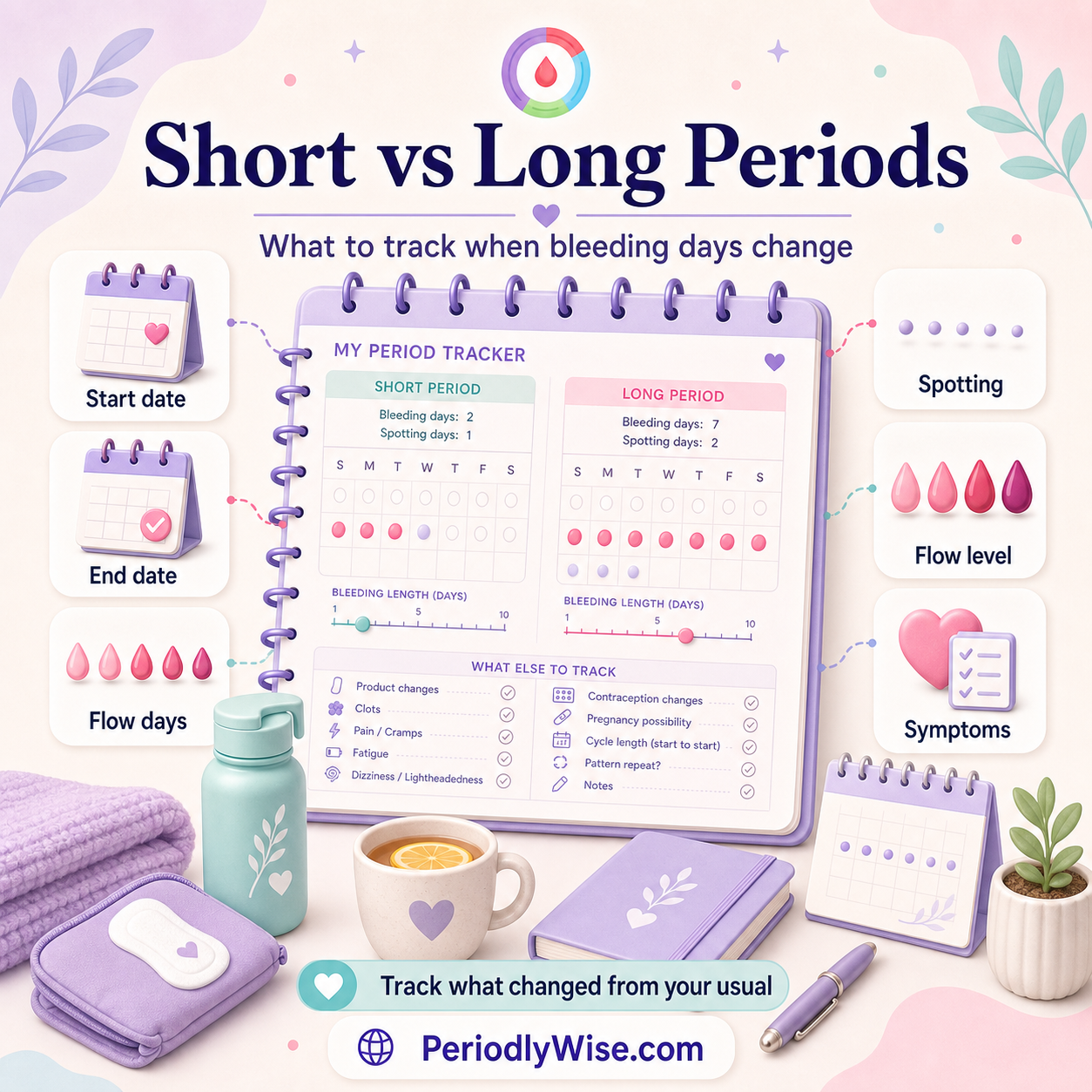
Learn what short or long periods can mean, which bleeding-day changes to track, and when heavier, longer, shorter, or unusual bleeding needs medical advice.
Read the guide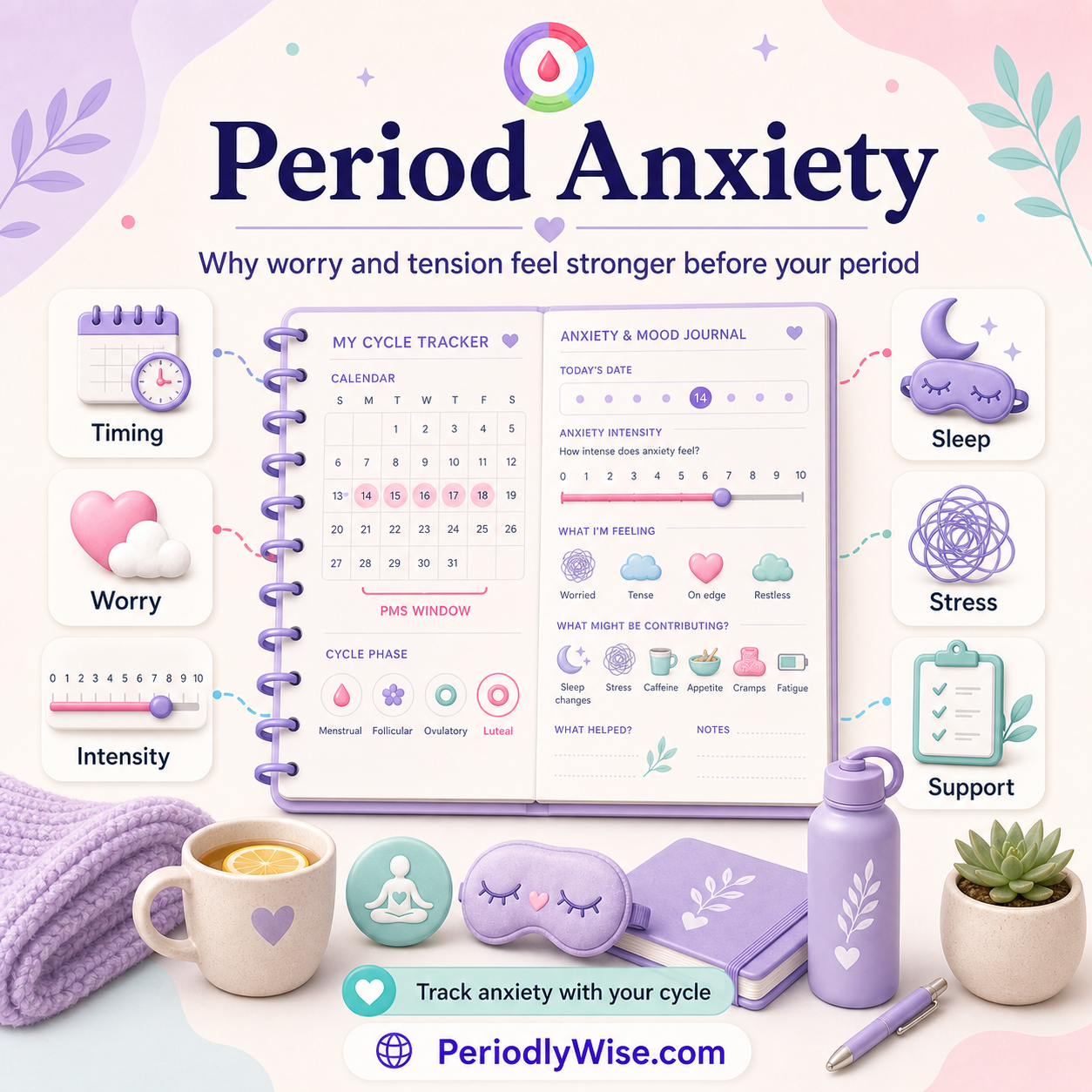
Feeling more anxious before your period? Learn why worry, tension, sleep changes, stress, and PMS symptoms can feel stronger, what to track, and when to get help.
Read the guide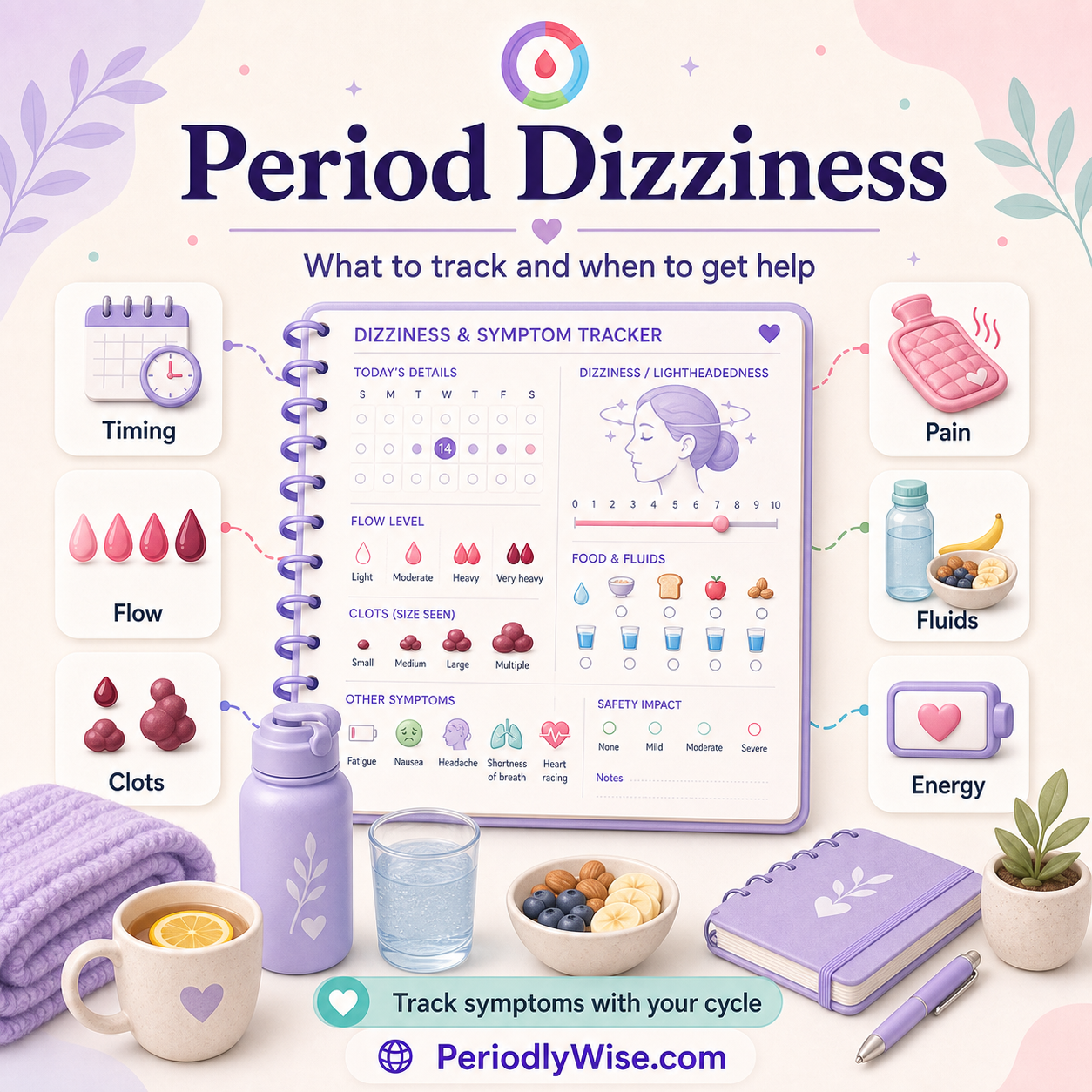
Learn why dizziness or lightheadedness can happen before or during your period, what symptoms to track, what may help, and when to seek medical advice.
Read the guide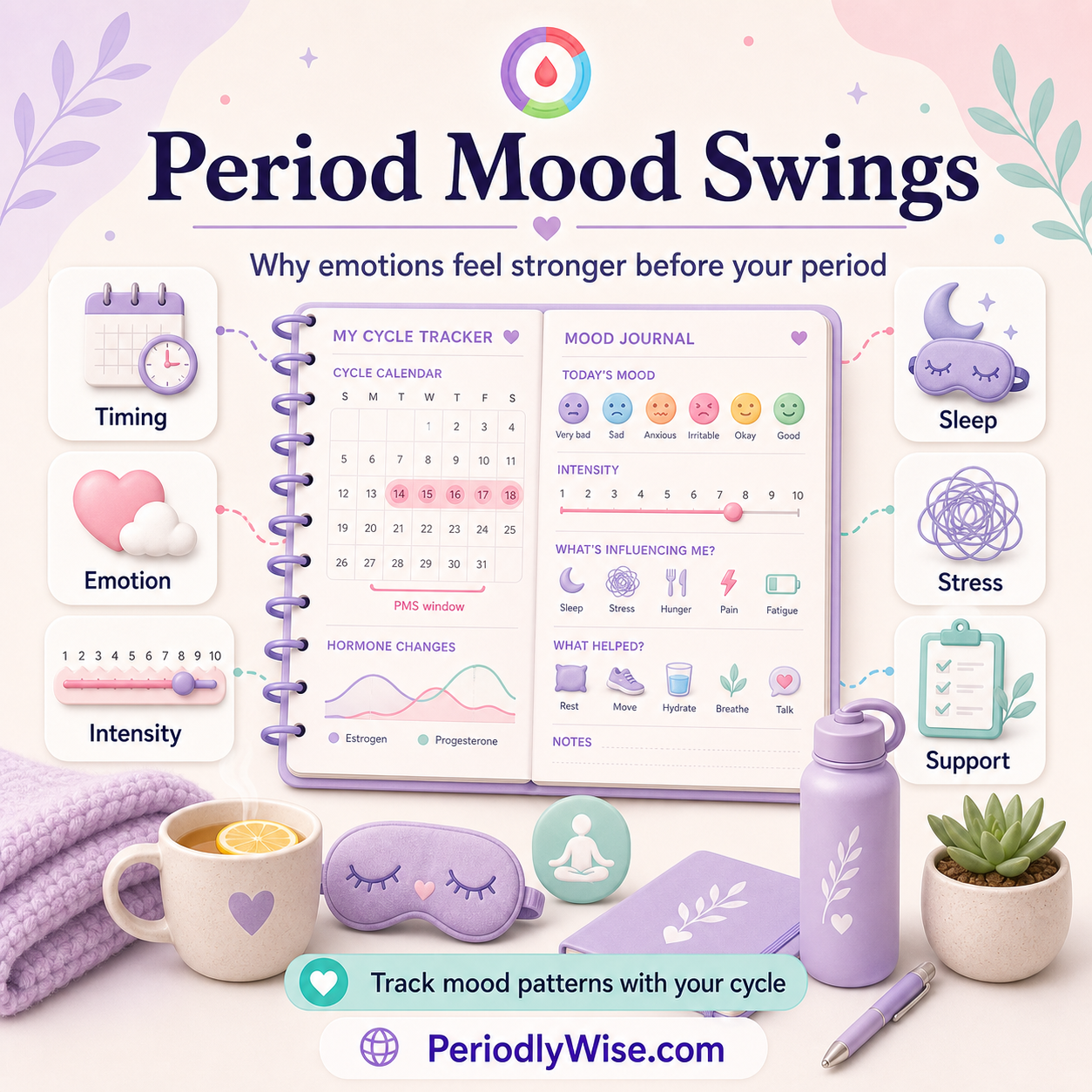
Learn why mood swings, irritability, anxiety, sadness, and stronger emotions can happen before your period, what to track, what may help, and when to seek support.
Read the guide
Learn why period cravings and appetite changes can happen before your period, what to track, how to respond gently, and when hunger or cravings may need extra support.
Read the guide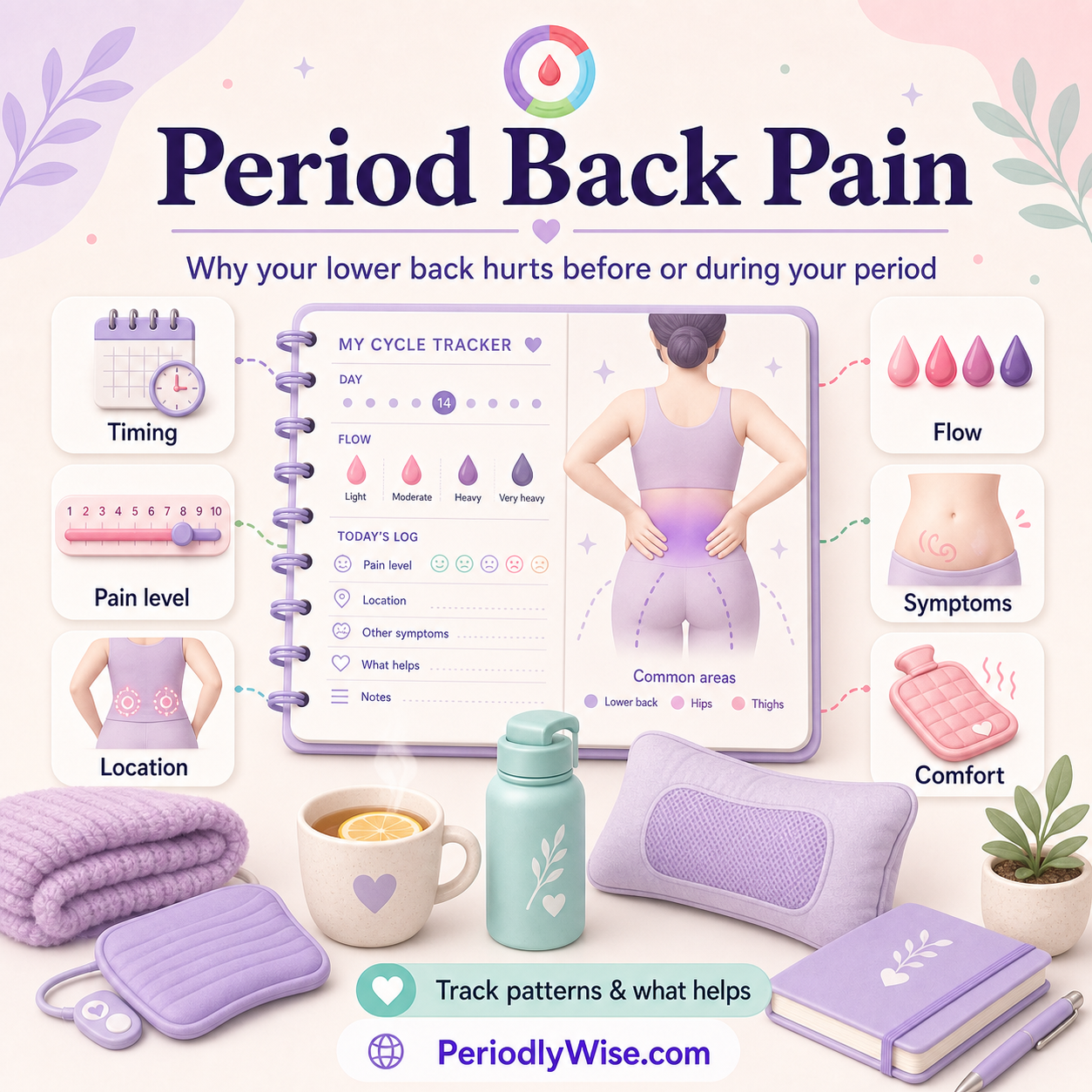
Learn why lower back pain can happen before or during your period, what menstrual back pain may feel like, what to track, gentle comfort tips, and when to seek medical advice.
Read the guide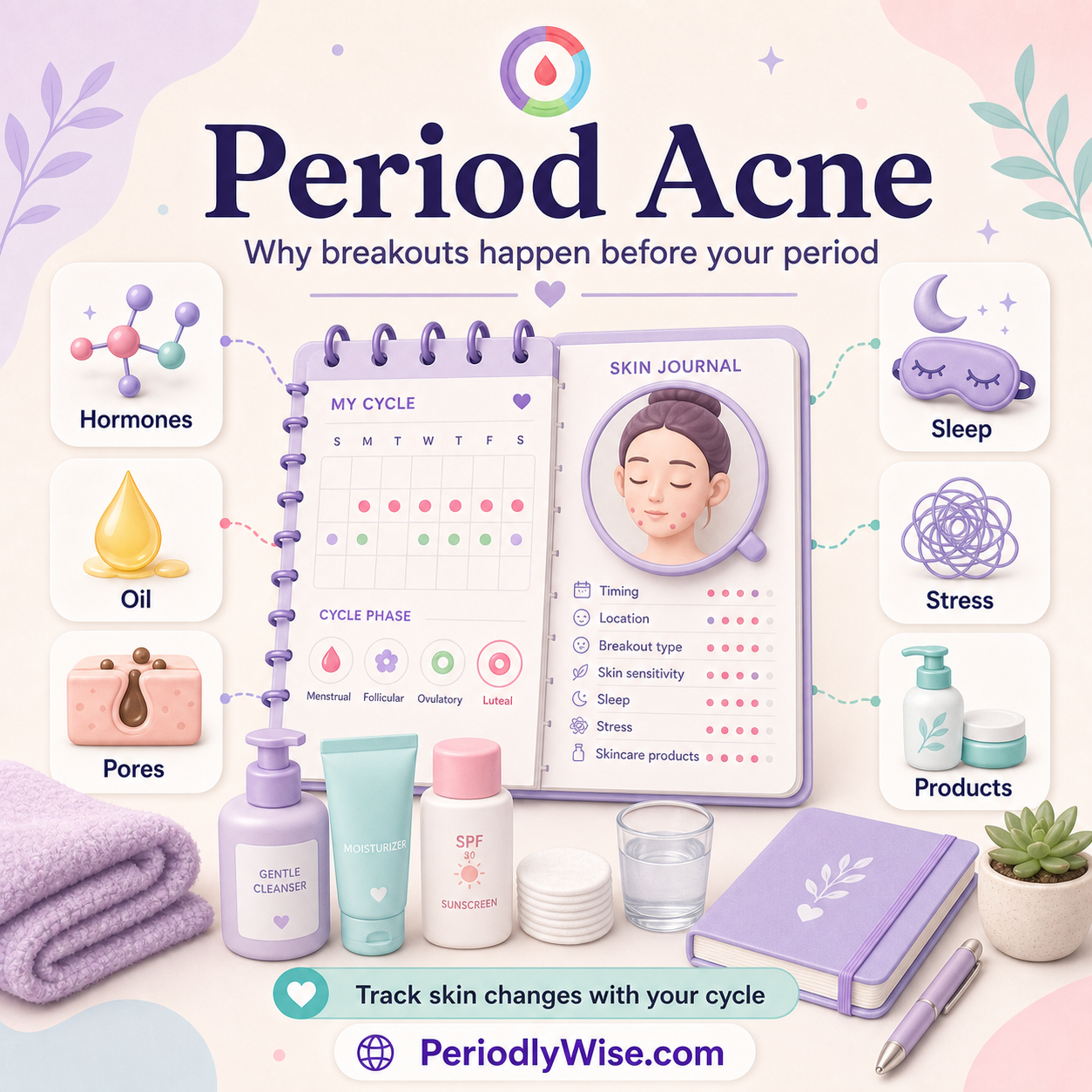
Learn why acne before your period happens, what hormone-related skin changes to track, how to care for premenstrual breakouts, and when to seek medical advice.
Read the guide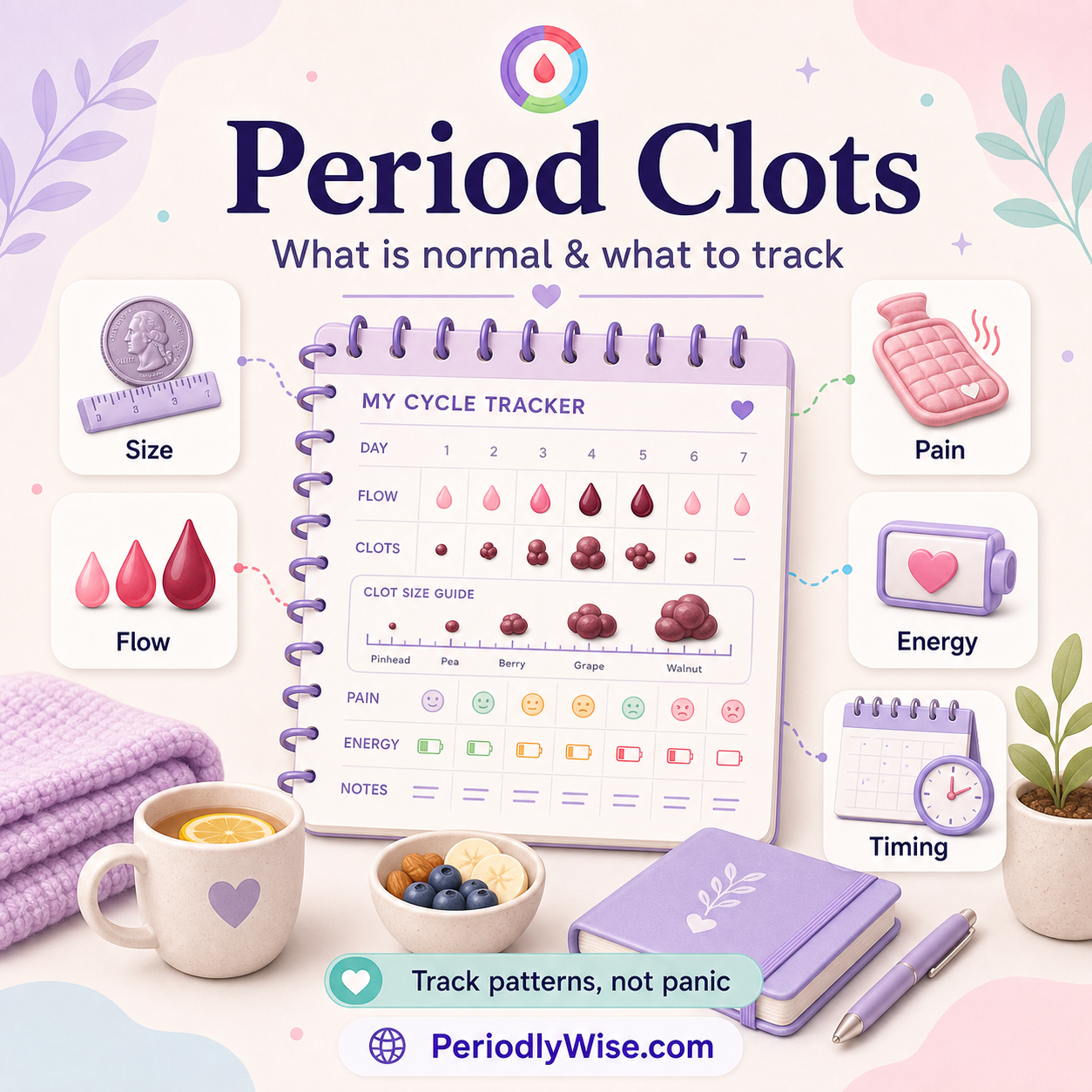
Learn what period clots are, when small menstrual clots can be normal, what clot size and bleeding patterns to track, and when heavy bleeding needs medical advice.
Read the guide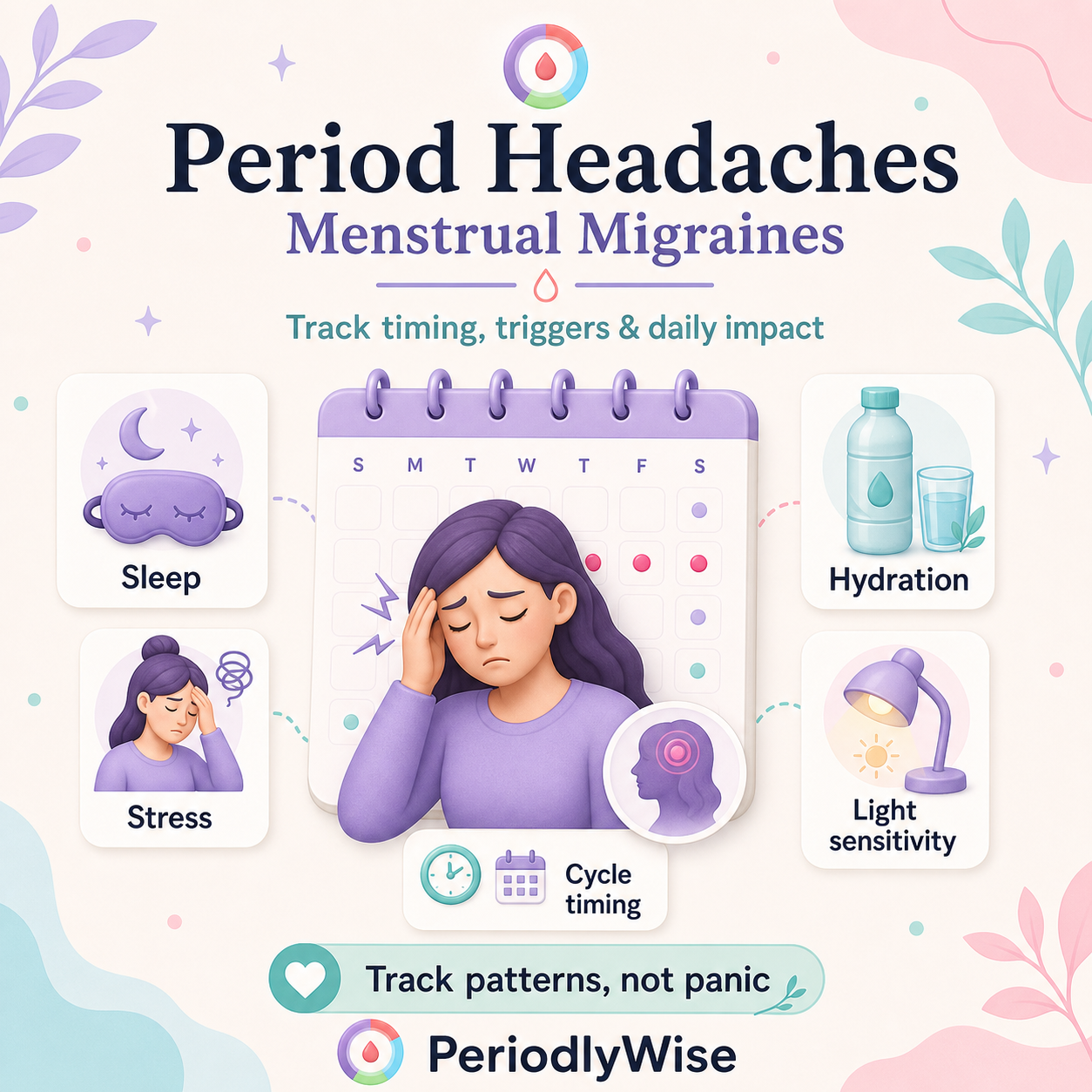
Learn why headaches and menstrual migraines can happen around your period, what symptoms to track, how cycle timing helps, and when to seek medical advice.
Read the guide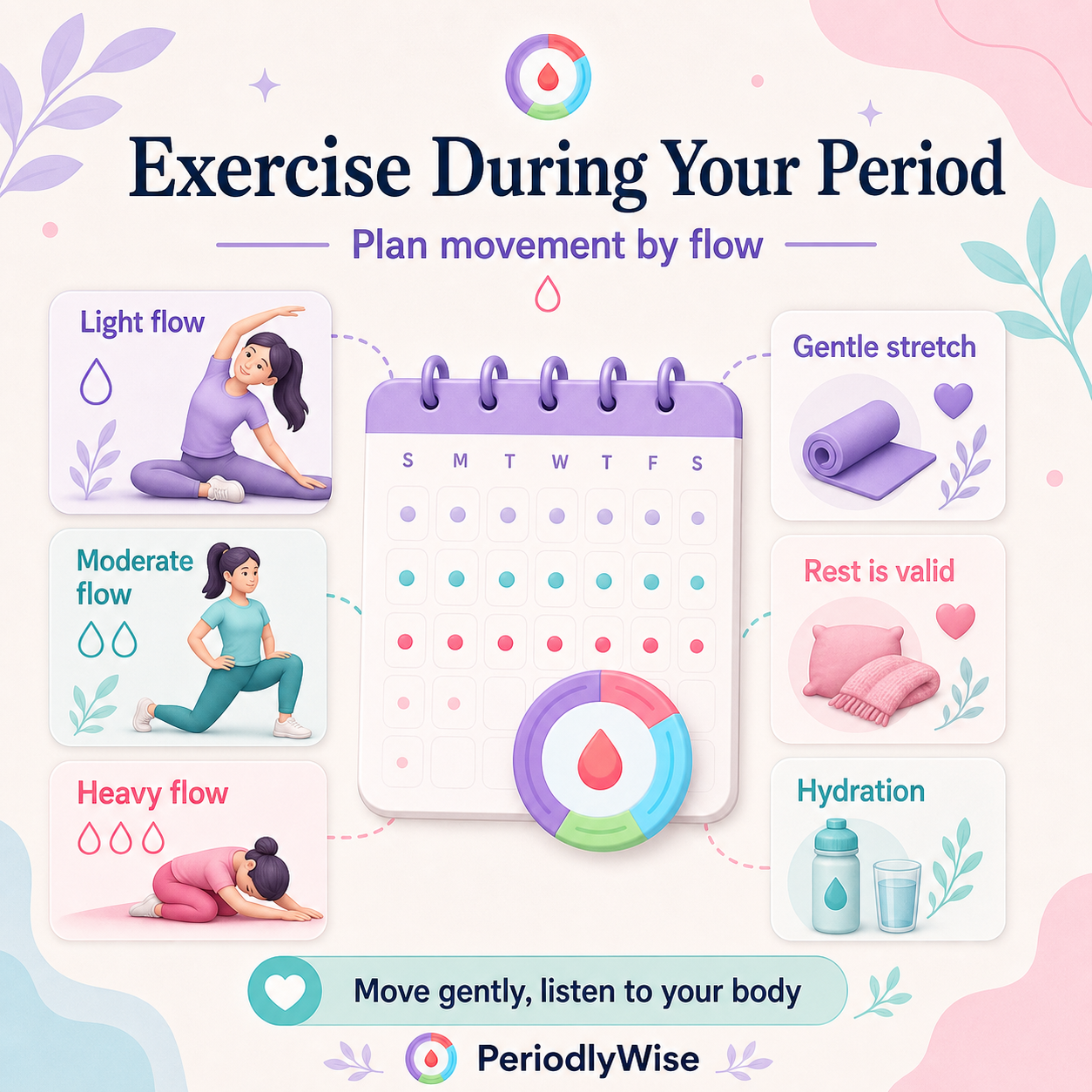
Learn how to plan exercise during your period with practical movement options for light, moderate, and heavy flow days, plus when rest is the better choice.
Read the guide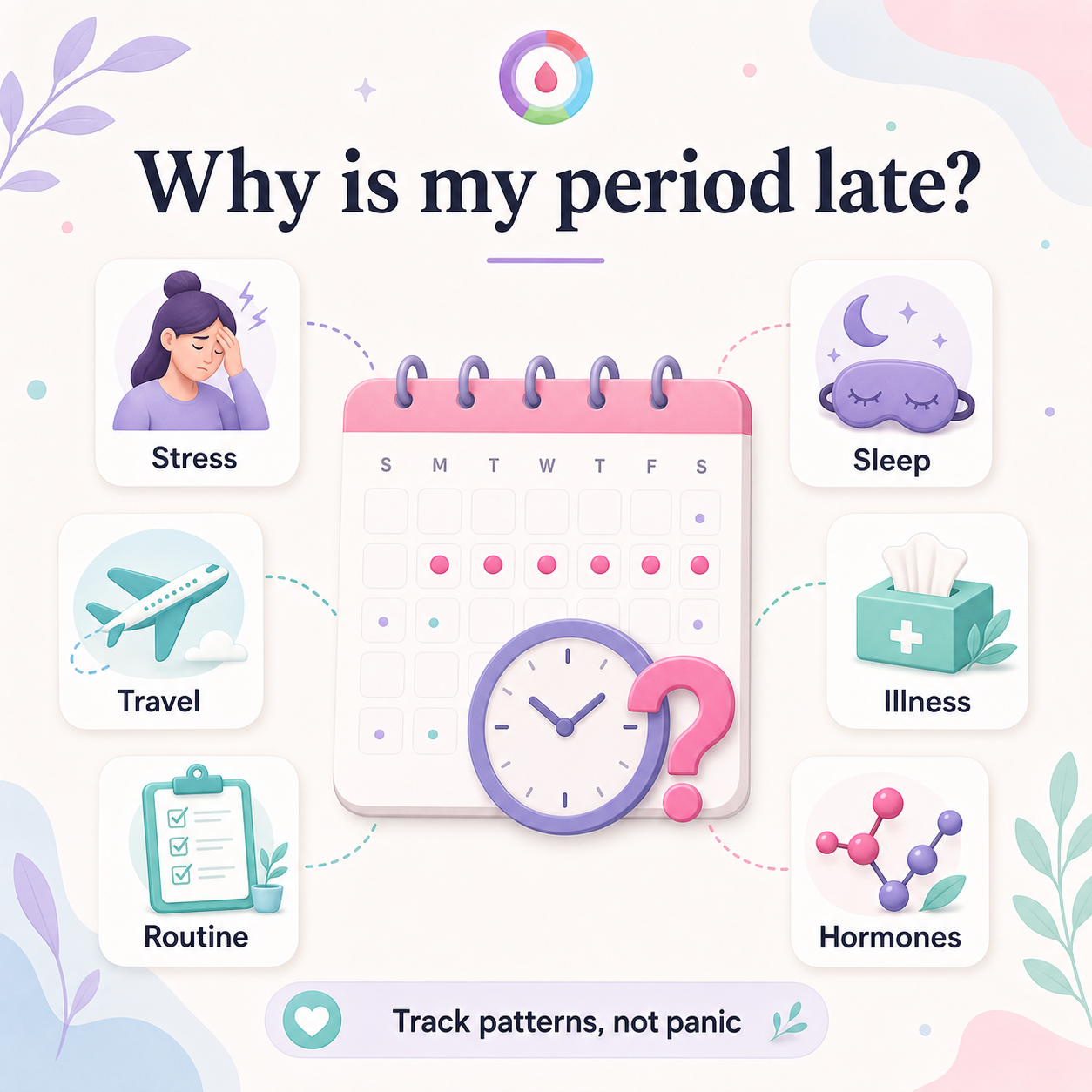
Learn why your period may be late besides pregnancy, including stress, sleep changes, illness, weight changes, exercise, birth control, PCOS, thyroid issues, and when to seek medical advice.
Read the guide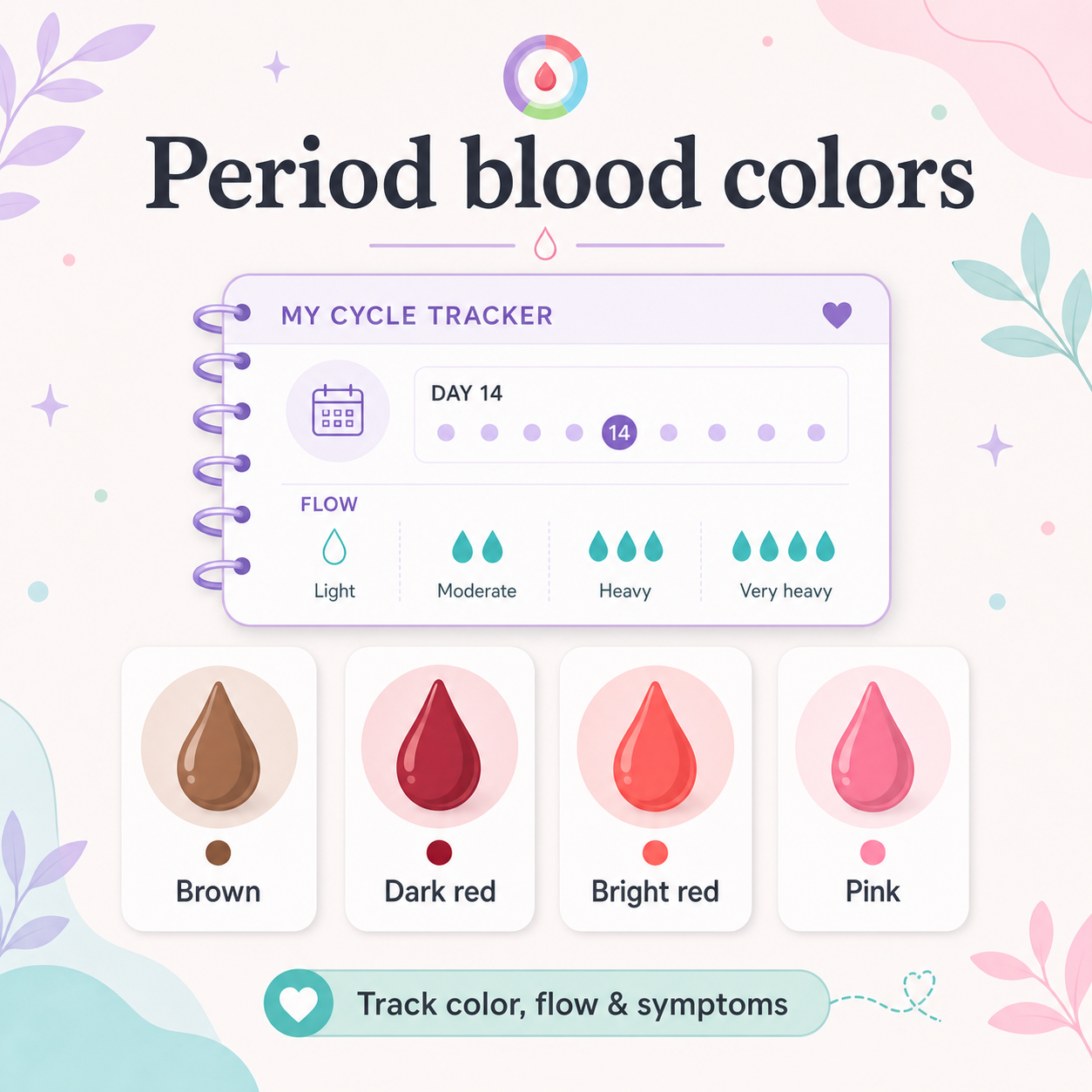
Learn what different period blood colors and flow changes may mean, including brown, bright red, dark red, pink, clots, light flow, heavy bleeding, spotting, and when to seek medical advice.
Read the guide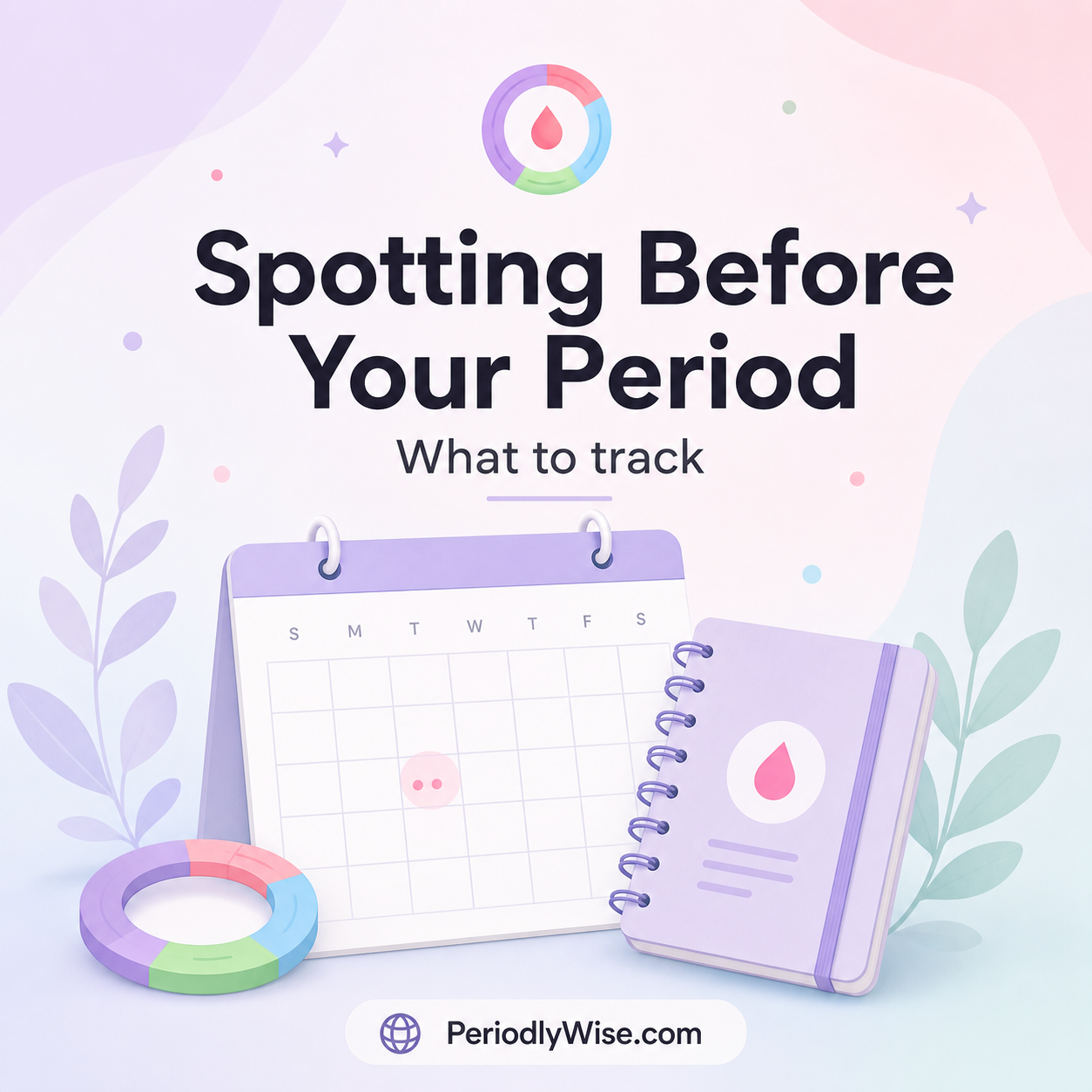
Learn what spotting before your period can mean, common reasons for light bleeding, what cycle details to track, and when spotting needs medical attention.
Read the guide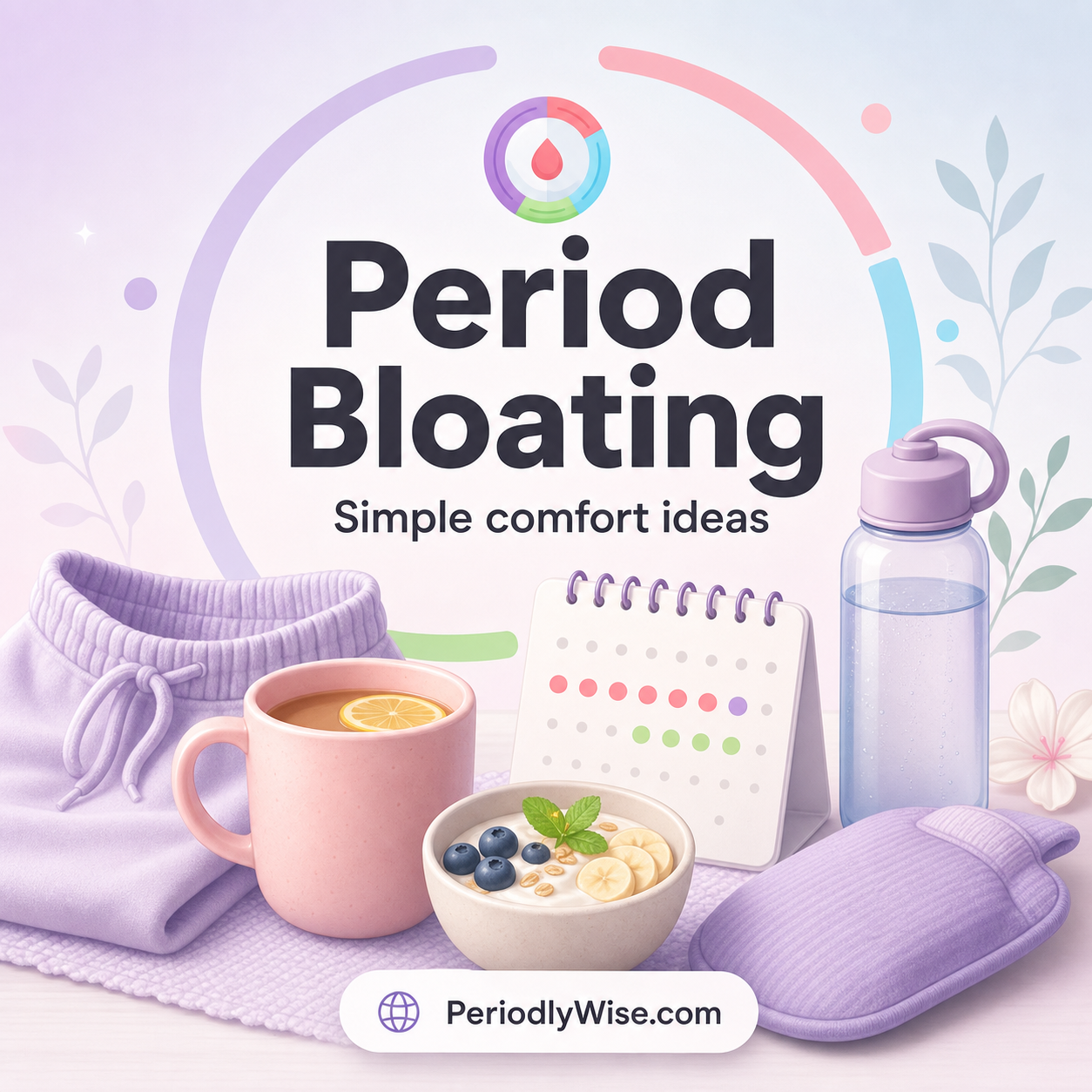
Learn why period bloating happens before or during your period, what can make it worse, simple comfort tips, and when bloating needs medical attention.
Read the guide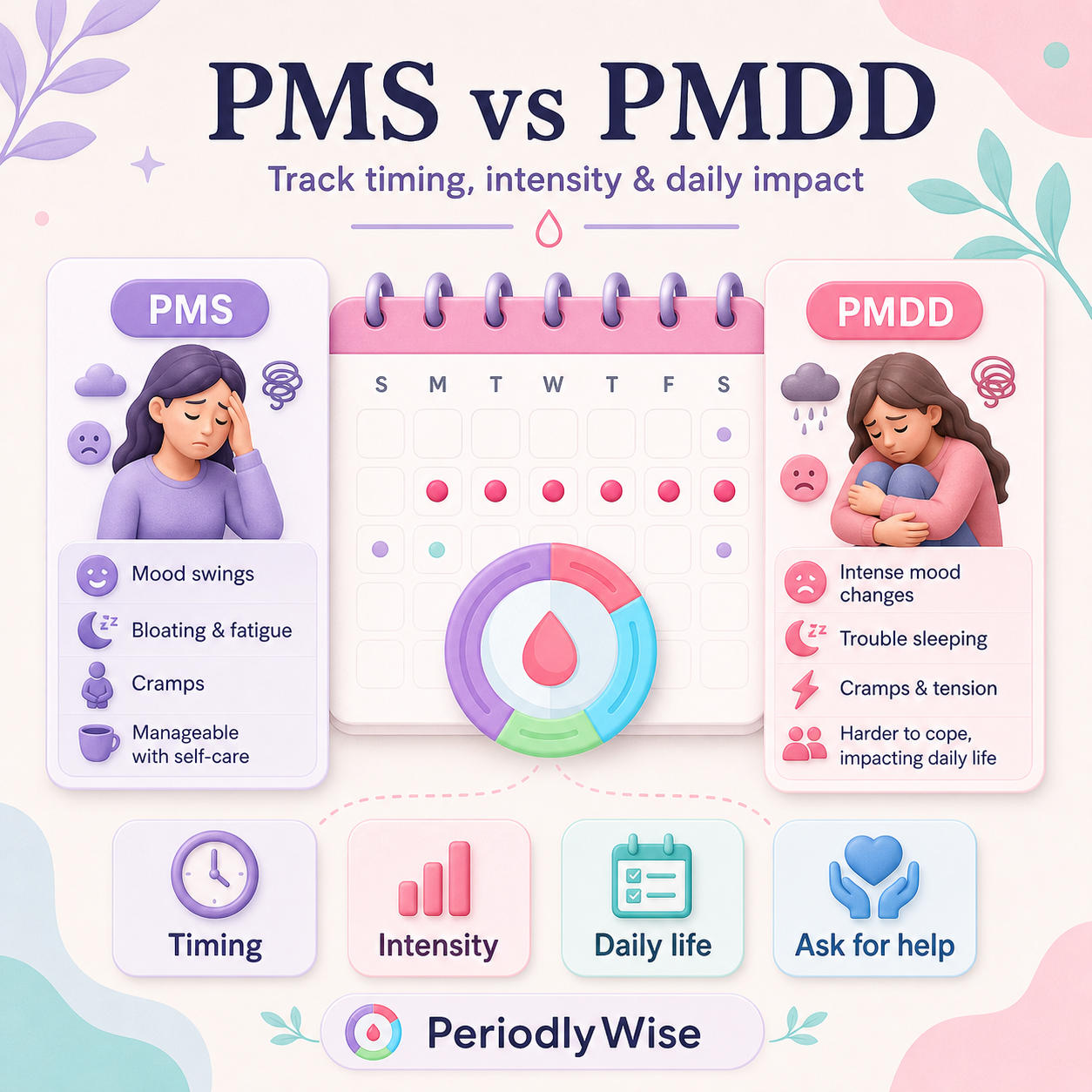
Learn the difference between PMS and PMDD, what symptoms to track, when symptoms may need medical support, and how cycle patterns can help you explain what is happening.
Read the guide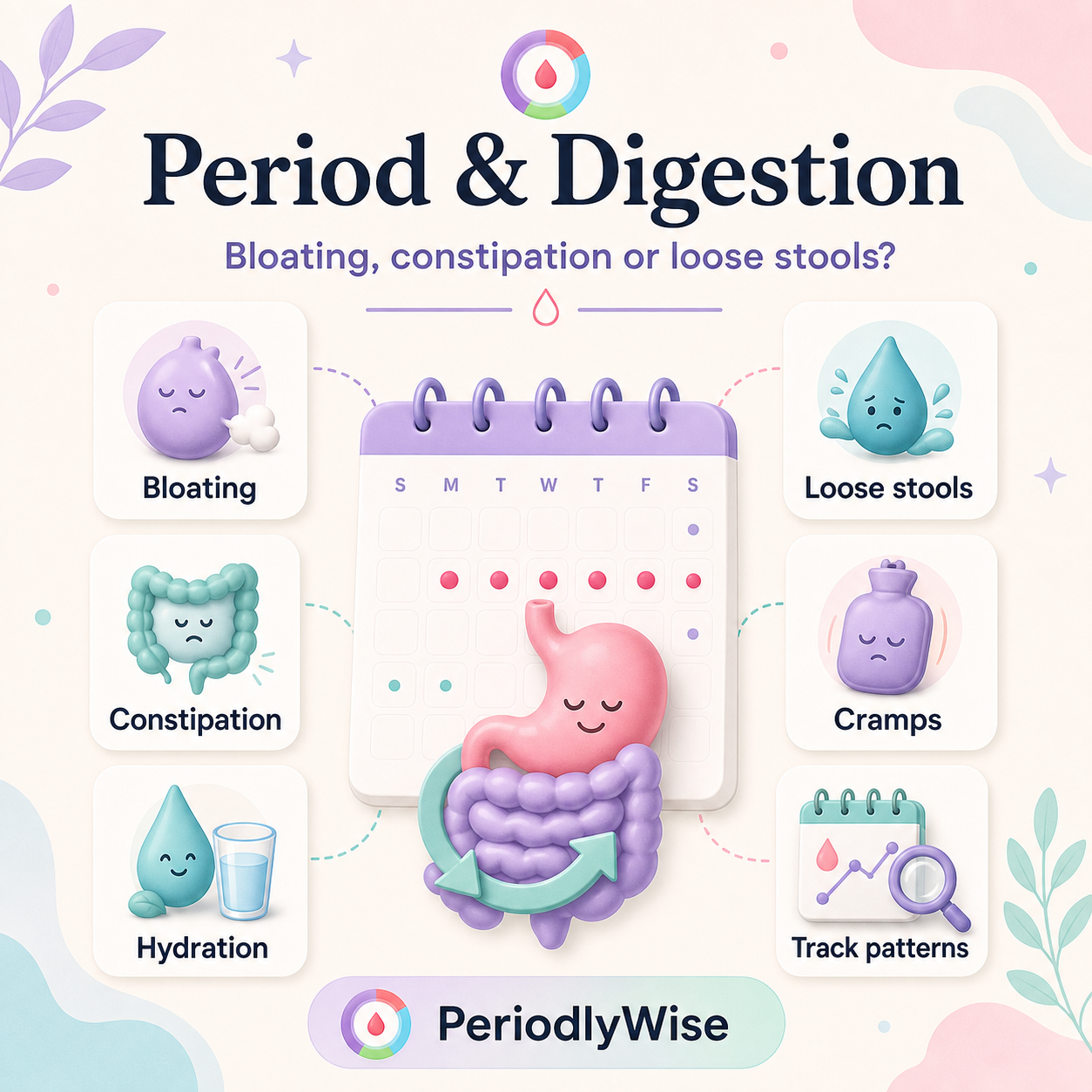
Learn why diarrhea, constipation, bloating, nausea, and bowel changes can happen before or during your period, what to track, and when to seek medical advice.
Read the guide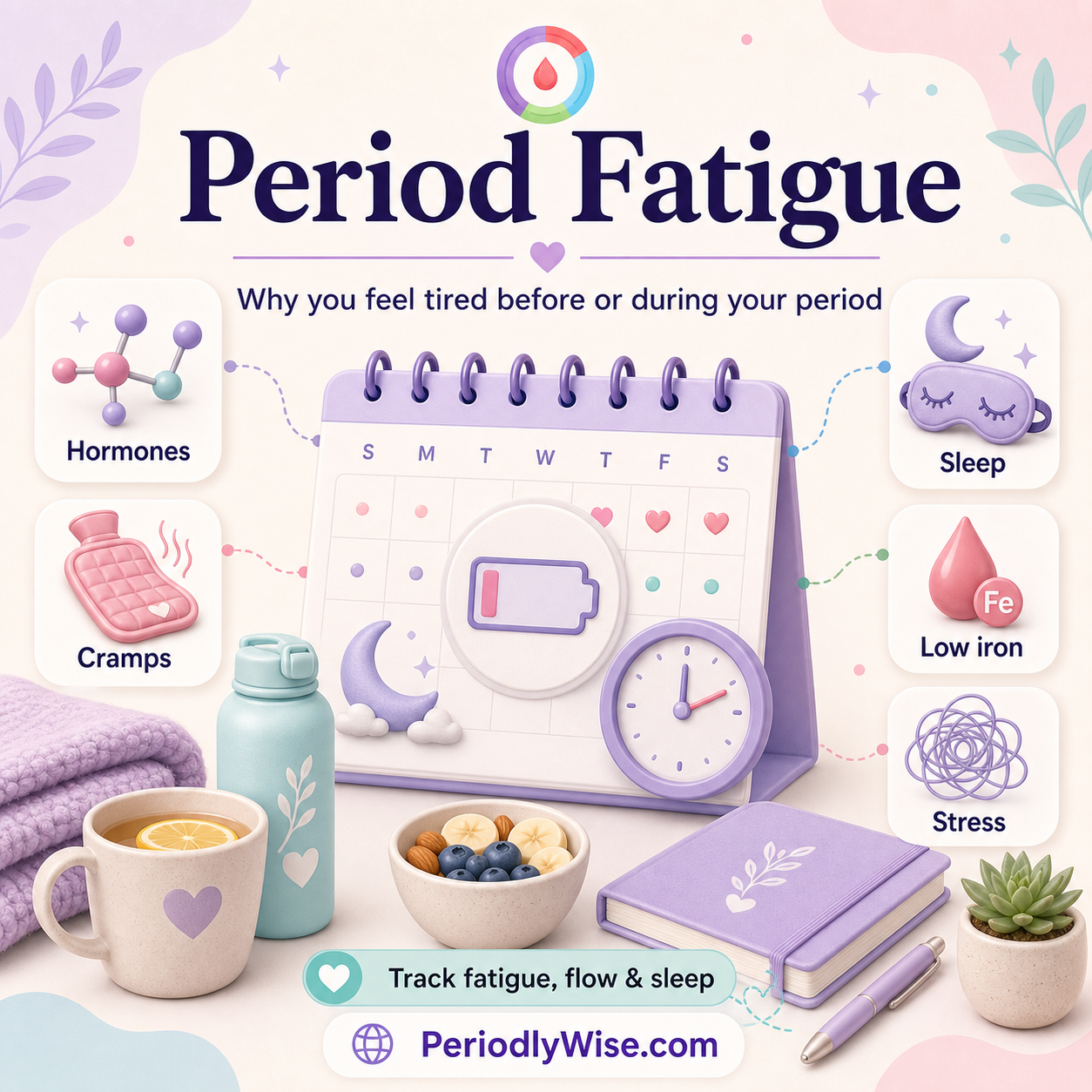
Feeling exhausted before or during your period can happen for several reasons, including hormone changes, cramps, sleep disruption, heavy bleeding, and low iron.
Read the guide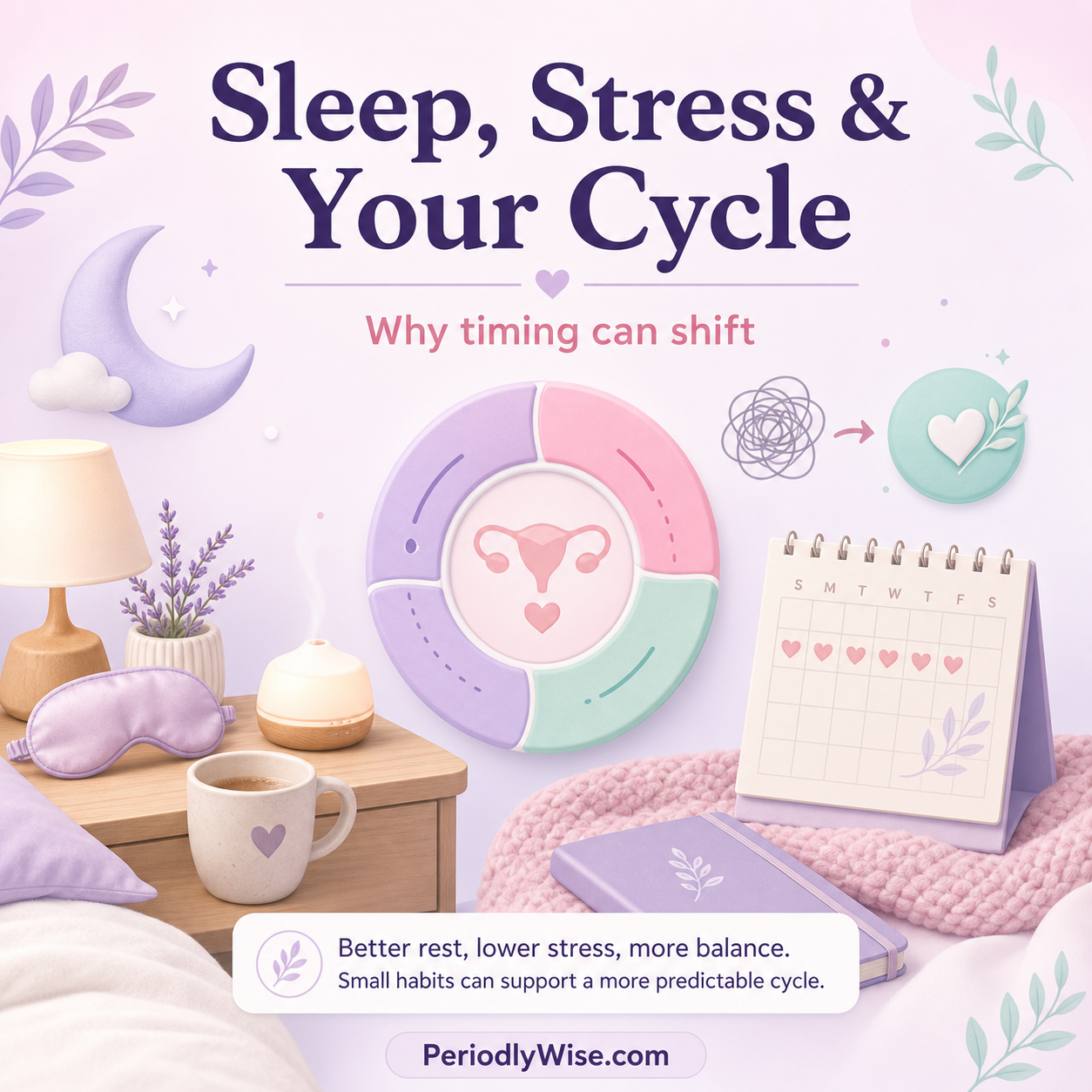
Learn how sleep, stress, routine changes, and cycle tracking can affect period timing, ovulation estimates, PMS symptoms, and irregular menstrual cycles.
Read the guide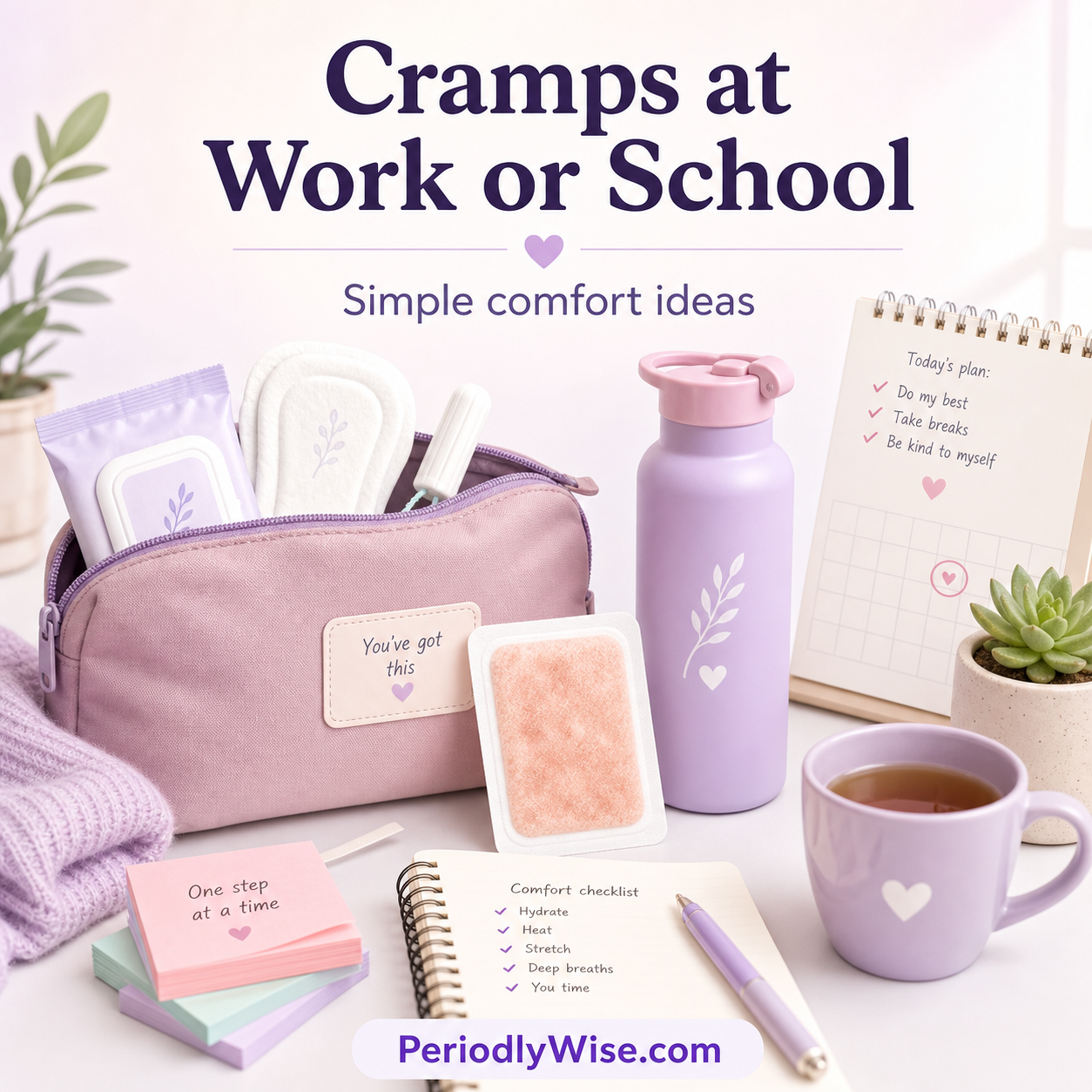
Practical ways to manage period cramps at work or school with heat, water, snacks, gentle movement, comfortable clothing, privacy planning, and a small period care kit.
Read the guide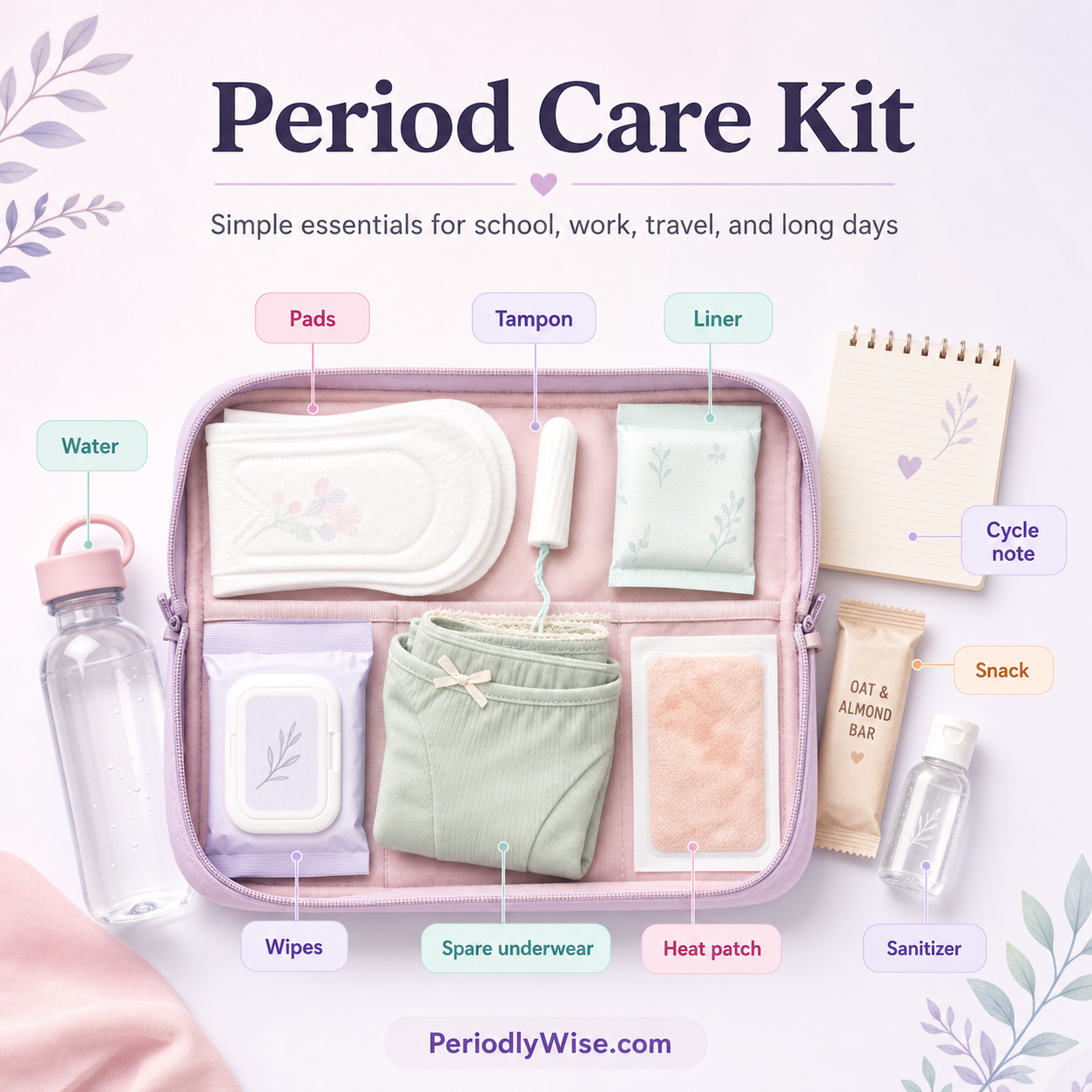
Build a simple period care kit with pads, tampons, liners, wipes, spare underwear, pain-relief basics, snacks, and planning tips for school, work, travel, and emergencies.
Read the guideUse these images as simple tracking prompts. New, severe, unusual, or worrying symptoms still deserve professional medical advice.