Feeling disconnected from your body can be difficult to put into words. You may feel like your body is heavier than usual, more sensitive than usual, less familiar, less comfortable, or harder to trust. You may look in the mirror and feel separate from what you see. You may know your body is yours, but still feel emotionally distant from it.
For some people, this feeling appears before a period. For others, it shows up during bleeding, on heavy-flow days, during cramps, after poor sleep, or when bloating, appetite changes, fatigue, or mood shifts overlap. It can feel confusing, but it is not something to be ashamed of.
Your body is not betraying you by changing across the cycle. Menstruation is a natural process. PeriodlyWise stands with everyone in this journey, including the days when your body feels harder to understand. The goal is not to force constant positivity. The goal is to build enough awareness and care that you do not have to feel alone inside the experience.
What body disconnection can feel like
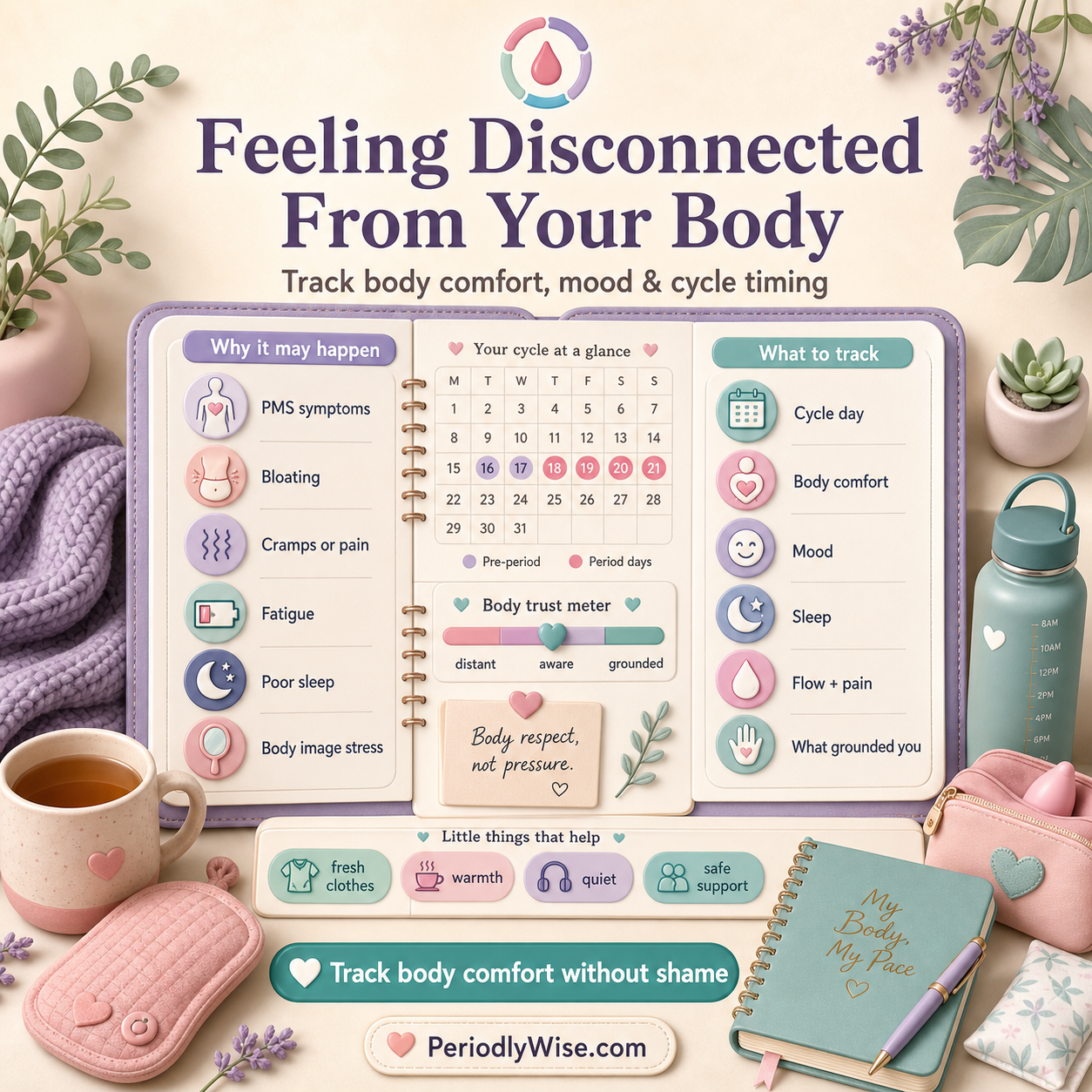
Body disconnection does not always mean one specific medical symptom. Sometimes it is a quiet emotional distance. Sometimes it is discomfort with body changes. Sometimes it is the sense that your body is doing things you did not choose: bleeding, cramping, bloating, leaking, breaking out, changing appetite, changing sleep, or needing more rest than you planned.
You might still function. You might still smile, work, study, parent, socialize, or handle responsibilities. But inside, your relationship with your body may feel strained. You may feel like you are managing your body instead of living comfortably inside it.
- Unfamiliar: your body feels different from the version you know best.
- Heavy: fatigue, cramps, bloating, or flow make movement feel harder.
- Over-aware: you keep monitoring leaks, pain, odor, skin, swelling, or product changes.
- Numb or distant: you feel emotionally flat, detached, or less present.
- Self-critical: you judge how your body looks, feels, eats, bleeds, or rests.
- Protective: you want quiet, privacy, loose clothes, or fewer demands.
If this comes with the thought "I do not feel like myself," read Not Feeling Like Yourself Before Your Period. These two experiences often overlap.
Why cycle symptoms can affect body trust
Body trust is easier when the body feels predictable. A period can challenge that predictability. Flow may arrive earlier than expected. Cramps may appear at night. Appetite may disappear or intensify. Bloating may change how clothes fit. Skin may break out. Sleep may get lighter. Heavy bleeding may make you check products often. Each change can make the body feel less familiar for a while.
PMS can include both physical and emotional symptoms, including bloating, cramps, headaches, appetite changes, sleep problems, fatigue, anxiety, sadness, mood swings, and concentration changes. When several of these happen together, disconnection can become more understandable. It may not be one symptom. It may be the combined load of many small changes.
There can also be a social layer. Many people are taught to hide periods, hide products, hide stains, hide discomfort, and act as if nothing is happening. That can make natural cycle needs feel embarrassing. A no-shame approach says something different: your body is allowed to have a cycle, and you are allowed to support it.
Body disconnection is not shame
Feeling disconnected from your body does not mean you hate your body. It does not mean you are ungrateful. It does not mean your period is dirty or wrong. Sometimes it simply means your body is asking for attention in ways that feel uncomfortable, inconvenient, or emotionally loud.
You do not have to force yourself into cheerful body positivity on a hard day. A softer goal is body respect. Body respect can sound like: "This body is uncomfortable today, and it still deserves food, rest, hygiene, comfort, safety, and kindness."
| Hard thought | More caring reframe |
|---|---|
| "My body is a problem." | "My body is having symptoms, and I can respond with care." |
| "I should feel normal." | "Cycle changes can feel different, and different does not mean wrong." |
| "I hate needing rest." | "Rest is a body need, not a character flaw." |
| "I feel disconnected, so something is wrong with me." | "This feeling is information. I can track it and seek support if it becomes intense." |
| "I am embarrassed by my period." | "Menstruation is natural. I deserve privacy, dignity, and practical support." |
What to track when you feel disconnected
Track both body details and emotional details. Body disconnection often lives in the space between the physical and emotional experience. A useful record should make room for both.
- Cycle timing: days before your period, period day, ovulation window, or irregular timing.
- Body comfort: cramps, bloating, breast tenderness, headache, back pain, skin changes, nausea, or digestion changes.
- Flow: spotting, light, medium, heavy, very heavy, leaks, clots, or product changes.
- Sleep: insomnia, wake-ups, oversleeping, vivid dreams, or waking unrefreshed.
- Appetite: cravings, low appetite, nausea, skipped meals, or feeling disconnected from hunger cues.
- Mood: numb, anxious, low, irritable, tender, overwhelmed, self-critical, or calm.
- Body image: feeling uncomfortable in clothes, avoiding mirrors, checking body changes, or wanting more privacy.
- Stress and context: work, school, family pressure, travel, conflict, illness, or social events.
- Grounding support: shower, fresh clothes, heat, stretching, rest, music, quiet, food, fluids, journaling, or talking with someone safe.
If bloating is a major trigger, read Period Bloating. If appetite changes make you feel separate from your usual body cues, the guide on Low Appetite During Your Period may help. If fatigue is the main reason your body feels unfamiliar, start with Period Fatigue.
How PeriodlyWise can help rebuild body trust
PeriodlyWise helps by giving your cycle a timeline. When symptoms feel random, the body can feel unpredictable. When you see that the same pattern appears three or four days before your period, on day 1, or after poor sleep, the experience may feel less mysterious.
That does not make the symptoms pleasant. But it can make them less personally confusing. Instead of thinking, "Why am I so disconnected from my body?" you may notice, "This tends to happen when bloating, low sleep, and PMS mood changes overlap before my period." That kind of clarity can reduce shame.
Use the Period Tracker to estimate your period window, then add short notes about body comfort and emotional distance. You can also use period tracking as self-care by treating the note as a care prompt, not a judgment.
Gentle grounding ideas for cycle-related body disconnection
Grounding does not need to be dramatic. It can be simple, physical, and respectful. The goal is to help your body feel like a place you can care for, even if it does not feel comfortable right now.
- Change into clothes that do not press on bloating, cramps, or tender areas.
- Take a warm shower or use heat where cramps or tension are strongest.
- Eat something simple if you have skipped food, even if appetite is low.
- Drink water or a warm drink if it feels soothing.
- Use a short body-neutral phrase: "I do not have to love how this feels to care for myself."
- Walk slowly, stretch gently, or rest if movement feels wrong today.
- Keep period products and backup clothes prepared so your body feels less unpredictable.
- Use notes to separate facts from self-criticism: "bloated, tired, day before period" instead of "I look awful."
If your body disconnection is tied to heavier bleeding, read The Emotional Side of Heavy Flow. If it becomes stronger near bedtime, Period Anxiety at Night may be helpful.
When to get extra support
Cycle-related disconnection can be mild and temporary, but it should be taken seriously when it is intense, frightening, or unsafe. Consider professional support if you feel detached from your body most of the month, if disconnection affects eating, hygiene, relationships, work, school, sleep, or safety, or if it connects with trauma memories, panic, depression, or self-harm thoughts.
Also seek medical advice if the body symptoms behind the disconnection are severe or changing: very heavy bleeding, severe pelvic pain, fainting, dizziness, shortness of breath, sudden confusion, new neurological symptoms, unexplained weight changes, or symptoms that feel different from your usual cycle.
You deserve support that takes both body and mind seriously. PeriodlyWise can help organize cycle information, but it cannot diagnose mental health conditions, trauma responses, eating disorders, PMS, PMDD, anemia, thyroid conditions, or any medical condition.
FAQ
Can PMS make me feel disconnected from my body?
PMS can include mood, sleep, appetite, fatigue, pain, bloating, and focus changes. When several symptoms overlap, some people feel less connected to their body or less comfortable in it.
Is feeling disconnected from my body the same as dissociation?
Not always. Some people use "disconnected" to describe mild emotional distance or body discomfort. Dissociation can be more intense and may need professional support, especially if it is frightening, frequent, trauma-linked, or affects safety.
What should I track if my body feels unfamiliar before my period?
Track cycle day, body comfort, flow, pain, sleep, appetite, mood, stress, body image, and what helps you feel grounded. Look for repeated timing across several cycles.
How can I be kind to my body when I do not feel good in it?
Aim for body respect, not forced positivity. Choose comfortable clothes, food, fluids, rest, warmth, privacy, and language that does not shame your body for having symptoms.
When should I seek help?
Seek support if the disconnection is severe, unsafe, persistent, linked with trauma, affects eating or daily life, or comes with self-harm thoughts, severe pain, very heavy bleeding, fainting, or shortness of breath.
Use PeriodlyWise to connect body comfort, mood, sleep, appetite, flow, pain, and what helped with your cycle timing.
Open the Period Tracker