Heavy flow can be physical, practical, and emotional all at once. It can mean changing products more often, checking clothes, planning bathroom access, waking at night, carrying backups, and feeling aware of your body in a way that is hard to ignore. That is not weakness. That is the real life load of managing a heavier period day, especially if your day 1 flow feels stronger at the start.
The emotional side of heavy flow deserves gentle language. You are not dramatic for feeling tired of it. You are not careless if a leak happens. You are not less capable because one day of your cycle asks for more planning than another. Heavy flow is not shameful. It is a body experience, and body experiences deserve care.
At PeriodlyWise, we stand with everyone in this natural journey. We do not see periods as something to hide or feel ashamed of. We also believe that heavy days deserve support, not silence. You can honor your period as natural and still give yourself practical help when flow feels intense.
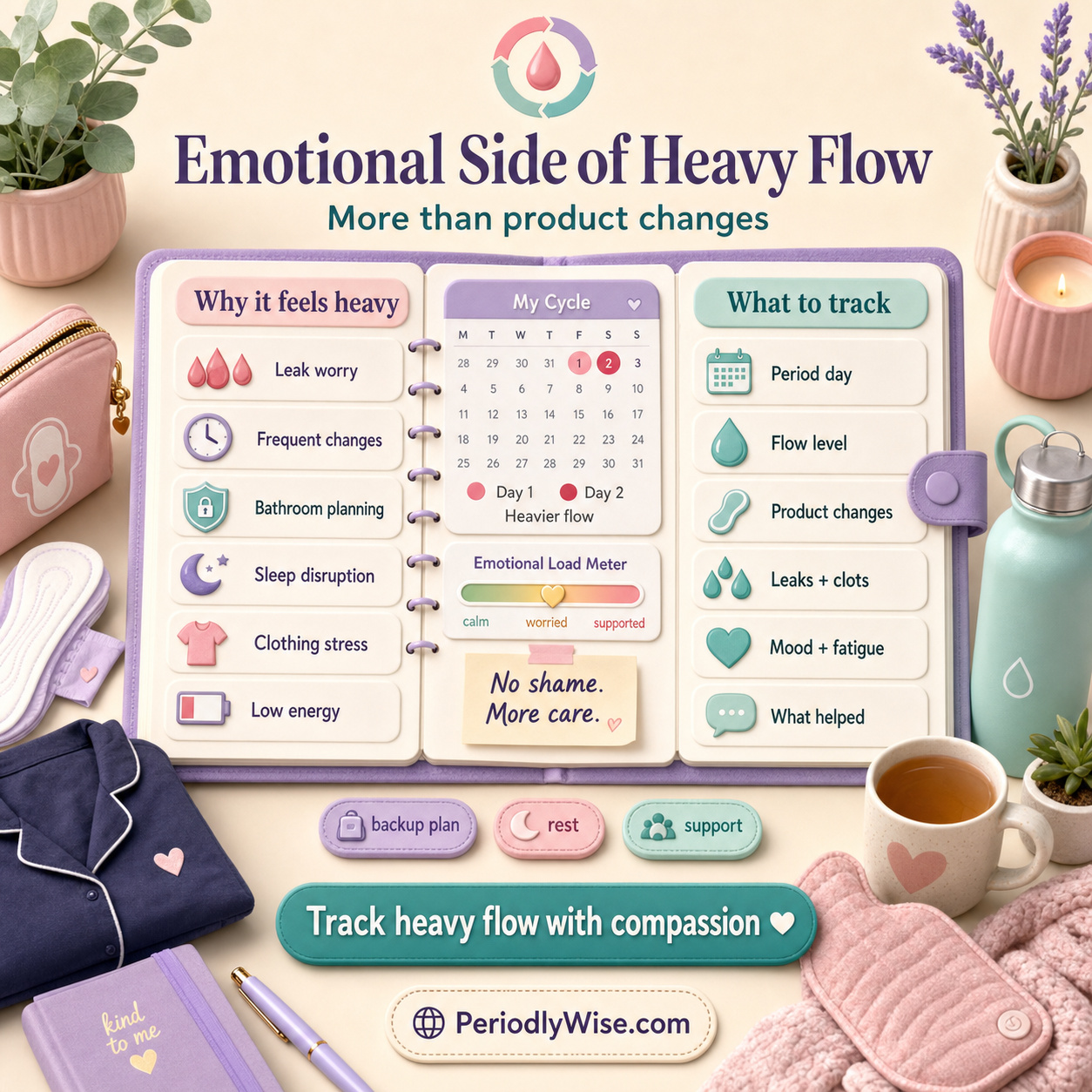
Why heavy flow can feel emotional
Heavy flow often asks for attention. You may need to check the time, change products more often, worry about leaks, avoid certain clothes, or plan your route around bathrooms. Even when everything is manageable, that extra mental load can be tiring.
It can also affect how safe you feel in your body. A sudden gush, a leak at night, or a product that fills faster than expected can make you feel tense or on alert. If this has happened before, your mind may start preparing for it before it happens again.
That emotional response is understandable. It does not mean you are overreacting. It means your brain remembers that heavy flow can interrupt comfort, privacy, sleep, and routine. Tracking can help because it turns worry into a pattern you can prepare for.
The hidden planning load of heavy days
Heavy flow is not only the amount of bleeding. It is also the planning around the bleeding. Many people quietly calculate product changes, backup protection, bathroom access, pain levels, sleepwear, sheets, work meetings, school hours, travel time, and whether they have enough supplies. If nights are the hardest part, the guide on period leaks at night goes deeper into flow, sleep position, product fit, and leak location.
This invisible planning can make a heavy day feel emotionally heavier than a light day. You may be doing normal tasks while also running a private checklist in the background.
| Heavy-flow situation | Emotional effect it can create | Supportive response |
|---|---|---|
| Changing products very often | Feeling interrupted, frustrated, or on alert | Track the timing and prepare stronger or backup protection for known heavy windows. |
| Worrying about leaks | Feeling self-conscious or distracted | Note leak location and product type so you can adjust coverage next cycle. |
| Heavy flow at night | Feeling anxious before sleep | Plan night protection, dark sleepwear, and a calm backup routine. |
| Fatigue on heavy days | Feeling low, slow, or less motivated | Reduce avoidable pressure and choose food, fluids, and rest that feel realistic. |
| Large or frequent clots | Feeling startled or worried | Track clot size and frequency, especially if this is new or paired with heavy bleeding. |
Feelings that can show up during heavy flow
Heavy flow can bring many emotions, and none of them make your period shameful. You may feel annoyed because your plans keep getting interrupted. You may feel embarrassed after a leak. You may feel worried because the bleeding seems stronger than usual. You may feel tender, tired, or impatient because your body is doing a lot.
These feelings deserve kindness. Instead of asking, "Why can't I handle this?" try asking, "What would make this day easier?" That question moves you from self-criticism to care.
- Worry: "Will I leak?" or "Is this heavier than usual?"
- Frustration: "I just changed and already need to change again."
- Embarrassment: "What if someone notices?"
- Fatigue: "I feel drained and I do not want to push through."
- Body distance: "I do not feel fully comfortable in my body today."
- Relief: "I know this pattern now, and I have a plan."
The last feeling matters. Tracking does not remove every hard moment, but it can create relief. Knowing your pattern can help you prepare products, rest, food, clothing, and schedule choices before the hardest day arrives. If heavy flow also affects your energy, read Period Fatigue on Heavy Flow Days.
What to track when heavy flow feels emotionally hard
For heavy flow, tracking is most useful when it includes both the physical details and the lived experience. The body details explain what happened. The emotional details explain how much it affected your day. If clots are part of the pattern, use the period clots tracking guide alongside your flow notes.
- Period day: day 1, day 2, day 3, or later.
- Flow level: medium, heavy, very heavy, or different from your usual.
- Product changes: product type, absorbency, and how often you needed to change.
- Leaks: none, underwear, clothing, bedding, front, back, or side.
- Clots: none, small, frequent, large, or new for you.
- Body symptoms: cramps, back pain, dizziness, headache, nausea, weakness, fatigue, or shortness of breath.
- Sleep: wake-ups, night changes, leak worry, or poor rest.
- Emotional tone: calm, worried, frustrated, sensitive, low, supported, or relieved.
- What helped: rest, heat, fluids, food, product change, backup layer, lighter plans, or emotional support.
A simple PeriodlyWise note might say: "D2 heavy, changed pad every 2 hours, tired, worried about back leak, heat helped, went to bed early." That note is practical and compassionate. It records the facts without blaming you.
Heavy flow is not a personal failure
A leak is not a failure. Needing more products is not a failure. Choosing dark clothing is not a failure. Resting more is not a failure. Your period is not a test of discipline, neatness, or strength.
Heavy days can invite a lot of self-criticism because they are visible, messy, and inconvenient. But menstruation is a natural process. If your flow is heavier, your care can be heavier too. More care does not mean something is wrong with you. It means you are responding to what your body needs.
It can help to prepare a heavy-day plan without shame. Keep products accessible. Choose clothes that help you feel secure. Use backup protection if it gives peace of mind. Keep gentle food and water nearby. Tell one trusted person if support would make the day easier. These are not signs of weakness. They are signs of wise self-care. For a calm preparation list, read Period Care Kit Essentials.
When heavy flow deserves medical support
It is possible to be positive about periods and still take heavy bleeding seriously. A heavy day is not shameful, but very heavy or disruptive bleeding can deserve medical advice.
ACOG notes that heavy menstrual bleeding can interfere with physical, social, emotional, or material quality of life. ACOG also lists heavy or abnormal period concerns such as bleeding that soaks through one or more pads or tampons every hour for several hours, needing to use more than one pad at a time, needing to change protection during the night, bleeding longer than 7 days, or clots larger than a quarter. The NHS similarly describes heavy periods as bleeding that affects life, including frequent changes, double protection, bleeding through clothes or bedding, large clots, or feeling tired or short of breath.
Consider speaking with a healthcare professional if heavy flow is new, worsening, lasts longer than usual, causes frequent leaks, includes large clots, or comes with dizziness, fainting, weakness, chest symptoms, shortness of breath, severe pain, or extreme fatigue. Seek urgent care if bleeding feels extreme, you feel faint, or pregnancy is possible and bleeding is heavy or unusual.
Asking for help is not shame. It is care. PeriodlyWise can help you organize your flow and symptom pattern, but it cannot diagnose or replace professional medical guidance.
How PeriodlyWise can help you feel more prepared
PeriodlyWise helps you estimate your period window and keep cycle records, so heavy days do not have to arrive as a complete surprise. When you know your heavier days often happen at the same point in the cycle, you can prepare products, sleep, clothing, food, and schedule choices with more confidence.
You can also use notes to connect heavy flow with fatigue, mood, cramps, night leaks, appetite changes, or stress. Over time, that record can help you see whether a heavy day is familiar for you or meaningfully different from your usual pattern. If worry becomes stronger near bedtime, the article on period anxiety at night can help you name that experience more gently.
Most importantly, tracking can help you speak about your cycle clearly. Instead of "my period is too much," you can say, "day 2 is usually heavy, I change products every 2 to 3 hours, fatigue is worse, and leaks happen if I sleep more than 7 hours." That clarity can support self-care and, when needed, healthcare conversations.
FAQ
Can heavy flow affect mood?
Yes. Heavy flow can affect mood indirectly through fatigue, sleep interruption, pain, leak worry, privacy concerns, and the extra planning it requires. Hormonal changes around the cycle can also affect mood for some people.
Should I be ashamed of heavy flow or leaks?
No. Heavy flow and leaks can happen, and they are not a moral failure or a reason for shame. They are body experiences that deserve practical support and kind language.
How can I prepare emotionally for heavy days?
Notice your usual heavy-flow window, prepare products and backup options, reduce avoidable pressure where possible, keep comfort items nearby, and remind yourself that needing care is normal.
When is heavy flow more than normal variation?
Medical advice is wise if bleeding is much heavier than usual, soaks through protection quickly, lasts longer than 7 days, causes repeated leaks, includes large clots, or comes with dizziness, fainting, shortness of breath, severe pain, or extreme fatigue.
Use PeriodlyWise to record flow, symptoms, sleep, mood, leaks, clots, and what helped so heavy days feel less isolating and more prepared.
Open the Period Tracker