Period tracking does not have to feel like a medical checklist, a warning system, or another thing you must do perfectly. At its best, it can feel like self-care: a quiet way of noticing your body, respecting your rhythm, and preparing for the days when you may need extra softness.
Your period is not shameful. Your cycle is not something to hide from yourself. Menstruation is a natural body process, and tracking it can be a way to meet that process with calm attention instead of embarrassment, worry, or guesswork.
PeriodlyWise stands with everyone in this natural journey. The goal is not to make periods feel like a concern or a problem. The goal is to help you understand your own pattern, support your comfort, and feel less alone in the everyday reality of having a cycle.
Why period tracking can feel caring
Self-care is not only bubble baths, perfect routines, or big lifestyle changes. Sometimes it is simply knowing that your period may arrive next week, so you keep products ready. Sometimes it is recognizing that your energy often dips before bleeding starts, so you stop blaming yourself for needing a slower evening.
Tracking can turn vague feelings into useful patterns. Instead of thinking, "Why am I like this today?" you may notice, "This is usually the week before my period, and I often need more rest." That small shift can feel deeply kind. It gives context without judgment.
The Office on Women's Health explains that the menstrual cycle is the monthly hormonal process the body goes through to prepare for pregnancy, and that cycle timing can vary from person to person. ACOG also describes menstrual patterns as a useful vital sign because changes in timing, bleeding, or symptoms can tell you something about the body. That does not mean every cycle note is alarming. It means your cycle is worth knowing.
Tracking without pressure or perfection
A self-care approach to period tracking should feel supportive, not strict. You do not need to record every sensation, every hour, or every product change unless that level of detail helps you. A few honest notes can be enough.
Think of tracking as a conversation with your body, not a performance review. Some cycles will be neatly recorded. Some will be messy. Some months you may only remember the start date. That still counts. A tracker should serve you, not make you feel behind.
| If tracking feels like pressure | Try this gentler version |
|---|---|
| "I must log everything." | "I will record the start date and one thing I noticed." |
| "My cycle should be predictable." | "My cycle can have patterns and still vary." |
| "Symptoms mean something is wrong." | "Symptoms are information, and I can respond with care." |
| "I forgot to track, so I failed." | "I can restart today. My body is still worth listening to." |
| "I should push through." | "I can plan around the days that usually need more support." |
What to track for gentle cycle awareness
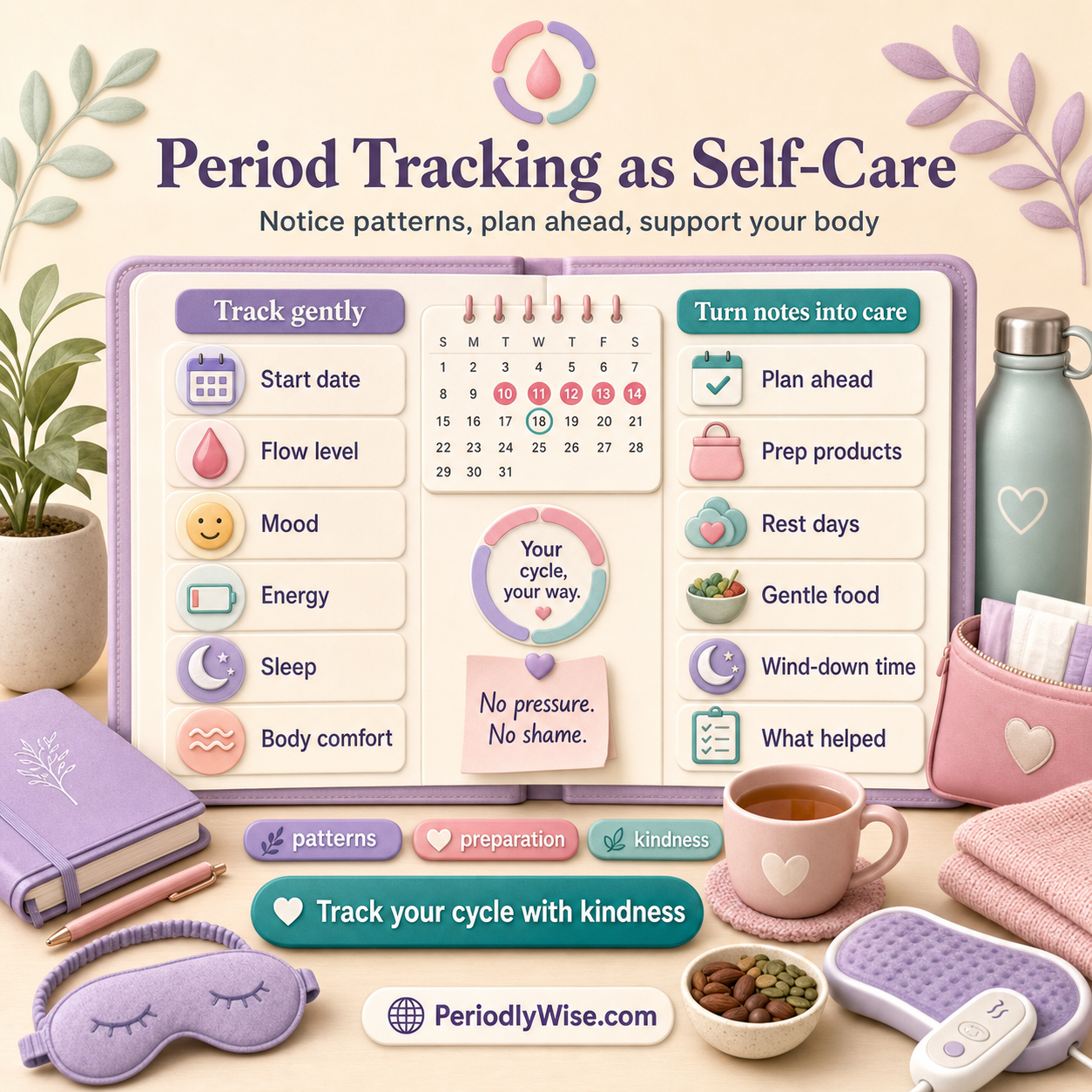
You can keep tracking simple. Choose the details that help you feel more prepared, more understood, or more comfortable. The most helpful notes are the ones you will actually use later.
- Period start date: the first day bleeding starts.
- Period length: how many days bleeding lasts.
- Flow level: spotting, light, medium, heavy, or very heavy.
- Mood: calm, sensitive, irritable, tearful, anxious, grounded, or low.
- Energy: normal, tired, drained, restless, or more focused than usual.
- Sleep: sleep quality, wake-ups, insomnia, or feeling rested.
- Body comfort: cramps, breast tenderness, bloating, headaches, back pain, or nausea.
- Appetite and digestion: cravings, low appetite, constipation, diarrhea, or nausea.
- What helped: heat, rest, movement, warm food, fluids, quiet time, medicine if safe for you, or support from someone you trust.
With PeriodlyWise, you can start with the essentials: period timing and cycle estimates. If you want the basics first, read our guide to using a menstrual calendar for period, ovulation, and fertile-day awareness. Then you can use notes to add the human part of the cycle, such as "needed more sleep," "felt sensitive but okay," "warm soup helped," or "day 2 flow was heavier than usual."
Turning cycle notes into care
The point of tracking is not only to collect information. The point is to use that information to take care of yourself in real life.
If your notes show that cramps often begin before bleeding, you can prepare heat, comfortable clothing, or lighter plans before the period starts. If your appetite usually drops on day 1, our guide to low appetite during your period can help you think about gentle food and fluids without pressure. If sleep gets harder before your period, read how sleep and stress can connect with the menstrual cycle.
Small preparation can change the emotional experience of a period. You may still have cramps, flow, tiredness, or mood changes. But you may feel less surprised, less frustrated, and less alone with them. If mood is the pattern you notice most, the guide on period mood swings and irritability before your period can give that experience more context.
| Pattern you notice | Self-care response to try |
|---|---|
| Energy dips before bleeding starts. | Plan one lighter evening, earlier sleep, or fewer non-urgent tasks. |
| Day 1 cramps are common. | Keep heat, water, comfortable clothes, and pain relief options ready if they are safe for you. |
| Heavy flow is usually strongest on day 2. | Prepare the right products and a backup plan so the day feels less stressful. |
| Mood feels more sensitive pre-period. | Use kinder language with yourself and avoid making every feeling a character judgment. |
| Sleep feels lighter before your period. | Protect wind-down time and reduce avoidable late-night pressure. |
Removing shame from cycle care
Many people grow up learning to hide pads, lower their voice when talking about periods, or act as if bleeding should not affect their day. That silence can make normal cycle needs feel embarrassing. It can also make people ignore discomfort until it becomes harder to manage.
A no-shame approach says something different: needing a pad is normal, needing rest is normal, needing to track your cycle is normal, and asking questions about your body is normal. Your period does not make you weak, unclean, dramatic, or less capable.
Tracking can be part of that no-shame approach because it gives you language. You do not have to say, "I am being difficult." You can say, "My flow is heavier today," "I sleep poorly before my period," or "I usually need a quieter evening on day 1." Clear language can protect dignity. For practical preparation, you can also build a simple period care kit that supports comfort without making your period feel like a crisis.
PeriodlyWise stands with you
PeriodlyWise is built around a simple belief: period awareness should feel respectful, private, and human. Everyone deserves to understand their cycle without shame, fear, or judgment. Whether your period is light, heavy, regular, irregular, calm, uncomfortable, emotional, or different from month to month, your experience still deserves care.
We stand with everyone in this natural journey. Tracking is not about treating menstruation as a problem. It is about making room for the reality of your body and giving yourself a little more preparation, compassion, and confidence.
When tracking should lead to support
Most cycle notes are simply personal awareness. Still, tracking can help you notice patterns that deserve medical advice. Consider speaking with a healthcare professional if your periods become much heavier than usual, bleeding lasts longer than 7 days, pain interferes with daily life, cycles change suddenly, periods stop unexpectedly, or symptoms such as dizziness, fainting, shortness of breath, severe pain, or extreme fatigue appear. If changing timing is your main pattern, start with tracking irregular periods without guessing.
Getting support does not mean your period is shameful. It means your comfort and health matter. PeriodlyWise can help organize information, but it cannot diagnose, treat, or replace a qualified healthcare professional.
FAQ
Is period tracking really a form of self-care?
It can be. Period tracking becomes self-care when it helps you understand your body, plan ahead, reduce shame, and respond to your needs with kindness rather than judgment.
Do I need to track every symptom?
No. You can track only what helps you. For many people, period start date, flow level, mood, energy, pain, and what helped are enough.
What if my cycle is not regular?
Irregular cycles can still be tracked. In fact, saved records can make changing patterns easier to describe. A tracker can show ranges and history, but sudden or concerning changes should be discussed with a healthcare professional. You can also read the irregular period calculator guide for a clearer view of how ranges work.
Should I feel worried if I track my period?
No. Tracking does not mean something is wrong. It can simply be a calm way to know your body better and prepare for your natural cycle.
Use PeriodlyWise to estimate your next period, notice your patterns, and support your body without shame or pressure.
Open the Period Tracker